by Dr. Martin Hertzberg
As the saying goes:
“If all you have in your hand is a hammer, then everything looks like a nail”.
It is hopeless to expect that Hansen could possibly analyze data objectively – all he has in his head is “CO2 climate forcing” and everything else has to be “forced” into that ridiculous paradigm. It makes no difference to him that the predictions of his past half-baked computer models based on “CO2 climate forcing” were completely wrong.
It is not worth my time (or anyone else’s in my opinion) to try to critique the entire paper, but the final paragraph on his p. 11 stands our like a sore thumb. In it he states:
” Earth orbital (Milankovic) parameters have favored a cooling trend for the past several thousand years, which should be expected to start in the Northern Hemisphere (NH). For example, Earth is now closest to the sun in January, which favors warm winters and cool summers in the Northern Hemisphere.”
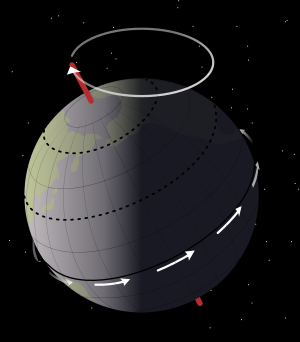
Those statements are typical of the misunderstanding in the popular literature of the Milankovic cycles. Since we are now further from the sun in the NH summer, he argues that the NH should get less solar insolation in the NH summer thus “favoring the growth of glaciers and ice-caps in the NH”. So why then we may ask are we now in an Interglacial Warming? What Hansen fails to realize is that when we are further from the Sun in NH summer we move more slowly in orbit, and are therefore exposed to the summer sun for a longer period of time.
From the graphs in the web-site http://individual.utoronto.ca/kalendis/seasons.htm , one can calculate that in 2010 the NH summer half of the earth’s orbit from the Spring Equinox to the fall Equinox lasts 186.1 days. The NH winter half of the orbit lasts 179.0 days. So the summer half gets 7.1 more days of solar insolation than the winter half. (Go to your calendar and count!)

Exposure time in this case is more significant that daily insolation caused by our further distance during the NH summer. And that is why we are in an Interglacial Warming and why Hansen is completely wrong in arguing that we should be “favoring the growth of glaciers and ice-caps in the Northern Hemisphere”.
Now some 10,000 years ago, because of the precession of the Equinoxes, summer and winter would have nearly flipped but with not much change in the earth’s orbital eccentricity. From the same web-site, in the year 8,000 BC, the NH summer half of the earth’s orbit lasted 178.5 days while the winter half lasted 186.6 days, so that the winter half exceeded the summer half by 8.1 days.
So 10,000 years ago the earth was further from the sun during NH winter and it spent a longer time on the winter half of the orbit, thus both effects re-enforced each other to give us a marked Glacial Cooling. (Actually the peak in that Glacial Cooling occurred several thousand years earlier than 8,000 BC.) Today, while we spend a longer time during the NH summer half of our orbit, we are further away in the summer, so the effects tend to cancel, but the longer time exposure is more important than the further distance.
The following discussion from my Chapter 12 of our recently published book “Slaying the Sky Dragon – Death of the Greenhouse Gas Theory” is a more general critique of the Hansen paper. Simply substitute “Hansen” for “Gore”.
The Legend of the Sky Dragon and Its Mythmakers
There is a simple way to tell the difference between propagandists and scientists. If scientists have a theory they search diligently for data that might actually contradict the theory so that they can fully test its validity or refine it. Propagandists, on the other hand, carefully select only the data that might agree with their theory and dutifully ignore any data that disagrees with it.
One of the best examples of the contrast between propagandists and scientists comes from the way the human caused global warming advocates handle the Vostok ice core data from Antarctica (6). The data span the last 420,000 years, and they show some four Glacial Coolings with average temperatures some 6 to 8 C below current values and five Interglacial Warming periods with temperatures some 2 to 4 C above current values. The last warming period in the data is the current one that started some 15,000 to 20,000 years ago. The data show a remarkably good correlation between long term variations in temperature and atmospheric CO2 concentrations. Atmospheric CO2 concentrations are at a minimum during the end of Glacial Coolings when temperatures are at a minimum. Atmospheric CO2 concentrations are at a maximum when temperatures are at a maximum at the end of Interglacial Warmings. Gore, in his movie and his book, “An Inconvenient Truth”, shows the Vostok data, and uses it to argue that the data prove that high atmospheric CO2 concentrations cause global warming.
Is that an objective evaluation of the Vostok data? Let’s look at what Gore failed to mention. First, the correlation between temperature and CO2 has been going on for about half a million years, long before any significant human production of CO2, which began only about 150 years ago. Thus, it is reasonable to argue that the current increase in CO2 during our current Interglacial Warming, which has been going on for the last 15,000 – 20,000 years, is merely the continuation of a natural process that has nothing whatever to do with human activity. Gore also fails to ask the most logical question: where did all that CO2 come from during those past warming periods when the human production of CO2 was virtually nonexistent? The answer is apparent to knowledgeable scientists: from the same place that the current increase is coming from, from the oceans. The amount of CO2 dissolved in the oceans is some 50 times greater than the amount in the atmosphere. As oceans warm for whatever reason, some of their dissolved CO2 is emitted into the atmosphere, just as your soda pop goes flat and loses its dissolved CO2 as it warms to room temperature even as you pour it into the warmer glass. As oceans cool, CO2 from the atmosphere dissolves back into the oceans, just as soda pop is made by injecting CO2 into cold water.
But the real “clincher” that separates the scientists from the propagandists comes from the most significant fact that Gore fails to mention. The same Vostok data show that changes in temperature always precede the changes in atmospheric CO2 by about 500-1500 years.
The temperature increases or decreases come first, and it is only after 500-1500 years that the CO2 follows. Fig 3 shows the data from the termination of the last Glacial Cooling (Major Glaciation) that ended some 15,000 – 20,000 years ago through the current Interglacial Warming of today. The four instances where the temperature changes precede the CO2 curve are clearly shown. All the Vostok data going back some 420,000 years show exactly the same behavior. Any objective scientist looking at that data would conclude that it is the warming that is causing the CO2 increases, not the other way around as Gore claimed. I am indebted to Guy Leblanc Smith (guy.lbs@rockknowledge.com.au) for granting permission to use Fig. 3 as it was published in Viv Forbes’ web-site www.carbon-sense.com .
It is even more revealing to see how the advocates of the human-caused global warming theory handle this “clincher” of the argument. It is generally agreed that the Vostok cycles of Glacial Coolings and Interglacial Warmings are driven by changes in the parameters of the Earth’s orbital motion about the Sun and its orientation with respect to that orbit; namely, changes in the ellipticity of its orbit, changes in its obliquity (tilt relative to its orbital plane), and the precession of its axis of rotation. These changes are referred to as the Milankovitch cycles, and even the human caused global warming advocates agree that those cycles “trigger” the temperature variations. But the human caused global warming advocates present the following ad hoc contrivance to justify their greenhouse effect theory.
The Milankovitch cycles, they say, are “weak” forcings that start the process of Interglacial Warming, but once the oceans begin to release some of their CO2 after 500-1500 years, then the “strong” forcing of “greenhouse warming” takes over to accelerate the warming. That argument is the best example of how propagandists carefully select data that agrees with their theory as they dutifully ignore data that disagrees with it. One need not go any further than to the next Glacial Cooling to expose that fraudulent argument for the artificial contrivance that it really is. Pray tell us then, we slayers of the Sky Dragon ask, what causes the next Glacial Cooling? How can it possibly begin when the CO2 concentration, their “strong” forcing, is at its maximum? How can the “weak” Milankovitch cooling effect possibly overcome that “strong” forcing of the greenhouse effect heating when the CO2 concentration is still at its maximum value at the peak of the Interglacial Warming? The global warmers thus find themselves stuck way out on a limb with that contrived argument. They are stuck there in an everlasting Glacial Warming, with no way to begin the next Glacial Cooling that the data show.
But one has to be sorry for Gore and his friends, for after all, they are in the global warming business. Global cooling is clearly someone else’s job!”
I can think of nothing more inappropriate and insulting to Milankovic than having Hansen speak at a Symposium in his honor.
===============================================================
Published originally at SPPI
Reference: Jan. 18, 2011: Paleoclimate Implications for Human-Made Climate Change: Draft paper for Milankovic volume. James Hansen
Joel Shore says:
January 27, 2011 at 9:20 am
The numerical sim is simply an implementation of what I stated, which you should be able to understand and accept:
As for the rest, so there is more to do with it than merely being closer to the Sun, and now we have to look at other effects, which you assert are exhaustively cataloged and known. More assertions proffered as “proof” with no data which actually confirms the speculation (though, no doubt, you can offer up some cherry picked analogues, while ignoring anything which would tend to go against your narrative)… pretty much par for the course for you guys.
BTW: I LOVE this contorted logic
“In fact, warming during the winter season has negligible effect on the melting of the ice sheet and, in fact, tends to be accompanied by higher precipitation, which favors ice sheet growth.”
So, a warmer winter causes more ice. Kind of like Global Warming causes record cold winters.
Here’s some direct counterevidence to your assertion:
Bart says:
Bart,
Try using a modicum of common sense here. You quote from an article that talks about summertime rain becoming more of a factor in melting ice. What I am talking about is wintertime temperatures in places with such cold climates that we are talking about the snowpack being unable to melt away in the summers (which is what causes the ice sheets to advance). In such places, warming during the winter is unlikely to lead to rain and will tend to lead to just more snow.
Sometimes I think that you like to be contrary just for the heck of it. You know, scientific knowledge doesn’t begin and end with your own personal knowledge. It is worthwhile to understand what other scientists have learned rather than to always start from square-one. It is a character feature called “humility” and one that, when it is lacking, makes for rather strong limitations on one’s ability to be a good scientist.
Joel,
What you lack in subtlety, you certainly don’t make up for in discretion. Common sense is the sense of the common layman. On scientific matters, it is most often wrong. If it weren’t, we never would have had any Dark Ages.
It’s Antarctica, Joel. The temperature rarely gets above 0 degC all year long.
Here’s another randomly selected google:
Joel Shore says:
January 27, 2011 at 1:31 pm
“What I am talking about is wintertime temperatures in places with such cold climates that we are talking about the snowpack being unable to melt away in the summers”
I thought the baseline was 65° N. The Sheldon Glacier in Antarctica, from the Reuters link, is at 67°30’S.
Bart,
It is on the Antarctic peninsula, which is the warmest part of Antarctica, as your link shows. So, your logic seems to be that the issue of rain in the warmest season on the warmest part of Antarctica somehow has a lot to say about rain being a problem in the coldest season in cold continental interiors of the arctic?
I am not even sure what you are arguing anymore since it has become so contorted. It seems to be that some vague armchair theorizing and handwaving overturns decades worth of careful empirical and theoretical study.
By the way, if you don’t respect common sense and you do not respect scientific authority, what exactly do you respect outside of your own intellect and those who you can find who basically agree with you (and disagree with the rest of the scientific community)?
“It ignores the fact that Hertzberg has no evidence whatsoever to support his hypothesis that the duration dominates”
This is hardly controversial. Even wikipedia notes that when northern hemisphere winter happens at aphelion that is the most extreme conditions for triggering an ice age.
Duration of winter probably is more important than distance from sun. As far as total insolation goes it’s a wash. The thing is, when looking for an ice age trigger, any temperature below 32F is important because that produces snow cover and snow lowers albedo which in turn lowers insolation in a vicious positive feedback cycle. You get the most snow when temperatures are brutally cold but rather just cold enough so it doesn’t melt during the day. So the lower surface temperature from greater distance is mostly wasted because decreases rather than increases snowfall. Conversely 8 extra days of winter and 8 fewer days of summer makes for deeper winter snowpack and less time to melt completely through in the summer. Northern hemisphere snowfall over land is the key to interglacial/glacial periods. Nothing else matters a whole lot other than how much snow cover survives the summer. Maximum snow survival happens (no serious dispute exists with this as the beginning of all glacial cycles lines up) when axial tilt is the lowest which diminshes the difference in summer and winter average temperatures – warmer winters and cooler summers. That’s empirical evidence that colder winters are counter-productive to ice age conditions if accompanied by cooler summers.
I really need to proofread BEFORE posting… (corrections in italics)
Dave Springer says:
Your comment is awaiting moderation.
January 27, 2011 at 7:36 pm
“It ignores the fact that Hertzberg has no evidence whatsoever to support his hypothesis that the duration dominates”
This is hardly controversial. Even wikipedia notes that when northern hemisphere winter happens at aphelion that is the most extreme conditions for triggering an ice age.
Duration of winter probably is more important than distance from sun. As far as total insolation goes it’s a wash. The thing is, when looking for an ice age trigger, any temperature below 32F is important because that produces snow cover and snow lowers albedo which in turn lowers insolation in a vicious positive feedback cycle. You get the most snow not when temperatures are brutally cold but rather just cold enough so it doesn’t melt during the day. So the lower surface temperature from greater distance is mostly wasted because it decreases rather than increases snowfall. Conversely 8 extra days of winter and 8 fewer days of summer makes for deeper winter snowpack and less time to melt completely through in the summer. Northern hemisphere snowfall over land is the key to interglacial/glacial periods. Nothing else matters a whole lot other than how much snow cover survives the summer. Maximum snow survival happens (no serious dispute exists with this as the beginning of all glacial cycles lines up) when axial tilt is the lowest which diminshes the difference in summer and winter average temperatures – warmer winters and cooler summers. That’s empirical evidence that colder winters are counter-productive to ice age conditions if accompanied by warmer summers.
Joel – I don’t know what to say. I’ve presented the evidence. It’s pretty clear that winter rainfall results in glacial runoff. There’s dozens of other hits you can find which confirm this, if you take time to look.
Here’s a hint why: rain is liquid water because it contains more ___ energy than ice, and ice melts in endothermic reaction when it absorbs ____. Fill in the blank.
Do you have some idea that water turns to ice when it comes into contact with ice? This isn’t ice-9 we’re talking about.
You, on the other hand, have presented zip, nada, nothing, beyond an appeal to unnamed and unreferenced authorities. One gets the impression that you just kind of used your “common sense” and decided, “yeah, that makes sense, therefore everyone must agree with me.” It’s kind of scary. I feel like I’m arguing with a homeless man that the government didn’t implant transmitters in his head.
Look, forget what I said before. Stop digging, OK? Cut your losses and just walk away.
I mean… dude. Did you read this?
What part of this is not making sense to you? Do you understand the word promptly means not waiting until summer and higher temperatures?
I’m genuinely nonplussed by your seeming imperviousness to facts. Do you think the water pools up somewhere and refreezes? Do you think most glaciers are static and level? Where are you getting your ideas?
“So, your logic seems to be that the issue of rain in the warmest season on the warmest part of Antarctica somehow has a lot to say about rain being a problem in the coldest season in cold continental interiors of the arctic?”
The arctic? There’s no ice sheet in the arctic. That’s an ice pack. It’s even more vulnerable to rain runoff. What in the world are you thinking?
I did some searching on the polar ice pack in particular. I found little besides an offhand comment that rain turning to ice versus snow increases heat absorption in daylight because of the lower albedo. Does that mean more of the ice pack will melt come summer? I will leave that for the reader to decide.
Then, I was reminded that one of the results of the AGW computer models is that warming should be most pronounced on winter nights at high latitudes. And, that means that, according to Joel, there should currently be more rain at the pole, and the arctic sea ice should be expanding.
I think that pretty much seals off all his avenues for retreat, at least until the sea ice rebounds convincingly. I’m off on extended business tomorrow so won’t be commenting again for a while.
Joel Shore says:
January 27, 2011 at 1:31 pm
“In such places, warming during the winter is unlikely to lead to rain and will tend to lead to just more snow.”
Ah, there’s the buried nugget. But, rain at the North Pole is not by any means unheard of, nor do we have a particularly good idea how often it happens. But, any rain will kill off snow accumulation, so its likely to be a wash at best.
Again, the fact that mainstream researchers are indubitably expecting a retreating ice pack in the face of warmer winter suggests you, Joel, are not in sync with the majority as you think. And, as to that:
You know, scientific knowledge doesn’t begin and end with your own personal knowledge. It is worthwhile to understand what other scientists have learned rather than to always start from square-one. It is a character feature called “humility” and one that, when it is lacking, makes for rather strong limitations on one’s ability to be a good scientist.
Thus spake the followers of Ptolemy to Copernicus, and the Vatican to Galileo, and the classical physicists to Einstein, and a host of other hidebound mediocrities to those who revolutionized our scientific understanding.
FWIW Joel, I have been rather dramatically successful in my scientific/engineering career, largely because I refused to be browbeaten and humbled into accepting at face value the reports of eminent authorities in my field. You are arguing for scientific stasis and squelching of debate, like your counterparts in the examples above. I would admonish you to take a chance once and a while, relying on your own skills, if you want to go anywhere in your career, and have a real and positive impact.
“…nor do we have a particularly good idea how often it happens…”
Missed a tag…
Hahaha. After many headaches trying to get to grips with the convoluted, contrarian, and grandiosely self-important comments of Bart; I finally dissolved into fits of laughter at his latest hubris.
Yes, the giants of science – Copernicus, Galileo, Einstein and Bart!
Although I suppose commenting on the threads of WUWT is very much akin to Dialogue Concerning the Two Chief World Systems or the Annus Mirabilis Papers. A shame none of us can keep up really. Yes, a “rather dramatically successful” and flowery fail.
I haven’t laughed so much since WUWT compared Hal Lewis’ letter of resignation from The American Physical Society to Martin Luther’ Ninety-Five Theses.
Thanks Bart.
Should be “to” not “from” after “resignation” I think. Damn I’m not so sure any more!
Quentin – you I would admonish to take a remedial class in reading comprehension next semester.
lmao
Don’t spill out your brains. Enjoy.
It may have been a mistake for me to write down my thought processes as I tried to figure out what the heck point Joel was trying to make. So, let’s recap to soothe Quentin’s aching head.
1) Total insolation is the same regardless of precession of the equinoxes. Temperature is a low pass filtered variable proportional to the insolation. Glacial melt should be proportional to the integrated temperature above 0 degC. Glacial accumulation occurs at temperatures below 0 degC. If accumulation has a consistent mean rate, then it should be proportional to the integrated temperature below 0 degC. To first order, there should be no difference in glacial melt due to equinoxial precession alone.
However, the smoothing of input energy to output temperature via the Earth’s thermal time constants should result in lesser melt in the summer perihelion case. Altogether, the result marginally favors Hertzberg’s interpretation over Hansen/Tamino. However, other varying parameters, such as orbit eccentricity and obliquity of the rotation axis to the orbit plane, could have greater impacts. And, now we have rain to consider.
2) Hansen/Tamino/Shore insist that warmer winters in the NH and cooler summers favor glacier and ice sheet growth. Hertzberg argues the opposite, which is, in fact, what we are seeing. But, HTS argue this is because of the additional effect of AGW.
In the Antarctic, the seasons are flipped. HTS position would therefore have to be that, in the absence of AGW, the ice sheet should be retreating, and with AGW, retreating even more. In fact, we are not seeing this at all, except in the coastal regions where there has been more rain in summer.
A key consideration in all of this is the effect of rain. Rain significantly shrinks glaciers and ice sheet/pack where it occurs. So, in fact, what we observe is consistent with the Hertzberg hypothesis: glaciers and ice pack retreating in the NH, advancing in the SH except where there is substantial impact of rain. It appears to be summer rain, which is consistent with Joel’s suggestion that there is greater precipitation in warmer times. Thus, what we are observing in the SH appears to be inconsistent with the HTS hypothesis, even more so with AGW factored in.
This so called Dr Hertzberg has been completely and utterly owned by Tamino.
Have a look at his blog.
I expect he will now apologise. As a man of honour, surely he must?
This so called Tamino is a shallow poseur. By his own math, he is wrong.
Bob Maginnes calculates correctly that the ratio of the duration of the current NH summer half of the Earth’s orbit relative to the duration of the winter half is
186.1/179.0 = 1.04. That is the duration ratio.