by Dr. Martin Hertzberg
As the saying goes:
“If all you have in your hand is a hammer, then everything looks like a nail”.
It is hopeless to expect that Hansen could possibly analyze data objectively – all he has in his head is “CO2 climate forcing” and everything else has to be “forced” into that ridiculous paradigm. It makes no difference to him that the predictions of his past half-baked computer models based on “CO2 climate forcing” were completely wrong.
It is not worth my time (or anyone else’s in my opinion) to try to critique the entire paper, but the final paragraph on his p. 11 stands our like a sore thumb. In it he states:
” Earth orbital (Milankovic) parameters have favored a cooling trend for the past several thousand years, which should be expected to start in the Northern Hemisphere (NH). For example, Earth is now closest to the sun in January, which favors warm winters and cool summers in the Northern Hemisphere.”
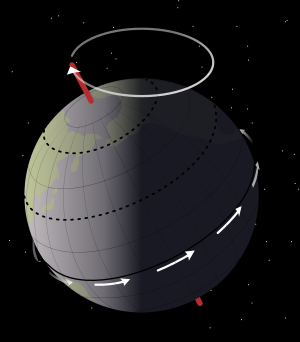
Those statements are typical of the misunderstanding in the popular literature of the Milankovic cycles. Since we are now further from the sun in the NH summer, he argues that the NH should get less solar insolation in the NH summer thus “favoring the growth of glaciers and ice-caps in the NH”. So why then we may ask are we now in an Interglacial Warming? What Hansen fails to realize is that when we are further from the Sun in NH summer we move more slowly in orbit, and are therefore exposed to the summer sun for a longer period of time.
From the graphs in the web-site http://individual.utoronto.ca/kalendis/seasons.htm , one can calculate that in 2010 the NH summer half of the earth’s orbit from the Spring Equinox to the fall Equinox lasts 186.1 days. The NH winter half of the orbit lasts 179.0 days. So the summer half gets 7.1 more days of solar insolation than the winter half. (Go to your calendar and count!)

Exposure time in this case is more significant that daily insolation caused by our further distance during the NH summer. And that is why we are in an Interglacial Warming and why Hansen is completely wrong in arguing that we should be “favoring the growth of glaciers and ice-caps in the Northern Hemisphere”.
Now some 10,000 years ago, because of the precession of the Equinoxes, summer and winter would have nearly flipped but with not much change in the earth’s orbital eccentricity. From the same web-site, in the year 8,000 BC, the NH summer half of the earth’s orbit lasted 178.5 days while the winter half lasted 186.6 days, so that the winter half exceeded the summer half by 8.1 days.
So 10,000 years ago the earth was further from the sun during NH winter and it spent a longer time on the winter half of the orbit, thus both effects re-enforced each other to give us a marked Glacial Cooling. (Actually the peak in that Glacial Cooling occurred several thousand years earlier than 8,000 BC.) Today, while we spend a longer time during the NH summer half of our orbit, we are further away in the summer, so the effects tend to cancel, but the longer time exposure is more important than the further distance.
The following discussion from my Chapter 12 of our recently published book “Slaying the Sky Dragon – Death of the Greenhouse Gas Theory” is a more general critique of the Hansen paper. Simply substitute “Hansen” for “Gore”.
The Legend of the Sky Dragon and Its Mythmakers
There is a simple way to tell the difference between propagandists and scientists. If scientists have a theory they search diligently for data that might actually contradict the theory so that they can fully test its validity or refine it. Propagandists, on the other hand, carefully select only the data that might agree with their theory and dutifully ignore any data that disagrees with it.
One of the best examples of the contrast between propagandists and scientists comes from the way the human caused global warming advocates handle the Vostok ice core data from Antarctica (6). The data span the last 420,000 years, and they show some four Glacial Coolings with average temperatures some 6 to 8 C below current values and five Interglacial Warming periods with temperatures some 2 to 4 C above current values. The last warming period in the data is the current one that started some 15,000 to 20,000 years ago. The data show a remarkably good correlation between long term variations in temperature and atmospheric CO2 concentrations. Atmospheric CO2 concentrations are at a minimum during the end of Glacial Coolings when temperatures are at a minimum. Atmospheric CO2 concentrations are at a maximum when temperatures are at a maximum at the end of Interglacial Warmings. Gore, in his movie and his book, “An Inconvenient Truth”, shows the Vostok data, and uses it to argue that the data prove that high atmospheric CO2 concentrations cause global warming.
Is that an objective evaluation of the Vostok data? Let’s look at what Gore failed to mention. First, the correlation between temperature and CO2 has been going on for about half a million years, long before any significant human production of CO2, which began only about 150 years ago. Thus, it is reasonable to argue that the current increase in CO2 during our current Interglacial Warming, which has been going on for the last 15,000 – 20,000 years, is merely the continuation of a natural process that has nothing whatever to do with human activity. Gore also fails to ask the most logical question: where did all that CO2 come from during those past warming periods when the human production of CO2 was virtually nonexistent? The answer is apparent to knowledgeable scientists: from the same place that the current increase is coming from, from the oceans. The amount of CO2 dissolved in the oceans is some 50 times greater than the amount in the atmosphere. As oceans warm for whatever reason, some of their dissolved CO2 is emitted into the atmosphere, just as your soda pop goes flat and loses its dissolved CO2 as it warms to room temperature even as you pour it into the warmer glass. As oceans cool, CO2 from the atmosphere dissolves back into the oceans, just as soda pop is made by injecting CO2 into cold water.
But the real “clincher” that separates the scientists from the propagandists comes from the most significant fact that Gore fails to mention. The same Vostok data show that changes in temperature always precede the changes in atmospheric CO2 by about 500-1500 years.
The temperature increases or decreases come first, and it is only after 500-1500 years that the CO2 follows. Fig 3 shows the data from the termination of the last Glacial Cooling (Major Glaciation) that ended some 15,000 – 20,000 years ago through the current Interglacial Warming of today. The four instances where the temperature changes precede the CO2 curve are clearly shown. All the Vostok data going back some 420,000 years show exactly the same behavior. Any objective scientist looking at that data would conclude that it is the warming that is causing the CO2 increases, not the other way around as Gore claimed. I am indebted to Guy Leblanc Smith (guy.lbs@rockknowledge.com.au) for granting permission to use Fig. 3 as it was published in Viv Forbes’ web-site www.carbon-sense.com .
It is even more revealing to see how the advocates of the human-caused global warming theory handle this “clincher” of the argument. It is generally agreed that the Vostok cycles of Glacial Coolings and Interglacial Warmings are driven by changes in the parameters of the Earth’s orbital motion about the Sun and its orientation with respect to that orbit; namely, changes in the ellipticity of its orbit, changes in its obliquity (tilt relative to its orbital plane), and the precession of its axis of rotation. These changes are referred to as the Milankovitch cycles, and even the human caused global warming advocates agree that those cycles “trigger” the temperature variations. But the human caused global warming advocates present the following ad hoc contrivance to justify their greenhouse effect theory.
The Milankovitch cycles, they say, are “weak” forcings that start the process of Interglacial Warming, but once the oceans begin to release some of their CO2 after 500-1500 years, then the “strong” forcing of “greenhouse warming” takes over to accelerate the warming. That argument is the best example of how propagandists carefully select data that agrees with their theory as they dutifully ignore data that disagrees with it. One need not go any further than to the next Glacial Cooling to expose that fraudulent argument for the artificial contrivance that it really is. Pray tell us then, we slayers of the Sky Dragon ask, what causes the next Glacial Cooling? How can it possibly begin when the CO2 concentration, their “strong” forcing, is at its maximum? How can the “weak” Milankovitch cooling effect possibly overcome that “strong” forcing of the greenhouse effect heating when the CO2 concentration is still at its maximum value at the peak of the Interglacial Warming? The global warmers thus find themselves stuck way out on a limb with that contrived argument. They are stuck there in an everlasting Glacial Warming, with no way to begin the next Glacial Cooling that the data show.
But one has to be sorry for Gore and his friends, for after all, they are in the global warming business. Global cooling is clearly someone else’s job!”
I can think of nothing more inappropriate and insulting to Milankovic than having Hansen speak at a Symposium in his honor.
===============================================================
Published originally at SPPI
Reference: Jan. 18, 2011: Paleoclimate Implications for Human-Made Climate Change: Draft paper for Milankovic volume. James Hansen
Discover more from Watts Up With That?
Subscribe to get the latest posts sent to your email.
Rob Honeycutt says:
January 25, 2011 at 9:18 am
“Somehow I don’t think that 150 years of science qualifies as a field of study at an infant stage. Don’t forget much of the physics of atmospheric radiation was worked out by the US military in the 1950′s for work on heat seeking missiles.”
The physics of atmospheric radiation is merely a subtopic within the field. The big questions have to do with feedback dynamics, system identification and observability, and evolution of systems governed by causal differential equations. These topics have been studied in great depth in the last century, but the most prominent climate scientists have little apparent familiarity with them.
Which is longer, a piece of string, or a piece of rope? Are you serious Bart?
Total solar insolation is NOT effected, it’s distribution throughout the seasons IS.
You seem to have an apparent familiarity with a sense of your own self importance. Maybe you would like to submit a paper regarding your expert knowledge to a prominent scientific journal for peer review?
Bart says:
January 25, 2011 at 8:51 am
Other food for thought: The Keplerian approximation is just that, an approximation in which the Earth is the only orbiting body and the Sun remains perfectly still. The Sun itself orbits the solar system barycenter, and the other planets perturb the Earth’s orbit as well. The magnetic field of the Sun is complex and undulating, and this could have implications for the incidence of cosmic radiation and cloud formation. And, of course, the Sun’s output varies, too, while the obliquity of the Earth with respect to the ecliptic, and the orientation of the ecliptic with respect to the galactic plane, also vary. There are a host of secondary processes which can also influence the Earth’s climate significantly. So, a statement of the form “For example, Earth is now closest to the sun in January, which favors warm winters and cool summers in the Northern Hemisphere” needs, at least, to be qualified to the effect of “all other processes being equal”, which they are not.
This is symptomatic of the infancy I have spoken of. All of the models are first order, often unverifiable hypotheses of how the system might work in a simple universe. It’s all spherical cows.
Quentin says:
January 25, 2011 at 10:51 am
“Which is longer, a piece of string, or a piece of rope? Are you serious Bart?”
It depends on which is longer. I think the kettle analogy is rather more transparent, as most of us have at least a vague sense for the thermal time constants of liquids we typically heat on the stove.
“Total solar insolation is NOT effected, it’s distribution throughout the seasons IS.”
Or even affected. Yeah, I derived that result before Tamino, Sparky, at January 24, 2011 at 5:01 pm above. But, what you do not seem to grok is that the energy retained by the Earth is affected by that “distribution throughout the seasons”.
“You seem to have an apparent familiarity with a sense of your own self importance. Maybe you would like to submit a paper regarding your expert knowledge to a prominent scientific journal for peer review?”
Been there, done that. Not in climate science specifically, mind, but in something rather more rigorous and mature, and sorely needing to be applied in that field.
And, on the subject of heat retention, it is apparent that, if the dominate thermal time constant, call it “tau”, of the Earth is such that tau*omega, where omega is the orbital rate of 2*pi rad/year, is significantly less than one, then the longer duration summer at aphelion will result in greater heat retention, and hence higher temperatures, than the shorter summer at perihelion.
Hence, I think it is likely that Hertzberg is right that it is the duration which matters more than the distance, and Hansen and (shockingly – well, maybe not so much) Tamino are wrong.
While I knew about the proximity of earth to sun in the Winter (NH), I never counted the days to figure out if there were more days in the summer!
I’ll take the more days! But it is things like that, while obvious to some such as Dr. Hertzberg, that come as enlightening moments to the less observant of us. Thanks!
Of course, you can reject current best understanding, with all it’s inherent uncertainties, that are fully acknowledged by the scientific community; by invoking a whole series of physical processes that I am sure have never occurred to scientists when they make their calculations. You can ridicule the models with your mocking use of the term “spherical cows”. You can continue to dismiss the infantile scientists with your reasonable sounding intellectual maturity.
But what are you really trying to achieve ? Are you trying to achieve a better understanding? Are you trying to further the scientific endeavor?
Or are you just colluding in the great doubt sowing endeavor?
P.S. Thanks for correcting my spelling mistake.
@-Bart
Thank you for the link to the previous thread on ice-cores -v- plant stomata. I congratulate you on being prepared to present the exchanges that you had with a refreshing lack of bashfulness.
I would agree with much if not most of what was posted by Joel and especially Ferdinand. If he could not present arguments that would cause you to question your position I doubt I (or anything) can.
Two points I would make.
1) The evidence from plant stomata is an extremely poor proxy of global CO2 levels.
It isn’t even a good proxy of local CO2 levels. Even if you select plants with a good correlation between CO2 and stomata in controlled conditions, the microsite and phenotype variation between plant clones in response to other factors is usually comparable to the CO2 signal. The argument that plants have evolved genetic mechanism to respond to CO2 variations, and therefore it must (have) occurred is mistaken, most plant variation is epigenetic and is a non-specific adaption mechanism at this level of response.
2) the stability of the CO2 level in the past is indicated by the stability of the C14 dating correction curve over the last few thousand years. The rise since 1890 has required a correction to C14 dating because the amount of C14 created by cosmic rays from Nitrogen is effectively constant in relation to the large change in the C12 and C13 amounts added to the total reservoir. While small correction have to be made for past variations in C14 production rates due to solar/cosmic ray variation, no similar correction is required for changes in the CO2 reservoir to over 320ppm in the timescale of C14 dating.
Finally, the thread essay author, David Middleton, mentions that the WAIS divide ice core project may provide better temporal resolution over the last few millenia because it is a fast accumulating ice field. There are preliminary results from that source which gives another data-point in the evidence for or against large (+30ppm) variations in past CO2 levels over the Holocene. They claim a resolution of ~20 years over the last 1000 years. They detect variations over that timescale in the CO2 level (if the migration of gases within the ice bubbles incorporated air from more than a 20yr period there would be no variation over that increment).
The variation is of the order of ~10ppm over the preindustrial era. They mention the largest variation, a fall, they observe… LIA?
Geophysical Research Abstracts,
Vol. 11, EGU2009-10845, 2009
EGU General Assembly 2009
© Author(s) 2009
Atmospheric CO2 Over the Last 1000 Years: WAIS Divide Ice Core
Record
J. Ahn and E.J. Brook
“The most striking feature of the record is a rapid atmospheric CO2 decrease of 7∼8 ppm within ∼20 years at ∼ 1600 A.D.”
Quentin says:
“But what are you really trying to achieve ? Are you trying to achieve a better understanding? Are you trying to further the scientific endeavor?”
How about: ‘Pointing out that CAGW is pseudo-science’?
Take away the grant money and the climate scare will fall by the wayside. Word.
[Snip. Tired of your constant snark. This one was especially substance free. ~dbs, mod.]
Bart says:
January 25, 2011 at 1:18 pm
“Hence, I think it is likely that Hertzberg is right that it is the duration which matters more than the distance, and Hansen and (shockingly – well, maybe not so much) Tamino are wrong.”
Having thought this over, I would like to retract this statement (except for the gratuitous knock against Tamino, whom I consider insufferable, dogmatic, simplistic, and opposed to the free exchange of ideas). I used too simple a model ;-).
Quentin says:
January 25, 2011 at 1:47 pm
“But what are you really trying to achieve ? Are you trying to achieve a better understanding? Are you trying to further the scientific endeavor?”
Yes, and yes. I believe the rush to judgment has been premature, ridden with confirmation bias, cherry picked data, simplistic models, and squelching of honest debate. I see a lot of conjecture accepted as fact. I see evidences which do not fit the narrative which have not been addressed. I have learned the hard way, over a lifetime of experience, that computer models don’t mean a damn thing if they haven’t been verified with extensive data taken from the real world covering a sufficient time interval to observe all the major processes.
izen says:
January 25, 2011 at 2:05 pm
“I would agree with much if not most of what was posted by Joel and especially Ferdinand. “
What a shock.
You appear to have missed my main points to Ferdinand and Joel:
A) the apparent but superficial similarity between the curves quantifying CO2 measurements and accumulated emissions is in no wise remarkable or dispositive
B) the emissions data contains cycles which do not appear in the measurements of CO2, which is impossible if the emissions data are reasonably reliable, and if they are not, then even the superficial similarity between the curves is open to question
And, by the way, I personally am not going to be able to accept the ice core data as anything but a possibility for many years to come. Why? Because there is no closed loop, no “control” against which to compare the results. Until we reach a point at which the reliable measurement data, which has only been available since 1958, can be compared directly to ice core proxy results, we will not truly know if it is reliable.
Won’t there be an update to this post now that Tamino has clearly debunked its claims?
A mistake is just a mistake. But a mistake knowingly left uncorrected seems malfeasance to me. I thought WUWT was better than that. I will end up reading only Willis’ posts.
Yes, yes, I know, the other side don’t correct their mistakes either. Sorry if that doesn’t make me any happier.
“B) the emissions data contains cycles which do not appear in the measurements of CO2, which is impossible …”
What I mean is, impossible under the paradigm that the emissions are responsible for the majority of the observed rise.
Nylo says:
January 25, 2011 at 4:13 pm
“Won’t there be an update to this post now that Tamino has clearly debunked its claims?”
Has he? I think he has merely made a conjecture. Temperatures may peak higher in summer at perihelion, but the higher temps last longer at aphelion. Ice melts at 0+eps degC regardless.
I think there needs to be a great deal more analysis done, or references to such analysis provided, to settle this dispute. Can you explain why you believe otherwise?
In a sincere attempt to avoid the appearance of snark, I will try this again. In light of the response from Tamino, it is clear Hertzberg has made elementary errors in his post. Anthony, I am sure, would not claim expertise in this subject, so I ask again: does he have no resources to review submissions such as this (and Goddard’s) for soundness? If not, isn’t it time he did?
Quentin says:
January 25, 2011 at 1:47 pm
“Are you trying to further the scientific endeavor?”
One other thing you might consider, Quentin… If this thing comes a cropper, if temperatures fail to rise or, God forbid, I am right and CO2 will eventually begin to decline all on its own, can you imagine the damage that will be inflicted to the name of “Science”?
Can you just hear the Creationists smirking, “yeah, well, you sure got that Global Warming thing right, didn’t you?” We’ve already got swaths of people refusing to inoculate their children based on incoherent fears that it somehow causes autism. The list is endless. It’d be a complete disaster. The scientific community is betting the ranch on this thing. Personally, I’d prefer better odds with such high stakes. Any responsible scientist, with experience confronting the twists and turns of pernicious Nature, should.
Adam R. says:
January 25, 2011 at 5:08 pm
Adam, I will ask you, too. What is your evidence that Tamino is right beyond his say so? How about asking for a response from Hertzberg before pronouncing him guilty? (Trial first, verdict after. What a concept!)
Adam R,
I can’t speak for Anthony, but it’s pretty clear he has an open invitation for someone like tamino, or any alarmist to write an article. But none of them do. Why not?
Because there’s no “there” there. AGW may exist, but it is insignificant, and no global harm has come from a pretty respectable increase in CO2. You would think there would be some global damage that could be cited. But there’s none. The only effect is increased food production.
Someone writing an article supporting CAGW would be pretty quickly reminded of some inconvenient facts: models are not evidence, and the null hypothesis has never been falsified – thus debunking the alternate hypothesis. And the thermometers used by USHCN aren’t even accurate to a ±1°C tolerance, much less tenths of a degree.
As for vetting every article, it’s hard to understand how one person can find and post as many articles as Anthony does every day, while helping other bloggers, and running the Surface Stations project, in addition to moderating a good part of the thousands of comments posted here every week, and writing numerous articles himself.
WUWT publishes articles from all sides, and leaves it up to the [uncensored] commentators to decide if the article has problems or not. There is better peer review here than in any climate science journal — which is why Michael Mann would never dare to submit an article to WUWT.
If there’s a problem with Dr Hertzberg’s analysis, I’m sure readers will point it out. So far, therre’s only been complaining. Announcing that tamino has found errors is not convincing. Eventually, everything will be sorted out right here on WUWT.
And no, I won’t go to tamino’s blog. In general, he’s not very credible. And who wants to comment on a censoring, low-trafficked blog, when you can reach thousands more readers here with no more effort?
Well the earth goes around the sun in one year; pick your favorite year; the one that gets you back to the same point in the orbit; discounting the precession of the perihelion; which is quite small for earth.
In that time frame, which pretty much repeats time and time again, year after year, the earth pretty much repeats its path at the same distances from the sun; not exactly at the same time on the same calendar date; but close enough.
So we know enough to calculate to total energy received by the earth in the form of solar radiation with a little bit of variation for solar outbursts and the like; but not much of anything in it.
To a first order; the total energy from the sun received by earth, repeats year after year. There are small changes as to where it lands on earth due to the fact that the orbital year is not an integer number of days; and for the same reason, on each and every calendar date, the rotation angle will not be the same, so again the radiation beam will shift slightly; but who wants to complain about the very small year to year differneces in the toal amount of that solar energy that say enters the deep oceans, for example.
So you can fiddle with the seasonal changes all you want; the total energy incident on the earth (extra atmospheric) doesn’t change from one year to the next (by anything to worry about). And since the earth’s atmosphere is well mixed; well then that energy ought to spread around until it replicates Kevin Trenberth’s cartoon energy budget.
Adam R. says:
January 25, 2011 at 5:08 pm
Could I suggest Adam that it’s not always going to be either practical or appropriate for Anthony to review in depth every article that appears on WUWT. At times surely that’s a role for well meaning and well informed responders to fulfill?
And another article on this topic – by Ed Caryl at NoTricksZone
You prefer, evidently, to take Hertzberg at face value and not be troubled with possibly contrary facts. Wonderful loyalty, sir. You deserve another ribbon on your choir robe.
Tamino’s criticism is valid on the evidence he gives, not on his “say so”. But by all means, let Hertzberg respond. I would be most interested to see him defend fundamental misunderstandings of his subject.
Adam R. says:
January 25, 2011 at 7:02 pm
“You prefer, evidently, to take Hertzberg at face value and not be troubled with possibly contrary facts.”
Pot, meet Kettle. Did it occur to you, Adam, that Tamino’s response, which boils down to “it’s hotter on midsummer’s day, ergo there is more melt”, is incomplete at best? So, it’s (for the sake of argument) hotter on midsummer’s day. So what? What matters is, how high the temp is above zero degC, how long it is there, and the rate of melt as a function of temperature. In the reductio, if it were 30 degC on midsummer’s day, but -2 degC the rest of the summer, that will cause less melt than if it were 20 degC all summer long.
This is a typical Tamino analysis – enough info to get the choir singing, but not enough to make a genuine point.
An odd–and oddly revealing–suggestion, indeed.
Are we to believe that Anthony bears no responsibility for the content of posts he publishes in his blog? And if that’s the case (here’s the revealing part), why is it that every time he allows a howler like this, it’s an anti-AGW screed? Surely, if he were just impartially shotgunning climate posts, the occasional pro-AGW “Oops!” would appear, eh?