by Dr. Martin Hertzberg
As the saying goes:
“If all you have in your hand is a hammer, then everything looks like a nail”.
It is hopeless to expect that Hansen could possibly analyze data objectively – all he has in his head is “CO2 climate forcing” and everything else has to be “forced” into that ridiculous paradigm. It makes no difference to him that the predictions of his past half-baked computer models based on “CO2 climate forcing” were completely wrong.
It is not worth my time (or anyone else’s in my opinion) to try to critique the entire paper, but the final paragraph on his p. 11 stands our like a sore thumb. In it he states:
” Earth orbital (Milankovic) parameters have favored a cooling trend for the past several thousand years, which should be expected to start in the Northern Hemisphere (NH). For example, Earth is now closest to the sun in January, which favors warm winters and cool summers in the Northern Hemisphere.”
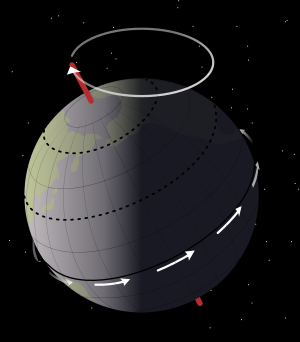
Those statements are typical of the misunderstanding in the popular literature of the Milankovic cycles. Since we are now further from the sun in the NH summer, he argues that the NH should get less solar insolation in the NH summer thus “favoring the growth of glaciers and ice-caps in the NH”. So why then we may ask are we now in an Interglacial Warming? What Hansen fails to realize is that when we are further from the Sun in NH summer we move more slowly in orbit, and are therefore exposed to the summer sun for a longer period of time.
From the graphs in the web-site http://individual.utoronto.ca/kalendis/seasons.htm , one can calculate that in 2010 the NH summer half of the earth’s orbit from the Spring Equinox to the fall Equinox lasts 186.1 days. The NH winter half of the orbit lasts 179.0 days. So the summer half gets 7.1 more days of solar insolation than the winter half. (Go to your calendar and count!)

Exposure time in this case is more significant that daily insolation caused by our further distance during the NH summer. And that is why we are in an Interglacial Warming and why Hansen is completely wrong in arguing that we should be “favoring the growth of glaciers and ice-caps in the Northern Hemisphere”.
Now some 10,000 years ago, because of the precession of the Equinoxes, summer and winter would have nearly flipped but with not much change in the earth’s orbital eccentricity. From the same web-site, in the year 8,000 BC, the NH summer half of the earth’s orbit lasted 178.5 days while the winter half lasted 186.6 days, so that the winter half exceeded the summer half by 8.1 days.
So 10,000 years ago the earth was further from the sun during NH winter and it spent a longer time on the winter half of the orbit, thus both effects re-enforced each other to give us a marked Glacial Cooling. (Actually the peak in that Glacial Cooling occurred several thousand years earlier than 8,000 BC.) Today, while we spend a longer time during the NH summer half of our orbit, we are further away in the summer, so the effects tend to cancel, but the longer time exposure is more important than the further distance.
The following discussion from my Chapter 12 of our recently published book “Slaying the Sky Dragon – Death of the Greenhouse Gas Theory” is a more general critique of the Hansen paper. Simply substitute “Hansen” for “Gore”.
The Legend of the Sky Dragon and Its Mythmakers
There is a simple way to tell the difference between propagandists and scientists. If scientists have a theory they search diligently for data that might actually contradict the theory so that they can fully test its validity or refine it. Propagandists, on the other hand, carefully select only the data that might agree with their theory and dutifully ignore any data that disagrees with it.
One of the best examples of the contrast between propagandists and scientists comes from the way the human caused global warming advocates handle the Vostok ice core data from Antarctica (6). The data span the last 420,000 years, and they show some four Glacial Coolings with average temperatures some 6 to 8 C below current values and five Interglacial Warming periods with temperatures some 2 to 4 C above current values. The last warming period in the data is the current one that started some 15,000 to 20,000 years ago. The data show a remarkably good correlation between long term variations in temperature and atmospheric CO2 concentrations. Atmospheric CO2 concentrations are at a minimum during the end of Glacial Coolings when temperatures are at a minimum. Atmospheric CO2 concentrations are at a maximum when temperatures are at a maximum at the end of Interglacial Warmings. Gore, in his movie and his book, “An Inconvenient Truth”, shows the Vostok data, and uses it to argue that the data prove that high atmospheric CO2 concentrations cause global warming.
Is that an objective evaluation of the Vostok data? Let’s look at what Gore failed to mention. First, the correlation between temperature and CO2 has been going on for about half a million years, long before any significant human production of CO2, which began only about 150 years ago. Thus, it is reasonable to argue that the current increase in CO2 during our current Interglacial Warming, which has been going on for the last 15,000 – 20,000 years, is merely the continuation of a natural process that has nothing whatever to do with human activity. Gore also fails to ask the most logical question: where did all that CO2 come from during those past warming periods when the human production of CO2 was virtually nonexistent? The answer is apparent to knowledgeable scientists: from the same place that the current increase is coming from, from the oceans. The amount of CO2 dissolved in the oceans is some 50 times greater than the amount in the atmosphere. As oceans warm for whatever reason, some of their dissolved CO2 is emitted into the atmosphere, just as your soda pop goes flat and loses its dissolved CO2 as it warms to room temperature even as you pour it into the warmer glass. As oceans cool, CO2 from the atmosphere dissolves back into the oceans, just as soda pop is made by injecting CO2 into cold water.
But the real “clincher” that separates the scientists from the propagandists comes from the most significant fact that Gore fails to mention. The same Vostok data show that changes in temperature always precede the changes in atmospheric CO2 by about 500-1500 years.
The temperature increases or decreases come first, and it is only after 500-1500 years that the CO2 follows. Fig 3 shows the data from the termination of the last Glacial Cooling (Major Glaciation) that ended some 15,000 – 20,000 years ago through the current Interglacial Warming of today. The four instances where the temperature changes precede the CO2 curve are clearly shown. All the Vostok data going back some 420,000 years show exactly the same behavior. Any objective scientist looking at that data would conclude that it is the warming that is causing the CO2 increases, not the other way around as Gore claimed. I am indebted to Guy Leblanc Smith (guy.lbs@rockknowledge.com.au) for granting permission to use Fig. 3 as it was published in Viv Forbes’ web-site www.carbon-sense.com .
It is even more revealing to see how the advocates of the human-caused global warming theory handle this “clincher” of the argument. It is generally agreed that the Vostok cycles of Glacial Coolings and Interglacial Warmings are driven by changes in the parameters of the Earth’s orbital motion about the Sun and its orientation with respect to that orbit; namely, changes in the ellipticity of its orbit, changes in its obliquity (tilt relative to its orbital plane), and the precession of its axis of rotation. These changes are referred to as the Milankovitch cycles, and even the human caused global warming advocates agree that those cycles “trigger” the temperature variations. But the human caused global warming advocates present the following ad hoc contrivance to justify their greenhouse effect theory.
The Milankovitch cycles, they say, are “weak” forcings that start the process of Interglacial Warming, but once the oceans begin to release some of their CO2 after 500-1500 years, then the “strong” forcing of “greenhouse warming” takes over to accelerate the warming. That argument is the best example of how propagandists carefully select data that agrees with their theory as they dutifully ignore data that disagrees with it. One need not go any further than to the next Glacial Cooling to expose that fraudulent argument for the artificial contrivance that it really is. Pray tell us then, we slayers of the Sky Dragon ask, what causes the next Glacial Cooling? How can it possibly begin when the CO2 concentration, their “strong” forcing, is at its maximum? How can the “weak” Milankovitch cooling effect possibly overcome that “strong” forcing of the greenhouse effect heating when the CO2 concentration is still at its maximum value at the peak of the Interglacial Warming? The global warmers thus find themselves stuck way out on a limb with that contrived argument. They are stuck there in an everlasting Glacial Warming, with no way to begin the next Glacial Cooling that the data show.
But one has to be sorry for Gore and his friends, for after all, they are in the global warming business. Global cooling is clearly someone else’s job!”
I can think of nothing more inappropriate and insulting to Milankovic than having Hansen speak at a Symposium in his honor.
===============================================================
Published originally at SPPI
Reference: Jan. 18, 2011: Paleoclimate Implications for Human-Made Climate Change: Draft paper for Milankovic volume. James Hansen
Alan McIntire
Thank you for the maths. I wish more policy were made using it.
“So about 1000 times as much heat went into melting the glaciers at the end of the Pleistocene as went into heating the atmosphere, implying CO2 had only a negligible effect”
We should be grateful that 1000 times more heat is being used to melt the arctic ice than its atmosphere. Latent heat used to melt the ice seems to be acting as a brilliant buffer against the warming of the arctic sea and arctic air. I only worry about what will happen when this buffer melts. All that heating will have to go somewhere. Are my worries justified. Everything seems so gloom and doom!
The Monster says: January 24, 2011 at 6:16 am
Check my piece (click my name) because I discuss this issue. Nobody has any evidence for the claim that historically CO2 follows temp rise but then amplifies it. It’s sheer bluster.
Edim and Albert Frankenstein, I’m a great fan of Jaworowski’s analysis of ice core problems (many reasons that ice CO2 could measure too low). Have a look at my introduction & transcription.
izen says:
January 24, 2011 at 5:41 pm
“And I doubt the basics of physical chemistry that govern the solubility of gases has altered.”
That is the sort of statement which tells me your mind is closed. You don’t really care how CO2 is fixated in the ice or how it diffuses over time, effectively low pass filtering the data and eliminating sharp peaks or rapid cycles. Somebody told you it was a reliable measurement, and you believed them. To the depths you have plumbed, the explanation is consistent with simple models which you can understand so, end of discussion.
The epochal evolution and regulatory systems of the Earth are not simple, and if you think a simple argument or lab experiment proves your point, then you are evading reality.
“Proof is for maths and liquor.”
So saith the Shepard, so saith the Flock! Burn the witches and torch their houses. Who can wait for proof when we have fear to guide us?
If you want my take on the topic and why I believe the evidence is distinctly lacking, you can read through the thread here.
And, when I say “read through the thread”, I mean read the article, and look for places where I have made comments beneath it.
Thanks Jeremy@January 24, 2011 at 8:45 am for supplying a link to Milankovitch forcing at 65 degrees north – apparently the latitude that the forcing corresponds most closely with the beginnings and endings of ice ages. However, the graph shows exactly the same information as the Wikipedia one – that there has been a steady decline in the Milankovitch forcing since the start of the current interglacial. And there has been a steady decline (with bumps) in temperature over the same period. Hansen says exactly this, and gets taken to task for not understanding stuff. Anyway, it would be pointless to go on about this, other than to ask Hertzberg to provide his calculation of orbital forcings over the last 10,000 years.
We appear to be at the start of a gentle increase in orbital (Milankovitch) forcing.
BTW, for those of you wanting to calculate the orbital forcings from first principals, I’m pretty sure its already been done. How else could Hertzberg know that Hansen is wrong?
The general denigration of Hansen is ridiculously over the top. There is an advertisement currently showing in Australia which starts by saying something like, “Sean of Sydney writes, ‘My gran could bowl Shane Watson'”. The scene then moves to a cricket oval with Sean’s gran bowling to Shane Watson, who proceeds to clobber the ball for six. The commentary then says, “Perhaps you meant your other gran, Sean”. The typical criticism of Hansen in this blog is rather similar to Sean of Sydney’s criticism of Watson.
And thanks Bart for your excellent comments, particularly the one at January 24, 2011 at 2:46 pm.
Bart says:
January 24, 2011 at 5:01 pm
Bob Maginnis says:
January 24, 2011 at 12:29 pm
On this, in case I do not have a chance to return, when I say “half”, I really mean “equinox to equinox”. And, when I say “You need to integrate … over each half of the orbit”, I mean of the part of the orbit between equinoxes centered at Earth aphelion, and then at perihelion.
Lucy,
That’s interesting reading about Venus. It is not at all surprising to me. The only astronomer who would be slow to consider this result wold be those who have a stake in not looking the fool. Any real scientist would be excited by the new understanding to be gained about planetary formation.
Here are two stupid questions:
How many poles has the earth?
Does the answer effect any of the analysis on this post?
If you want actual computations of the insolation over time and latitude, Peter Huyber’s web site at eps.harvard.edu has them. Be aware that nobody has ever been able to produce a quantitative explanation glacial-interglacial climate change by using orbital forcing alone – or even come close. There are a number of reasons – the magnitude is too large, the change is (to zero order) symmetric in both hemispheres, the 23 and 41 kyr orbital forcings are greater than the 100 kyr forcing, but the 100 kyr period dominates the last million years, etc. The work that does the best job of simulating both the onset and end of ice ages includes orbital forcing, CO2 feedbacks, and ice sheet dynamics. In direct contradiction to the claim in the original post, climate models can indeed produce glaciation at 280 pm CO2 (the “warm” interglacial value), triggered by insolation variations but amplified by ice sheet, CO2 and albedo feedbacks. There is simply no basis for the statement about “everlasting glacial warming”. The author is presumably not familiar with the literature, otherwise he’d never say something so far off base.
Here is Tamino’s response . . .
http://tamino.wordpress.com/2011/01/25/milankovitch-cycles/
Here is the crucial mistake in Dr. Martin Hertzberg’s post – “Exposure time in this case is more significant that daily insolation caused by our further distance during the NH summer”.
This is incorrect. A basic understanding of the Milankovitch cycle concerned, together with some fairly simple maths involving Kepler’s laws of planetary motion, would tell you that total annual solar insolation is not effected – distance from the sun and the length of the seasons effectively cancel each other out.
So when Dr. Hertzberg says “…the summer half gets 7.1 more days of solar insolation than the winter half…”. – “daily insolation caused by our further distance during the NH summer” cancels out this effect. Total annual solar energy received by the earth is NOT effected. The whole point is how this solar energy is DISTRIBUTED throughout the year/seasons.
This is fairly basic stuff. It betrays either a complete lack of understanding or willful distortion. Was this article peer reviewed by experts in the field before publication on this site? I think not. Dr Hertzberg is completely and utterly wrong. I find it quite depressing that this has been published as fact and then uncritically praised by readers in the above comments. Although as Louise hints at in an earlier comment, the opening couple of paragraphs of the post should have warned me that this was nothing more than a anti scientific rant.
Nice response from Tamino. Especially the Dunning-Kruger effect.
Regarding the first part of this piece, see Tamino’s rebuttal.
Regarding the CO2-lags-temperatures argument: Do we really have to go through the “blanket” analogy again? CO2 is not a source of incoming energy – it merely reduces the rate at which energy escapes to space, shifting the equilibrium, but not annihilating long cycles.
Imagine that you have a heater that works for a few days, then stops working for a few days, then works again, etc. Putting a huge blanket over you and the heater will definitely make you warmer during the times the heater is working (that is, warmer than you would have been with just the heater and no blanket). Try it!
However, when the heater breaks down, the blanket will allow you to remain warm a little bit longer, but in the end the heat will still escape away, and you will end up just as cold as you would have been without the blanket.
So a “heat retainer” will increase the warmth from incoming energy, but will not create energy out of nothing when your energy source goes down. Is it really so controversial?
Great analysis by Tamino.
Tamino is correct. But we must add in the final piece of the puzzle, obliquity. Interglacials only begin when NH summers are approaching perihelion, earth’s orbit is more elliptical AND obliquity is approaching it’s maximum tilt. Because the periods of these cycles are not equal interglacials do not happen unless all three favorable conditions are present.
This Dunning-Kruger effect is very interesting:
Kruger and Dunning proposed that, for a given skill, incompetent people will:
1. tend to overestimate their own level of skill;
2. fail to recognize genuine skill in others;
3. fail to recognize the extremity of their inadequacy;
4. recognize and acknowledge their own previous lack of skill, if they can be trained to substantially improve.
Roughly translated into climate science, most untrained skeptics:
1. Think they understand it
2. Think that Hansen at al are grossly incompetent
3. Don’t realise just how little they actually understand
4. Well, we don’t usually get to 4, because that would involve learning.
Now here is the really interesting bit. The Dunning-Kruger effect has been tested in the US, with students at Columbia University, and at least for that group it turned out that the effect was very real. Students in the bottom 12% of ablility tended to rate themselves as being in the top 40%. Students at the top end of ability tended to underrate their ability. But the effect is not as strong in Europe, and doesn’t appear to hold in East Asia.
So the country with the highest rate of climate change skeptics is the country where incompetent people are more likely to suffer the delusion that they are competent. Hmmmm.
Sorry. Pet peeve.
We are farther from the sun. Not further.
John Brookes says:
January 25, 2011 at 5:45 am
“The Dunning-Kruger effect has been tested in the US, with students at Columbia University… So the country with the highest rate of climate change skeptics is the country where incompetent people are more likely to suffer the delusion that they are competent. Hmmmm.”
You are apparently unaware of Columbia University’s reputation of a grandiose nest of liberals. Perhaps the correlation should read “the university with the highest rate of liberal students is the university where incompetent people are more likely to suffer the delusion that they are competent”. Prime example: President Obama.
Obviously it’s not foolproof – but my little book of skepticism says that if someone is flaunting their academic credentials on a subject outside their area of competency – ie Dr Martin Hertzberg – then it’s time to put my extra woolly skeptic hat and ear-muffs on.
What’s so great about Tamino’s post? He just stole my analysis from January 24, 2011 at 5:01 pm. (OK, OK, it was most likely done by someone else before I came along, but it is Tamino, after all, so you never know). Besides, when he says this:
“Then midsummer day won’t be as warm as it would otherwise — so you can expect less ice melting.”
he fails to take account of heat dynamics, and the fact that the time that the heat is applied can matter as much as its intensity. Which gets hotter, a kettle of tea kept at medium temperature for 10 minutes, or one kept at high heat for 10 seconds?
“…kept at medium heat…”
John Brookes says:
January 25, 2011 at 5:45 am
John, that’s a double edged sword. From my perspective, it’s the climate scientists whose field of study is at an infant stage, and who overestimate their understanding of a very complex system.
Bart said… “John, that’s a double edged sword. From my perspective, it’s the climate scientists whose field of study is at an infant stage, and who overestimate their understanding of a very complex system.”
Somehow I don’t think that 150 years of science qualifies as a field of study at an infant stage. Don’t forget much of the physics of atmospheric radiation was worked out by the US military in the 1950’s for work on heat seeking missiles.
On ice ages… I understand that prior to a couple of million or so years ago there were no ice ages. The planet was warmer and then dropped into the ice age cycle. Is this true? If so, what changed to drop us into the series of ice ages this planet has been experiencing since then?
Was it some change in the configuration of land masses? Something else? Or is this just another unknown?
On CO2 and out-gassing…
I think I’m in the camp that says there is too much CO2 in the atmosphere to be accounted for by ocean out-gassing. So how about someone explain this to me a bit further?
If I take a closed system with:
* a quantity of salt water with a known CO2 concentration, and..
* a volume of air, also with a known CO2 concentration, and…
* both air and liquid are at a known temp…
I assume that there is an equilibrium point where the water in/out gasses CO2 to the point where there is no longer a change in the CO2 concentration of air or water. (I understand that there is still gas exchange going on.)
What does artificially changing the CO2 concentration of the air portion do to the equilibrium? Does it increase the CO2 in the liquid? Does the system reach an equilibrium with the airborne CO2 being at a higher level than before injection?
Back to the initial conditions, What does changing the temperature of the water do? I expect that it will outgas some CO2, changing the equilibrium point.
If the temperature of the water is increased AND the CO2 in the air is increased (both by exactly known amounts) what does this do to the equilibrium point?
I think that if the average temperature if the liquid is increased by a small amount and the CO2 of the air portion is increased by a, relatively, larger amount, then the water will absorb CO2. Is this correct?
Now, since people have brought up beer… how does the above change if the liquid is beer (or soda, for those of us who don’t drink beer?)
Thanks
Greg
Apologies if some of the above had already been answered (and I just saw an ice age comment.) I had only read through about half the comments when I wrote that.