by Dr. Martin Hertzberg
As the saying goes:
“If all you have in your hand is a hammer, then everything looks like a nail”.
It is hopeless to expect that Hansen could possibly analyze data objectively – all he has in his head is “CO2 climate forcing” and everything else has to be “forced” into that ridiculous paradigm. It makes no difference to him that the predictions of his past half-baked computer models based on “CO2 climate forcing” were completely wrong.
It is not worth my time (or anyone else’s in my opinion) to try to critique the entire paper, but the final paragraph on his p. 11 stands our like a sore thumb. In it he states:
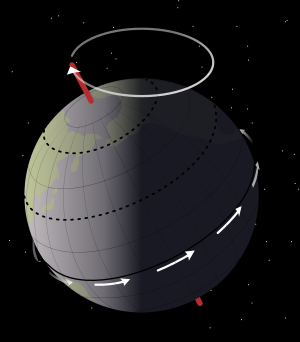
” Earth orbital (Milankovic) parameters have favored a cooling trend for the past several thousand years, which should be expected to start in the Northern Hemisphere (NH). For example, Earth is now closest to the sun in January, which favors warm winters and cool summers in the Northern Hemisphere.”
Those statements are typical of the misunderstanding in the popular literature of the Milankovic cycles. Since we are now further from the sun in the NH summer, he argues that the NH should get less solar insolation in the NH summer thus “favoring the growth of glaciers and ice-caps in the NH”. So why then we may ask are we now in an Interglacial Warming? What Hansen fails to realize is that when we are further from the Sun in NH summer we move more slowly in orbit, and are therefore exposed to the summer sun for a longer period of time.
From the graphs in the web-site http://individual.utoronto.ca/kalendis/seasons.htm , one can calculate that in 2010 the NH summer half of the earth’s orbit from the Spring Equinox to the fall Equinox lasts 186.1 days. The NH winter half of the orbit lasts 179.0 days. So the summer half gets 7.1 more days of solar insolation than the winter half. (Go to your calendar and count!)

Exposure time in this case is more significant that daily insolation caused by our further distance during the NH summer. And that is why we are in an Interglacial Warming and why Hansen is completely wrong in arguing that we should be “favoring the growth of glaciers and ice-caps in the Northern Hemisphere”.
Now some 10,000 years ago, because of the precession of the Equinoxes, summer and winter would have nearly flipped but with not much change in the earth’s orbital eccentricity. From the same web-site, in the year 8,000 BC, the NH summer half of the earth’s orbit lasted 178.5 days while the winter half lasted 186.6 days, so that the winter half exceeded the summer half by 8.1 days.
So 10,000 years ago the earth was further from the sun during NH winter and it spent a longer time on the winter half of the orbit, thus both effects re-enforced each other to give us a marked Glacial Cooling. (Actually the peak in that Glacial Cooling occurred several thousand years earlier than 8,000 BC.) Today, while we spend a longer time during the NH summer half of our orbit, we are further away in the summer, so the effects tend to cancel, but the longer time exposure is more important than the further distance.
The following discussion from my Chapter 12 of our recently published book “Slaying the Sky Dragon – Death of the Greenhouse Gas Theory” is a more general critique of the Hansen paper. Simply substitute “Hansen” for “Gore”.
The Legend of the Sky Dragon and Its Mythmakers
There is a simple way to tell the difference between propagandists and scientists. If scientists have a theory they search diligently for data that might actually contradict the theory so that they can fully test its validity or refine it. Propagandists, on the other hand, carefully select only the data that might agree with their theory and dutifully ignore any data that disagrees with it.
One of the best examples of the contrast between propagandists and scientists comes from the way the human caused global warming advocates handle the Vostok ice core data from Antarctica (6). The data span the last 420,000 years, and they show some four Glacial Coolings with average temperatures some 6 to 8 C below current values and five Interglacial Warming periods with temperatures some 2 to 4 C above current values. The last warming period in the data is the current one that started some 15,000 to 20,000 years ago. The data show a remarkably good correlation between long term variations in temperature and atmospheric CO2 concentrations. Atmospheric CO2 concentrations are at a minimum during the end of Glacial Coolings when temperatures are at a minimum. Atmospheric CO2 concentrations are at a maximum when temperatures are at a maximum at the end of Interglacial Warmings. Gore, in his movie and his book, “An Inconvenient Truth”, shows the Vostok data, and uses it to argue that the data prove that high atmospheric CO2 concentrations cause global warming.
Is that an objective evaluation of the Vostok data? Let’s look at what Gore failed to mention. First, the correlation between temperature and CO2 has been going on for about half a million years, long before any significant human production of CO2, which began only about 150 years ago. Thus, it is reasonable to argue that the current increase in CO2 during our current Interglacial Warming, which has been going on for the last 15,000 – 20,000 years, is merely the continuation of a natural process that has nothing whatever to do with human activity. Gore also fails to ask the most logical question: where did all that CO2 come from during those past warming periods when the human production of CO2 was virtually nonexistent? The answer is apparent to knowledgeable scientists: from the same place that the current increase is coming from, from the oceans. The amount of CO2 dissolved in the oceans is some 50 times greater than the amount in the atmosphere. As oceans warm for whatever reason, some of their dissolved CO2 is emitted into the atmosphere, just as your soda pop goes flat and loses its dissolved CO2 as it warms to room temperature even as you pour it into the warmer glass. As oceans cool, CO2 from the atmosphere dissolves back into the oceans, just as soda pop is made by injecting CO2 into cold water.
But the real “clincher” that separates the scientists from the propagandists comes from the most significant fact that Gore fails to mention. The same Vostok data show that changes in temperature always precede the changes in atmospheric CO2 by about 500-1500 years.
The temperature increases or decreases come first, and it is only after 500-1500 years that the CO2 follows. Fig 3 shows the data from the termination of the last Glacial Cooling (Major Glaciation) that ended some 15,000 – 20,000 years ago through the current Interglacial Warming of today. The four instances where the temperature changes precede the CO2 curve are clearly shown. All the Vostok data going back some 420,000 years show exactly the same behavior. Any objective scientist looking at that data would conclude that it is the warming that is causing the CO2 increases, not the other way around as Gore claimed. I am indebted to Guy Leblanc Smith (guy.lbs@rockknowledge.com.au) for granting permission to use Fig. 3 as it was published in Viv Forbes’ web-site www.carbon-sense.com .
It is even more revealing to see how the advocates of the human-caused global warming theory handle this “clincher” of the argument. It is generally agreed that the Vostok cycles of Glacial Coolings and Interglacial Warmings are driven by changes in the parameters of the Earth’s orbital motion about the Sun and its orientation with respect to that orbit; namely, changes in the ellipticity of its orbit, changes in its obliquity (tilt relative to its orbital plane), and the precession of its axis of rotation. These changes are referred to as the Milankovitch cycles, and even the human caused global warming advocates agree that those cycles “trigger” the temperature variations. But the human caused global warming advocates present the following ad hoc contrivance to justify their greenhouse effect theory.
The Milankovitch cycles, they say, are “weak” forcings that start the process of Interglacial Warming, but once the oceans begin to release some of their CO2 after 500-1500 years, then the “strong” forcing of “greenhouse warming” takes over to accelerate the warming. That argument is the best example of how propagandists carefully select data that agrees with their theory as they dutifully ignore data that disagrees with it. One need not go any further than to the next Glacial Cooling to expose that fraudulent argument for the artificial contrivance that it really is. Pray tell us then, we slayers of the Sky Dragon ask, what causes the next Glacial Cooling? How can it possibly begin when the CO2 concentration, their “strong” forcing, is at its maximum? How can the “weak” Milankovitch cooling effect possibly overcome that “strong” forcing of the greenhouse effect heating when the CO2 concentration is still at its maximum value at the peak of the Interglacial Warming? The global warmers thus find themselves stuck way out on a limb with that contrived argument. They are stuck there in an everlasting Glacial Warming, with no way to begin the next Glacial Cooling that the data show.
But one has to be sorry for Gore and his friends, for after all, they are in the global warming business. Global cooling is clearly someone else’s job!”
I can think of nothing more inappropriate and insulting to Milankovic than having Hansen speak at a Symposium in his honor.
===============================================================
Published originally at SPPI
Reference: Jan. 18, 2011: Paleoclimate Implications for Human-Made Climate Change: Draft paper for Milankovic volume. James Hansen
James Sexton says:
January 24, 2011 at 9:48 am
Your use of the 280ppm number implies you believe that to be the “normal” atmospheric concentration. I don’t believe this has been demonstrated. What of the Ordovician- Silurian and the Jurassic-Cretaceous periods? Were the properties of CO2 and ocean waters different then? And, again, the question still is, where did the CO2 come from?(Some say the concentration was as high as 4000 ppm.) Given your explanation, how would increased atmospheric CO2 be inconsistent with coming out of the LIA? You speak of “geological terms”, but consider events during a 100 year time period as relevant? Isn’t that like saying the average daily temp for the world is 55 degrees and expressing alarm when the days high temp reaches 100?
I don’t know what the “normal” CO2 concentration is. I don’t even think that there is any magical number for that. I used 280 because that’s what the PC stablishment claims that it was the CO2 level before industrialization and I think it is plausible. Perhaps it wasn’t 280, perhaps as much as 300. However I do believe in Mauna Loa measurements, so for me it IS certain that in the fifties we were already at 320ppm. And given the trend since then, it makes sense to me that the pre-industrialization level could have been about 280ppm. Anyway, with 280ppm I was referring to the CO2 concentration by the late 19th century.
Where did the CO2 come from? In the distant past you refer to, CO2 came from the outgassing of the oceans. But those oceans were quite hotter than they are now. And the process to reach those perhaps 4000ppm took quite long too. It took tens of thousands of years to reach those concentrations. The outgassing of the oceans is a sloooooow process, and it takes hundreds of years of steady warming for it to begin to be noticed (according to Vostok ice cores).
I would believe in an increased atmospheric concentration due to ocean outgassing as a result of warming from the LIA, if we were talking of an increase of, say, 20ppm in total. But not in the magnitude that has been observed. That’s too much for an ocean which has warmed too little.
In the same way that we doubt that the current warming is solely due to atmospheric CO2, because of an obvious lack of correlation (those periods of cooling like 1945-1975 in spite of steadily increasing CO2), the same argument goes against CO2 having been released by ocean outgassing. If oceans were the main source, shouldn’t we have seen a CO2 reduction between 1945 and 1975 when the oceans were cooling?
About your last question: we have lots of evidence that a day’s high temp can reach 100F. But we have no evidence, not even a simple indication that the average atmospheric CO2 concentration can increase or has increased in the past by 60% in little more than a century without a huge catastrophe or really big planetary warming causing it. So I don’t thing that this is a good example. And in any case, you mention being alarmed by it, but I have not expressed any sort of alarm. I am certainly not alarmed by the current concentration of atmospheric CO2. I only know that it is mostly the result of the burning of our fosil fuels. That’s all. Given that CO2 is the gas of life, better out than in. It doesn’t make me alarmed or worried, I’m rather pleased by it.
The key to the onset of an Ice Age is the Solar radiation balance above 65N latitude:-
Onset of Ice Ages:-
Ice Ages are cyclical in the Earth’s recent (last 30m years) past.
Original cause:-
Continental Drift of Antartica over the south pole 40m years ago. Ice pack at first formed over mountainous regions. This caused a positive temperature feedback due to the increased albedo, eventually the entire continent was covered with ice. This permanently reduced the surface temperature of the earth.
Cyclical Ice Ages – Why?
Once the surface temperature is lowered, the variability of the Earth’s orbit around the sun which causes a variation in the balance of solar radiation NH/SH summer/winter leads to summers cold enough to allow snow to remain unmelted and to accumulate.
Prior to the Antarctic moving over the South Pole, this would not happen as the earth’s surface would have been too warm.
The 3 parameters and periodicity is as follows:-
Orbital eccentricity varies between 0 (a perfect circle, sun always 93m miles away) and 0.1 ( min 88m miles max 98m miles) , period 100,000 years.
Axial tilt varies between 22.5 and 24.5 degrees , period 41,000 years.
Precession of the equinox , period 26,000 years. This parameter determines which month the summer solstice occurs, and impacts on the first 2 variables.
To start an Ice Age, the above parameters cause a lowering of solar radiation in the NH in summer. Snow does not melt from the previous winter and a positive temperature feedback driven by increased albedo sets in. The Ice marches south. Typically all of Canada, the Northern part of USA all of Scandinavia and most of Northern Europe have permanent Ice sheets. Obviously, Greenland and Antartica remain Ice covered.
To end an Ice, the opposite to the above. i.e. increased solar radiation in NH summer.
As Ice ages typically last 10 times longer then the inter-glacials, it seems clear that Ice Ages are easier to start then to end.
If the conditions are right, a run of cold winters caused by something like a Maunder minimum solar event could be enough to tip the climate into an Ice Age. This might be less than 100 years from interglacial to Ice Age, though of course this is hard to prove.
Current orbital parameters would sustain an Ice Age, all that is needed (possibly) is a Maunder minimum to push the climate over.
Something else to ponder, at the moment the Sun has entered a long period of quiet. This is not a Maunder minimum, yet.
CO2 is also part of this. As the Earth gets colder , the ocean absorbs CO2. In the ice age CO2 drops to 180 PPMV. This acts as a positive feedback to temp, reducing the temp by another 1C.
So of the total 5C drop , 4C is Ice/Albedo the other 1C is CO2 positive feedback lagging the intial temp drop.
I would like to JH explain how an Ice Age would end in his model? Surely the small forcing due the ice age starting would always be overwhelmed by the much larger CO2 forcing.
I just don’t see it.
I don’t know the details of the Milankovitch cycles myself, but I credit this account of Hansen speaking authoritatively about something while only having a superficial understanding.
Leif,
I think you’re referring to peak to peak (min/max) power TSI at TOA.
What is the total power to the NH during ‘summer’ versus what what is the total power to the SH during SH ‘summer’ as defined by the equinoxes and by the incoming power along the orbital path for that time.
The claim is that the extra days make up for some of the power levels.
Vince Causey, explaining why we cannot mark the end of the interglacial on the calendar, said:
“Part of the problem is that while the last few ice ages have a 100,000 year cycle that corresponds to the cycle of eccentricity, earlier ice ages have a 40,000 year cycle corresponding to obliquity. We don’t know why.”
Two questions, neither of which I am remotely qualified to answer, and my apologies if the questions are daft:
Could the evolving arrangement of the continents account for change in duration of glacial periods?
Can we be quite certain that that our distance from the Sun, or the eccentricity and obliquity of Earth’s orbit, did not change, perhaps because of some large body passing our system?
Again, apologies if the questions are crass, but for some reason Vince’s remarks raised the hairs on the back of my neck.
It is encouraging that Dr. James “Thumbs On The Temperature Scales” Hansen acknowledges the work of Milankovich. Perhaps in the not-to-distant future TOTTS Hansen will also acknowledge Landscheidt’s Impulse Of the Torque (IOT) and oscillating transferrence of angular momentum and spin orbit coupling between the Sun and planets, which totally explains the oscillating climates on these bodies. To not acknowledge these titanic forces and spend all your time analyzing a trace gas as the driver of climate is ignoring the elephant in the room to the exclusion of the flea on the elephant’s ass.
As the saying goes:
“If all you have in your
handhead is ahammermessiah complex, then everything looks like anailpositive forcing”.John Day says:
January 24, 2011 at 3:50 am
“The seasonal difference in solar irradiation is about 100 watts per square meter, much larger than the CO2 and other GHG “forcings” that we read about. So the more time spent at the lower insolation means more climate cooling effects. Right?”
But, that difference is mostly due to lower projected surface area due to tilt, not due to the extra distance. The distance to the Sun is about 150 million km. The radius of the Earth is 6378 km. Multiply that by the sine of the obliquity and, noting that irradiance decreases as 1/r^2, the reduction in isolation at the North Pole during winter is 0.0034%. But, the reduction in exposed surface area is something like 8%.
oMan says:
January 24, 2011 at 4:24 am
See above.
hr says:
January 24, 2011 at 4:55 am
“I suspect most well-informed people, including sceptical climate scientists, would prefer the latter explanation.”
Who cares what they might or might not prefer? What are the reasons to prefer it?
Nylo says:
January 24, 2011 at 5:14 am
“Knowledgeable scientists have become convinced long ago that the source of the current increase of atmospheric CO2 is human, and that oceans are currently a sink for CO2 because of the imbalance of the concentrations created by our emissions.”
A little knowledge is often dangerous.
“It wasn’t like this in the distant past, when there weren’t human emissions.”
We do not know that. We only have open ended experimental ice core data which cannot be verified.
Check my math but with the earth slowing its rotation at a rate of 2.2 seconds per year and the moon’s orbit expanding at a rate of 3.8 cm per year, in a wink of the eye in geologic time frames, a mere 100mm years, the moon has moved 1% of its present orbital distance further from the earth 3,800 of 385,000km and the days are now 36 minutes longer than they were when the dinosaurs roamed the planet. Wonder what effects these variables had upon the, volcanism, tides, weather, CO2 etc. back then compared to now? Assuming, of course, constant rates of change, which I doubt. Multiply these by 3 for the beginning of the dinosaur period. So many variables, so little understanding of all of the complex interactions.
Hertzberg say “What Hansen fails to realize is that when we are further from the Sun in NH summer we move more slowly in orbit, and are therefore exposed to the summer sun for a longer period of time.
From the graphs in the web-site http://individual.utoronto.ca/kalendis/seasons.htm , one can calculate that in 2010 the NH summer half of the earth’s orbit from the Spring Equinox to the fall Equinox lasts 186.1 days. The NH winter half of the orbit lasts 179.0 days. So the summer half gets 7.1 more days of solar insolation than the winter half. (Go to your calendar and count!)”
Rebuttal from Bob Maginnis
OK, then 186.1 / 179 = a ratio of 1.0396 to 1, but using the summer and winter distances from the Sun and knowing that radiation will be the inverse square of the distance, then:
152,097,053 km / 147,093,602 = 1.0399 to one, BUT, we must square that to get a ratio of 1.081, compared to a ratio of days at 1.0399, so Dr. Hertzberg wouldn’t have gotten his doctorate with such sloppy thinking. BTW, I only calculated for the solstice or near solstices, but Hertzberg still flunks physics.
“But, the reduction in exposed surface area is something like 8%.”
Should have said: But, the reduction in exposed surface area in the Northern Hemisphere is something like 8%. I just calculated that as (1-cos(obliquity))*100%. To get the actual number, you would have to integrate over the exposed surface area of the hemisphere. It’s probably in the neighborhood of 8% or, at any rate, much greater than 0.0034%.
What Hansen fails to realize is that when we are further from the Sun in NH summer we move more slowly in orbit, and are therefore exposed to the summer sun for a longer period of time.
…………………………………………………..
This is an excellent point. However, it does cast some doubt over the entire Milankovitch theory per se, since it would imply that contrasts in insolation between the seasons at times when the Earth’s orbit has a high eccentricity would be lower, and therefore less likely to force transitions to and from glacial and inter-glacial periods.
My own take is that rapid (in geological terms) transitions between solar insolation maxima and minima at high latitudes is the crucial element :
For example, daily insolation anomaly values at 60N peaked at +120 during the last interglacial (125K yrs BP), but fell to -80 just 10K years later, before rising to +100 at c.105K years BP.
During this time, the climate appeared to “flip” between inter-glacial to glacial and back to inter-stadial again.
Between 85K BP and 70K BP there was another rapid transition from +80 to -40 which, possibly combined with the huge volcanic eruption of Toba (c.74K BP) coincided with a transition to glacial conditions which persisted until :
Another rapid transition from -20 during the last glacial maximum (23K BP) to +80 at 10K BP “happened to coincide” with the end of the last glaciation and the beginning of the current inter-glacial period.
Feedback mechanisms associated with the building (disintegration) of continental ice-sheets and falling (rising) of sea-levels also play a crucial role, IMO.
The building of continental ice sheets profoundly changes the topography of the NH, perhaps to a similar extent that the formation of the Himalayas and the Tibetan Plateau did, – before which there is little geological evidence for ice sheet formation in the Northern Hemisphere. Consider the effect that raising the Canadian Shield to 10,000 feet above sea level would have on today’s climate………..
A sea-level fall (rise) of 150m is, in itself, enough to cause land temperatures to fall (rise) by 1C – a considerable amount. You also have to consider the possible feedback effects of, for example, the building of the Bering Strait land bridge, which sealed the Arctic Ocean off from the influence of the Pacific. Potentially at least, that one event could have had huge implications.
Could GCM’s not be used usefully to try and quantify the effects of these processes?
Dr. Martin Hertzberg critiques the final paragraph on p.11 of Hanson’s paper that refers to the fact that the Earth should favor a cooling trend because it is now closest to the sun in January, which favors warm winters and cool summers in the Northern Hemisphere. He claims that-
“Those statements are typical of the misunderstanding in the popular literature of the Milankovic cycles.”
Perhaps they are, they are certainly an incomplete description of the ‘standard model’ of the Milankovic cycles. At best they are a short-hand reference to the full theory which is shared knowledge within the scientific community even if the popular literature fails to understand it.
Short warm summers and long cool winters in the Northern hemisphere are observed to coincide with the warming from glacial to interstadial conditions.
Ice-age cooling is observed when the Northern hemisphere has long cool summers and short warm winters.
There are plentiful theories about the physical mechanisms that lead to this result grounded in the disposition of land in the Northern hemisphere.
While there may be misunderstanding in the popular literature I doubt that it is shared by Hanson. It seems unlikely that he is unaware of the fact that when eccentricity maximizes the variation in distance it also increases the difference in solstice length.
The observational data however clearly indicates that warming occurs when the closest approach is in the N hemisphere summer, and cooling when it is closest in January.
Pointing out that the eccentricity makes a difference to the ratio of the summer/winter solstice length may have cleared up a popular misunderstanding, but it does nothing to refute Hanson’s accurate, if brief, summary of the Milankovitch effect that is that it is the time of perihelion during the season cycle that matches the cooling and warming periods. The solstice length is inherent in that.
It could be restated that there is warming when N hemisphere summers are short, and cooling when N hemisphere winters are short. But that seems more confusing because it omits what is clearly the key factor, the intensity of insolation during a certain season, not its duration.
“Multiply that by the sine of the obliquity and, noting that irradiance decreases as 1/r^2, the reduction in isolation at the North Pole during winter is 0.0034%.”
Or, would be, if the North Pole were in daylight. So, there is greater reduction due to shadowing, but that is part and parcel of the reduced area argument, and not significantly a result of increasing distance from the Sun.
Planets orbit the sun tracing out an ellipse with the sun at one focus of the ellipse, the line connecting the planet and the sun sweeps out an equal area of the ellipse in equal time.
Planets therefore vary in their orbital velocity and spend more time around the second focus (away from the sun) and less time around the first focus (closer to the sun). This is Kepler’s 2nd Law of Planetary Motion
The polar ice-core data indicates that CO2 levels follow temperature changes.
CO2ppm hvae varied between ~200ppm during cold periods to 300ppm when it warms. The CO2 level follows temperature up AND down with a lag.
This ~100ppm change in |CO2 levels flows a temperature change of ~8degC
The physical chemistry of CO2 solubility in sea water is complex, but it is within human knowledge to calculate the amount of CO2 which will be dissolved or released for a given temperature change or partial pressure of CO2.
Whatever figures you take for sea surface temperature rise, and how ever much of Tenbreth’s missing heat you put into the deep ocean to warm it and reduce the solubility since the LIA you can’t get to here from there
The rise in temperature isn’t enough to account for an increase of around another 100ppm when it takes ~8degC to do it during ice-age transitions.
But the increase in CO2 levels works against the release of CO2 from oceans as they warm. The effect of increasing the partial pressure of CO2 is greater than the effect of warming the oceans.
After all when they are putting the CO2 into the bottle of soda they put more effort into increasing the pressure of CO2 than in cooling the soda.
And some may have noticed that if the bottle is at room temperature the bubbles don’t appear until after the pressure is released.
Works with beer too…
izen says:
January 24, 2011 at 2:10 pm
“Whatever figures you take for sea surface temperature rise, and how ever much of Tenbreth’s missing heat you put into the deep ocean to warm it and reduce the solubility since the LIA I do not understand the mechanism by which you can get to here from where I assume it was. And, if I do not understand it under my assumptions which are non-negotiable, then it cannot be, quod erat demonstrandum.”
Fixed that for you.
George E. Smith says:
January 24, 2011 at 10:49 am
Well it should be possible to construct a theoretical model; even a simplified one; say no relativistic stuff; just plain Newtonian or Keplerian model of earth’s orbit around the sun, using the current values of orbital elements (ellipse focal length and eccentricity) and take some solar cycle average value for the sun’s total emittance (maybe black body equivalent), and then simply calculate total earth intercepted energy for each day of the year.
I wrote a simple Newtonian simulation model of the solar system a couple of years back (it got briefly wheeled into battle on these threads during the “barycentre” affair). I used NASA data to initialise the planets. And I set up a spinning earth too, complete with a map of the continents.
It’s not very accurate and has a number of bugs that need fixing, but I occasionally think of dusting it off and developing it further in a variety of ways. One of those has been to take a look at Milankovich cycles.
Unfortunately it’s too slow and inaccurate to be able to leave just leave it running for 100,000 simulated Earth years. And anyway I don’t understand how to model variations in the Earth’s axial tilt and obliquity and precession (t, o, p).
But… thinking about it today, it seemed to me that if I could find out how all these things (t, o, p) varied I could run the simulation for one Earth year with the requisite values of t, o, and p at 1000 year intervals. And I could use my tilted spinning earth to total up incident solar radiation over a range of latitudes.
But what would I find, and what would it tell me? I suspect that I’d come up with some small cyclic variations in surface heat gains which would be Milankovich-like. How would those variations translate into glacial and interglacial periods? Or would I have to build a simple climate model as well? My understanding is the forcings due to these variations are pretty small, and as yet don’t fully explain glaciations.
“…what causes the next Glacial Cooling? How can it possibly begin when the CO2 concentration, their “strong” forcing, is at its maximum? How can the “weak” Milankovitch cooling effect possibly overcome that “strong” forcing of the greenhouse effect heating when the CO2 concentration is still at its maximum value at the peak of the Interglacial Warming?”
I absolutely love this question, it hits the nail right on the head.
Unfortunately I don’t think we’re ever going to get an answer to that impertinent query until a large percentage of the scientists out there grow a pair of kajones, step outside of the dogmatic consensus, speak out, start asking the important questions, and thus encouraging true unbiased scientific research.
@-Bart says:
January 24, 2011 at 2:46 pm
” And, if I do not understand it under my assumptions which are non-negotiable, then it cannot be, quod erat demonstrandum.”
…Fixed that for you.”
Actually my assumptions ARE negotiable.
All it needs is evidence rather than latin tags.
Got any evidence for a mechanism to release as much CO2 from the oceans in the last century as it took 8degC and ~1500 years of warming from the ice-age?
An earlier WUWT posting relevant to this discussion is:
http://wattsupwiththat.com/2010/12/30/the-antithesis/
Bob Maginnis says:
January 24, 2011 at 12:29 pm
“Rebuttal from Bob Maginnis
OK, then 186.1 / 179 = a ratio of 1.0396 to 1, but using the summer and winter distances from the Sun and knowing that radiation will be the inverse square of the distance, then: 152,097,053 km / 147,093,602 = 1.0399 to one, BUT, we must square that to get a ratio of 1.081, compared to a ratio of days at 1.0399…”
That is the wrong calculation. You need to integrate something proportional to 1/r^2 over each half of the orbit, such as:
P = integral(dt/r^2)
For a Keplerian orbit, dP = dtheta/(thetadot*r^2) = dtheta/h
where theta is the orbit angle (true anomaly) and h is the orbit momentum. Hence, integrating over the two halves of the orbit gives you pi/h, i.e., the ratios are 1:1. So, both you and Hertzberg are wrong. But, so is Hansen.
izen says:
January 24, 2011 at 4:36 pm
“Got any evidence for a mechanism to release as much CO2 from the oceans in the last century as it took 8degC and ~1500 years of warming from the ice-age?”
Firstly, you have already assumed you have an incontrovertible record for what happened with CO2 over the last 1500 years. I maintain that you do not. Secondly, the onus is not on me to prove that your hypothesis is wrong, it is for you to prove it is right.
Dr. Martin Hertzberg.
Thankyou for your post.
“Pray tell us then, we slayers of the Sky Dragon ask, what causes the next Glacial Cooling? How can it possibly begin when the CO2 concentration, their “strong” forcing, is at its maximum? How can the “weak” Milankovitch cooling effect possibly overcome that “strong” forcing of the greenhouse effect heating when the CO2 concentration is still at its maximum value at the peak of the Interglacial Warming”
Warmists claim the greenhouse forcing is dependent on the amount of radiation heating CO2. Milankovitch cooling happens because of radiation reduction. I would have thought this reduction would result in a pretty instantaneous reduction in greenhouse forcing. I’m not a climatologist, so I would be quite happy for you to enlighten me if the answer is more complicated.
@-Bart says:
“Firstly, you have already assumed you have an incontrovertible record for what happened with CO2 over the last 1500 years.”
I don’t consider the record, direct from ice-cores and indirect from geochemistry, is incontrovertible.
I am not aware of any strong evidence that calls that data into question. If you have a reason for dismissing the confluence of evidence for the record we have perhaps you can present it. (please don’t cite Beck!)
And I doubt the basics of physical chemistry that govern the solubility of gases has altered.
“Secondly, the onus is not on me to prove that your hypothesis is wrong, it is for you to prove it is right.”
Proof is for maths and liquor.
I have a hypothesis that is falsifiable, although I have yet to see any evidence that refutes it.
I can present evidence that supports it.
A lack of an alternative falsifiable hypothesis does not confer upon you the ability to reject mine.
A strong alternative or even evidence that falsifies mine does.
Not word games with provability.
I’ve been ferreting around to get to the root of the hissy fit that drove Hansen from astrophysics into GISS-tampering. What is really going on on Venus, and what deluded Hansen that it was a runaway greenhouse effect transferable to Earth alarms? I haven’t got the evidence quite from the horse’s mouth (so far), but I’ve got second and third best, a reference in New Scientist 1980, and a reasonable account of evidence involving Venus being doctored because it does not fit with scientists’ pre-conceived ideas. Here’s NS 1980:
Problem for NS was that as recently as April that year, they had an op-ed mocking those [Velikovskians] who predicted a hot Venus… Read this explanation – not a website I like unreservedly but that piece seems ok.
So… Venus is radiating heat. The inescapable (heh, “unequivocal”) logic of that is that Venus has a hot core, which is likely to be causing most of its high temperature, thus relegating CO2 to a minor additional effect. But, but, but, mainstream Science does not want to admit this concession to Velikovskian nutcases. So it cuts off its toes to “fit” the evidence.
I’d heard rumours of Venus emitting heat, also claims by anti-electric-universers that the EU lot were flat out wrong about Venus. But my New Scientist piece clearly backs up the rumour, and the other reference explains how and why the evidence has been fudged. Ha, so Hansen came to GISS already understanding about data fudging.