by Dr. Martin Hertzberg
As the saying goes:
“If all you have in your hand is a hammer, then everything looks like a nail”.
It is hopeless to expect that Hansen could possibly analyze data objectively – all he has in his head is “CO2 climate forcing” and everything else has to be “forced” into that ridiculous paradigm. It makes no difference to him that the predictions of his past half-baked computer models based on “CO2 climate forcing” were completely wrong.
It is not worth my time (or anyone else’s in my opinion) to try to critique the entire paper, but the final paragraph on his p. 11 stands our like a sore thumb. In it he states:
” Earth orbital (Milankovic) parameters have favored a cooling trend for the past several thousand years, which should be expected to start in the Northern Hemisphere (NH). For example, Earth is now closest to the sun in January, which favors warm winters and cool summers in the Northern Hemisphere.”
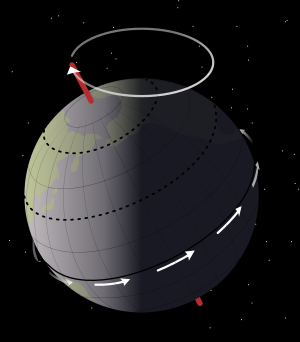
Those statements are typical of the misunderstanding in the popular literature of the Milankovic cycles. Since we are now further from the sun in the NH summer, he argues that the NH should get less solar insolation in the NH summer thus “favoring the growth of glaciers and ice-caps in the NH”. So why then we may ask are we now in an Interglacial Warming? What Hansen fails to realize is that when we are further from the Sun in NH summer we move more slowly in orbit, and are therefore exposed to the summer sun for a longer period of time.
From the graphs in the web-site http://individual.utoronto.ca/kalendis/seasons.htm , one can calculate that in 2010 the NH summer half of the earth’s orbit from the Spring Equinox to the fall Equinox lasts 186.1 days. The NH winter half of the orbit lasts 179.0 days. So the summer half gets 7.1 more days of solar insolation than the winter half. (Go to your calendar and count!)

Exposure time in this case is more significant that daily insolation caused by our further distance during the NH summer. And that is why we are in an Interglacial Warming and why Hansen is completely wrong in arguing that we should be “favoring the growth of glaciers and ice-caps in the Northern Hemisphere”.
Now some 10,000 years ago, because of the precession of the Equinoxes, summer and winter would have nearly flipped but with not much change in the earth’s orbital eccentricity. From the same web-site, in the year 8,000 BC, the NH summer half of the earth’s orbit lasted 178.5 days while the winter half lasted 186.6 days, so that the winter half exceeded the summer half by 8.1 days.
So 10,000 years ago the earth was further from the sun during NH winter and it spent a longer time on the winter half of the orbit, thus both effects re-enforced each other to give us a marked Glacial Cooling. (Actually the peak in that Glacial Cooling occurred several thousand years earlier than 8,000 BC.) Today, while we spend a longer time during the NH summer half of our orbit, we are further away in the summer, so the effects tend to cancel, but the longer time exposure is more important than the further distance.
The following discussion from my Chapter 12 of our recently published book “Slaying the Sky Dragon – Death of the Greenhouse Gas Theory” is a more general critique of the Hansen paper. Simply substitute “Hansen” for “Gore”.
The Legend of the Sky Dragon and Its Mythmakers
There is a simple way to tell the difference between propagandists and scientists. If scientists have a theory they search diligently for data that might actually contradict the theory so that they can fully test its validity or refine it. Propagandists, on the other hand, carefully select only the data that might agree with their theory and dutifully ignore any data that disagrees with it.
One of the best examples of the contrast between propagandists and scientists comes from the way the human caused global warming advocates handle the Vostok ice core data from Antarctica (6). The data span the last 420,000 years, and they show some four Glacial Coolings with average temperatures some 6 to 8 C below current values and five Interglacial Warming periods with temperatures some 2 to 4 C above current values. The last warming period in the data is the current one that started some 15,000 to 20,000 years ago. The data show a remarkably good correlation between long term variations in temperature and atmospheric CO2 concentrations. Atmospheric CO2 concentrations are at a minimum during the end of Glacial Coolings when temperatures are at a minimum. Atmospheric CO2 concentrations are at a maximum when temperatures are at a maximum at the end of Interglacial Warmings. Gore, in his movie and his book, “An Inconvenient Truth”, shows the Vostok data, and uses it to argue that the data prove that high atmospheric CO2 concentrations cause global warming.
Is that an objective evaluation of the Vostok data? Let’s look at what Gore failed to mention. First, the correlation between temperature and CO2 has been going on for about half a million years, long before any significant human production of CO2, which began only about 150 years ago. Thus, it is reasonable to argue that the current increase in CO2 during our current Interglacial Warming, which has been going on for the last 15,000 – 20,000 years, is merely the continuation of a natural process that has nothing whatever to do with human activity. Gore also fails to ask the most logical question: where did all that CO2 come from during those past warming periods when the human production of CO2 was virtually nonexistent? The answer is apparent to knowledgeable scientists: from the same place that the current increase is coming from, from the oceans. The amount of CO2 dissolved in the oceans is some 50 times greater than the amount in the atmosphere. As oceans warm for whatever reason, some of their dissolved CO2 is emitted into the atmosphere, just as your soda pop goes flat and loses its dissolved CO2 as it warms to room temperature even as you pour it into the warmer glass. As oceans cool, CO2 from the atmosphere dissolves back into the oceans, just as soda pop is made by injecting CO2 into cold water.
But the real “clincher” that separates the scientists from the propagandists comes from the most significant fact that Gore fails to mention. The same Vostok data show that changes in temperature always precede the changes in atmospheric CO2 by about 500-1500 years.
The temperature increases or decreases come first, and it is only after 500-1500 years that the CO2 follows. Fig 3 shows the data from the termination of the last Glacial Cooling (Major Glaciation) that ended some 15,000 – 20,000 years ago through the current Interglacial Warming of today. The four instances where the temperature changes precede the CO2 curve are clearly shown. All the Vostok data going back some 420,000 years show exactly the same behavior. Any objective scientist looking at that data would conclude that it is the warming that is causing the CO2 increases, not the other way around as Gore claimed. I am indebted to Guy Leblanc Smith (guy.lbs@rockknowledge.com.au) for granting permission to use Fig. 3 as it was published in Viv Forbes’ web-site www.carbon-sense.com .
It is even more revealing to see how the advocates of the human-caused global warming theory handle this “clincher” of the argument. It is generally agreed that the Vostok cycles of Glacial Coolings and Interglacial Warmings are driven by changes in the parameters of the Earth’s orbital motion about the Sun and its orientation with respect to that orbit; namely, changes in the ellipticity of its orbit, changes in its obliquity (tilt relative to its orbital plane), and the precession of its axis of rotation. These changes are referred to as the Milankovitch cycles, and even the human caused global warming advocates agree that those cycles “trigger” the temperature variations. But the human caused global warming advocates present the following ad hoc contrivance to justify their greenhouse effect theory.
The Milankovitch cycles, they say, are “weak” forcings that start the process of Interglacial Warming, but once the oceans begin to release some of their CO2 after 500-1500 years, then the “strong” forcing of “greenhouse warming” takes over to accelerate the warming. That argument is the best example of how propagandists carefully select data that agrees with their theory as they dutifully ignore data that disagrees with it. One need not go any further than to the next Glacial Cooling to expose that fraudulent argument for the artificial contrivance that it really is. Pray tell us then, we slayers of the Sky Dragon ask, what causes the next Glacial Cooling? How can it possibly begin when the CO2 concentration, their “strong” forcing, is at its maximum? How can the “weak” Milankovitch cooling effect possibly overcome that “strong” forcing of the greenhouse effect heating when the CO2 concentration is still at its maximum value at the peak of the Interglacial Warming? The global warmers thus find themselves stuck way out on a limb with that contrived argument. They are stuck there in an everlasting Glacial Warming, with no way to begin the next Glacial Cooling that the data show.
But one has to be sorry for Gore and his friends, for after all, they are in the global warming business. Global cooling is clearly someone else’s job!”
I can think of nothing more inappropriate and insulting to Milankovic than having Hansen speak at a Symposium in his honor.
===============================================================
Published originally at SPPI
Reference: Jan. 18, 2011: Paleoclimate Implications for Human-Made Climate Change: Draft paper for Milankovic volume. James Hansen
“Really? The graph was made from ice core data. What is corrupted and uncertain about it?”
I basically agree with this:
http://www.john-daly.com/zjiceco2.htm
I also agree that CO2 follows temperature and that some of the annual cycle is caused by vegetation (photosynthesis, decay), but most of it is ocean anual breathing.
James Sexton wrote:
lol, Nylo, your statement harms the warmists position. You and your kindred’s refusal to address this inconsistency speaks volumes. And you didn’t answer the question. The question is, where did all of the CO2 come from when the earth was warmer in the past? Reading your statement, you seem to be asserting that suddenly the oceans are now a sink but have never been in the past. But, even your assertion doesn’t answer the question. OK, for the sake of argument, let’s say it didn’t come from the oceans. Then, where did the CO2 come from?
First, I am a skeptic, regarding the effect that CO2 may have in our climate, which I think it is probably very little. I am only not a skeptic regarding where the current increased CO2 concentration in the atmosphere has come from.
Oceans are a sink when their temperature is too cold for the ammount of atmospheric CO2, meaning they tend to absorb CO2. They have been a sink in the past, in periods of cooling, when the change in their temperature made them more capable of absorbing CO2. They have been a source of CO2 too, in the past, in periods of warming, as the Vostok ice cores show, again because of their increasing temperature making them less able to have CO2 dissolved.
What has NOT happened in the past and is happening now, is the oceans acting like a sink while they are warming. And that is because, in the past, there weren’t other significant contributors to the atmospheric CO2. Now there are, it is us.
The oceans’ role as a source or a sink depends mostly on 2 things: the ocean’s temperature and the existing atmospheric concentration of CO2. A “sudden” (in geological terms) increase of the atmospheric CO2 like the one we have caused breaks the balance between the CO2 concentration in the oceans and in the atmosphere, making CO2 go to the ocean. The ocean acts like a sink. IF the CO2 concentration was now 280ppm instead of 390ppm, the oceans would be acting as a source and not as a sink, given the increase of temperatures. But because the atmospheric concentration is so high, even though the oceans are a little bit warmer now, they are still absorbing CO2.
To clain that the current increase of atmospheric CO2 has come from the ocean, you have to explain 1) where did OUR CO2 go, 2) why are the oceans releasing that huge ammount of CO2 if they are not anywhere as warm as they would need to be to cause such an effect, nor there has been any sustained warming for 800 years, which is what the Vostok ice cores seem to show that is needed for the oceans to start to release CO2 in significant ammounts.
Edim,
Sorry if I misunderstood what you were trying to say. Thanks for the explanation and link.
Looks like the La Nina caused the sea levels to drop. If we are in something like a Maunder Minimum, which looks increasingly likely then with fairly dramatic cooling, we would expect the CO2 levels to drop as well.
I’m increasingly of the opinion Ernst-Georg Beck was right
http://www.biomind.de/realCO2/statements.htm
This statement looks far more likely to be true than it did 3 or 4 years ago.
Alan McIntyre said:
Heh. Similar approaches tell us why it is just so stupid to believe that the heat capacity of the atmosphere can drive the melting of the remaining glaciers and the heating of the oceans.
Jeremy January 24, 2011 at 7:03 am:
OK, so I shouldn’t trust Wikipedia. Do you have a link to a graph showing the Milankovitch forcings for the period of 100k years either side of today? Thanks!
Thanks for the info, Dr. Hertzberg. It hadn’t occured to me that the eccentricity of the earth’s orbit must perforce lengthen the time it spends around aphelion and shorten it around perihelion. This effectively cancels out the difference in insolation between perihelion and aphelion at this point in the cycle:
http://physics.ucf.edu/~britt/Climate/L12-Astronomical%20control%20of%20solar%20radiation.ppt
The glacier building, according to the link above, happens when the NH winter is at aphelion which extends the winter instead of the summer by 8 days.
And yes, being the devoted skeptic and fact checker, I did count the days for myself by entering Mar 20, 2011 and Sep 23, 2011 (spring/fall equinox dates for this year) into a Julian calander converter then subtract the first Julian date from the second which comes out to 187 days centered on summer solstice and 179 days centered on winter solstice.
Nylo says:
“…nor there has been any sustained warming for 800 years, which is what the Vostok ice cores seem to show that is needed for the oceans to start to release CO2 in significant ammounts.”
The mechanism seems to be that CO2 follows temperature, with about an 0.8 millennium lag. The MWP was warmer than now. As the climate cooled, CO2 was absorbed into the oceans, where it slowly made its way in currents moving in the deep ocean along the ocean floor. Centuries later the CO2 was outgassed as the currents began rising to the surface and warming.
That may not be a complete explanation, but the ice core evidence shows that CO2 follows temperature at those time scales.
Said it before & I’ll say it again, that man, Hansen, needs to be fired. His advocacy (in denial of routine scientific principals) if carried through in governmental policy would severely damage the very taxpayers WHO PAY HIS SALARY. People who condemn their employers routinely lose their jobs. Why should ‘that man’ be exempt?
Earth’s orbit is currently nearly circular so, yes, Earth is a tiny bit farther from the Sun in the one season than the other, but that difference is small compared to what it can be when the orbit is more elliptical.
Bob from the UK ,
Go to:
http://www.carboeurope.org/education/schoolsweb.php
and choose:
CO2 concentration, start 1-12-2008, end 1-12-2010, NL StellingWerf College, Oosterwolde
and see what the kids measured. OK, I cherry-picked that station, but it’s still interesting.
Global temperature AND CO2 drop -> checkmate -> game over for warmists
There is no doubt that the Milankovitch theory provides an elegant explanation for ice age dynamics. It links the rate of growth and decay of northern hemisphere ice sheets to the average northern hemisphere July solar insolation at 65 degrees N (c.f. G. Roe, In defense of Milankovitch, Geophysical Research Letters, Vol. 33, L24703, doi:10.1029/2006GL027817, 2006). In fact Nigel Calder first observed the strong correlation between the first derivative of ice volume and northern hemisphere insolation in his Nature paper, Arithmetic of Ice Ages, in 1972. For the past several thousand years the 65 degree north July insolation has been dropping suggesting that northern ice sheets should be experiencing an accelerating rate of growth.
Given the recent ice age history of the Earth Hansen’s comment (though substituting ice volume for temperature) would seem to be reasonable.
What Hansen and others are either forgetting, or deliberately omitting from the discussion is the question of time scales. Variations in the solar insolation are on the order of several tens of thousands of years (23,000 years for precessional, 41,000 years for tilt and 100,000 years for obliquity). The current climate variations we are observing are on the order of 10’s to 100’s of years and are almost certainly dominated by features such as the PDO, AMO, solar cycles etc. There is no reason why we should see a Milankovith signal on such short time scales. We do see however, a cooling of Greenland over the past 6000 years that may possibly be explained by the Milankovitch hypothesis. It would be interesting to understand the Greenland ice sheet mass balance over this time too.
Thank you Dr. Hertzberg for a most enjoyable read! Now I understand much more about the implications of the Milankovic cycles. A very nice post indeed.
Please continue giving the warmers a bloody nose ever so often.
Would the volume of posts here have been greatly reduced if Nylo had entered (sarc off) at the end of his first post?
Well lets first be clear here. Your first graph didn’t specifically attempt to show “Milankovitch forcings”, it was titled “Insolation at 65N Summer Solstice”. There’s a subtle difference here in that insolation is (presuming this theory to be true) the result of a mixing of these multiple orbital-mechanics frequencies. I presume this graph to mean exactly what it says, exposure to the sun at 65N at summer solstice, which does not show all frequencies contributing. Since the periods of glaciation cannot fully be accounted for by the blended “forcing”, it is silly to limit ourselves to just the single blended Milankovich cycle “forcing” and say, “well it’s going down, so this warming cannot be natural.” . Second, your plot didn’t show 100kyear on each side, it showed 800, making your meaning of a “trend” in the plot to mean either an overall trend over a 1.6 million years (half of which are in the future), or you mean to look at the “now” and say, “well it’s going down”, with that very bad resolution. It would be nicer to have a plot closer to the present day, with fewer data points plotted, and ALL of the presumed orbital forcings present in some form, not just the combination.
I found this one, which I again don’t like as it only shows the “overall forcing” cycle:
http://www.climatedata.info/Forcing/Forcing/milankovitchcycles_files/BIGw02-milankovitch-and-temperature.gif.gif
It also comes from a blog source, so look at it with whatever salting you like. What is interesting though is that you see the drop in the cycle started long before Humans ever started pumping CO2 into the air, yet the temperature (as shown in the plot) did not follow. So while the Milankovich cycles aren’t a full explanation as to what the temperature will be in some future date (or the past), they’re at least not so obviously wholly disproven by Hansen’s own reasoning that ‘because the cycle is dropping, only mankinds influence is keeping it warm.’ It simply isn’t CO2, and Hansens usage of the M-cycles to prove his point are amateur at best.
Here is a quote from Prof Michael Marmot of UCL about correlations (specifically it was to do with the correlation between smoking and lung cancer):
Now that is precisely not what all those IPCC climate “scientists” such as Hansen have done with the correlation between CO2 and earth’s temperature. That’s why they aren’t good scientists.
I think that most people who review the Vostok ice core data and argue that the increase of temperature is caused or not caused by CO2 miss a very important detail. Rather than fixating on the rise of the temperature, study should be concentrating on the decline into the glacial period. Although the increase of temperature and CO2 have similar derivatives the decrease in temperature is precipitous compared to the slow decline in CO2. IMHO this is the proof that temperature change is independent of CO2 and that CO2 follows temperature. This fact seems to agree with The Monster’s reasoning.
Great information. I wonder though whether slightly snide comments (true though they may be) discourage the segment of the audience you are trying to reach out to. The fact that Louise didn’t continue reading is perhaps a testament to that.
On the flip side, some people find any excuse not to address facts that contradict their beliefs.
“”””” redneck says:
January 24, 2011 at 6:13 am
@ur momisugly Lief Svalgaard
Although the insolation during the NH winter is significantly higher is it possible that the lower angle of incidence, due to axial tilt, and the higher albedo, due to snow and ice cover, more than compensate for the higher insolation. “””””
What Leif said is absolutely true; the total insolation is highest during Northern Winters since earth is closest to the sun then. So the total Watts (rate of energy input) or the total Joules received by the eath in one 24 hour day (I don’t care which type of day you choose), is greatest during Northern Winter.
BUT !!
That greater energy input is falling mostly on the Southern hemisphere; not on the Northern hemisphere, because of the axial tilt.
So Southern Hemisphere summers receive more solar energy, and Southern Hemisphere winters receive less solar energy; because then the sun is further from earth.
And since the Southern Hemisphere is mostly ocean, which has a low albedo contribution, then I imagine that the earth stores much more solar energy during Northern Winters (Southern Summers) than the other way round.
Leif Svalgaard says:
January 24, 2011 at 4:16 am
@Herzberg
So the summer half gets 7.1 more days of solar insolation than the winter half.
The ‘winter’ [bad word here] insolation is higher because we are closer to the Sun. This is a non-trivial difference. About 100 times larger than the solar cycle variation.
~~~~~~~~~~~~~~~~~~~
Herzberg’s claim is a rebuttle to Hansen’s claim and which is scoped only in the NH. Perhaps it should be argued that this NH scope is irrelevant to the larger debate but it seems germane here to compare apples with more apples. Given that much of the NH receives no insolation at all in winter it seems the claim by Herzberg has an element of truth. There are more days of summer and there is more NH being warmed during the NH summer.
If we set limits for comparing NH and SH warming as beginning and ending at the equinoxes, does the NH or SH receive more insolation during the local summer? I’m just trying to get a better understanding of the process, so it may help to ignore surface features and explain what happens to a planet that is featureless can then compare with the Earth which is both feature rich and asymmetric between the NH and SH regarding land area vs ocean area, and ice cap vs frozen land mass (poles).
Nylo says:
January 24, 2011 at 7:49 am
First, I am a skeptic, regarding the effect that CO2 may have in our climate, which I think it is probably very little. I am only not a skeptic regarding where the current increased CO2 concentration in the atmosphere has come from.
Oceans are a sink when their temperature is too cold for the amount of atmospheric CO2, meaning they tend to absorb CO2. They have been a sink in the past, in periods of cooling, when the change in their temperature made them more capable of absorbing CO2. They have been a source of CO2 too, in the past, in periods of warming, as the Vostok ice cores show, again because of their increasing temperature making them less able to have CO2 dissolved.
======================================================
Ok, I’ll buy that, but what I don’t buy is how you know this process isn’t occurring now. Later, you state, “The oceans’ role as a source or a sink depends mostly on 2 things: the ocean’s temperature and the existing atmospheric concentration of CO2. A “sudden” (in geological terms) increase of the atmospheric CO2 like the one we have caused breaks the balance between the CO2 concentration in the oceans and in the atmosphere, making CO2 go to the ocean. The ocean acts like a sink. IF the CO2 concentration was now 280ppm instead of 390ppm, the oceans would be acting as a source and not as a sink, given the increase of temperatures. But because the atmospheric concentration is so high, even though the oceans are a little bit warmer now, they are still absorbing CO2.”
I have a problem with this. Your use of the 280ppm number implies you believe that to be the “normal” atmospheric concentration. I don’t believe this has been demonstrated. What of the Ordovician- Silurian and the Jurassic-Cretaceous periods? Were the properties of CO2 and ocean waters different then? And, again, the question still is, where did the CO2 come from?(Some say the concentration was as high as 4000 ppm.) Given your explanation, how would increased atmospheric CO2 be inconsistent with coming out of the LIA? You speak of “geological terms”, but consider events during a 100 year time period as relevant? Isn’t that like saying the average daily temp for the world is 55 degrees and expressing alarm when the days high temp reaches 100?
Nylo, at the end of the day, I think the explanation you gave is as credible as Hertzberg’s. But both have questions that need to be answered before they should be asserted as factual.(IMHO) But I do thank you for the time you took to give a greater explanation of your perspective.
Nylo says:
These falsehoods damage the skeptic position much more than whatever any warmist may say. Knowledgeable scientists have become convinced long ago that the source of the current increase of atmospheric CO2 is human, and that oceans are currently a sink for CO2 because of the imbalance of the concentrations created by our emissions. It wasn’t like this in the distant past, when there weren’t human emissions. But it is that way now.
The argument you are presenting here is, essentially, “This time it’s different”.
What has NOT happened in the past and is happening now, is the oceans acting like a sink while they are warming.
Again, “This time it’s different”. And what you are suggesting makes no sense. Just ask any brewer – when a liquid warms, it releases CO2. If you want to claim otherwise (that the oceans are suddenly behaving contrary to established physical law with regard to CO2), then you need to back up your claim.
—
Mike says:
I have a question if someone can answer it: If ice ages are brought on by variations in the earth’s orbit relative to the sun, then shouldn’t they predictable? Shouldn’t we then know – perhaps to the year – when the current interglacial will end? My sense is we don’t know. Why?
Mike, my sense is that we DO know, although not “to the year”. Given the time scales at which these things happen, an uncertainty of a few hundred years isn’t unreasonable. Looking at the Vostok charts and extrapolating forward, it looks like we’re right about due for the next cooling trend – starting somewhere around a couple hundred years ago to somewhere in the next couple hundred years. Fairly narrow span for a geologic trend.
Of course, this is just me looking at the charts – maybe someone else can offer a bit more complete of an answer.
@hr says:
January 24, 2011 at 4:55 am
Well that is really a point of debate. What were the CO2 levels in the past. There are in fact many reasons to think they were in fact similar to today.
Plant stomata records indicate the high 300’s as a likely figure.
The idea we can reconstruct with reliability the CO2 levels of the past from ice cores is seriously flawed. The compaction rate of ice fern, (measured in hundreds and thousands of years to closure to the air), the isotopic fractionation issues, the actual depth to age relationships, all have massive error bars associated with them.
Not to mention using pelagic fauna for CO2 and sea water temp reconstructions. Well, they are pelagic, (free swimming), and tend to move up and down the water column in oceans in response to temperature fluctuations rather than revealing the absolute temperature.
The stomata records, paper on WUWT somewhere, seem to be much more interesting with regard to CO2 levels in the past.
That’s not even considering the fact that there is an a actual limit, (even if you take the CO2=warmer hypothesis as “the truth”), of CO2 forcing, the curve for insolation is strongly asymptotic.
Up to around 250, there is a strong warming from CO2, after 300, it is pretty much all done and the increase in temperature, (though I strongly dispute the positive feedback AGW followers suggest exists), are so fractional as to be meaningless.
Perhaps I will find the time to submit a post on ice cores, paleoclimate is a special interest of mine 🙂
Albert Frankenstein.
The NH ice sheets indicate cooling over the past 6,000 years. That the summers are a few days longer is less significant than the overall trend. The problem with Hansen and the warmists is that they refuse to acknowledge that the Earth does not trend in a linear fashion.
The last 1,000 years have been the coldest of the past 10,000 years. It takes time for energy to dissipate, but it is doing so. In each of the past interglacials, there was a period of increasing warmth right before the temperature crash. Much like the MWP happened before the LIA. This warming period will also end in a crash, but one stronger than the LIA.
http://theinconvenientskeptic.com/2010/11/the-end-of-an-interglacial/
Well it should be possible to construct a theoretical model; even a simplified one; say no relativistic stuff; just plain Newtonian or Keplerian model of earth’s orbit around the sun, using the current values of orbital elements (ellipse focal length and eccentricity) and take some solar cycle average value for the sun’s total emittance (maybe black body equivalent), and then simply calculate total earth intercepted energy for each day of the year. How difficult is it to make a table of 365 or 366 tabulated values; based on some mathematically tractable and simple eliptical orbit. Why doesn’t such a table exist; or be publshed in say books on solar energy for example. I don’t recall that you need elliptic integrals to calculate that sort of thing; and if you do, then all the more reason for someone to make a table. I’m not going to, because there’s a whole raft of mathematicians out there wasting their time doing trend lines and r^2 calculations, who should be more mathematically fleet of foot than I am. And I’m only casually interested in the result; because I think there are bigger fish to fry.
Does it not seem odd to you, that Ice Core records, such as Vostok, or Dome C, and the other deep ones, apparently record the last 8 or so ice ages, and interglacial periods; but they also document the simple fat that over that entire 400,000-800,000 year time frame, that Antarctic ice melted has NEVER completely melted or slid off into the southern ocean; yet these Glacial Researchers du jour, keep on telling us how high the sea level is going to rise, when something that has never yet happened in the last million years, suddenly happens.
It seems that we know from the record at Vostok; for example the existence of Vostok Lake, that the bottom of the ice sheet in contact with the ground, must be constantly melting from internal heat from the earth. And that melt water would either pool in lakes like at Vostok, or else it will runoff through river systems, eventually into the Southern Ocean. And this could have been going on for millions of years. I don’t know how long the Geologist Tectonites believe that Antarctica has been roughly where it now is; but that ice sheet could have been there for many millions of years; we are just seeing the last million years or less of what is left after the earlier layers melted and disappeared. I don’t believe that the bottom of the Dome C ice coresw, was deposited on or near bed rock, 800,000 years ago. It probably was deposited on two miles of thick ice, that has long since melted.
But why do they keep telling us the whole thing is going to slide into the sea; it hasn’t ever happened in any time frame of interest to us; and isn’t going to happen in any time frame of interest to our descendents.