by Dr. Martin Hertzberg
As the saying goes:
“If all you have in your hand is a hammer, then everything looks like a nail”.
It is hopeless to expect that Hansen could possibly analyze data objectively – all he has in his head is “CO2 climate forcing” and everything else has to be “forced” into that ridiculous paradigm. It makes no difference to him that the predictions of his past half-baked computer models based on “CO2 climate forcing” were completely wrong.
It is not worth my time (or anyone else’s in my opinion) to try to critique the entire paper, but the final paragraph on his p. 11 stands our like a sore thumb. In it he states:
” Earth orbital (Milankovic) parameters have favored a cooling trend for the past several thousand years, which should be expected to start in the Northern Hemisphere (NH). For example, Earth is now closest to the sun in January, which favors warm winters and cool summers in the Northern Hemisphere.”
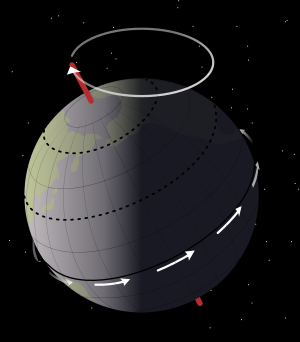
Those statements are typical of the misunderstanding in the popular literature of the Milankovic cycles. Since we are now further from the sun in the NH summer, he argues that the NH should get less solar insolation in the NH summer thus “favoring the growth of glaciers and ice-caps in the NH”. So why then we may ask are we now in an Interglacial Warming? What Hansen fails to realize is that when we are further from the Sun in NH summer we move more slowly in orbit, and are therefore exposed to the summer sun for a longer period of time.
From the graphs in the web-site http://individual.utoronto.ca/kalendis/seasons.htm , one can calculate that in 2010 the NH summer half of the earth’s orbit from the Spring Equinox to the fall Equinox lasts 186.1 days. The NH winter half of the orbit lasts 179.0 days. So the summer half gets 7.1 more days of solar insolation than the winter half. (Go to your calendar and count!)

Exposure time in this case is more significant that daily insolation caused by our further distance during the NH summer. And that is why we are in an Interglacial Warming and why Hansen is completely wrong in arguing that we should be “favoring the growth of glaciers and ice-caps in the Northern Hemisphere”.
Now some 10,000 years ago, because of the precession of the Equinoxes, summer and winter would have nearly flipped but with not much change in the earth’s orbital eccentricity. From the same web-site, in the year 8,000 BC, the NH summer half of the earth’s orbit lasted 178.5 days while the winter half lasted 186.6 days, so that the winter half exceeded the summer half by 8.1 days.
So 10,000 years ago the earth was further from the sun during NH winter and it spent a longer time on the winter half of the orbit, thus both effects re-enforced each other to give us a marked Glacial Cooling. (Actually the peak in that Glacial Cooling occurred several thousand years earlier than 8,000 BC.) Today, while we spend a longer time during the NH summer half of our orbit, we are further away in the summer, so the effects tend to cancel, but the longer time exposure is more important than the further distance.
The following discussion from my Chapter 12 of our recently published book “Slaying the Sky Dragon – Death of the Greenhouse Gas Theory” is a more general critique of the Hansen paper. Simply substitute “Hansen” for “Gore”.
The Legend of the Sky Dragon and Its Mythmakers
There is a simple way to tell the difference between propagandists and scientists. If scientists have a theory they search diligently for data that might actually contradict the theory so that they can fully test its validity or refine it. Propagandists, on the other hand, carefully select only the data that might agree with their theory and dutifully ignore any data that disagrees with it.
One of the best examples of the contrast between propagandists and scientists comes from the way the human caused global warming advocates handle the Vostok ice core data from Antarctica (6). The data span the last 420,000 years, and they show some four Glacial Coolings with average temperatures some 6 to 8 C below current values and five Interglacial Warming periods with temperatures some 2 to 4 C above current values. The last warming period in the data is the current one that started some 15,000 to 20,000 years ago. The data show a remarkably good correlation between long term variations in temperature and atmospheric CO2 concentrations. Atmospheric CO2 concentrations are at a minimum during the end of Glacial Coolings when temperatures are at a minimum. Atmospheric CO2 concentrations are at a maximum when temperatures are at a maximum at the end of Interglacial Warmings. Gore, in his movie and his book, “An Inconvenient Truth”, shows the Vostok data, and uses it to argue that the data prove that high atmospheric CO2 concentrations cause global warming.
Is that an objective evaluation of the Vostok data? Let’s look at what Gore failed to mention. First, the correlation between temperature and CO2 has been going on for about half a million years, long before any significant human production of CO2, which began only about 150 years ago. Thus, it is reasonable to argue that the current increase in CO2 during our current Interglacial Warming, which has been going on for the last 15,000 – 20,000 years, is merely the continuation of a natural process that has nothing whatever to do with human activity. Gore also fails to ask the most logical question: where did all that CO2 come from during those past warming periods when the human production of CO2 was virtually nonexistent? The answer is apparent to knowledgeable scientists: from the same place that the current increase is coming from, from the oceans. The amount of CO2 dissolved in the oceans is some 50 times greater than the amount in the atmosphere. As oceans warm for whatever reason, some of their dissolved CO2 is emitted into the atmosphere, just as your soda pop goes flat and loses its dissolved CO2 as it warms to room temperature even as you pour it into the warmer glass. As oceans cool, CO2 from the atmosphere dissolves back into the oceans, just as soda pop is made by injecting CO2 into cold water.
But the real “clincher” that separates the scientists from the propagandists comes from the most significant fact that Gore fails to mention. The same Vostok data show that changes in temperature always precede the changes in atmospheric CO2 by about 500-1500 years.
The temperature increases or decreases come first, and it is only after 500-1500 years that the CO2 follows. Fig 3 shows the data from the termination of the last Glacial Cooling (Major Glaciation) that ended some 15,000 – 20,000 years ago through the current Interglacial Warming of today. The four instances where the temperature changes precede the CO2 curve are clearly shown. All the Vostok data going back some 420,000 years show exactly the same behavior. Any objective scientist looking at that data would conclude that it is the warming that is causing the CO2 increases, not the other way around as Gore claimed. I am indebted to Guy Leblanc Smith (guy.lbs@rockknowledge.com.au) for granting permission to use Fig. 3 as it was published in Viv Forbes’ web-site www.carbon-sense.com .
It is even more revealing to see how the advocates of the human-caused global warming theory handle this “clincher” of the argument. It is generally agreed that the Vostok cycles of Glacial Coolings and Interglacial Warmings are driven by changes in the parameters of the Earth’s orbital motion about the Sun and its orientation with respect to that orbit; namely, changes in the ellipticity of its orbit, changes in its obliquity (tilt relative to its orbital plane), and the precession of its axis of rotation. These changes are referred to as the Milankovitch cycles, and even the human caused global warming advocates agree that those cycles “trigger” the temperature variations. But the human caused global warming advocates present the following ad hoc contrivance to justify their greenhouse effect theory.
The Milankovitch cycles, they say, are “weak” forcings that start the process of Interglacial Warming, but once the oceans begin to release some of their CO2 after 500-1500 years, then the “strong” forcing of “greenhouse warming” takes over to accelerate the warming. That argument is the best example of how propagandists carefully select data that agrees with their theory as they dutifully ignore data that disagrees with it. One need not go any further than to the next Glacial Cooling to expose that fraudulent argument for the artificial contrivance that it really is. Pray tell us then, we slayers of the Sky Dragon ask, what causes the next Glacial Cooling? How can it possibly begin when the CO2 concentration, their “strong” forcing, is at its maximum? How can the “weak” Milankovitch cooling effect possibly overcome that “strong” forcing of the greenhouse effect heating when the CO2 concentration is still at its maximum value at the peak of the Interglacial Warming? The global warmers thus find themselves stuck way out on a limb with that contrived argument. They are stuck there in an everlasting Glacial Warming, with no way to begin the next Glacial Cooling that the data show.
But one has to be sorry for Gore and his friends, for after all, they are in the global warming business. Global cooling is clearly someone else’s job!”
I can think of nothing more inappropriate and insulting to Milankovic than having Hansen speak at a Symposium in his honor.
===============================================================
Published originally at SPPI
Reference: Jan. 18, 2011: Paleoclimate Implications for Human-Made Climate Change: Draft paper for Milankovic volume. James Hansen
Wow, Nylo, I thought for a second or two you were on to something there, but your last sentence, “but it is that way now” indicates to me that your faith rather than your reason is your driving intellectual force. You must have some sciency sorta reasoning that tells you why “its that way now”, surely.
Nylo,
Part of the current increase is due to human emissions. But the ocean has been outgassing CO2 due to the natural warming of the planet since the LIA, in the same way that a warm beer outgasses more CO2 than a cold one.
The colder oceans are a CO2 sink, as you say. The continental U.S. is also a net CO2 sink due to the ≈40% increase in forest cover over the past century.
However, the central question is this: does the increase in this minor trace gas cause any known global harm? The answer is no. At current and projected levels CO2 is harmless, and beneficial to the biosphere. There really is no verifiable downside to adding more of this completely harmless airborne fertilizer. And the *slightly* elevated temperature due to the rise in CO2 is also beneficial [most of the curent rise in temperature is natural, and is caused by factors other than the rise in CO2].
@Lousie
I think the opening remark is a perfectly valid observation! It is hopeless to expect Hansen to analyse data objectively – the same as most of the warmist/alarmist team members – they simply do not make scientific assessment of data that does not agree! the reason they don’t seem to make such assessment is because they simply alter the data (or the terms of reference where such data might be applicable) to suit the data they want to use.
Still, you sit on your high horse if you want too. Arrogance is definitely not a virtue and your offensive yet really defensive position merely demonstrates how worried you are! In other words, your comment was entirely totally and utterly pointless as it has added nothing whatsoever to the climate debate! [did I hear someone say, ‘nothing new there then’?]
W.r.t the article, I think it has raised some valid points and I would also like to see some further explanation as others have commented.
Alexander Vissers says:
“The only convincing argument is that it should tend to get colder when shorter time exposure and longer distance coïncide in the northern hemispere.”
IMO that is impossible, or did I miss something?
A shorter time exposure (shorter summer) means the Earth is in the perihelion
part of its orbit, and hence the distance is not longer, but shorter.
“Now some 10,000 years ago, because of the precession of the Equinoxes, summer and winter would have nearly flipped but with not much change in the earth’s orbital eccentricity. From the same web-site, in the year 8,000 BC, the NH summer half of the earth’s orbit lasted 178.5 days while the winter half lasted 186.6 days, so that the winter half exceeded the summer half by 8.1 days.”
In addition, the obliquity 10,000 years ago was approaching 24.5 degrees which put the maximum tilt at the time when NH summer solstice was closest to the Sun. Any wonder why the great ice sheets melted?
I have a question if someone can answer it: If ice ages are brought on by variations in the earth’s orbit relative to the sun, then shouldn’t they predictable? Shouldn’t we then know – perhaps to the year – when the current interglacial will end? My sense is we don’t know. Why?
I’m a bit confused. When I go to Wikipedia, it gives a nice graph, it appears to show that the Milankovich cycles are currently trending down, and have been for some time. Yet the article above seems to be saying that Hansen is a fool for saying this.
If the trend for the last few thousand years was downwards, it would fit with the fact that we have been cooling for the last few thousand years. Is there something wrong with this thinking?
“How can it possibly begin when the CO2 concentration, their “strong” forcing, is at its maximum?”
Exactly the question I asked on Little Green Footballs during a discussion of a Peter Sinclair video about this subject. Of course, I didnot understand the complexities going on so my question was not considered serious.
This is why the logic of CO2 warming fails. In logic for the answer to be true it must be both necessary and sufficient. These Vostok graphs show that CO2 is not necessary nor sufficient. As far as I know all scientific “truths” to problems follow the necessary and sufficient idea. i.e. gravity.
@ur momisugly Lief Svalgaard
Although the insolation during the NH winter is significantly higher is it possible that the lower angle of incidence, due to axial tilt, and the higher albedo, due to snow and ice cover, more than compensate for the higher insolation.
I have attempted to engage Believers on the issue of the historical lag between temperature and CO2. Their first response is this theory that the Milankovic cycles are the weak signal that starts the cycle, but the CO2 provides a positive feedback that makes for a much larger swing in the cycle. My response is “then why is it that when CO2 is at its highest, this ‘weak’ signal can start an Ice Age, and when it is at its lowest, the ‘weak’ signal can end it?” The only thing I’ve heard back is a dismissive “you need to be more familiar with the literature; this is old stuff that’s already been dealt with.” But then they don’t actually deal with it. They provide no inkling of how to resolve the conundrum.
No one has ever answered the question satisfactorily.
Please someone tell Hansen about the difference between a sidereal year and a tropical year. Please someone tell him we’re in an elliptical orbit.
Combine the two and you get the reason for ice ages. (Sidereal (orbital position) year is 20 minutes shorter than a tropical year (which determines solstice and equinox dates). Every year we come up about 4 earth-diameters short of where we were the year before.
As Leif Svaalgaard pointed out, the total insolation received from the sun would be greater in winter than summer, outweighing the longer summer factor. The glaciers melted 10,000 years ago , when the northern hemisphere winters were longer, but we were closer to the sun in norther hemisphere winter.
Going on to greenhouse gases, as opposed to Milankovitch theory,
Some data I picked up surfing the internet:
“Glaciation
For a number of reasons, the volume of glacial ice near the poles
waxes and
wanes over time. As a result, water is alternately taken from or added
to the
world oceans. This can result in sea-level oscillations of up to 200
meters. For
example, modern continental glaciers are 1.5 to 2.5 km thick and have
a total
estimated volume of 33 million km3. If we assume the maximum volume
of
Pleistocene glaciers to have been 71.3 million km3, Flint, 1971 then
the
difference is 38 million km3. Using the assumption that glacial water
volume is
91.7% of the volume of sea water from which it is derived, a sea-level
drop of
106 m can be accounted for by Pleistocene glaciation. Melting of the
present
Greenland and Antarctic glaciers would produce a sea-level rise of
approximately
60 meters.
The specific latent heat of fusion of ice at 0 ºC, for example, is 334
kJ.kg-1.
This means that to convert 1 kg of ice at 0 ºC to 1 kg of water at 0
ºC, 334 kJ
of heat must be absorbed by the ice. Conversely, when 1 kg of water at
0 ºC
freezes to give 1 kg of ice at 0 ºC, 334 kJ of heat will be released
to the
surroundings. (Note for educators).
“The total mean mass of the atmosphere is 5.1480×10¹⁸ kg with an
annual range due to water vapor of 1.2 or 1.5×10¹⁵ kg depending on
whether surface pressure or water vapor data are used; somewhat
smaller than the previous estimate. The mean mass of water vapor is
estimated as 1.27×10¹⁶ kg and the dry air mass as 5.1352
A 4C rise or higher this century would see the world warm almost as
much in 100 years as it did during the 15,000 years since the end of
the last ice age.”
Putting it all together, 71.3 million k3 ice *0.917 vol ice/vol
water=
65.3821 million cubic kilometers of water.
1 cubic meter= 1000 kg.
1 cubic km = 10^12 kg
65.3821 million cubic km= 65.3821*10^18 kg
Total heat to melt glaciers =65.3821 *10^18 *1000*334 kj=2.18*10^25
joules
Cp air= 1.012 joules/gram K
1012 Joules/kg K * 5.148^10^18 =5.209776 *10^21 joules
4degree increase=2.0839 *10^22 joules
So about 1000 times as much heat went into melting the glaciers at
the end of the Pleistocene as went into heating the atmosphere,
implying CO2 had only a negligible effect- A. McIntire
Echoing what others have said, I too would like further explanation on the tradeoff between longer summers further from the sun, and shorter winters closer to the sun.
I am no scientist but the more I read, it becomes clear to me that harmonization of the multitude of exogenous cycles provide a natural explanation for most of the ‘excess’ warming attributed to CO2.
It seems ignorant to attributute the excess warming to humans when we have yet to fully understand the impact on climate of known exogenous cycles. At the same time, there must be exogenous cycles yet to be discovered whose effect diminishes the variation in climate that is ‘forced’ on CO2.
I can not believe there are still sceptics who believe that CO2 levels didn’t get much above 300ppm during previous interglacials. Amazing. This is the most obvious thing to be sceptical about.
The usual simplistic “if-then” conclusion, forgetting (or ignoring) the complexity of the system, just like the conclusions drawn from ‘studying’ Venus, and ignoring the differences between the planets. Gah. Despite being a demonstrably intelligent man, he seems intent on simply not thinking clearly, or following things through logically.
Nylo says:
January 24, 2011 at 5:14 am
“where did all that CO2 come from during those past warming periods when the human production of CO2 was virtually nonexistent? The answer is apparent to knowledgeable scientists: from the same place that the current increase is coming from, from the oceans.”
“These falsehoods damage the skeptic position much more than whatever any warmist may say. Knowledgeable scientists have become convinced long ago that the source of the current increase of atmospheric CO2 is human, and that oceans are currently a sink for CO2 because of the imbalance of the concentrations created by our emissions. It wasn’t like this in the distant past, when there weren’t human emissions. But it is that way now.”
=======================================================
lol, Nylo, your statement harms the warmists position. You and your kindred’s refusal to address this inconsistency speaks volumes. And you didn’t answer the question. The question is, where did all of the CO2 come from when the earth was warmer in the past? Reading your statement, you seem to be asserting that suddenly the oceans are now a sink but have never been in the past. But, even your assertion doesn’t answer the question. OK, for the sake of argument, let’s say it didn’t come from the oceans. Then, where did the CO2 come from?
Edim,
The problem for alarmists is that CO2 follows temperature, not vice-versa.
Precession and orbital eccentricity are hard for a lot of people to wrap their heads around when written in text. I loved this post, but I’m left feeling like pulling out Starry Night and making some videos to explain these cycles to the layperson.
It shouldn’t be that hard, All you have to show is the eccentricity from the top-down, show the earth orbiting sped up, then zoom in periodically to show the position of the hemispheres at different points back through time (perhaps I could also use an inset of the vostok data to show the temperature). Also, perhaps I should start off with a highly eccentric orbit to show how orbital mechanics “slow” objects down at aphelion. I’m liking this idea more every time I think of it. Someone link me to a video doing this and I’ll stop fantasizing.
First mistake. Sorry to say that, but it’s true.
Warning: All of science is in trouble because it took the “greenhouse effect” as true, when it is not. Don’t be so quick to take the Milankovitch theory as true. Look into the criticisms of that theory, and take THEM to heart, not the easy speculations of those who uncritically accept them. People who confidently proclaim they know the temperature 500,000 years ago, or how the temperature varied over that long an interval, should be considered as all too likely self-deluded. A science that says, “Venus is hot not because of its huge, dense atmosphere, but because of a runaway greenhouse effect” is not to be trusted when it makes equally self-assured claims that “the Earth regularly goes in and out of ice ages, over millions of years, due to variations in its orbit.” It is a fundamental error to try to disprove one bad hypothesis (the greenhouse effect) with another equally questionable (Milankovitch theory). That is the hard truth.
Smokey,
I take that graph with a GRAIN of salt. Too corrupted und uncertain.
I think the CO2 concentration will start dropping soon, following the “global cooling”.
I think the seasonal variations are oceans breathing and not vegetation cycles.
I saw one commenter on this article who would not read further because of the comment on Hansen’s integrity. It seems to me the article was an opportunity for the commenter to show where the author was wrong with the science. But he did not.
Dr Hertzberg invites critique when he put in his article “If scientists have a theory they search diligently for data that might actually contradict the theory so that they can fully test its validity or refine it”.
Much of a congress was just voted out of office because they saw no need to read to know.
This desire to not know enough and to limit information is no qualification for taxes and regulation based on not knowing and limited information. The climate change crowd has influence because of the acceptance of the claims without the desire of politicians to know for sure. And they would bet the future of Western civilization on it.
Mike says:
January 24, 2011 at 5:49 am
“I have a question if someone can answer it: If ice ages are brought on by variations in the earth’s orbit relative to the sun, then shouldn’t they predictable? Shouldn’t we then know – perhaps to the year – when the current interglacial will end? My sense is we don’t know. Why?”
Good question. Part of the problem is that while the last few ice ages have a 100,000 year cycle that corresponds to the cycle of eccentricity, earlier ice ages have a 40,000 year cycle corresponding to obliquity. We don’t know why.
Edim says:
“I take that graph with a GRAIN of salt. Too corrupted und uncertain.”
Really? The graph was made from ice core data. What is corrupted and uncertain about it?
But if you don’t like that one, here are more showing the same cause and effect; CO2 follows temperature:
click1
click2
click3
click4
click5
click6
click7
And a large part of the seasonal CO2 variation is caused by decaying vegetation.
Is the CO2 level today due to the MWP?
800 years seems about right.