Guest post by Steven Goddard
From The Washington Post :
According to the University of Illinois, Antarctic sea ice area is nearly 30% above normal and the anomaly has reached 1,000,000 km2. You could almost fit Texas and California (or 250 Rhode Islands) inside Antarctica’s excess sea ice.
http://arctic.atmos.uiuc.edu/cryosphere/IMAGES/current.365.south.jpg
According to NSIDC, over the last 30 years Antarctic sea ice extent has been growing at a rate of nearly 5% per decade, and set a record maximum last year.
http://nsidc.org/data/seaice_index/images/s_plot.png
And as you can see in the NSIDC image below, some Emperor Penguins have an extra long walk to their nesting ground – due to excess ice in the Weddell Sea and around West Antarctica.
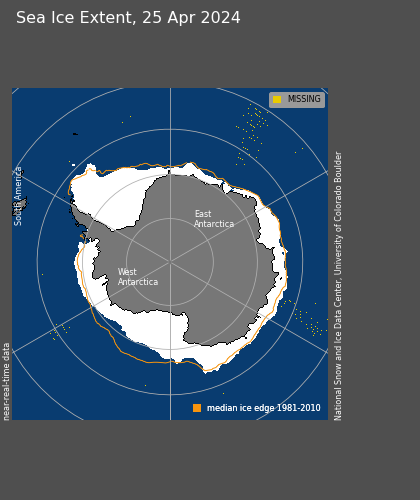
http://nsidc.org/data/seaice_index/images/daily_images/S_daily_extent.png

Well fed polar explorers, dressed properly for the cold climate
Sadly though, biologists using computer models have forecast that some Penguins are headed for extinction due to loss of Antarctic sea ice. Maybe that gives the males something to think about as they huddle in -70C weather all winter long, trying to keep from freezing to death or dropping their eggs. I suggest a Catlin-like expedition to the South Pole for biologists.

Male Emperor Penguins huddling to stay warm
The 30% excess of ice has not been widely reported, but there has been lots of talk in the press the last couple of days about ice breaking off the Wilkins Ice Shelf – the broken area being about one pixel in the NSIDC image above. Looking at the Wilkins picture below, I’m having a very tough time seeing any evidence of melting around the fractures, or any evidence of water pooling on the surface. Normally, such fractures are caused by tensile or shear stress, likely due to a change in currents. Ice melts from the edges towards the center, and that ice is very thick – up to 200 metres. Blaming the clean fractures seen below on warming and melting seems highly questionable – at best. I suggest bringing some actual structural and mechanical engineers into the discussion – how’s that for a novel idea in the AGW world?
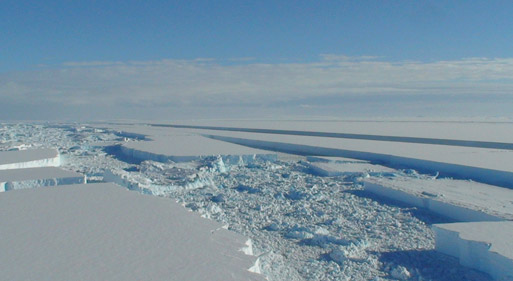
http://earthobservatory.nasa.gov/Features/WilkinsIceSheet/images/wilkins_aerial_photo_bas.jpg
Meanwhile in the Arctic, sea ice area is about 500,000 km2 below normal, which means that global sea ice area (Arctic + Antarctic) is about 500,000 km2 above normal. You could fit Dr. Hansen’s home state of Pennsylvania plus Al Gore’s home state of Tennessee plus Gordon Brown’s Scotland plus Dorothy’s Kansas inside the excess global sea ice area. Sounds like a real global meltdown, doesn’t it?
http://arctic.atmos.uiuc.edu/cryosphere/IMAGES/current.365.jpg
Perhaps we should be worried – about those poor penguins struggling across an extra 200 miles of ice.
Zeke,
Does you mean that we don’t need to worry about sea level rise for the next several decades?
I mean, if you’re right and (floating) ice at the North Pole melting reduces sea levels and building ice levels at the (land bound) South Pole also reduces sea levels it sounds as if rising sea levels could be one less thing for the doomsayers to bang on about. Am I right?
The people of the South Pacific will be so relieved.
And Al Gore gets to put another correction to his film.
If you want to construct a graph that shows a clear correlation and a positive cause and effect relationship I suggest a graph of the number of AGW propaganda pronouncements vs stories on the increasing resistance to cap and trade legislation.
Steven,
Surely the main contribution to science that we’ve had from Catlin so far is that it’s now very obvious that rising surface air temperatures are not the main cause of melting ice at the north pole.
Given that they’ve documented what sounds like significant ice break up at -35degC I’m inclined to agree that a rise to -34degC won’t make that much difference.
Couple of points seem clear?
1) The Antartic has not really changed in one way or another for as long as living memory yes?
2) Artic ice has dropped significantly from, say, 1960s & 70s yes? We can’t deny that?
So…….the question is, does the Artic ice levels indicate an unusual change, something we should be worried about?
Well…my problem with the ‘look at the artic’ situation is that we have photographs of the artic in the 30s that show it in a similar position to today, vast stretches of ice free areas in the artic summer. ‘Vanishing’ island appeared in the NYT I believe, as evidence of a global climate change, this was in the 1930s remember. And freight companies were talking about how great it would be to use the North West Passage. It all sounds rather familier. And of course it happened before too.
So it seems that the artic ice depletion is nothing new, and we had this situation barely 70-80yrs ago, before any real CO2 increase due to us. Yet it recovered on its own. Seems the Artic is constantly changing, as one would expect considering the seasonal variables?
So….we are told that ‘this time its different’ because its melting due to us……but the Antartic has stayed the same all through. Personally, I find the 1930s melting a bit of a awkward one to accept as ‘nothing to do with todays situation’?
About the Norwegians…..
Its moot to remember the recent trip by the worlds enviroment ministers to Antartica was organised by the Norwegian government (I had this confirmed by our UK ministers office) and by a strange quirk of fate they all arrived there just after Steigs ‘Antartic is warming after all’ report had done the rounds. One wonders about the time frame to organise such a jaunt…well….you are talking best part of a year I’d guess. Wonder how long Steigs time frame was…? Ah well, never know.
And its the Norwegian politico’s that gave Al Gore & the IPCC thier gong.
The Norwegians do tend to like thier AGW.
A cynic might say that they, like the British, sitting upon rapidly emptying oil reserves in the North Sea might actually find AGW quite useful politicaly. Becoming energy dependant on Mr Putin and the ‘One’s’ King is prob a bit unnerving. The Brits play this card to turn around the public opposition to nuclear power – we have a carbon bogeyman, better get those 11 nuclear power stations built quickly (..oh…and we will build a load of windfarms while we are at it because we know the public will soon wise up and realise they just don’t perform well enough and we need those nuke stations even more).
But only a cynic would say that of course. There is no conspiracy. Ignore the man behind the curtain. Move along.
In truth its rather sad to see scientists who obviously believe in AGW get used by politics. The truth is in the eating of the pudding I think. The politicians TALK about AGW but they don’t DO anything – except use it for revenue and in the case of the Europeans, nuclear power infrastructure. The term ‘useful something’ comes to mind?
“IN the context of climate change, global sea ice area may not be the most relevant indicator. Almost all global climate models project a decrease in the Northern Hemisphere sea ice area over the next several decades under increasing greenhouse gas scenarios. But, the same model responses of the Southern Hemisphere sea ice are less certain. In fact, there have been some recent studies suggesting the amount of sea ice in the Southern Hemisphere may initially increase as a response to atmospheric warming through increased evaporation and subsequent snowfall onto the sea ice.”
Zeke, you used the preceding paragraph in your argument that pretty much sums up my feelings towards the AGW Believers: First, when the Science proves otherwise, then the previously used AGW examples were not ” a relevant indicator.” Secondly, the whole argument for AGW, like the quoted paragraph, is based solely on conjecture, forecasts, scenarios, etc. – Not on Solid, unbiased Science.
…I believe an ‘artic’ is a lorry of course….s’cuse spelling…..
Is global (Antarctic + Arctic) sea ice extent (or area) durable ? Or does it decrease, globally ? Or Perhaps increase ?
Mikef,
“Greens stooges to Nuclear lobby”? Interesting concept.
I’ve always felt that the most bizarre paradox of the AGW movement was the substitution of an imaginary problem (CO2) for a real one (nuclear waste).
Interesting times, nonetheless.
So your analysis is “exactly what is predicted” (Flanagan 11:32:42), and “somewhat misleading” (Zeke Hausfather 11:35:29) at the same time! 🙂
2 more thoughts about ice melt.
1) If we accept (as Catlin seem determined to prove) that it’s water temp, not air temp, that melts North Pole ice then surely the only thing that’s important is how much will increasing CO2 raise sea temps?
I can’t help but think that it’s going to need an awful lot more retained energy (via CO2 natch) to warm the water than to warm the air.
2) Given that there’s no discernible difference in sea levels (or at the very least we’ve managed to cope OK so far without even trying) following the annual 10m Km2 North Pole melt how can anyone get excited about another 2m – 4m Km2, even if they believe it to be possible?
Isn’t it a bit misleading to compare total area losses when the two areas in question are of a considerable difference? As Climate Change Fraud writes:
Sea ice at Antarctica is up over 43% since 1980 and we hear nothing in the news, yet Arctic ice is down less than 7% and they’re all over it!
No idea whether these percentages are right but the post goes on to explain what exactly the IPCC models forecast would happen – an increase of interior ice not sea ice as happening:
Remember that some of the “models” predicted increased antarctic ice, but they predicted increased “interior ice” due to increased snow fall. None of the models predicted increased sea ice around the antarctic.
and it also explains how, according to IPCC models, an increase in interior ice could happen as a result of global warming:
When it gets very cold the air become drier and it snows less, as the temperature warms towards freezing it actually snows more. Since the antarctic rarely even gets close to freezing its understandable that warming would cause more snow fall. Over time compacted snow would lead to more ice.
(I have not checked the figures myself, but maybe somebody here will check them out; too late in the day for me!)
I love the AGW rules.
It is OK to claim that both polar ice caps are disappearing, but not OK to present undisputed data which shows that total polar ice area is above normal.
Sorry to hog but there’s a cracking story on the BBC website at
http://news.bbc.co.uk/1/hi/world/americas/7977263.stm
Apparently, amongst other things, a 1m sea level rise will cause problems for Ecuador’s shrimp and fishing industries. Other than fishermen needing another 1m of rope (hardly insurmountable – I’ve got some in my garage that I could Fedex) I can’t think what the problem might be.
Unless the next headline will be something along the lines of
“Global Warming Shrimp Drown Horror”. And you thought polar bears had problems.
If only we’d taught them to swim.
BrianMcL (14:14:30)
Actually, most sea level rise is supposed to come from thermostatic expansion (warm water takes up more space) not ice melt.
timetochooseagain,
Do we know how well the models cope with the offset between possible thermostatic expansion vs actual net land based ice build and the measured reduction in floating ice?
I’d imagine that in a system as complex as the oceans it’s going to be very difficult to determine what the average sea temp is / was / will be.
Let’s face it, we’ve no idea what the average land temp is and we’ve had thousands of stations measuring it for almost 200 years.
Re chillibean 12.24.47
For real Brittish idiots try Monbiot in the Guardian
Ed Zuiderwijk (12:34:40) :
Hey, Penguins in danger because of too much ice, Polar Bears in danger because of too little (at least that’s what we’re being told)?
Obviously these animals find themselves at the wrong Pole!
Solution: Noah Ark, 2009 style: ship Bears to Antarctica, and Penguins to the North Pole and Bob’s your uncle.
I suggest that you use two Arks and run the trips in parallel, – otherwise you will end up with both populations at the same pole at the same time. Which could be quite catastrophic for the Penguins, but, on the other hand, quite satisfying for the Bears.
It’s melting, it’s freezing, it’s melting, it’s freezing… hey, isn’t that what water and ice do when subjected to varying temperatures? Am I missing something? Or is it what happened in “this is not Kansas anymore”?
How does the energy required for ice to melt and for water to freeze come into account in the scientific papers?
how could we melt enough ice for a 20ft rise in sea levels
Pete 15;49;53
For Brittish read British
“”” Zeke Hausfather (12:05:25) :
To forestall the obvious question of “how could global sea ice be decreasing significantly when Antarctic sea ice is increasing”, it is useful to look at the trends in each. Over the past 30 years, Arctic sea ice has been declining at a rate of 0.516 million km per decade, while Antarctic sea ice has been increasing at a rate of 0.125 million km per decade. This means that global sea ice is decreasing at 0.391 million km per decade.
You might object, saying that there has been a fundamental shift in the last few years, and using data from 1979 to present obscures this change. However, if we use data from 2001 to present, for example, the rate of decline in global sea ice is even greater: 0.765 million km per decade. Granted, its too soon to tell if the last decade was anomolous, just as its too soon to tell if the last few months were anomolous. “””
Well not so fast Zeke,
You gave the decline rate of Arctic Sea ice over the “last 30 years” a period which we ALL know has posted some of the highest temperatures of the last 100 years. Remember, some of the highest altitudes on earth are to be found up in the mountains; so not surprisingly some of the warmest years in the last centruy are clustered around the recent global temperature maximum whcih some say was as early as 1995, but certainly by 2000; and now the globals temperature anomaly is heading downwards; and not surprisingly the arctic ice is also now heading upwards, as we all witnessed in Gorey detail last fall and winter, and as shown on the graph you cited.
Now according to an ex Navy submariner; ex Scripps Institute Oceanographer, ex oil company arctic Prospector, who has spent a lot of (classified) time under that ice, the average thickness of arctic ocean ice is no more than one metre; and that comes and goes each year from ocean water freezing.
On the other hand, Antarctic coastal ice (shelves) are very thick and don’t grow in area much each winter, because the perimeter of the Antarctic ice is about twice as far from the south pole, as is the perimeter of the Arctic ocean, and it isn’t land locked like the Arctic ocean, so it has all that southern ocean sloshing around the whole continent twice a day; simply breaking off new sea ice growth as fast as it can form.
So antarctic ice growth is largely from precipitation on top of those already existing ice sheets and shelves; and that certainly does not all melt each summer.
So if you are talking about annual ice acreage change, that is one thing, and yes the arctic was losing out there; but in terms of total global ice tonnage, it isn’t nearly as bleak.
And as I said; the Arctic acreage certainly seems to have done a turnaround. Well we won’t know much more till next september; but don’t bet your house on that all clear in five years prediction from the best bunch of climate models that computer geeks have been able to dream up.
Why are ther so many climate models, if the science is settled and they all are supposed to be models of the same planet; and in particular are supposed to be models of this palnet; which they ain’t; because this planet has clouds, as well as oceans, that together regulate the temperature through phase change from vapor to liquid/solid in the atmosphere.
Vapor =warming; liquid/solid =cooling; so how neat is that.
George
With regard to Zeke Hausfather (11:35:29) :
Zeke, if you look at the Cryosphere Today web site you will see clearly that the Antarctic sea ice extent is currently well above the 1979-2000 average (which for all we know may be an artificially high average since the years preceding 1979 were cold). Peak Antarctic ice extent increased each of the last four years, showing a definite trend toward increasing coverage. Looking at Arctic ice on the same web site, the total coverage is below the 1979-2000 average but when you look at the regional measurements, something like 11 of 14 regions are at or above the average. Only two are well below the average. In any field of science data like this make it hard to argue for a generalized phenomenon weighted toward the outlier data. If there is a generalized phenomenon the weight of the data suggest either “nothing happening” or “getting a bit colder”.
With respect to the Antarctic, for years every time a patch of ice broke off it made the news and we heard the shrieks of “global warming! global warming!”. Now that it’s clearly going in the opposite direction, all of a sudden the models predicted it and it doesn’t mean much anyway. Pay no attention to that man behind the curtain, just look at this model over here! That is intellectual dishonesty of the highest order.
“”” pwl (15:52:46) :
It’s melting, it’s freezing, it’s melting, it’s freezing… hey, isn’t that what water and ice do when subjected to varying temperatures? Am I missing something? Or is it what happened in “this is not Kansas anymore”?
How does the energy required for ice to melt and for water to freeze come into account in the scientific papers?
how could we melt enough ice for a 20ft rise in sea levels “””
Well pwl, when the arctic floating sea ice melts, it absorbs 80 calories per gram from the warmer sea water it is floating on. That’s enough energy to heat to the boiing point,l 0.8 grams of ice water, or it can cool 80 grams of water one deg C, or 40 grams of water 2 deg C and so forth.
So an astronomical amount of sea water is cooled when all that arctic ice melts; and since sea water always has a positive temperature coefficient of expansion; the arctic ocean sea level falls while all that ioce is melting; and it was measured in 2006 to be falling 2 mm per year; for at least the previous 10 years of the satellite study.
And all that cooled sea water sinks to the bottom, and eventually falls of the cliff at the bottom of the Chukchi sea/Bering sea where it is only about 30 meteres deep anyway, and sinks to the bottom of the north Pacific, and heads towards the equator to replace the warm water coming up fromt eh Western Pacific.
So if the ice didn’t melt, the Pacific ocean would do all kinds of bad climate things.
The satellite data actually go back into the early 1970s – here is a SH graph http://farm3.static.flickr.com/2337/2195388623_61f52809d7.jpg (which shows a large decline in sea ice prior to the recent stabilisation). This is supported by peer reviewed science – eg
http://www3.interscience.wiley.com/journal/118884850/abstract?CRETRY=1&SRETRY=0
BrianMcL (15:40:15)
My answer would be, I don’t think they handle the issue spectacularly well. Even the AGW advocates that usually have such faith in models, are forced to appeal to the problems with them to get big, scary sounding amounts of SLR. Of course, they use their own models (of ice sheet dynamics) to make such arguments.
John Galt
“Is that what happened in the Holocene Climate Optimum, when temperatures were estimated to be much warmer than today? And how did the polar bears and penguins manage to survive it? Did I hear somebody mention Noah’s Ark?”
Contrary to what AGW proponents tell us, the polar bears and penguins loved it. The seals had to swim ashore where the polar bears were waiting – what a feast! Fortunately, things began to freeze up again or the seal would be all gone. (probably that is how we got seals down in california etc – they fled there). Now for the penguins. They loved it because they get their food from the sea – not the sea ice and they didn’t have to walk as far. Also, with the warmer weather, there was a bigger survival rate for the eggs and for the returning mates (both ways). Antarctica was crawling with penguins!