32 Comments
October 15, 2026 2:37 am
Remarkable sane piece of writing.
I got busted by ULEZ taking someone to Heathrow airport. As someone who no longer drives to London I was not aware of its extent.
I appealed it all the way to a face to face hearing with a condescending female lawyer, of the Pakistani persuasion who explained to me in the politest possible way that essentially she and Transport for London didn’t give a fuck and were going to demand money with menaces one way or another, I spun it out as long as possible and smiled at her ‘well at least your time will have cost far more then the fine I will pay’
It’s ALL about jobs for the (tribal) boys, income streams and moral posturing.
I don’t think you need to layer race onto this.
Have you not experienced any officialdom lately?
Jihadis wake up wanting to kill etc
Islamists infiltrate and then subvert and use the system in their favour….
A police officer was filmed telling [muslim] counter-protesters to “stash the weapons in the mosque and we won’t have to arrest anyone”. – GBN
Can you guess the ethnicity of that police officer????
October 15, 2026 2:45 am
After a very short search HERE :
ULEZ stands for Ultra Low Emission Zone, a designated area in London where drivers of older, more polluting vehicles must pay a daily charge of £12.50 to drive. First introduced in April 2019, the zone is managed by Transport for London (TfL) and aims to reduce harmful air pollution, improve public health, and combat climate change
• Operating Hours: The ULEZ operates 24 hours a day, 7 days a week, 365 days a year, with the sole exception of Christmas Day (25 December).
• Coverage Area: The zone covers all London boroughs and almost the entirety of Greater London (the area up to, but not including, the M25 motorway).
• The Cost: If your vehicle does not meet the strict Euro emissions standards, you must pay the £12.50 daily fee to drive anywhere within the zone. Failure to pay results in a penalty charge.
Hmm on edit that doesn’t say anything about any GDF Cameras
October 15, 2026 3:50 am
It would all end in a weekend if the freight drivers said no.
No deliveries of any kind into the zone, nothing in the shops, no builders, no beer/wine, no groceries, no fancy coffee beans.
I wonder how long it would take before the houses of parliament and city hall run out of biscuits and tea.
It’s not about the money it’s about control. The more you play along, the more rules will be applied.
October 15, 2026 3:52 am
We cleaned up largely as a result of the Clean Air Acts – 1956, 1968 and 1993.
ULEZ is a cash generating scheme, and that comes on top of the Congestion charge (£18/day) in central London. Then there are the newly introduced tolls on the previously free Blackwall tunnel. The LTN’s, crazy parking charges and all of these measures have not changed what was clean air to begin with. It’s a war on movement by private individuals in their private vehicles.
There is one place in London where action really does need to be taken to clean up the air. And that is entirely in Sadistiq Khan and TfL’s remit – the London Underground. This illustrates the utter hypocrisy of their green politics and climate alarm.
London Underground: the dirtiest place in the city
An FT Investigation shows that air pollution on the Tube is as much as 10 times above health guidelines – FT
New study reveals high levels of pollution on London Underground
Researchers from King’s College London have carried out the first comprehensive study of fine particles on the London Underground to evaluate the exposure of people travelling on different parts of the network. – KCL
Etc.
The 15 year sentence is ample evidence of two-tier justice Britain: A man who ripped an illegal migrant dinghy rendering it useless is on remand until March in jail awaiting trial. Seven or eight suspected terrorists are given bail just like that.
October 15, 2026 4:56 am
“…Ulez had “dramatically reduce[d] air pollution”.
Surely, air in London is sampled frequently and the samples analyzed for all manner of chemicals, gasses, particulates and such. So what are the results of such sampling? Did implementation of ULEZ reduce “pollution” or not? No models please, just actual measurement data. If the air is not sampled and analyzed, that is another inexplicable error by Labor.
As numerous people have written, revenue generation is just an irresistible cherry on top.
It’s about Khan wanting to burnish his C40 credentials. Who is shown not once but twice on the landing page? (I hesitate to pin this on Khan alone. I have no doubt, were he still in office, Boris Johnson would be elbowing his plump self to the front of the team photo.)
Khan is only 56; he’s probably too young to remember real bad London air quality. But he knows he won’t be garlanded for saying London’s air-quality is “good enough” and has been for years.
October 15, 2026 7:14 am
“… and compliance with Ulez standards has risen from 39% to 97%.”
That’s an odd claim. It is not necessary to comply, just go on-line to the website, pay a charge and you can drive in ULEZ zones – don’t pre-pay, get a bigger fine.
To comply means buying a new vehicle or a compliant second hand one. For many that’s not possible, too expensive, so paying the charge is “cheaper”.
But the question to ask is, air quality has improved… so what?
What is the benefit? Compared to what? At what cost? With what evidence?
If you want poor air quality leave the city and go into the countryside – pollens, dust, soil particles, toxic chemicals from plants, dead skin and particles of fæces from birds and insects, smoke from fires.
October 15, 2026 11:07 am
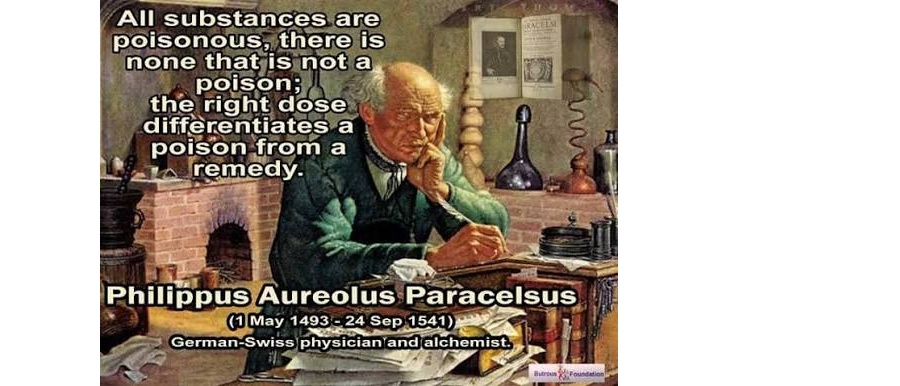
Virtually every drug and experimental compound I ever came across in 40 years of neuropharmacology had an logarthymic concentration-effect relation. It is true also of most toxic substances in the environment. I cannot understand where the linear assumption comes from, since the this is one of the first things you learn in undergraduate biochemistry.
I cannot understand where the linear assumption comes from,
It probably leaked out of the anti-nuclear bed-wetters camp, and their linear no threshold “model”.
October 15, 2026 1:07 pm
Actually Londoners do not seem to mind the ULEZ. The last mayoral elections was in 2024 after the zone had been introduced and Sadiq Khan was re-elected with an increased vote share. The conservative candidate who promised to removed it saw their vote share decrease by a couple of percent while the far right reform candidate got 3% of the vote. Overall parties supporting the ULEZ got a combined vote share of over 50%.

There’s a Reason Ulez is So Hated
As Kevin Rees jailed for 15 years for blowing up a Ulez camera with a homemade bomb, we see why London’s anti-motorist money-making ‘clean air’ scheme is so widely hated.
From Tilak’s Substack
Tilak Doshi
Last Friday, a retired appliance engineer named Kevin Rees was jailed for 15 years at the Old Bailey for blowing up a Ulez camera in a London street in December 2023. The judge found that the offence was motivated by terrorism; the blast damaged cars and property up to 100 metres away, including a child’s bedroom. Of course, building a bomb and detonating it on a residential street is a grave crime, and nothing below excuses it.
But it is fair to ask how a roadside charging scheme became a cause that drove one man to explosives, and why as many as 1,500 cameras are said to have been attacked in some way. Despite an FOI request for an update on how many cameras and other sensors had been attacked or removed, the authorities withheld year-by-year vandalism counts and repair costs, citing public safety and criminal investigations in February 2026.
The extension of the zone to all 32 boroughs in 2023 was imposed on millions of people who had no meaningful say in it. Labour’s loss of the Uxbridge by-election that July was widely blamed on it, and London Mayor Sir Sadiq Khan himself has acknowledged that when the original zone was launched, “all the mainstream political parties, including my own, were opposed”. What we are looking at is less a public-health measure than a moral crusade with a revenue stream.
Moving goalposts and modelled deaths
The standard defence is that Ulez and related measures (such as Low Traffic Neighbourhoods) have worked; London’s air has indeed improved. In 2024, for the first time, London recorded no breach of the UK’s legal annual limit for nitrogen dioxide, and compliance with Ulez standards has risen from 39% to 97%. One might think this the moment to declare victory. Instead the goalposts have moved. In 2021 the World Health Organisation cut its annual guideline for nitrogen dioxide from 40 to 10 micrograms per cubic metre, and for fine particulates from 10 to five, and Imperial College’s Frank Kelly has welcomed Khan’s commitment to bring London into line. But a target that recedes as one approaches it is not a target but a treadmill.
Driving the treadmill is the linear no-threshold assumption that harm falls in proportion to exposure all the way down to zero. Thus, only when exposure is zero can we know that harms are fully avoided. Hence the Labour Assembly Member declaration that “no level of air pollution is safe”. It is a doctrine no policy can ever satisfy, since any residual exposure is by definition a residual harm; cost-benefit analysis is replaced by a liturgy of pristineness. Paracelsus knew better: the dose makes the poison. So, London’s own fine-particle levels, halved since the early 2000s, still remain a problem by this standard.
The human toll is then expressed in deaths. Public Health England put the figure at around 4,000 premature deaths a year in London, and City Hall’s latest Imperial study claims attributable deaths fell by roughly 40% between 2019 and 2024. These are not bodies counted in a morgue with coroners’ reports but outputs of a model. These models multiply estimated exposure by a “concentration-response coefficient” and, under the no-threshold assumption, finds victims wherever there is a pollutant. Nor is it obvious how much credit the zone deserves. Defra’s count of UK zones breaching the nitrogen dioxide limit fell from 33 in 2019 to five in 2024, in a country where by one count only 10 zones charge motorists at all. Vehicle fleets turn over everywhere, and internal combustion cars keep improving their pollutants emission performances. The honest question is how much of London’s improvement Ulez can claim, and at what price.
In August, the Mayor produced his trump card: a Lancet Public Health study reporting that London schoolchildren’s lung growth caught up with that of children in Luton after the zone arrived, published alongside an op-ed by Khan himself in the Guardian. This deserves scrutiny before cheers. It rests on a single comparison town; its follow-up, from 2018 to 2022, spans the pandemic years when traffic collapsed everywhere; and it does not measure the London-wide expansion that provoked the Ulez revolt. The same Queen Mary-led team’s earlier study, in 2019, found no improvement in children’s respiratory health from London’s original low emission zone.
Nor is the research ecosystem a disinterested one. Emails obtained by Conservatives under freedom of information show that in November 2021 the Mayor’s deputy for the environment, Shirley Rodrigues, wrote to Imperial’s Professor Kelly calling a study by his Imperial colleagues – which found only small improvements at launch – “misleading”, and asked him to set the record straight. Kelly’s Environmental Research Group has been paid more than £800,000 by Khan’s office since 2021, and he agreed to issue a statement, partly written by Rodrigues, saying Ulez had “dramatically reduce[d] air pollution”. City Hall called this “standard practice”. It probably is, and that is precisely the problem: the umpire is paid by one side.
Bootleggers, Baptists and the mayor’s purse
In 1983 the economist Bruce Yandle offered a parable that explains more about modern regulation than most textbooks. Sunday alcohol bans, he observed, were backed by two unlikely allies: Baptists, who thought drink sinful, and bootleggers, who profited when the legal trade was shut. The Baptists supply the moral cover; the bootleggers supply the booze, get the profits and make the necessary payoffs to interested parties to keep the status quo. Khan’s Ulez is a textbook case. The Baptists are the clean-air campaigners and the professional classes of inner London, sincere in their conviction that tailpipes are poisoning their children. The bootlegger is Sadiq Khan and City Hall.
The sums involved are not insubstantial. In 2025 the zone raised £57 million in fines and £123 million in fees, against a running cost TfL puts at £100 million. Over the full 2024-25 year, TfL’s own figures put gross Ulez income at £219 million and Congestion Charge income at £271 million; add in the Low Emission Zone and the combined road-charging income in the statutory accounts was about £940 million, against passenger income (bus and rail fares) of about £5.3 billion (TfL freedom-of-information reply; 2024-25 quarterly report). By law the net proceeds must be reinvested in London’s transport network, which is true but beside the point. Money is fungible, and a transport budget fattened by motorists’ penalties is one City Hall need not source from elsewhere. Set against the budget of the whole Greater London Authority of roughly £15.5 billion, the gross take is about 6%.
With compliance at 97% (remember those cameras and sensors everywhere?), the rational response of a revenue-hungry administration is to widen the net, and on cue Khan has said he will remove the congestion charge exemption for electric vehicles, the very cars motorists were urged to buy to escape the zone. My colleague Richard Eldred examined the leaked TfL documents on this war on motorists in the Daily Sceptic last year and I covered the class war on motorist in these pages previously.
The Mayor’s office yearly revenue is about £900 million, with a capital programme dominated by housing and policing. Spending on woke causes such as equality, diversity and inclusion, gay parades, carnivals, Pride grants and the Shared Endeavour Fund (against hate, intolerance, radicalisation and extremism – read Islamophobia) are of course small in the scheme of things. The scandal is not that a LGBTQ rainbow pedestrian crossing in Trafalgar Square is paid by Ulez fines. It is that a scheme of punitive fines, taxes and charges on white van tradesmen and the working class family with an older car is sold in the name of public health.
City Hall is not an austere place. The Mayor himself drew £160,976 in 2024, when he and at least 13 of his staff were reported to be out-earning the Prime Minister, while his deputy mayors’ salaries had risen to roughly £148,000. A mayor’s remit of buses, policing and housing should occupy anyone fulltime. Yet Khan has found the time to chair (and jet around the world for) C40 Cities, the global climate network. Khan, is no mere city mayor. He is a key Labour party figure reported to have backed a pledge to rejoin the EU, a cause Prime Minister Burnham has just put on the table. A 2019 C40 report set out an “ambitious target” of no meat and dairy by 2030. The direction is plain. Brussels and the climate summits are fine hobbies, but the people paying for them are the van drivers and working families in the poorer, outer boroughs of London.
The irony is rich. As mayor of Greater Manchester, Burnham scrapped his city-region’s charging clean air zone, arguing that even a small one would be “a considerable financial burden” for businesses in a cost-of-living crisis, and promising to hit legal limits by investments instead. Londoners, under a far larger zone, were offered no such clemency. And the burden falls hardest where capacity to absorb it is least. A haulier whose lorry fails the standard has faced £100 to £200 a day in London’s low emission zone since 2008, and a £50 daily charge for non-compliant lorries in Birmingham. The tax’s incidence ends up in freight rates and, in due course, on the supermarket shelf.
Rousseau in the boroughs
When my wife and I moved to Britain from Singapore to be nearer our daughter’s family, a close friend invited me to Edinburgh. He could not drive up to the train station: his old car fell foul of the city’s low emission zone, so he had to arrange a meeting point outside its boundary. I was baffled. Singapore, where life expectancy reached 83.9 years in 2025, among the longest in the world, rations cars too, through certificates of entitlement and road pricing, but chiefly to keep traffic moving on a small island.
Why do so many otherwise sensible people embrace purity as policy? Rousseau – whom Voltaire famously teased in 1755 for making readers of his Noble Savage discourse long to walk on all fours – bequeathed the notion that modernity is a fall from grace and nature a lost Eden. His angst over Western modernity combined with Malthus’s profoundly wrong prophecy of limits to growth. Karl Popper, in The Open Society and its Enemies, showed us where the pursuit of Plato’s utopia ends: in coercion. Rupert Darwall traces the evolution of green tyranny in our times, in part from the irrationality of the German Romantic movement of the 18th and 19th centuries. Attach that tradition to a child’s health and it becomes unimpeachable, for what could be a stronger lever than the fear that your toddler is inhaling the fumes of dirty cars and buses?
A saner settlement
None of this is an argument against clean air, so long as real trade-offs are weighed appropriately. In an objective cost-benefit analysis, the preferences of the privileged lanyard classes should play no role. It is an argument against treating air as a sacrament. A sane policy would begin from the fact that London already meets its legal limits, and that further tightening must pass the test applied to any other public spending: what does it cost per life-year saved, and who pays? It would freeze the outer-London expansion until its benefits are assessed by researchers who are not on City Hall’s payroll. It would target genuine hotspots, such as busy roadsides beside schools or even poorly ventilated subway stations, rather than fining a plumber for a van he paid off years ago.
The Baptists will keep preaching and the bootleggers will keep going ker-ching on their cash registers. Londoners, who must drive, deliver and pay, are entitled to ask for the one thing neither will supply, which is proportion and reasonable trade-offs. This certainly needs no explosive devices to get it. We have a ballot box, and the next mayoral election falls in 2028.
This article was first published in the Daily Sceptic https://dailysceptic.org/2026/10/11/theres-a-reason-ulez-is-so-hated/
Dr Tilak K. Doshi is the Daily Sceptic’s Energy Editor. He is an economist, a member of the CO2 Coalition and a former (cancelled) contributor to Forbes. Follow him on Substack and X.
Tilak’s Substack is a reader-supported publication. To receive new posts and support my work, consider becoming a free or paid subscriber.
Share this: