The coal industry is in a fight for its life. The forces arrayed against coal are many, varied and powerful. Supporters of coal — producers, consumers, suppliers, transporters — need to rally at the state and regional levels because that’s where the fundamental decisions on coal power plants will be made. National committees, debates in Washington and discussions at 30,000 feet will not prevent coal from being a footnote in America’s energy history by the time today’s Kindergarteners leave middle school. Coal needs “boots on the ground” from the industry. Our Website, seeks to get data on the value of coal into the hands of individuals and companies who want to defend coal’s future.
Despite being the cornerstone of the U.S. electricity supply system for over a century, the coal industry has become the punching bag for its opponents and now they are going for the knockout. The relatively passive approach of the coal industry is simply not working. Over 300 coal power plants have closed in the last 15 years and generating capacity has declined 46% — from 318 Gigawatts (GW) to 170 GW. And the beat goes on, based on the latest DOE Outlook, by 2030 coal capacity will be only 69 GW. After that comes oblivion for coal in the U.S. — the fuel that built the nation.
Plant by plant, decision by decision, the U.S. is losing its most reliable and affordable energy asset. The Trump Administration has filed extensions to keep some plants open but these are only temporary (e.g. 90 days) and are like putting a Band-Aid on a gaping wound. Americans will pay higher rates, have less reliable power and fall ever further behind China, which is building the most robust electric power system on earth, and it is anchored by coal. The world is becoming increasingly electrified. It will be China’s strength in coal-based electricity that will propel it to ascendance over the U.S. in Artificial Intelligence.
In the U.S., cult-like opposition to coal comes from a variety of self-serving groups:
Some utilities want to close coal plants because they can make more money through handouts from the Inflation Reduction Act than by simply providing affordable and reliable electric power to their customers. The IRA offers utilities financing to cover the costs of shifting from coal to “renewables.”
Sierra Club, with a $500 million war chest from billionaires like Michael Bloomberg, seeks to “close every coal plant in the United States.” This is the same Sierra Club that calls for a detailed Environmental Impact Statement every time a minor dam is built but is ok with closing an entire industry without even a calculation on the back of a cocktail napkin.
Politicians who curry the vote of vociferous anti-coal extremists, generously funded by not only elitist environmental groups but by industries seeking to supplant coal, e.g. wind and solar. Jason Stanek, Director of Government Services at PJM, the nation’s largest Regional Transmission Organization covering 13 states, has stated that the vast majority of coal retirements are due to politics rather than economics.
State Regulators who are intimidated by hordes of coal opponents paid to attend hearings as well as perhaps 200 lawyers, organizers and activists who have been hired to litigate and work against coal across the Nation. In fact, Bloomberg has funded a program at NYU Law School that places attorneys, referred to as “climate fellows,” directly into state attorney general offices to focus on anti-coal efforts.
Media: The knee jerk reactions of the media to anything coal related are legion. When President Trump issued an Executive Order supporting coal, the ink had hardly dried before the wails from the Press began: “Trump wants ‘clean coal’ but there’s no such thing” – ABC News ; “Trump Administration plans to give dirty U.S. coal plants a reprieve” — Reuters; “Trump gave the dying coal industry a lifeline” — Washington Post.
Competitors: The natural gas industry set the dirty tricks ball rolling with Chesapeake Energy’s “Face It, Coal is Filthy” campaign replete with photographs of children with smudged faces, apparently from coal mines. CEO Aubrey McClendon donated $26 million to the Sierra Club to oppose the building of new coal-fired power plants.
Conclusion: Despite their incredible hypocrisy these special interest groups are succeeding in closing down one of the most important industries in the U.S. By 2030, just four years from now, anti-coal groups will have eliminated 80% of coal’s electric generation capacity. Reliability will be lower, rates will be higher and the U.S. will be less competitive. Tens of thousands of well-paying jobs will be lost and businesses associated with coal industry will either go bankrupt or see their revenues greatly diminished.
Over the last two decades, the coal industry has ceded much of the battlefield to its opponents and even now seems somewhat complacent about its future. The Trump Administration will be gone three in years. And even while Trump is in office, state regulators and utilities are proceeding to close coal power plants throughout the country — Colorado, Michigan, Indiana, Pennsylvania, Virginia, Ohio, Washington, on and on. Decisions on these remaining plants will be made over the next several years. Such decisions will not be made at the national level, but rather in communities, states and regions. If they want to survive, businesses which depend on coal must get their hands dirty.
Note: Coal is the Cornerstone seeks to give a voice to supporters of coal in its many dimensions and contributions. But we need help and ask like-minded individuals and companies to help support the effort.Visit us at http://www.coaliscornerstone.com. Access to our previous articles is available on this site.
Frank Clemente PhD. specializes in research on the socioeconomic impact of energy policy and is the author of The Global Value of Coal, published by the International Energy Agency (2012). Professor Clemente has served on the faculty of the University of Kentucky, University of Wisconsin and Penn State. He has extensive experience in speaking, writing and presenting data on the value of coal to the U.S. and the world. All opinions expressed here are presented independently from any university with which he has been affiliated.
Fred Palmer Esq. served as CEO of Western Fuels before he joined Peabody Energy as Senior Vice President for Government Affairs. Palmer was Chair of the World Coal Association Board and a member of the National Coal Council. He received the American Institute of Mining, Metallurgical and Petroleum Engineers Award for “Distinguished Achievement in Coal Technology.”He also received a Statement of Appreciation from the National Coal Council in 2015 with a plaque for “Guidance since 1990.”
This article was originally published by RealClearEnergy and made available via RealClearWire.
What an incredible gift is the Powder River Basin coal.
We in Wyoming depend upon coal for jobs and taxes. Much of surface land in northeast Wyoming is coal under a few feet of soil. It is low sulphur and clean burning, a gift from God, if you will. We should be using more of it.
Coal Built America to where we stand today, now it’s our turn to stand behind coal. I don’t think coal will ever get in front of natural gas in a big way as it was once upon a time. Lets not ignore it. Under our feet is 150 years or more of this energy. Not using it would be like saying to you – because there is solar and wind, no more gasoline and diesel fuel will be available.
Put this into your thinking cap.
Because of AI – America is needing to produce a lot of electricity, and natural gas is going to be the fuel of choice, because it’s plentiful and it’s a clean fuel. These natural gas power plants can be constructed near to the natural gas sources. The problem lies with transporting the electricity. Our national grid can’t handle the volume of electricity. It needs a major upgrade.
There is an option: It’s called Community Power Plants. In America we have a lot of natural gas pipelines already crossing the country. If an AI Data Center can locate itself where a Community Power Plant sized for the Data Center can be located, this will work. It would be great if the AI Group oversized the Community Power Plant by 15 or 20%, to inject the overage into the grid as a “good neighbor” gesture.
But there will be those locations where the natural gas just is not available for one reason or another. A Coal Community Power Plant could then be constructed. America has rail spur lines cris crossing America, and we have a lot of roads. Coal can be brought near to the site, and a truck can bring it to the site. We want these Community Power Plants looking clean, and not as an eyesore.
To keep it clean a large inground “coal storage room” can be created and a Bobcat and conveyors can be used to fuel the boiler.
We believe it is time for America to get serious about it’s electrical energy security. We live in different times. Imagine if “they” were to take out a good number of our GW power plants. Besides being in the dark, where would that leave us?
What if America had spread out across the country a few thousand 20MW to 50MW sized Community Power Plants connected to the grid? America would have it’s Standby Generators just like it has it’s National Guard. The great thing about coal is it is always available as an onsite standby fuel source. This I Believe I A Story Tip that must be shared.
Lets not forget about Power Plant Energy Efficiency. Natural Gas is America’s Clean Energy Source. It can and has been combusted for over 40 years to near 100% energy efficiency, residentially and commercially. Why is America still allowing it’s power plants to operate at +-50% energy efficiency?
That must be changed. President Trump created DOGE to look for and reduce waste. Natural gas appliances and our electricity producing power plants need to be put on that list.
file:///C:/Users/sidab/OneDrive/Desktop/Community%20Power%20Plant%20Info/Community%20Power%20Plants%20&%20Greenhouses.jpg
Unfortunately, energy from coal has more enemies than you can shake a stick at, including other providers of base load energy. To me it makes sense to use coal for base load energy in order to conserve gas reserves for space heating, peaking plants and petrochemical manufacturing. In any case, markets, not alarmists nor their communist masters, should make this call.
All of this is happening not because coal can’t supply the energy we need safely, cleanly and efficiently but rather because of misguided and ignorant government policy. Take the government money and mandates from wind and solar and coal will return to its rightful place.
Thank you for doing this important work!
The “Website” link at the beginning of the article has an extra %20 at the end; it should be:
https://www.coaliscornerstone.com/
American coal power plants are very clean these days. There are no longer any operating coal-fired power plants in the USA without sophisticated scrubbers to eliminate most air pollution, and there haven’t been for many years.
That’s why, for example, the propagandists at the Associated Press and the Washington Post resort to “fake smoke” pictures, which are really just backlit condensing steam:
https://sealevel.info/climate/Ltr_to_Washington_Post-propaganda_not_emissions_spewing.html
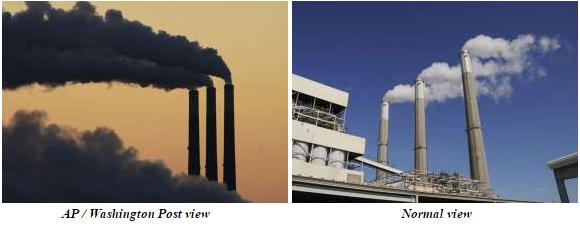
Coal is not only a very clean, affordable energy source, it’s also less vulnerable to supply disruptions than most other energy sources, including natural gas.
Coal is also the greenest energy source, because, as a fringe benefit, it produces the most precious air fertilizer. In fact, it’s greening the Earth:
https://www.nasa.gov/centers-and-facilities/goddard/carbon-dioxide-fertilization-greening-earth-study-finds/
Here are a lot of other papers & articles about it:

https://sealevel.info/greening_earth_spatial_patterns_Myneni.html
Most of the references to coal in the news call it “dirty coal”. And CO2 is called “carbon,” to link it to soot, which is carbon, but CO2 is a colorless gas.
“American coal power plants are very clean these days. There are no longer any operating coal-fired power plants in the USA without sophisticated scrubbers to eliminate most air pollution”
After the scrubbers were added to a coal power plant in Northampton, MA at a cost of 50 million dollars, the f****** state shut it down and they had a big party blowing up the smokestack.
It amuses me to read of the criticism of Aubrey McClendon, a self-made billionaire who started with next to nothing, then at age 23 founded a high risk mineral company that became Chesapeake Energy at his age of 29. He was a leader in the rather important technology of fracking.
The criticisms in this article above are by 2 authors whose C.V.s are far less impressive.
Such is our unhappy way of life when arguments with theoretical words try to trump arguments with material and cash results. Geoff S
And Chesapeake’s contributions came back to bite them. The anti-coal groups became anti-fossil fuel groups and started fighting against natural gas (which they are trying to re-brand as “methane.”)
I have also seen it called “”dirty natural gas.” Does not compute.
Natural gas is not 100% methane, but it is composed primarily of it (typically 70–90% or more). While methane (CH4) is the main component, raw natural gas also contains “other hydrocarbons like ethane and propane, along with impurities.”
Grist for the mill.
Methane is a powerful “greenhouse gas.”
BS alarm sounding.
too bad Aubrey didn’t want to stay around to see how things turned out
His success is not the issue. The issue is how he joined forces with enemies of fossil fuels to attack competing forms of fossil fuels. By co-opting the Eco-Nazi mantras about fossil fuels being problematic to attack competitors, he effectively advanced stupid causes and stupid policies.
For that, he richly deserves the criticism, whether or not you’re impressed by their CVs.
and their fight back should include the growing evidence (CO2 Coalition etc.) that man made CO2 has no impact on the climate whatsoever and that in fact more of it is good for the planet & its inhabitants – the whole fraudulent premise that man made CO2 is destroying the earth needs to be destroyed
“It will be China’s strength in coal-based electricity that will propel it to ascendance over the U.S.
in Artificial Intelligence.”Fixed it.
One of the purposes of calling CO2 “carbon emissions” is to invoke memories of smog. Smog is fog and smoke. Smoke is particulate carbon. CO2 had nothing to do with it.
That problem has been, successfully, dealt with.
Yes, coal is carbon and carbon dust is “dirty.” But modern coal fired steam turbine electrical generators do not put much coal dust into the air, if any, unlike 60 years ago.
Sad the activists are winning and the people are losing.
Sad the politicians genuflect to activists and ignore the citizens who they were voted to represent.
Some interesting changes coming down the pike. First, Maryland. Their energy plans have been to replace all fossil-fuel power plants with wind and solar by 2035. They brilliantly enacted this into law. First up was the closure of two old coal burning plants. Nope, renewables not in place in time. They are being kept open to avoid power shortages. They have an emergency transmission line under construction from another state, but it won’t be enough for much more than residential growth. Now they are dependent on 40% of their energy being supplied from out of state. New data centers? Industries? Nope, power too expensive for industry, not available for data centers. No possibility of meeting any of the legislated target dates. They will be tied up in lawsuits because of that, and no new fossil-fuel plants can be built until laws are changed. Maryland is on track for sky-high power bills and power shortages for years.
Virginia is in better shape, but the political environment guarantees no new data centers will be built in the state. Can’t use coal. Can’t build pipelines for natural gas.
No new data centers in VA nor MD. The DC area absolutely must have AI data centers. Where will they be built? West Virginia is close enough, and they are offering significant incentives to build them there. And the incentives are greater if the power is generated by using coal.
I recently saw an advertisement for a new company in West Virginia to convert coal to liquids. This process was developed by Standard Oil back in the 1920s. Germany used it some in WW2. It is kind of expensive is why it never was used much.