EU funding for the collection of a new tree ring network covering the Northern Hemisphere and the development of tree ring growth and density models
Johannes Gutenberg Universitaet Mainz

Tree rings tell us a lot about what the climate was like in the past and are therefore used by researchers for climate reconstructions – something that is particularly relevant in a time of climate change. However, since the 1960s, the rings of trees have no longer provided an accurate reflection of temperature development. This problem, known as divergence, is the starting point for a new research project, for which paleoclimatologist Professor Jan Esper of Johannes Gutenberg University Mainz (JGU) will be receiving more than EUR 2.5 million in EU funding. Over the project’s five-year duration, Esper and his team will track the development of trees at 100 sites in the Northern Hemisphere to develop a new model for the reconstruction of tree growth that will generate reliable data for climate research. The European Research Council (ERC) has awarded Professor Jan Esper and his MONOSTAR project an ERC Advanced Grant, the EU’s most richly endowed funding award that is earmarked for outstanding researchers.
Tree rings present a prime archive in which hundreds of years’ worth of climatic developments have been recorded in great detail, from regional to global scales. However, climate reconstructions depend on reliable correlations between tree growth and climate. “It worked very well up until the second half of the last century,” explained Esper. “But since the 1960s, the tree ring width and densities have not been able to keep pace with global warming.” It was during the 1990s that the divergence problem was recognized as a phenomenon with far-reaching consequences. Not only does it undermine the reliability of temperature reconstructions based on tree rings, it also has implications for our understanding of how sensitive the Earth’s climate is to man-made greenhouse gases. “The problem impacts all climate reconstructions based on year-to-year changes over the past 1,000 to 2,000 years,” Esper pointed out.
Sampling and monitoring tree sites in the Northern Hemisphere
The scientist therefore proposed to start by collecting new data, among other tasks. To this end, Esper and his team along with cooperation partners from many different countries will launch a uniquely international project to record the growth of various species of conifers in cold locations and in boreal coniferous forests of the Northern Hemisphere. The width and density of tree rings will be measured at 100 locations, from the Rocky Mountains through the Alps and as far as the Himalayas. Additional extensive monitoring procedures will be carried out at ten of these locations in order to collect detailed findings on influencing factors so that a new tree ring density model can be created. The core samples from each of the locations will be analyzed at two laboratories in Germany, one lab in Russia, and another one in Switzerland.
Studying the influence on ecology, archeology and history beyond climate research
Paleoclimatologists suspect that temperature is not necessarily the only decisive factor in the divergence problem. “There are many other influencing factors that can influence plant growth in extreme locations, such as levels of ozone or changes in radiation,” added Esper. The results of MONOSTAR, an acronym for Modeling Non-Stationary Tree Growth Responses to Global Warming, could have far-reaching consequences: If historical warm periods and climate changes can be reconstructed more accurately, this will not only help climate researchers, but will also spark new research ideas in ecology, archeology, and historical studies.
Distinction for scientific excellence
Jan Esper studied and later earned a doctorate in geography at the University of Bonn. After a postdoc position at Columbia University in New York City, he continued his work on dendrochronology at the Swiss Federal Institute for Forest, Snow and Landscape Research (WSL), and qualified as a professor at the University of Bern. Since 2010, Esper has been a professor at the Department of Geography at Johannes Gutenberg University Mainz. He became a member of the Academy of Sciences and Literature in 2018. His research focuses on the paleoclimate, urban climate, and dendrochronology.
ERC Advanced Grants are awarded to outstanding researchers to enable them to undertake projects considered to be highly speculative due to their innovative approach, but which, because of this, can open up access to new approaches in the corresponding research field. Only researchers who have already made significant breakthroughs and have been successfully working for at least ten years at the highest levels of international research are eligible for the grant. The only criteria considered in awarding ERC funding are the academic excellence of the researcher in question and the nature of their research project. An ERC grant thus also represents acknowledgement of the individual achievements of the recipient.
###
Related links:
https://www.blogs.uni-mainz.de/fb09climatology/ – Climatology Group at the JGU Institute of Geography
https://erc.europa.eu/news/erc-2019-advanced-grants-results – ERC press release “€450 million for Europe’s long-term frontier research”
https://erc.europa.eu/news-events/magazine/erc-2019-advanced-grants-examples – ERC 2019 advanced grants examples
Read more:
https://www.uni-mainz.de/presse/16168_ENG_HTML.php – press release “Natural climate archives play an important role in climate reconstructions of past millennia” (4 Feb. 2013)
https://www.uni-mainz.de/presse/16094_ENG_HTML.php – press release “International team of researchers publishes first reconstruction of Eastern European springtime temperatures since the Middle Ages” (15 Jan. 2013)
https://www.magazin.uni-mainz.de/970_ENG_HTML.php – JGU MAGAZINE “Finnish trees tell the story of 2,000 years of climate history” (22 Aug. 2012)
https://www.uni-mainz.de/presse/15491_ENG_HTML.php – press release “Climate in northern Europe reconstructed for the past 2,000 years: Cooling trend calculated precisely for the first time” (9 July 2012)
Maybe it won’t be a repeat of Yamal.
May be not, that is his 2012 reconstruction:
That is because they never did !
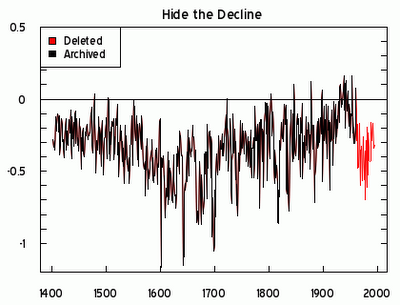
That was why Mickey Mann and his co-conspirators had to “hide the decline” in Briffa’s proxy. At least this is getting open recognition now, though pretending this was a new problem in 1960 and spuriously assume tree rings were thermometers and not hydro-thermometers is still a problem it seems.
Was there ever a period where tree ring growth corresponded well enough with measured data to be useful at all.
It corresponds well with fabricated values though.
Further:
https://www.uni-mainz.de/eng/15491.php
The simplest explanation of the “divergence” is that tree rings are not thermometers.
There are so many factors that affect tree rings growth. Sun, rain and prolonged dry weather just to mention a few. I thought they agreed more than 20 years ago that this is not possible?
Also – stand density; pests (bugs and fungi) that might be chewing up the foliage and slowing growth; the age of the tree; storms that might break off much of the foliage; air pollution; soil chemistry, etc. I suspect the temperature is the lesser of many influences over tree ring growth. Of course they claim they’re measuring rings in areas where temperature is or should be the dominate influence- but I doubt it. Even if that’s true, just how accurate can it be? Probably with an error bar of 30% or more under ideal conditions. Now maybe ice cores and coral can offer better temperature estimate- I have no idea- but I’m sure tree rings are worthless for this purpose.
JZ (a forester since Nixon was in the White House)
I believe the Yamal abomination of Mann was in mountainous terrain as well. Altitude, orientation to the sun, slope and specifics of the ground the trees are rooted in would all be important factors. But they don’t mean anything if the researcher intends to apply bogus mathematics to the data and conceal that data.
IMHO, Esper has more integrity under his finger nails than the entire lot of reconstruction charlatans.
Mann and Briffa couldn’t spare a kind word for him in the Climategate emails.
Admitting to, instead of hiding, the decline is at least a start. It will be interesting to see if Steve M. Weights in on the grant.
the way government works in Canada is that they never launch a study unless they know ahead of time what the results will be. I hope your confidence in Esper is well founded but the EU bureaucracy looks less friendly to democracy every day.
“But since the 1960s, the tree ring width and densities have not been able to keep pace with global warming.”
If the rings don’t fit, acquit.
+100
🙂
Yep, I’d just copied that text too.
The divergence problem was not one of “not keeping up” it was one of going the wrong damned way. Hide the decline, was not hide the not keeping up.
Maybe Briffa’s trees were just choked by all the “toxic CO2”. They didn’t have a chance.
Well we all know that if you don’t use the magic words, you don’t get the funding, but it hardly smacks of objectivity.
+1000
My first reaction too.
I hope Jan Esper will keep an objective mind and that the statement cited above is merely for the sake of getting the grant.
And what about the increased levels of CO2?? Surely that would have more of an effect on growth rings than any global warming. Which since the 60’s has been a fraction of a degree.
Oh yeah! There’s a thought. Then they’ll be telling us that more growth is bad for the environment.
** “It worked very well up until the second half of the last century,” explained Esper. “But since the 1960s, the tree ring width and densities have not been able to keep pace with global warming.” **
Do we already have a problem?
I will only accept results if Steve McIntyre audits them.
There’s no physical theory showing how to transform tree ring metrics into Celsius, Gerald.
Statistical re-scaling of tree rings into the air temperature record won’t reveal past temperatures, no matter the statistical methods.
I am very aware of that, but certain individuals perform miracles.
Not with tree rings, they don’t.
Tree rings is voodoo science.
Just walk through a clear cut forest sometime and observe the rings on tree stumps. Trees don’t agree with one another with respect to past climate, even rings on stumps situated only a few meters apart disagree with each other.
Tree rings don’t record past climatic conditions.
“Tree rings don’t record past climatic conditions.”
Sure they do. Although, they record more than just temperature and there’s a lot of variability in the various influences that effect tree ring growth, so as a temperature proxy, they’re useless, but as a proxy for overall conditions, they’re fine and this is why dendrochronology mostly works.
As a means of clawing one’s way upward in academia without doing any meaningful work, they can hardly be beaten.
Ditto McIntyre.
Tree rings never were a measure of temperature. What is recorded in a tree ring is how well a particular tree in a particular location grew during a particular time. The only way to correlate the tree ring growth with temperature is to have accurate measures of all the variables affecting that tree at that location-daily temperatures, daily precipitation, soil composition around the tree at the time, wind velocities, damage to the tree(birds, animals, insects, infections), almost ad infinitum.
The end result is you didn’t need the tree because it doesn’t add any information about climate and conditions. It does help biologists under stand how trees grow.
“”“It worked very well up until the second half of the last century,” explained Esper. “But since the 1960s, the tree ring width and densities have not been able to keep pace with global warming.”””
Or perhaps it is just that since they were able to start comparing actual detailed real world physical temperatures to the current tree ring data that the “divergence” occurred.
I agree with other commenters here. Tree rings did NOT work very well up until the second half of the last century, it’s just that there was no reliable evidence to compare them with. So no-one knew if they worked or not. But from the first point in time when there WAS reliable evidence to compare them with, they failed. The inevitable conclusion is that they don’t work, period.
As I understand it, anything that came close to 20thC temperature trends were heavily weighted over the rest, and still there was a divergence. Surely it’s time to quit with the thermometers?
It does seem that they are operating on a flawed theory, but they don’t want to let go of it.
Good on you Diggs. My thoughts exactly and was just about to make the same comment myself!!! Maybe some exposure to the actual world may make Esper realise his or his colleagues lack of clothes!
He has an opportunity to describe the Emperor in complete detail. It’s just a question of whether or not he has the integrity. I wish I knew the man.
“Tree rings tell us a lot about what the climate was like in the past and are therefore used by researchers for climate reconstructions – something that is particularly relevant in a time of climate change.”
Since there has never been a time when the Climate didn’t Change, I guess that means that tree rings will always be relevant.
How many competent statisticians will be involved?
Yah, right….
I suspect an incredible amount of noisy data will be beat into submission using cutting edge statistical techniques and will reveal the appropriate correlations.
“How many competent statisticians will be involved?”
Plenty. The question us, how many unbiased ones will be involved?
Oh wow, and from eureka alert as well!
Some initial quotes :
1, “However, since the 1960s, the rings of trees have no longer provided an accurate reflection of temperature development.”
2, “Not only does it undermine the reliability of temperature reconstructions based on tree rings”
3, “The problem impacts all climate reconstructions based on year-to-year changes over the past 1,000 to 2,000 years,”
4, “There are many other influencing factors that can influence plant growth”
5, “If historical warm periods and climate changes can be reconstructed more accurately”
Here are my thoughts on this
1, how can one possibly claim that the treemometer was an accurate temperature proxy before the 60’s When we know that they don’t work as such after the 60’s? was there maybe better data available before that period?
2, do they actually say here that temperature reconstructions based on tree rings are unreliable?
3, o wait, they say here that ALL temperature reconstructions are unreliable!
4, so here it says there are many possibilities i.e. we really don’t know what is causing what.
5, IF is a big word here, it implies two things, first is that the current reconstructions are not (sufficiently) accurate. And second that it may not be possible to improve the accuracy even if the new project is successful. The rest of the sentence is also interesting, “ this will not only help climate researchers, but will also spark new research ideas in ecology, archeology, and historical studies.” so lots of new ideas and research in many fields are expected, what happend to settled science?
My own opinion about the ‘divergence problem’ is this, if you can’t explain why something that used to work doesn’t work anymore then you don’t understand what is going on! And as a consequence can draw no conclusions from your work/theory due to a failure of basic scientific understanding.
I know that a lot of people are aware of the divergence problem and have great difficulty accepting tree-ring reconstructions but it is not mainstream knowledge, this new EU grant should be the final nail in the hockeystick coffin. And it should start a lot of people to question, even if only for themselves, this concept of settled science.
I hope the media will pick it up.
All in all a very surprising post from eureka alert, how did this get past the gatekeepers? Everyone working from home and not paying attention maybe?
Stay safe!
Willem
“I know that a lot of people are aware of the divergence problem and have great difficulty accepting tree-ring reconstructions but it is not mainstream knowledge, this new EU grant should be the final nail in the hockeystick coffin. ”
final nail meme strikes again.
The bottom line is this. As Briffa knew if you include data past 1960 for tree rings your resconstruction
of the past becomes LESS CERTAIN, that is your uncertainty becomes so large that “evidence” of the LIA and the MWP disappears, you get estimates with such large confidence intervals that you can’t say much about past temps.
Luckily tree ring data is not that important
“Luckily tree ring data is not that important”
Think of it as just another tipping point and you’ll get there eventually. If you’re all in lockdown with Covid19 I’d suggest you all try a mini herb garden to observe the effect of plant food and work up from there. They need soil sunlight and water too so stay safe.
Hi Steven,
I’m not sure where you’re going with this?
in general it seems to me that if you have to exclude a part of your data series to maintain some sort of acceptable confidence levels in order to say something, you better have a damn good reason and explanation as to why that is acceptable.
Just ignoring a part of your data in order to preserve your theory/conclusion/reputation is called cherry picking at best and if there is money involved fraud would be a better term.
Now, this new research seems to indicate that there is no good explanation for the divergence problem and as a consequence (of there not being any sound explanation for the divergence) the whole concept of the tree-ring a temperature proxy is not sound science.
The nail in the coffin comes from the fact that a prestigious research grant is now awarded to try and address issues with the reconstructions. To quote the article “ ERC Advanced Grants are awarded to outstanding researchers to enable them to undertake projects considered to be highly speculative due to their innovative approach”, so it is now no longer possible to claim that the prior work was sound. Otherwise why spend this high profile money trying to address a problem??
Or to put it differently, the EU funding demonstrates that the tree-ring proxy’s are flawed, maybe fatally but lets wait and see what the results are.
Last thing, you say that “ Luckily tree ring data is not that important”, important for what?
They sure were/are Important for the CAGW propaganda machine, a lot of people/organizations will be highly embarrassed if it all turns out to be junk.
All the best,
Willem
“Last thing, you say that “ Luckily tree ring data is not that important”, important for what?
They sure were/are Important for the CAGW propaganda machine, a lot of people/organizations will be highly embarrassed if it all turns out to be junk.”
Important for what?
1. Important for understanding the effect of GHGs on temperature.
in simple terms we have understood that c02 causes warming since 1896.
We understand it with ZERO reconstructions of the MWP.
A better construction of the LIA and MWP won’t help at all in constraining
the most important unknowns.
A) what is ECS
B) How much c02 will we emit
C) What damage if any will this cause.
2. HS has already been demoted as an icon, back when Ar4 was published.
“ … in simple terms we have understood that c02 causes warming since 1896.“
Only in a closed system under laboratory conditions.And Arrhenius himself had doubts 10 years later.
I thought we had grown out of still believing this nursery rhyme. In the real world, CO2 concentrations lag temperature changes at all timescales. In simple English temperature dictates CO2, not the other way round.
(And in equally simple terms, “the science” tells us that a warmer atmosphere overall should be a calmer one rather than more perturbed, so less already with the scaremongering, please. We have some immediate, genuinely existential problems on our hands much more important than paying heed to a failed lab experiment from over 100 years ago.)
“2. HS has already been demoted as an icon, back when Ar4 was published.”
Then what’s all the fuss about??? Why is the IPCC still around if there’s no hockey stick?? Why is the left still screaming climate change if there is no “there” there??
“A better construction of the LIA and MWP won’t help at all in constraining
the most important unknowns.”
Yes it would. It would tell us that CO2 is not the climate control knob, and that nothing we’re seeing now is “unprecedented”.
Tree rings are not important where he lives…Mars.
LOL
What is important then?
You can only fit so many nails in a coffin lid, Mosh !!
There is probably only room for one more !
The only important coffins I can think of have Dyson and Singer in them.
The great skeptics are not bringing up a new batch of smart kids to replace them.
Serious question, how much are you paid to post this tripe?
“The bottom line is this. As Briffa knew if you include data past 1960 for tree rings your resconstruction
of the past becomes LESS CERTAIN, that is your uncertainty becomes so large that “evidence” of the LIA and the MWP disappears, you get estimates with such large confidence intervals that you can’t say much about past temps.”
Wrong.
What Briffa knew, as Mann and the rest of the team knew, was that you had to find that ONE proxy that would give you a hockey stick shape, and then make it outweigh all the others, so as to make them insignificant.
Briffa tried to have a very small conscience, but still could not admit the fraud in which he engaged. You’re not forgetting this, are you Mush?
Briffas did exactly what Mann did.
Crap, link mal-formed.
Here it is: https://climateaudit.org/2009/09/30/yamal-the-forest-and-the-trees
Mosher writes
You don’t get to exclude data and declare greater certainty without a complete understanding of why. McIntyre said it best when he simply observed trees aren’t thermometers.
This!
“divergence”, as used in the statement, seems to simply mean that the tree ring data don’t meet the EXPECTED result caused by climate change. It seems that is pretty good evidence the theories of climate change are probably wrong – and that should be no surprise to the readers here.
“don’t meet the EXPECTED result caused by climate change”
I think that’s right, nw.
They had a tree ring. The tree ring didn’t report what they wanted it to report, so they claimed it was a divergence, instead of modifying their theory to fit the facts the tree ring was reporting. This is how alarmists do “science”.
The inherent problem with using Tree Rings as a Proxy for Temperature as affected by ambient CO2 levels is that more than temperature can affect Tree Ring size.
Daily Sunlight availability
Rainy periods
Atmospheric CO2 concentration to fertilize growth
And of course Temperature which tells the tree to wake up.
And most evergreens don’t go to sleep anyway.
Here in Australia, water is more a driver of growth than temperature and a bushfire can halt growth for a whole three to six months without causing damage below thick bark.
Here in Canada it is evident to anybody who tries to grow things (like trees) that the amount of snow and the rate of melting in the spring are very important and can vary a great deal from year to year. A deep snow pack will result in the ground being insulated and thawing earlier while a thin snowpack causes the ground to freeze deeper and thaw more from the top down in Spring. The rate of melt determines how much water goes to the roots and how much runs off. Especially so on sloped ground. Very different results from year to year. As in Australia, water is a critical and highly variable factor, once the thaw has taken place. In colder climates the season for growth is very short so the particulars of the conditions matter a great deal. Trees that grow on mountains near the tree line are growing at extreme conditions where trees a few feet higher or less well placed are stunted or dead. An interesting place to look for examples, to say the least.
Does temperature wake trees up? When I was at school, there was a theory that length of day played a part. Consider the other end of the season. Is it temperature that tells the tree to drop its leaves?
“Consider the other end of the season. Is it temperature that tells the tree to drop its leaves?”
It would seem to be. My Japanese Maples will start turning if we get a week or more of below average temps in late summer/early fall, weeks or months befure “usual”.
There are *far* more impacts on tree ring growth than you have listed. A few are insect infestation, shade from other trees, root competition from nearby trees, local animal populations, and parasitic vines.
There are so many confounding variables that it will be almost impossible to come up with a valid statistical study that can isolate just one variable.
In fact, there are so many species and sub-species of confers, each with their own individual growth rates, that it will be difficult to develop a standard for comparing the growth rates in widely separated geographical locations.
If they try to use controlled plots and plantings of similar new seeds in each location then their results will not only take years to collect but will have no bearing on past growth rates of naturally occurring conifers.
Willem69 April 14, 2020 at 6:58 pm
I hope the media will pick it up.
Ha ha ha ha ha ha ha ha ha ha!
The very last thing the EU is going to do is to fund “research” showing that they have spent hundreds of billions on “solving a problem” that doesn’t exist.
Or throwing doubt upon the notion that we all need to spend trillions more on advancing towards their globalist, socialist utopia.
The results of this study will already have been carved into a tablet of stone. “We must establish the Dictatorship of the Proletariat”
And the EU and the UN will lead us on to final victory. With the further assistance of the Chinese Communist Party, of course.
I know of one EU funded research project, which colleagues of mine worked on, where the EU made changes to the submitted report because it didn’t like some of the conclusions. My colleagues have been cynical about EU research ever since. Their impression was that the EU wanted the research to support a political policy outcome that had already been decided.
“However, since the 1960s, the rings of trees have no longer provided an accurate reflection of temperature development. ”
Tree rings have never, ever provided an accurate reflection of temperature. The whole temp-recon field is a descent into pseudo-science. Another gift from Mann, Bradley, and Hughes.
See also, “Negligence, Non-Science, and Consensus Climatology.” All of AGW-promotion is baloney with gravy; the part that isn’t outright mendacity.
Shame doesn’t begin to do justice to the disgrace consensus climatologists have brought upon themselves.
Shame is a meaningless emotion in someone without a developed conscience.
Which is my take on why so many of the Left don’t feel shame for their mendacity. Adopting relative moralism (rather than absolute moralism) is the foundational identifying trait of today’s Progressive-Climate Scam adherents like Mann, etc. That is, once you decide your end mission is “saving the planet” then the means (like murdering billions) to do so becomes guilt-free.
I work with wood, occasionally, and keep a supply of interesting old wood with reasonably accurate dates, going easily back to 1884 and a few pieces to 1745 (ignoring the bog oak) . I kept for a number of years, just to show people who had only ever read about dendrochronology, a gorgeous section of a wood I cut to about 5 x 1 (inches), from a mature tree with the rings being almost straight lines .
The thing showed ever so clearly an abrupt change in temperature !
Half the length showed standard tree rings as one would expect but the second half was full of really closely spaced tree rings .
How the temperature changed that quickly to affect it that much is just amazing !
either that or it was a change in the water supply . . . .
Or a change in nutrient supply, or sunlight (other trees grew up nearby and blocked much of the sun during the growing seasons). That’s the main problem with Treemometers. You don’t know which factor(s) are limiting growth.
Actually, I think tree rings tell us quite a bit about climate. It’s just the details that can’t be teased out.
We know good years when we see them in tree rings, but we’re not sure which or how many of the positive factors for growth were in play.
You say, that’s just weather, not climate. It was just a year with mild temperatures and decent rainfall. But if you have an old tree with 80 or so years of mostly good years showing, I don’t have a problem with someone pronouncing that period as benign. Likewise for a string of mostly poor ring growth, that was a period of sucky climate.
It’s just that when claims are made that tree rings are thermometers are made, I put on my skeptic hat. There’s little proof of what caused the difference in good or bad years: precipitation? temperature, fall of a nearby shading older tree? and so on.
A slice of a huge old growth tree, finished with a thick coating of highly polished acrylic urethane does make a nice coffee table, if not a treemometer.
When I first saw pictures of bristle cone pines, I was gob smacked. I had read about them being used as proxy for how good the summer growing season was on the plains. I had also read how the temperature component of the growing season could be infered from isotope ratios in the rings. The reason for being gobsmacked was they grew in rocky ground that would quickly drain the winter melt so the tree was very dependent on rainfall for most of the growing season, especially when the ground finally warmed up.
What an awful choice for a thermometer.
“I had also read how the temperature component of the growing season could be infered from isotope ratios in the rings.”
Is that correct? I’ve never heard of isotope ratios in tree rings, but have heard of them in ice cores. With tree rings the main factors are ring width and density, as far as I know.
I’m no longer on the computer I had used. When I Google now, more recent papers appear using carbon and oxygen. The 90s paper i had looked at used potassium.
We can say that year was benign, but only in that location and for that tree. Everything else is unknown.
Cargo Cult Science examples:
“But since the 1960s, the tree ring width and densities have not been able to keep pace with global warming.”
“It could not be simpler,” said the Aztec priests. “We simply cut out beating
hearts and roll heads down the temple steps … and it rains.” They all believed it.
And all of the Aztecs knew what to do when that wasn’t working; double down! More hearts and more heads…
…and more money in today’s times, although maybe we should have a look under some of these ‘climate scientists’ desks. Or maybe we don’t want to know ;o)
Isn’t the whole hockey stick thing based on this one tree – YAD061 – by Michael Mann ?
JPP
You’re pretty far off.
You’re not reading, apparently. Even the link says “Briffa”, not Mann. The One Tree was how Briffa tried to prop up the Hockey Stick scam.
Mann’s “one tree” consisted of sets of cores from Bristlecone Pines, which have odd growth patterns, and are deemed not suitable for climate recons. But, they had what Mann wanted, which none of the other tree ring proxies had, late 20th century growth spurts. So he plugged them into the Mann-O-Matic, and overweighted the results by something like 400 times, totally overwhelming all the other proxies combined. Voila, hockey stick.
We have a few places with over 100 years of good quality thermometer data. Why can’t we take cores from nearby trees and compare to the good data?
Thanks
JK
JimK: Why can’t we take cores from nearby trees and compare to the good data?”
What?!?! That’s crazy talk!
;o)
Why not indeed.
Assume the answer is they don’t really want to know
It was attempted – that is when they did the patch “trick”.
One could do that, but any correlation between temperature and tree rings would be indistinguishable from happenstance.
And the air temperature data is much poorer than its proponents let on.
Tree rings, eh? If there are no thermometer records to begin with, so therefore you have to use tree rings to determine otherwise unmeasurable temperatures, how do you evaluate the correspondence of temperature to tree ring width? Especially when you know that there was a measured divergence beginning in the mid-60s, which would seem (to me) to invalidate the whole concept right there. You might need a Nature trick to hide the decline, or something like that that would cast doubt on your integrity if people found out you were using the trick.
I’ll bet palmistry works this well.
It might be a simple funding problem, but once again the Southern Hemisphere misses out. There are very few published SH tree ring studies. The much publicised and much criticised PAGES2K compendium has no tree ring studies from mainland Australia, (last time I looked) while the Australian mainland has one of the longest and best historical thermometry records.
I used to imagine the lack of publications was caused by too many studies giving such contrary results that they were pulled before publication.
Now I can theorise that this grant to Jan Esper is designed to highlight how poor thermometry is, with no need to show it is poor in the SH as well.
I spent a decade researching plant nutrition and therefore I have seen examples of some of the many variables, besides temperature, that influence growth and cannot be compensated for in historic times. This applies to the pre-1960 era as well as after. There is no way to know if one or more multi-decadal divergences in the 2,000 years studied before 1960. It is therefore logically impossible to claim that the tree thermometry method worked well, or in any fashion, before 1960.
Esper should use these $$$ to show that tree ring thermometry is an invalid method that should now cease to be used unless a fundamental breakthrough can be shown to make it valid. Geoff S
Heresy! The science is settled.
The QI show asked “How do you tell the age of a tree?”
The answer was “Not by counting the rings..” Sometimes they create 2 sets of rings in a year and sometimes none at all. “You have to ask the person who planted it”. The reliability is low.
Sunlight, cloud, rainfall, temperature (partially independent of sunlight, cloud and rainfall), fertilisation (CO2, volcanic, soil runoff etc) can all vary the growth of trees. So they make a few more assumptions and processing raw data to align data series and cover the error ranges.
Question) How do you determine good tree data or bad?
Is the answer) By judging if it meets your assumptions of long term trends and already accepted sources.
The tree ring process is prone to selection bias and the influence of other sources used to “process the data”. Non-alarmists can choose different results but it’s very hard to remain impartial. What I can agree with are, “don’t panic” and “the science is not settled”.
Tree-mometer hokum is just more junk science masquerading as science to dupe non-experts and the public into believing something these charlatans want them to believe, and getting a nice paycheck while doing it using OPM.
Voodoo witchdoctors appeasing volcano gods with fruit basket and virgin donations from ignorant villagers would blush with envy if they knew the level to which such a scam could be taken. Of course, those witchdoctors knew what to do with both offerings before they threw the baskets and not-quite-so-virgin anymore virgins into the volcano to hide the evidence of what they did.
Nice to see a bit of climate science.
WUWT used to concentrate on science, but recently it seems to mostly be tedious political ranting.
Tree rings are a VERY good clue as to when a tree grew.
They aren’t much good for climate as a whole. Remember, the Lindbergh baby kidnapping conviction relied upon a dendrochronologist who testified that the ladder found at the house was from a group of ladders sold by a certain lumber yard. The growth rings matched. Good science.
The Anasazi ruins were dated by growth rings. There is reasonable data to assume they (the data) are true.
The University of Arkansas at Fayetteville has a good lab (or used to, dunno now) that has a track of tree rings that can reasonably put a harvested log within a few years of the last 2,000 years. THAT is good science.
When was this log cabin erected? Can tell you when the tree died… within a few years. Good science.
Tell you what the temperature was when it was harvested?
NO friggin’ clue!
EUR 2.5 million funding
See: opportunity cost
There must be at least 42 better uses for this money.
Not that I don’t appreciate the things learned from dendrochronology.
Treemometers are a waste of time, talent, and money.
Climate zone classifications using vegetation is something different.
See original Köppen.
I’ll tell one more story, just cause its a good one.
I have a set of Encyclopedias from Britain, last copyright 1832. Fascinating. Herbarium et Fruticum Britannia, if I recall.
The names are pretty much settled (some are not), and the methods are still valid, largely.
But there is an entire half volume on what I would call “champion trees”.
The author cites one source as saying that there was a beech of a certain size at a manor at some location.
Going there (near by) he could not find a tree of that size, but did find one of nearly that size (the reference was from some 100 years earlier).
His theory was that the tree “girt itself up” to compete with surrounding trees…
Imagine that. How knowledge and science have changed.
“Tree rings tell us a lot about what the climate was like in the past and are therefore used by researchers for climate reconstructions – something that is particularly relevant in a time of climate change. However, since the 1960s, the rings of trees have no longer provided an accurate reflection of temperature development. This problem, known as divergence, is the starting point for a new research project…”
No the tree ring hockey stick was what fired up this whole climastrological industrial complex in the first place and now you tell us the resulting incentivised Groupthink based upon it has the fundamental flaw scientific folks pointed out to them all then and since. Now it’s just a problem of ‘divergence’ and another 2.5mill EUR will look into it? What about all the trillions pissed up against the wall in the meantime with the divergers from the null hypothesis the climate is always changing?
That’s the real flaming ‘divergence problem’ as you try and air brush it all away here watermelon shucksters. More taxeater dough to look into divergence? Decent honest folk can’t make this stuff up or take anymore of it unless it’s part of a Prosecution case to bring all these scoundrels and scammers before the Courts and who can trust the ERC with that?
Good on you Diggs. My thoughts exactly and was just about to make the same comment myself!!! Maybe some exposure to the actual world may make Esper realise his or his colleagues lack of clothes!
The Briffa divergence may be a closer approximation of the NH temperature trend than the later much-adjusted surface series: