Water levels were 16 feet higher in the flood of 1935
by Roy W. Spencer, Ph. D.
In the context of climate change, is what we are seeing in Houston a new level of disaster which is becoming more common?
The flood disaster unfolding in Houston is certainly very unusual. But so are other natural weather disasters, which have always occurred and always will occur.
(By the way, making naturally-occurring severe weather seem unnatural is a favorite tactic of Al Gore, whose new movie & book An Inconvenient Sequel [ currently #21,168 in Kindle] is dismantled in my new e-book, An Inconvenient Deception [currently #399]).
Floods aren’t just due to weather
Major floods are difficult to compare throughout history because the ways in which we alter the landscape. For example, as cities like Houston expand over the years, soil is covered up by roads, parking lots, and buildings, with water rapidly draining off rather than soaking into the soil. The population of Houston is now ten times what it was in the 1920s. The Houston metroplex area has expanded greatly and the water drainage is basically in the direction of downtown Houston.
There have been many flood disasters in the Houston area, even dating to the mid-1800s when the population was very low. In December of 1935 a massive flood occurred in the downtown area as the water level height measured at Buffalo Bayou in Houston topped out at 54.4 feet.

By way of comparison, as of 6:30 a.m. this (Monday) morning, the water level in the same location is at 38 feet, which is still 16 feet lower than in 1935. I’m sure that will continue to rise.
Are the rainfall totals unprecedented?
Even that question is difficult to answer. The exact same tropical system moving at, say, 15 mph might have produced the same total amount of rain, but it would have been spread over a wide area, maybe many states, with no flooding disaster. This is usually what happens with landfalling hurricanes.
Instead, Harvey stalled after it came ashore and so all of the rain has been concentrated in a relatively small portion of Texas around the Houston area. In both cases, the atmosphere produced the same amount of rain, but where the rain lands is very different. People like those in the Houston area don’t want all of the rain to land on them.
There is no aspect of global warming theory that says rain systems are going to be moving slower, as we are seeing in Texas. This is just the luck of the draw. Sometimes weather systems stall, and that sucks if you are caught under one. The same is true of high pressure areas; when they stall, a drought results.
Even with the system stalling, the greatest multi-day rainfall total as of 3 9 a.m. this Monday morning is just over 30 39.7 inches, with many locations recording over 20 inches. We should recall that Tropical Storm Claudette in 1979 (a much smaller and weaker system than Harvey) produced a 43 inch rainfall total in only 24 hours in Houston.
Was Harvey unprecedented in intensity?
In this case, we didn’t have just a tropical storm like Claudette, but a major hurricane, which covered a much larger area with heavy rain. Roger Pielke Jr. has pointed out that the U.S. has had only four Category 4 (or stronger) hurricane strikes since 1970, but in about the same number of years preceding 1970 there were 14 strikes. So we can’t say that we are experiencing more intense hurricanes in recent decades.
Going back even earlier, a Category 4 hurricane struck Galveston in 1900, killing between 6,000 and 12,000 people. That was the greatest natural disaster in U.S. history.
And don’t forget, we just went through an unprecedented length of time – almost 12 years – without a major hurricane (Cat 3 or stronger) making landfall in the U.S.
So what makes this event unprecedented?
The National Weather Service has termed the event unfolding in the Houston area as unprecedented. I’m not sure why. I suspect in terms of damage and number of people affected, that will be the case. But the primary reason won’t be because this was an unprecedented meteorological event.
If we are talking about the 100 years or so that we have rainfall records, then it might be that southeast Texas hasn’t seen this much total rain fall over a fairly wide area. At this point it doesn’t look like any rain gage locations will break the record for total 24 hour rainfall in Texas, or possibly even for storm total rainfall, but to have so large an area having over 20 inches is very unusual.
They will break records for their individual gage locations, but that’s the kind of record that is routinely broken somewhere anyway, like record high and low temperatures.
In any case, I’d be surprised if such a meteorological event didn’t happen in centuries past in this area, before we were measuring them.
And don’t pay attention to claims of 500 year flood events, which most hydrologists dislike because we don’t have enough measurements over time to determine such things, especially when they also depend on our altering of the landscape over time.
Bill Read, a former director of the National Hurricane Center was asked by a CNN news anchor whether he thought that Harvey was made worse because of global warming. Read’s response was basically, No.
“Unprecedented” doesn’t necessarily mean it represents a new normal. It can just be a rare combination of events. In 2005 the U.S. was struck by many strong hurricanes, and the NHC even ran out of names to give all of the tropical storms. Then we went almost 12 years without a major (Cat 3 or stronger) hurricane strike.
Weird stuff happens.
I remember many years ago in one of the NWS annual summaries of lightning deaths there was a golfer who was struck by lightning. While an ambulance transported the man to the hospital, the ambulance was stuck by lightning and it finished the poor fellow off.
There is coastal lake sediment evidence of catastrophic hurricanes which struck the Florida panhandle over 1,000 years ago, events which became less frequent in the most recent 1,000 years.
Weather disasters happen, with or without the help of humans.
I’m impressed with developments in permeable paving, which might really help to alleviate flooding problems in major metropolitan areas. Check out the video: https://www.inverse.com/article/7853-permeable-concrete-is-the-mind-melting-future-of-driveways-and-parking-lots
It’s only as good as the soil/material beneath it. Useless for large storms that have saturated it. Intended as a small storm water quality measure. Our state gives little credit for its use in SWM.
Unfortunately, the only way to do flood control is with a reservoir of some sort. No free lunch in drainage.
A few years ago, the Great Lakes were “going dry” (i.e. a lower than average winter-spring precipitation led to a lower than average water level – who knew?)
APOCALYPSE!!! The models are right! This is the “new” normal, its climate change, doncha know.
Yes, the large ships they call “lakers” would get stuck, they’d have to dredge the channels, pleasure boaters were worried as they docks were high and dry. The horror, the horror…
Fast forward to 2017. Higher than average winter-spring precipitation led to a higher than average water level – who knew?
APOCALYPSE!!! The models are right! This is the “new” normal, its climate change, doncha know.
Repeat as needed.
(BTW, if you ever want to get banned from a radio call in show, point out the fact that a model that predicts more precipitation automatically countenances those models that say the opposite. Just sayin’.)
I used to live in Houston and still own multiple properties there. Always paid very close attention to flood plane maps when buying property. Never had one flood yet.
Not to minimize this current tragedy, but the Galveston hurricane in 1900 claimed between 6,000 and 12,000 lives, according to what I have read. So far this week the number of deaths has been relatively very small (fewer than 10 so far) apparently. That number will likely rise sadly.
Joe Bastardi, Weatherbell.com, makes the case that storms are named much earlier today than in the past. One reason is prior to satellites many storms at sea remained undetected or undocumented. But another reason has been a recent inclination by NHC to name storms too early. Hence why they ran out of names one recent year.
I thought the same when reflecting that Gilbert was, IIRC, in September, yet here we are already with and H-storm in August.
Not to mention Katrina in August 2005.
Some years are indeed more active, of course, but a lot of it stems from naming tropical storms out to sea which will never come ashore and probably won’t form hurricanes.
How long before they start naming hurricanes in the US “cyclones” just because is sounds different?
I visited Galverston a few years back, just the romantic in me. I can understand why everyone died in 1900. It’s nothing more than a town on a sand bar.
Thanks for putting this in perspective, Dr. Spencer!
My thanks,too. And, also, to the others who have posted so much useful information on this thread.
Film of 1935 Houston flood…
http://abc13.com/news/rare-film-shows-great-flood-of-1935/1301371/
May I suggest exploring this link:
https://water.weather.gov/ahps2/index.php?wfo=hgx
Click on a gauge site and look for the historic levels on the left.
I do not in anyway mean to dismiss what those in the area are experiencing now. It’s bad.
It’s made worse because it is impacting more people.
But the levels are not “unprecedented”.
In other words, the weather event itself is not “unprecedented” because of a coal plant in West Virginia.
I visited friends in Houston back in the late 70s. One afternoon they took me to a smart new mall with a Nieman Marcus store. While we were there, there was a a short but heavy shower of rain, the road outside flooded and when we tried to leave we could not get out for about 15 minutes. At the time, I was astonished that a city that sent men to the moon had a transport infrastructure that could not cope with routine rainfall. Then I saw the number of creeks and bayous in the city, and the rice fields around it, and wondered how they managed to drain it at all. I’m surprised that it doesn’t flood more often.
They built up the city without enough levees in place. Those bayous are accidents waiting to happen.
I completely disagree.
Since 1650 the Ocean temperatures have risen. This was do to a more active Sun.
This is Climate Change,
BUT “Natural, caused by the Sun”.
The Oceans are the warmest since measurements commenced.
BUT, only a very small percentage, say 5%, is caused by CO2.
Follow this simple formula:
Strength of Hurricane Winds [in category] = (Ocean temperature – 80F)/3
BUT, something new has happened.
Solar EUV, UV has plummeted since 2000. We are now in a Solar Minimum.
Solar EUV, UV is a great proxy for Energy reaching the Earth’s Surface.
Easily measured by the 10.7cm Flux. (see Penticton. CA)
This means hot oceans, cold lands. The result will be enormous amounts of moisture transferred from the oceans to the land!
IT WILL GET WORSE…
Countdown to use of Downtown Houston drone footage as evidence of sea level rise in 10, 9, 8,…
In the aftermath of Sandy there was some discussion about installing water-resistant doors in office buildings. I wonder if such doors could be retrofitted to homes and businesses in vulnerable areas and/or mandated by local building codes for future construction.
Similarly, I wonder if water-resistant shutters would be feasible technically and could be retrofitted to vulnerable structures and/or required for future ones.
I also wonder if water would seep in elsewhere anyway, and if it would do so in damaging amounts. There’s something the EPA could research and maybe fund product development.
Roger, wood frame construction has, and needs, vents in the walls. Those would admit water that rose above the wall vent level. True masonry structures, perhaps, and steel frame or concrete construction again perhaps.
Masonry structures need drains to let water drain from between wythes of brick. Masonry also cracks. Masonry structures would not be reliably water tight in a flood either.
There aren’t any explicit wall vents in wood frame houses that I’m aware of. None in any I’ve seen, including the one I’m living in.
I have only lived, and done construction in, Northern California and South Central Texas. Everything built since WWII has had wall vents, while older, less tight construction did not have them (almost nothing in my areas of work was built in the 1930’s). Unvented frame construction will mildew or dry-rot with tight building paper.
Thanks. My house was built in 1927.
If those vents are three feet high, then sealing the doors would protect the house against most flooding. Rises above three feet, such as what’s happening in Houston to low-lying structures, aren’t common.
I also wonder if water would seep in elsewhere anyway…”
The slightest crack. Used to happen to my Mom’s basement in any heavy, or prolonged rain.
And she was on high ground.
But seepage would be more tolerable than flooding, if only a few inches of water got in. It could be sucked out a couple of days later after most hurricanes.
I had a residence near the ocean that I sold just before Andrew. I had installed new doors that had a “refrigerator” seal on them. I went back to take a look afterwards out of curiosity. The water mark was about waist high on the outside, but there did not seem to be any flooding inside. I think it made a difference.
Sounds like you would be building a barge. It could just float away.
Kind of makes you wonder whether this is a good place to locate a big city…
Well, when they rebuild, they should note the high water mark from this flood and build just a little higher than that next time.
Or better yet, they should study the historical record and build a little higher than the highest flood they can find. I think Roy Spencer mentioned that one flood in Houston in the past was some 16 feet higher than this one.
TA, yours is the BEST post in this whole thread of over 80.
I wish someone would put it where all Texans and, in fact, every reader could learn the most valuable lesson of a lifetime.
This is a nice preview of the flood from 2009 – https://www.texastribune.org/hell-and-high-water/
That sure makes one wonder it’s possible to seriously piss off the ones in charge.
Houston is in serious need of flood control infrastructure. Obviously not enough large enough levees in the right places, insufficient bypasses, pumps, etc.
We’re less than 200 ft above sea level so there’s not a lot of places to move it. You’re talking about an area larger (inside the middle loop alone) larger than Rhode Island. Approx 100,000 people move here every year. I live over 100 miles from the coast, yet am only 130′ above sea level. There is virtually no natural slope. The entire county received over 25″ of rain in virtually every spot in the county. Not in a few. In every single spot that measures rainfall. Many have received over 40″ in less than a week. https://www.harriscountyfws.org/
Houston was home for almost 30 years. It was a great place to work and raise a family. We left 12 years ago. It has always had disasters and will always be a disaster waiting to happen. Somehow though it always comes back.
When I worked in seismic processing about 30 years ago my old boss, a veteran of the oil business, once said ‘they spoiled a good swamp when they built Houston’. But he was not a Texan…
Houston specifies sizing the storm water system to handle a 2 year event. Allowed ponding at the high point of the road is 6″ allowed ponding at the low point is 18″. Both measurements are above the top of curb In the event of anything over the 2 year event the roads are designed to cascade to the outfall. See chapter 9 of the COHIDM Pages 9-10 and 9-17.
I would rather drive on roads than have them storm water conveyance, however under ideal conditions the hydraulic grade of the 100 year event can be contained in the 2 year system
Infrastructure Design Manual
https://edocs.publicworks.houstontx.gov/documents/design_manuals/idm.pdf
Clearly that is a dry flood brought on by cold warm, wind calm, day night and snow rain. Did I cover all options?
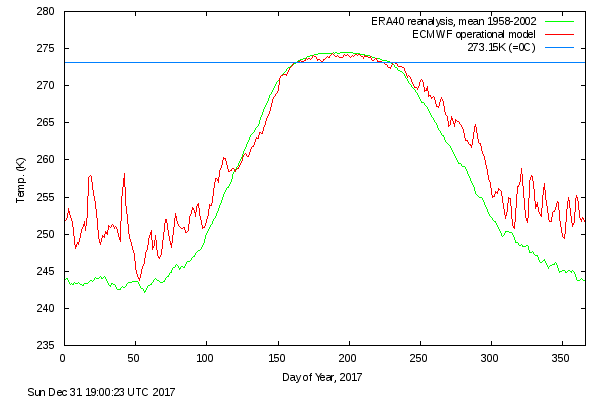
The north pole at 8pm was17 degrees Celsius. 1 degree above listowels temperature. This whole summer has been warmer at the north pole than anywhere in southern ontario canada. Wow you discuss hustons flooding?
Mr, Gillespie,
I don’t think you’ve got that right.
What sensor are you using for “the north pole”? What was its latitude and longitude each day the past 90 days,, and what was its 90 day hourly record? Where was the “sensor” last year, and what latitude and longitude during the previous 90 days? What were its temperatures last year?
The temperature Gillespie posted was likely Fahrenheit, not Celsius, and was likely North Pole, Nunavut. Occam’s Razor.
This storm represents many symbols, one main one it happened on a new moon. Follow dave and abby on linkedin and get involved with the mystery of life and evolution of man. Following symbols is so important. Man cannot see any of thisbecause ego is so inflated he has become a self created godman complex. There are far greater beings in this universe than us. Deflate the ego and participate.
The new moon occurred at the exact time of the eclipse last week.
At that time Harvey was an area of cloudiness and a remnant low.
Stop trolling.
https://weather.com/storms/hurricane-central/harvey-2017/AL092017
We are going thru some of the worst flooding that our city has endured in such a long time and you wrote an article saying that there’s nothing to see here! There’s not even a reference to all the destruction or the suffering that people are enduring in this moment. As far as I know the warmer the waters in the gulf coast, the more energy a hurricane could carry. The warmer the air, the more moisture it can carry as well. All of those are symptoms of climate change.
You have to factor in the effect of warmer temperatures, but you fail to do that, why? Because you’re bent on proving your point that climate change has nothing to do with it.
It’s going to get more and more difficult to continue the nefarious effects of climate change. We can count on you to continue to deny it, regardless of the loss of property and human life. You’re making it more difficult for us, as a society, to start doing the right thing to combat climate change.
Its not “nothing to see here”, but that the flooding is not a new phenomenon. The flood in 1934 was worse, but Houston was much smaller, and anyone who remembers it is probably in a nursing home. Ignorance of history is a mark of zealots, and their arguments.
Climate Change did not cause the flooding. In an unusual circumstance the storm stalled just inland and started to pump the Gulf of Mexico into inland Texas. That unusual storm pattern caused the massive flooding. The lack of Climate Change (1°C per century or about 0.01°C per year) would not have made a measurable difference in the flooding. There is no claimed mechanism within Climate Science that purports to cause a Hurricane to stall just inland as a result of Climate Change. I cannot imagine what you are going through and hope for a quick end to the flooding.
J Mac made the following comment on another thread:
Warming attributed to mankind supposedly only started after WW2. In 1963 the earth was still cooling and continued to cool for another 10 years or so, yet the rain that fell was twice that in Texas. Hard to blame Climate Change for that.
Joe,
You seem to be bent on proving your point that climate change has everything to do with it.
“As far as I know the warmer the waters in the gulf coast, the more energy a hurricane could carry. The warmer the air, the more moisture it can carry as well. All of those are symptoms of climate change.”
No, they are not symtoms of climate change.
The Gulf may be slightly warmer, and that would fuel a hurricane, but the Gulf has been warmer before and fueled much more powerful hurricanes in the past than Harvey, and the bottom line is there is NO evidence that humans have increased the temperature of the oceans through CO2 production. Mother Nature is directing this show.
What happened with Harvey has happened before with no need for input from CO2 or human beings.
The fairly unique thing about Harvey was that it was trapped by the alignment of the weather patterns into sitting over one place for a week straight. Any time a low-pressure system like this stops or stalls, it is going to drown everything underneath it.
Had Harvey moved at the same speed as Katrina, it would have been out of Houston within two days and the flooding would not be nearly as bad as it is.
Hurrican Harvey is a tremendous rainmaker, but it has nothing to to with human-caused CO2. Anyone who says it does should provide some proof of their claim. Don’t bother. I know there is no evidence. And don’t give me that “97 percent” BS, either.
From the weather Channel,
Rainfall Totals
Here are the latest rainfall totals through 10 p.m. CDT Monday, all in Texas unless otherwise specified:
    39.72 inches near Dayton
    36.34 inches near First Colony
    35.15 inches near Pasadena
    34.90 inches near Waller
    34.39 inches near Baytown
    34.30 inches Mission Bend
    33.96 inches near League City
    33.65 inches in Jacinto City
    30.32 inches in South Houston
    29.17 inches near Richmond
    27.69 inches at Houston Bush Intercontinental Airport
    25.16 inches in Sugarland
    21.70 inches at Houston Hobby Airport
    21.88 inches in Smithville
    19.64 inches in College Station
    12.33 inches near Hackberry, Louisiana
    10.85 inches in Galveston
    10.07 inches at Austin's Robert Mueller Municipal Airport
    9.65 inches south-southwest of Lake Charles, Louisiana
    9.37 inches near Victoria
    3.82 inches near Corpus Christi
Notice that the Austin and Corpus stations are several hundred miles from Houston – equal to several states (countries) away up in the Northeast, Europe, or parts of Asia. My dad (Katy, west of Houston downtown by many kilometers) emptied his 6″ rain gauge 4x times (24 inches known rainfall), but estimates it overflowed several times. Been 12 hours since he was at that location, so totals are unknown out there. More than 28 inches best estimate.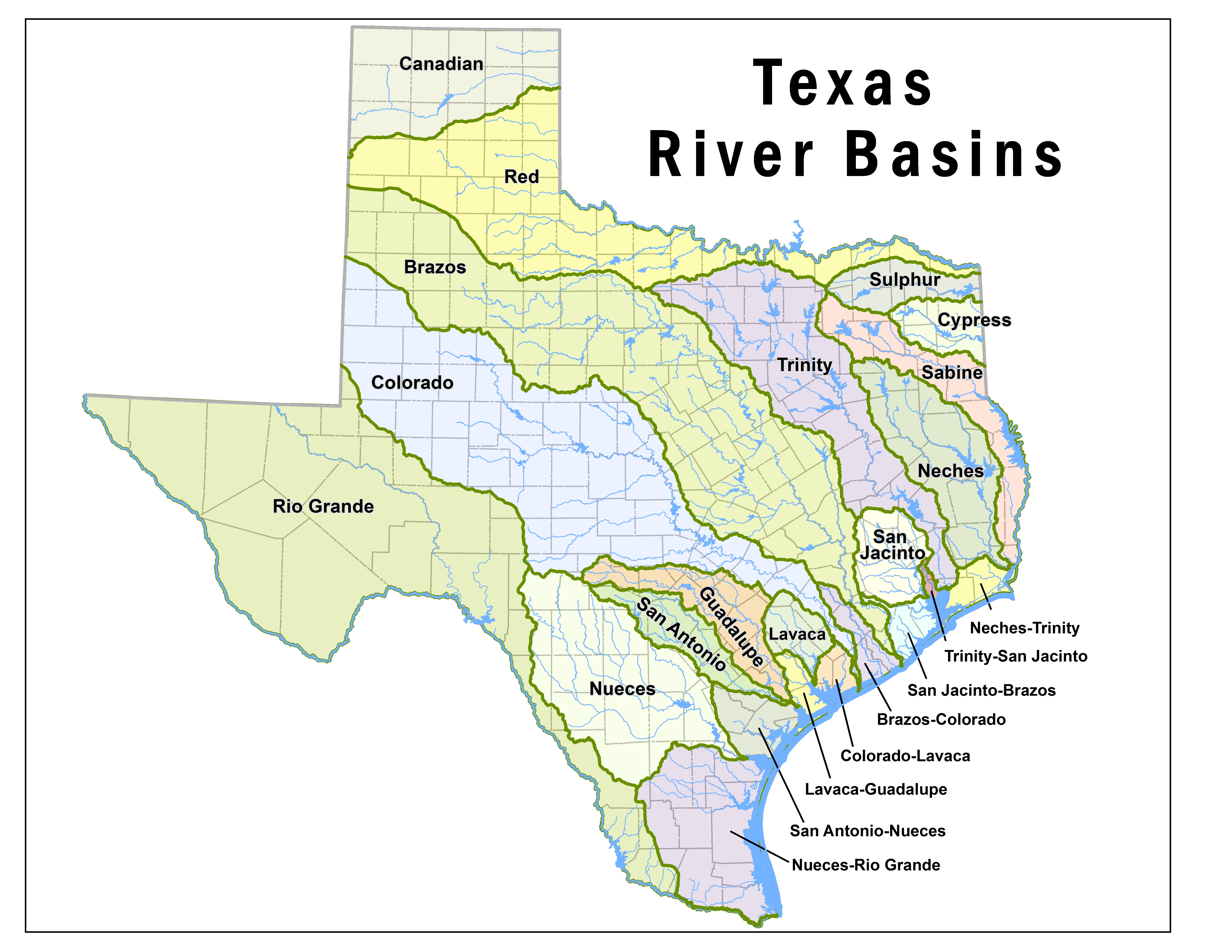
The College Station drainage area (Brazos River) collects a long irregular 80-120 mile x 600 mile area (44,788 mi²) that is northwest of Houston. The Colorado River drains an additional 39,000 sq miles area of TX that will head also head towards Houston, hitting the coast at Bay City TX – slightly south of Houston near the large power plant down there. The Trinity River drains the area north of Houston – It’s flooding also, but is north of Houston – and so not as severely. So far.
ALL of that rain is going to hit Beaumont-Baytown, Houston, Texaas City, Sugarland, Bay City, Rockport and points south in the next 2-3 days. Look at a map of the refineries, then start calculating gas prices for the next few weeks.
(Buy Home Depot, Lowes, Ace Hardware, and Wal-Mart.
I would like to send/email a copy of this post to the BBC Today programme who insist via some bogus professor from Reading University that man made globing warming is indeed the reason for the flooding in Houston. He reasoned that the predictions (from woefully inadequate computer models) of a 6 deg rise in global temperatures would lead to a doubling of the water vapour in the atmosphere; even though it hasn’t happened yet. Future predictions including Al Gore’s crap new film are being blatantly used by the BBC to explain current events without fear of contradiction
Is it possible to email this post as an attachment?
Hurricane season is underway. This happens every year. Global warming can only effect the strength and duration. The amount of rainfall as well. Each storm has characteristics that seem normal. But look at the abnormaties of each
This could be from warming waters. The great barrier reef now is all algae. The water there is only a few degrees warmer than normal. Took millions of years to develop. How long did it take to destroy??
“The great barrier reef now is all algae.”
Mad as a box of frogs…