From the “settled science” department of the UNIVERSITY OF YORK and possibly inspired by Volkswagen…
The research, led by the International Council on Clean Transportation and Environmental Health Analytics, LLC., in collaboration with scientists at the University of York’s Stockholm Environment Institute (SEI); University of Colorado; and the International Institute for Applied Systems Analysis, examined 11 major vehicle markets representing more than 80% of new diesel vehicle sales in 2015.’
Of these markets, they found vehicles emitted 13.2 million tons of nitrogen oxide under real-world driving conditions, which is 4.6 million tons more than the 8.6 million tons expected from vehicles’ performance under official laboratory tests.
Chris Malley, from the SEI, University of York, said: “This study shows that excess diesel nitrogen oxide emissions effect crop yields and a variety of human health issues. We estimate that implementing Next Generation standards could reduce crop production loss by 1-2% for Chinese wheat, Chinese maize, and Brazilian soy, and result in an additional four million tonnes of crop production globally.”
Nitrogen oxide is a key contributor to outdoor air pollution. Long-term exposure to these pollutants is linked to a range of adverse health outcomes, including disability and reduced life expectancy due to stroke, heart disease, chronic obstructive pulmonary disease, and lung cancer.
Josh Miller, researcher at the International Council on Clean Transportation (ICCT), said: “Heavy-duty vehicles, such as commercial trucks and buses, were by far the largest contributor worldwide, accounting for 76% of the total excess gas emissions.
“Five of the 11 markets that we looked at, Brazil, China, the EU, India, and the US, produced 90% of that.
“For light-duty vehicles, such as passenger cars, trucks, and vans, the European Union produced nearly 70% of the excess diesel nitrogen oxide emissions.”
The study estimates that excess diesel vehicle NOx emissions in 2015 were also linked to approximately 38,000 premature deaths worldwide – mostly in the European Union, China, and India.
Susan Anenberg, co-Founder of Environmental Health Analytics, LLC, said: “The consequences of excess diesel NOx emissions for public health are striking. In Europe, the ozone mortality burden each year would be 10% lower if diesel vehicle nitrogen oxide emissions were in line with certification limits.”
At a global level, the study estimates that the impact of all real-world diesel nitrogen oxide emissions will grow to 183,600 early deaths in 2040, unless something is done to reduce it. In some countries, implementing the most stringent standards – already in place elsewhere – could substantially improve the situation, according to the researchers.
###
The study was funded by the Hewlett Foundation, ClimateWorks Foundation, European Climate Foundation, Energy Foundation China, and the NASA Health and Air Quality Applied System Team.
Muddled and confusing (deliberately so) so as to cause maximum panic and shock.
Where is there any actual balance on this NOx thing?
See this:
http://www.telegraph.co.uk/gardening/how-to-grow/diesel-cars-fuel-growth-of-city-trees/
There is also a very old article which I’ve now lost but it mentioned the bemusement of Scandinavian foresters about the panic and subsequent expense the UK got into about ‘acid rain’ Supposedly NOx and SO2 were blowing over the North Sea, making the rain into nitric & sulphurous/sulphuric acids and killing their forests.
Total BS. The trees loved it, as per the above article.
And since the UK started digging epic holes to quarry limestone, using 10% of the power from UK coal plants and creating mountains of gypsum that nobody wants, Scandinavian trees are growing at 75% of the rate they were. It could not get any crazier and yet again we witness another very expensive panic response to an ill conceived and poorly researched (fake) problem.
Just like CO2
Now where NOx reacts to produce ozone, then there may be some of the problems with plant growth and folks’ breathing.
But how to get any better detail than the estimates from computer models that are simply reflections of the closed half asleep minds of hapless machine’s grant & publicity seeking programmers- convinced of themselves that they ‘care’
Of course an epic round of tax rises and a bodge fix are the only inevitable outcomes.
Turkeys vote for Christmas yet again..
In the US, the number of deaths attributable to “on-road diesel vehicle NOX emissions, 2015 was 2,982. For comparison …
Number of deaths for leading causes of death: [2014]
Heart disease: 614,348
Cancer: 591,699
Chronic lower respiratory diseases: 147,101
Accidents (unintentional injuries): 136,053
Stroke (cerebrovascular diseases): 133,103
Alzheimer’s disease: 93,541
Diabetes: 76,488
Influenza and Pneumonia: 55,227
Nephritis, nephrotic syndrome and nephrosis: 48,146
Intentional self-harm (suicide): 42,773
https://www.cdc.gov/nchs/fastats/deaths.htm
And remember, the above are actual counts, the NOX numbers are modeled.
When I was young, we did not have seat belts or a polio vaccine.
Now the young are much more likely to die of cancer or heart disease.
I love the misuse of statistics. Coal is the largest man made source mercury but only because all the larger sources were reduced by regulations.
The point is that you can only mitigate real problems.
No idea of why their real world tests differed to such an extent from lab tests? Doesn’t this suggest that
every pollutant emission should be checked in the realwrold? Assuming these real world tests are right and the lab tests wrong. Replication, I say, replication is in order.
Forget NOX, go after the pollen …
When the researchers looked at the number and rate of deaths and the amount of Poacae, a common pollen found in the Netherlands, they found that the days with the highest pollen counts were associated with an increase of about 6% in death from heart disease, 15% in death from COPD, and 17% in death from pneumonia.
http://www.webmd.com/allergies/news/20000427/high-pollen-linked-death#1
Poaceae or Gramineae is a large and nearly ubiquitous family of monocotyledonous flowering plants known as grasses. Poaceae includes the cereal grasses, bamboos and the grasses of natural grassland and cultivated lawns (turf) and pasture.
https://en.wikipedia.org/wiki/Poaceae
Is NOx a problem? Yes, because mixed with VOCs and sunlight produces ground level ozone. Do diesel veicles emit more than tested? Yes, because tests were cheated in the US and rigged in the EU. Are the 36000 premature deaths real because of this? Not at all. The world is a complicated place and London is not LA.
Climateworks Foundation Board headed by Christina Figueres. Main web page says mission is to engage philanthropy to solve the climate crisis. What climate crisis? Which makes all of these crop yield and mortality estimates suspect.
Seems to me that the problem is VOCs more than NOx.
… said Fox in Sox
🙂
Oh, and ground level ozone was a bigger problem 40 years ago than today.
Rud, you locked at a wrong part of the mission statement. The important part is “to engage philanthropy”. Ms Figueres has an expensive taste, and it needs a lot of neutralization to keep it carbon neutral.
Imprecision of language is steadily worsening. NOx ” affects” crop production. Err.. which way? NOx could be a fertilizer or a poison. Health: the few thousand deaths when you are talking pops like China, EU, Brazil… Hey maybe people laugh themselves to death. I’ve seen deliberate hits of nitrous in New Orleans streets that would be high concentration. Also people getting their teeth fixed or small surgeries get dosed up. I think particulates from diesel may be killing more.
Excerpted from the above commentary on diesel engine exhaust emissions:
The age(s) of the person(s) that are being exposed to the afore noted diesel engine exhausts containing Nitrogen oxide(s) …… is/are surely more important regarding “adverse health outcomes” than is the number of years required to be defined as “long-term exposure”
YUP, it’s the age of the person being forcibly exposed to the dastardly effects of inhaling diesel engine exhausts that should be of primary importance, …… but it is not.
YUP, local, state and the federal government mandates “NO cigarette smoke” around, on or near Public School property and/or near any of the school children because they claim “cigarette smoke” is dastardly dangerous to all those young children, adolescents and teenagers ……. while at the same time, …… said local, state and the federal government mandates that all school children be subjected to breathing “scads of diesel exhaust” because the children are transported to and from school by big ole diesel powered school busses.
Is anyone really concerned about school children inhaling those dastardly dangerous diesel exhaust fumes? Other than me and maybe a couple others, ……. I don’t think so.
> …examined 11 major vehicle markets representing more than 80% of new diesel vehicle sales in 2015.’
Of these markets, they found vehicles emitted 13.2 million tons of nitrogen oxide under real-world driving conditions, which is 4.6 million tons more than the 8.6 million tons expected from vehicles’ performance under official laboratory tests.
Excuse me? They -measured- the diesel emissions? In 11 different parts of the world? And got 2 digit accuracy? Clearly what they say they did (found) and what they really did (model) are not the same thing. They obviously plugged in a multiplier based on the VW differences that were measured and extrapolated.
Too bad. The diesel is a great invention. Great power, great fuel economy.
Also loud and smelly, but hard to have everything.
Giant dually diesel pickups have become de rigeur in the culture of my birth. Some barrel racers now tow their gooseneck homes and barns on wheels with cap-over trucks.
the engine that powers the world
Without diesels civilization as we know it would collapse.
Stalin ordered the development of a diesel aircraft engine. This hare-brained scheme reaped enormous benefits, when the experimental, V-12 aluminum diesel engine was adapted to power the war-winning T-34 medium tank.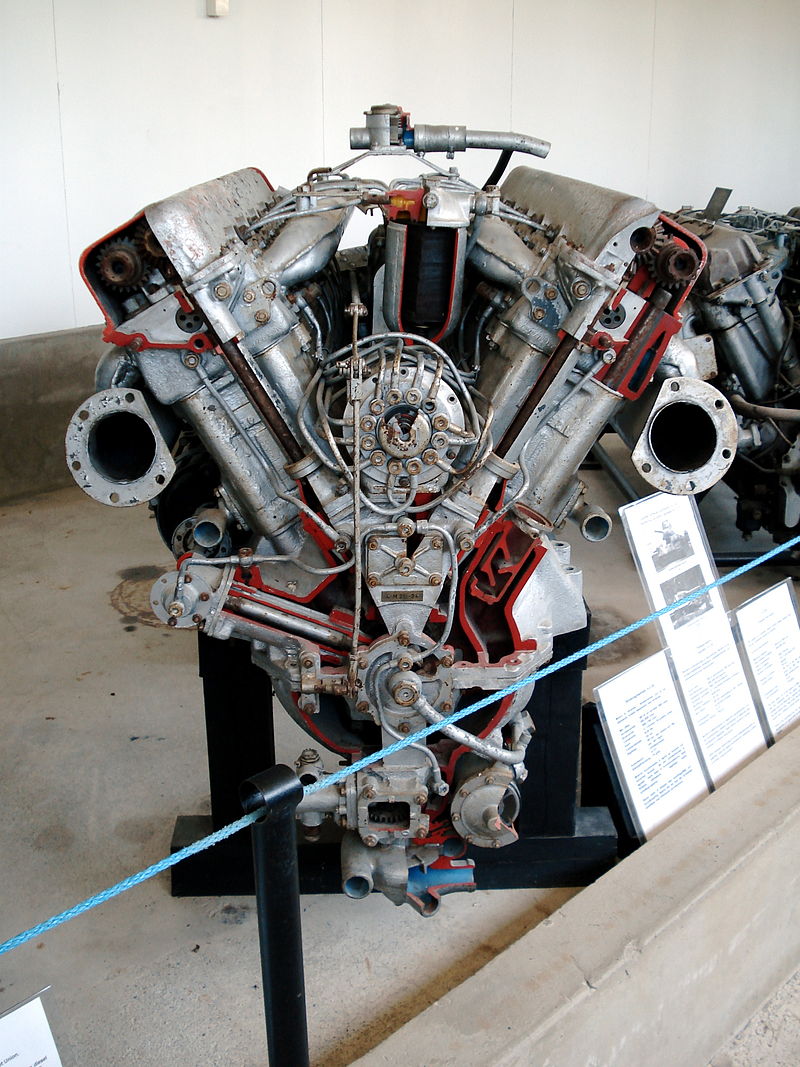
Diesel aircraft engines have actually been used (e. g. Jumo 205 and 207), though somewhat heavy they had excellent fuel economy but did not take kindly to large and sudden changes in power output so were not successful in combat aircraft.
And do you have any concrete information about the B-2 engine being intended for aircraft use? It was never ever used for anything but AFV:s (and and to power oil drills). There was a version with an supercharger borrowed from a Mikulin aircraft engine, but it was used in the KV-3 heavy tank).
A Soviet defector told me about Stalin and the diesel aircraft engine. I had no reason to doubt him.
Stalin might have wanted to keep up with the Jumo 204, not knowing the limitations of diesel aircraft engines. Or he might have come up with the idea himself or from listening to engineers.
It was never used in a production aircraft, since trials didn’t go well. As you say, in actual service it was only in AFV.
TTY,
Here’s a Wiki entry on interwar Soviet diesel aircraft engine development. The experimental AN-1RTK turbo-supercharged diesel engine, development of which began in the early 1930s, might be what “Viktor” had in mind:
https://en.wikipedia.org/wiki/Charomskiy_ACh-30
Diesel engines bad? Try wood-burning stoves. Some interesting figures here: http://www.bmj.com/content/350/bmj.h2757/rr-1
And yet those in power in the UK converted coal-fired power plants to burn wood pellets imported from the SE US.
Demented.
If Diesel fuel is so bad then its use should be banned world wide. If you as an individual believe that the use of fossil fuels is bad then stop making use of all good and services that involve the use of fossil fuels.
After all, it is your money that keeps the fossil fuel companies in business.
Yes, it’s pretty much the line in the sand for standards of living and little issues like that.
Being a Swede, and well acquainted with Stockholm Environment Institute (SEI) and their ‘science’ I suggest that anything sourced from there should be regarded as extremely dubious.
And of course, so many diesels on the road is due to government regulations.
No. It is because diesels are more cost effective than gasoline powered vehicles.
Diesels proliferated in Europe in recent years because the way the required miles per gallon was calculated was slanted toward diesels. (European manufacturers were relatively better at diesels.) In the US, electric-hybrids are used to by manufacturers meet MPG regulations.
Of course, diesels have real cost advantages over gasoline engines in many applications.
When I was a kid, diesel was about half the cost of gasoline. With all the diesel cars on the road, it’s now about 50% more expensive.
I suspect most of the advantage of better mileage is eaten up by the higher cost.
I’m getting sick and tired of all the alarmist reports with virtual death estimates to create a realm of importance.
In the mean time they are shutting down our economies with their BS.
The time has come for a nice Toba like volcanic eruption or a nice astroid impact to show human kind is not in control and linear models are non existing on this planet.or the universe.
By the way, did they send a copy of the report to the Diesel Brothers, they live and breathe diesel engines and I wonder how they will respond if they know the’re going to die prematurely of diesel emissions.
Smoking is dangerous, especially if handling fuel or ammunition. Smoking in bed and children playing with their parents cigarette lighter is a common cause of fires.
Association is not causation. You can not cause someone to get lung cancer. Between my parents, grandparents, the navy, and the work environment; I was over 40 before I was not surrounded by 2-pack smokers. My children were raised in in a non-smoking environment, which meant I needed a shower and a change of close before being around them.
An important part of my job was to ensure accidents and work place environmental issues were insignificant.
When you look at the statistics, smoking is not significant, second had smoke is really insignificant.
Clearly, the largest risk factor is getting old. Since our modern world, helps us live longer; what do researchers do? Look for ‘links’ to ‘premature’ death.
If you need a ‘study’ to tell you have a problem; You do not have a problem.
For example, there was a ‘problem’ determining the allowable occupational exposure to plutonium in the US because of the lack of individuals exposed. Looking at soviet data, there appears to be an issue. In the USSR, you are a non-smoker if you smoke less than a pack a day.
So set the limit at zero. No problem unless your job is setting limits.
Pu is arguably the most poisonous substance in the world, since, if you get even a tiny amount in your lungs, you will get lung cancer. OTOH, you can sprinkle it on ice cream, eat rapidly before the ice cream melts, and you’ll probably suffer no ill effects, as it takes time for the radiation to cause cancer.
Consumption, OK, but not recommended. Inhalation, deadly.
Chimp is wrong. The toxicity of Pu is the same as nicotine. I can buy a cartoon at the grocery store, distill out the nicotine and poison Chimp based on the L/D 50. Chimp will go into convulsions and die. Of course a baseball bat is faster and easier.
So how toxic is nicotine? Millions are addicted, yet when was the last time you saw a smoker go into convulsions.
“it takes time for the radiation to cause cancer”
Again you can not cause cancer. Radiation is a very small risk factor for cancer. There is radiation poisoning if you fission Pu. Based on the USSR, aka the evil empire, complete lack of industrial safety in its weapons plants, it is vodka and smoking that they need to worry about.
Pu is scattered all over parts of Japan right now from the reactor explosions at Fukushima.
I read about some US nuclear scientist long ago who smeared Pu on his hand and then licked it off as a marketing gimmick to show how safe nuclear power is. He apparently lived to a ripe old age.
Retired Kit P: It sounds to me like you’re confusing the chemical toxicity of Pu (heavy metal) with its damaging ionizing effect in long term, close proximity to lung tissue.
I thought the ability of the body to absorb Pu depended on which oxide you were dealing with.
And no, the explosion as Fukushima did not spread nuclear material over the Japanese country side.
The question regarded the initial explosion.
The amount that has leaked out is minor and quickly diluted to meaninglessness in the ocean.
What are the sources for your charts and I notice that there is no scale to tell what the colors mean.
Just because you want to tell lies, does not obligate anyone to believe them.
Retired,
Sorry, but you’re wrong.
Inhaled Pu is lethal.
https://academic.oup.com/aje/article/160/2/163/76549/Lung-Cancer-and-Internal-Lung-Doses-among
I’m all for nuclear power and, in US hands, weapons, but the fact is that getting Pu in your lungs is a death sentence. You might die of something else waiting for the cancer, but if you live long enough, you’ll lose at least part of whichever lung is affected. If you’re lucky.
Not that smoking isn’t bad. Lung cancer killed my aunt and smoking shortened the lives of my mom her other sister.
NOx is produced by high combustion temperatures and the nitrogen in the fuel and air. Diesel engines ignite the fuel by the high temperature caused by high compression ratios. This is a “Doohh!” moment.
These alarming stats flow from the “linear effect no threshold” paradigm. Reject the premise and the stats collapse.
Perhaps there could be a Dilbert strip on this subject.
But wait, Europe has been in love with diesels for small, medium, and luxury cars forever.
Curious how on the internet a 5 minute Google search makes everybody an instant “expert” on everything.
The important conclusion for me seems to be that the laboratory test protocols fail to simulate real-world driving conditions. Which probably also means regulatory emission limits are only tenuously tethered to reality.
Diesels are 25 to 30% more efficient than gasoline, which means less fuel consumption, for the same distance travelled. Also distillation is less complex than refinement, so it is cheaper to produce. It should cost less than gasoline, but is heavily taxed, and there is always supply and demand price movements.
Then there is the expected lifetime of a diesel engine in comparison to a gasoline engine. In general 3x the running life before an overhaul is required.
I have yet to see a convincing study that shows there are adverse health problems from NOx. And I have looked. There are many accusations, but like most of these “you need to be regulated” stories, there is not much actual data that supports the contention.
Modern diesels burn so cleanly, there is no odor or smoke. If they want to regulate it in cities that have ozone problems, they could probably make a rational case for that. Although even that rests more on correlation than causation.
Attacking the rest of us, is just another example of regulating for the sake bureaucratic restrictions, over what you will be allowed to do. I would place a large wager that more people die from the stress of preparing, and paying their taxes, than from exposure to NOx. If we want to save lives, lets start with reducing the tax burden on people, and you would find a statistically significant result from that.
“… the impact of all real-world diesel nitrogen oxide emissions will grow to 183,600 early deaths in 2040 …”
In a world of 8 billion people, 183K premature deaths kinda seem so small that I wonder if it is just a statistical artifact when qualifying for cause of death. This is like climate, human health is much more complicated than climate that it is so hard to qualify for causes. Diseases and trauma are easy to diagnose but air pollution?
When a few smokers outlive non-smokers, you really wonder how researchers can make any real conclusions about human health.
Katie May 15, 2017 at 10:47 pm
It’s important that we know what the x is in NOx – or more to the point what percentage of the NOx is nitrous oxide – which is a so called a greenhouse gas. Nitrous oxide (N2O) absorbs and emits infrared radiation (greenhouse gas) coming off the surface of the Earth.
Nitrous oxide is not a component of NOx, which is only single N atom oxides.
NO2 (nitrogen dioxide) and NO (nitric oxide) do not – so they are not greenhouse gases generated from burning most fossil fuels except pure methane. And N2O (nitrous oxide) which is also released by commercial jets into the stratosphere is also an ozone depleting chemical.
Actually both NO and NO2 do absorb IR.
It’s important that we know what the x is in NOx – or more to the point what percentage of the NOx is nitrous oxide – which is a so called a greenhouse gas. Nitrous oxide (N2O) absorbs and emits infrared radiation (greenhouse gas) coming off the surface of the Earth.
NO2 (nitrogen dioxide) and NO (nitric oxide) do not – so they are not greenhouse gases generated from burning most fossil fuels except pure methane. And N2O (nitrous oxide) which is also released by commercial jets into the stratosphere is also an ozone depleting chemical.
this information has been around for decades. Admittedly I just read the extract – so??? what is the point??
What is “x”?
It is a letter in the English alphabet.