
Guest essay by Eric Worrall
Researchers testing the effects of global warming on a 2000 litre fish tank have warned that the world faces a major collapse of coastal fisheries, because some of their fish died.
Climate change could drive coastal food webs to collapse
Authors
Professor, Marine Biology, University of Adelaide
Professor, Ecology, University of Adelaide
University of Adelaide
May 1, 2017 6.01am AEST
Coastal marine food webs could be in danger of collapse as a result of rising carbon dioxide levels, according to our new research. The study shows that although species such as algae will receive a boost, the positive effects are likely to be cancelled out by the increased stress to species further up the food chain such as predatory fish.
…
Test tank
We used a self-contained ecosystem in a 2,000-litre tank to study the effects of warming and ocean acidification on a coastal food web. This approach can give us a good idea of what might happen to genuine coastal food webs, because the tank (called a “mesocosm”) contains natural habitats and a range of species that interact with one another, just as they do in the wild.
Our food web had three levels: primary producers (algae), herbivores (invertebrates), and predators (fish).
The results show that carbon dioxide enrichment can actually boost food webs from the bottom up through increased algal growth. This benefited herbivores because of the higher abundance of food, and in turn boosted the very top of the food web, where fish grew faster.
But while this effect of ocean acidification may be seen as positive for marine ecosystems, it mainly benefits “weedy” species – a definition that can be applied to some species of algae, invertebrates, and even fish.
In contrast, habitat-forming species such as kelp forests and coral reefs are more likely to disappear with rising CO₂ emissions, and with them many associated species that are deprived of their habitats and food.
Detrimental effect
Our results therefore showed that warming had a detrimental overall effect on the coastal food web we studied. Although higher temperatures boosted algal growth, herbivorous populations did not expand. Because herbivore abundances remained similar and elevated temperatures result in a higher metabolic demand, predatory fish consumed more herbivorous prey, resulting in a collapse of these prey populations.
…
Read more: http://theconversation.com/climate-change-could-drive-coastal-food-webs-to-collapse-76798
The abstract of the study;
Boosted food web productivity through ocean acidification collapses under warming
Authors
Silvan U. Goldenberg,
Ivan Nagelkerken,
Camilo M. Ferreira,
Hadayet Ullah,
Sean D. Connell
First published: 27 April 2017
Future climate is forecast to drive bottom-up (resource driven) and top-down (consumer driven) change to food web dynamics and community structure. Yet, our predictive understanding of these changes is hampered by an over-reliance on simplified laboratory systems centred on single trophic levels. Using a large mesocosm experiment, we reveal how future ocean acidification and warming modify trophic linkages across a three-level food web: that is, primary (algae), secondary (herbivorous invertebrates) and tertiary (predatory fish) producers. Both elevated CO2 and elevated temperature boosted primary production. Under elevated CO2, the enhanced bottom-up forcing propagated through all trophic levels. Elevated temperature, however, negated the benefits of elevated CO2 by stalling secondary production. This imbalance caused secondary producer populations to decline as elevated temperature drove predators to consume their prey more rapidly in the face of higher metabolic demand. Our findings demonstrate how anthropogenic CO2 can function as a resource that boosts productivity throughout food webs, and how warming can reverse this effect by acting as a stressor to trophic interactions. Understanding the shifting balance between the propagation of resource enrichment and its consumption across trophic levels provides a predictive understanding of future dynamics of stability and collapse in food webs and fisheries production.
Read more (paywalled): http://onlinelibrary.wiley.com/doi/10.1111/gcb.13699/abstract
Note: the link to the study does not work in some web browsers, I had to view it using Google Chrome
Unfortunately the full study is paywalled, but attempting to infer global consequences of increased CO2 from a toy eco-system in a 2000 litre fish tank is absurd.
On the positive side, the researchers performed an actual experiment, rather than just running a computer model.
But anyone who has ever kept fish knows how difficult it can be to keep a fish tank eco-system stable. Fish in a tank are subject to numerous stresses, even a small mistake with feeding, water contamination or filtering waste can lead to disease and death.
If the researchers had instead studied regions of the ocean with elevated CO2 levels, they would have discovered plenty of places in the ocean where CO2 levels are naturally elevated well beyond anything anthropogenic CO2 will achieve, due to natural outgassing from volcanic sources.
Many of these reefs are ridiculously healthy, despite corals and fish growing in water which is continuously totally saturated with CO2.
The existence of healthy natural reefs with populations of fish growing in regions of the ocean which are full of CO2, strongly suggests whatever killed the fish in that 2000 litre research tank had nothing to do with CO2.
2,000 liters?!?
Are they kidding? Is that some kind of bad joke? If that’s a mesocosm then my .2 acre backyard is a veritable wilderness refuge.
Yea, 2000m liters does seem a bit on the small side to make any statements about. Rich amateur class, but most amateurs probably do a better job.
Yes, I could list a fair few differences between a 2000 liter tank and the real coastal world!!!!!!!!!! Just how naive can research “scientists” be????
They are based in Adelaide, Australia, y’know that smart state where they all believe coal destroys planets and they all drink evian too.
Yup, an aquarium size of 2,000 liters (528 gallons) is but a drop of water in a teacup compared to these aquariums, to wit:
The Georgia Aquarium in Atlanta, Georgia, USA contains 6.3 million US gallons (24,000 m3) of water and several thousand fish. It measures 284 ft × 126 ft (87 m × 38 m) and the depth ranges between 20 and 30 ft (6.1 and 9.1 m), https://en.wikipedia.org/wiki/Georgia_Aquarium
The S.E.A. Aquarium (South East Asia Aquarium) situated in southern Singapore contains a total of 45,000,000 litres (9,900,000 imp gal; 12,000,000 US gal) of water.
https://en.wikipedia.org/wiki/Marine_Life_Park#S.E.A_Aquarium
The Chimelong Ocean Kingdom is a theme park situated in Hengqin, Zhuhai, People’s Republic of China. Allegedly the world’s largest aquarium featuring 4 whale sharks, manta rays, corals, and many other species. https://en.wikipedia.org/wiki/Chimelong_Ocean_Kingdom
Hell, I’ve got a 500 gallon (1892.L) cistern sitting next to my carport that we made out of the bottom half of a concrete septic tank. My grandmother use to raise goldfish in tanks bigger than that. I wouldn’t call anything less than maybe 50,000 liters (~13.200 gal) a mesocosm (i.e., medium world) when it comes to studying coral reefs. That would at least give you an area of about 13′ depth by 10′ width by 20′ length. Don’t know how you could call anything less a medium scale system, At least according to several websites, the most prolific reefs occupy depths of 18–27 m (60–90 ft).
2000 liters is 2 IBC containers worth, I have two of them in my back yard with the tops cut off which I use to breed fish. As far as things go, they’re as vulnerable an environment as you can get given anything living in them is totally dependent on the person managing them. Occasionally I have even been known to bubble CO2 through them .. we’re talking about an insignificantly small volume of water that is probably more vulnerable to rapid temperature changes than any effect from CO2 .. oh, I see they didn’t make any claim to be regulating temperature in their press statement, I wonder if they recorded it in their ‘study’ or is that, like the sun, an irrelevance ?
I am too damn American, and have problems visualizing SI quantities over mL amounts. Mr former brother in law had at least a 1500 liter fish tank, given a while to think of the volume.
And I hate to think what might be lurking in my 2.0 acres
2,000 litres spread on my front yard, wouldn’t even make it wet enough to need to put my galoshes on, and it certainly wouldn’t qualify my yard as a wet land.
G
“and it certainly wouldn’t qualify my yard as a wet land.”
George, be very careful the EPA doesn’t hear you say that. !!
There’s a joke among Northeast Indiana farmers that you need to make sure your tiles are in working order and have your colverts clear, because if water sits in your field for more then 3 days the EPA will declare it a wetland and seize it.
… though come to think of it, nobody laughs when it’s said. <¿<
schitzree
No joking matter.
That DID HAPPEN in the north end of San Francisco Bay at the mouth of the Napa River. Farmer lost an ages-old dike after a short flood one spring.
Wet mud, couldn’t fix the dike for a few weeks.
Lost the fight, field, the farm, and his life fighting the authorities just trying to “fix the dike” so crops could grow again.
A fish tank may have been too ambitious for the researchers. They should start with an ant farm and work their way up.
2000L = 528 gallons US. That’s less water volume than a 10 person hot tub! Researchers at University of Washington and similar will use this ‘bath tub gin’ experiment to claim a cause and effect relationship showing why killer whale populations are down in selected areas of the Pacific.
Yes! I put my killer whale in a 500 gallon aquarium, and it died!
Yea, not exactly the Sheds Aquarium. For us Americans, 2000 L = 530 gal. Would fit in a 4 x 4 x 4 1/2 foot tank. Hard to imagine a decent representation of a real marine ecosystem in such a small container.
Shedd – dang autocorrect.
Arthur ‘Two Sheds Aquarium’ Jackson, eh? 🙂
I’ll gladly take the 500 gallon tank off their hands. My goldfish can use some more room.
Just don’t move them to a Hamner-Brown aquarium, PLEASE!
Hey Mates, why don’t you drop on over to see us on Zealandia; we have a fish tank you wouldn’t believe. At times it seems like the whole damn place is one big fish tank.
And it would blow your mind to see just how the predatory fishes that live on Zealandia thrive like there is no tomorrow.
They absolutely love the warm waters in Zealandia.
I think you may have your internal plumbing crossed up there Mates, if you think predatory fish don’t like warmer water.
G
PS I won’t be there to greet you, since I have ex-patted to the USA.
NZ supports dual citizenships with the US. You may still qualify if you want. I will not be giving up my NZ and British citizenships when I become an Australian.
I inject CO2 into my tank to maintain the plants. My fish like healthy plants.
They get what they ask for, delibretly …
2,000litres. That’s smaller than my oil tank!
They could only run a 2,000 ltr tank in Adelaide because the wind-provided electricity there can’t be relied upon to keep the aerator pump going for more than 2 hours at a stretch.
+1
BOOM.
http://www.ifocas.org/calculator.htm
A cubed fishtank sides 126cms
Well, mine is, too. If I don’t mow it.
The researchers managed to model the performance of a kelp forest in only 2,000 liters?
They used the “short” variety of kelp – from Antarctica. It didn’t like the higher temps. I lost all my bananas in Manitoba this winter – didn’t like the cold. Another example of total junk science from the blob.
That is 2 cubic meters. a bit bigger than 6 feet by 3 feet by 3 feet.
I bet their jacuzzis are larger.
6x3x3? That’s barely a bathtub.
Wow, 2000 liters. That’s almost–ALMOST–6 % of the size of my backyard swimming pool.
One more example of people who don’t really understand what an ecosystem is elevating themselves to expert status.
You’ll notice most environmental activists live in cities. They have no idea what the real world is, they think everything is going to hell in a hand basket because they never see trees. It’s actually kind of tragic.
BTW, I should mention I’m overly smug on this subject because I’ve spent 40 years living in the wilderness. I actually like cities, but I don’t spend much tie in them. They become more useful the older I get.
That is one thing I noticed years ago. Before a recent study showed there were more than 3 trillion trees in the world I was wondering how many trees there were, my wild guess was there had to be at least a trillion, but I realize that most trees are never seen by people. most people in the developed world live in or near cities. I it is like we are fish. Many fish probably have no idea there is any such thing a dry land. If all the trees you see are from cities or roads you have no idea how many trees there really are, it is easy to see why this limited view would make someone think we are cementing over the world, but it is not anywhere near being true. When I try to explain this too many people they think I’ve gone mad.
“they think I’ve gone mad”
At some point in the recent past the world became an asylum and there was a sign on the door: “Under New Management – Now Resident Owned and Operated”.
Ogden Nash comes to mind:
I doubt if ever I shall see
A billboard lovely as a tree.
In fact, unless some billboards fall
I’ll never see a tree at all.
: > )
I have a similar experience Tom, for the past 40 years I’ve lived on an in-holding in CA’s oldest State Park. Trees as far as I can see in every direction, truly beautiful.
But the folks who live in the cities rarely come here. For about 0 years I ran a B&B on the property hoping to introduce more of them and it was very successful but I maybe changed 500 minds on the subject. Millions more are still living with the illusion the urbanized world is the entire universe.
Some I’m sure live there by choice, others because they think they must. I’ve done my best but I’m retired now.
The world isn’t going to hell in a hand basket. It just isn’t happening. It’s all mediated hype and instilled fear. An illusion.
“For about 10 years…”
All too frequently in this world where Sesame Street influenced millions of youngsters that counting things is normal and represents our world and universe.
Only the sampling and extrapolations are just as looney as the “University of Adelaide’s” 2,000 bottles of beer in their personal ecological disaster and aquarium mismanagement.
There are many false estimates floating around pretending some perversion of reality; e.g. fanatical estimates for stars or planets in the universe. Better known as the limitations of the human mind meet infinity beyond our conception.
Near where I live are some fields being reclaimed by forest species.
When Bradford pears flower in the spring, these fields are ablaze in pear blossoms. Flowers that adorn trees of every size from two feet to fifty feet plus.
The Bradford pear is one of those abused fruiting trees, that fruit with small numbers of pears roughly a peppercorn in size. Birds can easily clean these trees of fruit in a few hours and then following nature’s course drop pear seeds far and wide to sprout.
Trying to walk through these overgrown fields is nigh impossible. The pear trees easily number in thousands per acre.
Nature never does things halfway. Berry eating birds freely seed Virginia holly, wild cherry, Virginia cedar, American beech trees and whatever else was on the menu.
During the Civil War, War of Northern Aggression or War between the States; several famous battles were fought very nearby.
Both Chancellorsville and the Battle of the Wilderness were fought in similar overgrown tangles of trees. During the Battle of the Wilderness, cannon fire ignited the dry woods with the fire claiming many injured men who were unable to escape the burning wilderness. Burned skeletons were found late into the twentieth century.
I’ve observed similar overgrowth occur in a number of states. It is very much a function of forest growth.
As time moves on, taller trees shade out shorter trees, longer lived trees capture upper forest sunlight as shorter lived softwoods perish.
Still, for many years, the overgrown plots of land are rife with trees. When winter arrives and leaves fall, it becomes obvious that there are just as many cedar trees as pear trees. When the forest reaches sufficient age, slower maturing trees begin blooming marking their own portions of overgrowth.
If researchers sampled these overgrown plots and then extrapolated tree populations, there would be many trillions of trees around the world.
The woods on my property is roughly one hundred to one hundred twenty years into a maturing hard wood stand. Yet, there are still hundreds of trees per acre. My oldest oak trees are hardly through their years of youth; and the beech trees are yet small. I long for American Chestnuts to return and join in the fun.
Try telling them humanity occupies 3% of the planet. Mad doesn’t come close. Did I read somewhere that the whole of humanity could each have a house and a yard in the state of Texas? If that’s the case, I would be a plumber.
I have a question. It’s a bit Zen.
Q. If a climate scientist is in a forest and says something, but there is nobody there to hear him, is he still wrong?
A. A climate scientist is never in a forest. That’s too much like the real world for them.
HotScot – I did the Texas House and yard back-of-the-envelope analysis several years ago. I figured out a modest suburban home, somewhat below median value, with a front and back yard. With Google Maps, I figured out the square yardage. I multiplied that by the population of the world. I compared the square footage needed to give each person this suburban home square footage in Texas with the square footage that might be available in Texas. I subtracted some portion, since, obviously, rivers and other geological areas are not suitable for a home. Yes, we could all fit in Texas, with a modest suburban home including front yard and back yard.
I convinced myself we are not “running out” of land.
I then went on to examine whether we were “running out” of food. Basically, I calculated how many calories per year the entire population would need, if assumed a 2,000 cal/day requirement. I figured out that the U.S. annual corn production would meet 1/3 of those calories. At that point, I felt no need to go further to calculate U.S. wheat, oats, rice, soybean, or Russian wheat, Chinese rice, etc. There is plenty of food.
So, I am in no panic about humans crashing the planet by overpopulation. I do believe we can over-fish and lose species. I do believe water is limited, but that existing desalination technology can solve that problem.
Tom, this is also why city folks will go to crazy lengths to protect one tree. Guess what people, there are plenty more trees.
Here in Alberta, most people live well South of the middle of our province, in the area that is farm land and grass land. Few Albertan’s realize that our Northern half (which is larger than the Southern half) is unending trees. It is so large, it can just be estimated to be infinite.
I did 20 years by the fish market in lower Manhattan . The ignorance of the typical urban dweller about the real world is one of our great modern dangers . They can’t even connect the warmth and light in their apartments to the resources providing it , but by pure dumb numbers inflict their ignorant delusions on vast rural regions .
It is only by the almost incidental wisdom of the USA’s electoral college system that those vast areas were able to elect a practical builder like Trump over the urban dysfunctional like Clinton .
Climate Omphaloskepsis:
https://en.wikipedia.org/wiki/Omphaloskepsis
Omphaloskepsis one of my favorite sesquipedalian words.
I have googled both words…:)
How in the name of all that is holy did oceanic food webs survive the entire Mesozoic Era and the Paleocene, Eocene, Oligocene, Miocene and Pliocene Epochs of the Cenozoic Era, all warmer, some by a lot, than now?
Or most of the Paleozoic Era, also hotter?
Most of the Phanerozoic Eon, ie the past 541 million years, have enjoyed much hotter climate than now, with naturally much higher CO2 levels. The plants and their photosynthesizing ancestors were happier campers then.
Well L.C.Smith seems quite happy to stay unemstincticated with all this warm acidic ocean water around. They are not even supposed to communicate with human beings since we left them of the list of important sea critters.
g
“How in the name of all that is holy did oceanic food webs survive the entire Mesozoic Era and the Paleocene, Eocene, Oligocene, Miocene and Pliocene Epochs of the Cenozoic Era”
Because they weren’t in a fish tank.
I would compare this to the Biosphere 2 near Tucson, AZ. Neither is a real environment.
That was my thought. It was very similar to the fish tank experiment. It was a self-contained environment designed to see if humans could sustain themselves on Mars.
It didn’t go well because of a whole bunch of unanticipated problems like the morning glories taking over the rain forest. link As far as I can tell, nobody has yet succeeded in creating a completely self-sustaining self-contained self-regulating ecosystem. The more recent mars habitat analogs build in ‘supply missions’.
As I recall, wasn’t there a bit of fraud involved with Biosphere 2 project, something about food and supplies being surreptitiously inserted into the biosphere by outside scientific monitors to ensure the participants didn’t starve.
They say they’re innocent. link 🙂
“Nobody”? I thought that was where we resided.
No humans have succeeded in duplicating that on a small scale.
Here is a non paywalled copy.
http://onlinelibrary.wiley.com.sci-hub.io/doi/10.1111/gcb.13699/
I briefly skimmed the paper, was thinking about a clever reply, but I cannot come up with a better description than the title of this post. Good job Eric.
Thanks Charles & James 🙂
From the paper I think they had 12 X 1,800l tanks, simulating 3 different scenarios, run at 900ppm CO2 and +2.8C above ambient, claiming those are the predicted numbers for the end of the century.
Still doesn’t make it realistic, though.
That’s a big tank for a home enthusiast and a tiny tank for anything serious.
As soon as I saw the term “ocean acidification” I tuned out.
Latitude, et al. hit this bogus spitball of a junk science claim out of the park when a particularly vile little troll calling itself “Julienne” kept up a steady spew of grossly inaccurate claims:
Latitude: “… aquariums in the house are a decent example of why the ocean acidification does not work…. It’s common for CO2 levels in a closed house to be 1,000 ppm or higher. Aquarists maintain pH by simply adding buffer…. The oceans will not become more acidic unless they run out of buffer…. and as long as carbon dioxide is converted to calcium carbonate that won’t happen.”
(https://wattsupwiththat.com/2012/03/08/climate-change-impacts-in-the-usa-is-already-not-happening/#comment-916209 )
Latitude: “… Julienne, are you aware that CO2 is nothing more than an acid, and that there are much stronger acid releases in the ocean…….that do not lower pH? As far as acids in the ocean……CO2 is a non-player.”
(https://wattsupwiththat.com/2012/03/08/climate-change-impacts-in-the-usa-is-already-not-happening/#comment-916247 )
{continued below}
Latitude: “Julienne Stroeve says, March 8, 2012 at 8:19 am: Latitude, there are many studies out there that contradict what you say above, including the recent Science paper. Do you have evidence to show that atmospheric CO2 does not impact ocean pH? — Chemistry is easy………..biochemistry is hard. First, show all those clean surfaces where pure chemical reactions take place……can’t be done, it’s a biological process. CO2 can only lower pH in the lab, where you continue to inject CO2 until you deplete all of the buffers. Buffers are replenished in the ocean by bacterial processes in the sediment. The boundary layer between the aerobic and anaerobic…the oxic. As you increase CO2 levels in the real world, the oxic migrates closer to the surface making the process faster. Biological processes produce such a huge amount of acids…..it makes the whole CO2 acidification look stupid and
silly….which it is. Bacteria alone produce so much acid and CO2…that it dwarfs anything CO2 could do…..”
(https://wattsupwiththat.com/2012/03/08/climate-change-impacts-in-the-usa-is-already-not-happening/#comment-916267 )
Pat Moffitt: “Many of the loosely defined ‘harmful algal bloom’ cells were too small for the counting methods routinely used prior to the late 80s. An increase in harmful blooms can be the result of changes in salinity, temperature, silica, grazing pressure, flushing times, allelopathy, tidal range, nutrient ratios, wind, mixing, light, state changes, end point bias …”
(https://wattsupwiththat.com/2012/03/08/climate-change-impacts-in-the-usa-is-already-not-happening/#comment-916270 )
{continued below}
Stark Dickflüssig: “Julienne Stroeve says, March 8, 2012 at 8:39 am: Latitude, so you are saying that all the published studies on how atmospheric CO2 changes the pH of the Ocean are wrong? — … there are no papers that show this. Yes, there are many papers that purport to show that CO2 may cause a decrease in ocean pH, but absolutely nothing to demonstrate clear causation in the pH of the actual, physical oceans of the Earth.
Unless you, Julienne, know of some paper that states such unequivocally, I would suggest you retract your baldly unscientific statement that ‘atmospheric CO2 changes the pH of the Ocean’.
(https://wattsupwiththat.com/2012/03/08/climate-change-impacts-in-the-usa-is-already-not-happening/#comment-916307 )
E.M.Smith: “… the proposed bad consequence of oceans [being] ‘less alkaline’ is the inability of shell fish to make shells. [However,] the distribution of freshwater clams into areas with surface water pH in the very acid 4.x range kind of says that’s not a problem: http://chiefio.wordpress.com/2012/03/08/clams-do-fine-in-acid-water/. Also, there are many megatons of carbonate on the ocean bottom ( ‘fish gut rocks’ along with diatoms, et al.) that will buffer the pH such that it can’t change much at all. Oh, and don’t forget the megatons of METAL NODULES, a.k.a. manganese nodules, that have precipitated out on the ocean bottom. They, too, are going to prevent acid conditions from forming…”
(https://wattsupwiththat.com/2012/03/08/climate-change-impacts-in-the-usa-is-already-not-happening/#comment-916356 )
{continued below}
John West: “In addition to above……. To go from 8.3 to 7.0 pH using H+ concentration as apparently used by the [self-snip], it’d take a 1900% increase. So, a 26% increase even rounded to 30% isn’t much. It’s crazy to use %’s with pH — if any of my chemists tried that …”
(https://wattsupwiththat.com/2012/03/08/climate-change-impacts-in-the-usa-is-already-not-happening/#comment-916357 )
Latitude: “Julienne Stroeve says, March 8, 2012 at 9:53 am: Latitude and others, Scripps has been investigating the impacts of dissolved CO2 and pH both in the laboratory and in the oceans. — Who was it that said something about keeping up?
Scripps blockbuster: Ocean acidification happens all the time — naturally:
Until recently we had very little data about real time changes in ocean pH around the world. Finally, autonomous sensors placed in a variety of ecosystems “from tropical to polar, open-ocean to coastal, kelp forest to coral reef” give us the information we needed.
It turns out that far from being a stable pH, spots all over the world are constantly changing. One spot in the ocean varied by an astonishing 1.4 pH units regularly. All our human emissions are projected by models to change the world’s oceans by about 0.3 pH units over the next 90 years, and that’s referred to as “catastrophic”, yet we now know that fish and some calcifying critters adapt naturally to changes far larger than that every year, sometimes in just a month, and in extreme cases, in just a day.
https://wattsupwiththat.com/2012/01/09/scripps-paper-ocean-acidification-fears-overhyped/.”
(https://wattsupwiththat.com/2012/03/08/climate-change-impacts-in-the-usa-is-already-not-happening/#comment-916363 )
{continued below}
Smokey: “Julienne Stroeve says, What I have been asking you to back up is your assertion that atmospheric CO2 is not important in terms of ocean pH levels. — … Atmospheric CO2 levels, being less than one four hundred-thousanths of the CO2 contained in the oceans, are not important. To assume atmospheric pH is important to oceans is to assume the tail wags the dog. More accurately: that the flea’s wagging tail wags the dog’s tail that wags the dog.
To help Julienne get up to speed on the subject, here are some articles that deconstruct the “ocean acidification” nonsense:
{4 great links debunking ocean acidification junk science}
Ocean pH varies far more than the calibration tolerances of the recording instruments, therefore the claim that there has been a change of 0.1 pH cannot be supported. Like most of the alarmist claims, ‘ocean acidification’ is a baseless assumption. …”
(https://wattsupwiththat.com/2012/03/08/climate-change-impacts-in-the-usa-is-already-not-happening/#comment-916456
{continued below}
Jimbo: “Julienne Stroeve says, March 8, 2012 at 9:53 am: Latitude and others, Scripps has been investigating the impacts of dissolved CO2 and pH … They have a laboratory apparatus that enables studies on the effects of varying CO2 and oxygen levels on marine organisms in a controlled setting. — The Oceans are not a lab. …”
(https://wattsupwiththat.com/2012/03/08/climate-change-impacts-in-the-usa-is-already-not-happening/#comment-917134 )
Gail Combs: “Julienne Stroeve, you will not get anywhere here on WUWT, because most of us have scientific training of some sort, so the newest scare scenario just isn’t going to fly. … In short, this is why you are being ignored: Chemical Laws for Distribution of CO2 in Nature: http://www.co2web.info/esef4.htm …”
(https://wattsupwiththat.com/2012/03/08/climate-change-impacts-in-the-usa-is-already-not-happening/#comment-917157 )
{continued below}
David A: “Oh Julienne, I forgot the link to my post. http://www.co2science.org/articles/V13/N9/EDIT.php. While visiting, you may wish to read these also. All of [them] debunk the disaster meme of CAGW and ocean acidification. …
{6 articles linked in comment}
(https://wattsupwiththat.com/2012/03/08/climate-change-impacts-in-the-usa-is-already-not-happening/#comment-918046 )
Janice, I believe you’ve just become the WUWT historian of record. I more or less expected that to happen after you finished your last project and now we have clear evidence. 🙂
Well, Mr. Bartleby, I can’t claim to have done any additional research — I just used that handy dandy little anthology (I just used Ctrl – F and entered “acidification”).
The hard part was breaking up my comment into parts — aaaarrrgh!! I STILL had one part go into the spam bin — no “your comment is awaiting moderation,” just **POOOOOF!!** (ha, ha! smirks WordPress) gone.
Thank you for your vote of confidence AND for the chance to vent. Huff …. puff….. huff…. puff….. Frown.
#(:)) (smiling at you, though)
Thanks Janice.
2000 litres is 528.34 gallons, hardly an ecosystem and sure as hell not even big enough to be a pond. If they went to one of those big public aquaria that contain all sorts of fish, the occasional shark, maybe even a crab or two, and took measurements there twice a day, i might listen, but then their experiment would fail badly because they wouldn’t be allowed to alter the pH of the water to suit themselves.
Sorry, but this isn’t science. It is twaddle.
528.34 gallons is about 28.34 gallons larger than my hot tub.
My swimming pool, which is saltwater, is 30,000 gallons and it’s not excessive, just a regular octagonal pool that happens to be deep enough for me to teach open water diving candidates in. I would hesitate to describe it as an “ecosystem”, though it does occasionally grow algae imported on our equipment from the Monterey Bay.
Sheesh. Octagonal? How did I do that?
The pool is a very conservative rectangular shape. The house is octagonal. I had no idea my fingers and brain have been working against me like that…
They used six species, and only ran the test for three and a half months.
They boosted the temperature by 2.7C for the “hot” tanks. According to their appendix,
“The physical condition of the predators, based on Fulton’s condition factor (Bolger & Connolly, 1989), remained unaltered by future climates (ANOVAs: df(1,8), p > 0.7 for OA, T and OA×T). The only 5 fish that died, out of the total of 84 individuals, were distributed among the mesocosms with elevated temperature.”
In other words, the fish were fine and healthy, and they don’t know why they died… but anyone who ever kept tropical fish wouldn’t bat an eye. It could be anything. For one thing, they “tested” the temperature adaptation that they expect to happen over the next 80 years or so in 14 weeks, and didn’t allow for reproduction.
There were some interesting effects, too. For example, herbivore production in these heavily-controlled tanks varied by a factor of four (about 0.4 grams per month to about 1.6 grams per month) in the high CO2 + high temp tanks. They also had a threefold variation in predator weight gain in the high-temp only tanks.
Here’s the kicker: According to their numbers, six of the nine non-control tanks had equal or better production among predators and herbivores than the control tanks, and only three had lower outcomes. Considering that two of the three “bad” results fell outside of their 95% confidence interval, I’d start looking at what they screwed up in their tank management in the high CO2 + temp environments…
Hoe many Great Hammerhead sharks were among those predatory species ??
G
I’ve got a 2500 gallon fish pond, almost 5 times bigger than these pikers, and I’ve kept all my fish alive. In fact my fish and plants are all loving the extra CO2 (so says MY research) and multiplying like crazy, so I’m sure my results show that their results are just from incompetence…the first rule of fish ponds is keep your fish and plants alive…
Adelaide? They are still suffering from blackouts.
I had a cousin who suffered from blackouts.
We finally convinced him to stop doing drugs.
Modern [political/social] scientists are prone to exaggerate to absurd extremes in both time and space, forward and reverse. The limited frame of reference traditionally recognized by science and promoted by the scientific method is, apparently, an inconvenient, restrictive truth.
Well at least they didn’t just use a computer model.
I can get more than 2000 litres of water in my hot tub and the ecosystem in there is alive and well
This taps into a big puzzle.
In high school, in my oceanography class, we took a trip to the shore and captured samples of sea live we could catch with some nets we set on the floor, bayside, for a while.
We hauled in our catch, then dumped the catch into a waiting salt water tank – there were 3-4 students per tank.
In the end, the very tiny crabs grew, and captured and ate everything else – which I guess was shrimp and fish and I don’t recall what else. Really, kind of sad and morbid.
This always reminds me of playing Chess, or Risk, or Monopoly: at first, there is something of a balance of powers, but eventually one trend overrules the rest. So, it seems that in competitive environments, some species will dominate, but in that domination seal its own fate. The crab died once all food source was gone.
Frankly, for those who have faith in the theory of evolution, you have to deal with this phenomenon: one party gaining enough advantage to run rough-shod over others. This would produce a status quo quite unlike what we see out there in the real world. Sure, it is a dog-eat-dog world out there, but the only monocultures we see are man-made, and those suffer from various inevitable problems.
In nature, we see many species amazingly integrated and sustained over vast stretches of time without nose-diving it all, as did this aquarium, and as did my high school aquarium. Sure, species go extinct, but we still live in a world where any biome we might stumble upon has an amazing array of community members somehow carrying on in very complex arrangements. Extraordinary claims require extraordinary evidence, and I just have not heard any defense of this long-term sustained complexity in the defense of evolution. So, I am skeptical of the simple, limited claims of evolution.
I think you must have changed the ecosystem you were studying, which led to it all going pear shaped. How would you like to be that aquarium, that had this benign little octopus in a big tank along with a whole bunch of quite big sharks.
The sharks started getting disappeared; like overnight. How does a big shark get emvanished with no water spilled out of the tank.
A late night video-camera discovered the secret. Little cute octopus ran them down and killed them and ate them one after another. Now I knew that a six foot octopus could squeeze itself through a hole the size of a shilling; and actually watched one do exactly that to remove itself from the boat that caught it in a net.
But who knew they can do the same trick inside out, and surround themselves about an eight foot shark. That is some nasty preditation if you ask me. On second thoughts; don’t ask; I just can’t bear the thought of how big a something they might be able to eat.
G
No, I heard it was a 2,000,000 ml oceanic simulator.
Re:
Didn’t get the memo OBVIOUSLY.
Here ya go, Nagelkerken, Connell, and Goldenberg:
CO2 UP. WARMING STOPPED.
“CO2 UP. WARMING STOPPED.”
Now, now. Its not fair to use Facts against AGW F.U.D.
😉
A microcosm of a mess.
For more see OCEAN ACIDIFICATION- SEA FRIENDS
This is a hell of a good reason why such people should NEVER be put in charge of ANY ecosystem…. especially the Earth.
There is more data represented by this simulated aquarium than by that tank in the study:
“Finding Nemo” — aquarium in dentist’s office
(youtube)
This is a 2700 litre tank …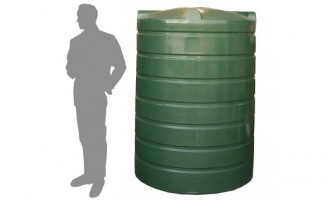
Disney’s Living Sea (tank) holds 21,576,847 Liters.
For perspective, Great Lakes hold 22,712,470,704,000,000 Liters.
Test tank held 2,000 Liters.
Need one say more about how unrealistic the test was.
Of course, these are Orstrayleyah’s sceancists, from the same University that sacked Murray Salby because he ‘knew too much’.
Perhaps we should study my 1,500 gallon septic tank? I know something NATURAL is going on there!
1,500 gallons? Piker 🙂
My local planning board made me put in a 3,000 gallon septic tank. They decided my house had 10 bedrooms and of course they got away with it.
I’ll be happy to talk septic tanks. I think I have the largest septic tank in the county.
What size is the drain field?
You’ll be amazed at the similarities … a lot of technology for marine coral and fish tanks is adapted from sewerage treatment!