From the “in a word, no” department and the AMERICAN CHEMICAL SOCIETY comes this same tired old story we keep hearing from eco-activists tht believe bugs are more “sustainable” than beef. Because cattle make methane, and that will set the world on fire someday.
The buzz about edible bugs: Can they replace beef?

Edible bugs might sound unappetizing to many Westerners, but they’ve long been included in traditional diets in other regions of the world, which are now home to more than 2 billion people, according a report by the U.N. Food and Agriculture Organization. The report also notes that about 1,900 insect species have been documented as a food source globally. That they’re a source of protein is well established, but if the world is to turn to bugs to replace meat, the critters will need to offer more than protein. Iron is a particularly important nutrient that is often missing in non-meat diets, causing iron-deficiency anemia, which can lead to lower cognition, immunity, poor pregnancy outcomes and other problems. In light of these concerns, Yemisi Latunde-Dada and colleagues wanted to find out whether commonly eaten insects could contribute to a well-rounded meal.
The researchers analyzed grasshoppers, crickets, mealworms and buffalo worms for their mineral contents and estimated how much of each nutrient would likely get absorbed if eaten, using a lab model of human digestion. The insects had varying levels of iron, calcium, copper, magnesium, manganese and zinc. Crickets, for example, had higher levels of iron than the other insects did. And minerals including calcium, copper and zinc from grasshoppers, crickets and mealworms are more readily available for absorption than the same minerals from beef. The results therefore support the idea that eating bugs could potentially help meet the nutritional needs of the world’s growing population, the researchers say.
###
The authors acknowledge funding from the King’s College London.
The abstract that accompanies this study is available here.
The American Chemical Society is a nonprofit organization chartered by the U.S. Congress. With nearly 157,000 members, ACS is the world’s largest scientific society and a global leader in providing access to chemistry-related research through its multiple databases, peer-reviewed journals and scientific conferences. Its main offices are in Washington, D.C., and Columbus, Ohio.
Sooooo, what are all of those that want us to eat bugs eating? I mean, after all, if they are so concerned about sustainability they should all have been practicing what they’re preaching for some time now.
Yea! Just like SpottedAl Gorbal and M. DiCaprio ride their bikes to Australia using polar bears and baby seals as convenient hopping stones!
I require approx 60 grams of protein per day. I don’t do dairy (lactose intolerant) so how many bugs must I eat daily?
Hi Tom,- A European bug wrangler reared 488.4 Kg of edible cricket Acheta domesticus per square meter annually with a production rate of 1.34 Kg per square meter daily of crickets. Based on this cricket variety composition from bug research data this production schedule worked out to 0.28 Kg of protein per day produced per square meter.
I have worked out the calculation for a 6 foot tall non-obese 175 pound male protein requirement of 87.5 grams protein daily & trust this is relevant enough to orientate you. If all that protein was supplied by this kind of cricket then all the 87.5 gr. protein could be reared in the equivalent space of 0.3125 sq.mt. Which means that person’s annual protein requirement could be raised on 114 sq.mt.
Soybean at 40% protein content, based on average yield range, would require 626 – 183 sq.mt. to provide the same 175 pound person’s annual protein at the rate of 87.5 gr. daily. However, I must point out that I have not calculated the area required to produce the feedstock for this kind of cricket & different diets give different food conversion ratios.
In terms of edible A.domesticus cricket weight, rather than their unprepared total mass weight, on a diet of 50% soluble carbohydrate, 10% protein, 5% fat, 8% fiber, ash, trace mineral/vitamin & 12% moisture feed for every 1.59 Kg feed you get 1 Kg of edible cricket.
In 2015, based on USA farm commodity prices, I calculated that formulating one’s own feed from bulk stock meant that each Kg of the above feed formula would cost US$0.14 for it’s protein & carbohydrate ingredients. In a simplified estimate, to rear 1 Kg A. domesticus cricket edible portion the feed cost was around US$0.22.
Thank you, and your information is interesting but I just want to know how many crickets do I have to eat daily.
And cricket waste is a great fertilizer! BUT, I will feed the crickets to the trout and then eat the trout for dinner.
Again Tom, – My internet went down & still some glitches. Your original question was # of bugs to get 60 gr. protein. This depends on the type of insect, since bugs have different % protein (& fat). Before going further let me say that insect protein amino acid profiles differ & one should not assume 60 gr. of bug protein as the only protein would provide a perfect human amino acid complement without any vegetable sourced amino acids to round the protein out.
Acheta domesticus crickets are being introduced into households more as a dried & milled ingredient to incorporate into baked & fried goods, rather than as a pile of cooked crickets to chow down. Since rearing conditions, feed & age create variations in a bug’s harvest weight I will use A. domesticus female fresh weight of 400 mg/ cricket for convenience (age mate males weigh less) as a conservative reference.
So the answer to your question is “alot” if figuring on crickets; well over 200 A. domesticus crickets. I am not getting prompt internet access to my prefered source so will not specifiy here the moisture content of fresh crickets or the % protein in fresh crickets from memory. For now, to give you some context, I will repeat one claim that crickets can be 60% protein by dry weight mass. If you are interested in more specific details let me know & since I expect my internet to improve soon will follow up.
I’m lactose intolerant also, beginning 30 days after turning 17. I <3 dairy, it just needs to be fermented first; and bugs do a great job (not insects, bugs, the things lots of insects eat)
I’ll agree they are healthy. I won’t agree that beef will cause the world to burn.
The whole idea is a total ruse anyway. These CAGW hypocrites attack cows because they emit “carbon” from the grass that they ate that came from the air but then wholly support wood burning power generation that emits “carbon” from the trees that they “ate” that …. came from the air. What do I have wrong here?
You thought about it for a moment. That’s where you went wrong.
Yeah, no fair using logic.
Mike M You did not think about it quite enough. The carbon that the cows took in came from CO2 via plants, some of which is emitted as methane. Methane has a global warming potential 72 times that of CO2 in a 20 year period. So the cow converting CO2 into methane increases the current warming significantly.
But the methane only lasts about 8 years in the atmosphere before breaking down.
If the weather were to warm dramatically, the methane would start breaking down even quicker.
Here in Northern Vermont I am surrounded by dairy farms … and we don’t know winter anymore from all that methane heating. Excellent, actually, and good beef.
So the cow converting CO2 into methane increases the current warming significantly.
No. There is about 220 times more CO₂ in the air than CH₄
“seaice1 October 27, 2016 at 9:08 am
The carbon that the cows took in came from CO2 via plants, some of which is emitted as methane. Methane has a global warming potential 72 times that of CO2 in a 20 year period.”
Sorry mods, but this post is a load of carp. Seaice1, you haven’t a clue!
Methane schmethane. Methane is virtually irrelevant compared to WV which masks the same wavelengths.
You people are the ones regularly using the term “carbon” in your narrative, that is until the argument goes against you forcing you to revert back to the correct molecular names of the substances. Regardless, you cannot get around the FACT that the “carbon” came from the air! You made that bed …
And coal is really really old wood (and other organic matter). So why is wood ok to burn when it’s young and green and much less efficient fuel, but not ok when it’s old and black and efficient? Those wacky Greenies.
drednicolson. Because wood is part of our current carbon cycle. Fossil fuels are adding to the carbon in the current carbon cycle. All the carbon in wood was taken out of the atmosphere recently. All the carbon in coal was taken out of the atmospheres millions of years ago. Surely you can see the difference?
Whether or not you think that adding carbon is harmful or not, you surely cannot disagree that burning fossil fuels adds to the amount of carbon currently in the atmosphere, averaged over a few years, whereas burning wood does not.
My tiger salamander rescued from our well a few years ago doesn’t even seem to like fresh caught grasshoppers . Prefers freeze dried crickets .
Pieces of raw liver on a string works well too. I had one of those for a while when I was a kid.
A piece of raw liver?
That implies raising vertebrates . And
higher life forms are what’s broiling the planet .
Oh , and I use a hemostat I happen to have around .
I am going to fire up the charcoal grill this evening. Beef steak, swordfish steak and some burgers. Bugs not welcome.
michael
Good luck with that, the United States didn’t rise to the greatest power and democracy in history by eating crickets and buffalo worms and I seriously doubt it will revert to such primitive practices. Perhaps we should consider butchering and consuming crackpot scientists and hairbrained journalists? Their contribution to the food supply would surely be more valuable to society than their current worth.
But wouldn’t you get mad scientist disease?
Only if you eat the brains.
But they’re from another planet so those brains are an alien species.
Yes but the people eat such things in the great nation North Korea, which the Greens want us to emulate. I guess it goes well with the tree bark and grass.
You’d need some mighty small lassoes to do roach rustling.
Bugs will make efficient high-quality feed for chicken & aquaculture fish.
Excerpted from above commentary:
HA, me thinks “The idea of eating bugs” should, … or will surely, …. “open up a can-of-worms” along with “creating a buzz”.
Quoting above commentary, again:
HA, and the “buzz” being created surely has something to do with …….. just what kinda “iron” did those crickets have “high levels” of? Ya best find out before ya go on a “cricket eating diet” because, to wit:
Excerpted from included source link:
And now that everyone knows there are two (2) kinds of “dietary iron” ……. the “can-of-worms” involving the improbability of there being any actual, factual truths or evidence, scientific or otherwise, to support the currently touted …… “Out of the trees and across the hot and dry African Savannah Theory of Homo Sapien Evolution” …… should surely now cause the subject of “human origins” to be hotly debated.
Our early human ancestors evolved to be the “brainy” ones of the family of Great Apes simply because our ancestors resided on the shores of large bodies of saltwater which provided them an easily accessible, abundant supply of “iron rich” high protein food sources, ….. to wit:
Insects are in the animal kingdom.
YUP, but as far as I know there are not very many “hemoglobin” eating insects that one could “make-a-meal” out of ….. or would even want to try to eat.
HA, “blood sucking” mosquitoes, ticks, bedbugs, leeches, etc., are not “heme” animals that one can easily make a meal of to ward off their hunger pains.
I don’t like the way a cricket’s hind legs will poke your palate and stick in your throat. Perhaps we need a GMO cricket with less chitin.
Will the masses wake up to the hypocritical tyranny that people (hello Gore!) who decree that WE eat bugs and live in cold, dark hovels themselves dine on steaks and luxuriate in palaces?
OK, so bugs and worms have protein and iron. But we get more than that from beef, pork, etc., and one of those things is vitamin B12. Humans require it but our bodies can’t synthesize it like other mammals. Do bugs and worms have useful quantities of B12? What about vitamin D? Some humans can’t synthesize that either.
Notice what the authors did not do? They did not recruit volunteers to go on a diet where their protein source was converted to crickets and then measure week to month health effects. No, what they really mean is that all those other people (especially the poor) need to eat bugs.
Enforcement mechanism? SNAP benefits to restrict payments for beef and other tradition farm foods but provide higher benefits for “sustainable protein products.” Additionally new regulations for reduced price lunches to require integration of “carbon-neutral proteins.” The poor (and especially their children) can eat bugs. Because you know, we care about them. It’s for their good.
Just cook your choice of protein in cast iron pots, iron intake solved.
I used to drive past a pond on the way to work where the owner had hung a bug zapper from a tree limb over the water. One of his neigbors, whom I worked with, said they used to go down in the evenings and watch the fish as they come to the surface every time the bug zapper zapped. Better than TV he said. Probably better than politics, too.
One something like this;
http://www.northerntool.com/images/product/400×400/168/168459_400x400.jpg
And not just one cricket but, a mouthful so they have to chew, feel the texture and then swallow it…and nothing to drink til the crickets are down the gullet.
I don’t want to watch though…too ew!
‘eating bugs could potentially help meet the nutritional needs of the world’s growing population, the researchers say.’
How could the world population be growing if its nutritional needs aren’t being met already?
Gamecock is not interested in having “researchers” choose what he eats, nor paying for people to tell him what he should be eating.
I’m reminded of the line from the movie “Tom Horne”, in which Steve McQueen, being dined by the evil cattle baron on lobster, says, “I never et a bug that big before.”
Australian haute cuisine: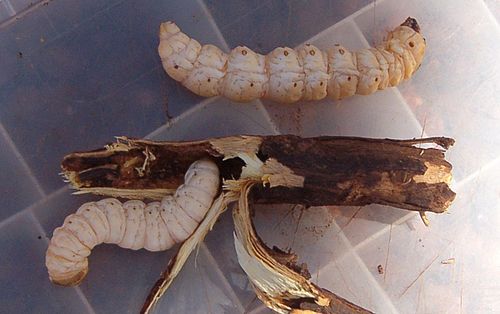
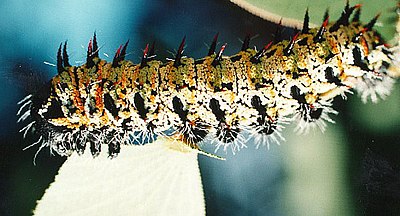
South African haute cuisine:
With caterpillars, who needs a tractor?
Perhaps the bravest man who ever lived was the first one to eat one of them critters.
Snowpiercer is a movie that reveals the global warmer mindset.
Rich elite living in luxury, commoners relegated to eating bugs.
All caused by an attempt to stop global warming.
IMO Tilda Swinton is close to being a unique personality among players active today, or perhaps ever. Her politics are abhorrent, but she is a brilliant actress, as well as being a giantess. I am an abroad Scot of her ilk, BTW.
So I’m doomed to be a vegetarian?
My grandfather disapproved of my father eating pork. My father disapproved of me eating seafood, and would faint if offered some escargot r frog legs. I tried preserved smoked locusts in Central Asia. They don’t taste good, in my opinion, but I guess I would eat them if very hungry. Allegedly, John the Baptist survived on locusts in the desert. Chinese eat everything that moves (though they prefer pork and noodles if they can afford them). Some Central American tribes enjoy roast tarantula.
Ancient Sumerians never ate any fish, believing it to be poisonous. This belief was also widespread in the Middle Ages in Europe (the French word “poisson” for “fish” comes to mind). Orthodox Jews and their cultural and religious plagiarists, the Muslims, cannot stand the thought of eating pork. In Israel, the law requires that swine should not touch the Jewish soil. As a result, non-believers raise swine in Israel on platforms made of wooden planks. Israeli pork is abundant good. But you’d never find pork in Turkey or in Egypt. Being non-orthodox in Muslim countries can go only so far; but you can kill your wife there if you suspect that she is unfaithful. The authorities may give you a slap on the wrist for that, but they will stone your wide to death if you ask them. Angela Merkel wouln’d survive a day in some Muslim regions where I lived time to time.
I’ve met Americans who viewed traditional, delicious Russian foods as utterly disgusting (“Yuck, fish eggs!”), unhealthy (“Salt pork fat with rye bread? It’ll kill you!”) or dangerous (“Wild mushroom soup??? No, thanks, I wouldn’t think of trying it!”)
However, tastes of different peoples, as well as the possibility of eating insects and worms, is not the point here. The point is that green activists hate the civilisation that feeds them, they want to destroy our traditions, they are illogical and suicidal. When it comes to the destruction of Western way of life, everything goes for them, that’s why they are in bed with the Sharia Islam: the worse, the better!
Besides, insects form the largest biomass on Earth that produces far more methane than cattle. Let green activists chew cockroaches, if they so prefer. Parasites feel an affinity toward parasites, I reckon.
My grandfather disapproved of my father eating pork. My father disapproved of me eating seafood, and would faint if offered some escargot r frog legs. I tried preserved smoked locusts in Central Asia. They don’t taste good, in my opinion, but I guess I would eat them if very hungry. Allegedly, John the Baptist survived on locusts in the desert. Chinese eat everything that moves (though they prefer pork and noodles if they can afford them). Some Central American tribes enjoy roast tarantula.
Ancient Sumerians never ate any fish, believing it to be poisonous. This belief was also widespread in the Middle Ages in Europe (the French word “poisson” for “fish” comes to mind). Orthodox Jews and their cultural and religious plagiarists, the Muslims, cannot stand the thought of eating pork. In Israel, the law requires that swine should not touch the Jewish soil. As a result, non-believers raise swine in Israel on platforms made of wooden planks. Israeli pork is abundant good. But you’d never find pork in Turkey or in Egypt. Being non-orthodox in Muslim countries can go only so far; but you can kill your wife there if you suspect that she is unfaithful. The authorities may give you a slap on the wrist for that, but they will stone your wide to death if you ask them. Angela Merkel wouln’d survive a day in some Muslim regions where I lived time to time.
I’ve met Americans who viewed traditional, delicious Russian foods as utterly disgusting (“Yuck, fish eggs!”), unhealthy (“Salt pork fat with rye bread? It’ll kill you!”) or dangerous (“Wild mushroom soup??? No, thanks, I wouldn’t think of trying it!”)
However, tastes of different peoples, as well as the possibility of eating insects and worms, is not the point here. The point is that green activists hate the civilisation that feeds them, they want to destroy our traditions, they are illogical and suicidal. When it comes to the destruction of Western way of life, everything goes for them, that’s why they are in bed with the Sharia Islam: the worse, the better!
Besides, insects form the largest biomass on Earth that produces far more methane than cattle. Let green activists chew cockroaches, if they so prefer. Parasites feel an affinity toward parasites, I reckon.
Horses? Some historic perspective: My Onkel Rheinhold (1896-1917) wrote home from the western front that he had acquired a positive opinion of horseflesh as the best (compared with what he otherwise had to eat). My father, Franz (1903-89), back in Hamburg, also appreciated the taste during the “turnip Winter” of 1916-17. Almost as many horses as humans were slaughtered during World War I. Does anyone imagine that the dead horses were given a ‘decent burial’? If you’re hungry enough, you’ll eat leather, bones, and anything else that appears to be possibly digestible.
Never got to meet my uncle, ‘disappeared’ at Passchendaele 28 years before I was born.