The following link is to a Tweet from Peter Gleick regarding Typhoon Haiyan. It includes a map of the subsurface temperature anomalies at depths of 100 meters in the northwest tropical Pacific for October 2013. Overlaid on it is the storm track of Typhoon Haiyan. The map was included in Jeff Masters blog post here at the WeatherUnderground.
http://twitter.com/PeterGleick/status/400701313593270272/photo/1
The source of the map is the JMA webpage here. My figure 1 is the full map JMA presents for the depth of 100 meters. The JMA also presents temperature anomalies at 3 other depths: 50, 200 and 400 meters. Why didn’t Gleick and Masters present the temperatures at those depths as well?

Figure 1
I’ll let you decide. See Figures 2, 3 and 4.

Figure 2
###

Figure 3
###

Figure 4
And Figure 5 is the JMA map of sea SURFACE temperatures for October 2013.

Figure 5
Animation 1 is of the temperature anomaly maps at 100 meters from the JMA, from their start month in January 2011 to October 2013. The October 2013 conditions do not look “remarkable” when compared to the anomalies since January 2011.

Animation 1
Animation 2 is of the temperature anomaly maps at 100 50 meters from the JMA, from their start month in January 2011 to October 2013. The October map in the area of Haiyan doesn’t appear remarkable either.

Animation 2
Jeff Masters refers to Tropical Cyclone Heat Potential (TCHP) in his blog post, but fails to illustrate it. Animation 3 is an animation of Tropical Cyclone Heat Potential from NOAA here. At best, the Tropical Cyclone Heat Potential was low-to-mid scale at the time of Haiyan.
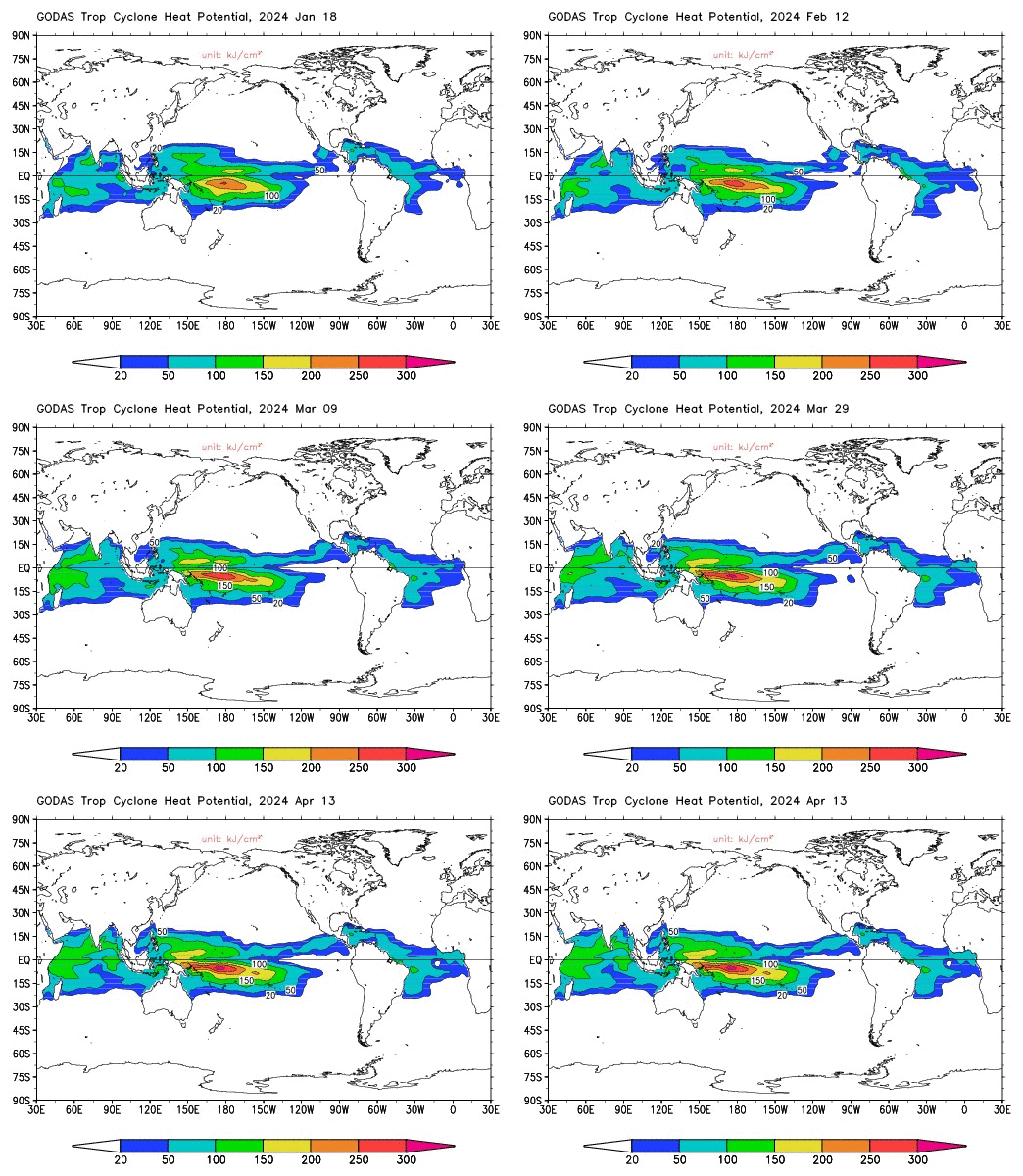
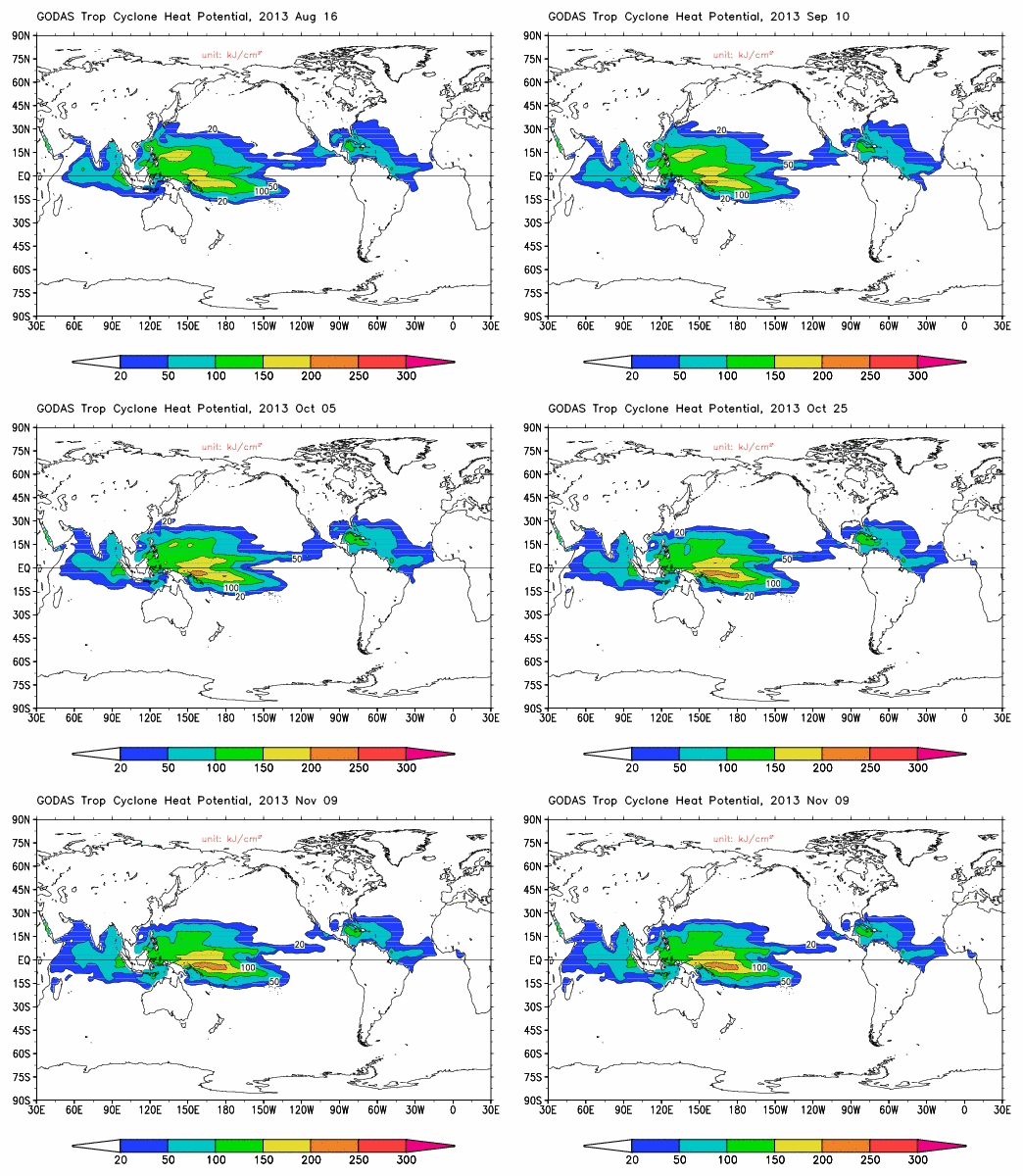
Animation 3
Now, I’m not disagreeing with Jeff Masters that a typhoon stirs subsurface waters and that the band of warm water at depths of 100 meters COULD have contributed to Haiyan. But Masters’s blog post was speculation. His use of the word “could” in his opening sentence is the indicator (my boldface).
A remarkable warming of the sub-surface Pacific waters east of the Philippines in recent decades, due to a shift in atmospheric circulation patterns and ocean currents that began in the early 1990s, could be responsible for the rapid intensification of Super Typhoon Haiyan.
Masters did not state the subsurface waters at depths of 100 meters WERE responsible, but “could be responsible”. He was speculating.
But Gleick presented it as fact, without showing that sea surface temperature anomalies and the temperature at 50 meters were not unusually warm.
One alarmist speculates and another presents it as fact. Why doesn’t this sound unusual to me?
That happens pretty frequently on both sides of the debate.
hunter says:
November 14, 2013 at 5:45 am
Tropical storms may certainly draw on energy deeper than “a few meters” once they’ve formed, but the certainly don’t form (or draw on) the anomalies of a even a month-long series. They are an instant phenomenon based on instant conditions. They simply don’t have any capacity to care what the past or future holds, to say otherwise is anthropomorphisation or the sort of magical thinking that leads idiots to say that the denial creates the reality.