Guest Post by Willis Eschenbach
In my last post, “Emergent Climate Phenomena“, I gave a different paradigm for the climate. The current paradigm is that climate is a system in which temperature slavishly follows the changes in inputs. Under my paradigm, on the other hand, natural thermoregulatory systems constrain the temperature to vary within a narrow range. In the last century, for example, the temperature has varied only about ± 0.3°C, which is a temperature variation of only about a tenth of one percent. I hold that this astonishing stability, in a system whose temperature is controlled by something as fickle and variable as clouds and wind, is clear evidence that there is a strong thermostatic mechanism, or more accurately a host of interlocking thermostatic mechanisms, controlling the temperature.
 Figure 1. The behavior of flocks of birds and schools of fish are emergent phenomena.
However, this brings up a new question—although the change in temperature is quite small, with changes of only a few tenths of a percent per century, less than a degree, sometimes the global average temperature has been rising, and sometimes falling.
So what are some of the things that might be causing these slow, century or millennia long drifts in temperature? Is it changes in the sun? I think that the explanation lies elsewhere than the sun, and here’s why.
The temperature control system I describe above, based on the timing and duration of the onset and existence of emergent temperature phenomena, is temperature based. It is not based on the amount of forcing (downwelling solar and greenhouse radiation).
By that I mean that the control system starts to kick in when the local temperature rises above the critical level for cloud emergence. As a result, by and large the global average temperature of the planet is relatively indifferent to variations in the level of the forcing, whether from the sun, from CO2, from volcanoes, or any other reason. That’s why meteors and volcanoes have come and gone and the temperature just goes on. Remember that at the current temperature, the system variably rejects about a quarter of the available incoming solar energy through reflections off of clouds. We could be a whole lot hotter than we are now, and we’re not …
This means that the system is actively regulating the amount of incoming solar energy to maintain the temperature within bounds. It doesn’t disturb the control system that the solar forcing is constantly varying from a host of factors, from dust and volcanoes to 11 and 22 year solar cycles. The thermoregulation system is not based on how much energy there is available from the sun or from CO2. The resulting temperature is not based on the available forcing, we know there’s more than enough forcing available to fry us. It is set instead by the unchanging physics of wind and wave and pressure and most of all temperature that regulates when clouds form … so when the sun goes up a bit, the clouds go up a bit, and balance is maintained.
And this, in turn, is my explanation of why it is so difficult to find any strong, clear solar signal in the temperature records. Oh, you can find hints, and bits, a weak correlation to this or that, but overall those sun-climate correlations, which under the current paradigm should show visible effects, are very hard to find. I hold that this shows that in general, global average temperature is not a function of the forcing. The sun waxes and wanes, the volcanoes go off for centuries, meteors hit the earth … and the clouds simply adjust to return us to the same thermal level. And this weak dependence of output on input is exactly what we would expect in any significantly complex system.
So if the sun is not guilty of causing the slow drift in global average surface temperature over the centuries, what other possible defendants might we haul before the bar?
Well, the obvious suspects would include anything that affects the timing and duration of the onset and existence of clouds, or their albedo (color). Unfortunately, cloud formation is a complex and poorly understood process. Water droplets in clouds form around a “nucleus”, some kind of particle. This can be sea salt, dust, organic materials, aerosols, a variety of types and species of microorganisms, black carbon, there are a host of known participants with no clear evidence on how or why they vary, or what effects they have when they do vary. Here’s a quote from the abstract of a 2013 scientific paper, emphasis mine:
The composition and prevalence of microorganisms in the middle-to-upper troposphere (8–15 km altitude) and their role in aerosol-cloud-precipitation interactions represent important, unresolved questions for biological and atmospheric science. In particular, airborne microorganisms above the oceans remain essentially uncharacterized, as most work to date is restricted to samples taken near the Earth’s surface. SOURCE
Here’s another example:
Cumulus clouds result from the ascent of moist air parcels. An unresolved issue in cloud physics is why observed cumulus cloud droplet spectra even in the core of cumulus clouds are broader than the spectra predicted by cloud droplet nucleation and condensational growth in adiabatically ascending parcels (Pruppacher and Klett, 1997). SOURCE
Cumulus clouds are one of the most common types on earth and we don’t even understand cloud nucleation there. The problem is that the size and composition of atmospheric aerosols, and the complex interaction between those aerosols and the various organic and inorganic atmospheric chemicals, ions, free radicals, and natural and man-made particles, plus variations in the type and amount of microbial populations of the atmosphere, plus the ability of one chemical to adsorb onto and totally change the surface properties of another substance, all have the potential to affect both the timing and the duration of both cloud formation and precipitation, along with cloud optical properties. As such, they would have to be strong contenders for any century-scale (and perhaps shorter-scale) drifts in temperature.
Another possible cause for the slow drift might be the proposed cosmic ray connection, sun’s magnetic field –> cosmic ray variations –> changes in cloud nucleation rate. I see no theoretical reason it couldn’t work under existing laws of physics, I made a “cloud chamber” as a kid to see radioactivity come off of a watch. However, one difficulty with this cosmic ray connection is that the records have been combed pretty extensively for sun/climate links, and we haven’t found any strong correlations between the sun and climate. We see weak correlations, but nothing stands out. Doesn’t mean they don’t exist, but it may be indicative of their possible strength … or as always, indicative of our lack of knowledge …
Another cause might be the effect on thunderstorms of gradual changes in the earth’s electromagnetic fields. Thunderstorms have a huge (think lightning bolts) and extremely poorly understood electromagnetic complement. They serve an incredibly complex electromagnetic circuit that couples the atmosphere and the surface. It ties them together electromagnetically from the “sprites” that form when thunderstorms push high above the surrounding tropopause, and from there in various ways through dimly glimpsed channels the electromagnetic current runs down to and up from the ground. Thunderstorms also are independent natural electrical Van de Graaf machines, stripping electrons in one part of the thunderstorm, transporting them miles away, and reuniting them in a thunderous electrical arc. We have no idea what things like the gradual changes in the location of the Magnetic Poles and alterations in the magnetosphere or variations in the solar wind might do to the timing and duration of thunderstorms, so we have to include slow alterations in the global magnetic and electrical fields in the list of possibilities, perhaps only because we understand so little about them.
The next possibility for slow changes involves the idea of bifurcation points. Let me take the alteration between the two states of the Pacific Decadal Oscillation as an example. In each of the states of the PDO, we have a quasi-stable (for decades) configuration of ocean currents. At some point in time, for unclear reasons, that configuration of ocean currents changes, and is replaced by an entirely different quasi-stable (for decades) state. In other words, somewhere in there is a bifurcation point in the annual ebb and flow of the currents, and at some point in time, the currents take the path not recently travelled and as a result, the whole North Pacific shifts to the other state.
Now, even in theory one of these two state has to be more efficient than the other in the great work of the heat engine we call the climate. That great work is moving energy from the equator to the poles. And in fact there is a distinct difference, one of the two states is called the “warm” state and the other is called the “cool” state.
Intuitively, it would seem that IF for whatever reason the Pacific Decadal Oscillation stayed permanently in one state or the other, that the world would end up either warmer overall or cooler overall. Let me explain why I don’t think the PDO or the El Nino/La Nina or the North Atlantic Oscillations are responsible for slow drifts in the regulated temperature.
The reason is that just like the thunderstorms, all of those are emergent phenomena of the system. Take the PDO as an example. Looking at the Pacific Ocean, you’d never say “I bet the North Pacific stays warm for decade after decade, and then there’s a great shift, all of the sea life changes, the winds change, the very currents change, and then it will be cold for decade after decade”. No way you’d guess that, it’s emergent.
And because they are emergent systems, I hold that they too are a part of the interconnected thermal regulation system, which in my view includes short term emergent systems (daily thunderstorms), longer term (multi monthly Madden Julian oscillations), longer term (clouds cooling in summer and warming in winter), longer term (3-5 years El Nino/La Nina), and longer term (multidecadal PDO, AMO) emergent systems of all types all working to maintain a constant temperature, with many more uncounted.
And as a result, I would hold that none of those emergent systems would be a cause of slow drift. To the contrary, I would expect that they would work the other way, to counteract slow drift and prevent overheating.
Moving on, here’s an off-the-wall possibility for human induced change—oil on the global oceans. It only takes the thinnest, almost monomolecular layer of oil on water to change the surface tension, and we’ve added lots of it. This reduces evaporation in two ways. It reduces evaporation directly by reducing the amount of water in contact with the air.
The second way is by preventing the formation of breaking waves, spray, and spume (sea foam). Spray of any kind greatly increases the water surface available for evaporation, depending on windspeed. Remember that evaporation due to wind speed is the way that the thunderstorm is able to sustain itself. So when the amount of area evaporating is decreased by ten or twenty percent due to lack of spray, that will commensurately decrease the evaporation, and thus affect the timing of the onset and the duration of thunderstorms.
…
OK, you gotta love this. I thought “time for more research” after writing the last paragraph, and I find this:
Sailors who traditionally dumped barrels of oil into the sea to calm stormy waters may have been on to something, a new study suggests. The old practice reduces wind speeds in tropical hurricanes by damping ocean spray, according to a new mathematical “sandwich model”.
As hurricane winds kick up ocean waves, large water droplets become suspended in the air. This cloud of spray can be treated mathematically as a third fluid sandwiched between the air and sea. “Our calculations show that drops in the spray decrease turbulence and reduce friction, allowing for far greater wind speeds – sometimes eight times as much,” explains researcher Alexandre Chorin at the University of California at Berkeley, US.
He believes the findings shed light on an age-old sea ritual. “Ancient mariners poured oil on troubled waters – hence the expression – but it was never very clear what this accomplished,” says Chorin. Since oil inhibits the formation of drops, Chorin thinks the strategy would have increased the drag in the air and successfully decreased the intensity of the squalls.
Hmmm … good scientists, not such good sailors. As scientists, I’d say they only have part of the answer. They should also run a calculation on the increase of the evaporative area due to the spray, and then consider that the hurricane runs on evaporation. That’s why they die out over the land, no moisture. Cut down the spray, put oil on the water, cut down the evaporation, cut down the power of the storms. And just like you get sweatier and hotter if a muggy day prevents evaporation, the same is true of the ocean. If you cut down evaporation, it will get warmer.
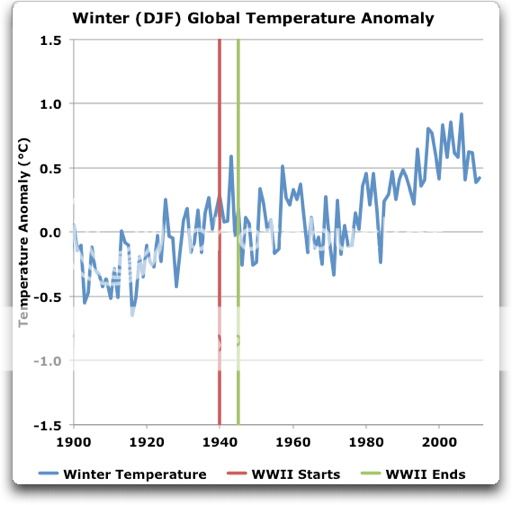
Of course, the counter-argument to the oil-on-the-water cuts evaporation and warms the ocean hypothesis was World War II. It put more oil into all of the oceans of the world than at any time before or since, and during the war in general the world was quite cold … dang fact, they always get in the way.
Having said that, as a blue-water man I can assure you that the authors of that claim are not sailors. Sailors don’t dump oil in the water to lower the wind speed, that’s a landlubber fantasy. They do it because it prevents waves from breaking and drops and spray from forming, so it can help in rough conditions. It doesn’t take much, you’d be surprise at the effect it has. You soak a rag in motor oil and tow it a ways behind the boat when you are drifting downwind. If the Coast Guard catches you, you’ll get a ticket for causing a sheen on the water and rightly so, but if it saves your life once, it’s probably worth it. Heck, when you’re caught in a big offshore blow, if it just has a placebo effect and reduces your personal pucker factor, its probably worth it … but I digress.
One thing is clear, however. The climate has been on a slow drift up and down and up and down, warm in Roman times, cold in the Dark Ages, warm in the Middle Ages, cold in the Little Ice Age, warm now … so while humans may indeed play some part the post-1940’s drift (down, then up, now level), it’s likely not a big part or we would have seen it by now … and in any case if we did have an effect, we still don’t know how.
I want to close by noting the power of the paradigm. If the paradigm is that greenhouse gases are the likely reason for slow climate drift because you assert (curiously and incorrectly) that temperature slavishly follows forcing, then you will look for variations in all the things that affect those GHGs.
But once the paradigm shifts to describing the climate as composed of interlocking active thermoregulatory mechanisms, we find ourselves with a range of entirely different and credible candidates for slow drift that are untouched and uninvestigated. It may be something above, or something I haven’t even considered, the change in plankton affecting the clouds or something.
This is why the claim that we have identified the “major forcings” as being say CO2 and methane and such ring hollow. Those are only the major players within the current paradigm. The problem is, that paradigm cannot explain a system so tightly thermoregulated that over the last century, the global average surface temperature only varied by ± one tenth of a percent … engineers, please correct me if I’m wrong, but given volcanoes and aerosols and the like that is a record that any control systems engineer would be proud of, and it is done with things as ephemeral as clouds. To me, that fact alone proves that the earth has a thermostat, and a dang precise one for that matter. A truly wondrous and marvel-filled planet indeed.
In friendship and exploration of the aforesaid marvels,
w.
Discover more from Watts Up With That?
Subscribe to get the latest posts sent to your email.

[Sorry for this being so long…]
Yes, Willis. Asking the right questions is the first step toward getting the right answers. Everyone here at WUWT is, in one way or another, aware that the wrong questions have been asked by those controlling the dialog on climate. And we others haven’t quite seen those right questions, either.
In simple systems it is easy to find the right questions. The more complex the system the more difficult it is to find those questions. And when questions are asked that have (seeming) non-answers or when they keep on not affecting the answers, it is time to ask, “Are we asking the right questions?”
The existing paradigm controls/dictates the questions. If the paradigm is wrong, the right questions will never get asked.
Thinking outside the box of a current paradigm that is getting us nowhere is the only way to break out of the box and get to where the right questions can be asked. It isn’t that all of a sudden we will see that the questions asked are better. When we are barely out of the box – the current paradigm – our questions are still being affected by our “in the box thinking.” When we are looking outside the box of the current paradigm we need to TRY to get way outside the paradigm, to ask, “What if _______ is the real case? What then?” Of course, in the full process anything inside or outside the paradigm still has to then be falsifiable and pass.
To ask such questions as “What would a sea spray droplet do?” or “What if the system is acting like an intelligence of its own?” IS a way of breaking out.
Good questions lead to answers – but that can happen only if we can recognize when the answers are worth a damn.
– – –
The Reductionist approach to science has worked for some time now, so we can’t really blame the climate guys for thinking that forcings. Reductionist, bottom-up, always looks for forcings, because in Reductionism the whole is always the sum of the parts. “When you do A, then B follows” thinking means that they are thinking that “If B, then there must be an A causing it.”
But can Reductionist thinking even work when addressing chaotic systems? When everything affects everything else, where is the bottom? What are the starting points? What are the pieces of which the whole is made, when A flows into B flows into C flows into D, . . . into A, and it all happens in blendings, not discrete steps? And which is the first?
As an engineer I know that even in the very discrete cause-and-effect world of machines the questions can be hard to find, and when working with the wrong question(s) the right answer is not going to show up.
So, yes, what should be happening is not a Reductionist approach (which is getting no one much of anywhere) but a Brainstorming Session, where all questions are on the table, where no judgments are made. New questions may not in themselves be the right questions, but they can LEAD to the right questions.
Look at all the areas in which questions have been asked – tree rings, ice cores, corals, SST, AMO, PDO, ENSO, Laurentian ice sheet melting, UHI, cosmic rays . . . on and on. Right questions are NOT that easy to come by.
Without the right questions, the right answers are impossible.
At this point, who knows what the right questions are? It is clear that continuing to ask the same ones and expecting them to inform us properly is insanity.
With such an enormous chaotic system, we are – so far – in over our heads. Finding the right paradigm which will dictate better questions is the way to go. Maybe we can’t find that better paradigm until some of the right questions fall out of the sky on us.
Go, Willis. Keep asking. If nothing else, you are brainstorming and you might lead someone else to ask the right first question.
Maybe you already have. Maybe the system itself acts like an intelligent, self-regulating being. If we rule that out, we may be ruling out ever understanding it. I’ve seen so many times where researchers say that we just don’t have the computing power, that the complexity is too much for our computers. Our computers, however, are built on the Reductionist principle. Maybe that in itself is the roadblock.
If the system is in itself intelligent (in a way we can’t fathom or accept now), by accepting that as a possibility, we might find that first right question that opens up the floodgates.
How do stem cells know what type cells to become? DNA is a Reductionist fundamental. But stem cells are directed by something to become one type of cell in one part of the body and another in another part of the body, and can be ANY type of cell. The directing of which to be – is that Reductionist? Does it come from protrusions on neighboring cells that trigger the stem cell? Or does the gestalt of the body act in a coordinated way, informing organs when to do what and stem cells to become whatever? In fact, what IS the thing we call the autonomic nervous system, or the subconscious, too? Are they intelligences, regulating and informing?
Is climate the same?
Are there intelligences existing that Reductionism doesn’t allow for, and which are beyond it?
Are these too metaphysical of questions to be asking? In a Reductionist world like science is now, certainly. But is Reductionism holding back science in this case? The scientists – deep in the Reductionist paradigm – may be the wrong ones to ask. Metaphysicians are not the ones to ask, either, because they don’t have their feet on the ground enough.
Willis, you are posting an entirely new start here. Let’s hope you are triggering a bit of a revolution. New sciences may be possible out of it, maybe new maths. You may be opening Pandora’s Box. But until it is opened, no sense can be made of chaos or chaotic systems. The science is inadequate at present. The math is, too. The modelling programs cannot be written without adequate math and paradigms. Some day the models WILL exist. But not till the underlying system intelligence is found – WAY outside the present (non-Pandora’s) box.
Steve Garcia
Alfred Alexander says:
February 9, 2013 at 2:59 am
Perish the thought, I have absolutely no desire to ban Steven. He’s one of the good guys, and a friend. He just drives me spare with his posting technique. It’s a shame because he is a really smart guy and his science-fu is generally strong.
But when he comes in, drops a one-liner and leaves, I want to tear my hair out … or more usually, tear his hair out.
In general, this site is light on banning. I think William Connelley is still banned, as is jae, but noboby gets banned for just being a jerk, you’ve got to get into pushing some serious abuse to get 86ed .
And Mosher has never done anything of that sort, in fact I’ve probably abused him (for his posting technique) more than the other way around.
Finally, like you, I’ve learned things from Steven.
So no, set your mind at ease, Mosh is not going anywhere, and I do hope he comes back here and explains his one-liner.
w.
@ur momisugly lgl (February 9, 2013 at 10:03 am)
Thanks for the clarification. I also managed to find the following:
http://www.sciencebits.com/files/pictures/research/calorimeter/calorimeter2.gif
(from: http://www.sciencebits.com/calorimeter )
Why are some solar-terrestrial time series truncated at ~1926 even though they go back many decades further?
I illustrated a phase shift in solar-terrestrial resonance quite some time ago, but I didn’t emphasize this land-ocean longitudinal framework:
Chen, T.-C.; & Wu, K.-D. (1992). Semi-annual oscillation of the global divergent circulation. Tellus 44A, 357-365.
http://www.tellusa.net/index.php/tellusa/article/viewFile/14967/16781
Some help visualizing the longitudinal coordinates of aa & extra-aa:
http://www.openstreetmap.org/?minlon=60&minlat=-7&maxlon=240&maxlat=7&box=yes
Many years ago, in a book by James Gleick, (Chaos, Making a New Science) I was introduced to Chaos in the scientific term. One of the key points made was that Chaos was self regulating. If it wasn’t, we would never have evolved or survived as a human race. Since then I have observed
Chaos at work in all aspects of life and in my own profession, medicine. Willis is a favorite of mine and this post is yet another example of Chaos at work. (Ashbaugh, DG Chaos in Health Care, Pharos of AOA Medical Society, 56(Winter)17-21, 1993)
Greg Goodman says:
February 9, 2013 at 1:57 am (Edit)
Well, it may be an incorrect memory from an earlier time … I had based it on accounts I have read of the war, which mostly said that (in Europe, at least) the winters were long and hard … and on the (now probably discredited) drop in SSTs. Hang on …
…
…
Well, bust my buttons, that’s another urban legend that’s dead … the WWII period was not uncommonly cold.
Color me wrong … but at least that improves the odds that the “oil-on-the-water” theory is correct.
w.
For anyone wondering about many of the concepts of the unpredictability and self-regulating nature of weather should study chaos theory. The book “Chaos, The Making of a New Science” by James Gleick, is a nicely done introduction. Many of the things that people call “random” are, in fact, not random at all, but artifacts of chaotic system behavior. One of the most interesting aspects of chaotic systems is self-regulation, and the way that bifurcation occurs at increasing internal feedback energy. Another aspect is that chaotic systems are impossibly difficult to understand in detail; individual component mechanisms (first principle physics) are real, but the result is very often counterintuitive; in short, the system is non-linear to high degree.
I find compelling Willis’ ideas here for one of the inner mechanisms of the heat engine that makes the climate system work. One may not agree, but hey, at least here is some logical thinking based on scientific first principles. That beats politics and zealotry every time. Well done, Willis.
Let’s see, degrees K, degrees C: same unit size, but different scales. Heat engines must be analysed using absolute temperature; so earth’s temperature analysed in deg. K is correct. But it is clear that the relevant regulation mechanism depends strongly on properties of water in transition from solid to liquid to vapor phases, and since the boundary system pressure is more or less never greater than one atmosphere, the regulating phenomenon occur nicely in the middling deg C range.
The real interesting thing to work with here isn’t actually temperature, but heat. Temperature is the result of heat, but various substances have different capacities for heat at given temperature. Substances at phase change can involve enormous quantities of heat with little temperature change. The heat content of water changes massively between different phases. The transition from solid to vapor phases of water substance involves huge amounts of energy, much larger than simply changing a given mass one degree within a given phase. So part of the self-regulating nature of the earth is tied up simply with the thermal properties of water in the evaporation and condensation cycle, and at colder temperature the heat of fusion. Given the changes in albedo due to the formation of clouds, the fact that 2/3 of the earth’s surface is convered by water, and the operating system pressure, the idea that the earth’s average temperature is self-regulating to high precision should not be too surprising. That it is self-regulating should be obvious.
The premise is that the earth’s average temperature is controlled by the feedback of cloud formation more than anything else, and that this feedback is strong because of the properties of water. The variance of albedo is the regulator, since that determines the actual energy absorbed by the earth’s mass that results in a given average temperature. This view means that things that intrinsically affect the way clouds form (either directly or indirectly) change the operating setpoint of the feedback mechanism, and that is what changes the average temperature. Where the variance in input energy is small, it must follow that the variance in albedo is small. With small variance, time spectral analysis of the system is difficult because the entire system is chaotic; there are few periodicies beyond the daily and seasonal cycles and the remainders are not very stable. There are too many variables and influences to get good linear cause-effect analysis that lead to the necessity or ability to do anything about it.
The earth’s climate system is apparently at a chaotic system feedback energy that at least two stable bifurcation states exist. One is the ice age level, and the other is the present pleasant interglacial. No one really knows what causes the transition between these states (and I am not interested in running the experiment!), but the fact that relative temperature stability exists in both states can be explained by the same mechanism, which is the variance in albedo to small changes in equilibrium. In the ice age state the ice covering the surface of the earth increases the average albedo without clouds; so it makes some sense that the average stable temperature is lower. How the earth goes from one climate state to another is the really big question. I think our present obsession with climate change is mainly political.
That, and 25 cents American will buy you a cup of coffee where I work.
-BillR
oldfossil says:
February 9, 2013 at 3:35 am
Please, oldfossil, please continue to give my posts a miss, your presence doesn’t move the conversation in any direction but down. Mosh and I are friends, and his posting style drives me nuts. So I bug him about it, and he gives me grief in return.
Why the hell should you care how I relate to my friends? And more to the point, what on earth makes you think that I care in the slightest if some random anonymous internet popup without the balls to sign his name to his words approves of my actions? …
So I beg you … read my posts all you want, but don’t comment. It just makes you look really, really foolish, and I doubt that you are that clueless … but it sure make you look that way.
w.
Joe Born says:
February 9, 2013 at 5:00 am
Joe, as always good to hear from you … but dang, if folks can’t handle the idea of sand dunes and thunderstorms and dolphins as emergent phenomena, perhaps “hysteresis in ferromagnetic-core solenoids” or “bimodality in tunnel diodes” might not be the best alternative example for them … just sayin’ …
w.
Willis — when you published the first part of this series (emergent phenomena) I did wonder (sitting on ‘planes and in airports with little else to do) about the article you wrote explaining ENSO – for which I thank you, it had never been clear to me exactly how/why that worked – if it were not a temporary (in geological terms) phenomena.
It is only because of the current arrangement of the continents that it works like it does, funneling warm water off to the pole to radiate away the excess heat. What happens when if/when a gap opens where Central America currently is, for instance, and a lot of that water lows out into the Atlantic?
If your thesis is correct, and I suspect it may be, then one might expect some step-change in temperature to occur until some new phenomenon emerges to stabilize temperaturs at a new “normal”.
These sorts of changes must have happened in the past. It might be interesting to try to find evidence of predominant emergent phenomena in other stable states that have occurred in the past.
feet2thefire says:
February 9, 2013 at 11:01 am
[Sorry for this being so long…]
…
How do stem cells know what type cells to become? DNA is a Reductionist fundamental. But stem cells are directed by something to become one type of cell in one part of the body and another in another part of the body, and can be ANY type of cell. The directing of which to be – is that Reductionist? Does it come from protrusions on neighboring cells that trigger the stem cell? Or does the gestalt of the body act in a coordinated way, informing organs when to do what and stem cells to become whatever? In fact, what IS the thing we call the autonomic nervous system, or the subconscious, too? Are they intelligences, regulating and informing?
John Gribben in his book “Deep Simplicity”, in the chapter “Earthquakes, Extinctions and Emergence” talks about Kauffman’s work on chaotic networks. You get a special sort of emergence from such networks, called “limit cycles”. Kauffman made a chaotic network of 30,000 nodes, programed a simple algorithm of interaction between nodes, and looked at all the pathways / configurations that arose. In “theory” there should be almost infinite possibilities. But in practice the “solutions” condensed to only a quite small number of states – the limit cycle. With 30,000 nodes, in Kauffman’s experiment, he got a limit cycle of 256 states.
Why is this signficant? There are about 30,000 genes in the human genome. There are about 256 cell types in the human body.
Kev-in-Uk says:
February 9, 2013 at 5:25 am
Great. Since you haven’t said what Steven’s “valid point” is, perhaps you could start there … he just waved his hand and said the magic word “inertia”. Perhaps you can deduce his point from that. I cannot, and your claiming that waving your hands and saying “inertia” is a “valid point” doesn’t help.
The naked claim of “inertia” goes nowhere, because there is no mechanism involved to bring the planet back on course. It’s like watching a Google driverless car going down the road and claiming that what keeps it on the centerline is “inertia”. Yes, cars and planets have lots of inertia, thermal and otherwise … and no, inertia is not enough to keep either one on the centerline of the road …
So I’m gonna wait until either you or Mosh explain to me the mechanism by which “thermal inertia” can e.g. bring the planet back to the same temperature after a meteor strike. At that point, we can agree that you and Steven have a valid point.
Here’s the thing. Steven is making two different claims:
1. The temperature is a linear function of the forcing.
2. The temperature can’t move up or down much, because “inertia” keeps it within a tenth of a percent over a century.
He (and perhaps you) need to take your pick, he can’t assert both.
Thanks for your reply,
w.
Greg Goodman says:
February 9, 2013 at 2:21 am
Damn, have a look at this too:
http://oi49.tinypic.com/xbfqtw.jpg
Again, I had concluded that the marked drop in cyclone energy during the war was that many non land-falling storms simply did not get noticed because of much reduced shipping patterns in the Atlantic.
Is that your oil too ?!
Willis, did you miss the ACE plots, that looks like a totally independent verification of your idea.
Close up , less filtering : http://oi47.tinypic.com/vg769i.jpg
BTW in Europe we tend to think of WWII starting in Sept 1939 not Dec 1941 😉
At least if you are looking for oil spills I think the german U-boats were in action before the US Navy.
Willis:
Short term oscillations/cycles, then longer term, then longer term.
Let’s not leave out consideration that the slow drift may in itself be a manifestation of even longer term oscillations/cycles. Within the Holocene we’ve had the Heinrich events, and within the Pleistocene were the Dansgaard-Oeschger events, fairly regular (in their scale approximately equal to PDOs and ENSOs in regularity). Are these all, then, thermostats that reverse some warming or cooling past certain boundaries and on different time scales, based not on time but on temperatures?
There is nothing that dictates the PDO and AMO are the longest cycles.
There is no agreed upon cause of the Dansgaard-Oeschger events and Heinrich events. The Laurentian Ice Sheet is believed to have playerd a part in the Younger-Dryas onset, but it seems impossible (to me) that the LIS was the cause of all the Heinrich events. It is possible the LIS at 13kya or so was an effect, not a cause. The cause may well have been simply the Heinrich thermostat kicking in again.
As to the drift, if longer term thermostat cycles exist, why wouldn’t they have what looks like drift? Drift or shift, if we look at it proportionally, it might be all a matter of time scale.
Steve Garcia
Willis, that DFJ data looks like it’s got the Folland’s folly post-war data rigging. Here is Atlantic maritime air temps from ICOADS v2.5
http://oi47.tinypic.com/hwj19d.jpg
Don’t know how well that fits you hypothesis but there looks to be warming of T-air fitting the period of probable oil spills in N. Atlantic.
harrydhuffman (@harrydhuffman) says:
February 9, 2013 at 6:20 am
The mean global temperature of the atmosphere is not an “emergent” phenomenon, but simply a designed one. No one has yet demonstrated to my professional scientific satisfaction that there has even been any real global (as opposed to regional) warming over the period of modern temperature records; it is entirely unclear that climate scientists are even properly measuring the true global mean surface temperature, that they may not after all have been merely identifying multidecadal ocean temperature oscillations as “global mean surface temperature”.
“Emergent phenomena” is just a false euphemism for a very real design of the world (as is every other design-denying term that has been invented by defenders of the undirected evolution paradigm, to avoid admitting the rather obvious designs scientists and laymen alike can observe just about any day, if their eyes and minds are open to recognizing them–look, for example, at the flowers, and their characteristic so-called “co-evolution” with animals and plants, a fundamental characteristic entirely counter to the expectations of, and thus disproving, undirected evolution). The next paradigm, as only my research has uncovered, is a rebirth of appreciation for the world design, as most recently redone by the “gods” of ancient worldwide myths, in a wholesale re-formation of the Earth’s surface (designed to communicate their deeds to any future mankind capable of seeing and interpreting it), only 10,000 to 20,000 years ago.
—————————–
Hi Harry,
What on earth are you talking about?
I could follow the first paragraph, although I’m not sure I agree. Whether or not scientists are ‘measuring’ the global mean surface temperature properly – I’d quibble here that there is no way to measure the global mean, but rather to compute it from measurements. If multidecadal ocean temperature oscillations strongly affect surface temperatures (which I personally think is pretty reasonable), then I don’t see what the distinction between this and ‘true’ global mean surface temp is about.
But paragraph number two leaves my head spinning. You’re packing an awful lot in there. No such thing as ’emergent phenomena’ because the world is designed. Undirected evolution is similarly false (presumably … what? There is a directed design to evolution?). A statement about flowers so called ‘co-evolution’ with animals and plants which leaves me mystified; what specifically are you talking about and how does this prove anything?
You’re gotten up to full speed in bewildering me by the last line. The next paradigm? As in ‘method of thinking about something’ paradigm I guess? …is a rebirth of appreciation for the world design, as most recently redone by the “gods” of the ancient worldwide myth…
…wait what?!? Are you saying the gods of ancient worldwide myth redid an appreciation of world design? Finally, WHAT is ‘in a wholesale re-formation of the Earth’s surface designed to communicate deeds to future mankind?’
I feel like I’m watching that Southpark episode with the lawyer using the ‘Chewbacca Defense’.
“It does NOT .. MAKE … sense.”
Help me out here.
Mark
Dr Pollack demonstrates in the above video his observations about the behavior of water. He sheds enormous new insight into the possibilities for energy flux pathways in our complex world (universe). I don’t claim to have answers but I’m pretty good at having questions. Dr. Pollack’s observations should at least challenge peoples understanding of what it is that they think they know. I urge all inquisitive minds to view the video (58 min).
I will attempt a thumbnail sketch of my thoughts. My chemistry prof in college 40 years ago referred to water as “Weird Water” or “Wacky Water”, “WW” for short, because it behaves in mysterious ways that were not understood.
As demonstrated by Dr. Pollack, it is indeed a marvelously complex medium. In the surface layer of water the molecules self organize into a zone with a liquid crystal structure. This zone excludes solutes. He calls it the Exclusion Zone or E Z water. Exposure to light (see 40:17 in film) causes this E Z to grow in thickness away from the surface, in other words the E Z is photo sensitive. The mind blower for me is that this E Z displays a measurable electrical charge and current flow. It is a liquid battery! A Water Battery! It is powered by photons. It is most absorbent in the IR range. It converts Electromagnetic Radiation into Electrostatic Charge. (I had to stop and duct tape my head back together!)
Now think again about lightning, that electrical phenomenon that we don’t really understand. At 38:30 in the film I think he explains the process. The E Z grows at the interface of water with air. A droplet will form a liquid crystal E Z, the molecules are constrained and can keep the protons mechanically separated from the negative charge, powered by IR. The cloud of droplets accumulate a charge until the kinetic motion of turbulence disrupts the crystals and the potential is discharged as lightning.
Now think again about oil on water as expounded upon by Willis. I speculate that perhaps the oil smooths the water allowing the E Z water to form. The E Z starts absorbing IR from the storm, converting it into Electrostatic charge and ‘grounding’ the storm if you will. These are questions not answers.
Now think of the E Z water forming under Ice and excluding ions. Talk about the potential for desalinization. (More duct tape.)
As to the implications for the CAGW debate, the energy balance calculations, and the ‘missing heat’: I may not know how the models are run or be conversant in the mathematics involved but I can spot unknown variables when I see them. In my opinion it is a Brave New World out there. Take a look at the slide at 44:02. He describes a new energy pathway: Sun > water> imparts energy for building order and separating charge.
Gotta go, more later perhaps.
-RG-
P.S We haven’t even gotten to photosynthesis yet!
P.P.S. More CO2 = more sugar!
I put a post on this site saying that I attempted to heat water from above and found that the water rejected the heat totally. The reason seems to be that surface tension blocks heat but how I don’t know. I did not realise that surface tension was far more complex than I thought. Your explanation makes sense. If surface tension blocks heat AGW is dead. What now.
Greg Goodman –
Nice graphs, but I would expect to see some variance during WWI, especially due to the unlimited submarine warfare decision of the German High Command in January 1917, not to mention the not-so-limited submarine warfare for most of the war prior. It wasn’t as long or as large – and it didn’t include the Pacific – but it seems it should at least show up somewhat if this premise is correct.
Also, the 1-year lag seems arbitrary, but it puts the two sets in phase pretty well, outside of my query above. Arbitrary is fine as a guess. Guesses are the first step in Richard Feynman’s scientific method – but such a guess would need an explanation/theory/mechanism. Got one for why it is one year? Why any lag at all?
Just askin’.
Steve Garcia
When the Milankovick cycles do their thing and the glaciers advance and retreat
I believe the proof shows forth that at the extremes,
at least, it is the sun.
For a long time I have used a mental model of the Earth’s atmosphere as a heat pipe with water working as working fluid. If a segment of the heat pipe near the cool end is taped with heat insulating tape (“green house” gas), the heat will be just dumped further down the pipe. If one studies the dynamics of heat pipes ( heat transport by mass transfer) a lot can be learned about the atmosphere/hydrosphere system. Here is a good explanation: http://www.ht.energy.lth.se/fileadmin/ht/Kurser/MVK160/2012/Per_Wallin.pdf
As for calming the waters. Fish oil flushed down the head every few minutes works well to keep the spindrift down, and helps somewhat with the smaller breaking seas.
f2f says: unlimited submarine warfare decision of the German High Command
“unlimited” here is merely a statement of intent, since it was obviously limited by by the number of submarines they had which was very limited in WWI
The one year lag was simply exploring the relationships in the data. It was the lag that seems to give the best correlation, though I did not determine that exactly. Since surface temps will need to rise quite a bit before there is enough energy to set up a major storm system there will necessarily be a considerable lag. Also since we are looking at 5 or 10 year variations of build up of both temperature and accumulated storm energy, I don’t think a year long lag is problematic.
In view of the sampling problems in both datasets , I’m actually amazed to see this level of correlation. It increases greatly the level of confidence I have that there is some genuine climatic signal to be found despite the data collection problems.
If Willis is correct and both the wartime rise in SST and air temps and apparently anomalous drip ACE can at least be accounted for by oil spillage that would be really interesting. Don’t know how that could be taken beyond the ‘interesting idea’ stage though.
Willis , thank you so much for your thought provoking searches for answers . Thank you Anthony and friends for the work you do to bring these discussions to light . The only regret I ever have about coming to this site is the time that it consumes . But I am more than rewarded in knowledge and often humor . Thank you all , posters and commenters alike .
@Willis said: “Thanks, Terry. An actual citation to such an actual correlation sunspots/grain prices would make your claim more than an anecdote.”
Having no first-hand knowledge, I rely on E.M. Smith Here are some summary pages discussing apparent periodicity, much of which is coincident with solar minimums.
http://chiefio.wordpress.com/?s=sun+weather
http://chiefio.wordpress.com/?s=planetary+angular+momentum
The sun’s role in your model is limited to providing the heat to drive the model. I was thinking of longer term variation. The drought/famine historic indicator is not perfect, but it does survive in the historic record where the instrument record is missing.
Regards,
Terry
@William Howard Astley February 9, 2013 at 10:58 am: –
A bit O/T, perhaps:
Your third link had an interesting feature, the alignment of solar max with the solar polar field strength. The solar max generally comes during the weakest portion of the solar polar field strength.
When comparing that to the well-known “butterfly pattern” of the sunspots, that indicates that the polar field strength is at its weakest when the sunspots are peaking. That should be a clue to what is going on inside the sun and what really causes the sunspots. Right now there is a hypothesis, maybe even a consensus, but it seems to me to be pretty speculative still.
I have to ask if the equatorial field strength is being measured or is even measured at all. If the greater overall field strength – like the butterfly pattern – cycles to the poles and then back to the equator (or nearly to each), it would be useful. Since the butterfly pattern starts at higher latitudes (early in the sunspot cycle) and then proceeds equator-wards with time, it does seem to be some sort of under-the-surface (possibly rotating) dynamo with one segment of the dynamo of great strength and that this greater “pole” of the “rotor” sweeps toward the equator and causes sunspots.as it sweeps through the mid-latitudes. That the sunspots rarely arise at the equator, it adds to my mental picture of a rotor, as the rotor would be subducting (going deeper) as it nears the equator. As the greater field force aims more toward the poles, it would show up on the chart as high levels – exactly when the sunspots are not showing up.
Someone has undoubtedly seen this link to the butterfly pattern, but it was nice seeing it myself. Even if I am wrong, it’s been a nice mental exercise.
Steve Garcia
Philip Peake says:
February 9, 2013 at 12:13 pm
Thanks, Phillip. Indeed, the slow changes in the location of the plates has had huge influence on the planet, including the closing of the Panama seaway (which may have set into motion the ice ages), and the fact that we have land at one pole and water at the other.
The climate system is constantly evolving to maximize heat flow to the poles plus turbulence. So it is not possible to guess which way that frog would jump if e.g. the Panama Seaway opened up again … but you can be sure that a) the frog would indeed jump, and b) the new jump will land on a place that tends to maximize heat flow plus turbulence given the physical conditions … and that may end us up warmer, colder, or oscillating between the two.
w.