Guest Post by Willis Eschenbach
Trading food for fuel, in a world where high food prices already affect the poor, has always seemed like a bad idea to me. If I have a choice between growing corn to fuel SUVs versus growing corn to make tortillas, to me that’s a no-brainer. I’ve known too many people for whom expensive tortillas are unobtainable tortillas to vote any other way.
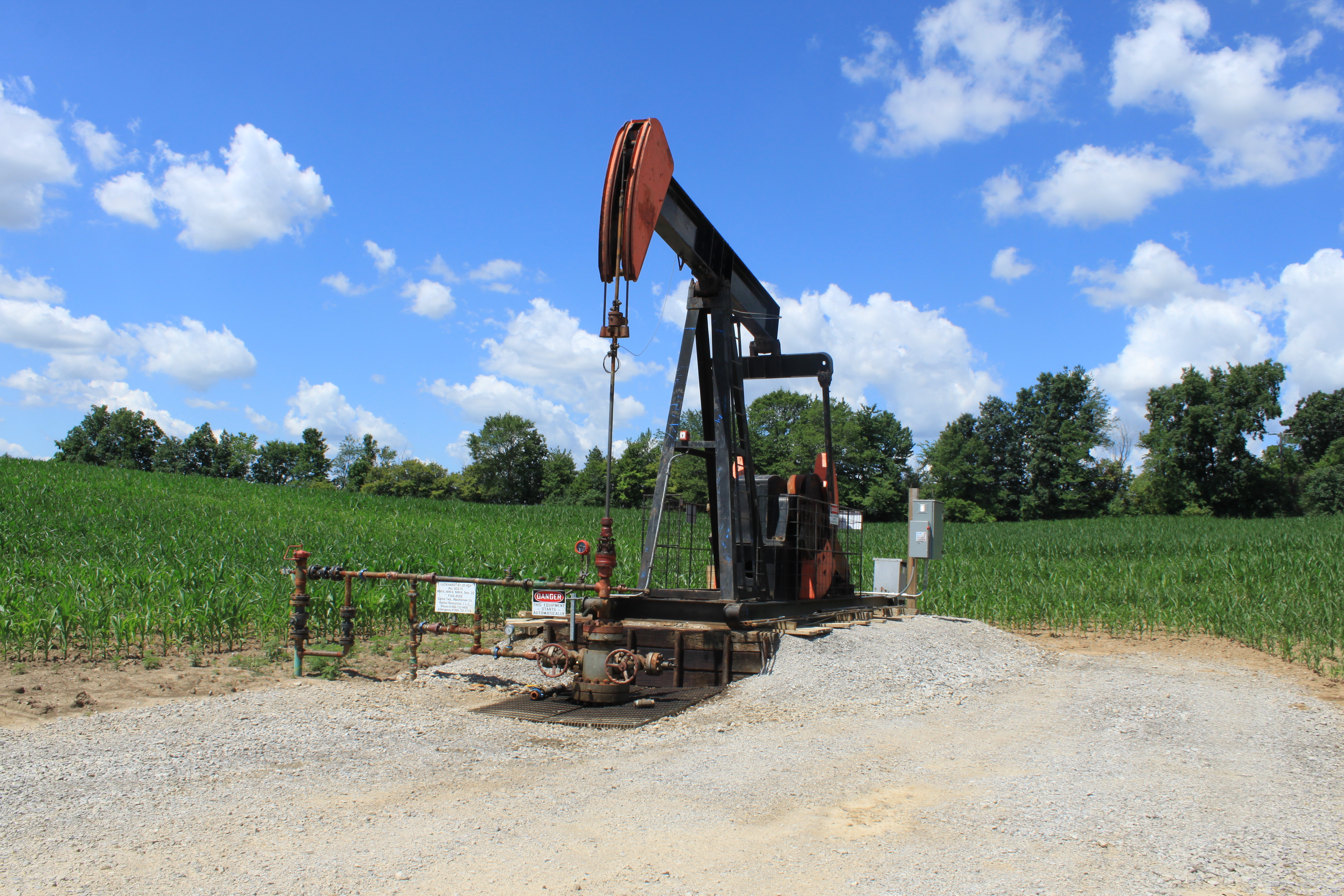
 Figure 1. The preferable kind of corn-field-based fuel, brought to you by a corn field in Michigan. SOURCE
As a result, I’m a long-time opponent of turning corn into fuel. I think it is a crime against the poor, made the worse by the unthinking nature of the ethanol proponents as they advocate taking food out of poor kids’ mouths.
But that’s not the only way that our monomaniacal insistence on renewable energy is taking food from the plates of the poor. For example, tropical forest has been cleared for oil-palm plantations for fuel. But even that is not what this post is about. This post is about trading food for energy in California, the breadbasket for the nation. Here’s the headline:
Fresno County judge rules in favor of I-5 solar project
Jan 03 – The Fresno Bee, Calif.
A Fresno County judge has ruled that a solar energy project along Interstate 5 can move forward despite arguments from the state farm bureau that it will eat up valuable California farmland.
The decision, which comes as good news to the state’s burgeoning solar industry, is the first handed down in the ongoing land war between solar developers seeking real estate for renewable energy and Central Valley farmers trying to protect their tillage.
While the ruling pertains only to the Fresno County project, the decision sends a message across the Valley that agriculture doesn’t necessarily reign supreme.
“I do think it gives a boost to the solar development community,” said Kristen Castanos, a partner at the law firm Stoel Rives in Sacramento who has represented energy ventures and tracked solar efforts on farmland. “This gives counties and developers a little more confidence in moving forward.” SOURCE
This is unbelievably short-sighted. The only good news is that compared to say buildings, it’s much easier to remove a solar installation and return the land to actually producing food. Not easy in either case, but easier for solar. But the good news stops there.
The bad news is, the power thus produced will be much more expensive than power from either fossil fuels or hydropower. But both fossil fuels and hydro are verboten under Governor Jerry “Moonbeam” Brown’s plan to get 30% of all electricity from renewable sources, with “renewable” meaning “renewables other than hydro”. Thirty percent! This madness has already given us some of the highest electrical rates in the country, and we’re not even near to 30% renewable yet.
The worse news is what the dispute was about. California has a strong farmland act, called the Williamson Act. If you put your farmland under the Williamson Act, you can’t develop it, it has to stay farmland. In exchange you get various tax advantages. The important thing to note is that it is a legal contract between the State of California and the owners of the land. This is to prevent the landowner from taking the benefits and then developing the land.
In this case, the article cited above goes on to say (emphasis mine):
Superior Court Judge Donald Black found last month that Fresno County officials acted appropriately two years ago when they canceled a farm-conservation contract that allowed a solar development to proceed on ag land near Coalinga.
The California Farm Bureau Federation sued the county, alleging that the Board of Supervisors did not have the right to cancel the contract put in place under the state’s farm-friendly Williamson Act.
Black said county supervisors met Williamson Act requirements for canceling the contract.
“All parties concede the development of renewable energy is an important public interest both in the state of California and in Fresno County,” Black wrote.
I’m sorry, but there is no public interest in wildly expensive solar power. Nor should County officials be able to break a legal contract at their whim, based on some fanciful claim of a public benefit. The only people being benefitted here, above the table at least, are the owners of the project. The owners will be paid a highly inflated price for their power, which I and other ratepayers will be forced to subsidize. Expensive subsidized energy is not in the public interest in any sense.
In any case, breaking a Williamson Act contract to put in a solar installation definitely reveals the profound hypocrisy of the people behind the project and the useful idiots that support it. They’re approving massive, hideous development on prime farmland in order, they claim, to save the environment. Yeah, pave it to save it, that’s the ticket …
It also sets an extremely bad judicial precedent for future breaking of Williamson Act contracts. Since Kelo vs. New London the expansion of the “taking” powers of governments under the infinitely flexible rubric of “public interest” has ballooned unbelievably. Now we are to the point where they can even take away Williamson Act protections.
The Williamson Act is there to protect the totally irreplaceable, amazingly productive farmlands of California. The Fresno County officials are breaking the intent and spirit of the Williamson Act so that private developers can make a fortune picking the ratepayers’ pockets … and that’s supposed to be in the public interest? Spare me. For me, a kid who grew up on the good rich California earth, that’s a very sad day.
So yes. The idea that you shouldn’t allow the development of solar installations on some of the world’s finest farmland, not just any farmland but farmland legally protected under the Williamson Act, appears to be history in Californica. Infinitely stupid.
Y’know, I love the land here—the fold and break of the coastal hills dropping into the ocean; the wide valleys full of farms; the Sierra Nevada Mountains, where I grew up, towering over the Central Valley; the crazy, blazing deserts; the forests and groves full of deer and fox and mountain lion; and my own little corner where I live in the middle of a redwood forest, with a tiny triangle of the sea visible through the coastal hills. What’s not to like?
But I am roundly fed up with the government, and with the ‘lets power the world on moonbeams, we can all ride high-speed unicorns for transportation and just eat veggie-burgers’ crowd of folks that thinks losing irreplaceable farmland is a good thing in a hungry world, and thinks that hydropower is not renewable energy …
Regards to all,
w.
kakatoa says:
January 5, 2013 at 8:44 pm……………
Governor Brown has stated in the past that he is in favor of requiring 40% of our electrical energy coming from RE sources (vs the 33%RES that is the current mandate).
——————————————–
That’s fine. Live any way you want. Just don’t make the rest of us pay for it.
cn
willis says that
” This post is about trading food for energy in California, the breadbasket for the nation. ”
=====================================
No, no Willis, “breadbasket” is the term for the states of the Midwest, where the bulk of the nation’s grains are grown. Shifting this term to the west coast is ludricrous. California would more appropriately be termed “the fruit basket of the nation”
mpainter
Ah yes. California. Building fans to cool the oceans. And will help, due to Newton, keep the San Andreas closed up. Are they smart or what?
Willis
You forgot the ultimate benefit of government coercion for our own good – “You’ll all be farting through silk underpants.”
Willis, It’s all much more complex than you’re making it.
Yes, Steve Schaper’s views notwithstanding, using farmland to grow ethanol feedstock seems to be a bad idea. Even a lot of environmentalists agree that it was a mistake. Using unfarmable land to grow a biofuel feedstock might be acceptable. It would depend on the details. I find Schapers arguments unpersuasive. Farmland is for FOOD, Steve. Things are only going to get worse later in the century as mankind continues to be entirely too fruitful and multiplicative.
And yes, devoting any significant amount of farmland to solar seems misguided if the land is really farmable. (There are surely cases where devoting a bit of land to solar are the right engineering solution to some problem even in farm country). There’s a gazillion acres of land in the southwest deserts that seem suited to solar and nothing much else. No need to use farmable land for solar (or WalMarts come to that). Note that in California, you always need to consider whether water is going to be available for farming. Where it isn’t, maybe solar is OK
You seem to have somehow concluded that solar is inherently expensive. I’d sure like to see your source on that, because I don’t find that very credible. Sure, in New York City, it’d be costly because of site costs, storage costs, and the probable need for backup facilities that are paying down costs only part of the year when sun angles drop and days shorten in Winter. But surely, the right place for large scale solar is the Southwest deserts where availability is high, sun angles toleralbe, and land costs should be very low. Unlike fossil fuels, solar costs will probably drop in future decades.
And finally, don’t be fooled by the current relatively low costs of hydrocarbon fuels. While I agree that CO2 is probably a specious issue, hydrocarbons are a limited resource, and I think everyone is going to be surprised at the ability of folks in the developing world to burn through that resource in their search for running water, indoor plumbing, central heating, air conditioning and automobiles.
A sensible policy for the US would probably be to burn through our natural gas windfall — cheap, abundant, minimally polluting, what’s not to like? — and to use the several decades that gives us to plan for the future in mid-Century and beyond. When the gas becomes scarce, switch to coal — cheap, abundant, but — with current technology — not remotely clean. But we should also be thinking about the day — probably a century or more away when we really will be almost totally dependent on renewables and nuclear. And we should allow for the possibility that we turn out to be wrong about CO2 not being a problem and should have some idea what we will do if we have to forego hydrocarbons sooner than we think.
This sums it up –
http://i45.tinypic.com/35l6rf7.jpg
@Bill Marsh
I realize that hundreds of thousands of years of recoverable Thorium reserves seems unrealistic, however, with Liquid Fluoride Thorium Reactors (LFTRs) 99% of Thorium is converted to energy, which means the entire world’s yearly energy needs can be supplied with just 7,000 tons of Thorium (about what would fit inside an average grain silo..)
Compare that to current Uranium solid fuel reactors that only burn about 0.5% of the Uranium inside very expensive to fabricate ceramic pellets. Thorium requires no special processing as it only has one isotope in nature (Thorium 232) so as long as it is pure, you can burn it as comes out of the ground in the liquid fuel salts (Thorium/Fluoride/Berrilium/U233).
The easiest source of Thorium now is rare earth mines that now treat Thorium as a nuisance. One small rare earth mine generates around 5,000 tons of “waste” Thorium a year. It’s about as plentiful as lead.
We’ll never run out of the stuff.
You’re right about Uranium. If we keep using it as inefficiently as we are with solid fuel reactors, we will run out of it.
LFTRs do require some U233 initially as a neutron source, but in the Thorium fission reaction, U233 is created in the decay chain, so additional U233 never needs to added. Neat trick isn’t it.
Claude Harvey says:
January 5, 2013 at 11:39 pm
When “the end justifies the means” the rule of law is abandoned. We’re seeing that effect taking place on a wholesale basis in California. Prop 13 limit on property tax? No problem. We’ll just reclassify what shows up on your property tax bill as “fees”. My latest Los Angeles County property tax bill exceeded Prop 13 constitutional limits by 30%, all attributed to “fees” for services previously covered by my property tax assessment. I now get a “streetlight” fee, a “trash service” fee, a “sidewalk maintenance” fee, a “brush fire hazard inspection” fee, on and on it goes. They’re now proposing a “clean the bay” fee. They’ve even liened my home without my permission to finance a “Save the Santa Monica Mountains” fund. I can either caught up $3,500 immediately or carry a lien which must be discharged whenever my home is sold. I’m not making any of this up.
———————————————-
Makes one wonder why there’s no headline news of a taxpayer revolt.
Based on this, I would think the Tea Party would be the largest political party in the LA area.
SEIU would torch City Hall over a 3% pay increase.
cn
@SAMURAI:
I’m generally in agreement with your points. A couple of expansions / clarifications though:
We’ve made reactors that use Th already. While the liquid fuel ones are interesting, and in many ways better, we can make and use Th rods in existing water reactors (and have done so).
U does not get used so in-efficiently by necessity but by choice. At higher U costs, we would do U recycle (of many kinds).
The “breeder blanket” to start a Th to U233 conversion can be any of U233, U235, or Pu. You are not limited to U233. (For a water reactor.)
Our present U “waste” can easily be used as “fuel”. There is no need to treat it as waste and turn it into monuments to hazard for hundreds of years. We choose to do that as we are stupid.
BTW, the often quoted “thousands and thousands of years” for “reactor waste” to become safe is based on a bogus comparison. It takes that long to decay to background, but if you make your standard “decay to original ore” (i.e. you don’t need to make the planet less radioactive, only as radioactive and risky as you found it) the “time to guard” drops to about 200 to 250 years. Quite reasonable, as I think we can bury things in old mines and expect them to stay that way for 200 years. (But better would be to recycle the fuel…)
Oh, and the existing CANDU reactors are great on Th and work well with various mixed fuels and fuel recycle strategies.
Why is CANDU ignored and recycle U denigrated? You can make bombs easier that path…
We have loads of choices and more fuel than can ever be used. ( I like the liquid reactors too, BTW).
willis: “I’ve known too many people for whom expensive tortillas are unobtainable”
===================================================
“Expensive tortillas”? Come, come willis, you make me chuckle- how much do tortillas cost in California? Corn into ethanol may be objected to for several reasons, but it hardly takes food out of people’s mouths. You yourself recently commented on another thread (quite vehemently, as a matter of fact) that there was no shortage of food in today’s world, yet here you are, only a few hours after that comment, bewailing that ethanol is “taking food out of poor kid’s mouth’s”. For one thing, the food stamp program hardly feeds “corn” to poor kids. You would do better to aim for a bit of consistency in your postings. How you carry on about “tortillas”!
The alternative to ethanol is methanol, which is much more cheaply produced than ethanol. Methane, from natural gas, CH4, can be converted into methanol, CH3OH, quite readily and at a vastly lower price than conversion of corn into ethanol, CH3CH2OH.
Formerly in this country, methanol was used in gasoline formulation. Where natural gas was scarce, such as in Brazil, ethanol was used. So what happened? The agricultural lobby happened, that’s what happened. Congress passed a bill making the use of ethanol mandatory. The object was to boost the market price of grains, and boy did it ever. In effect, the public now pays the grain subsidies at the gas pump.
The ethanol program makes even less sense in view of the “shale gas” revolution, whereby supplies of natural gas have suddenly become more plentiful, and in effect, are begging for a market. Ethanol for a fuel is simply an expensive gasoline formulation designed to put money into the pockets of farmers, and it needs to be dispensed with for the vastly more economical methanol, for the benefit of the nation.
Steve Schaper says:
January 5, 2013 at 5:00 pm
As far as the corn is concerned, and these facts have been presented to you by varous commentators time and time again, False dichotomy. We don’t raise the kind of corn you can make tortillas from.
I wonder if Steve Schaper really that stupid or if he’s deliberately missing the point? Maybe I’ll just go and occupy a room in his house, throwing out his possessions and putting in mine (no room for both). Surely that would be OK because I don’t have the kind of possessions he does. Sorry Steve, but it has to be said: you’re a twat.
@Mpainter:
“California, the land of fruits and nuts!” 😉
Oh, and we’re the “salad bowl” of the nation…
@DonK:
Thanks to Fracking about a trillion barrels equivalent just came on line in the USA alone. More in the rest of the world. We’ve got hundreds of years “more” now. (Not just gas, but oil too).
Watch for a frantic attack on fracking as it is going to turn the USA into a net oil exporting country if it isn’t stopped.
Did I mention that’s Trillions, with a T?
We are not any where near “running out” of oil, gas, and unconventional oil.
Goodness gracious me, I left out something-
Willis: “crowd of folks that thinks losing irreplaceable farmland is a good thing in a hungry world”
Now this is the best yet. Willis, on his posting of Jan.2, “The Cost of Energy”, argued vehemently on that thread that food was not a problem in today’s world, and never would be because of modern agricultural capacities. Yet, here on this posting Willis paints a picture of a “hungry world” that can’t afford tortillas: “I’ve known too many people for whom expensive tortillas are unobtainable”.
Well, Willis, I suppose that you will let us know when you finally make up your mind about things.
@MPainter:
It would seem you’ve never known any poor folks.
I have.
There are many where adding 40 cents to the cost of tortillas ends things.
ONE example. Some years back I inherited a crappy little rental house out in a poor part of California. One day, the rent check didn’t come. (Something like $200). I went to see what was happening. The “housewife” was fixing “dinner” for the two infants. She was taking flour (wheat) and making a fat noodle like thing out of it and cooking them. That was what she had to feed them.
Her husband had gone out into the street to stop some idiots from doing something stupid (having a fight or preparing to shoot out a street light or whatever). One of them started swinging at him just in time for the cops to arrive and haul them both off for fighting. He was in jail, and going to stay there a while as they had no way to bail him out. That meant NO paycheck (and they were barely making it anyway). I looked at her, looked at the kids, and said “Well, whenever you can, send the rent.” and left. KNOWING I was never going to ask her for the rent again. (Two months later I stopped by and found the place empty – she moved back with other family – parents I think. About a year after that I left the ‘rental business’).
That is not a unique state of affairs, and as ‘hubby’ had just been arrested a few days before, she was feeding the kids flour lumps because that’s what they normally could afford…
Folks who think you can increase food and housing costs even 10% and not cause poor folks grave harm are incredibly out of touch with poor folks.
And that doesn’t even get into the folks where we export corn who live on a couple of bucks a day all told…
I do agree on the Methanol, but not just feeding it straight into cars. It takes a special corrosion resistant fuel system to handle it (even in blends) and special oils (as the blowby is corrosive). I wanted to buy one of the 3-way flex cars when they were selling them in California (in the 80s) and checked ’em out. It’s the hard way to go.
Easier is the Mobil Zeolite method (now owned by Exxon) and it was used in production in New Zealand (back just after the Arab Oil Embargo). Run nat gas over a zeolite catalyst (molecular sieve) and you get gasoline out.
The other thing you can easily make is butanol from methane. It’s a ‘drop in replacement’ for gasoline in the existing fleet.
Were it not for the politicization and government “regulation” / control of what is an allowed fuel we would already be up to our eyeballs in alternatives (not the least of which is DME also easily made from methane or coal).
If we made cars specifically to use methanol, it would be great, but for use in the existing fleet, it needs to be chemically converted. Which isn’t very hard…
Re: Chuck Nolan says:
January 6, 2013 at 3:48 am
“Makes one wonder why there’s no headline news of a taxpayer revolt.”
When renters begin to vastly outnumber owners and “the rule of law” is abandoned, owners take it in the shorts. If a California constitutional provision cannot limit an owner’s effective tax burden, what can? Interestingly, while I’m getting soaked for “fees” on top of constitutionally limited property taxes, a number of monster solar projects have been exempted fro ANY California property taxes. The counties in which those plants are located are learning that they’ve inherited the additional local government service costs associated with those plants, but no local share of property tax revenue to cover those costs.
California voters happily approved Jerry Brown’s recent ballot measure to soak the rich (which most voters won’t have to pay), but even Los Angeles’ public employee unions object vociferously to an L.A. proposal to raise local sales tax (which they WOULD have to pay).
See where all this leads?
In truth every person in the US (and Australia) needs to reduce our carbon consumption by greater than 80% if we were to reach the “carbon equity point” based on the modelled prediction of maximum worldwide emissions to minimise to a two degree rise.
Now we know that the models are wrong, but that doesn’t stop the Eco nuts from continuing to push this as a good thing. The trouble is that, even if we reduced our consumption by 30% and then used 30 % renewables (who are they kidding) we would still not be there.
This is the lunacy of the entire proposition, with today’s population we would all have to go back to a medieval standard of living to not emit that much carbon and we all know that today’s population cannot be supported using medieval technologies.
So the solution is to let everybody starve to death. Everyone but me, that is.
E.M.Smith says: January 6, 2013 at 4:28 am
@MPainter:
It would seem you’ve never known any poor folks
============================
I know lots of poor folks. Myself for example. Where I live, poor people get food stamps for the asking, and thereby eat very well. It always mystifies me when people talk about “hunger” in this country, because the food stamp program is universally available, unless I be mistaken.
You grew up in California, Willis? You are one of the few Baby-Boomers who actually did. When I lived out there briefly, (1982-1984,) I found it odd that I could not find a single person my own age (born 1953) who was born there. Everyone my age was a run-away, “California dreaming” and fleeing some problem or responsibility “back east.” Eventually I decided running away from my problems was no way to face them, and went home. Now it seems your entire state is run by the run-aways. It must be rough on a native like yourself.
The people who really love the land are usually the people born on it, especially if they have farmed it; not the people who see the land as a sort of political or economic “concept.”
Notwithstanding many sentiments I support in the post, here’s my beef:
I hate zoning. It’s a socialist spinoff.
So, in principle, no land should be coercively segmented for any purpose. Thus, I should be free to deploy my land to raise cockroaches, or grow weeds, or generate uneconomic solar power, …whatever, even if it’s prime agricultural land.
So, as I read it, this judicial decision in essence is OK to me. Consciously or not, it’s an anti-zoning measure.
To be sure, some people will use their land in ways I think are detrimental to their, and/or our benefit, economically or spiritually. But it’s their land! So long as they’re not impinging on our rights, they should be free to pursue whatever use they choose. We can argue with them, boycott them, or offer to buy them out. But we must not coerce them to adhere to our preferences.
Of course, exactly HOW we construe what our/their rights are is another question altogether. (Do they have the right to billboard pornographic pictures, or host a pornographic website from there? AFAIK, the natural law says, ‘no’.)
I wholeheartedly agree with you Willis. I note that many Californians are fleeing the state and moving back east. This 3 ring circus is really getting ridiculous here in Massachusetts which is ground zero for many of the recent failures. Beacon power, Evergreen solar, A-123 and on and on. Even the Boston Globe is pushing wind (or passing it) as of late.
This appeared a couple of days ago.
http://www.bostonglobe.com/business/2013/01/03/extension-wind-energy-credits-boost-local-industry/RlSE3Gn1FwlvH04X2RucaJ/story.html
Then this.
http://www.boston.com/news/local/massachusetts/2013/01/06/wind-energy-jargon-defined-glossary/KpUPTlqQRZqABOkZZ2WXxH/story.html
I now present a glossary of my own.
Nameplate Capacity: The claimed output of a wind or solar facility that is unachievable and which they receive a subsidy for.
Crash: Sound that a wind turbine makes when it’s tower or rotors fail.
Burn: This is what happens when a gearbox fails and starts a forest fire.
Thud: Sound a turbine makes when shedding ice.
Silence: This is primary sound made by wind turbines and is associated with nameplate capacity.
Ka-ching: This sound is made when wind executives meet with the DOE and Tim Geithner. It’s also associated with shell and shelf llc’s efforts in the US China and abroad. The accounting trick, REPO-105 (107 in Europe) are closely associated.
RICO: This is what happens when wind companies (IVPC/First Wind/UPC) build in Italy and the US.
Blackout: Grid instability caused by wind plants.
That said, QssQss has a fantastic link to a photo, which ironically looks like a ‘field of tele-prompters’.
john from DB
@E.M.Smith:
Liquid Fluoride Thorium Reactors (LFTRs) biggest attributes over solid fuel reactors are: 1) they can run at single atmospheric pressure (unlike solid fuel reactors that have to run at 100 to 150 atmospheres) which means expensive containment domes are not required. 2) LFTRS don’t require water, so large cooling towers aren’t required. 3) LFTRs use gas turbine generators, which are about 50% more efficient than steam turbine generators. 4) LFTRs liquid salts get up to 1600C, which is a lot higher than pressurized steam and allows waste heat to be used for many other purposes. 5) LFTR safety feature is fail proof and passive. As long as gravity works, no radioactive material can escape the facility. Since I live in Japan, about 200KM south of the Fukushima Daiichi plant, you can imagine why that feature is near and dear to me… It’s impossible for meltdowns to happen with LFTRs.
6) there is no need to worry about nuclear proliferation with LFTRs.
There are absolutely no advantages of solid-fuel reactors over LFTRs, unless you consider bomb-grade materials created by solid fuel reactors an advantage, which I don’t.
Ethanol mandates tie the price of the food crops used to make the ethanol directly to the world price of oil. The price of related food crops are indirectly influenced as well through substitution effects. This will only drive up the price of food and since ethanol is barely if at all energy efficient (nat gas used to make ammonia to fertilize corn) this is almost fraudulent. This is a clear example of the horrible effects of ideology trumping economics.
“Makes one wonder why there’s no headline news of a taxpayer revolt.”
That would be because the tax structure – revised to make sure that the ‘rich pay their fair share’ has reduced the ‘taxpayers’ to a small minority so they are not capable of staging a ‘revolt’.
I believe it was Voltaire that said something about the American Republic enduring until the population discovered that they could vote themselves anything they wanted. I fear we are approaching that state.
” According to the FAO’s fantastic dataset FAOSTAT, humans in 2009 consumed about 2.9E+16 joules of food energy.”
That means nothing because we cannot eat coal and we cannot burn navel oranges in jet airplane engines. But we can convert coal to jet fuel with which to haul oranges from one part of the world where they are overly abundant to another part of the world where for a season they are sufficiently more valuable as to more than pay for the cost of hauling them there on a back-haul cargo plane.
Enviros admit this when they tell us that if we could subsidize algae or switch grass or some such plant, we could convert its hydrocarbons into a usable fuel. We could do exactly the same with coal, and we are sitting on an ocean of it. In fact we are already awash in * indelible* hydrocarbons, from natural gas, to sewage sludge that we could convert to fuels products suitable for our autos, trucks, tractors and airplanes thus freeing land to grow food.
At that heart of this is the concern for the level of CO2 in the atmosphere. I would ask, what is the optimum level? Are we below it or above it? We certainly are below what it has been in the past.
Those who fret about CO2 fret about temperature. But I would ask, what is the optimum temperature? Are we below it or above it? If the past is any guide, on average where I compose this, near the Great Wheat Farm known as Kansas, on average those vast wheat fields would be under a thousand feet of ice. Is that what we want?
Enviros could displace a lot of transportation-related CO2 by pushing for generating as much electricity to recharge their electric cars and to power their air conditioners. Notably, they never advocate this. In fact, the net effect of their advocacy is to destroy human prosperity and wealth. Should LENR ever become a viable power source, they will quickly oppose it too.
Willis Eschenbach: “[H]umans in 2009 consumed about 2.9E+16 joules of food energy.”
That sounds low. In the (admittedly unlikely) even that my math is correct, it comes out to about 0.13 W/person. I’m a low-energy guy, but I suspect I expend more than that just breathing.