Guest Post by Willis Eschenbach
Trading food for fuel, in a world where high food prices already affect the poor, has always seemed like a bad idea to me. If I have a choice between growing corn to fuel SUVs versus growing corn to make tortillas, to me that’s a no-brainer. I’ve known too many people for whom expensive tortillas are unobtainable tortillas to vote any other way.
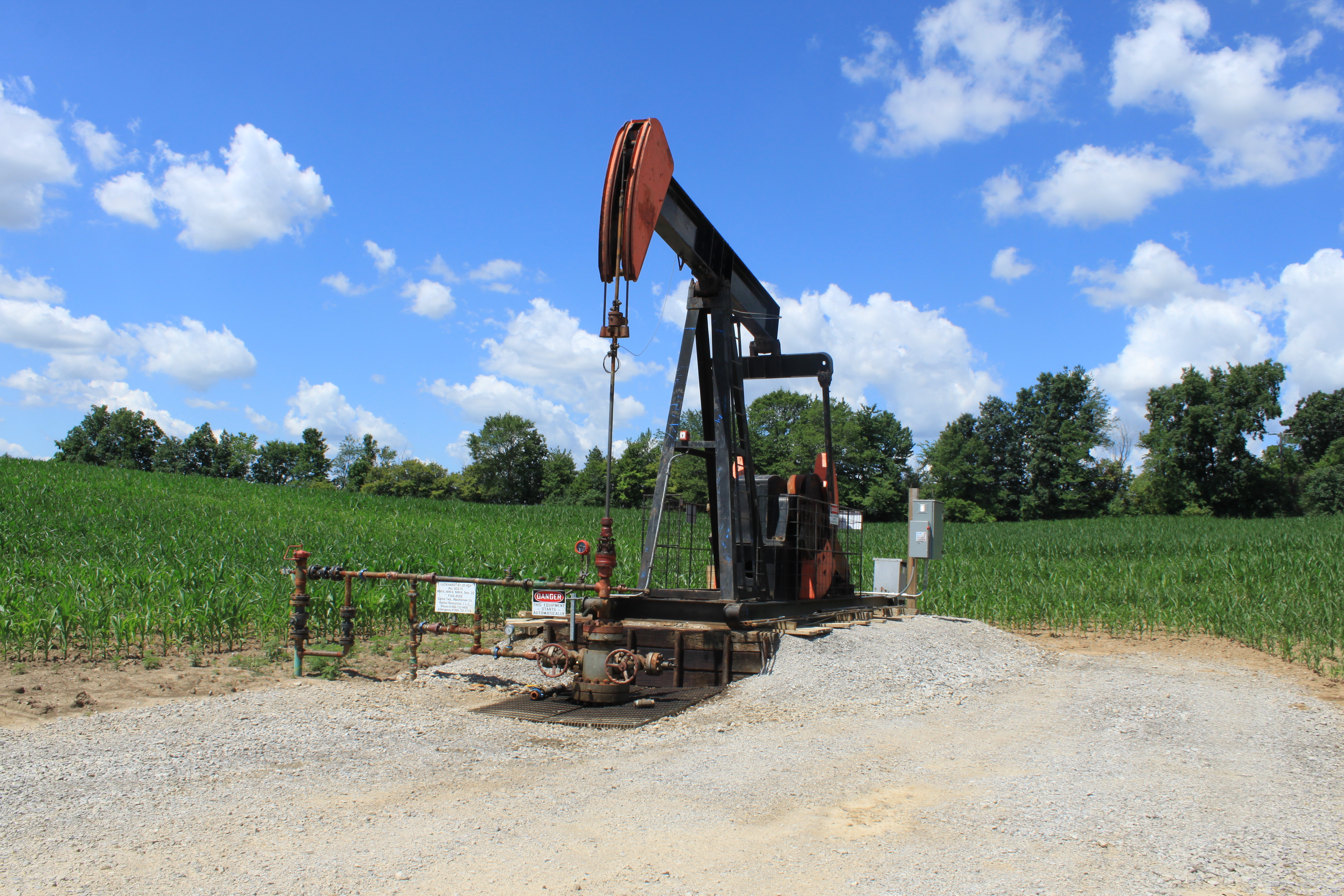
 Figure 1. The preferable kind of corn-field-based fuel, brought to you by a corn field in Michigan. SOURCE
As a result, I’m a long-time opponent of turning corn into fuel. I think it is a crime against the poor, made the worse by the unthinking nature of the ethanol proponents as they advocate taking food out of poor kids’ mouths.
But that’s not the only way that our monomaniacal insistence on renewable energy is taking food from the plates of the poor. For example, tropical forest has been cleared for oil-palm plantations for fuel. But even that is not what this post is about. This post is about trading food for energy in California, the breadbasket for the nation. Here’s the headline:
Fresno County judge rules in favor of I-5 solar project
Jan 03 – The Fresno Bee, Calif.
A Fresno County judge has ruled that a solar energy project along Interstate 5 can move forward despite arguments from the state farm bureau that it will eat up valuable California farmland.
The decision, which comes as good news to the state’s burgeoning solar industry, is the first handed down in the ongoing land war between solar developers seeking real estate for renewable energy and Central Valley farmers trying to protect their tillage.
While the ruling pertains only to the Fresno County project, the decision sends a message across the Valley that agriculture doesn’t necessarily reign supreme.
“I do think it gives a boost to the solar development community,” said Kristen Castanos, a partner at the law firm Stoel Rives in Sacramento who has represented energy ventures and tracked solar efforts on farmland. “This gives counties and developers a little more confidence in moving forward.” SOURCE
This is unbelievably short-sighted. The only good news is that compared to say buildings, it’s much easier to remove a solar installation and return the land to actually producing food. Not easy in either case, but easier for solar. But the good news stops there.
The bad news is, the power thus produced will be much more expensive than power from either fossil fuels or hydropower. But both fossil fuels and hydro are verboten under Governor Jerry “Moonbeam” Brown’s plan to get 30% of all electricity from renewable sources, with “renewable” meaning “renewables other than hydro”. Thirty percent! This madness has already given us some of the highest electrical rates in the country, and we’re not even near to 30% renewable yet.
The worse news is what the dispute was about. California has a strong farmland act, called the Williamson Act. If you put your farmland under the Williamson Act, you can’t develop it, it has to stay farmland. In exchange you get various tax advantages. The important thing to note is that it is a legal contract between the State of California and the owners of the land. This is to prevent the landowner from taking the benefits and then developing the land.
In this case, the article cited above goes on to say (emphasis mine):
Superior Court Judge Donald Black found last month that Fresno County officials acted appropriately two years ago when they canceled a farm-conservation contract that allowed a solar development to proceed on ag land near Coalinga.
The California Farm Bureau Federation sued the county, alleging that the Board of Supervisors did not have the right to cancel the contract put in place under the state’s farm-friendly Williamson Act.
Black said county supervisors met Williamson Act requirements for canceling the contract.
“All parties concede the development of renewable energy is an important public interest both in the state of California and in Fresno County,” Black wrote.
I’m sorry, but there is no public interest in wildly expensive solar power. Nor should County officials be able to break a legal contract at their whim, based on some fanciful claim of a public benefit. The only people being benefitted here, above the table at least, are the owners of the project. The owners will be paid a highly inflated price for their power, which I and other ratepayers will be forced to subsidize. Expensive subsidized energy is not in the public interest in any sense.
In any case, breaking a Williamson Act contract to put in a solar installation definitely reveals the profound hypocrisy of the people behind the project and the useful idiots that support it. They’re approving massive, hideous development on prime farmland in order, they claim, to save the environment. Yeah, pave it to save it, that’s the ticket …
It also sets an extremely bad judicial precedent for future breaking of Williamson Act contracts. Since Kelo vs. New London the expansion of the “taking” powers of governments under the infinitely flexible rubric of “public interest” has ballooned unbelievably. Now we are to the point where they can even take away Williamson Act protections.
The Williamson Act is there to protect the totally irreplaceable, amazingly productive farmlands of California. The Fresno County officials are breaking the intent and spirit of the Williamson Act so that private developers can make a fortune picking the ratepayers’ pockets … and that’s supposed to be in the public interest? Spare me. For me, a kid who grew up on the good rich California earth, that’s a very sad day.
So yes. The idea that you shouldn’t allow the development of solar installations on some of the world’s finest farmland, not just any farmland but farmland legally protected under the Williamson Act, appears to be history in Californica. Infinitely stupid.
Y’know, I love the land here—the fold and break of the coastal hills dropping into the ocean; the wide valleys full of farms; the Sierra Nevada Mountains, where I grew up, towering over the Central Valley; the crazy, blazing deserts; the forests and groves full of deer and fox and mountain lion; and my own little corner where I live in the middle of a redwood forest, with a tiny triangle of the sea visible through the coastal hills. What’s not to like?
But I am roundly fed up with the government, and with the ‘lets power the world on moonbeams, we can all ride high-speed unicorns for transportation and just eat veggie-burgers’ crowd of folks that thinks losing irreplaceable farmland is a good thing in a hungry world, and thinks that hydropower is not renewable energy …
Regards to all,
w.
Samurai
I support nuclear technology to produce energy. According to this article the decommissioning costs alone of LFTR be around the price per Watt you mention: $.02.
http://www.google.com.au/url?sa=t&rct=j&q=&esrc=s&source=web&cd=1&cad=rja&ved=0CDUQFjAA&url=http%3A%2F%2Fen.wikipedia.org%2Fwiki%2FLiquid_fluoride_thorium_reactor&ei=UhTpUM3SB8vLmgWJ5IDYDw&usg=AFQjCNGdKxy39KxUvGWCtNPPS0dO9yi7oQ&bvm=bv.1355534169,d.dGY
Climate Ace says:
January 5, 2013 at 10:11 pm
Ace, if you and folks like you didn’t want to pick my pocket to pay for your obsession with renewables, that would be fine. I’d have no problem. But you don’t want to pay for it. You want me to pay for it, whether I want to or not.
That makes you no better than common thieves, stealing my money in order to pay for your guilt-ridden green fantasies. This renewables mania has driven electricity prices in California through the roof. I hold you and your ilk 100% responsible.
If you and yours think renewables are a good idea, then you should have the decency and honesty to pay for them yourselves. Instead, you steal my money to pay the solar dealers for the junk to feed your solar addiction. It is despicable.
w.
The greenies are always banging on about how there are far too many people and the world can’t possibly feed them all even though it does. It seems said greenies are doing their level best to ensure their hallucination of global starvation comes about because – we’re saving the planet dudes.. How do these morons sleep at night? Who the heck do they think they are saving the planet for? Certainly not poor people in third world countries. Not us either.
When the solar power scheme goes bankrupt, and it will, and they lose interest in it, the solar frames could be used as a frame for grape vines, watermelons, passion-fruit or some other useful agricultural purpose.
I love how greenie economics ALWAYS kick in with that phrase, yet the subsidies NEVER factor into the the Lifecycle of their pet projects.
Willis
I had a question of you in relation to a traditional fishing technique. I would appreciate your looking at it.
Ace, if you and folks like you didn’t want to pick my pocket to pay for your obsession with renewables, that would be fine. I’d have no problem. But you don’t want to pay for it. You want me to pay for it, whether I want to or not.
There are various ways of looking at this, but I think the most reasonable way is to say that we are internalising the true costs of a fossil fuel economy which has indiscriminately picked all our environmental pockets for centuries.
That makes you no better than common thieves, stealing my money in order to pay for your guilt-ridden green fantasies. This renewables mania has driven electricity prices in California through the roof. I hold you and your ilk 100% responsible.
Those who have externalised the costs of fossil fuel burning are, IMHO, no better than common thieves. They are destroying stuff without paying for it. The fossil fuel mania is helping to destroy lots of good things and I hold you and your ilk 100% responsible.
If you and yours think renewables are a good idea, then you should have the decency and honesty to pay for them yourselves. Instead, you steal my money to pay the solar dealers for the junk to feed your solar addiction. It is despicable.
If you and yours think that fossil fuel externalities are a good idea, then you should have the decency to honestly pay for them yourselves. Instead, you steal everyone’s environment to pay fossil fuel dealers for the junk to feed your fossil fuel additions. It is despicable.
Same same except for our different starting point.
A superlative post. This is the sort of story that can make even lukewarmers realize that something is rotten in Denmark.
Ian W said at 6:19pm, “every 5 seconds a child dies from hunger”, and cited the ‘Bread for the World Institute’. I followed his link and noticed that the institute’s site includes a section on ‘Climate Change’. Oh good, a ready litmus test for their intellectual honesty. Hoping to find an expose of how the shiboleth of CAGW is being used to impoverish the world, I proceeded to their ‘Climate Change’ page.
That section begins with: “At this point, the scientific evidence on climate change is unequivocal. If we don’t take strong action, the consequences could be catastrophic for everyone.”
That’s as far as I needed to read. They have zero credibility. I must sadly assume that their true goal is not to ameleorate hunger, any more than Greenpeace’s true goal is to help the environment. A tree is known by its fruit; they’re just more Luddites, trumpeting the party line to de-industrialize and impoverish the world.
So, does a child starve to death every five seconds, or not? I wish I knew. But I know better than to trust figures from any watermelon front group.
intrepid-wanders
I support nuclear technology to produce energy. According to this article the decommissioning costs alone of LFTR be around the price per Watt you mention: $.02.
I love how greenie economics ALWAYS kick in with that phrase, yet the subsidies NEVER factor into the the Lifecycle of their pet projects.
What greenie economics? Who was talking about subsidies? The starting point was an agreement that nuclear energy is supported. The focus was cost. The point was that the cost per Watt mooted on WUWT (see above) was also the estimated cost of decommissioning a LFTR plant. In other words, the cost per Watt was likely to be higher than claimed.
@Climate Ace– That decommission cost of $0.02/kWh is high. That would equate to $600 million, which is unreasonable.
Also, the $0.02/kWh electrical cost is a rough estimate and doesn’t even factor in the additional revenue streams LFTRs would have such as a variety of byproducts: molybdenum 99, Bismuth 217, U238, and many others and also revenue from waste heat being used to desalinates water to creat cheap dimythyl ether, ammonia and many other high demand chemicals.
LFTRs will eventually usher in a new Thorium Age. It’s cheap, plentiful, safe, clean and very scalable.
E=MC2 beats F=1/2MV^2 by a factor of millions.
UK sceptic
The greenies are always banging on about how there are far too many people and the world can’t possibly feed them all even though it does. It seems said greenies are doing their level best to ensure their hallucination of global starvation comes about because – we’re saving the planet dudes.. How do these morons sleep at night? Who the heck do they think they are saving the planet for? Certainly not poor people in third world countries. Not us either.
I suppose that makes you a non-greenie?
I am not aware of any reputable institution of any ideological bent, investigation, study, report, etc, etc, that claims there is neither hunger nor starvation in the world. You quite rightly raise your issue with hallucinations. Perhaps you could provide some references to support your view that world feeds everyone?
Kum Dollison says:
January 5, 2013 at 9:44 pm
I will be blunt. That’s content-free. If you object to something I (or someone else) said, quote their exact words. Vague mutterings about how people are “willfully wrong” are just childish babble. If you have something to say, say it. If you object to something I said, tell me what you object to. Ill-defined hazy objections, no matter how passionate or how well-meant, are meaningless.
w.
When “the end justifies the means” the rule of law is abandoned. We’re seeing that effect taking place on a wholesale basis in California. Prop 13 limit on property tax? No problem. We’ll just reclassify what shows up on your property tax bill as “fees”. My latest Los Angeles County property tax bill exceeded Prop 13 constitutional limits by 30%, all attributed to “fees” for services previously covered by my property tax assessment. I now get a “streetlight” fee, a “trash service” fee, a “sidewalk maintenance” fee, a “brush fire hazard inspection” fee, on and on it goes. They’re now proposing a “clean the bay” fee. They’ve even liened my home without my permission to finance a “Save the Santa Monica Mountains” fund. I can either caught up $3,500 immediately or carry a lien which must be discharged whenever my home is sold. I’m not making any of this up.
Juan Slayton says:
January 5, 2013 at 8:05 pm
TimTheToolMan: I’m in favour of decentralised Solar installation. Solar panels on every roof.
Yup. The small installation on my roof has produced more electricity than we have used since we turned it on 18 months ago.
———————————————————
With the vast revenue being produced by these roof-top PV systems it is high time that the solar fat cats started paying their fair share of tax.
This is interesting, a link between solar activity and ED. Apparently it only affects climate deniers. Warmies usually are neutered to attract redical feminist/environmentalists in a manginal role.
http://friendsofginandtonic.org/files/9cfdcf6e2f668759748c1e4e4b32feb2-267.html
To Martin, who thinks that there should be no control over land use;
What if farming is less profitable than other things for a few decades?
You HAVE to maintain a minimum level of farmland, no matter what, because everyone must eat.
You assume that everyone acts in the public interest.
You need to see the world as it is, not as you would have it be……..
Steve’s comment about corn is inane.
First, true, there are many kinds of corn. However, one variety can be substituted for another at planting time. In addition, the TMR for dairy, swine, and chicken production can adjust for differing varieties of corn by adjusting the ration composition when the feed is mixed.
Corn prices are ridiculously high right now. Most break evens for farmers are around the $3 mark. Corn is at $6-7 right now. So they can sell what ever they produce.
The high price of corn has driven chicken and pork prices much higher. This in turn hurts the poor who depend on these meats for protein. It has also driven milk and cheese prices higher. Not good.
Kum Dollison says:
January 5, 2013 at 9:44 pm
Not that Willis needs a second, but your concepts are wrong. The industry is lying to you and the public in general. They use mealy mouth speech and deception far worse than the Carnegie’s of old.
Take for instance the China Lake Navel Weapon’s Center. Huge solar project and one project among 3 or so with the government (http://www1.eere.energy.gov/femp/news/news_detail.html?news_id=18736). Obviously, the NWC is government owned and is not subject to civil law (otherwise, no impact studies). But, carefully loo at the numbers:
Okay, let’s say it is a 14 MW PV system. It is apparently generating around a third of the power requirements of China Lake Navel Weapons center, or about 14 MW of 36 MW needed.
What was that? 14 MW (Nameplate I am sure) of a 270 MW current capacity? Ridgecrest has not grown for 20 years, so it is not a growth factor missed. The only thing missed is the truth spun to vomiting.
Willis, Good post and there are some good comments as well.
“We don’t raise the kind of corn you can make tortillas from”
Why not? If ethanol production drives up the price of “ethanol corn” so that farmers use their land to grow this corn will this not lessen the supply of “tortilla corn” and drive the price up? Isn’t this what is happening to the price of corn, whether it’s “ethanol” or “tortilla”?
On free market principles and regulation…
Libertarian viewpoints, although I agree with many, can be taken to the extreme. We need some government, some laws, and some regulation. Regulating industry needs to be direct, simple, and straight forward. Regulate known pollutants at the source. IE, power plants can produce no more than x amount of chemicals y and z per KW of power produced. Then the government needs to stop there and let the market do it’s thing.
On Greenspan and Ayn Rand…
I am going to talk out my butt here a bit but Milton Friedman was criticized for his advice on manipulation of the money supply to lessen the effects of a recession when in fact he was a free market economist and against the Federal Bank monetary system. His response was that he was doing the best that he could in the system that was in place because he could not change the system. Are you sure that Greenspan was not in the same position, trying to make the best out of a system hat he was unable to change?
Climate Ace says:
January 5, 2013 at 10:13 pm
Samurai
I support nuclear technology to produce energy. According to this article the decommissioning costs alone of LFTR be around the price per Watt you mention: $.02.
================
Interesting that the Wikipedia article you quoted says this about the relative abundance of Thorium to Uranium.
“Using LFTRs, there is enough affordable thorium to satisfy the global energy needs for hundreds of thousands of years.[63]”
I am skeptical of that figure of ‘hundreds of thousands of years’ although I’ve seen estimates that the US has sufficient recoverable Thorium to supply our energy needs for 8,000 years. I’ve also seen estimates that the world is about to run out of suitable Uranium to power current reactors and would exhaust available supplies within 30 years if nations embark on a massive building program. We’d end up having ‘Uranium wars’ to go along with the ‘fresh water wars’ that will be coming to Asia in the near future.
Don of windmill fame had the right idea about tilting at windmills, we now have two targets for the Don, huge monsterous mills and acres of solar death panels.
It is of note that road signs are often modified in the country, perhaps some modification on a regular basis would slow down the breeding rate of these monstrosities.
intrepid_wanders
That article is extremely confusing. On one hand it claims that the system produces 14Mw/year of power (9,000 households worth), which is 30% of China Lakes power demand. It also states that China lake has 4 geothermal plants that produce 270 Mw/year of power (378,000 households worth). According to my admittedly feeble math skills, that means that China Lake’s geothermal plants are already producing roughly 5.75 times the power needs of China Lake (and have been doing so since 1987).
The immediate question this brings to my mind is, why exactly did they need to build the solar plant in the first place if they already have 5 times the power they need and exactly how is this solar plant going to ‘save’ the Navy money if its producing excess capacity. Wouldn’t they have saved a whole lot more if they didn’t contract for the system in the first place?
Willis …. the topic of ethanol has been discussed here many times. And as others have noted, extensive data has been provided that refutes the majority of your claims about it. For all of your smarts – your research, and statistical knowledge – its pretty clear you’ve never bothered to apply them to an honest, straightforward, look at ethanol.
And I see William and a few others are here with their many times refuted and grossly inaccurate claims about ethanol.
Ethanol is a renewable fuel. Every gallon is less fossil fuel we need to use. The net energy balance on corn ethanol is appx 1.6 – for every one unit of energy consumed, 1.6 units of energy are produced. Cellulosic biomass and other new technologies are in to the appx 4 to more than 8 to 1 net energy balance.Overall Ethanol IS FAR cleaner and better for the environment than burning gas, and overall DOES reduce greenhouse gases.
A bushel of corn produces ethanol, plus returns a significant portion back as distillers dried grain solids high quality animal feed, along with corn oil and other valuable byproducts.
Corn prices are largely driven by speculators – not ethanol. There is not a huge increase in acres of corn planted due to ethanol – much of the ethanol use is thru better practices and higher yields.
The current corn prices do NOT significant increase the cost of food – as the corn is a tiny share of the overall cost of product. On a box of corn flakes the cost is in the few cents range. America produces enough corn to meet all domestic demand, all ethanol demand, and all export demand – and still there is enough to add to the reserves every year.
Corn exports to Mexico are not dramatically different. We can pretty much supply all the corn they want to buy.
Producing corn for ethanol has a huge, IMO, benefit as well that no one considers. It is what I call an “active” emergency reserve. We can ALWAYS divert corn for ethanol to food in a true emergency. By growing 40% more corn than needed for food and other non-fuel uses we have an active divertable reserve of fresh corn stock every growing season.
I agree with you that diverting high value cropland to solar is a poor decision. There is plenty of nonproductive land better suited. That said there are significant problems with producing crops in central California – mostly water related. After taking those issues into consideration solar MIGHT possibly offer reasonable use of that land.
For example – if, after considering water issues and other costs of farming in that area the electric energy created is remotely reasonable, such energy created could potentially replace energy from ethanol production, thus freeing what is likely more productive and cost efficient growing land for food. Pure wild arse guessing and speculation on my part – zero idea if feasible – just out of box what if thinking.
I also think there are easy alternatives – especially in California. For example I cannot imagine it is that tough to find 91 acres of rooftops – commercial buildings, schools, shopping malls etc.
Or thinking out of the box, if solar is actually cost beneficial – why not simply covering the huge number of lane miles of Californias massive roadways with roofs of solar? In Europe there is a long section of train tracks they’ve done exactly this with. .
And to be really controversial – a couple points …at some point America has to look out for America first, We can not be the worlds enforcer and its social safety net all the time. We should do all we can, but we should not have to do it all.
Second – as hard and seemingly cruel as it sounds someone has to start addressing the real problems when we talk about lack of food, and that IMO is that many of these places can not support the populations that now exist there. We manage many things, including living beings, based on sustainability – what the land can support. IMO we need to identify the same in these food and sustenance critical areas and then manage accordingly.
It does no good to give a man a fish – if they can never eventually fish for themselves in their home lands. Doing so it would seem condemns them to a life that is no life at all.
I would hope you would give the issue of renewable energy the same level of accuracy and effort as other topics.
Nice comback at the left-greenies with the title.
Background:
“We had to destroy the village in order to save it” was a quote from the Vietnam War, attributed at first to an Air Force Major. In fact it had been fabricated by the journalist Peter Arnett. Arnett went on to report on the first Gulf War, providing Saddam Hussein with the same services he had offered to North Vietnamese.
http://en.wikipedia.org/wiki/Ben_Tre
http://en.wikipedia.org/wiki/Peter_Arnett
@Michael Irwin.
VERY well said. California valley farm land is some of the finest in the world in a place where you can get FOUR growing seasons if you try. Just insane to cover it. IF they really want all that power from solar panels, why not just grant an ‘easement’ to put them over the freeway and center divide? It is a huge expanse of land that runs for hundreds of miles, and I, for one, wouldn’t mind at all having the shade over the road and the rain kept off in winter.
Similarly, the folks in India figured out they could grow enough Jatropha for bio-diesel in the mandated rail road right of way to power the train on the tracks. As it’s not used for food anyway, instead of weeds, get biofuel. That kind of thing works and does not suck up food land.
But the biggest thing is just that “Citizens can’t nullify the contract but the government can”, And not even the particular government that signed the contract!
At this point, contracts have lost any meaning and ‘ownerships’ is just a license to pay taxes until the government decides to take your land and give it to someone else for development.
(Recent court case held that “eminent domain” can be used to increase city tax revenues by taking YOUR land and giving to a preferred party to develop it ‘better’…)
@Steve Schaper:
Oh please. Flint, flour (dent), sweet. Depends on what you load in the seed hopper and who you sell it too. Sweet is hardest to harvest (as it is wet) but flint vs flour? Sheesh. Oh, and need I point out that they BOTH were developed by the natives for eating? Not a lot of ethanol SUVs or whiskey distilling in the 1200 AD Indian lands… To claim that either is not “food corn” is a flat out lie. How “the white guy” uses them just indicates our bias, not what they can be used for. (I have a nice Black Aztec that’s a decent sweet, and OK flour. I’ve got a Hopi Red that’s mostly a flour type, but can be eaten as sweet when young. I’ve got some flint type seeds specifically for human food – you can make tortillas from them if desired, but ‘mush’ is a better use. ALL native seeds developed over thousands of years for human food.
Flint type:
http://www.recipetips.com/glossary-term/t–37935/flint-corn.asp
Dent, or ‘flour’ corn:
http://www.lovetolearn.net/additional_writeups/dent_corn_recipes.html
http://www.cheeseslave.com/homemade-corn-tortillas-part-one/
And on and on and on… The idea that there is some kind of of corn NOT suited to food use is just broken.
@Reality Check:
We grow ALL kinds, but most of the hybrid field corn is a kind of “Dent” corn. A brief lesson in corn growth:
As the kernel matures, a white liquid inside starts out rich in sugar, then eventually deposits this as starch. The skin over the outside can be thin, or thick.
If the skin is thin and the milky juice stays sugar it is “Sweet” or “fresh” corn. (Modern hybrids have a broken gene for conversion to starch so stay ‘sweet’ for weeks. Ancient varieties start turning starchy fast so one day is about it. My Dad insisted we pick only once the pot was at the boil for best sweet corn. He was from an Iowa corn farm and was right 😉 Sweet corn has very wrinkled seeds. (It does make enough starch to survive and plant, but the seed shrinks when drying).
Flint corn is so named as it is “hard as flint” 😉 Very thick skin / hull and lots of solid starch. Stays solid and does not wrinkle or dent, with a smooth skin. Best used for things that soften and process the kernel (like masa and hominy and polenta ). So hard that they are tough on animal teeth, so not all that great to feed to animals who evolved to eat grass… (Though grinding and milling help).
“Dent” or “Flour” corn is in between. At maturity, it makes a lot of starch, but not as hard a skin / hull and not as solid a kernel of starch. Easy to grind. Fairly easy on cow teeth. When dry it gets a tiny ‘dent’ in the end of the kernel as some sugary liquid dries out (but not as much as sweet). It is also, traditionally, a “multi-purpose” corn. So I’ve gone out of my way to put specific “dent” corn types in my “Heritage seed bank” (small freezer on the porch) as a preservation against a genetic stupidity with GMOs and just in case an “aw shit” happens and we need to become self sufficient. Picked very young (and cooked inside 10 minutes 😉 it serves as a pretty good sweet corn. Not as sugary sweet as the hybrid ones, but better for your diet if trying to live off the land. Run to completion, it makes a fine “tortilla corn”. It’s pretty much an all around corn.
(There is also a fourth corn: Popcorn. It is a ‘flint’ type but with particularly small round kernels)
As most “field corn” is fed to animals, it is typically a ‘hybrid dent’ type.
These folks sell a nice selection of corns:
http://www.southernexposure.com/corn-ezp-52.html
Their list of heritage dent and flint corns (notice that they list both as fine for eating)
http://www.southernexposure.com/corn-dent-flint-flour-corn-c-3_18_72.html
This is one I have:
The “roasting” indicates that it’s a bit floury for sweet use (boiled) but makes a great roasted ear ( a bit ‘chewier’ and better with stronger flavors than just sugar…)
An interesting one I don’t have (Flint type):
It is the notion that there is a corn that is NOT food that is broken. The only difference is how much the sugar converts to starch and how hard the skin on the kernel gets. (between the categories… individual varieties will vary in color, flavor, texture, best cooking method, …)
@TRM:
Here in California it’s even nuttier to NOT put them on roofs. Our peak demand is for mid-day summer air conditioning. Mounted on the roof, they can be made to both make electricity and insulate / shade the roof. “Win-win”.
@RACookPE1978:
Nice list. But you forgot the “tule fog” they get near Fresno in the winter… I grew up in it. When it ‘lifts’ it is overcast. I’ve spent months in winter never seeing the sun…
https://en.wikipedia.org/wiki/Tule_fog
@Bill Marsh:
We never run out of Uranium until we run out of planet. With minor changes, the same technology can be used for Thorium, but there is so much in Thorium sands that we won’t need it for thousands and thousands of years.
https://chiefio.wordpress.com/2009/05/29/ulum-ultra-large-uranium-miner-ship/
Resources vs Reserves is a key point. At low prices, we don’t have many years of “reserves” as it costs more for the next harder to extract “resource”. For Uranium, it’s about $100 kg (IIRC) to get all you want from Sea Water. At $40 / Kg that “reserve” does not exist. At $120 / kg we have unlimited U reserves. It’s just how the definitions work.
So “greens” always talk about “running out of reserves” and never about “ultimate resources”.
BTW, a Kg of U has way more than $100 of energy in it….
https://chiefio.wordpress.com/2009/03/20/there-is-no-energy-shortage/
http://chiefio.wordpress.com/2009/05/08/there-is-no-shortage-of-stuff/
More uranium erodes into the ocean every year than is needed to power the entire planet on nothing but uranium. We can extract it with proven technology today at prices that are just fine, but a tiny bit more expensive than using land reserves. All we need is to use up enough of the cheap stuff to get functionally infinite “reserves”.
Mr Lynn says:
January 5, 2013 at 8:29 pm
Is there the possibility of appealing this ruling that breaks the Williamson Act contract? If it got as high as the US Supreme Court, perhaps there might be a chance of reversing it.
/Mr Lynn
—————————
Wasn’t Kelo decided in the US Supreme Court?
Wasn’t Justice Kagan involved in that case?
I’m getting older and less trusting in the system.
cn