Guest Post by Willis Eschenbach
Trading food for fuel, in a world where high food prices already affect the poor, has always seemed like a bad idea to me. If I have a choice between growing corn to fuel SUVs versus growing corn to make tortillas, to me that’s a no-brainer. I’ve known too many people for whom expensive tortillas are unobtainable tortillas to vote any other way.
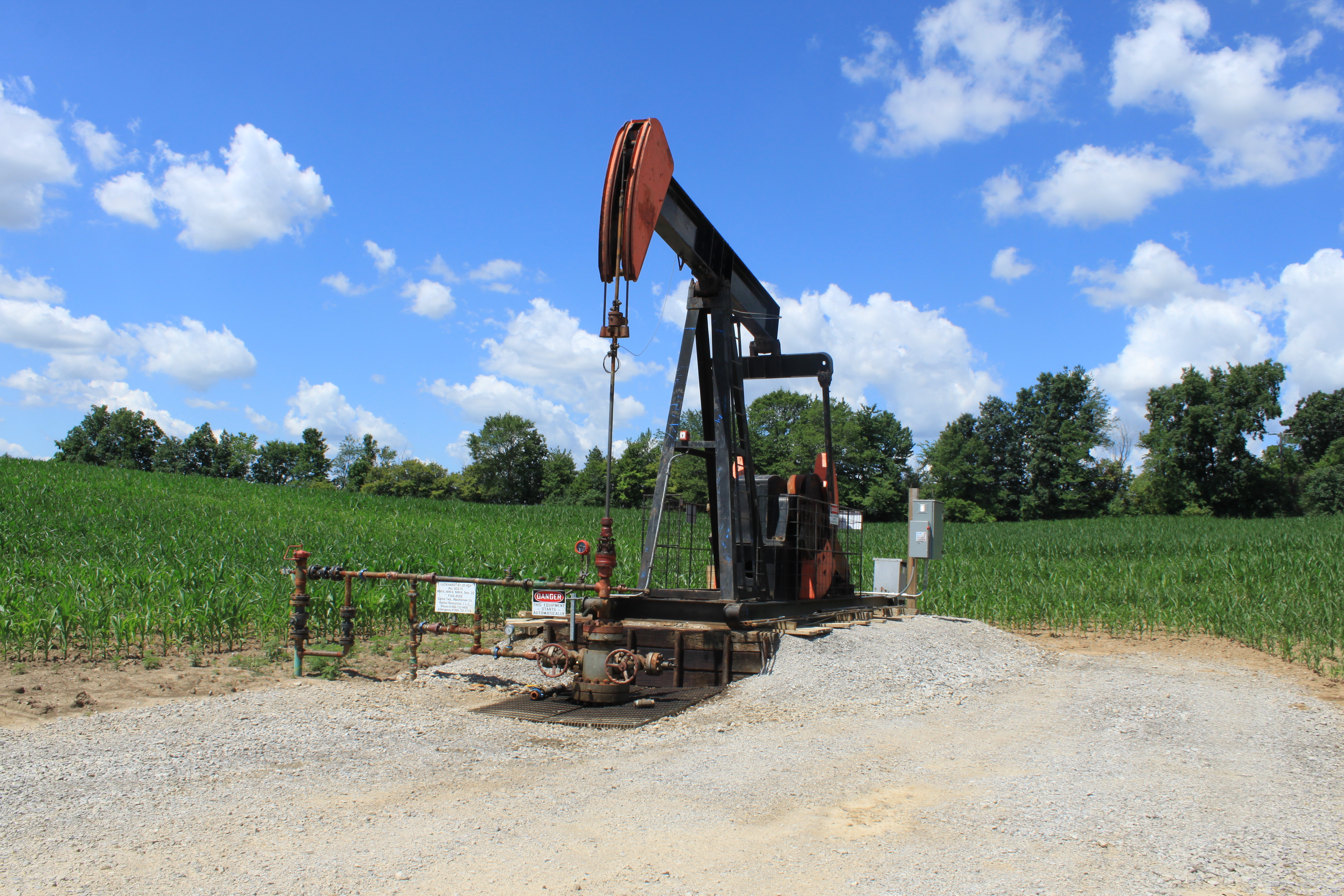
 Figure 1. The preferable kind of corn-field-based fuel, brought to you by a corn field in Michigan. SOURCE
As a result, I’m a long-time opponent of turning corn into fuel. I think it is a crime against the poor, made the worse by the unthinking nature of the ethanol proponents as they advocate taking food out of poor kids’ mouths.
But that’s not the only way that our monomaniacal insistence on renewable energy is taking food from the plates of the poor. For example, tropical forest has been cleared for oil-palm plantations for fuel. But even that is not what this post is about. This post is about trading food for energy in California, the breadbasket for the nation. Here’s the headline:
Fresno County judge rules in favor of I-5 solar project
Jan 03 – The Fresno Bee, Calif.
A Fresno County judge has ruled that a solar energy project along Interstate 5 can move forward despite arguments from the state farm bureau that it will eat up valuable California farmland.
The decision, which comes as good news to the state’s burgeoning solar industry, is the first handed down in the ongoing land war between solar developers seeking real estate for renewable energy and Central Valley farmers trying to protect their tillage.
While the ruling pertains only to the Fresno County project, the decision sends a message across the Valley that agriculture doesn’t necessarily reign supreme.
“I do think it gives a boost to the solar development community,” said Kristen Castanos, a partner at the law firm Stoel Rives in Sacramento who has represented energy ventures and tracked solar efforts on farmland. “This gives counties and developers a little more confidence in moving forward.” SOURCE
This is unbelievably short-sighted. The only good news is that compared to say buildings, it’s much easier to remove a solar installation and return the land to actually producing food. Not easy in either case, but easier for solar. But the good news stops there.
The bad news is, the power thus produced will be much more expensive than power from either fossil fuels or hydropower. But both fossil fuels and hydro are verboten under Governor Jerry “Moonbeam” Brown’s plan to get 30% of all electricity from renewable sources, with “renewable” meaning “renewables other than hydro”. Thirty percent! This madness has already given us some of the highest electrical rates in the country, and we’re not even near to 30% renewable yet.
The worse news is what the dispute was about. California has a strong farmland act, called the Williamson Act. If you put your farmland under the Williamson Act, you can’t develop it, it has to stay farmland. In exchange you get various tax advantages. The important thing to note is that it is a legal contract between the State of California and the owners of the land. This is to prevent the landowner from taking the benefits and then developing the land.
In this case, the article cited above goes on to say (emphasis mine):
Superior Court Judge Donald Black found last month that Fresno County officials acted appropriately two years ago when they canceled a farm-conservation contract that allowed a solar development to proceed on ag land near Coalinga.
The California Farm Bureau Federation sued the county, alleging that the Board of Supervisors did not have the right to cancel the contract put in place under the state’s farm-friendly Williamson Act.
Black said county supervisors met Williamson Act requirements for canceling the contract.
“All parties concede the development of renewable energy is an important public interest both in the state of California and in Fresno County,” Black wrote.
I’m sorry, but there is no public interest in wildly expensive solar power. Nor should County officials be able to break a legal contract at their whim, based on some fanciful claim of a public benefit. The only people being benefitted here, above the table at least, are the owners of the project. The owners will be paid a highly inflated price for their power, which I and other ratepayers will be forced to subsidize. Expensive subsidized energy is not in the public interest in any sense.
In any case, breaking a Williamson Act contract to put in a solar installation definitely reveals the profound hypocrisy of the people behind the project and the useful idiots that support it. They’re approving massive, hideous development on prime farmland in order, they claim, to save the environment. Yeah, pave it to save it, that’s the ticket …
It also sets an extremely bad judicial precedent for future breaking of Williamson Act contracts. Since Kelo vs. New London the expansion of the “taking” powers of governments under the infinitely flexible rubric of “public interest” has ballooned unbelievably. Now we are to the point where they can even take away Williamson Act protections.
The Williamson Act is there to protect the totally irreplaceable, amazingly productive farmlands of California. The Fresno County officials are breaking the intent and spirit of the Williamson Act so that private developers can make a fortune picking the ratepayers’ pockets … and that’s supposed to be in the public interest? Spare me. For me, a kid who grew up on the good rich California earth, that’s a very sad day.
So yes. The idea that you shouldn’t allow the development of solar installations on some of the world’s finest farmland, not just any farmland but farmland legally protected under the Williamson Act, appears to be history in Californica. Infinitely stupid.
Y’know, I love the land here—the fold and break of the coastal hills dropping into the ocean; the wide valleys full of farms; the Sierra Nevada Mountains, where I grew up, towering over the Central Valley; the crazy, blazing deserts; the forests and groves full of deer and fox and mountain lion; and my own little corner where I live in the middle of a redwood forest, with a tiny triangle of the sea visible through the coastal hills. What’s not to like?
But I am roundly fed up with the government, and with the ‘lets power the world on moonbeams, we can all ride high-speed unicorns for transportation and just eat veggie-burgers’ crowd of folks that thinks losing irreplaceable farmland is a good thing in a hungry world, and thinks that hydropower is not renewable energy …
Regards to all,
w.
S Meyer: If wind and solar were viable forms of energy, taking into account land mass required, etc, then putting them in would be okay. If the area is “too pretty to desecrate” with a power plant, then another place would have to located. We do have to have power plants and we have to put them somewhere. While I am thoroughly angered by the wind turbines I can see from my house, I would not object to a power plant going in if this were the best location and the plant was the best solution for power. My land might lose value and I might not be really happy losing my views, but I don’t want to live in the dark and cold, so I am willing to sacrifice when necessary to that end.
[snip]
Title made me think of a Gallagher joke.
“They say that the cities are ruining the environment. This isn’t true. It’s the farmers. By planting crops they leach the nutrients from the soil. They rotate the crops, they rotate the nutrients they leach from the soil. Where as the city puts down parking lots, the asphalt. Seals in the nutrients.”
john: This site will occupy 90 acres and supply enough power for 18,000 homes.
The roof area for 18,000 homes will easily exceed 200 acres. Absolutely no need to mess up 90 acres of good farmland, create unsightly power lines, and lose a significant percentage of your production to transmission losses.
Ken Mitchell: I’m all in favor of building privately-financed solar power facilities… in deserts such as Death Valley
I am appalled to find myself agreeing with Senator Boxer. Death Valley (and the associated Panamints) are the refuge to which I fled at the end of every school year to regain my sanity after handling 20-30 8-year-olds for 9 months. But as I indicated above, there is no necessity to use either prime farmland or pristine wilderness for this purpose.
TimTheToolMan: I’m in favour of decentralised Solar installation. Solar panels on every roof.
Yup. The small installation on my roof has produced more electricity than we have used since we turned it on 18 months ago.
jaycurrie says:
January 5, 2013 at 5:34 pm
Isn’t there a desert or two in California?
There are indeed. In fact, western Fresno County comes within a whisker of being desert too. Most of the western Great Valley south of the Sacramento-San Joaquin Delta falls in the rain shadow of the Coast Range. If you stop your car at any of the rest stops along I-5, and you kow what you are looking at, you will find evaporite minerals such as calcite and gypsum crystals form in the soil. Decades ago the west side was sheep and cattle country. There simply wasn’t enough water to irrigate it for crops. These days it has been converted to expensive vineyard and orchard operations that require water subsidies to survive. I don’t disagree with Willis that it is a profound mistake to convert land from agriculture to solar power production, but the real mistake was made years ago when subsidized irrigation was supplied to the area. Since the collapse of the real estate market and the accompanying decline in consumption of expensively grown wine, fruits and nuts, visible decline – dead vineyards and orchards – has begun to be visible. Range land is not ideal crop land and irrigation tends to destroy such soils through hardpan formation – the Hohokam in Arizona discovered the problem with irrigating desert land a thousand years ago.
The biggest problem with solar power developments is that they are expensive and – worse – uglier than a south-bound baboon viewed from the north.
Everard says: January 5, 2013 at 7:09 pm
Perhaps “treason” is a term we need to introduce into the thoughts of ministers and senators more frequently. Perhaps into the press, too, as at least that smells of something exciting. Perhaps our “leaders” need to be reminded that they are meant to be working for the people, not enslaving them, not crippling them, starving them and killing them through neglect and willful criminal behaviour. The “leaders” most into this scam know full well it is a mockery of science and a lie.
======================================
I agree. You are Australian. You are being sold out by fraudulent Government. Start a movement for a voter referendum- a bill of attainder against the government. This is a novel idea. But it will command the news and attention and it will grow, given the political climate there. It will change the game utterly.
Keb writes “I’m all in favor of building privately-financed solar power facilities on suitable land; for example, in deserts such as Death Valley.”
So what about the desert fauna? Do you really think it is dead barren land?
The old Chinese saying, ” from peasant to peasant in four generations,” seems to still be accurate. This time it appears to be the turn of the west to do it en masse.
Is there the possibility of appealing this ruling that breaks the Williamson Act contract? If it got as high as the US Supreme Court, perhaps there might be a chance of reversing it.
/Mr Lynn
What is even more sickening is that this sits right on top of the Monterey Shale formation with an estimated 4 times the amount of gas and oil as in the North Dakota Bakken formation. So they are going to take a shipload of farmland out of production, plaster it with solar cells, when they could have drilled a couple of wells in the exact same location and provided a lot more energy for a lot lower cost. What idiots!
Reality check says:
January 5, 2013 at 7:35 pm
S Meyer: If wind and solar were viable forms of energy, taking into account land mass required, etc, then putting them in would be okay. If the area is “too pretty to desecrate” with a power plant, then another place would have to located. We do have to have power plants and we have to put them somewhere. While I am thoroughly angered by the wind turbines I can see from my house, I would not object to a power plant going in if this were the best location and the plant was the best solution for power. My land might lose value and I might not be really happy losing my views, but I don’t want to live in the dark and cold, so I am willing to sacrifice when necessary to that end.
You need to really check reality. Solar farms aren’t “power plants” in any way, shape or form. They range in size from severals tens to several thousand acres. They might be more productive in taxes than a run-of-the-mill desert farm or water-subsidized crop land, I’ve never tried to analize that. But, the choice as posed by Willis is between eating or not. Not whether things are “cold and dark” or not. You want to note that hydroelectricity was ruled out by Brown, though is it is far more efficient than solar power, immensely lower in terms of environmental impacts – yes Hetch Hetchy was incredibly beautiful, but it was built back when engineers were not quite clear on ideal water storage locations. There are a lot of locations in California with much better characteristics and they are not likely to destroy views when built either. Personally, I think Th reactors are the best short term choice for power.
john says:
This site will occupy 90 acres and supply enough power for 18,000 homes. Solar power cost is now.less.than $2 per watt. Please try and tell the truth.
____________________________________________________________________________
Are you talking about installed cost of a PV system? I believe it is closer to $4/watt for panels, interconnect and all the other goodies that go along with putting in a system. Also, land usage is about 10 acres/megawatt. If you are talking about price for the electricity, then that’s extremely expensive electricity. The PJM price runs $25-$100/megawatt hour, your $2/watt is substantially more than that. The fixed consumer price in Virginia is $70/mWh.
I couldn’t find the current “price” of solar electricity or the subsidy paid for it. In any event, solar is relatively very expensive compared to fossil fuel sources, generally unreliable on output and consumes huge amounts of land. Solar, like wind, is only viable with heavy subsidies and goes away when the subsidies end.
Yesterday was a good day for the utility scale PV systems that supply the CA grid as noted here: http://content.caiso.com/green/renewrpt/DailyRenewablesWatch.pdf .
Unfortunately it was a rather windless day so the output of the large wind farms was rather low. It’s a good thing that we have lots of non-renewable energy sources to supply the grid as RE generation sources provided just a tad under 8% of the total supply of electrical energy needed in the state as measured by CA ISO. A few years worth of generation data is available per day (by hour if your interested) at this site- http://www.caiso.com/green/renewableswatch.html
Governor Brown has stated in the past that he is in favor of requiring 40% of our electrical energy coming from RE sources (vs the 33%RES that is the current mandate).
Just goes to show there is no such thing as so-called “green” energy – all forms of energy have a cost. And I think its a crime when “green” energy does anything to diminish our food growing capabilities. Food comes first.
john,
Two dollars per watt must be corrected for capacity factor so multiply by about 3. This then becomes 6 dollars per watt. By the way, that 2 dollars is for utility scale projects, residential scale installations are closer to 5 dollars per watt. Of course, the obvious solution is the simplest. Eliminate the production subsidies. If solar is as cheap as you believe then why do I need to help California ratepayers pay for their electricity?
john: This site will occupy 90 acres and supply enough power for 18,000 homes.
?????
The promoter is talking “peak power” there – The maximum you can possibly get with new collectors at noon on the brightest day of the year. So, for one hour of one day of the year you can provide 18,000 homes. Maybe.
All the rest of the year you get less power. Regardless, you can only get this less-rated-power for 6 hours each day: Solar power cannot generate energy between 3:00 PM solar time through the night until 9:00 AM the next morning.
90 acres x 4,047 square meters/acre = 364,000 sq meters.
You need room for roads to clean the collectors (and fresh water that you have to provide, cleanup and process), for the transformer yard to connect it tot the grid, for the control room, for the maintenance building, for the service area, etc. Assume 3-4 acres of pavement and buildings for that.
But, solar collectors CAN’T be built “flat” to the ground to produce power, they have to be inclined into the sun, which creates either “shadows” that fall on the other collectors around them and lost power, or wasted collector space sitting in the dark. However, the “shadow” behind the collectors has to be bought, paved over (else it grows weeds or brush that shades the collectors) but need be included in the ground space removed from farming. At California’s latitde, you usually need 2x ground space for each meter of collector. (Hold a book up to the light at 35 degrees, look at the length of the shadow to see this effect.)
So you can actually only get 180,000 square meters of collecting surface. Fresno County is latitude 36.74 north. From NOAA website, for today’s date, I get a grand total of 2700 watts/meter square “available” on the collector during the entire day.
You did receive 495 watts/square meter available at noon. (If there were no clouds and you had water from the river, cleaned it up, and sprayed off the collector yesterday. Except the environmentalists won’t let you use river water to irrigate farmland, so I’m sure they’d let you use river water to clean collectors and put the dirty water back in the river … Right?)
Maximum efficiency of solar collectors is 12 – 15%, so you can get a maximum today of 60 watts – 75 watts per square meter. At noon. The rest of the day, even less.
How’s that solar power working out for for right now … at 9:00 PM out there?
I can build a natural gas, combined cycle power plant that is quiet, invisible (behind trees) to its neighbors, and sits on 12 acres. Produces 1200 MegaWatt of power. Continuously. Every day. And feeds the plants with its greening gasses too!
I’ve always referred to ethanol from corn as scamanol, because that’s all it is. It’s just a political tool used by both parties to buy off the farm vote.
It’s an insane policy that not only increases the price of corn, ALL food products. As farmers devote more and more acreage to corn, that leaves less acreage is available for other crops, which decreases supply and increases prices.
Meat prices also rise as feed prices increase.
The net result is that a higher portion of disposable income is required for food, leaving less money for other consumer goods, which ends up hurting the entire economy.
Solar subsides are even worse…. They stifle technological advancement by making uneconomic technology artificially “viable”, which reduces the necessity to innovate. In addition, subsidies misallocate limited capital resources, leaving less money for other industries.
What’s even worse is that a cheap alternative energy source called Liquid Fluoride Thorium Reactors (LFTR) exists capable of producing electricity @ur momisugly $0.02/kWh, compared to solar at a whopping $0.25/kWh.
But no sense worrying about it. China is now working feverishly on developing LFTRs and have already put $500 million behind it. They’ll probably have working LFTRs by 2020 pumping out electricity at $0.02/kWh, while the US will have wonderful “green” energy at $0.30/kWh.
Take a guess what’s going to happen to the US/China trade deficit (currently $300 BILLION/YR) when China’s LFTRs go online. Oh goody.
This site will occupy 90 acres and supply enough power for 18,000 homes. Solar power cost is now.less.than $2 per watt. Please try and tell the truth———–
Poorly stated and utterly meaningless.
Max
Is this project for residential power (18,000 houses)? They’ve solved the storage problem then? Great!
No, you say, they have not. Oops. Thanks but no thanks then – I’ll not be buying one of those fancy mid-1800s houses.
Liquid Fluoride Thorium Reactors (LFTRs) is a proven technology capable of producing electricity @ur momisugly $0.02/kWh compared to solar @ur momisugly $0.30/kWh. It’s not even CLOSE.
China allocated $500 million in 2011 to quickly develop LFTRs and they’ll probably have them up and running by 2020.
Care to guess what will happen to the US/China trade deficit (current $300 BILLION!!) when China is pumping out electrons at $0.02/kWh while the US is busy subsiding solar at $0.30/kWh???
China will eat our lunch AGAIN using a technology US taxpayers funded back in the 60’s…. Oh, the irony…. Don’t you love it so.
Reality check:
So… If crops for fuel rather than for food were economically viable without any form of government incentive, it would be ok? Even if that meant a lot of poor people could no longer afford their food? The scary thing is that this could actually happen, if fossil fuels get expensive enough. I would agree that crops for fuel is a very bad idea and should be abandoned ASAP, but somehow I don’t trust the market all that much either…
You guys are about to convince me that the “warmers” are right.
If you people are this willfully wrong about about all renewables, you just “might” be the same about Climate Change.
john says:
January 5, 2013 at 6:23 pm
John, thanks for the moral instruction. I would never have thought about telling the truth without your wise guidance.
I note that you have said nothing about the breaking of the Williamson Act, the subject of the post.
Finally, if you think a man is not telling the truth, where I come from making such an accusation without facts to back it up can earn you a busted nose. So what is it that I have done that you think is not the truth? Time to put up or shut up.
w.
PS—Indeed, telling a man exactly where and how he is wrong is the action of a polite man, and in fact is a scientific necessity.
Accusing him of not telling the truth is the action of a despicable man, particularly when done without evidence.
I may be wrong, john, I have been many times. But I always endeavor to tell the truth. I do not appreciate your claim to the contrary.
S. Meyer says:
January 5, 2013 at 6:49 pm
I’m not one of them. As I have posted here before, I know that people need regulations. Otherwise, some damn fool will always piss in the water supply. It’s a given. We’re pigs, we need regulations to save ourselves from our baser natures. That’s beyond question on my planet.
w.
1. Agree that farms should be used for food and not for fuel.
2. Agree that solar installations should go be on land that has been trashed and is no longer useful for either production or nature. Thankfully, there is plenty of that class of land available.
3. Agree that landholders and governments should act in good faith when it comes to land tenure, land use, and the public interest.
4. Disagree about the renewables. It is good to see that the Government of California is doing the righ thing. 30% is still too low, but it is a good start.