Guest Post by Willis Eschenbach
Trading food for fuel, in a world where high food prices already affect the poor, has always seemed like a bad idea to me. If I have a choice between growing corn to fuel SUVs versus growing corn to make tortillas, to me that’s a no-brainer. I’ve known too many people for whom expensive tortillas are unobtainable tortillas to vote any other way.
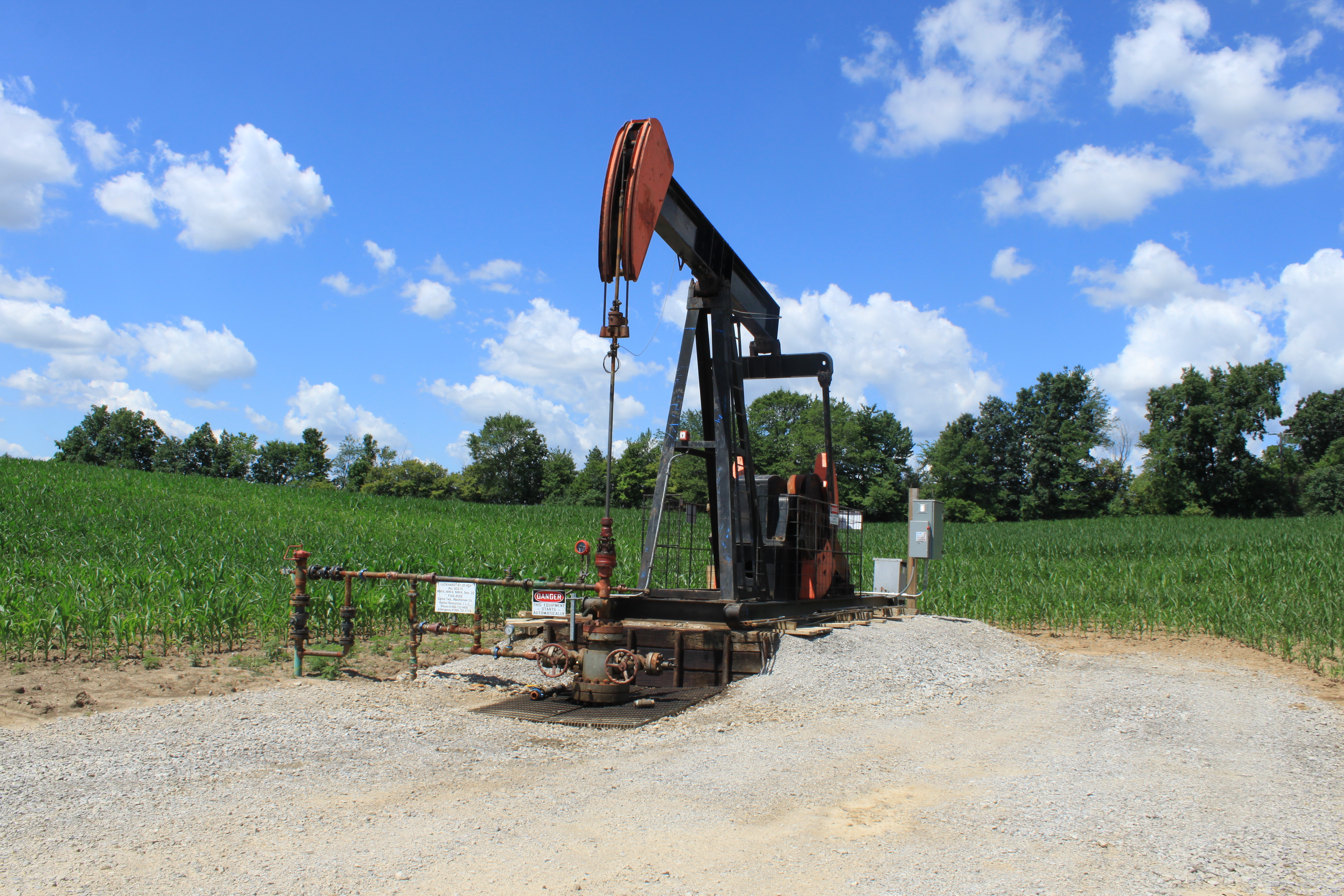
 Figure 1. The preferable kind of corn-field-based fuel, brought to you by a corn field in Michigan. SOURCE
As a result, I’m a long-time opponent of turning corn into fuel. I think it is a crime against the poor, made the worse by the unthinking nature of the ethanol proponents as they advocate taking food out of poor kids’ mouths.
But that’s not the only way that our monomaniacal insistence on renewable energy is taking food from the plates of the poor. For example, tropical forest has been cleared for oil-palm plantations for fuel. But even that is not what this post is about. This post is about trading food for energy in California, the breadbasket for the nation. Here’s the headline:
Fresno County judge rules in favor of I-5 solar project
Jan 03 – The Fresno Bee, Calif.
A Fresno County judge has ruled that a solar energy project along Interstate 5 can move forward despite arguments from the state farm bureau that it will eat up valuable California farmland.
The decision, which comes as good news to the state’s burgeoning solar industry, is the first handed down in the ongoing land war between solar developers seeking real estate for renewable energy and Central Valley farmers trying to protect their tillage.
While the ruling pertains only to the Fresno County project, the decision sends a message across the Valley that agriculture doesn’t necessarily reign supreme.
“I do think it gives a boost to the solar development community,” said Kristen Castanos, a partner at the law firm Stoel Rives in Sacramento who has represented energy ventures and tracked solar efforts on farmland. “This gives counties and developers a little more confidence in moving forward.” SOURCE
This is unbelievably short-sighted. The only good news is that compared to say buildings, it’s much easier to remove a solar installation and return the land to actually producing food. Not easy in either case, but easier for solar. But the good news stops there.
The bad news is, the power thus produced will be much more expensive than power from either fossil fuels or hydropower. But both fossil fuels and hydro are verboten under Governor Jerry “Moonbeam” Brown’s plan to get 30% of all electricity from renewable sources, with “renewable” meaning “renewables other than hydro”. Thirty percent! This madness has already given us some of the highest electrical rates in the country, and we’re not even near to 30% renewable yet.
The worse news is what the dispute was about. California has a strong farmland act, called the Williamson Act. If you put your farmland under the Williamson Act, you can’t develop it, it has to stay farmland. In exchange you get various tax advantages. The important thing to note is that it is a legal contract between the State of California and the owners of the land. This is to prevent the landowner from taking the benefits and then developing the land.
In this case, the article cited above goes on to say (emphasis mine):
Superior Court Judge Donald Black found last month that Fresno County officials acted appropriately two years ago when they canceled a farm-conservation contract that allowed a solar development to proceed on ag land near Coalinga.
The California Farm Bureau Federation sued the county, alleging that the Board of Supervisors did not have the right to cancel the contract put in place under the state’s farm-friendly Williamson Act.
Black said county supervisors met Williamson Act requirements for canceling the contract.
“All parties concede the development of renewable energy is an important public interest both in the state of California and in Fresno County,” Black wrote.
I’m sorry, but there is no public interest in wildly expensive solar power. Nor should County officials be able to break a legal contract at their whim, based on some fanciful claim of a public benefit. The only people being benefitted here, above the table at least, are the owners of the project. The owners will be paid a highly inflated price for their power, which I and other ratepayers will be forced to subsidize. Expensive subsidized energy is not in the public interest in any sense.
In any case, breaking a Williamson Act contract to put in a solar installation definitely reveals the profound hypocrisy of the people behind the project and the useful idiots that support it. They’re approving massive, hideous development on prime farmland in order, they claim, to save the environment. Yeah, pave it to save it, that’s the ticket …
It also sets an extremely bad judicial precedent for future breaking of Williamson Act contracts. Since Kelo vs. New London the expansion of the “taking” powers of governments under the infinitely flexible rubric of “public interest” has ballooned unbelievably. Now we are to the point where they can even take away Williamson Act protections.
The Williamson Act is there to protect the totally irreplaceable, amazingly productive farmlands of California. The Fresno County officials are breaking the intent and spirit of the Williamson Act so that private developers can make a fortune picking the ratepayers’ pockets … and that’s supposed to be in the public interest? Spare me. For me, a kid who grew up on the good rich California earth, that’s a very sad day.
So yes. The idea that you shouldn’t allow the development of solar installations on some of the world’s finest farmland, not just any farmland but farmland legally protected under the Williamson Act, appears to be history in Californica. Infinitely stupid.
Y’know, I love the land here—the fold and break of the coastal hills dropping into the ocean; the wide valleys full of farms; the Sierra Nevada Mountains, where I grew up, towering over the Central Valley; the crazy, blazing deserts; the forests and groves full of deer and fox and mountain lion; and my own little corner where I live in the middle of a redwood forest, with a tiny triangle of the sea visible through the coastal hills. What’s not to like?
But I am roundly fed up with the government, and with the ‘lets power the world on moonbeams, we can all ride high-speed unicorns for transportation and just eat veggie-burgers’ crowd of folks that thinks losing irreplaceable farmland is a good thing in a hungry world, and thinks that hydropower is not renewable energy …
Regards to all,
w.
Willis – I actually really DO hang out at Cowboy bars … very often – was at one tonight … and the one thing they appreciate is plain speakin’ folks who say what they have to say. They may not agree – and on occasion they may try to whup yer arse – but they still respect you for saying it.
I said what I felt needed to be said – based on the facts as I saw them. I supported my comments with reasoned explanations and data. I noted it was not one issue but several cases with similar selective parsing that helped support your claims.
I showed your claims were incorrect – that besides your selective parsing you used the wrong data for the claim you were making – but gave a pass as that could be chalked up to not understanding exactly what the data was.
I felt a stronger statement was warranted not only because of the several instances of similar selective use of the data – but also becasue of the manner you used it. Despite your clear error in proper data set, let alone the selective use of the data, your conclusions were not accurate. Yet you used them to attack another poster and completely dismiss the RFA response to the NY Times Guatamela story.
My response was in related proportion to yours.
Despite your denigration and pretty impolite and bullying dismissal of my and others well reasoned, supported and documented responses, I continued to respond as civilly as I could.
You are completely entitled to dismiss my, or other comments for any reason you please. But if you are going to make statements here you should expect that they may be challenged at times. And where those challenges are at least well thought, and supported, they deserve a civil rebuttal. I and several others invested considerable time in research and providing those responses too yours. You responded with denigration and derision – largely ignoring the information provided AND largely ignoring your own admonishments to others.
It seems its perfectly acceptable for you to respond boorishly to civil replies, but heaven forbid you are called to task for your repeated errors, inaccuracies and omissions.
I absolutely meant it when I said I respect you and much of your writing and work. And I meant it when I said your replies here have not been representative of what you are capable of.
Vigorous debate is an important part of drilling down to real issues. Sometimes that debate can even become heated. That does NOT necessarily mean it is disrespectful. Too often though, when you disagree, you are dismissive and disrespectful of the positions and claims of others.
It is one thing to disagree, another to be disagreeable.
You may well believe that about me. At times I am most certainly guilty – sometimes on purpose, but often simple by plainly saying what I see and think.
This is an important topic. And also one with much disinformation. It is very easy to saying burning food for fuel is bad. But that is not enough reason without facts to back it up.
You say burning food for fuel is bad. I to a point agree – if it is actually true. We cannot have an intelligent useful discussion until we are at least better informed on those facts. As I always do – I have spent many, many hours researching the base data to try and learn the answer. You know far better than I that the data itself is only a tool to learning those answers – we must also understand context.
You know it is wrong to cherry pick a data set to better support a position. Whether by intent or omission you did exactly that here. You know it is largely useless to try and intuit what a small data set might portray, without context – without knowing how it fits in the bigger picture. But you did so anyway – and used it to attack others and dismiss legitimate other responses.
I was a warmist until I kept trying to confirm the claims and learned much was not confirm-able or accurate. The science educated me and changed my beliefs.
I was against ethanol until I did the same. Like you I spent considerable time and much money in an island setting. With huge transport costs, energy independence is a huge issue. Although generally a strong critic of large scale solar I was shown how it can be a good idea in certain situations. The same with wind energy – large scale use an expensive boondoggle and blight – but on certain applications and situations made sense.
I needed to also consider disaster planning into the mix – which changes perspective a lot. I eventually incorporated solar (both voltaic and for water heat) – making it an attractive and functional architectural element, and wind – using multiple more compact “egg beater” type turbines – as artistic elements – visually attractive and again functional.
As part of cost review and disaster planning the availability of fuel in a remote island environment after a large hurricane or similar becomes a serious issue. Which led me to renewable fuels – and a detailed review of ethanol. And that detailed review convinced me of ethanol’s benefits. Those benefits are enhanced in a remote island environment, but are jsut as applicable on the mainland.
So wander around hurt with your panties all in a bunch becasue someone pointed out you weren’t accurate, and maybe even fudged the numbers a bit to make your point if you must.
But I would MUCH rather have an intelligent debate and try to dig up and discuss the real answers and facts about ethanol and its affects, if any, on food security be it for Guatemalans, Larry the Cable guy’s starvin’ Ethiopians ;-), or anyone else for that matter..
If you are serious about finding the answer I say lets work together to first identify the data and circumstances – the context – and then discuss and debate fairly and vigorously.
[REPLY: Mr. Scott, you called me a liar. As I said, I don’t hold discussions with low-lifes that do that. Apparently you think I was kidding. As I said, the conversation is over, so you’re just wasting electrons whining and bitching about how I’m treating you mean. You need to grow up and learn the rules of adult conversation. If you wish to apologize for calling me a liar, we can pick it up again. Or you can just attempt to shine it on as though you’ve done nothing, as you have childishly attempted to do so far. In any case, you can apologize or not, it’s up to you. Until then, I’m done. -w.]
A Scott: You do realize disaster planning and daily life are two different things and the solutions to each may be completely different? I read you advocating disaster planning be used for daily life solutions and that seems pretty far off.
Perhaps you mean the possibility of more abuse. In which case, I appreciate the concern, but Willis’s roughness does not bother me.
http://www.nytimes.com/2013/01/06/science/earth/in-fields-and-markets-guatemalans-feel-squeeze-of-biofuel-demand.html?_r=1&
johanna says:
January 8, 2013 at 3:17 pm
Intermittent sources as part of the grid are fine, if they operate at peak times. Use soemthing constant for baseline demand, and, if it works, fill in with something else for peak demand. In California’s central valley, from mid-March to mid-November, more than 5% or 10% cloud cover is rare. Much of that time, one has to keep an air conditioner running if things are to be remotely tolerable. High temperatures above 100F (38C) are very common in June and July, and this can continue intermittently into October. The hottest times, and highest electricity demand (due to air conditioning) come when solar output is highest. But you Aussies know about heat, at least in some places, since your weather service just had to implement two more colors (colours) for the forecast maps, to represent temperatures hitherto unknown in the forecasts.
Anyway. Power systems have to handle the highest expected base load 24/7, and also the highest peak load, whenever that occurs. Where people use air conditioning, the highest load is about when it’s hottest, mid- to late-afternoon. This happens to be when solar power systems reach their peak, too. Their power is much lower if it’s cloudy, but so is the AC demand. For the Central Valley, and much of California, cloudy days are extremely rare (and much cooler) in the summer.
Hitherto, the power grid has had to be able to handle baseline power 24/7 but also peak power when that occurs. One can buy power from elsewhere, since heat waves don’t hit the entire continent simultaneously. However, handling peak power has always meant having, somewhere, conventional generating capacity sufficient to handle the peak.
This is no longer true. Since solar works best right when the AC demand, and overall demand is highest, you can use conventional power for baseline, and add solar for peak times. As demand increases over the years, this means some conventional plants won’t have to be built, because solar can handle the peaks.
So, why did I say “fossil fuels” rather than “conventional plants”? Let’s look at hydro and nuclear:
Hydroelectric plants require damming up a mountain valley or a river, where there’s some notable elevation change. There’s only a finite number of places where this will work well, and many of them in the US already have dams. Central California could probably use at least one more major dam to help the water supply, and maybe others are later. At least a few of those places should be left alone, for scientific and aesthetic reasons. But, a dam and its lake are not environmental disasters; far from it. They provide recreational opportunities and habitat for wildlife, just different wildlife than the valley did without the lake. But, the available locations for dams are limited, and in California , we’re already using many of the best places. Hydro is great, but we just can’t keep building it because we can’t build mountains, and we’ll run out of potential sites someday.
Nuclear has some underlying concerns that will never go away: if the stuff inside of it gets outside, it makes an abominable mess. This is manageable, with newer designs being tremendously safer than older ones, even for uranium designs, much less thorium. That doesn’t protect against terrorist strikes, but that risk can be managed as well. Some of the most efficient designs are also good for producing weapons; we don’t want certain people to be using these. It’s a lot easier to keep them from it if we’re not using them ourselves, which also saves the headache of security to prevent diversion from our own power plants. So, some designs are a problem from the proliferation standpoint.
But now, for the near future, nuclear plants are not going to be built. The public is still scared after Fukushima, and a difficult political environment for nuclear power just got worse. With time and effort, this can be reversed, but it won’t happen overnight.
Nuclear power plants are finicky in terms of their load. For example, Xe-133, a fission by-product, is a powerful neutron absorber, and is itself radioactive. When you change power level, the Xe-133 concentration will start out at a level consistent with the earlier power level, and as it comes to a new equilibrium, through buildup and decay, the control rods have to be adjusted. If the water temperature changes (it doesn’t necessarily have to) the reaction rate changes with neutron energy. All of this means that it’s best to run the reactor at a constant load. If the nuclear is a large part of the mix, then you need load-leveling to handle peak power. This means either generating capacity that will sit idle some of the time, or energy storage.
The energy storage system that really works is a pair of lakes, at different heights, with a large pipe (tunnel or penstock) between them. The lower lake needs a turbine and a motor/dynamo, that can either generate power as water flows from the upper lake, or pump water back up from the lower lake. This works really well, and allows the nuclear plants to run all night and store up energy to be used at peak times the next day. It obviates the need for new plants to handle peak power.
But, as with straight hydro power, it doesn’t work everywhere. It’s only practical if you have mountains, or other serious elevation changes. (I’ve thought about the idea of drilling a 30ft, or 9m wide hole, 300 m down into the ground to an underground cavern, to act as the lower lake, but I don’t see it as being practical just now.)
So, you need to handle a variable load, and you need to expand capacity as population increases. Expansion of hydro is limited, and new construction of nuclear is politically difficult, as it has been for some time. Also, nuclear works better if you have load leveling with either another generation technology that will be idle at times, or with energy storage. Hydro storage is also limited by terrain.
For future expansion, that leave fossil fuels for conventional sources. That’s why I “slipped” them in there.
That’s why I see solar power as having a prominent place in future power generation, for the near future. They don’t pollute the air (which I breathe) and they don’t have fuel costs. They only work when the sun is shining, and work better when it shines brightly, but this is exactly when the load from air conditioning systems is highest.
Wind, I’m not so big on. It’s OK, it reduces emissions and doesn’t use fuel, but it only works when the wind is blowing, and that’s steadier in some places than others. It absolutely needs backup either in the form of other generating capacity, with its costs, or else in the form of energy storage. And, they have their own environmental problems.
These need not be mutually exclusive, if the market, once created, will eventually sustain itself. Which solar will, for the niche in which it best operates, especially as prices come down.
Or from taxpayers to producers. We don’t want to do either unless it’s very clear what we get in return, such as a developed market for a technology that we find beneficial.
You appear not to have considered the variations of load and production with time of day, and the similar variations with cloud cover. Unbearably hot days tend to be bright and sunny. I don’t think you’re considering the costs of pollution, either, some of which are spread out over the population in general, who are not getting paid for them. We’ve always traded off people’s health for power, but it can be worth paying more for power up front to avoid the health costs on the back end.
I guess that large, established corporations with large workforces and stable income streams are not “dynamic,” then. But they sure as hell are not “rent-seekers” just because they want stable markets, not unless they game the government to get such. They’re ready to adapt to changing conditions, but General Motors is not interested in building cars unless they’re reasonably sure that people will buy them, and at a price that can be predicted before the production line starts up on a new model. They want predictable markets. not chaotic, ones which might suddenly have very little demand.
Tell that to the British Empire, among others, and the colonies that labored under their mercantile system. The world outgrew that way of working, thankfully, but if you can ssuccessfully argue that Europe didn’t get wealthy under that system between, say, Columbus and the American Revolution, I’d like to see you do it.
Rent-seeking is a complicated concept; it includes, among other things, intellectual property such as patents and copyrights, even though they do result from someone’s labor and genius. I’m not against those.But I certainly oppose rent-seeking in the unproductive sense, although I don’t mind if a lot of the real productivity is in the future, I want things that can legitimately, in the broadest sense, be called investments. If society pays for something, then society should expect to receive a return on it.
The return on investment can be calculated in dollars, but not necessarily in cash flow—unless electric ratepayers start paying for the respiratory ailments suffered by those who have to breathe in the effluent caused by their hair dryers, video games, and air conditioners. In California’s central valley, air pollution is especially bad, the need for air conditioning is especially high, and the sunlight is especially intense. People elsewhere in the country may receive less of a direct benefit from solar subsidies, but they still benefit from the astonishing abundance of farm produce—about ¼ of the vegetables consumed in the country, and a great deal of dairy products—that comes from the central valley, and so they benefit when it’s tolerable for people to live and work.
kakatoa says:
January 8, 2013 at 5:43 pm
He simply picked a particular installation and analyzed that. It’s a large one (92 MW) and so smaller ones might not have the economies of scale that the one analyzed has.
The bottom line for MidAmerican is identifying places where rates are high at peak and that are squeezed on the generation side, Caudill says. “Those drive the market. It’s hard to say where we end up next — but I feel strongly that there are opportunities out there.””
Now, this is an important factor in the economics of solar power. Just at a quick glance, I see that for some customers, during the summer, when both solar power and AC usage are at their peak, the the price for energy during peak hours is 2-4 times what it is during off-peak hours, and considerably more than in the winter. This could go a long way to offsetting the higher price per kW for solar, by bringing it a higher return when its output is highest.
I’m not that far from the Sierra foothills, or at least some of them.
Gail Combs says:
January 9, 2013 at 3:20 am
With a quick web search, I may have found where this is, East of Raleigh.
Swapping in and out of some alternate pasturage would work too, but only if they have it.
Never saw one on a pickup, but there was one that loved to stand on a stump. This astonished a friend of mine who came over for a bike ride. I lived in rural Alamance county, between Chapel Hill and Durham, in an area that people would drive 20 or 30 miles with their bikes, to enjoy the beautiful scenery and the near-empty back roads, where the farmers in their pickups would calmly cross the double yellow lines to give a bicyclist the entire lane, and wave as they drove by. Re the goat: as we rode up the hill and passed the goat on his stump, my friend turned to me, and said, “did you see that?” I replied, “yeah, that’s the goat. He does that.”
Which saves money over a more stout installation. Although, when the next occasional hurricane comes through, they will want something very stout, or else to be able to take the panels down in a hurry.
Well, it probably would have been OK, but I’m glad I wasn’t sipping my coffee when I read this. Still, I can attest that it works for the inside of the windshield of an old sports car with non-functional heater/defroster, although I didn’t use the entire sheep. I just kept a decent wool hat in the car, and used it to wipe the fog off of the glass as I drove. It would then stay clear for up to an hour. When I wasn’t wiping, I wore the hat.
I apparently didn’t make my point clear … my initial research on disaster planning educated me and evolved into looking at wider renewability and sustainability benefits and perspective.
As Willis brought up – converting good farmland to solar is NOT a good use of technology – it is downright stupid in my opinion. Grow a “crop” of sunlight might be economically beneficial on that land but iof it is indeed high quality crop production land there are many other places 91 acres of solar could go.
What I learned from my research on a small scale – re: disaster planning – showed me first, that ethanol is a viable partial solution. Mostly it taught me the vast majority of attacks on it are not well founded. When you drill down and start looking, the work attacking ethanol is very like the global warming – CAGW science – dubious at best. Claims that burning “food” for fuel are causing food shortages and the like are simply not as far as I can find supported by fact – there is much anecdotal and modeled claims but very little hard evidence.
The claims prices of corn have increased becasue of ethanol are similarly unsupported. You can do all the studies you want that show that ethanol is related to corn prices, but when wheat, soybeans and other crops prices have increased almost identically it shows correlation is not causation.
Nor does it ultimately bother me. But we could have much more productive conversations with a little less of it.
Vigorous, even heated, debate is a good thing … if the goal is better understanding.
For all its greatness, this place turns into just as bad as SKS from some fronts, when some people disagree with certain comments or positions.
Been there – done that – earlier in the thread …. part of what set Willis off 😉
[Oh, please, stop the bullshit. I was “set off” by your calling me a liar and then refusing to apologize, not by your scientific claims, so you can stuff your smileys where they’ll do the most good. -w.]
The rebuttal link was from the RFA – so immed. some attack the source rather than the information.
When you actually start doing open-minded review what you find is the problem with food costs in Guatemela are because the corn costs THERE are high – not ours. What you find is the US has provided them ALL the white corn they have wanted – and that one of the big reasons these country’s import US corn si to reduce the cost of food there – our corn is cheaper – NOT more expensive – than theirs.
Anyone that read the NY Times story carefully would have seen that another part of the problem is because we provided subsidized corn that was TOO CHEAP in the 1990’s.
ONLY in the eyes of a tree-huggin’ greenie liberal would someone be attacked for trying to help by selling corn to these countries at subsidized rates. They attack because it was too cheap and so the Guatemalan’s stopped producing enough on their won. And now attack claiming we must sell cheaper.
These attackers also fail to note that Guatemalan consumption of corn has dropped – something like 25% – as they have gotten more access to milk, eggs, meat etc., and becasue of the shift of the younger generation to bread products.
What really frosts me in reading bleeding heart stories like this NY Times piece – besides the ignorant and biased reporting – is trying to shift blame.
It is not the US or anyone else who makes decisions for Guatemala. As a country they make the choice on what to grow – and whether to grow for domestic or export use. As a country they have chosen not to grow enough food locally , instead to opt for higher value exports. And had any of the idiots who write this drivel actually looked at their exports they would find there is a very long list – not just sugarcane and palm oil. A perfect example are an array of fancy vegetables grown primarily for export.
The white corn America ships them is lower cost than their own. Our corn helps them LOWER food costs – not increase them. We do not contribute to their food “poverty” as some like to call it – we help MITIGATE the costs of their staple product – white corn – becasue they CHOOSE to produce other products for export.
.
Apologies on the quote–missed the earlier discussion.
I would just note that use of the term “renewable” does not mean “unlimited”. Scale enters also. The more we grow our fuels, the more land we need. Never mind if we previously used it for food or for a theatre parking lot. Or if we love taking land from third world countries for growing trees for carbon credits and biofuels. (Taking from those who cannot object.) Renewables really are just as limited as any other energy source–you need to refine them, or build giant traps for them (as in wind), etc. We’re pretending we can save the planet using “renewables” while using “non-renewables” like petroleum to transport and refine and produce the renewables.
There is always a trade-off, but unless we keep the governments from handing out money in the hopes of their bestest contributors making millions and getting them re-elected for life, energy will be based on who gets the most money and not who does the job best. Yes, life is like that.
As for running out of food, bottom line, it’s a self-correcting problem. People starve, fewer people, more food. As humans, we might be able to avoid that if we actually used science and not money to rule the world. We don’t. Nature corrects that which we will not. It’s just the way it is.
mpainter says:
January 9, 2013 at 11:40 pm
Moderator- would you mind explaining that?
[reflection is your friend . . out to you . .mod]
$$$$$$$$$$$$$$$$$$$$$$$$$$$$$$$$$$$$$$$$$$
upon reflection:
costly error to abuse and mistreat those who would be your friend.
mpainter, I fear I don’t understand that. What are the dollar signs for? And are you claiming that the moderator is mistreating you?
And if so, how is that a “costly error”? Worst case scenario I can see is that you never post here again … what’s not to like?
w.
In response to Jazzy T’s comment on Jan 10th:
My wife and I have an electrical energy billing rate schedule like the one you identified (“the the price for energy during peak hours is 2-4 times what it is during off-peak hours, and considerably more than in the winter.”). In our case (E-7 rate schedule from PG&E) the price we pay for a kwh of energy from the grid at peak times in the summer is 4 to 6 times Tier 1 off peak usage prices. And percentage wise you are correct in the winter months it is only 34% to 300% more for a grid (PG&E) provided kwh of energy during peak hours compared to off peak time usage. Our problem last month was our total kwh per day pushed our costs up to the 300% more level. We don’t normally have this happen.
My wife reminded me that our bill was a bit atypical (ie expensive) last month because we had house guests for a fair amount of the month. Even with our house guests our little PV system keep our peak time usage low . Our peak usage was less then 3.3 kwh per day. Last year without our house guests we sent 4 kwh to the grid at peak times in December. Unfortunately, I couldn’t tell our house guests not to run the heaters (electric energy source- yes natural gas would be preferred, but we don’t have it), take showers (water provided by a well), or do their laundry. It’s amazing how much energy it takes to dry your clothes with an electric dryer.
My wife has given me yet another to do: to see if investing in some infrastructure (new propane gas lines, and a modified laundry room to vent a propane hot water tank and propane dryer) would make sense for us from an energy efficiency and cost of energy perspective. My suggestion that we don’t have family and friends stay the night(s) for the holidays didn’t go over well. I think my approach was a bit off the mark- what I should of suggested was that we do the visiting as that would of taken care of the extra kwh that made our bill go through the roof. She snickered a bit with my other alternatives to addressing the extra kwh usage of house guests. 1) Charge them for staying with us and explain why it costs $.26 kwh on our bill in the winter for them to use any electrical energy or 2) try to get the CPUC to require that folks transfer some of their allocated reasonably priced energy to me for their stay. Her snicker changed to a complete laugh with the second alternative. As we expect to get our smart meter next week I came back with resolution to her your out of your mind look/response It wouldn’t be that hard to have the smart meter be programmable so it could read a allocation card for the extra people staying with us during the holidays. She decided it was time for me to have a beer and dig her a hole for a new apple tree.
A graphic on pricing I compiled some time back … if as claimed it is corns use for ethanol that is increasing prices on corn and allegedly driving up food costs – then it must be magic – since the costs on the other commodities have risen almost identically
MODS: If that didn’t go thru – here is the link:
https://docs.google.com/file/d/0B_26actSzzJJQXVXZE81MFhpTzg/edit?pli=1