Guest Post by Willis Eschenbach
Trading food for fuel, in a world where high food prices already affect the poor, has always seemed like a bad idea to me. If I have a choice between growing corn to fuel SUVs versus growing corn to make tortillas, to me that’s a no-brainer. I’ve known too many people for whom expensive tortillas are unobtainable tortillas to vote any other way.
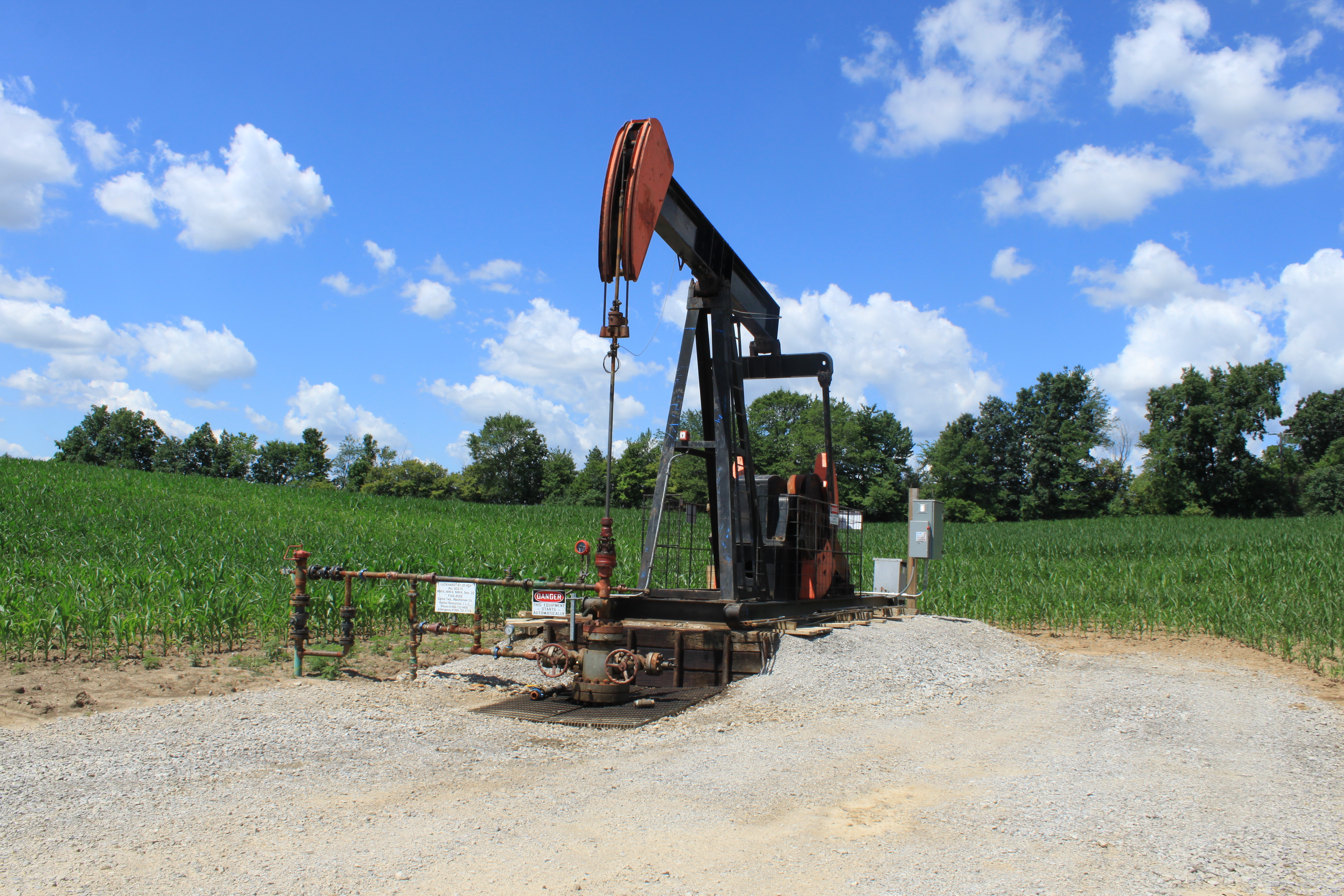
 Figure 1. The preferable kind of corn-field-based fuel, brought to you by a corn field in Michigan. SOURCE
As a result, I’m a long-time opponent of turning corn into fuel. I think it is a crime against the poor, made the worse by the unthinking nature of the ethanol proponents as they advocate taking food out of poor kids’ mouths.
But that’s not the only way that our monomaniacal insistence on renewable energy is taking food from the plates of the poor. For example, tropical forest has been cleared for oil-palm plantations for fuel. But even that is not what this post is about. This post is about trading food for energy in California, the breadbasket for the nation. Here’s the headline:
Fresno County judge rules in favor of I-5 solar project
Jan 03 – The Fresno Bee, Calif.
A Fresno County judge has ruled that a solar energy project along Interstate 5 can move forward despite arguments from the state farm bureau that it will eat up valuable California farmland.
The decision, which comes as good news to the state’s burgeoning solar industry, is the first handed down in the ongoing land war between solar developers seeking real estate for renewable energy and Central Valley farmers trying to protect their tillage.
While the ruling pertains only to the Fresno County project, the decision sends a message across the Valley that agriculture doesn’t necessarily reign supreme.
“I do think it gives a boost to the solar development community,” said Kristen Castanos, a partner at the law firm Stoel Rives in Sacramento who has represented energy ventures and tracked solar efforts on farmland. “This gives counties and developers a little more confidence in moving forward.” SOURCE
This is unbelievably short-sighted. The only good news is that compared to say buildings, it’s much easier to remove a solar installation and return the land to actually producing food. Not easy in either case, but easier for solar. But the good news stops there.
The bad news is, the power thus produced will be much more expensive than power from either fossil fuels or hydropower. But both fossil fuels and hydro are verboten under Governor Jerry “Moonbeam” Brown’s plan to get 30% of all electricity from renewable sources, with “renewable” meaning “renewables other than hydro”. Thirty percent! This madness has already given us some of the highest electrical rates in the country, and we’re not even near to 30% renewable yet.
The worse news is what the dispute was about. California has a strong farmland act, called the Williamson Act. If you put your farmland under the Williamson Act, you can’t develop it, it has to stay farmland. In exchange you get various tax advantages. The important thing to note is that it is a legal contract between the State of California and the owners of the land. This is to prevent the landowner from taking the benefits and then developing the land.
In this case, the article cited above goes on to say (emphasis mine):
Superior Court Judge Donald Black found last month that Fresno County officials acted appropriately two years ago when they canceled a farm-conservation contract that allowed a solar development to proceed on ag land near Coalinga.
The California Farm Bureau Federation sued the county, alleging that the Board of Supervisors did not have the right to cancel the contract put in place under the state’s farm-friendly Williamson Act.
Black said county supervisors met Williamson Act requirements for canceling the contract.
“All parties concede the development of renewable energy is an important public interest both in the state of California and in Fresno County,” Black wrote.
I’m sorry, but there is no public interest in wildly expensive solar power. Nor should County officials be able to break a legal contract at their whim, based on some fanciful claim of a public benefit. The only people being benefitted here, above the table at least, are the owners of the project. The owners will be paid a highly inflated price for their power, which I and other ratepayers will be forced to subsidize. Expensive subsidized energy is not in the public interest in any sense.
In any case, breaking a Williamson Act contract to put in a solar installation definitely reveals the profound hypocrisy of the people behind the project and the useful idiots that support it. They’re approving massive, hideous development on prime farmland in order, they claim, to save the environment. Yeah, pave it to save it, that’s the ticket …
It also sets an extremely bad judicial precedent for future breaking of Williamson Act contracts. Since Kelo vs. New London the expansion of the “taking” powers of governments under the infinitely flexible rubric of “public interest” has ballooned unbelievably. Now we are to the point where they can even take away Williamson Act protections.
The Williamson Act is there to protect the totally irreplaceable, amazingly productive farmlands of California. The Fresno County officials are breaking the intent and spirit of the Williamson Act so that private developers can make a fortune picking the ratepayers’ pockets … and that’s supposed to be in the public interest? Spare me. For me, a kid who grew up on the good rich California earth, that’s a very sad day.
So yes. The idea that you shouldn’t allow the development of solar installations on some of the world’s finest farmland, not just any farmland but farmland legally protected under the Williamson Act, appears to be history in Californica. Infinitely stupid.
Y’know, I love the land here—the fold and break of the coastal hills dropping into the ocean; the wide valleys full of farms; the Sierra Nevada Mountains, where I grew up, towering over the Central Valley; the crazy, blazing deserts; the forests and groves full of deer and fox and mountain lion; and my own little corner where I live in the middle of a redwood forest, with a tiny triangle of the sea visible through the coastal hills. What’s not to like?
But I am roundly fed up with the government, and with the ‘lets power the world on moonbeams, we can all ride high-speed unicorns for transportation and just eat veggie-burgers’ crowd of folks that thinks losing irreplaceable farmland is a good thing in a hungry world, and thinks that hydropower is not renewable energy …
Regards to all,
w.
johanna – you have failed to provide a single shred of intelligent comment on this subject, let alone anything to support your positions. Your entire contribution is ad hominem attack. I’ll repeat, people with nothing to contribute, whether by intent or inability, are usually quite easy to identify.
willis – with all due respect – and I truly mean that – you do yourself a disservice with this attitude.
You attacked and denigrated me for failing to provide data to support my claims. I responded and presented data, in a fair amount of detail, along with source so you could verify. I spent 3 or 4 hours reviewing and updating my past work before I replied.
You ignored the data I provided, which was directly relevant. After your admonition about providing data in your original reply you here do exactly the same – not a single link to support your claims. Nor a link to the studies you note.
Much of the claims you make are, as philincalifornia notes, is not accurate or current. Your claims about lack of mechanization in Brazil’s sugarcane industry for example. Reality is almost completely contrary to your claims
UNICA, the Brazilian Sugarcane Industry Association, and the Sao Paulo state government, made an agreement long ago to end sugarcane straw burning by 2014. This requires mechanization, as burning is primarily to facilitate manual cutting. By the 2008/09 harvest year, roughly half of the harvest was mechanized.
A quote from UNICA:
Even in 2009 more than 75% of the fields were mechanized in many areas of Sao Paulo.
I don’t say this to bust your chops but to get you to engage in a discussion – based on accurate, current information.
Please provide links to the papers you note – I’ll be happy and interested to look at them. That said they are many, many others that show the efficacy of ethanol.
I changed two words in your comment from above – “mill” and “food”:
Even with these two simple changes – the validity of your comment remains exactly the same. You and others think we should use corn for food not fuel. Regardless of the use, corn is corn, and the inputs are virtually identical.
philincalifornia says:
January 8, 2013 at 8:08 pm
Vapid, vague, and without a single checkable fact. Sorry, Phil, but that kind of unsubstantiated and unfalsifiable claim means absolutely nothing.
In any case, I decided to fact-check the fact-checker. I started with his first claim, that
Sadly, he doesn’t cite any sources for these two claim. However, he doesn’t supply much in the way of citations for anything else, so I guess that’s no surprise.
Anyhow, in the White Corn Newsletter, I see a couple of things. One is that in 2007 the US harvested about 330,000 hectares of white corn. In 2012, the US harvested about 260,000 hectares. So in five years, despite his claim, the acreage dedicated to white corn in the US has dropped by about 20%.
Looking at the Guatemala end, imports in Guatemala have risen. They import about 90,000 tonnes of white corn annually. Despite the comment about “little white corn” being grown in the US, the US supplies about half the corn imported by Guatemala … and what we export to Guatemala is only about 2% of our white corn production. We’re not a major producer, but we produce about 50% more than Guatemala.
So I’m sorry, Phil. The first two “facts”, claimed by your so-called factchecker, turned out to be both unsupported by any citation or link of any kind, and more to the point, completely untrue. The US supplies half of Guatemala’s imports of white corn with 2% of our production, and the acres dedicated to white corn have indeed been reduced, by a fifth in the last five years.
When I find that kind of thing, when the first two “facts” I look at are both unsupported and wrong, well, I don’t waste any further time. I fear your expert is nothing of the kind.
Do other factors affect Guatemala’s tortilla prices? Sure. The rise is by no means all due to the US ethanol market and its distorting effects on the market. Part of it is, however. At present, about 40% of the US corn crop (which is about 15% of the global corn crop) is made into ethanol. By its very nature this has to distort the global market.
Finally, one further look at the claim that “very little white corn is grown in the US”. In fact, the US and South Africa are the two largest producer countries of white corn … hardly “very little” in any sense.
If you’d like an actual analysis of the conversion of farmland to biofuel, you might check out the study by Tufts University called The Cost to Mexico of U.S. Corn Ethanol Expansion. From the abstract (emphasis mine):
w.
A. Scott says:
January 8, 2013 at 11:24 pm
Thanks, A. I don’t see the logic. Whether something is useful as a fuel depend on the EROEI, the energy returned on the energy invested. For example, if we have to put in a gallon of oil to get a half gallon of oil out of the ground, that’s a bad deal. If it takes a litre of diesel to produce a litre of ethanol, that’s a very bad deal.
Human food is not subject to that restriction. We eat many foods that have larger fossil fuel inputs than the calories we get from them. However, it’s worth it because they are foods, and we can’t eat the fuels.
w.
A. Scott says:
January 8, 2013 at 11:02 pm
I’m sorry, A. Scott, my bad. I should have answered. My problem was I found that absolutely none of the data you provided was relevant in the slightest. It all concerned the quantity of corn, and said absolutely nothing about the price. I was under the impression we were talking about the economic effect of the conversion of 40% of the corn crop to ethanol. Such an analysis as you did, which did not touch the cost of corn, or the effect on the costs of the transition to ethanol on various types of corn, seemed to me to totally miss the point.
To do a proper analysis of the costs of the change to ethanol requires more than just looking at raw production and export figures as you have done. Take a look at the method used in the Tufts University study above for one example of a proper way to do it.
My apologies for not answering, however, I should have done so.
w.
A. Scott, you say:
While the sugarcane industry is mechanizing, it is far from mechanized. Heck, even your quote above says mechanization is not even going to be introduced in most areas in Sao Paulo until next year.
Fully a quarter of the rural population of Brazil, about a million people, are employed in the sugarcane business. In 2010, about 550,000 of them were cane cutters. Not that mechanized.
The idea that sugar in Brazil is as mechanized as corn in the US is far from true. In Brazil, 12% of the people are in the agricultural sector. In the US, because of extensive mechanization, agriculture only requires 2% of the people.
Finally, in addition to the difference in mechanization whatever it may be, Brazil sugar-cane ethanol has other advantages over corn ethanol. These include
1) Sugar cane is a grass, and produces a whole lot more sugar than corn.
2) Brazil is tropical, so you can grow year-round.
3) The “bagasse”, the stalks of the sugar cane, are burned to power the ethanol process.
Corn doesn’t have those advantages.
Heck, even Al Gore now says he regrets pushing corn ethanol, that it was a mistake, and that he only did it because he was friends with some of the corn farmers … and when the Goreacle gives up, you can be damn sure the ship is sinking.
w.
Willis Eschenbach says:
January 8, 2013 at 11:20 am
… only chemical enrichment of the soil, …
Oh, my god, not CHEMICALS. Everyone knows that CHEMICALS are dangerous things, I sure hope you are doing everything you can to keep CHEMICALS out of your body …
>>>>>>>>>>>>>>>>>>>>>>>>>>>>>>>>>
ROTFLMAO…
(As a Chemist I absolutely HATE the way the word chemical has been turned into a swear word.)
City types have never seen Saltpeter crystallize out at the bottom of manure piles. With goats, sheep and chickens I see it all the time.
I do not even need wood ash to get saltpeter, just what I shovel out of the barns.
JazzyT says:
January 8, 2013 at 1:59 pm
….This could actually be a lot easier than one might think, at least within limits. If the panels could be swiveled, so that the edge faced the arc of the sun across the sky, it would cast a thin shadow, and allow the land to be farmed. The farmer could decide whether to harvest lettuce or kWh for a given season, based on projected crop prices, energy prices, and water delivieries…..
>>>>>>>>>>>>>>>>>>>>>>>>>>>>>>>>>>>
Here in North Carolina, the Solar farm near me has grass grazed by lambs. It kills two birds with one stone.
1. You can buy/sell the lambs through the season to keep the stocking rate correct so the area is neither under or over grazed.
2. Sheep are very good at eating both grass and weeds and keeping the pasture looking like a lawn. (I use them to control weeds in my pastures) Goats are also great weed eaters but unlike goats you don’t find sheep standing on the roof of your pickup despite the fact they can jump like a deer.
3. The market weight of lambs is about 50 lbs so they do not get big enough to damage the installation.
4. When you want to clean a panel, all you have to do is grab a lamb by all four feet and give the panel a swipe with the lambswool. The lanolin will then make water (and dirt) bead-up and roll off the panel when it rains.
Best of all you do not have to pay someone to mow instead get a profit from the sale of the sheep in the fall.
Willis – I looked at the Duke.edu – it does say what you quoted. But not in the context you seem to use it. They were talking about whether growing corn for ethanol on conservation set aside land was a feasible green house gas mitigation policy.
In the 2009 article they say “it makes more sense using today’s technology to leave land unfarmed … than to plow it up for corn to make biofuel” and further that “corn-ethanol production is an inefficient and expensive … policy that should not be encouraged until ethanol-production technologies improve.”
However these comments, as noted in your quote, are about ethanol’s suitability as a greenhouse gas mitigation policy – regarding the conversion of conservation set asides to corn production. It was not about the suitability of ethanol as a fuel.
They note making ethanol from corn DOES “reduce atmospheric releases of the greenhouse gas carbon dioxide” becasue CO2 emitted in burning ethanol “is ‘canceled out’ by the carbon dioxide taken in by the next crop of growing plants.”
The study notes “some CO2 not counterbalanced by plant carbon uptake gets released when corn is grown and processed for ethanol.” That said, Its 1st author Buenos Aires, Argentina-based Gervasio Piñeiro admits we reduce greenhouse gas emissions 20 percent when we substitute one liter of ethanol for one liter of gasoline.
So … the study finds that using corn as ethanol is CO2 neutral – the CO2 released by burning the ethanol is re-sequestered with the next crop of corn. They also admit that substituting ethanol for gasoline results in a “20% reduction” in CO2.
Let’s set aside that this study was NOT about the efficacy of ethanol as a renewable fuel, but rather was about the effectiveness of growing corn for ethanol as a “greenhouse gas mitigation policy” on on crop reserve set-aside lands.
Instead let’s look at the findings with respect to Willis’ position that the corn we grow should be used for food, not fuel – not as a CO2 mitigation strategy.
In both cases – food and fuel – corn would be grown on the land. In both cases the inputs Willis (and the authors) note, to grow the corn, would be virtually identical. Corn is corn, and does not know or care where it is shipped – whether to an ethanol plant or a mill. In both cases the CO2 emissions from “using” the corn, and the re-sequestration of the CO2 with growing of the next crop would be identical.
At the gate of the farm, all costs, and the emissions picture, would be virtually identical.
In the ‘using corn for food or fuel’ efficacy debate then – the areas of potential difference is the processing, transportation and use of the product.
Use as ethanol gets an immediate credit at least on emissions, as admitted by the author, a 20% reduction in CO2 in replacing gasoline with ethanol. Many of us, Willis and myself included, do not think CO2 is an important issue – however most of us also agree its not bad to minimize where possible.
All other things being essentially equal, That leaves the comparison down to to “processing” and transportation costs.
All use of corn involve a very similar milling process. This simple flow chart shows that process. The only real difference is the addition of fermentation and distillation to create ethanol.
This extra ethanol step is largely offset by the additional processing required to create various corn based products. It takes using roller mills, sifters, grinding tables, and the like to create the wide variety of smaller grits, meals and flours. The bran and germ are passed through to be dried, cooked, and aspirated to produce corn germ and bran products.
I have not researched the exact difference – but an educated guess is they are quite similar – distillation uses heat, as does much of the process for refining corn products.
Here is a ethanol plant interactive graphic. And here is a slightly expanded version of the corn refining process graphic from above.
I believe the above shows the processing costs for creating the raw finished product are very similar.
Which leaves transportation costs.
For ethanol, these plants are largely located very near the farms they are supplied by. As of Sept 2012 there were over 200 ethanol plants located across the country. This map shows they are located directly in and throughout the primary corn growing ranges. Additionally many of these plants are farmer owned coops with corn deliver to the plant by the plants owners..
A siting study by AUS Consultants in 2002 based on dry mill ethanol supply characteristics found the vast majority of corn comes to the plants from within a 50-mile radius in order to minimize grain transportation costs. This benefits farmers two ways – both in delivery costs to the plant, and in feed costs by obtaining high quality Distillers Dried grain Solids co-product from the plant.
Consumers also benefit as well – as almost all of an ethanol plants production is used in nearby surrounding communities.
On the other hand for corn mills the picture is quite different. There are only a small number of corn mills in the country. The biggest 3 players have just 9 mills in the US between all of them:
ADM: NE and TN
Bunge: KS, NE, IL, IL, CA
Cargill: IL and IN
They are generally located in corn growing areas but its simple to see transportation costs are far higher – both in getting the corn TO the mill, and getting products back out to customers.
And it is exactly that – transportation costs that are the biggest part of the costs of both products. It seems clear that ethanol wins by a large margin.
We aren’t finished however. At this point ethanol is a finished product delivered to and ready to be consumed at a pump in nearby communities. Ethanol’s total cost is complete.
Not so with other corn products however. After the milling process we do not have finished corn products. In almost every case the raw product must be transported to a manufacturer
to be turned into finished product, This adds more costs to the corn product – both processing and transport. And then that manufacturer must package (more costs yet) and deliver to the “channel” – usually to regional distribution centers, then local distributions centers then to retailers. These costs are highly significant.
At the end of the comparison, the field to consumer costs between using corn for ethanol vs corn for other uses are significantly negative weighted against corn as other products.
Using corn for ethanol, when all “field” to “consumer” costs are considered, is more cost effective, and likely significantly so, than using corn for other products.
Everyone keeps forgetting that when you break the soil to grow crops you expose it to erosion. Erosion means the soil is washed into the sea where it can not be retrieved. Corn is one of the hardest crops on soil and will “wear out” the soil. Feedlot, corn fed beef/hogs/poultry are hard on the land when compared to grass-fed. Pastures can bring marginal land into use and help renew old worn-out crop fields.
” It demands more nutrients” means there is more fertilizer run-off from corn than from other crops.
I hate the word ‘sustainability’ but when it comes to preserving our farm soil it has a place. To put it bluntly the large corporations and people like Soros and Rothschild who are buying farmland with the view of making a large profit from bio-fuels do not give a rats rear-end about the long term health of the soil. My farm was rented crop land and the original two foot of topsoil was eroded to nothing within 4 decades. That is a stark example of what happens to rich farmland that is mismanaged. Planting cover crops takes time, effort, and money and is therefore not used by those interested in a quick buck. For example 50 LBS of Inoculated White Dutch Clover (Trifolium Repens) costs $149.99 (10 lbs per acre are recommended)
Willis – first, thanks for a civil response …
I’ll respond to your other comments when I can … but as to mechanization of Brazil’s sugar crop – I do have to give you a hard time. Not an attack – but a rebuttal.
You originally said:
You were wrong. You painted a picture – a valid one actually – but of how things were many years ago – where it was all hard, human labor.
I provided quotes directly from UNICA:
I also noted in 2009 more than 75% of the fields were mechanized in many areas of Sao Paulo.
Regarding the UNICA quote you said (emph yours):
You didn’t read the quote very carefully Willis. Or only saw what you wanted.
I’ll repeat relevant part in entirety (emph. mine):
The full quote said the agreement means “virtually all” of the Sao Paulo harvest “will be mechanized by 2014” … Sao Paulo represents something like 85% of all production.
Your parsing the entire quote – which clearly shows their is a longstanding multi-party agreement in place, whose implementation was well underway as far back as 2007, that provides and means virtually full mechanization in Sao Paulo by 2014 – into “mechanization is not even going to be introduced in most areas in Sao Paulo until next year” is not a remotely accurate portrayal of the quote or facts.
While I am picking on you 😉 – you also said:
Sugarcane is a semi-perennial grass plant – once you plant it you can get up to 10 or so harvests before needing to replant. To maintain yields necessary however you often must replant after 3 years or so. There is often a need to rotate a cover crop for a year in between (although I’ll have to check if that is as necessary with 3 year replanting)..
Sugarcane is an “annual” crop – harvested once a year. A year round growing season does not provide for additional harvest of sugarcane.
It does not tolerate frost well but does grow at higher elevations – where temps would be much cooler. .
Some of Brazil is tropical – mostly the north region near the equator. If I recall less than 10% of sugarcane is grown in this region – and that has lower yields
Much of Brazil – including Sao Paulo area is not “hot” nor tropical. Most of that section of Brazil is very temperate – leaning to cool:
Once harvested sugarcane must be processed within 72 hours. Corn if properly handled may be stored almost indefinitely
And “bagasse” – is in effect being used in the US. The corn plant will be a key feedstock in cellulosic biomass plants … and is already being used in some corn plants to generate heat and/or electricity.
Last – you are correct – sugarcane does have much higher sugar content obviously than corn. But its energy content is similar to that of cellulosic processes using switch-grass and similar feedstocks. The increased sugar content increases the net energy yield.
But we don’t grow sugarcane in the prime growing regions in the US. We grow corn. Corn ethanol has a positive net energy balance – 1.6 and higher – for every btu of fuel expended it returns 1.6 or more BTU’s of energy. This reflects the solar energy captured within the corn.
I’ve shown we have plenty of corn – that our use for ethanol has not materially affected corn exports worldwide. We have met all domestic needs including ethanol, fulfilled all export demands of us, and still have a billion bushels in reserve.
I’ll address in a bit more detail when I can, but ethanol corn use has not dramatically increased corn prices – if the supply had remained static, while demand rapidly increased – that would be so. But in reality production has increased to meet demand – both in the US and world. When supply increases it offsets increased demand.
There is no shortage of corn in the world. Despite several flat years and one poor year by the worlds largest exporter – the US – world corn exports have increased significantly since the US corn ethanol market started growing in 2002. From 2002 to 2011 alone World Corn Exports have increased from 77 million to over 103 million metric tonnes. .
I would also note the US Ethanol industry made up the majority of the poor crop production in 2012 by reducing use for corn ethanol.
What I left out of the post above was a very large part of increases in commodities prices, and food costs, are becasue of transportation cost increases largely driven by fuel price increases the last several years.
These transportation costs both increased commodities price portion of food costs, but also the processing, distribution and packaging part of food costs as well.
I’ll try to find some of the work on this when I can … and
Okay Willis, as per your request, with quotes:
=========================
Willis quotes Malthus (on a previous thread):
“Assuming then my postulata as granted, I say, that the power of population is indefinitely greater than the power in the earth to produce subsistence for man.”
“Population, when unchecked, increases in a geometrical ratio. Subsistence increases only in an arithmetical ratio. A slight acquaintance with numbers will shew the immensity of the first power in comparison of the second.”
Willis:
“I don’t see any “maybe” or “sometimes but not others” or “might happen” or anything of the like in Malthus’s words.”
============================ mpainter:
It’s right under your nose: “Assuming then my postulata as granted…” and “population, when unchecked,….”
Those qualifiers are the game changer. Malthus never meant that geometric population growth was the *inevitable* result of population dynamics. He meant to establish the *potential* fecundity of population in order to make his point that, ordinarily, this *potential* was not fulfilled, and then he proceeded to examine why it was not. He postulated “checks” which acted to confine population within the available resources. Note the “population, when unchecked”. The central theme of Malthus is that population is indeed “checked”. Malthus expends a great deal of ink describing the “checks” which kept population within bounds. For example:
Malthus: “The cause of this slow progress in population cannot be traced to a decay of the passion between the sexes. We have sufficient reason to think that this natural propensity exists still in undiminished vigour. Why then do not its effects appear in a rapid increase of the human species? An intimate view of the state of society in any one country in Europe, which may serve equally for all, will enable us to answer this question, and to say, that a foresight of the difficulties attending the rearing of a family acts as a preventive check; and the actual distresses of some of the lower classes, by which they are disabled from giving the proper food and attention to their children, act as a positive check, to the natural increase of population.”
And: “The preventive check appears to operate in some degree through all the ranks of society in England. There are some men, even in the highest rank, who are prevented from marrying by the idea of the expenses that they must retrench, and the fancied pleasures that they must deprive themselves of, on the supposition of having a family. These considerations are certainly trivial; but a preventive foresight of this kind has objects of much greater weight for its contemplation as we go lower.”
And: “Every obstacle in the way of marriage must undoubtedly be considered as a species of unhappiness. But as from the laws of our nature some check to population must exist, it is better that it should be checked from a foresight of the difficulties attending a family, and the fear of dependent poverty, than that it should be encouraged, only to be repressed afterwards by want and sickness.”
And: “If this sketch of the state of society in England be near the truth, and I do not conceive that it is exaggerated, it will be allowed that the preventive check to population in this country operates, though with varied force, through all the classes of the community. The same observation will hold true with regard to all old states. The effects, indeed, of these restraints upon marriage are but too conspicuous in the consequent vices that are produced in almost every part of the world; vices that are continually involving both sexes in inextricable unhappiness.”
mpainter:
Malthus made the point that food resources acted as the ultimate restraint on population, but this “ultimatum” was seldom realized except through some disastrous event. His essential principle was that behavior of populations “checked” population growth and confined it within available resources. Malthus was no catastrophist, rather he gave the reasons catastrophe was averted.
Well, then, did Malthus say that population never achieved its potential fecundity in geometric growth?
Malthus: “I said that population, when unchecked, increased in a geometrical ratio; and subsistence for man in an arithmetical ratio. In the United States of America, where the means of subsistence have been more ample, the manners of the people more pure, and consequently the checks to early marriages fewer, than in any of the modern states of Europe, the population has been found to double itself in twenty-five years.”
“But to make the argument more general and less interrupted by the partial views of emigration, let us take the whole earth, instead of one spot, and suppose that the restraints to population were universally removed. If the subsistence for man that the earth affords was to be increased every twenty-five years by a quantity equal to what the whole world at present produces; this would allow the power of production in the earth to be absolutely unlimited, and its ratio of increase much greater than we can conceive that any possible exertions of mankind could make it.”
mpainter: Somewhat vaguely, Malthus postulates that if “restraints to population were universally removed”, then the required geometric rate of food production would be “much greater than we can conceive…” By no means does Malthus argue in the catastrophic terms of Erhlich & Co. In fact, he makes allowance for the particular ingenuity of man:
“The main peculiarity which distinguishes man from other animals, in the means of his support, is the power which he possesses of very greatly increasing these means.”
Does this sound like catastrophism? And so forth. A reading of Malthus makes it clear why he is credited with founding Demography- it reads just so. He was never a catastrophist, though his work has been presented as such. Neo-Malthusianism finds thin soup in looking to Malthus for support.
Willis: “In other words, the inevitability of population expanding to consume all a available food, as well as the inevitability of population outstripping food supply, were most assuredly conclusions of Malthus.”
mpainter: This is the argument of the catastrophists which you have imbibed concerning Malthus. His Essay was mainly concerned with the enumeration and exposition of the “restraints to population”. Nowhere does he postulate “the inevitability of population expanding to consume…” and “outstrip food supply”. Instead, the only “inevitability” that might be extrapolated from his Essay are the “checks” which population assumes to avert catastrophe.
Just as the AGW crowd have warming on the brain, so the catastrophists have catastrophe on the brain. This is called garbage in the grooves.
Of the 22 chapters of “Essay on the Principles of Population”, there is only one paragraph that seems to match the pessimism of catastrophists:
“Famine seems to be the last, the most dreadful resource of nature. The power of population is so superior to the power in the earth to produce subsistence for man, that premature death must in some shape or other visit the human race. The vices of mankind are active and able ministers of depopulation. They are the precursors in the great army of destruction; and often finish the dreadful work themselves. But should they fail in this war of extermination, sickly seasons, epidemics, pestilence, and plague, advance in terrific array, and sweep off their thousands and ten thousands. Should success be still incomplete, gigantic inevitable famine stalks in the rear, and with one mighty blow levels the population with the food of the world.”
Here, with pulpit eloquence, Malthus presents famine as the most dreadful of possible calamities confronting humankind, should the food resources be strained by overpopulation. Nowhere else in the 22 chapters does Malthus express such pessimism. This is thin soup, indeed, for the catastrophists who point to Malthus as their authority, the whole of the rest of Malthus refuting their contentions.
Refutation of the catastrophists: In his “Essay on the Principles of Population”, Malthus examines the factors which limit population growth, and describes certain “checks” which serve to restrain population. His examination of the matter involved the exposition of the innate capacity of population to expand, which was “geometric”, to be contrasted with the “arithmetic” expansion of food resources. Exposition of this innate capacity was the necessary premise to his examination of the “checks” that restrained growth. His Essay answers the question “Given a geometric population growth and limited food supply, why and how are the attendant consequences averted?” When Malthus touches on disasters such as famine, he means only to emphasize how the restraining “checks” benefited populations by keeping population at the level of food production. Catastrophism ignores the main postulate of Malthus: that population growth is restrained by various “checks”, some self-imposed, which serve to avert disaster. Catastrophists put that population will inevitably expand to the precipitation of disaster, whereas Malthus put the opposite.
Thank you for your attention
mpainter
Willis – I continue to review your comments, and I have to say I think you’re being awfully close to outright dishonest. Maybe that’s harsh, but to be honest I’m disappointed – I’ve always seen you as a champion of the truth.
Here, you are employing some of the same tactics we accuse the CAGW side of – worst of all cherry picking and selective recall of out of context facts.
I showed some of this with your selective parsing regarding mechanization. You had the full quote from UNICA right there, but ignored the parts that quite literally showed the opposite of your claim.
In reading your reply to philincalifornia it gets worse. You simply ignore inconvenient data and chose two out of context points that prove your claim, but do not reflect the facts.
You said:
Those two numbers are in the link you provided, and for those years. However they do NOT support the conclusion you drew – that the acreage “dedicated to white corn production has dropped.”
First off you use the incorrect data to begin with. To determine the acreage “dedicated to” production yo use the PLANTED acres. This number reflects the market’s INTENT. Using harvested area as you did reports the lick of the draw – how things turned out, after weather and all other issues intervened. Harvested acres tell us nothing valuable about how many acres were dedicated to white corn.
I might give an ordinary person a pass, that maybe they didn’t just didn’t understand the difference, but I do not for a minute think your research and data skills are merely ordinary. You’ve shown yourself to be a skilled researcher, and more so a statistician.
But even if I was inclined to give you a pass – on accidentally confusing the two, that becomes much harder with your pretty clear appearance of cherry picking. Perhaps it was a quick look and grabbing the numbers that seemed to best highlight your claim – but as I noted – you are better than that.
You had data available, in the harvested acres category of your link, for the 2005/06 thru the “projected” 2011/12 season. Instead of using the full data set, you arbitrarily chose the 2006/07 year as your start point. Which just ‘happened’ to be the year with the highest harvested acres by a significant amount.
Making this choice allowed you to inflate the harvested acres decline and better make your claimed point. And I might add, better supports your attacking the reply made by the RFA towards the NYT Guatemala report, and taking a swipe at philincalifornia for presenting the RFA comments.
You used your ‘cooking the books’ to dismiss the entirely accurate and legitimate claims in the RFA commentary.
It would seem a more straightforward reporting of the data from your provided White Corn Report link your statement should have been …’farmers dedicated appx 246,000 hectares to white corn in 2005/06. and a projected nearly 285,000 hectares in 2011/12, for a net planted acres increase of 15.8%.‘
Or even … ‘farmers dedicated an average 283,000 hectares to white corn production during the 2005/06 thru 2011/12 period, with 2011/12’s planted acres very slightly above that average at 285,000 hectares.
If we were talking about Michael Mann using a clear outlier that does not factually represent the data would be met with scorn and derision.
In a way perhaps worse, you used data that was incomplete, to prove your claim – and to attack and dismiss the RFA comments and philincalifornia.
The report date appears to be Feb 12. Much of the data has no source reference or only a vague reference to USDA. Even though final figures had been long available for 2010/11 they note their data is “Est.” for this period. And they note the 2011/12 data shown – which you used as a key part of your claim – is noted as “Proj” … estimated and projected data.
That data IS readily available, I provided a link in my post above. The USDA Yearbook contains all this data. The White Corn Export data is in the 2012 Yearbook Table 26. It takes but a few seconds to download your very own copy.
What the USDA data shows is US White Corn Exports worldwide increased from 770,000 metric tonnes in 2003, the first full year of increased ethanol production … to slightly over 1 million metric tonnes in 2010/11- an increase of 31%.
Exports to Mexico during that time averages 404,000 metric tonnes, with 2010/11 at 581,000.
During the 2003/04 thru 2010/11 time period the US White Corn Exports totaled 6.17 million metric tonnes. The top 7 country’s represent nearly 90% of that US export.
Mexico is number 1 by far – receiving 41%. Guatemala is #7 on the list of exports received since 2003, getting 4.4% of the total US white corn exported.
They asked for and received from the US:
11,5 MT in 2003/04
63.0 MT in 2004/05
58.0 MT in 2005/06
0.0 MT in 2006/07
9.57 MT in 2007/08
40.47 MT 2008/09
37.68 MT in 2009/10
52.42 MT in 2010/11
Guatemala is part of CAFTA – they impose a tariff on imported goods. They have waived the tariff in some cases, in 2011 this was limited to 82,000 metric tonnes – it appears the US provided the majority. The biggest problem in the region is that local corn prices are increasing rapidly. Countries like Guatemala are importing white corn to reduce the price of food. By all appearances the US has and will provide all the white corn Guatemala wants.
Sorry Willis … gotta say it …. whatyoutalkinabout?!
I’d love to be wrong but it sure looks like you cherry picked and used that to ‘cook the books’ – and then attacked RFA and even phil as a result. You are, and can do, better than that.
Oh, yeah, you asked for a link to the study. It’s here.
w.
A. Scott says:
January 9, 2013 at 10:32 am
Mr. Scott, I will have a discussion with almost any man, except a man who calls me a liar as you have just done. I won’t have any dealings at all with that kind of a lowlife.
This conversation is over.
w.
mpainter says:
January 9, 2013 at 8:50 am
mpainter, thanks for the quotes. Unfortunately, they don’t change anything.
The problem is the claimed inevitability. Nowhere in the quotes you offer does Malthus say “hey, remember about the geometric and the arithmetic increase? I was wrong.” Nowhere does he say “Remember how I said population would always increase to meet available food? I meant most of the time”.
It is those underlying claims which are the problem. You seem to think that by Malthus saying that there were some limitations on the power, that he recognized “checks” on population growth that he was making things right. But the issue is not the checks on the underlying geometrical or arithmetic growth.
The problem is that the underlying description of “geometric vs arithmetic” is totally wrong. Food doesn’t go up arithmetically. An nowhere did Malthus either notice or admit that. And population doesn’t always increase to consume all available food. Mathis had no opportunity to notice or admit that.
As a result, his conclusions (as well as those of the current Malthusians) were wrong. He believed that population, because it increased geometrically, was immensely more powerful than food production, because he though food could only increase arithmetically.
It is this underlying belief about food that was wrong. Food production has no inherent rise or fall the way population does. It is a function of leveraged human effort and imagineering. Malthus never understood that, and neither do his modern adherents like Ehrlich.
mpainter, let me correct what I think is a misunderstanding. It seems you believe I think Malthus was a fool or an idiot or something. Not so. I’m not an opponent of Malthus. I’m just tired of him. I do think Malthus was way ahead of his time.
However, he was not far enough ahead of his time to see what the combination of fossil fuel energy plus human imagineering would do to food production. My friend grows thousands of prize-winning lettuces in 4″ (10 cm) horizontal plastic pipes with holes cut in them where the lettuces grow, and water running through them. She grows them every month of the year, regardless of the weather, in a greenhouse very densely, in a very small space. I don’t fault Malthus for not foreseeing this kind of thing, nobody in Malthus’s time even dreamed of such a production method. Food production is not restricted to “arithmetic” growth, that’s an obsolete 18th century idea.
You keep focusing your argument on saying that Malthus understood there were checks to population’s geometric growth. I know that. Malthus knew that. What Malthus didn’t know is that his underlying paradigm, of geometric vs. arithmetic, was wrong. Food production is not arithmetic. It has no inherent growth rate.
Thats the part that Malthus never understood, and that’s the part the current Malthusians don’t understand. It’s also the part that leads to the claims of certainty that the crunch will happen. People base that certainty on the fact that the growth rates are supposed to have a mathematical basis and you can’t argue with math … but the math is wrong.
My best to you, mpainter, and thank you for the quotations, I appreciate the effort. If you find any quotes where Malthus says “hey, the whole geometric vs arithmetic thing? That’s all wrong”, or where he says ” ‘Member when I said population ALWAYS rises to meet available food? I meant SOMETIMES”, please post them here. There certainly may be some, but I’ve not found any.
w.
Willis ….
It is fact you used the wrong data set for your claim – “harvested acres” doe’s NOT represent land “dedicated to” white corn production. Coming from someone of your expertise as a researcher I find that disappointing but not dishonest – it could be chalked up to simply not taking enough time to understand the dataset.
There is no good way around the other issue – by every appearance you cherry-picked data to better make your point. It is convenient to choose the highest number as a start point, but it is not an honest representation of the data.
You did this not just once but twice. Once with the acreage, pulling out the highest number, which was reasonably clearly an outlier and using as your “start point” rather than considering the entire record.
You did something similar with your reply on mechanization. You had a quote from UNICA clearly indicating and agreement was in force REQUIRING mechanization by 2014, and a statement that virtually all areas of Sao Paulo would be mechanized by 2014, yet you cherry picked the part that said “mechanization would be introduced” in Sao Paulo, inferring it would not be full mechanized, despite the full quote claims to the contrary.
Neither are untruthful – a lie. I went to some effort to make this very clear – you quoted real numbers and information. What you did not do was quote in context, taking in to account the full data or record.
I indicated this was not an honest representation of the facts and data. And that is a true statement. It does not say or imply you lied – you did not – you were however, at least i my opinion, clearly less than straightforward and honest in your characterization.
There is no disrespect involved. It is a simple statement of how I view your actions, which I supported with reasoned, supported, commentary.
Be upset if you wish – but that will not change things Willis. I will repeat – I respect you and much of your work. At time you play fast and loose however, and as here, use many of the tactics you rightfully rail against when done by others. That is not honest or fair – to you or your readers. You do yourself a disservice by doing so, especially when you use to attack, denigrate and dismiss others, and other valid claims and data.
My goal in engaging you and pointing this stuff out is to try and get you to fairly address and review – and accurately present your information in a straightforward way.
This is an important topic. It deserves an honest, open discussion, based on a fair review of facts and data – not speculation, nor cherry picking.
To be VERY clear:
You did not lie, and were not called a liar. You did by all appearances ‘fudge the number’ by selectively parsing the data and facts. There was no disrespect involved – I simply report what I see – so that it can be discussed.
Again – you would be the first to cry foul if a Michael Mann or similar did the same.
Willis, you haven’t grasped the essential point yet, but never mind, school’s out.
Concerning myself, I know that any catastrophist citing Malthus to me will soon be feeling uncomfortable as I cite chapter and verse of that profound thinker.
A. Scott says:
January 9, 2013 at 4:45 pm
Mr. Scott, I am not close to dishonesty of any type. I am telling the truth as best I see it. When a man tells me (as you did) that I am “being awfully close to outright dishonest”, he is just using a fancy way to call me a liar and try to avoid responsibility for saying it. I don’t go anywhere near dishonesty in any form, and I won’t put up with you accusing me of it.
If you don’t grasp that have accused me of dishonesty, go hang out in some cowboy bars for a while, and try out that kind of hair-splitting. I’m a reformed cowboy, but there’s some things that never change.
Next, don’t try to explain things by then saying I was “fudging the number” and “selectively parsing the data”. Do you really think you can slip further accusations past me in the guise of explanation?
Mr. Scott, perhaps you fudge the numbers. Perhaps you make a habit of selectively parsing the data. Perhaps you wander close to outright dishonesty, but never go any further than implicit dishonesty. I couldn’t say.
But I’ll tell you, I damn well don’t do any of those things, and I won’t discuss matters with a man who accuses me of fudging the numbers and skating along the edge of dishonesty.
I report what I find, I give you my interpretation, I cite the facts I think are relevant, I present my best case. You may find that the facts to you lead to a very different interpretation, you may very well select other facts to discuss, you present your best case.
Now, you can accuse me of not understanding the facts. You can accuse me of coming to an incorrect conclusion or drawing incorrect interpretations.
But by god, you can’t accuse me of skating on the edge of dishonesty and fudging the numbers just because you don’t like my interpretations or the facts I’ve chosen to discuss or the results of my calculations. That’s way, way over the line on my planet, and I won’t put up with it.
w.
mpainter says:
January 9, 2013 at 8:29 pm
Sorry to hear that you think school is out, I was hoping you’d learn something.
Uncomfortable? That is absolute bullshit. I’ve given you two citations from Malthus. One establishes the “geometrical versus arithmetic” argument. The other is about how population always rises if there is available food. Neither one is true. I invited you to find anything from Malthus to contradict those.
You have provided nothing to make me uncomfortable in the slightest. You have not provided a single quotation from Malthus saying the geometric vs arithmetic thing is wrong. You have not provided a single quotation from Malthus saying the “population always rises if there is food” thing is wrong.
But you think you can “cite chapter and verse”? OK, bring it on—where are the quotations showing those two claims of Malthus were wrong?
And now you want to declare that school is out? Well, I can certainly see why you might want that …
w.
The stragglers are still coming around The Horn, cool videos here:
http://www.vendeeglobe.org/en/
I know, but it only happens every 4 years.
No lies, just man vs nature.
[snip . . mod]
Moderator- would you mind explaining that?
[reflection is your friend . . out to you . .mod]