There’s a new paper in PNAS worth having a look at. It seems the authors found some very strong evidence for a comet or asteroid impact during the period known as the Younger Dryas. According to Wikipedia:
The Younger Dryas stadial, also referred to as the Big Freeze, was a geologically brief (1,300 ± 70 years) period of cold climatic conditions and drought which occurred between approximately 12,800 and 11,500 years BP (Before Present). The Younger Dryas stadial is thought to have been caused by the collapse of the North American ice sheets, although rival theories have been proposed.
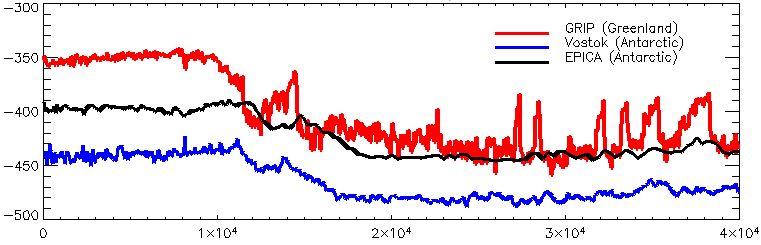
With this new paper, this may be one of those “case closed” moments in science showing that “climate change”/ice sheet collapse itself wasn’t to blame for the cold event, but the climate changed due to the impact event. This rather undoes the claims last year covered on WUWT in the story Sudden Clovis climate death by comet – “bogus”. I’d say it is pretty hard to argue with micro magnetic impact spherules dated to the time.
Evidence from central Mexico supporting the Younger Dryas extraterrestrial impact hypothesis

Abstract
We report the discovery in Lake Cuitzeo in central Mexico of a black, carbon-rich, lacustrine layer, containing nanodiamonds, microspherules, and other unusual materials that date to the early Younger Dryas and are interpreted to result from an extraterrestrial impact. These proxies were found in a 27-m-long core as part of an interdisciplinary effort to extract a paleoclimate record back through the previous interglacial.
Our attention focused early on an anomalous, 10-cm-thick, carbon-rich layer at a depth of 2.8 m that dates to 12.9 ka and coincides with a suite of anomalous coeval environmental and biotic changes independently recognized in other regional lake sequences.
Collectively, these changes have produced the most distinctive boundary layer in the late Quaternary record. This layer contains a diverse, abundant assemblage of impact-related markers, including nanodiamonds, carbon spherules, and magnetic spherules with rapid melting/quenching textures, all reaching synchronous peaks immediately beneath a layer containing the largest peak of charcoal in the core. Analyses by multiple methods demonstrate the presence of three allotropes of nanodiamond: n-diamond, i-carbon, and hexagonal nanodiamond (lonsdaleite), in order of estimated relative abundance.
This nanodiamond-rich layer is consistent with the Younger Dryas boundary layer found at numerous sites across North America, Greenland, and Western Europe. We have examined multiple hypotheses to account for these observations and find the evidence cannot be explained by any known terrestrial mechanism. It is, however, consistent with the Younger Dryas boundary impact hypothesis postulating a major extraterrestrial impact involving multiple airburst(s) and and/or ground impact(s) at 12.9 ka.
…

…
Summary
Synchronous peaks in multiple YDB markers dating to 12.9 ka were previously found at numerous sites across North and South America and in Western Europe. At Lake Cuitzeo, magnetic impact spherules, CSps, and NDs form abundance peaks within a 10 cm layer of sediment that dates to the early part of the YD, beginning at 12.9 ka. These peaks coincide with anomalous environmental, geochemical, and biotic changes evident at Lake Cuitzeo and in other regional records, consistent with the occurrence of an unusual event. Analyses of YDB acid-resistant extracts using STEM, EDS, HRTEM, SAD, FFT, EELS, and EFTEM indicate that Lake Cuitzeo nanoparticles are dominantly crystalline carbon and display d-spacings that match various ND allotropes, including lonsdaleite. These results are consistent with reports of abundant NDs in the YDB in North America and Western Europe.
Although the origin of these YDB markers remains speculative, any viable hypothesis must account for coeval abundance peaks in NDs, magnetic impact spherules, CSps, and charcoal in Lake Cuitzeo, along with apparently synchronous peaks at other sites, spanning a wide area of Earth’s surface. Multiple hypotheses have been proposed to explain these YDB peaks in markers, and all but one can be rejected. For example, the magnetic impact spherules and NDs cannot result from the influx of cosmic material or from any known regular terrestrial mechanism, including wildfires, volcanism, anthropogenesis, or alternatively, misidentification of proxies. Currently, only one known
event, a cosmic impact, can explain the diverse, widely distributed assemblage of proxies. In the entire geologic record, there are only two known continent-wide layers with abundance peaks in NDs, impact spherules, CSps, and aciniform soot, and those
are the KPg impact boundary at 65 Ma and the YDB boundary at 12.9 ka.
If you’re interested, the paper is published with unrestricted access on the PNAS website.
Or, you can read a full PDF copy that’s been mirrored on Dropbox.com at: http://dl.dropbox.com/u/2268163/Mexico%20YD%20Paper.pdf
h/t to reader Dennis Cox
@Michael Irwin.w.wygart 7:18 am:
“I just finished downloading and reading the paper – very interesting. Carolina Bays?? Maybe, probably not.”
Yes, this seems to be the case. But a more puzzling surface feature may not exist. ALL the ideas for their formation have been shown to be totally inadequate in one way or another – and there have been at least two dozen hypotheses.
The one I just laugh at is the aeolian one. To imagine that the wind could make not one, but half a million ellipses IN the ground and all aligned, with a pattern that DOES seem to point at one vague area near Michigan as a centroid. Southern bays are more northerly aligned, northern bays more westerly, and a gradual progression in between. No wind can do that.
As to what did, other than the wind or the YD? No idea, and I’ve been looking into it for years and years. And no one else does, either. For 70+ years scientists have tried, and all have come up with a big fat nothing. See http://tiny.cc/mri2aw for a study of LIDAR images.
Steve Garcia
The Younger Dryas impact hypothesis
David Bressan on Monday, April 25, 2011
http://historyofgeology.fieldofscience.com/2011/04/younger-dryas-impact-hypothesis.html
A Catastrophe of Comets
http://craterhunter.wordpress.com/tag/younger-dryas-impact/
http://craterhunter.wordpress.com/the-planetary-scaring-of-the-younger-dryas-impact-event/california-melt/
It seems hard to argue with this info.
Interesting, maybe the fresh water input and enhanced export was due to soot. Interesting mystery …
Enhanced sea-ice export from the Arctic during the Younger Dryas
http://www.nature.com/ncomms/journal/v3/n1/full/ncomms1658.html
While this paper is very intriguing it would seem to have one weakness in attempting to link a single event (the YD) with a multi-millennial temperature proxy. Problem is:
a) there are a number of other events in the temperature proxy (O-18 graph) that show a similar divergence (similar amplitude and duration). Either these are all meteorites or we don’t need a catastrophe to explain the YD.
b) the Antarctic temperature proxy does not show the same higher amplitude, shorter duration pulses that are seen in the Arctic proxy. This suggests that these events are NH only. More importantly, the Antarctic proxy starts to increase several centuries before the YD event suggesting a long-term Earth-bound event. It seems unlikely that something that was felt in Mexico and that affected the Arctic would not also affect the Antarctic.
Some I’m leaning toward an earth-bound event to explain the O-18 temperature proxy graph fluctuations, although micro magnetic impact spherules does sound incontrovertible.
Jimbo says:
March 12, 2012 at 3:09 am
I should have added………..
Because the MWP was a northern hemisphere event.
http://joannenova.com.au/2009/12/fraudulent-hockey-sticks-and-hidden-data/
Pure speculation on my part, but I would guess the large Moon that orbits the Earth is hostile to a long-lived debris ring system around the earth. That is my guess why we don’t see a current ring system, aside from our own space junk. Pages 24-40 (of 167) of this Int’l Ultraviolet Explorer Sat. Final Report (1997) give some interesting plots on orbital evolution of an approximately geostationary satelite.
@Don Easterbrook 8:20 am:
Before jumping on this bandwagon, consider the following:
“1. There may well have been a meteorite impact near the beginning of the Younger Dryas (YD), but that doesn’t prove it was the CAUSE of the YDs.”
– A valid point. The science is not settled here. It has barely begun.
“2. The YD is just the most prominent of many Dansgard-Oerscher abrupt climatic events.”
– Yep. but it is the one that TOOK.
“3. The YD ended just as abruptly as it began a little over 1000 years later.”
– Not so. It’s ending was several times slower, according to the 18O graph as I read it.
“4. The YD corresponds with changes in 10Be and 14C production rates, suggesting changes in incoming radiation and pointing toward a Svensmark type cause.”
– I don’t know enough to comment
“5. The problem with single event causes (e.g., volcanic eruption) is that they cannot be sustained for the length of time of the climate change. If the idea is that the cooling was caused by ejection of dust into the atmosphere, that wouldn’t last for more than 1000 years.”
– Your opinion. You have no idea what happens with something coming in with the equivalent energy of tens or hundreds of times more energy than all our nuclear warheads.
6. If the YD was caused by dust in the atmosphere, it should show up in the Greenland ice cores (where even very small, annual accumulations of dust from summer ablation are well preserved). There is no such evidence of dust from an impact event throughout any of the well preserved YD ice core record.
– It wasn’t dust. You’ve got your facts wrong. But as to Greenland evidence, have you seen the following? Do nanodiamonds count?
http://tiny.cc/qgk2aw “YDB press release: Scientists discover nanodiamonds in Greenland ice” —
PhysOrg September 8th, 2010 in Space & Earth / Earth Sciences
Steve Garcia
The only way you could cause a YD transition with an asteroid impact is if it hit an ice dam here. Or possibly in the Gulf of St. Lawrence where glacial Lake Vermont and all of the coalesced glacial lakes in the East drained into the ocean forming the Champlain Sea, but that supposedly happened just before the YD. There is weak evidence of Champlain sea freshening from the West, presumably Glacial Lake Agassiz, but it’s difficult to get it by the Laurentide at this time as well. This entire problem is highly intertwined and convoluted. More data could cinch it. The problem with the Nipigon feature is that it does not have the classical supsurface impact fracture features, instead it is structurally controlled within well known faulting, and was subsequently subject to massive glacial flooding as well as the Marquette readvance.
This is an amazing thread. It brings many things to mind.
Could not an impact on a continental glacier be almost completely obscured by the movements and final melt actions of the glacier itself? The impact crater itself could have been formed in ice, not in the underlying solid crust, and quickly obscured by subsequent glacial movements. Much of the ejecta material might come to rest on top of ice, except for that which was moving at suborbital velocity and thus landed far afield. But the materials on top of the ice would then be carried away, as the glacier moved, wouldn’t it? If this had occurred, then wouldn’t the solid impact debris be found in the glacial moraines? Have we looked there for such evidence, or could we? I think such moraines would be highly complex mixtures and difficult to analyze. But as unsatisfying as this would be, if an impact could not be located, would that disqualify the theory?
I’m wondering about the 1300 year time frame of TYD cool period. If tons of water vapor and dust were thrown into the stratosphere by an impact event, how long would it stay there? It seems to me that most of it would precipitate out fairly quickly, although I presume that via albedo effects, this would rapidly and radically cool the planet in the short term. Would something else be necessary, such as ocean saline levels or something like that, be required to extend the cool period? In other words, the impact event would be almost like a seed, but it’s side effects COULD control a 1300 year long extent?
Also, if an impact event were from a comet, as opposed to a meteriod, what would that do to immediate atmospheric CO2 and Methane counts? It seems they would go up rapidly from the almost instantaneous vaporization of a comet? Or is the amount of CO, CO2, Methane and other GHGs in a comet too small to affect such concentrations?
Mickey, a very perceptive comment.
An impact onto an ice sheet definitely impairs the ability for the impactor to make a crater. And yes, who knows what kind of evidence would be left, with the ice sheet later in full retreat. Even if a crater is formed under the ice, what degree would erosion erase the crater’s topography? All of this is a set of variables that may never be known with any clarity. Even if evidence is in the moraines, the churning of rubble and ice would make it impossible to make sense of any of it – other than its presence in some vague proportion which would be impossible to read.
“I’m wondering about the 1300 year time frame of TYD cool period. If tons of water vapor and dust were thrown into the stratosphere by an impact event, how long would it stay there?”
You bring up a question others here have asked. The others assume it would only be in the atmosphere a relatively short time – months or a few years. Some point out that the end of the YD was also quick – but it wasn’t as quick as its onset. That being the case, one might work backward and determine that once the particulates began to fall out of the stratosphere, the Earth would likely begin warming accordingly 0 and fairly quickly. So the question does become, as you say, “How long would it stay there?” If that answer is 1200 years, then we have exactly the YD as we see it on graphs. Is 1200 years possible? When people have talked of nuclear winter, it often is talked about as lasting a long time. But 1200 years? Of course everyone should be skeptical of that. But what do we know about impact events directly? Nothing. Equating them to volcanic eruptions seems reasonable, yet different mechanisms are at work in volcanoes, mainly convection. Do impacts and convection work the same? One would think only a bit.
As to methane and CO2, the telltale seems to be ammonia. High spikes of ammonia seem to accompany air bursts. I don’t know enough to tell you much on that, though.
There is much that is unknown. Your questions are among those that would need answers.
Steve Garcia
Fascinating stuff. Would appear that there were two centers of impact for comet storms – one over northern Michigan and one over northern Mexico for a continent-wide extinction event. Fred Whipple started the discussion of the Taurid Complex in 1940 as the remains of a large comet captured into the inner solar system that fragmented. The complex is in earth crossing orbit. Kresak in 1978 suggested that the Tunguska body was related to Comet 2P/Encke, the most active remaining member of the Taurid Complex.
This discussion is going to get really loud before it is over and will be a lot of fun to watch. Cheers –
Quite possible, but sometimes things get missed if you are not looking for them. The signature of that sort of event would I suspect but a slight step change in annual dust levels. I know that one of the markers of cold periods like the Younger Dryas are higher dust levels, but I think everyone just assumes that dust is terrestrial and due to lower humidity and increased wind intensity during colder periods with diminished vegetation to hold wind erosion in check.
I do not recall that any one specifically looked at that ice core dust record of the younger dryas for indications of the long term filtering out of an exo-atmospheric dust shell slowly returning back to earth. World wide distribution of impact markers obviously would indicate the presence of an impact but the length of time it took for the layer to build up might be a marker ( or falsification) for the long term return of low orbital debris returning to earth. If it was simple impact ejecta that promptly re-entered the impact signature markers would be concentrated in a brief thin layer of the dust associated with the younger dryas. If on the contrary there was a significant low orbital dust cloud formed those markers would be more sparse but would be deposited over a very long time period and a thicker layer with lower annual concentration.
I don’t know enough about dust markers in ice cores to speculate if the evidence already exists or perhaps has already been noted but just not recognized for what it might mean.
At this point it is just a thought experiment “what if” and then speculation on the logical out come of what we might see if a dust shell formed in low orbit for 10’s 100’s or approx 1,300 years.
Larry
In 1994 I watched the scars of the Comet Shoemaker–Levy 9 impact rotate into view on Jupiter through my backyard telescope (8″ SCT). Took pictures and was much impressed. We have all probably seen some of the Galileo photos of the impacts on the back side of the planet. Bottom line, I, like most, am not sure what caused the YD but would not rules out strikes from multiple objects as we saw on Jupiter. Who says they all had to happen at the same time or even within a couple of hundred years of each other given the complex Earth/ Moon system gravitational situation and potential orbits it could create of objects arriving in a long string. Land impacts, ocean impacts, air bursts are all possible at widely different times and places. Someone needs to model this. Ok, sorry, forget it.
It seems that the America’s suffered a number of extraterrestrial bombardments beyond and after the Younger Dryas.
See this:
http://abob.libs.uga.edu/bobk/ccc/ce010702.html
GOING INTO THE WATER:
A SURVEY OF IMPACT EVENTS AND THE COASTAL PEOPLES OF SOUTH-EAST NORTH AMERICA, THE CARIBBEAN, AND CENTRAL AMERICA
E.P. Grondine epgrondine@hotmail.com
“INTRODUCTION: SURVEY SCOPE AND TECHNIQUES USED
Hello Benny,
In my survey last year of impact events and the Native American peoples of South-East North America, I mentioned several items and then let them pass, as they laid outside of the scope of that survey proper. Nearly all of those items pertained to the coastal peoples of the region, and there were good reasons for this limitation of scope: due to both the maritime nature of these peoples’ cultures, as well as to the ecological niches in which they lived, it is impossible to consider these peoples outside of the wider context of the peoples who lived during the same period on the islands in the Caribbean Sea and along the coasts of Central America.
This essay is a first attempt to extend that earlier survey into those coastal areas. Unlike last year’s survey, where site visits were followed up with an extensive literature search, this survey is limited solely to a literature search. My opinion is that the technique used for the first survey is much more efficient, as site visits allow for a familiarization with the pottery sequences, iconography, and technologies, those items which are really the key to population movements, and thus to a full understanding of the evolution of any oral or written records which remain. But sadly yet once again, as in preceding years, the folks at the MacArthur Foundation have failed to declare me a genius and send me a large amount of money, so due to the costs involved in visiting sites over such a wide area, a literature search was the only technique available to me. Should someone wish to fund visits to sites in the Caribbean and Central America they would undoubtedly improve the survey to a considerable degree; the general consensus seems to be that site visits to the Caribbean and Central America which are taken in the middle of the North American winter are optimal.
Before starting any survey we might reasonably expect, given the data which has been recovered up to this time from other areas of the Earth, that over a suitably long period of time the peoples living in these coastal areas would also have been affected by impact events. Indeed, several Conference participants have been arguing for quite some time for the existence of a Holocene-start impact event which affected this area. The first part of this survey will be a limited review of some anthropological materials pertaining on this possible impact event, though this will not be a detailed work. Also included in this first part of the survey will be a brief mention of a possible mega-tsunami produced geological structure, the Puuk Foothills of the Yucatan.
The bulk of this survey will focus on a mega-tsunami event ca. 1150-1050 BCE, which fairly well devastated those living along the coasts of this area. In order, the second part of the survey will cover the peopling of the areas which the impact affected, and describe the lives of those who died in the event. The third part of the survey will cover the preservation of later historical records and folk memories of the catastrophe. The fourth part will set out some of the historical and myth materials which have survived, including also some materials which appear to refer to the earlier Rio Cuarto impact event.
In closing this introduction, I want to state that this has been the survey from hell. These peoples were completely warped by this impact, and had a world view which was both unified and completely distinct from that of western Europe. While the world view of the South East Native American peoples resonated with me to a certain degree, as I am familiar with their lands, the world view of the peoples of the coastal regions never has. Having worked through the material on them to the extent which I have, I suspect that anthropology would be better as a science if anthropologists were generally required to work on peoples with which they did not identify, so as to reduce the problem of identification.
Given this far far far different world view, it appears that it normally takes around 20 years for an anthropologist to master these materials to the point at which they can make substantial contributions to the field. But in the case of these impacts events, the cultural points are gross, to put it succinctly, and my ambitions extend no further than that I may direct those trained in these cultures to that evidence, without committing too many blunders along the way.
Finally, it helps if one is not distracted by current events. That said, here goes….”
The link provided by Caleb and Rick above to the text at Graham Kendall’s site leads to file not of his own writing but of a chapter “Frozen Mammoths” arguing for “hydroplate theory,” from an online book by a creationist Walt Brown. (It is not clear that Kendall himself agrees with it – there’s plenty of anti-creationist stuff at his site too.). Interesting reading, but the hydroplate claim seems very unusual – a “plate” of water ten or so miles beneath the earth.
The 1833, and 1866, 67, 68 and then a significant repeat of the Leonids meteor shower in 1966, 1999,2001, and 2002 certainly provides circumstantial evidence that such repeating multiple object encounters are possible here at earth’s orbit.
Since approximately 70% of the impacts would be at sea, and another 10% or so would impact on the ice caps or glaciers, suggest that less than 20% of the impact events would leave any observable crater evidence.
If such a shower event occurred on a continuing cycle with large enough objects to produce significant climate changes it could help explain a long period of colder weather if the earth crossed orbits with the debris field on a regular basis for a few hundred years. Once the climate is forced into a cold cycle by such an event it would take some time to recover to normal air temperatures, snow cover and sea surface temperatures, so the event would not have to repeat on an annual basis. Every 10-50 years would probably be sufficient if the number and size of the objects were large enough.
Larry
beng says: @ur momisugly March 12, 2012 at 7:10 am
….Simple postulate: Approximately 12,900 yrs ago a comet-train impact produced shallowly-angled air-burst(s) with multiple in-line impacts….
_________________________________________________
Another possibility is that if the comet hit the earth with “glancing” blows it could have hit multiple times before it was completely gone. Especially if it was “captured” by the Earth. I do not know if that shows up in the “layer contains a diverse, abundant assemblage of impact-related markers, including nanodiamonds, carbon spherules, and magnetic spherules…”
I present at a meeting in South Carolina where Firestone presented this hypothesis at the time his team was preparing to publish the first paper. He idea was greeted with some very concentrated scepticism. The question is tangled in wild web of odd empirical data that are less than securely dated. Firestone originally suggested that an impact had occurred somewhere in North America – as concerns bolides an “impact” includes aerial events like Tunguska and the detonation that produced the sheeted Desert Glass from the eastern Sahara. A very large bolide event might have occurred. If the detonation took place above the Laurentide Ice Sheet there would be little evidence of it. More importantly, the heat from the detonation would cause abrupt melting and evaporation of ice and water. That could mean that an impact caused a melting of a big piece of the Laurentide Ice Sheet that in turn triggered the Younger Dryas. Consider that, BOTH ideas could be part of the picture! The original PNAS paper and supporting data is available here:
http://www.pnas.org/content/104/41/16016.full.pdf+html?with-ds=yes
Firestone also saw evidence of radiation from space in particle tracks on the upper surfaces of paleoindian artifacts, and indications of a major firestorm in the “black mats” that are often associated with YD era archaeological sites. However, no impact event could have been the cause of the radiation tracks on Paleoindian weapons. Not, that is, unless there are some seriously radioactive comets or stony meteors out there.
Re feet2thefire and George Tetley:
I made a new web page in English of the Mossala and Ava craters in archipelago in SW Finland.
http://www.kolumbus.fi/larsil/Mossala_and_Ava_craters.html
Notice that I don’t know what the origin of these formations are, I think they are fairly recent but obviously I may be wrong. Comments and possible pointers to articles are very welcome. The web page also gives a feeling for what Finnish (Arctic) summer looks like. We live north of 60 deg N!. /Lars Silen, physicist Finland.
Interesting theory. Lets not forget that sudden cooling events are known as Heinrich events and there were six of them during the last ice age. The causes of these sudden intense cold events is unknown, although many geologists have speculated on the possibility of a solar cause. (Sorry Leif 🙂 ) There have also been sudden warming spells and these are known as Dansgaard-Oeschger (DO) events, also due to unknown causes.
Bear in mind that Heinrich event cooling is thought to have taken place in a matter of decades, and some evidence indicates a time frame of just a few years. This would be catastrophic if it occurred today. The Younger Dryas is thought by some to be a Heinrich event and would make it 7th event, and some have speculated that the Holocene 8.2 kilo year event is also a Heinrich event.
In any event, if a meteor or comet impact started the YD we still have lots of explaining to do for the other sudden cooling events, as well as the DO sudden warming events. Fascinating stuff – ins’t it?
@agimarc 11:36 am:
It would be nigh on impossible for Tunguska to be anything but and Encke remnant, seeing as it hit on June 30, 2008 – right in the middle of the Taurid meteor shower. Some other body hitting, right then, when the Earth is passing through the Taurid stream with its tens of thousands of fragments? Not likely at all.
The Taurids are a real danger. We don’t really know what is in them, and we go through the worst of it every 3.3 years – and still don’t know what is there. Only NEOs that cross Earth’s orbit and are also IN our plane can hit Earth, and Taurids are the ones that do that the most.
Steve Garcia
BTW, that last is exactly why the astronomers who say we only get a big one every 100,000 years or so are leading us astray. If only ONE of the Taurids is big, it passes us every 3.3 years.
Steve Garcia
@Trent Telenko 12:24 pm:
FWIW, “Benny” here is Benny Peiser, the Director of the Global Warming Policy Foundation (GWPF), which many here are familiar with. Prior to that Benny was the central figure on the Cambridge Conference, which was a mostly academic online message board about Earth impacts studies. Since the Cambridge Conference ended, the amount of moneys going to impact studies has dropped almost to nothing.
Steve Garcia
@Trent Telenko 12:24 pm:
Also, the Ed Grondine who wrote that to Benny Peiser (in about 2001) self-published a book, Man And Impact in the Americas, which is available at http://tiny.cc/blr2aw /plug
It is a helluva read.
Steve Garcia
The Younger Dryas was shown to have large changes in the North Atlantic ocean where polar ocean water moved in a gyre as far SE as northern Spain. Nowadays the polar ocean water is back up towards the Greenland coast.
The Gulf stream flowed in a much more southerly direction, moving little northwards and mainly across eastwards towards Spain and North Africa. The ocean above was polar and very cold giving major ice age conditions for example to Europe. Three periods of different ocean circulation in the north atlantic ocean were found around the Younger Dryas.
Therefore how does an impact become long term, when normally the dust takes only a few years to clear? The only possible mechanism would be to alter ocean circulation, but this seems very far fetched to be achievable. That’s for just one change on impact, but for 3 changes around this period seems impossible.
With this consideration in mind it is difficult to accept an impact like this could bebale to change ocean circulation. Also if there was an impact large enough to do this, it should beable to be detecected on the planet as a scar around the timing of the event. Other than that there is some science in this paper that is interesting.
Hi guys, I’m actually doing an essay on this for university and can’t decide whether to support the theory or reject it. What confuses me is the fact that the extinction of mammals across North America was not synchronous from the papers I’ve read. For instance, some mammals died out well after and before the beginning of the YD. http://www.sciencedirect.com/science/article/pii/S1040618209003966. They also said that the extinctions were mostly the larger mammals http://www.ncbi.nlm.nih.gov/pubmed/1801948. If there was an impact, would it not wipe out a number of species pretty instantaneously? Furthermore, I read a few papers who argue paleoindian cultures existed after the possible impact event when firestone said they were wiped out more or less. Some researchers have also accused firestone et al. of misidentifying nanodiamonds as a their replicate studies did not produce the same results. I can’t understand how we have such an asbolute certification that the material in Mexico is extraterrestrial but not for other sites with black mats across North America- http://www.ncbi.nlm.nih.gov/pmc/articles/PMC2775309/ and http://www.ncbi.nlm.nih.gov/pubmed/20805511. Is it possible the researchers are just producing results that they want to see and making excuses for them? My own personal belief is that a meteor impact of some sort could have occured and the meteor exploded mid air as others have said, but theres still not enough evidence to prove it caused the YD event. Still, the evidence for the timing and extent of the damage the impact caused is not very well defined. Some have argued black mats are organic layers caused by wetter conditions induced by the YD cooling as opposed to wildfires, so I’m unsure about which to believe. Would there not also be evidence of any impacts in Antarctica ice cores perhaps? I think this a really interesting topic and I look forward to seeing how it develops with this new evidence. I am certainly no expert at all because I am only a student and I’m only repeating some of the research I have read.