There’s a new paper in PNAS worth having a look at. It seems the authors found some very strong evidence for a comet or asteroid impact during the period known as the Younger Dryas. According to Wikipedia:
The Younger Dryas stadial, also referred to as the Big Freeze, was a geologically brief (1,300 ± 70 years) period of cold climatic conditions and drought which occurred between approximately 12,800 and 11,500 years BP (Before Present). The Younger Dryas stadial is thought to have been caused by the collapse of the North American ice sheets, although rival theories have been proposed.
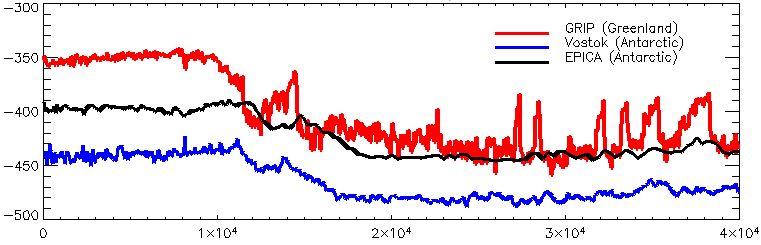
With this new paper, this may be one of those “case closed” moments in science showing that “climate change”/ice sheet collapse itself wasn’t to blame for the cold event, but the climate changed due to the impact event. This rather undoes the claims last year covered on WUWT in the story Sudden Clovis climate death by comet – “bogus”. I’d say it is pretty hard to argue with micro magnetic impact spherules dated to the time.
Evidence from central Mexico supporting the Younger Dryas extraterrestrial impact hypothesis

Abstract
We report the discovery in Lake Cuitzeo in central Mexico of a black, carbon-rich, lacustrine layer, containing nanodiamonds, microspherules, and other unusual materials that date to the early Younger Dryas and are interpreted to result from an extraterrestrial impact. These proxies were found in a 27-m-long core as part of an interdisciplinary effort to extract a paleoclimate record back through the previous interglacial.
Our attention focused early on an anomalous, 10-cm-thick, carbon-rich layer at a depth of 2.8 m that dates to 12.9 ka and coincides with a suite of anomalous coeval environmental and biotic changes independently recognized in other regional lake sequences.
Collectively, these changes have produced the most distinctive boundary layer in the late Quaternary record. This layer contains a diverse, abundant assemblage of impact-related markers, including nanodiamonds, carbon spherules, and magnetic spherules with rapid melting/quenching textures, all reaching synchronous peaks immediately beneath a layer containing the largest peak of charcoal in the core. Analyses by multiple methods demonstrate the presence of three allotropes of nanodiamond: n-diamond, i-carbon, and hexagonal nanodiamond (lonsdaleite), in order of estimated relative abundance.
This nanodiamond-rich layer is consistent with the Younger Dryas boundary layer found at numerous sites across North America, Greenland, and Western Europe. We have examined multiple hypotheses to account for these observations and find the evidence cannot be explained by any known terrestrial mechanism. It is, however, consistent with the Younger Dryas boundary impact hypothesis postulating a major extraterrestrial impact involving multiple airburst(s) and and/or ground impact(s) at 12.9 ka.
…

…
Summary
Synchronous peaks in multiple YDB markers dating to 12.9 ka were previously found at numerous sites across North and South America and in Western Europe. At Lake Cuitzeo, magnetic impact spherules, CSps, and NDs form abundance peaks within a 10 cm layer of sediment that dates to the early part of the YD, beginning at 12.9 ka. These peaks coincide with anomalous environmental, geochemical, and biotic changes evident at Lake Cuitzeo and in other regional records, consistent with the occurrence of an unusual event. Analyses of YDB acid-resistant extracts using STEM, EDS, HRTEM, SAD, FFT, EELS, and EFTEM indicate that Lake Cuitzeo nanoparticles are dominantly crystalline carbon and display d-spacings that match various ND allotropes, including lonsdaleite. These results are consistent with reports of abundant NDs in the YDB in North America and Western Europe.
Although the origin of these YDB markers remains speculative, any viable hypothesis must account for coeval abundance peaks in NDs, magnetic impact spherules, CSps, and charcoal in Lake Cuitzeo, along with apparently synchronous peaks at other sites, spanning a wide area of Earth’s surface. Multiple hypotheses have been proposed to explain these YDB peaks in markers, and all but one can be rejected. For example, the magnetic impact spherules and NDs cannot result from the influx of cosmic material or from any known regular terrestrial mechanism, including wildfires, volcanism, anthropogenesis, or alternatively, misidentification of proxies. Currently, only one known
event, a cosmic impact, can explain the diverse, widely distributed assemblage of proxies. In the entire geologic record, there are only two known continent-wide layers with abundance peaks in NDs, impact spherules, CSps, and aciniform soot, and those
are the KPg impact boundary at 65 Ma and the YDB boundary at 12.9 ka.
If you’re interested, the paper is published with unrestricted access on the PNAS website.
Or, you can read a full PDF copy that’s been mirrored on Dropbox.com at: http://dl.dropbox.com/u/2268163/Mexico%20YD%20Paper.pdf
h/t to reader Dennis Cox
From wikipedia user Atani on March 12, 2012 at 6:43 am:
Sorry, but the Talk Page reveals William Connolley’s involvement. He and his Wiki-goons control articles even peripherally involved with Climate, and they actively “correct” anything that goes against the Catastrophic Anthropogenic Global Warming meme. References: One, two, three.
No citation is authoritative enough if Connolley does not approve of it, especially if it says something about a skeptic that could be construed as positive. Reference.
We skeptics would like to correct Wikipedia errors, as well as correct the noted bias where opposing viewpoints on climate issues are deliberately suppressed by Connolley and crew in violation of NPOV. But we cannot, as Connolley and his gang deride our sources as not authoritative, do not recognize there is valid scientific controversy, and use Wikipedia as their own personal forum to smear skeptics and distort their viewpoints and records, when they either allow or are forced to admit that said individual skeptics exist and are worthy of some sort of mention.
And this is all done with the tacit permission of the Wikipedia administration. Thus we find, generally speaking, that Wikipedia is nearly worthless and can’t be trusted. And we cannot help out and try to fix it, as one of the surest ways to get banned is to challenge Connolley and his cabal, no matter what facts from real reliable sources are on your side.
I applaud you for your idealism. But we have long since accepted and adapted to the reality.
Before jumping on this bandwagon, consider the following:
1. There may well have been a meteorite impact near the beginning of the Younger Dryas (YD), but that doesn’t prove it was the CAUSE of the YDs. It’s the same logic as saying the cause of the 1978-1998 warming coincided with rise in CO2 so the cause must be CO2. Bad logic.
2. The YD is just the most prominent of many Dansgard-Oerscher abrupt climatic events.
3. The YD ended just as abruptly as it began a little over 1000 years later.
4. The YD corresponds with changes in 10Be and 14C production rates, suggesting changes in incoming radiation and pointing toward a Svensmark type cause.
5. The problem with single event causes (e.g., volcanic eruption) is that they cannot be sustained for the length of time of the climate change. If the idea is that the cooling was caused by ejection of dust into the atmosphere, that wouldn’t last for more than 1000 years.
6. If the YD was caused by dust in the atmosphere, it should show up in the Greenland ice cores (where even very small, annual accumulations of dust from summer ablation are well preserved). There is no such evidence of dust from an impact event throughout any of the well preserved YD ice core record.
7. The list goes on and on–too many to include them all here. Perhaps a longer response later. The bottom line is that a single event, meteorite impact event doesn’t prove the origin of the YD.
@Lucy Skywalker 3:02 am:
I’ve been very up to date on this. FYI: The Carolina Bays seem less and less feasible. C14 dates argue against it – some very much earlier, some later.
Mr Leprosy himself? Hahaha – Yeah, they’ve been ripping off his ideas for decades and NO ONE has the temerity to actually credit the man. But as time has gone on, many of his points have been rendered more likely. Even his multidiscipline approach is finally beginning to take shape.
And catastrophism? Stephen J Gould’s “punctuated equilibrium” was a small step toward catastrophism. Over time, they will be dragged, kicking and screaming to catastrophism. It is as anathema as Velikovsky, because it implies Noah’s Flood, which they HAD to take down in the battle with the Church. Uniformitarianism and Gradualism were the ‘final word’. Or were they?
I wonder what Wiki will make of it. http://en.wikipedia.org/wiki/Younger_Dryas_impact_hypothesis#History_of_the_hypothesis
Most recently, In January 2009, transmission electron microscopy evidence showing nanodiamonds from the geologic moment of the event was published in the journal Science[11] and reviewed in the International Herald Tribune.[12] Also, in the same issue, D.J. Kennett reported that:
These diamonds provide strong evidence for Earth’s collision with a rare swarm of carbonaceous chondrites or comets at the onset of the Younger Dryas cool interval, producing multiple airbursts and possible surface impacts, with severe repercussions for plants, animals, and humans in North America.[2]
Evidence from central Mexico supporting the Younger Dryas extraterrestrial impact hypothesis.
Isabel Israde-Alcántaraa, James L. Bischoffb,1, Gabriela Domínguez-Vázquezc, Hong-Chun Lid, Paul S. DeCarlie, Ted E. Bunchf, James H. Wittkef, James C. Weaverg, Richard B. Firestoneh, Allen WestI, James P. Kennettj, Chris Mercerk, Sujing Xiel, Eric K. Richmanm, Charles R. Kinzien, and Wendy S. Wolbachn.
http://dl.dropbox.com/u/2268163/Mexico%20YD%20Paper.pdf
http://www.pnas.org/content/early/2012/03/01/1110614109.abstract
Popular Science has this at
http://tiny.cc/ufd2aw
Steve Garcia
Kozlowski says:
“Any connection to the Carolina Bays?””
It would seem to me that a multiple impact event, or a single large impact with the ejecta coming back down on top of ice sheets, instantly evaporating them could leave what we now can observe. Rings of sand, possibly part ejecta and part flash evaporated ice sheets (they carry a great deal of sand and debris.) The shallowness of the bays could also be a result of the impact having to melt through the ice sheet.”
The problem with this idea is that most of the areas where Carolina Bays are found were never glaciated.
@Willis 3:10 am:
“What’s interesting to me is that previously a large freshwater flood was the consensus explanation of the Younger Dryas … and people found a bunch of evidence to support it.”
Willis, Climate scientist Rodney Chilton has a paper almost ready pointing out many of the flaws in the “Lake Agassiz” emptying. (I hope it finds a journal to call home.) For one thing, the ice sheet was still blocking the Great lakes and St Lawrence at 12.9kya. It also discusses Heinrich events and corals, etc.
And I like Dr Carl Wunsch’s take on the other aspect of that, the THC (which Chilton does not include):
http://tiny.cc/nsd2aw
So, strike one and strike two. Without the THC, and without Lake Agassiz and its ice dam bursting, there IS no climate change explanation for the Y-D onset.
Steve Garcia
Doug Proctor says: March 12, 2012 at 7:36 am […]
when Cytheria left our planetary space, sloshed back from whence it came (and filling Great Salt Lake in Utah, explaining the salt there in the process).
Interesting ideas Doug, I have always suspected that the myths of ancient peoples likely have some basis in reality. Therefore I find Velikovsky’s theory that the native Americans saw something in the sky back then likely. I didn’t know we needed anything to explain the salt in Salt Lake, since the western U.S. was a shallow sea before the Rockies uplifted. I have stood on ancient shores near Keota, CO, with fossilized wave-lapped sands and water-warn stones and pebbles, at the tops of buttes several hundred feet above the eastern high plains. Here in western CO, we have coal seams everywhere, beneath red sandstones, and plenty of fossil shells at 8000′ and above.
@CodeTech 4:11 am:
“Interesting – next step, locating the impact location? Or do we have any leading theories? I know it took a long time for people to settle on the Chicxulub impact for the 65 mya event.”
Correct on the 65mya event! Few doubted a crater would be found. Me? I look at Chicxulub and I can’t see the crater.
The Y-D is currently suspected as being a cometary air burst, like Tunguska – and likely over the Canadian ice sheet, which would have mitigated any possible crater. Several impact possibilities do exist, still, one of which is Saginaw Bay in Michigan.
Also, thinking is tending toward multiple impactors, ala Shoemaker-Levy/9, though it is still too early. The search has just begun. One difficulty is that astronomers and geologists can’t wrap their heads around anything but meteor impacts. Cometary impacts may be VERY different, and with the friability of comets, each case may be completely different. So winning over those two camps to new types of impacts will be a long drawn-out affair. But even for those who think in terms of comets and air bursts, there is not much known at present, so it is all out there on the frontier. Tunguska is the only real clue, and it may have been different from most; no one knows.
Steve Garcia
So, the Monolith didn’t just give a little boost to the hominids in the Olduvai gorge, it also decided that Cro-magnon needed a little climatological boost to kick off the agricultural revolution. Knocking out the megafauna that the hunter-gatherers relied on with an asteroid, interesting solution.
The evidence is also in the Bahamian blue holes. Both extinct species and iron intrusions. Indicative of massive dust bearing winds from Africa that blanketed the islands then.
@Philip Bradley 3:58 am:
Yes, Uniformitarianism/Gradualism (steady gradual forcings) is the norm, but catastrophes punctuate it. What could be more plausible? Once they found out in the 1800s that rocks really DO fall out of the sky, wasn’t this an inevitable point of realization? If little rocks fall out of the sky, then big ones do, too. The geologists come up with really really old ages of most meteor craters, and they may be right. But they do us a disservice by saying “move along, there is nothing to see here” about impacts happening more often or more recently. They don’t accept any new possibilities until absolutely proven (or the old codgers die off) – which takes decades and decades for each convincing.
Yep. Good and valid point. Though the current focus is on the YD start, the YD end will have to be addressed some day, too. Who knows? It may overturn everything currently being concepted.
Steve Garcia
Regarding the search for a crater:
In the original 2007 paper titled Evidence for an extraterrestrial impact 12,900 years ago that contributed to the megafaunal extinctions and the Younger Dryas cooling R.B. Firestone et al proposed that a 4 mile wide bolide had broken up in the atmosphere and that most of it had hit the Laurentide Ice Sheet.
They cited some unpublished data from experiments by Peter Schultz from Brown U. And where he had done hypervelocity impact experiments at the NASA Ames Hypervelocity Vertical Gun Range simulating a low angle hyper velocity impact into ice. Those experiment showed that a half mile wide bolide coming in at an oblique angle can hit a half mile thick sheet of ice and leave no crater in the surface beneath after the ice melts away. Just randomized patterns of surface melting. Those experiments imply that if there is relevant planetary scarring from the event anywhere in the Canadian Shield, instead of the shock metamorphic effects like we see in a normal cratering event. The remaining scars will consists of hydrothermal blast effects. So those scars should consist of rocks that were melted under conditions of extreme heat, and pressure. And in the presence of a lot of water.
My thinking is that if it is possible to get a valid age since melt from any suspect melt formations, and since the youngest volcanogenic rocks in the Canadian shield are some dyke formations that are something like a million years old. Then it should eventually be possible to confirm planetary scarring somewhere in the area that was once covered by the Laurentide ice sheet. And whatever that place looks like now, it won’t be a crater.
The trouble though, is that the nanodiamond bearing impact layer is found all over North America, and even the rest of the northern hemisphere.
But that 4 mile wide bolide idea is what got them in trouble. Enter Mark Boslough, a physicist from Sandia Labs who objected to the hypothesis as written saying that it would be physically impossible for a four mile wide bolide to have enough time in the atmosphere to break up completely, and scatter fragments over a continent sized area without leaving a good sized crater somewhere. And that’s why “where’s the crater became the rallying cry for opponents to the hypothesis.
But this new paper answers Mark’s very valid skepticism by citing the work of astronomer W.M. Napier and his paper titled Palaeolithic extinctions and the Taurid Complex Bill Napier’s work show that the thing was probably the fragments and debris from a large comet that hit soon after its complete breakup. The new evidence from Mexico implies that the southwest was a impact zone too. And that almost all of it produced large aerial bursts. Hence, there is no reason to think we’ll find a crater anywhere in the southwest either.
Perhaps something different.
The materials in the impact layer describe temps, and pressures, at the surface that should have been capable of significant melting and efficient ablation of surface materials. But that brings us to a paradox in the search for relevant planetary scarring for the event.
Ever since Sir Charles Lyell published ‘The Principles of Geology’ back in the 1830s it has been assumed without question under the standard uniformitarian/gradualist paradigm that the only conceivable source of enough heat to melt the surface of the Earth is terrestrial volcanism. And with the exception of a cratering impact event, no one has ever imagined that such energies could come from the sky. So that if there are formations of geo-ablative melt in the southwest impact zones of the YD event, we can assume that they have already been located. But they are listed on the geologic maps as volcanogenic.
Folks might note that north of lake Cuitzeo, and extending all the way up into southwest Texas there are a few hundred thousand cubic miles of materials lying undisturbed, and in pristine condition in the Chihuahuan desert that were all emplaced as a fluidized flow like a pyroclastic flow. And less than 15% has ever been positively associated with a volcano.
And in high resolution satellite images those orphan pyroclastic materials present wind-driven patterns of movement, and flow. Like the debris laden froth, and foam on a storm tossed beach.
@Larry Plume Silen4:57 am:
Yes, a search for some kind of crater is occurring, but with an air burst or a comet, all the meteor impact thinking may not hold true – IMHO it almost certainly doesn’t. A friable comet will not cause the same impact as an iron/nickel/rock meteor. An air burst cannot have the same surface impact.
The Firestone team of 2007 thought the impact WAS on an ice sheet, one on top of the Canadian Shield. Thinking since then has included other possibilities, too. It is just too early to have found the impact site. And current thinking also is that multiple impacts were likely. Your Finland site may have been one. The science still all needs to be done, and though the search is on, any site(s) right now is anybody’s guess.
Steve Garcia
“This nanodiamond-rich layer is consistent with the Younger Dryas boundary layer found at numerous sites across North America, Greenland, and Western Europe.”
The recent Japan earthquake shifted the earth’s rotation axis by about 25 centimeters. Would multiple extraterrestrial impacts alter the milankovitch cycle as the earth redistributed mass due to various orbital shifts from the impacts? If yes, wouldn’t there be an abrupt climate change indicator globally?
@Garacka 5:10 am:
“Isn’t there also a paper that looked at mammoth bones from that time and found high speed particulate impact pits? I recall comments seemed to be leaning toward it being a stretching of the data.”
Correct. That was one of Firestone’s lines of evidence for the YD Impact. The impacts on tusks was real. But the dating was wrong. Here is the abstract from the Hagstrum et al 2010 paper, “Micrometeorite Impacts in Beringian Mammoth Tusks and a Bison Skull” [http://tiny.cc/w1f2aw]:
So the mammoth tusk micro-impacts were from over 20,000 years earlier. Maybe it is only a coincidence, but this 35kya event is pretty much contemporaneous with the end of the Neandertals. If I had the credentials and funding, I’d be looking into that possibility. After all, the end of the Neandertals is just as big an unsolved mystery as the end of the mammoths.
Steve Garcia
@Stephen Fisher Richards 5:29 am
“This study indicates that the climate flips between more or less stable states irrespective of changes in forcings.
As predicted by chaos theory.”
Are you sure it isn’t Catastrophe Theory? (no pun intended)
Steve Garcia
@Pamela Gray6:36 am:
“Certainly the dust alone cannot account for the length of the cold spell. However, the kicked up dust could account for the first couple years.”
The ‘black mat” is not comprised of dust, but remnants of fires, on a continental scale, found forensically in Belgium and now Mexico and many sites around the U.S. The burning or fallout may extend farther. The search has just begun. It isn’t dust.
The megafauna bones are found not only UNDER the ‘black mat,’ but when found at the same site, the ‘black mat’ lies directly ON the megafauna bones. And no such bones are found IN or above the ‘black mat.’
Steve Garcia
Pamela, your observation has an unspoken assumption that the ejecta dust (or most of it) stayed in the atmosphere or went outside the atmosphere and then promptly re-entered.
What of the possibility that a significant fraction of the ejecta went outside the atmosphere and then entered low earth orbit, forming a dust shell around the planet, that might persist for several hundred years?
Due to mutual collisions the ejecta material constantly renewing itself with ever finer and longer lasting small dust, which perhaps had higher optical thickness than the original.
That would create a situation where the initial impact and atmospheric dust load caused a prompt cooling, followed by a long period of diminished top of the atmospheric solar intensity lasting hundreds of years, which would help maintain the long term cooling for on the order of 1000 years.
The very fine dust that would remain in orbit would, as I understand it, gradually change from a uniform shell to a disk and unless some mechanism existed to constantly renew its mass would eventually go away as solar wind and the tenuous layers of the upper atmosphere gradually cleaned out the lowest dust.
Once the orbital dust pall converted to a disk it would not have much effect on solar intensity at the top of the atmosphere. (at some angles to the sun it could even act as a reflector increasing solar intensity on the top of the atmosphere).
Do we have any evidence of a vestigial ring system of dust around the earth?
Is it likely that enough dust ejecta would go into low earth orbit with orbital decay times in the multi-century time range?
Larry
For a counter view of this, people here might want to read Pinter et al 2011 – The Younger Dryas impact hypothesis: A requiem [http://tiny.cc/55g2aw], which argues that the YD impact people are delusional and can’t tell facts from fiction. Abstract only. Paywall, but readable for $0.99.
Most of the abstract is a political screed for their side with appeals to authority – ahtorities THEY agree with. Basically they are saying that the YD impact people aren’t real scientists and only their side can read the evidence.
I hope they are choking on this latest find.
Steve Garcia
A catastrophic event goes a long way to explaining the extinction of large mamals (eg Mamoths) but not the length of the YD. Unless of course, the catastrophic event permanently altered the flow of ocean currents. Examination of a few of the preserved Mamoths suggest a much more benign climate for Siberia than we see in the recent past. The catastrophic event only takes us so far. We still await an explanation for the long running degradation of the Siberian climate even after the YD. This is surely the real problem.
Jimbo says:
March 12, 2012 at 3:06 am
That Wiki graph shows Greenland and Vostok proxies. Funny how both proxies ‘fail’ to show the Medieval Warm Period. Pick and choose. 😉
GISP2 Ice Core Temperature and Accumulation Data-Greenland.
Last 11,000 years (Holocene)
Look at the 1,000 year range.
http://i599.photobucket.com/albums/tt74/MartinGAtkins/gisp2-Holocene.png
Data:-
ftp://ftp.ncdc.noaa.gov/pub/data/paleo/icecore/greenland/summit/gisp2/isotopes/gisp2_temp_accum_alley2000.txt
@beng 7:10 am:
Google “Rio Carto” and pick out the hits having to do with impacts. These are impact craters that are accepted as real (they are on the international database as meteor impacts, though a vocal skeptical group argues they are aeloian – wind – formed). They are from multiple very-low-trajectory (under 15°) impactors, many are miles long, and all are VERY long ellipses. Most sources will refer to about ten craters, but there is a large field to the SSW of hundreds upon hundreds of them, all with the approximate long-axis azimuth of about 210°.
And the accepted date?
The Imperial College London at http://tiny.cc/sth2aw puts them at less than 5,000 years ago. With that one and Tunguska, astronomers who tell us big impacts only happen every 100kya are stroking us. Indigenous accounts suggest even more often than that. 536AD is a possible impact year.
Steve Garcia
Willis Eschenbach says:
March 12, 2012 at 3:10 am
“What’s interesting to me is that previously a large freshwater flood was the consensus explanation of the Younger Dryas … and people found a bunch of evidence to support it.
Also of note is that the Younger Dryas is often cited as evidence of fast climate change from postulated natural “tipping points” … whereas it now appears to be a meteor impact.
Dang, climate science is fun. Always something new in this most settled of sciences …
w.”
============================================================================
Human beings, even (especially?) scientists, are competitive animals. So they always have to have “competing theories”.
Nobody ever stops to consider the possibility that BOTH theories may actually be true, and that the effects of the meteor impact may have combined with the effects of an ongoing freshwater flood to produce the Younger Dryas……..
Larry Ledwick (hotrod) says:
March 12, 2012 at 9:57 am
===========
If this is the case, wouldn’t it show up around the same time frame in ice cores from Alaska, Greenland, and Antarctica?