One of the favorite phrases used by alarmists as a way to worry us over fossil fuels (besides the CO2 component) is to cite “peak oil”, to make us think we won’t be able to locate additional reserves soon. This graph below was prominently featured in Treehugger.

Only one problem, it is a unitless graph, no timeline, no volume. So, it then becomes not science, but propaganda art. While we were discussing the thread NIPCC, Gleick, heads, sand, water bottles, and all that commenter DirkH found yet another “peak” which seems pretty amusing:
DirkH says: September 1, 2011 at 11:38 am
[Peter] Gleick is head of the Pacific Institute; according to wikipedia, they have discovered “peak water”. While reading about it, I accidentally found a list of peak-somethings on this wikipedia page (near the end):
http://en.wikipedia.org/wiki/Peak_water
I like especially “peak soil”. I think it’s time to declare “peak BS”; the moment the production of BS cannot conceivably go any higher and future BS production will dwindle until mankind runs out of BS.
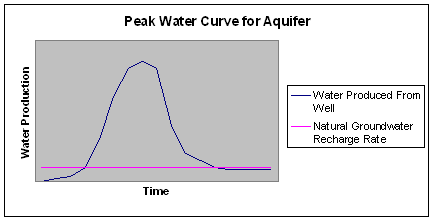
Hey look, another unitless graph from Wikipedia:
Here’s the peakage list. Who knew?
Other resource peaks
I’ve given some extensive thought to what other peaks have been observed or are expected to happen:
Peak Gore (this has already occurred):
When a skeptic blog can kick yer butt on the Internet every day of the week and twice on Sundays, you know nobody but the faithful is listening anymore:

Peak Hansen: (May have occurred this week)
The three strikes rule is well recognized in law and in baseball, with three arrests now has the mighty Jimbo struck out at NASA?

Peak McKibben (This is far into the future)
There’s no limit on crazy pronouncements o_O especially when combined with Keith Olbermann.

Peak Public Opinion on Global Warming (Occurred in 2008, according to Gallup poll)

Peak Pikas (Cancelled, told ya so)

Discover more from Watts Up With That?
Subscribe to get the latest posts sent to your email.
Bubble Boy A says:
“the constrictors risk forcing a premature switch to a lower cost alternative fuel ”
Bubble Boy B says:
“peak oil occurs because the cost of the substitute good ends up being cheaper.”
You boys will get a shock when the bubble bursts.
There is no alternative to fossil fuels, and any belief you have that there will be some other substitute found is a hope devoid of any presently achievable plan.
Ultimately atomic power is the only source of energy there is, whether that is in the form of artificial nuclear reactors, solar PV from that big natural nuclear reactor in the sky, or captured atomic energy compressed into harmless atomic batteries in the form of fossil fuels. Atomic power is the only *source* of energy there is, regardless of when and how it is captured or stored or transmitted.
Until a technology is devised for capturing the energy from sunlight in a way that can be scaled up without competing with food production, there can be no tangible plan for prolonging the industrial technological lifestyle to which we have (in a single generation) become accustomed.
This is not inevitable, it is just what must happen unless the unforeseeable saves us.
Hope is not a plan. Accepting our likely fate and preparing for it is better than sustaining a delusion.
otter17 says:
What specifically are these mineral resources that humanity has quit using?
Rock for example, at the end of the stone age. Wood as an energy source (not mineral I know). Coal, while not exactly quit, has been replaced as an energy source in many applications. We can probably predict that the use of copper will go down in the near future due to glass fibre and wireless technologies. Use of several other metals in automotive and aviation construction is likely to go down due to carbon fibre and other modern replacements. etc.
What specific market mechanisms prevent any economic consternation when an important resource begins to become scarce?
Prices go up, thus development of alternatives becomes attractive for investors, which they do such that replacements become available to consumers just in time.
Most peak oil folks do not want doom and gloom
You haven’t been reading much of the “peak oil” websites have you?
but they do want some foresight and alternatives to be considered when there is evidence of a decline in an important resource on the horizon.
There is nothing wrong with thinking ahead, but there’s a lot wrong with restricting the access to energy sources, artificially raising prices, outlawing technologies etc. Unfortunately malthusianism in its various incarnations is used as a justification to those ends, and that is objectionable.
None of those policies are necessary, while they put a burden on economic development and personal well being of many people. If one day conventional oil really becomes scarce (of which there are currently no signs, but let’s just assume it happens), then the development of unconventional alternatives will become viable. It’s already happening in part, e.g. shale oil and coal liquefaction. This is happening without any political intervention, just market forces at work.
One day in the future, the internal combustion engine and the jet engine (the only two petrol based applications for which we currently have no viable alternatives) may eventually become uneonomical to run, but that day is not here now, and it’s still far in the future. Chances are, another more attractive technology will come around long before that happens. But that day is not here yet. At this stage we have no viable alternative to the combustion engine, so let’s use it until other technologies mature.
Janice says:
Titan is a moon of Saturn. It appears to have large amounts of liquid methane. It would appear that not all fossil fuels need to come from fossils.
Methane is a very basic compound that is abundant in the universe. Some biological processes generate methane (hence natural gas), but that doesn’t mean that is the only way it can emerge.
I would think that the ingenuity of engineers would allow us to one day mine Titan, and produce a steady supply of energy for Earth. We just need the will to do it.
It wouldn’t be economical. You need thousands of times more energy to transport the stuff from there to here than is contained in it. No engineer can do away with this fact. But it’s not necessary, there’s plenty of energy down here.
anorak2 says:
September 5, 2011 at 2:43 am
This was an excellent post
Re
“There is nothing wrong with thinking ahead, but there’s a lot wrong with restricting the access to energy sources, artificially raising prices, outlawing technologies etc. Unfortunately malthusianism in its various incarnations is used as a justification to those ends, and that is objectionable.”
Well stated, my analogy is the government policy is like Tarzan traveling through the forest letting go of one branch before the next is within reach. But there is a lot wrong with wasting resources and dollars while chasing technologies that have a zero chance of providing a meaningful amount of energy. The recent solar company collapse is just one example. Cellulosic ethanol production is another. When investors and the populace finally catch on (there are signs already) , there will be little interest or trust that the government has the ability to take our tax dollars to manage and select the right technologies for development. One of the problems is that there is a rush to commercialization before the basic research is carried out. Also there appears to be no economic analysis. Of course the other concern is that by squandering the resources today, we will not be able to afford the research and development if and when it is really necessary.
Catcracking:
i had a friend that grew up in the Escondido Ca. area during the depression and he told me that they had oilwells down there that the oil was so “light” that they could run it directly into pickups and burn it without to many problems. (remember this was an era when compression ratios were less, sparkplug gaps were greater………).
on the other end of the scale there was a mine in Utah that was bitumen and was so thick that they dug it out with picks and shovels, shipped it in burlap bags piled six high on flatcars on a purpose built railway. as i understand it was “refined” and the product was the usual mix of oils, solvents……..
C
Catcracking:
i saw a small article referred to in the Bakersfield local news to the effect that the EPA was talking about regulating “deep ground water”, water that is now totally contaminated by natural salts and chemicals (thousands of feet below what is considered potable water) as it “might ” be a future source of fresh water. that is if “someone” ever develops a purifying process……
it disappeared immediately.
what do you think?
C
RE: “Robert says:
September 2, 2011 at 11:35 am
Coincidence or not, just finished reading a Dutch populair science magazine from 1981, peak oil would occur in about 9 years from the time that magazine was published.”
I can recall when “Peak Oil” was “just around the corner” in the 1970’s. That, combined with Jimmy Carter’s mishandling of the Arab Oil Boycott, convinced me to install solar hot water in the late 1970’s. We had a back-up electric water heater, for we lived up in Maine, but we hardly ever used it. The solar system seemed to work quite well, though I’m sure it was a primative model. However I did feel a bit of a fool, when the “oil shortage” was followed by an “oil glut.” When the system eventually needed repairs, (just as electric or propane water heaters
eventually rust out and requires replacement,) we discovered the company that made it had gone belly up. So we went back to the old ways.
It does seem to me that every morning around 100 million showers start pouring hot water d0wn the drain in the USA, and that if we really needed to reduce our use of oil, solar hot water would be the easiest place to start. The simple fact no one bothers is all the proof I need that there is no crisis.
PK,
I’m not a geologist, and can’t comment on the deep ground water. The Saudi’s as well as ships desalinate sea water so maybe it is possible to “purify” the water, the question may be whether or not it is economic. Desalination units are even available for small pleasure yachts.
RE: Caleb: (September 5, 2011 at 5:47 pm)
“I can recall when “Peak Oil” was “just around the corner” in the 1970′s.”
According to some total world oil production data that I have found on-line, it does appear that a narrow ‘hubbert’s curve’ peak in the mid 1970’s when added to a standard Gaussian curve having a wide peak about four times higher and at dates between 2015 and 2020, depending on the optimization criteria used, can give a reasonable match. Unlike temperature data, I have not found any official listing of total world oil production over the whole twentieth century. It is probably naive in the extreme to assume that any simple mathematical formula will predict world oil production. Time will tell.
Not to mention:
Peak temperature 1998
Peak sea-ice loss 2007, and
Peak solar influence 1958
I only just noticed this post – very funny!
The reason Peak Oil got the traction it did, was that OPEC hides its reserve data and therefore future OPEC production is difficult if not impossible to predict.
Were a normal market in oil to exist, then as someone pointed out above, Peak Oil would occur when a cheaper alternative becomes available.
The biggest impediment to non-conventional oil is the fear OPEC will crash the price in order to bankrupt non-conventional producers as it tried in the 1990s.
The solution is for governments to tender for long term supply from non-coventional sources at fixed prices. Not only will this ensure secure supply, it will dramatically reduce the power of OPEC.
Here is a link to an official Document on this issue:
“When Will World Oil Production Peak?”
by Guy Caruso, Administrator, Energy Information Administration U.S. Department of Energy, for the 10th Annual Asia Oil and Gas Conference at Kuala Lumpur, Malaysia June 13, 2005
http://www.eia.doe.gov/neic/speeches/Caruso061305.pdf
The bottom line is not soon, but sometime in the latter part of this century.