Steve Goddard points out that warm SST events often have a downside. My view: something like capacitor discharge in an RC circuit. – Anthony

Dr. Roy Spencer reported that January, 2010 was the warmest on record at +0.72C anomaly after a relatively cool +0.28 in December. Dr. Spencer is one of the most trustworthy players in climate science and clearly does not have a warming agenda. So is earth’s climate warming out of control after all?
To answer this question, it is worth looking back at the “second warmest January” which came in 2007. Like 2010, January, 2007 also took a big jump up from the previous month and was at the peak of an El Nino. The warm weather led the Met Office and to forecast a record warm year. Hansen also speculated about the possibility of a “Super El Nino.”
4 January 2007
2007 – forecast to be the warmest year yet
2007 is likely to be the warmest year on record globally, beating the current record set in 1998, say climate-change experts at the Met Office. http://www.metoffice.gov.uk/corporate/pressoffice/2007/pr20070104.html
But the Met Office was wrong in 2007. Instead of breaking the temperature record, temperatures plummeted nearly 0.8C to below normal after El Nino quickly faded – as you can see in the graph below.

Source : Wood For Trees – Late 2006 to mid 2008
One big difference between January, 2007 and January, 2010 is that this time around, land temperatures are not so warm. Many parts of the planet have been reporting near record cold temperatures, in particular Europe, Siberia, Antarctica and the US.
So what is going on in 2010? Bob Tisdale has reported that this is the warmest El Nino since 1998.

http://bobtisdale.blogspot.com/2010/02/preliminary-january-2010-sst-anomaly.html
The ocean makes up 2/3 of the planet and dominates the global temperature average. Bob reports that “NINO3.4 SST anomalies peaked about five weeks ago and they’ve been dropping like a stone” so we may be in for a repeat of 2007. The Met Office is doing their part to make it happen.
Met Office : Climate could warm to record levels in 2010
10 December 2009
http://www.metoffice.gov.uk/corporate/pressoffice/2009/pr20091210b.html
In the meantime, try to stay warm during the “record heat.”

http://wxmaps.org/pix/temp1.html

http://wxmaps.org/pix/temp4.html

http://wxmaps.org/pix/temp3.html
Flashback to 2007
Dr. Roy Spencer reported that January, 2010 was the warmest on record at +0.72C anomaly after a relatively cool +0.28 in December. Dr. Spencer is one of the most trustworthy players in climate science and clearly does not have a warming agenda. So is earth’s climate warming out of control after all?
To answer this question, it is worth looking back at the “second warmest January” which came in 2007. Like 2010, January, 2007 also took a big jump up from the previous month and was at the peak of an El Nino. The warm weather led the Met Office and to forecast a record warm year. Hansen also speculated about the possibility of a “Super El Nino.”
4 January 2007
2007 – forecast to be the warmest year yet
2007 is likely to be the warmest year on record globally, beating the current record set in 1998, say climate-change experts at the Met Office. http://www.metoffice.gov.uk/corporate/pressoffice/2007/pr20070104.html
But the Met Office was wrong in 2007. Instead of breaking the temperature record, temperatures plummeted nearly 0.8C to below normal after El Nino quickly faded – as you can see in the graph below.

Source : Wood For Trees – Late 2006 to mid 2008
One big difference between January, 2007 and January, 2010 is that this time around, land temperatures are not so warm. Many parts of the planet have been reporting near record cold temperatures, in particular Europe, Siberia, Antarctica and the US.
So what is going on in 2010? Bob Tisdale has reported that this is the warmest El Nino since 1998.

http://bobtisdale.blogspot.com/2010/02/preliminary-january-2010-sst-anomaly.html
The ocean makes up 2/3 of the planet and dominates the global temperature average. Bob reports that “NINO3.4 SST anomalies peaked about five weeks ago and they’ve been dropping like a stone” so we may be in for a repeat of 2007. The Met Office is doing their part to make it happen.
Met Office : Climate could warm to record levels in 2010
10 December 2009
http://www.metoffice.gov.uk/corporate/pressoffice/2009/pr20091210b.html
In the meantime, try to stay warm during the “record heat.”
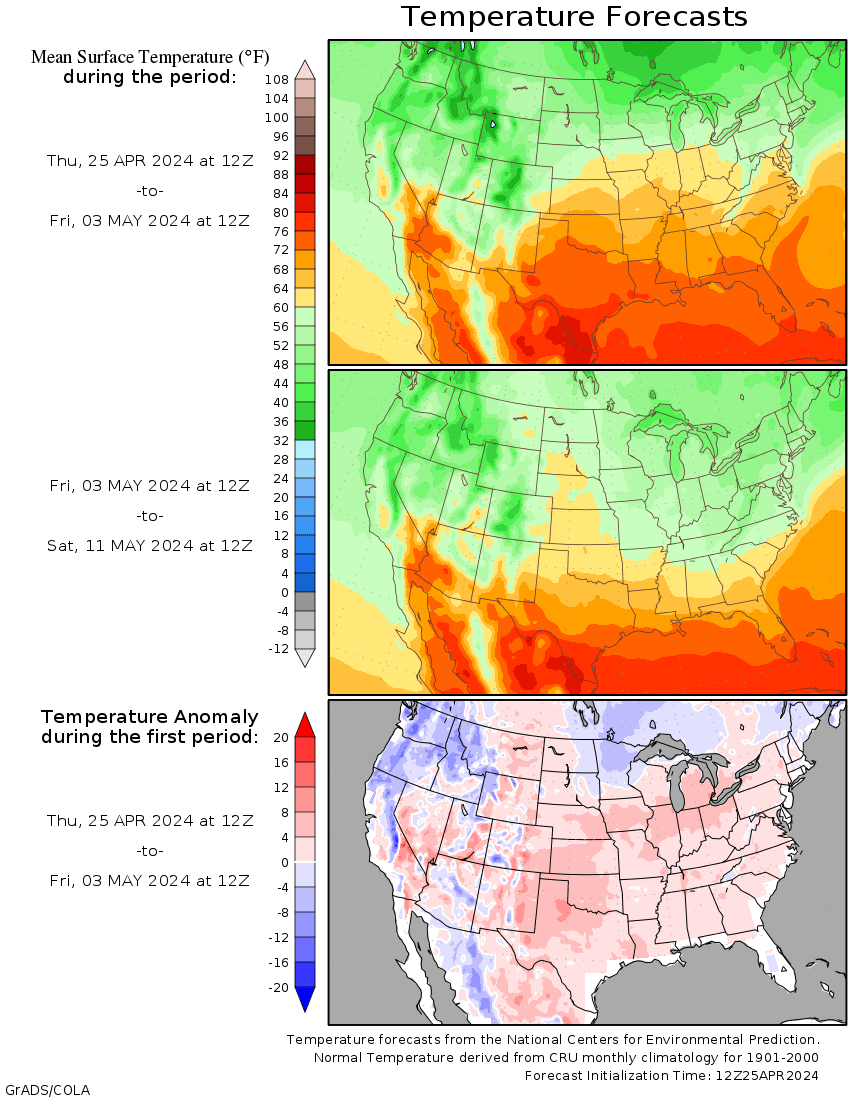
http://wxmaps.org/pix/temp1.html
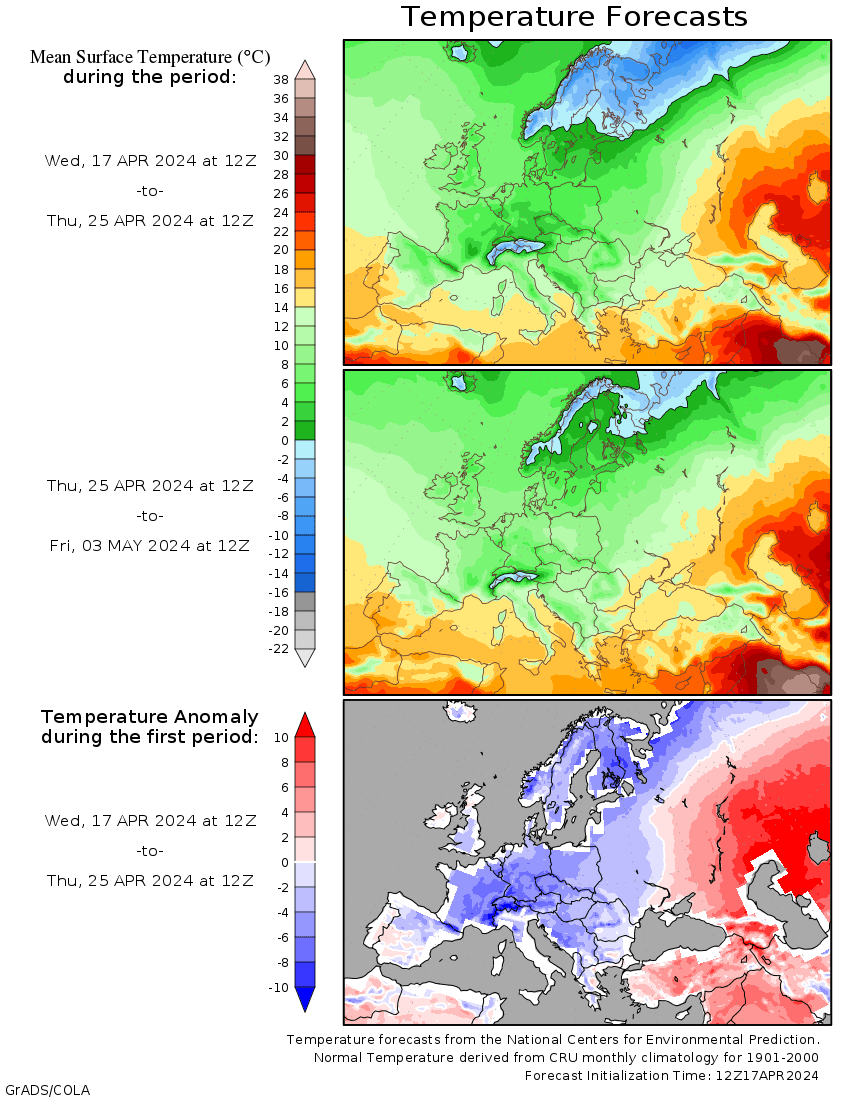
http://wxmaps.org/pix/temp4.html
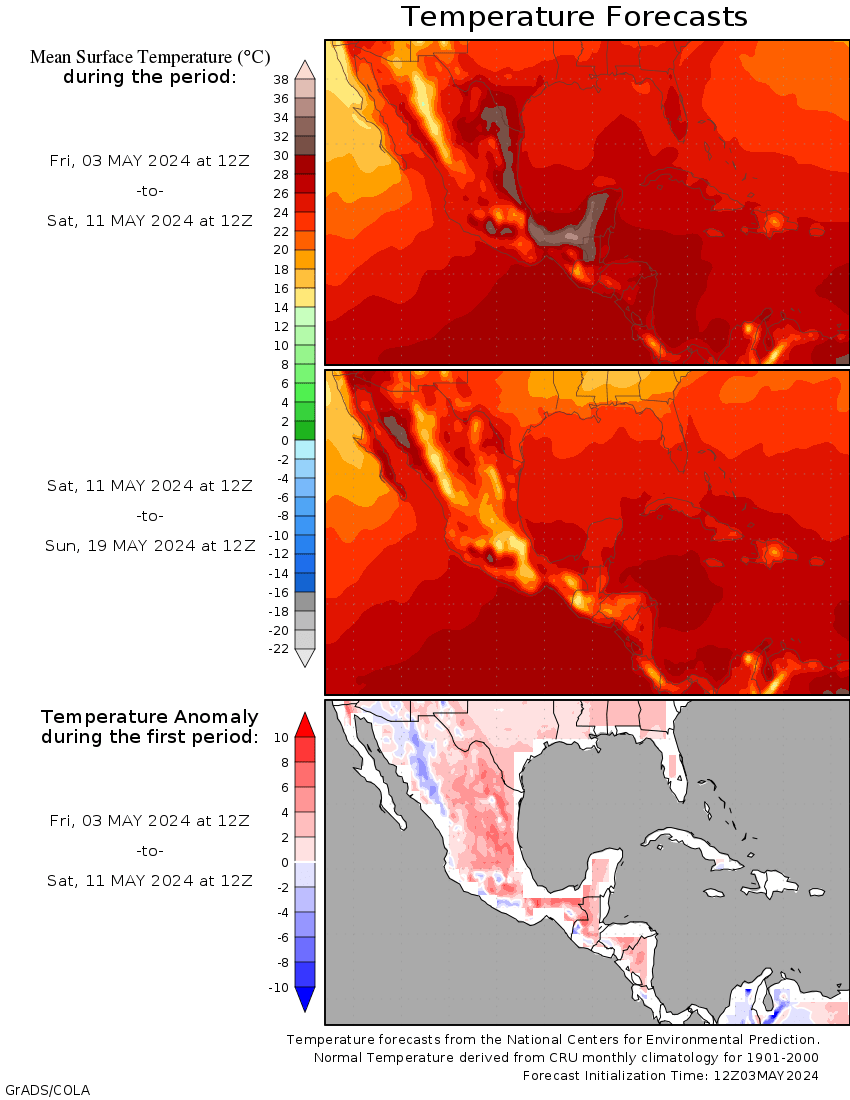
http://wxmaps.org/pix/temp3.html
Asbestos in and of itself is fairly benign. However what it does do is to puncture the cell walls and allow chemicals into the cell that shouldn’t be getting in there. Those chemicals often trigger cancer and other rather nasty things. Treat it with respect. At one time it was the best thing around. Since then we have come up with better stuff.
I would suggest that the extremes of cold and hot have produced a layering effect of the atmosphere more so than normal trapping warmer parts closer to the oceans (fluid dynamics anyone)?
Laymans interpretation:
The accumulation of energy in the oceans over the latter part of the 20th C is being periodically “exhaled” by the oceans via El Nino.
History tells us this exhalation takes much less time than accumulation, hence the sudden drops.
With the less active sun of recent times, El Nino events will gradually weaken.
The water vapour in the atmosphere due to these exhalations manifest themselves in the larger than normal snow covers in the northern hemisphere.
It’s irrelevant to the climate what happens over the land areas as they can’t store heat like the oceans.
The upshot is, buy yourself a good coat for the coming decade or three.
It’s the sun and the oceans stupid, CO2 is largely irrelevant unless you want a new mechanism to tax people.
Jimbo (13:49:06) :
“I forecast in my scenario that Pachauri will be gone by the end of the month, or at least an announcement of intention to go before end of his tenure.”
Possibly out the door with El Nino,look at this:
http://weather.unisys.com/surface/sst_anom.html
Bob T. I’m no expert but this thing’s crashing..
Gail Combs (15:33:59) :
Asbestos used as a talcum power replacement will likely be ground fine.
Also, asbestos in lungs help catalyze a reaction with smoke to produce benzopyrenes, a strong carcinogen. I think I clipped a small article about that from Science News (I also saved the first article they had on AIDS before it had a name).
I don’t know the cancer rate among non-smoking asbestos workers, but it was extremely high for smokers.
BTW, the first (main? one of the few?) studies linking Radon exposure to lung cancer was among Uranium miners who worked in dusty conditions and many smoked.
This large January warming anomaly is a bit worrying to me.
Many cold records have been made recently, at least in the NH. I don’t think it would be too controversial to hypothesise that this cooling is due to a lack of heat!
To get the record high January temperatures that we’ve just experienced indicates that thermal energy is being redistributed and in ways that we won’t find favourable.
As land dwellers we depend on what’s happening at ground-level, not on the sea or in the stratosphere.
If the recipients of lost land heat are unusable parts of the globe that then radiate that energy into space then, Houston, we may have a problem!
Global average temperature, whether absolute or relative, tells us nothing about crop production, disaster prediction, quality of life or, just about anything that really matters.
Measuring GAT has become an obsession. Figuring out what it means has turned into pointless debate. Arguing about how the numbers should be interpreted vastly exceeds the medieval contortions involving needles and angels.
Forget GAT, what matters to our existence is QOL. Quality of Life.
It may not be easily measurable but it sure is recognisable!
In addition to my above post.
The PDO has already flipped. This happens sooner than the ENSO because of the smaller ratio of oceans in the northern hemisphere.
ENSO will follow (don’t know the lag time) and will be dominated by La Ninas
Until the sun becomes more active, (possibly by the ascending phase of cycle 27), expect temps to drop followed by a drop in precipitation.
But hey, I’m just speculating like the IPCC. (very likely lol)
Douglas DC: You wrote, “Bob T. I’m no expert but this thing’s crashing…”
Yes it is.
http://i50.tinypic.com/ih2vtj.png
The cold land based temperatures are probably more important than the warm SSTs. I think that both land based temperatures and sea based temperatures will respond to radiative forcing. But SSTs can contradict the radiative forcing effect for short periods of time through currents and Kelvin waves. The land will reflect the radiative forcing more quickly. I think that we will see the oceans catch up with the land based trend eventually.
[quote]
Dr. Spencer is one of the most trustworthy players in climate science and clearly does not have a warming agenda.
[/quote]
Agreed. But NASA still needs to release the source code used to process satellite data. The public paid for it with tax dollars and it’s clearly in the public’s interest to know how these data are produced.
And I’m still not convinced the satellite data is correct now that I know they measure temperature using statistics.
Gail Combs (14:50:32) :
Sure that UFO is not a volcano?
I suspect the geo part of climate has been underestimated given the rush to make CO2 the culprit. I haven’t seen anything lately on this topic.
I have wondered about the warm area between SA and NZ. It has hung around for a long time (at least when I’ve noticed) which seems unusual for weather. Anyone know of any research into this area?
magicjava (17:32:33) :
And I’m still not convinced the satellite data is correct now that I know they measure temperature using statistics.
Well, at least there are two separate analyses that are in close agreement (RSS and UAH). This makes me more comfortable.
Well, I sure hope these warm temperatures make it down to the surface and over land. I could use a little warmth right about now.
Now there’s an interesting thought … if more warm moist air stays over oceans for an extended time then the big GHG (H2O) could retain additional heat … that causes more evaporation … hmmmmm. Could the blocking highs actually be part of the reason for this big jump in January?
I’ve been totally confused by the controversy over the several theories of climate change. So in August 2007 I began a day-by-day study of highs and lows in the Puget Sound Region of Washington State. I now have 30 months of data. Of those thirty months, 24 expereienced daytime highs below the 20-year average (as posted by the local newspaper). The other six, including Jan 2010, were above average. Jan set a new high, credited to the latest El Nino.
As I understand it, El Nino’s always start in the same general area of equatorial western Pacific waters and migrate north and east until they brush up against North America. Last summer (August, I believe) University of Washington researchers discovered a significant level of undersea volcanic activity precisely where El Nino’s are born. Connect the dots.
Asbestos, much like CO2 and compact flourescent lamps has had a knee-jerk reaction, it is a great roofing and insulation product, whatever colour it is fairly safe when wet (wet particles have trouble getting in a position to be inhaled) in the UK all asbestos, even cement asbestos sheets are toxic waste (and have to be handled by high cost specialists) until it is in the skip then off to open land-fill where it is inert. It is funny the dusky con man should bring it up at the same time as his fraudulent activity
Well it sure looks like el nino la nina follow global temperatures vice versa really so we are learning a lot about climate now arent we? explains 1998 and 2009/2010
[quote Richard M
Well, at least there are two separate analyses that are in close agreement (RSS and UAH). This makes me more comfortable.
[/quote]
RSS uses the same type of instrument UAH uses. Which means they’re using statistics too.
If those statistics were set during warming periods (which they were), what’s to say they’re not causing artificial warming when they adjust the data? The statistics are adjusting the readings of channel 5 by 10 times what the reported anomaly is.
That, and you can’t use one unknown process (RSS) to describe another (UAH).
As some posts above have suggested:
If the ocean surfaces are at high temperatures, then they are likely to lose heat to space even more rapidly. If, on balance, less heat is arriving (due to clouds, for example), then the earth will cool down even more.
However, the “pattern” I see in the satellite temperature indicates a few years of warmer temperatures.
Unless we get following year like 1998 — followed by a “bump up” of the temperature oscillations.
Hmmmm… We’ll see which it is. But, it will take a while.
Heat moves from warm places to cool places. When SSTs are warm, heat moves out of the ocean. When SSTs are cool, heat moves into the ocean.
My high school girlfriend’s father was a non-smoking dock worker in WWII, who was exposed to asbestos on the docks. He died a horrible death at age 55 from asbestosis.
OT: interesting doings on the Sun today.
Flux pops up 4 units, and some 8 hours later up pop 2 new Sunspot groups.
The leading group appears at roughly the same longitude where the last one (1043) appeared.
Do not doubt the danger of asbestos. Long term inhalation of asbestos fibers will be very bad for your health.
Steve Goddard (13:54:22) :
Interesting theory about the causes of El Nino here:
=============================================
You have to be ready to duck into a foxhole to avoid a storm from certain people when you bring up the sun sometimes.
There is volcanism on the floors of the oceans, but Science doesn’t know exactly how extensive or active it is — much of the seafloor is unexplored.
For example, there is evidence that volcanism takes place on the sea bottom of the Arctic Ocean, but, again, how extensive or active, is not known with precision.
Of course, the next question is how much energy or heat gets added to the oceans by Earth’s undersea volcanic processes?
A numerical value is hard to find.
But it would be due dilligence to investigate.
Maybe it’s next to nothing and insignificant — but that’s Science — asking questions and then seeking answers.
Richard M,
“Well, at least there are two separate analyses that are in close agreement (RSS and UAH). This makes me more comfortable.”
You mean like GISS and HadCrut??