
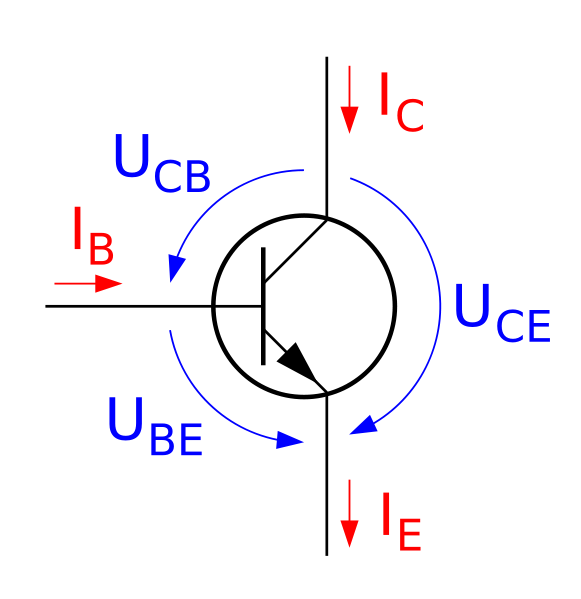

Some months back, I mentioned that I felt the sun-earth connection was much like a transistor. This new NCAR study suggests this may be the case where small solar variances are amplified in the earth atmosphere-ocean system.
From EurekAlert
Small fluctuations in solar activity, large influence on the climate
Sun spot frequency has an unexpectedly strong influence on cloud formation and precipitation
Our sun does not radiate evenly. The best known example of radiation fluctuations is the famous 11-year cycle of sun spots. Nobody denies its influence on the natural climate variability, but climate models have, to-date, not been able to satisfactorily reconstruct its impact on climate activity.
Researchers from the USA and from Germany have now, for the first time, successfully simulated, in detail, the complex interaction between solar radiation, atmosphere, and the ocean. As the scientific journal Science reports in its latest issue, Gerald Meehl of the US-National Center for Atmospheric Research (NCAR) and his team have been able to calculate how the extremely small variations in radiation brings about a comparatively significant change in the System “Atmosphere-Ocean”.
Katja Matthes of the GFZ German Research Centre for Geosciences, and co-author of the study, states: „Taking into consideration the complete radiation spectrum of the sun, the radiation intensity within one sun spot cycle varies by just 0.1 per cent. Complex interplay mechanisms in the stratosphere and the troposphere, however, create measurable changes in the water temperature of the Pacific and in precipitation”.
Top Down – Bottom up
In order for such reinforcement to take place many small wheels have to interdigitate. The initial process runs from the top downwards: increased solar radiation leads to more ozone and higher temperatures in the stratosphere. “The ultraviolet radiation share varies much more strongly than the other shares in the spectrum, i.e. by five to eight per cent, and that forms more ozone” explains Katja Matthes. As a result, especially the tropical stratosphere becomes warmer, which in turn leads to changed atmospheric circulation. Thus, the interrelated typical precipitation patterns in the tropics are also displaced.
The second process takes place in the opposite way: the higher solar activity leads to more evaporation in the cloud free areas. With the trade winds the increased amounts of moisture are transported to the equator, where they lead to stronger precipitation, lower water temperatures in the East Pacific and reduced cloud formation, which in turn allows for increased evaporation. Katja Matthes: “It is this positive back coupling that strengthens the process”. With this it is possible to explain the respective measurements and observations on the Earth’s surface.
Professor Reinhard Huettl, Chairman of the Scientific Executive Board of the GFZ (Helmholtz Association of German Research Centres) adds: “The study is important for comprehending the natural climatic variability, which – on different time scales – is significantly influenced by the sun. In order to better understand the anthropogenically induced climate change and to make more reliable future climate scenarios, it is very important to understand the underlying natural climatic variability. This investigation shows again that we still have substantial research needs to understand the climate system”. Together with the Alfred Wegener-Institute for Polar and Marine Research and the Senckenberg Research Institute and Natural History Museum the GFZ is, therefore, organising a conference “Climate in the System Earth” scheduled for 2./3. November 2009 in Berlin.
Because of “inertia” (heat capacity) in the system, temperatures do not follow an 11 year cycle, I find. However, the actual temperature cycle can be reproduced fairly closely since roughly 1850 using only “sunspot variability” (mechanism unknown) and volcanic eruptions as drivers — according to a simple physical model I created for my own edification.
So, I am open minded to studies like this one because they support what I tentatively believe plausible. Still, they may be wrong to a greater or lesser degree for all I know.
“Small fluctuations in solar activity, large influence on the climate”
“In order to better understand the anthropogenically induced climate change”
One almost gets the impression that the researchers are covering their PC tracks as the two statements suggest great potential for obvious contradictions. After all if they stand behind their research, the enevitable conclusion is that the measure of the anthropogenic componet of the recent warming would have to be diminished as a result. . .possibly significantly.
In this case it really is a zero sum calculation.
FatBigot (15:54:36):
Not NASCAR, NCAR!
But you already knew that, Mr Prestidigitator.
Retired Engineer (13:57:30) : ‘Hah! I knew that extra UV had to do something.’
Tenuc (15:16:26) : “Me too… Although I suspect this is only one small piece of the jigsaw. The effect of varying solar ion stream, changing magnetic field, degree of cosmic ray bombardment etc. must also have an effect on our chaotic climate system.”
That’s my thought, too. I’m especially interested in the swings in ionosphere temperature. Though extremely diffuse, the temperatures therein range from 500°K to 1500°K from solar minimum to solar maximum, a 28-to-1 swing relative to radiative capability. I’ve wondered about the similarity to a triode previously:
http://www.greenworldtrust.org.uk/Forum/phpBB2/viewtopic.php?t=99&postdays=0&postorder=asc&highlight=jorgekafkazar&start=45
11 Mar 2009 07:42 pm: “It’s almost like in a triode, where small changes in the voltage of the grid have an amplified effect on the total current, cathode to anode. The analogy breaks down rather quickly, but it’s still intriguing.”
I found this post to be very interesting. I am beginning to wonder if changes in solar radiation have a significant effect on the PDO. I’ve looked at PDO reconstructions from the past 300 or so years and I’ve noticed that the intensity of PDO cycles tends to positively correlate with stronger solar activity. It would make sense, then, that the PDO was unusually negative at mid-century and unusually positive towards the end.
I would assume, then, that the intensity of the PDO will greatly diminish as we enter a period of relative quiet from the sun. Without some other effect (like large volcanic eruptions in the tropics), El Niños and La Niñas will become weaker over time as well.
Calling Dr. Svensmark…Dr. Svensmark to the operating room… STAT!
Are you reading this part clearly Leif? Shoots holes in your argument on another thread.
“In order for such reinforcement to take place many small wheels have to interdigitate. The initial process runs from the top downwards: increased solar radiation leads to more ozone and higher temperatures in the stratosphere. “The ultraviolet radiation share varies much more strongly than the other shares in the spectrum, i.e. by five to eight per cent, and that forms more ozone” explains Katja Matthes. As a result, especially the tropical stratosphere becomes warmer, which in turn leads to changed atmospheric circulation. Thus, the interrelated typical precipitation patterns in the tropics are also displaced.”
Its plainly not all about TSI minor variances.
Nope. You have to be really smart to realise how dumb you are.
Part of the human condition I am afraid.
Kindest Regards
FatBigot,
My eyes did the NASCAR thing too, but then they do something with your nickname every time that makes me shake my head and go, “Huh?” Happens every time; you’d think my brain would learn.
Creative ideas are always logical in hindsight. This is some great research.
Mike Ramsey
I was getting ready to be the party pooper as I read the article, but was then delighted to find it greeted here with a liberal dose of caution, even cynicism.
Stephen Wilde – Thank you for those two posts, you have said it all (well, nearly all) and saved me a lot of time.
Stephen Wilde (14:53:21),
I see electrical engineering is not your strong point.
1. What you are looking for is capacitance not resistance.
2. A fixed resistor at constant current delivers a fixed amount of heat. Resistors are 100% efficient in converting electrical power to heat. P = I^2 * R
As to the transistor analogy:
Bipolar, MOSFET, JFET, IGBT, or something else?
any idea what the gm is? And if bipolar, the beta or alpha. And what is the alpha cut off frequency? And if we are going to get really picky how about the Noise Figure as applied? And just to go totally obscure on you – the Miller effect.
Stephen Wilde (14:53:21) :
Being a sceptic doesn’t make me accept bad science!
Depending upon what you mean by heat…
1) Energy. the energy dissipation will be the same, no matter what.
2) Temperature. Yes, varying efficiency of energy dissipation will lead to different temperatures. (A good heat sink will dissipate energy more efficiently and at a lower temperature)
This is why the use of the correct terminology is so vital. Heat ain’t energy, it’s the transfer of energy.
Incidentally, the heating would be the same in both above scenarios, only the temperature would change.
DaveE.
re: Stephen Wilde (14:53:21) :
“A constant current through a resistor will result in different amounts of heat being produced depending on the efficiency of the resistor.”
What? That statement makes no sense.
Steve Hempell (14:19:42) :
“This response also cannot be used to explain recent global warming because the 11-year solar cycle has not shown a measurable trend over the past 30 years”
I like the insoucience of this statement.
But over 300 years? And over the past two years?
However, it allows the authors to keep the funding coming
So some acceptance of the amplified solar influence paleo-climate data has always indicated.
Its a move in the right direction. No indiacation of the aplification factor though, but if its 5-10x than co2 becomes a small bit player.
This highlights:
A) Climate models are simply force fitted and have no predictive skill
B) The anthropogenic influence is exaggerated
C) We know far to little to make financially damamging decisions yet
Nice to see a post on my favourite subject of sunspots, UV and climate bias Anthony.
Guys, it isn’t a transistor effect, a resistor effect, or even a thermistor type reaction. If I would offer an electronic equivalent name it would be an atmospheric ‘band pass filter’ that periodically accentuates ocean temperatures.
BTW. I liked the NASCAR pun. Those guys probably are just as well equipped in the tech field to deal with climate.
Best regards, suricat.
What? The Sun has something to do with Earth’s temperature? Preposterous! Sacrilege!
Oh, thought this was real climate. Bwuhahahahaha.
Additional info from the same place:
National Center for Atmospheric Research (NCAR)
News Release, August 27, 2009
Scientists Uncover Solar Cycle, Stratosphere, and Ocean Connections
http://www.ucar.edu/news/releases/2009/solarcycle2.jsp
The first thing I learned in college, fresh out of high school, is just how massively “dumbed down” EVERYTHING was that I had been taught previously – not the fault of my excellent teachers, because if they didn’t “dumb it down”, of course, the teaching of it would take far too much time. And that’s the problem today – everyone thinks “science” has the “answers” when actually, we haven’t even begun to ask the proper questions, especially for a subject as insanely complex as climate…
It’s interesting how studies that seem to contradict or at least modify major tenants of the “consensus” on AGW pay lip service to the concept. Here’s another example. A study finds that the heat waves that have been plaguing California and much of the rest of the west lately are caused by increased humidity. The water vapor comes from increased warmed in a section of the ocean and prevents heat from escaping into space at night. What causes the increased ocean warmth and thus the humidity? Well, AGW, obviously.
http://www.sciencedaily.com/releases/2009/08/090825151008.htm
Having read a lot of things like that, I get the feeling that a substantial portion of scientists working in the area are playing a bit of a double game. They publish stuff that chips away at the margins of the AGW hypothesis and then add a sentence or two at the end to get past peer review at the more politicized scientific venues.
Ok. The oceans and atmosphere are both emitters and collectors, depending on what the Solar Activity is doing (wild guess).
So the sunspot activity runs the base, the FUV runs the collector, making for an NPN allowing everything else to enter freely, but not leave so freely.
When the sunspot is low, the FUV low and the NUV runs the collector on the PNP allowing more to escape than enters.
I was waiting for the explanation as to the PNP or NPN functions that the Sun/Oceans/Atmosphere play. So I made one up.
Somebody that knows this stuff please make a proper model.
I’d like to learn how this works.
suricat (18:14:07) :
Bandpass is what I thought about many months ago, but the experts say no way, Jose. Cannot happen. Maybe it does, resistor, transistor, diode, whatever.
So, to summarise…
“It’s the sun, stupid!”
😉