
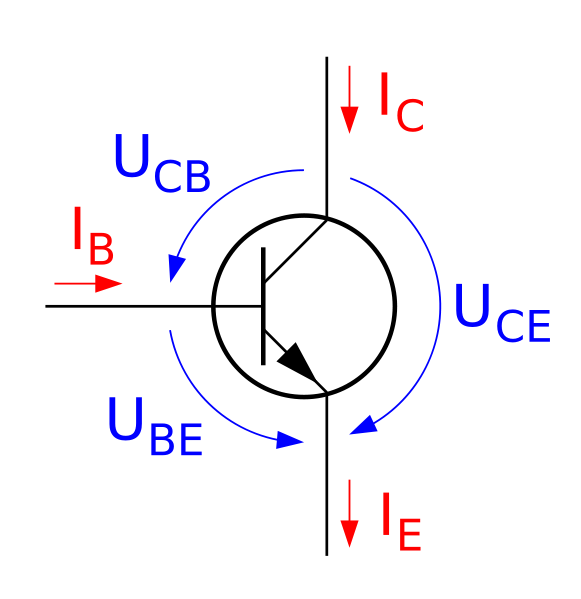

Some months back, I mentioned that I felt the sun-earth connection was much like a transistor. This new NCAR study suggests this may be the case where small solar variances are amplified in the earth atmosphere-ocean system.
From EurekAlert
Small fluctuations in solar activity, large influence on the climate
Sun spot frequency has an unexpectedly strong influence on cloud formation and precipitation
Our sun does not radiate evenly. The best known example of radiation fluctuations is the famous 11-year cycle of sun spots. Nobody denies its influence on the natural climate variability, but climate models have, to-date, not been able to satisfactorily reconstruct its impact on climate activity.
Researchers from the USA and from Germany have now, for the first time, successfully simulated, in detail, the complex interaction between solar radiation, atmosphere, and the ocean. As the scientific journal Science reports in its latest issue, Gerald Meehl of the US-National Center for Atmospheric Research (NCAR) and his team have been able to calculate how the extremely small variations in radiation brings about a comparatively significant change in the System “Atmosphere-Ocean”.
Katja Matthes of the GFZ German Research Centre for Geosciences, and co-author of the study, states: „Taking into consideration the complete radiation spectrum of the sun, the radiation intensity within one sun spot cycle varies by just 0.1 per cent. Complex interplay mechanisms in the stratosphere and the troposphere, however, create measurable changes in the water temperature of the Pacific and in precipitation”.
Top Down – Bottom up
In order for such reinforcement to take place many small wheels have to interdigitate. The initial process runs from the top downwards: increased solar radiation leads to more ozone and higher temperatures in the stratosphere. “The ultraviolet radiation share varies much more strongly than the other shares in the spectrum, i.e. by five to eight per cent, and that forms more ozone” explains Katja Matthes. As a result, especially the tropical stratosphere becomes warmer, which in turn leads to changed atmospheric circulation. Thus, the interrelated typical precipitation patterns in the tropics are also displaced.
The second process takes place in the opposite way: the higher solar activity leads to more evaporation in the cloud free areas. With the trade winds the increased amounts of moisture are transported to the equator, where they lead to stronger precipitation, lower water temperatures in the East Pacific and reduced cloud formation, which in turn allows for increased evaporation. Katja Matthes: “It is this positive back coupling that strengthens the process”. With this it is possible to explain the respective measurements and observations on the Earth’s surface.
Professor Reinhard Huettl, Chairman of the Scientific Executive Board of the GFZ (Helmholtz Association of German Research Centres) adds: “The study is important for comprehending the natural climatic variability, which – on different time scales – is significantly influenced by the sun. In order to better understand the anthropogenically induced climate change and to make more reliable future climate scenarios, it is very important to understand the underlying natural climatic variability. This investigation shows again that we still have substantial research needs to understand the climate system”. Together with the Alfred Wegener-Institute for Polar and Marine Research and the Senckenberg Research Institute and Natural History Museum the GFZ is, therefore, organising a conference “Climate in the System Earth” scheduled for 2./3. November 2009 in Berlin.
Dominos. Or could it be “sensitive dependence on initial conditions”? Interesting.
This basically just confirms Nir Shaviv’s “calorimeter” paper. It isn’t Earth shattering but it’s good to see that the solar influence is being looked at in a more sophiticated manner. Up until now it’s just been “The GCM’s don’t show it, so it doesn’t exist.”
Further information
http://www.scienceblog.com/cms/person/gerald-meehl
with specific links
http://www.scienceblog.com/cms/small-fluctuations-solar-activity-large-influence-climate-24510.html
http://www.scienceblog.com/cms/scientists-uncover-solar-cycle-stratosphere-and-ocean-connections-24512.html
Maybe I missed it, but I didn’t see the standard disclaimer at the end: “Although this research indicates alternate influences on the climate, it doesn’t change the fact that Mark’s pickup truck is responsible for the death spiral of the arctic.”
“This investigation shows again that we still have substantial research needs to understand the climate system”.
Yes we do indeed. Are you listening Al?
Mark Bowlin (13:39:36) :
Yep, you just missed it…
😛
DaveE.
Dave E.
Rats. I thought there was promise in this one.
Hah! I knew that extra UV had to do something.
I suspect it has a lot to do with interactions of cyclic patterns on the Earth, because we don’t see a regular pattern (about 11 or 22 years) of swings in the climate. So, depending on the state of the PDO, a bunch of other stuff, and the number of birds on the roof, sunspots change things. Sometimes.
The debate isn’t over, it’s hardly begun.
This makes intiutive sense to me. I look forward to (real) scientists and engineers weighing in. Leif, what are your thoughts?
Have Prof. Richard Huettl of the GFZ, Alfred Wegener IPMP, Senckenberg RI, and the Natural History Museum invited contributors from WUWT? If not, can we contribute to send a few “delegates”?
Mark Bowlin (13:57:21) :
Actually Mark, there is promise & what they say is true.
The better understand(ing of) the anthropogenically induced climate change from understand(ing) the underlying natural climatic variability, may lead them to the conclusion that the former is insignificant.
DaveE.
Mark Bowen: Dave E
Here is your disclaimer I think
Last sentence of paper:
“This response also cannot be used to explain recent global warming because the 11-year solar cycle has not shown a measurable trend over the past 30 years.”
Tom in Florida : (13:40:45) – ” substantial research ” requires substantial funding .
Wow! Interesting work.
Add the possible cosmic ray effects and “iris” effects, and maybe we don’t really need CO2, anymore.
“interdigitate” is a new one for me.
Looks like a flux capacitor
An interesting post because it is a look at the Earth energy flow system as a coherent whole which is just what I have been doing for the past 18 months.
However it goes along with the predomimant current view in both warmist and sceptic camps that the driving forces originate in the air.
My view is that that is not possible. The oceans control the air at all times.
There are the following objections to this post:
1) There is no clear 11 year climate cycle which must follow from the proposition that there is amplification of the sunspot variations in each cycle.
Leif Svalgaard’s points about the smallness of solar variability on that time scale are convincing to me. It takes a run of several weaker or stronger cycles to make a significant difference to total energy input to the oceans such that a background warming or cooling trend can be established and even that is frequently hidden behind a complex oceanic variability with cycles operating separately in each major body of water and often supplementing or offsetting each other and solar variations.
2) They correctly refer to changed circulations in the air bur fail to note that the most significant such shifts follow and do not lead oceanic changes. For example the main observed shifts in global temperature trends and the shifts in the latitudinal position of all the air circulation systems always follow the 25 to 30 year shifts in the phase of the oceans (especially the Pacific – usually referred to as the Pacific Decadal Oscillation).
3) Just as with the AGW warmers they rely on a positive feedback. In this case they call it ‘positive back coupling’ as opposed to the water vapour feedback process of the warmers. The trouble is that all observations show that the climate system is always sharply negative otherwise the long term stability we see would have been lost long ago.
All the above problems and many others can be dealt with by noting the simple real world observation that it is the oceans which change the rate at which energy is released to the air and that drives everything else we see in terms of weather and both global and regional climate shifts.
I don’t see anyone seriously denying either the PDO phase shifts or the climate response. There are similar climate responses to individual ENSO events but they are less easily discernible amongst the background chaotic variability of weather.
Nor do I see any evidence that climate changes happen first and the oceans follow.
I really cannot understand the persistence of the view that all one has to do is change something in the air to change the Earth’s climate. Any warmist or sceptic ideas that rely on that proposition are being discredited daily by ongoing observations.
OK, well how do we rationalize this with the fact that the sun was much weaker when it was young. If 0.1% has that much effect, how much effect does 1% or 10% have (I don’t know how much weaker it was, but read an article here about it a week or so ago)?
Yet another reason to put a hold on all carbon legislation, bin the current GCM models, and start from scratch collecting good data and building models openly verified on empirical evidence.
It’s not a ‘transistor effect’
It is a ‘resistor effect’ as I explained in another thread:
“Solar energy is always entering and leaving the oceans. The amount of energy contained by the oceans is simply a function of how long the oceans slow down the release of the energy received. The longer it is retained the higher the ocean energy content and the higher the temperature. If the solar energy were passing through the oceans with no delay at all then there would be no heat energy in the oceans, the oceans would have long ago frozen solid or would have been evaporated to space because there would be no hydrological cycle either.
I have no difficulty envisaging that the oceans themselves (possibly over very long time scales in a number of overlapping cycles) vary the speed of transmission of solar energy through those oceans before it is released to the air. If the ocean temperature is a function of the speed of transmission of energy (rather than the absolute quantity of that energy) then that largely decouples the small solar variations from climate changes except over even longer periods of time (several centuries).
A constant current through a resistor will result in different amounts of heat being produced depending on the efficiency of the resistor.
There is no need for the oceans to be ‘holding’ any energy. All they need to do is accelerate or decelerate the release of energy to the air and that results in temperature changes largely independent of solar variations.
The higher the input and the lower the output the higher will be the ocean energy content and thus the temperature at any given time and vice versa.
Furthermore when the oceans release energy faster as in El Nino conditions the air warms but the oceans are in the process of losing energy unless it is being replaced even faster.
Faster release of energy to the air implies that the oceans have become a less effective resistor and less heat is produced within the oceans. Slower release of energy to the air implies that the oceans have become a more effective resistor and more heat is produced within the oceans.
But the air warms as the seas cool and the air cools as the sea warms”
This is old, so if anyone can shed further light , I am open to it: A.E. Douglas showed that prairie drought cycles followed solar cycles pretty closely. Correlation isn’t causation, but sometimes it is. Great post Anthony, and I like the transistor analogy, but was wondering if, due to the mitigating capacity of the oceans, it would be more like a resistor? Once again, I am open to correction. This can be a humbling website to those of us who are smart enough to know we are dumb. All humans are dumb, but what scares me most are people who are too dumb to know they are dumb.
Retired Engineer (13:57:30) :
“Hah! I knew that extra UV had to do something.”
Me too… Although I suspect this is only one small piece of the jigsaw. The effect of varying solar ion stream, changing magnetic field, degree of cosmic ray bombardment etc. must also have an effect on our chaotic climate system.
Much more work to be done before we can even get close to understanding climate, let alone predicting what will happen in the future. This shows a ‘time-out’ is needed before G8 agree to global Cap & Trade.
The article states “Nobody denies its influence on the natural climate variability….”
I seem to have seen it stated categorically on many occasions that the sunspot cycle couldn’t possibly have any effect on the climate. Usually stated in a curt and dismissive manner!
And I thought it was CO2!!!
When is all said and done, and we get the ‘alarmism’ out of this BS, we will find that we knew very little about what/how our climate is affected. Maybe this whole AGW issue will at least put forward many articles that will all contribute to the overall knowledge and get down to some REAL climate issues and how and why they occur.
It was worth reading this article just to enjoy “interdigitate” (And to learn that NASCAR does things other than race cars).
Thank goodness we have a new metaphor – the transistor. That damn greenhouse metaphor is so 19th century.
“This can be a humbling website to those of us who are smart enough to know we are dumb. All humans are dumb, but what scares me most are people who are too dumb to know they are dumb.”
Hang on ….. I know I’m dumb – does that mean I’m smart?
Me ‘ed ‘urts.