Charles Rotter
Jessica Weinkle teaches public policy at the University of North Carolina Wilmington and writes the Substack Conflicted. Her latest post there, Bob’s Your Uncle, traces how First Street, the outfit whose flood scores sat on Zillow listings until Zillow pulled them last November, grew out of a tangle of advocacy money, academic modellers and finance. It goes with a comment she published October 29 in Dialogues on Climate Change, “Reflections on Burgess: Conflicts of interest, institutional neutrality, and democratic accountability,” which is open access and worth reading in full.
The comment answers Matt Burgess’s “Toward institutional neutrality in climate change science,” which argues that scientific institutions can host scientists with strong views but should stay out of official positions on contested political questions. Burgess calls the practices and norms inside those institutions the harder problem. Weinkle takes that up through conflicts of interest, with First Street as her case study. The company is now being sued by the attorneys general of Nebraska and Florida. From the Florida complaint, as she quotes it:
36. The integration of First Street’s nonprofit origin with the commercialization of Risk Factor is deceptive. Consumers assume that First Street is providing unbiased, scientific data to inform and empower consumers to make better decision when purchasing a home. Instead, consumers are relying on the product of a venture -capital-backed enterprise, owned by a financial analytics firm that directly profits from the deceptive and misleading scores it sells to consumers.
https://jessicaweinkle.substack.com/p/bobs-your-uncle
First Street started around 2016 as a 501(c)(3) charity. By 2022 its subsidiary Risk Factor was selling property-level analytics to banks and other financial firms. In February 2024 it restructured as a public benefit corporation backed by Tom Steyer’s Galvanize Climate Solutions, and this year MSCI, the Morgan Stanley spin-off, bought it for $120 million in cash at closing, with earnouts to follow. MSCI sells climate risk analytics to CalPERS, the California public pension giant, which uses climate analytics to justify investments such as Octopus Energy, where Steyer also has money. Bob’s your uncle.
The models go back further. Michael Bloomberg, Steyer and Hank Paulson co-chaired the Risky Business Project, which hired Rhodium Group, which brought in academics to sell the public on climate risk. Weinkle calls the project politically motivated and notes it was modelled on the Stern Review. The Rhodium–academic partnership became the Climate Impact Lab, and the two built First Street’s flood model. CalPERS listed the cast in its 2022 letter to the SEC backing the climate disclosure rule:
The First Street Foundation Flood Model was developed by the Rhodium Group and the Climate Impact Lab with contributions by First Street Foundation; Columbia University; Fathom; George Mason University; Massachusetts Institute of Technology; Rutgers University; The University of California, Berkeley; and University of Bristol.
https://jessicaweinkle.substack.com/p/bobs-your-uncle
Weinkle’s gloss on that list:
This is a closed loop of academics working with a modeling firm and consultancy that is 50/50 political advocacy and commercial interest.
https://jessicaweinkle.substack.com/p/bobs-your-uncle

The loop reached well into government. First Street work turned up in the Fifth National Climate Assessment, and Weinkle counts more than 30 government agencies using it, along with a Congressional Budget Office report on flooding and a Joint Economic Committee report on climate risk to insurance and housing. First Street also had a seat on the Treasury’s climate-related financial risk advisory committee. When Weinkle testified before the Senate Budget Committee in March 2023, First Street’s founder testified too, and Chairman Whitehouse opened the hearing by citing a Nature Climate Change paper, co-authored by First Street Foundation researchers, that put the overvaluation of flood-exposed homes at $121–237 billion.
A shared business interest is fine by Weinkle as long as it’s disclosed, and this one wasn’t, in the journals or in advisory reports like the National Climate Assessment. Those reports and the academics’ media appearances ended up serving firms that were lobbying for a climate risk regulatory regime justified by the very same reports. The comment paper has the starkest example. A February 2024 PNAS paper proposing a sixth Saffir–Simpson category declared no competing interests, though one author listed First Street as his affiliation and the handling editor had supplied the synthetic hurricanes behind First Street’s wind model. Four months later the editor and that author were named co-inventors on a First Street patent application.
On why NASEM, the IPCC, the NCA and, depending on who is in the White House, the agencies all say the same thing:
They are saying the same thing because they draw on the same people, organized around shared technical practices and assumptions, and sharing a common financial stake- which happens to be supported by a narrow political position.
https://jessicaweinkle.substack.com/p/bobs-your-uncle
Her earlier posts on the climate lobby ecosystem and ClearPath, First Street and American Flood fill in more of the map.
She says plainly that the comment isn’t peer reviewed, and it ends with a full declaration of her own consulting, paid essays and Senate testimony, which is more than the PNAS authors managed.
Dave Burton adds:
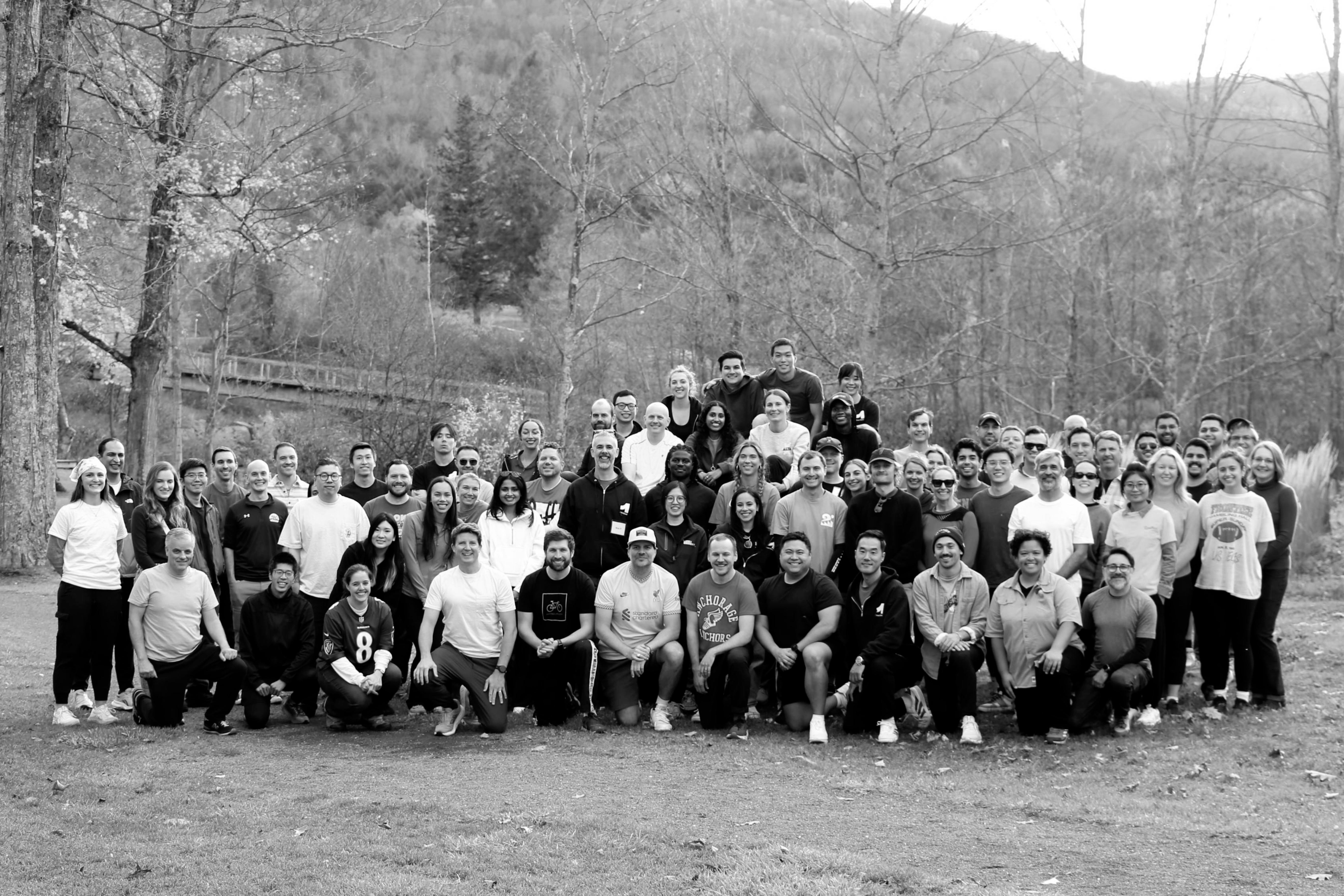
Dave Burton of sealevel.info, who sent us the tip, has been watching First Street for years. He calls it “a very well funded ‘charity’” and pointed us to its current team photo. He wrote about the outfit in a thread on X and in two comments here at WUWT about a year ago. From the first:
First Street Foundation (a/k/a 1 St Street Foundation Inc) is a 501(c)(3) charity in NYC, created to hype unscientific sea-level alarmism. They popped up in late 2017, with an initial paid staff of about ten people, and quickly expanded to fifteen. (Someone obviously wrote a very big check!)
They work with leftist profs at Columbia University, and their MO is to publish junk science in obscure journals, accompanied by flashy press releases, blasted out to every media outlet on the planet, with the general theme that wildly accelerated sea-level rise dooms coastal cities, because of climate change.
Amusingly, one of their websites claimed that Obama’s villa on Martha’s Vineyard would be under >3 feet of water in a Cat 3 hurricane:

I don’t know whether that’s true, but they also said that my house has a 67% chance of flooding in next 30 years, which certainly is not true. My house is atop a long, rather steep slope, far above any possible flood zone.
It’s been a lucrative grift for them. According to their Form 990s they raked in:
- 2017: $1,251,100
- 2018: $4,098,901
- 2019: $4,577,674
- 2020: $6,942,000
- 2021: $8,726,760
- 2022: $7,679,254
- 2023: $6,893,556
From that, they’ve been paying their CEO, Matthew Eby, $400,000 per year.
Their funding sources are undisclosed, but almost certainly mostly from climate industry sources.
Here’s the reality which First Street denies (the best mid-Pacific sea level measurement record):

From the second:
On their website they have a photo of 29 smiling employees (all of them thirtyish, except for two older men, one of whom is probably Mr. Eby), standing outside their Brooklyn address, a few blocks from the Manhattan Bridge. So it appears that they’ve doubled in size again:
Money doesn’t seem to be a problem for them. That page also says:
First Street is always expanding and looking for passionate experts to join our team. Please view our current openings.
That link currently shows six job openings.
Tellingly, they chose to locate their HQ at 247 Water Street in Brooklyn, an address which is apparently only 3.2 meters above mean sea level (and the average tide range there is about 1.6 meters). So I don’t think they’re actually as worried about sea-level rise as they pretend to be.

First Street’s registered address is indeed 247 Water Street. The elevation screenshot was run on 147 Water Street, a little way along the same street, and reads 2.6 metres. I haven’t checked his 3.2 metres for 247 itself.
=====
Jessica Weinkle, “Bob’s Your Uncle,” Conflicted (Substack), November 2, 2026, https://jessicaweinkle.substack.com/p/bobs-your-uncle
Jessica Weinkle, “Reflections on Burgess: Conflicts of interest, institutional neutrality, and democratic accountability,” Dialogues on Climate Change, 2026, https://doi.org/10.1177/29768659261498311
h/t Dave Burton