Jim Steele
The coral that now form our modern reefs evolved 240 million years ago during the Age of Dinosaurs when coral formed a marvelously fluid symbiotic relationship with symbiodinium algae. The new algae symbionts absorbed CO2 and produced sugars via photosynthesis for the coral. In turn coral respiration produced CO2 that supported the algae’s photosynthetic production. This symbiotic relationship evolved when CO2 was 4 times above today’s concentrations and global temperatures were several degrees higher. Takashima (2006) reports the mid-Cretaceous earth “surface temperatures were more than 14°C higher than today,” a time when dinosaurs roamed Antarctica. Atlantic warm pool sea surface temperatures reached a maximum of 42°C (107°F).


That evolutionary history explains why shallow-water coral are now restricted to the warmest ocean waters. Graphic A shows the location of today’s coral. Graphic B shows the oceans regional temperatures. Corals are most abundant in the warmest waters of the Indian Ocean and Western Pacific Warm Pool, also known as the Coral Triangle. There, sea surface temperatures (SST) reach 28-30°C (82-86°F), sometime a little higher.
In contrast, the eastern tropical Pacific, experiences cooler SSTs due to upwelling typically in the range of 20°C (68°F). With the eastern tropical Pacific 8-10°C (14-18°F) cooler than the tropical western Pacific, there coral reefs are scarce and restricted to much smaller Atlantic and eastern Pacific warm pool regions. So why are today’s warm temperatures blamed for coral bleaching? Why does CNN report bleaching as catastrophic?

To survive 240 million years of extreme environmental change that required a fluid symbiosis. More recently during glacial maximums sea levels fell by 120 meters, killing all the shallow water coral reefs. As the ice melted, sea levels then rose 10 times faster than sea level rise today. Such rapid sea level changes greatly altered the sunlight reaching the surviving coral and the amount of nourishment the algae could produce.
Increased sunlight produces excessive dangerous Reactive Oxygen Species (ROS) like hydrogen peroxide and superoxides during the light reactions of photosynthesis that produce highly charge electrons and singlet oxygen by splitting water. Normally algae have several methods of neutralizing those dangerous ROS molecules but a rapid increase in sunlight, and thus ROS, sometimes overwhelms their protective systems. Thus, many corals threatened by increasing ROS, have adopted the survival strategy of ejecting their mal-adapted algae (i.e. bleaching). Coral can re-absorb those algae later when the extreme light conditions subside or absorb new symbiodinium algae adapted to the higher light conditions.
Today the major factor affecting solar insolation is changing cloud cover associated El Nino-La Nina oscillations. As seen in graphic C, during La Nina-like conditions heavy cloud cover reduces solar insolation over the coral triangle. During an El Nino, that heavy cloud cover shifts eastward causing greater solar heating around the Great Barrier Reef. The El Niño events of 1982-83, 1998, 2010, and 2015-2016 are all associated with massive coral bleaching.

Great Barrier Reef bleaching can also happen during a La Nina, but only when a high-pressure weather system sits over the reef and locally reduces cloud cover. Either way, reduced cloud cover both increases surface temperatures and overwhelms the algae’s photosystems by increasing ROS production. That prompted some scientists to argue that surface warming alone, greater than 1°C degree, will cause bleaching and that fit their climate crisis narratives. Alarmists like Fred Pearce on Yale 360 fear mongered global warming threatens coral writing, “The coral reefs of the tropics have looked doomed” … “Some experts say they will be gone by mid-century, the first great ecosystem casualty of the climate emergency.”

However, the science of coral bleaching now reports it is changes in the sun’s insolation that primarily drives bleaching by increasing ROS production during photosynthesis along with solar heating. If global warming alone is causing coral bleaching and rising coral deaths, we would expect a steady decline in coral cover as CO2 rises. However, changes in coral cover have oscillated as we would expect from the El Nino oscillation. After recent El Nino-related massive bleaching events impacted nearly 90% of Australia’s corals, in 2022 the Australian Institute of Marine Science (AIMS) reported the highest levels of coral cover across two-thirds of the Great Barrier Reef (GBR) in over 36 years (graphic D).
Sleep well! Corals are not threatened by rising CO2.
Story Tip
This turned up on my Face Book News Feed last night:
The Potential for Geologic Hydrogen for Next-Generation Energy (April 13, 2023)
Prospectivity mapping for geologic hydrogen (January 16th 2025)
Note that the links are from [usgs.gov]
first link not working
https://www.usgs.gov/news/featured-story/potential-geologic-hydrogen-next-generation-energy
Tens of thousands of drill stem test have been done for natural gas wells. Methane is about 2 orders of magnitude more common (in molar %) than is hydrogen. You can figure from there knowing a natural gas heating bill….
from the 2nd link
“Exploration for geologic hydrogen remains in an early stage and discoveries of high concentrations of subsurface hydrogen are still relatively rare.”
doesn’t sound like much potential- but of course the USGS has to keep busy to get those nice salaries- and what better than to discuss potential solutions to the climate emergency!
Assuming large volumes of hydrogen are located, then the fun begins.
For example: Drilling and extraction without igniting hydrogen. Certainly there are solutions, but this is too early to say what will work and how much it costs.
Then there are the known issues of transportation and safety of storage and use. We humans are great at innovation, but will the economics be agreeable?
As to the climate? What happens when we burn vast quantities of H2 and add vast quantities of H2O to the earth system? Water is a fun molecule and it is active (think microwave ovens).
So if we can solve all of the issues of getting it turned into electricity or thermal energy, will we have an unintended consequence and will that be greater than what we are doing now?
“the science of coral bleaching now reports it is changes in the sun’s insolation that primarily drives bleaching by increasing ROS production during photosynthesis along with solar heating.”
From my 2020 Sun-Climate Symposium poster. Coral reef base growth has coincided with ocean warming since the Maunder Minimum, and coral bleaching events have occurred from El Niño events and periods of high solar irradiance, contributing to the production of excess atmospheric CO2 anomalies.
El Nino/La Nina events are associated with geological seismicity or volcanism in the point source area (Guillas 5-28-2010). It is evident the generation of an El Nino is immediately followed by the generation of a La Nina proving one cycle and not separate events
Guillas 5/28/2010
Ocean warming strongly affects ocean coral reef systems, often referred to as “coral bleaching”.
I believe that the alteration of coral reefs is a natural and necessary effect caused by geologically induced El Ninos. El Nino-warming and chemical changes of Pacific Ocean seawater have a strong influence on Pacific Ocean phytoplankton distribution by enriching the ocean with iron, phosphorus, etc. Geological emissions from active ocean floor features are known to emit these minerals.
All El Nino/La Nina computer prediction models loaded with atmospheric and shallow oceanic data consistently fail [to predict correctly], likely because they are modeling the “side effects” of geologically warmed/cooled oceans and not the “cause” of the El Nino/La Nina event. All of these models, including the current model, do not have the ability to project the timing of occurrence, magnitude, frequency, generation by heat pulses, and “bundling” patterns more than a few months in advance.
The sea floor within the same region as the eastern high pressure cell is one of the Earth’s most rapidly spreading mid-ocean ridge systems (Walker, 1999)
One hypothesis:
Increased earthquake activity triggers episodic seafloor spreading with increased magma injection and seafloor heating prior to El Nino developmentWarmer ocean waters from the spreading ridges in the region either stimulates or increases the severity of the developing El Nino
The hypothesis can be tested by strategically placing deep Argo systems in the area.
That is a very good idea.
It appears that all El Ninos and La Ninas originate in the exact same deep ocean seafloor area which is located east of Papua New Guinea and west of the Solomon Islands (Figure 2). The Source Point covers 150,000 square miles, which is a mere 0.23 percent of the Pacific Ocean’s 64,092,958 square miles. The Source Point’s area is one of the most geologically active regions on Earth because it is home to the junction of five extremely active major fault systems, the second largest ocean floor lava plateau on Earth, hundreds of ocean floor volcanoes, and a tremendous number of ocean floor hydrothermal vents:
You have the red dot for the marginal Gulf of Mexico Flower Gardens and adjacent reefs (just below 30 degrees N not S) which has marginal bottom (~20C) temperatures where the corals are. It was a delta during the last glacial and during the 2021 freeze got a little colder on the bottom where the corals meters from the surface do rise various amounts but require dives. Atlantic red dot Bermuda is a volcanic rise from 3600 meters which has reached lower temperatures producing tropical fish kills.
Story Tip
I’m not sure what to make of this:
The U.S. is trying to unravel a hacking plot that targeted climate activists
To me, it’s the recovery of the Bikini Atoll coral reefs after thermonuclear bombardments that stands as the observation that nulls any hypothesis that a bit of extra seasonal warmth is going to kill off the coral reefs for good.
> Sleep well! Corals are not threatened by rising CO2.
Add: Nor rising seas levels.
Very good article. I also note the sensitivity of plants (marine algae) to UVB radiation. Note the 2024 decrease in stratospheric ozone production, which must have affected marine algae.


The Niño 4 region is cool, which creates a high in the region and an increase in cloud cover over the Great Barrier Reef.
GBR bleaching is nothing new
The 2015/16 bleaching was coincident with a drop in sea level from the El Nino event, exposing the surface coral to too much direct sunlight
I’m surprised that Jim didn’t mention sea level in the article – it was Jim I think who first alerted us to El Nino sea level fall at the GBR being a factor.
Mike,
My short articles cant cover everything. However you are correct that an El Nino does lower sea level in the Coral Triangle which would also increase my reporting how increased solar insolation causes bleaching. Thanks for adding the sea level dynamic.
Very nice Jim, excellent job as usual.
Great post Jim. I had wondered if bleaching was a purification event, and your explanation supports this. It also explains periodicity, regionality (not all areas bleach) and synchronicity in bleaching events. Now you have to convince the “true believers”! If they do believe that bleaching is harmful and dangerous to the corals, they have to explain the rapid recoveries that always occur following a regional bleaching event.
You also give clues as to why deep sea corals, particularly New Zealand’s 58 species of black coral, don’t seem to undergo bleaching.
.
Jim: nice post!
Two questions:
1) What percent of the 1400+ mile reef is surveyed each year? [and how is it done?]
2) What is the average ocean temperature difference from the northern [nearer to the
equator] to the southern part of the GBR, and how does that affect bleaching?
OK, that was 3 questions. 🙂
Good article Mr. Steele
I published a link to the same coral chart on my blog yesterday and a link to a related article:
Corals To Disappear Soon | Real Climate Science
I believe the death of the corals prediction is the oldest and worst environmental prediction I have ever read. I read an article about coral dying in the 1960s. Although it may have been only about Carribean coral.
Of course most of the GBR coral are dead. What happened there is sneaky Australian conservatives plant plastic coral with weights in the water at night, so it looks like the coral are thriving. The scientists see them from airplanes and they look great from the air. Or they use drones. Real scientists do not go in the water.
Eric Worrall should write an article on the fake plastic coral.
Good article? Is that really you Richard?
Misattributing the effects of decreased cloud formation to greenhouse warming appears to be the major honest mistake in the alarmist models. (I say “major honest mistake” because their penchant for using urban and suburban weather stations so they can misattribute increased urban heat island effects due to increased development to greenhouse gasses looks flat out dishonest.)
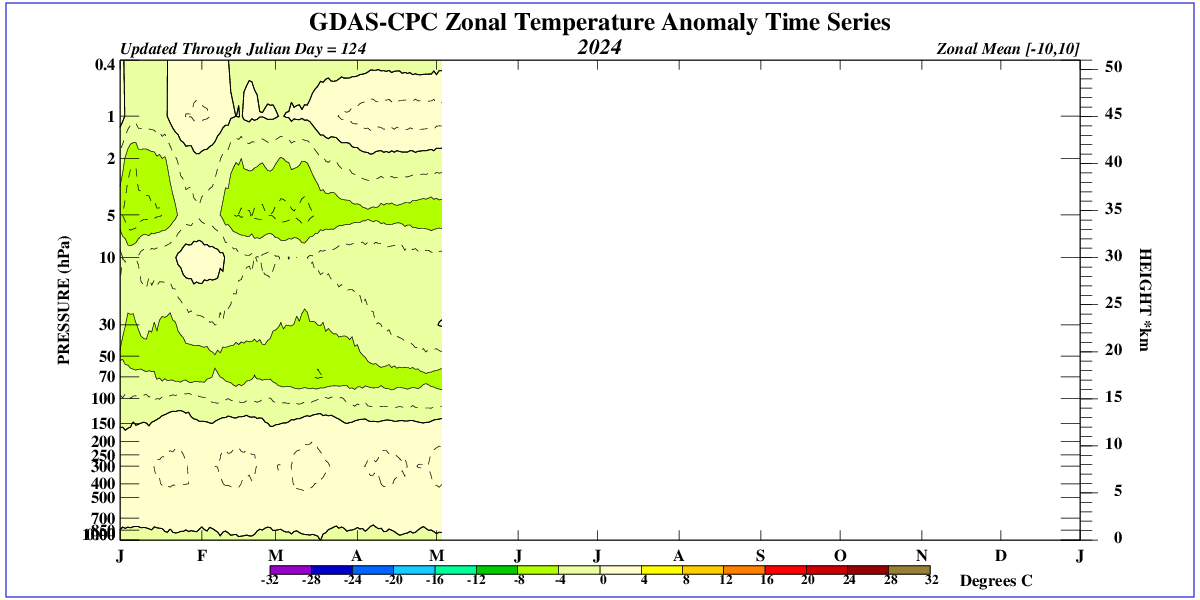
Isn’t the decrease in cloud cover related to the decrease in condensation nuclei? Besides, you can see that the troposphere over the equator has been noticeably warmed with the decrease of ozone in the stratosphere.
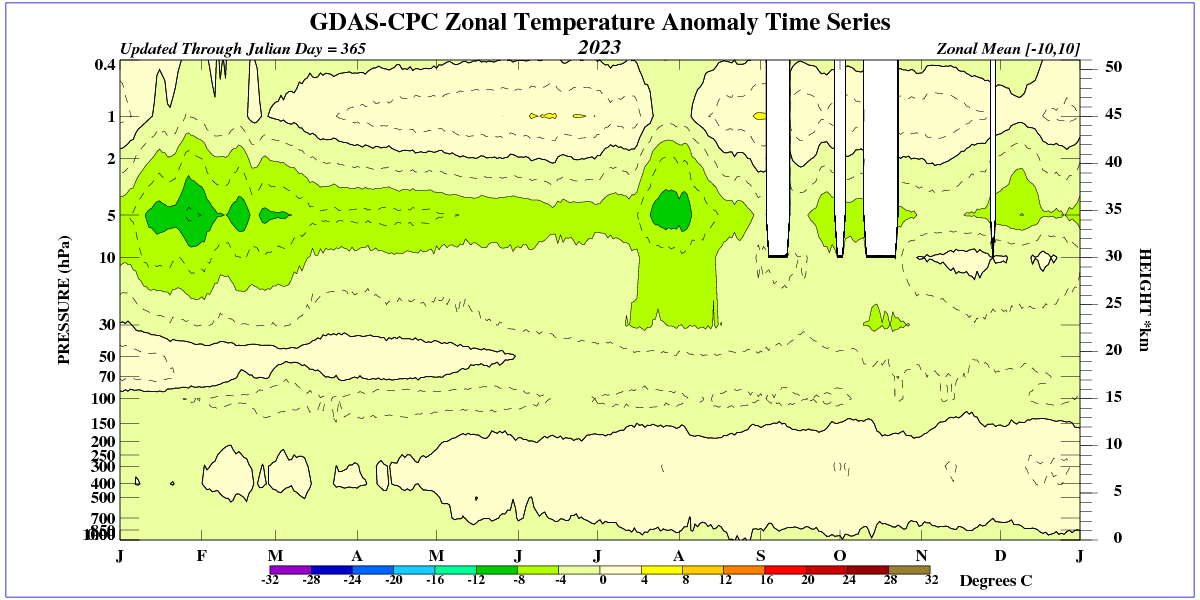
Yes, which has made me wonder at times whether clean air regulations that removed sulphur from jet fuels and soot from power-plant output might be a source of anthropogenic warming. And, of course, the alarmist models all ignore cosmic ray flux as a factor.
Currently, the amount of ozone over the equator is increasing and the temperature of the troposphere is decreasing.

There is also the possibility that toxic cyanobacteria, which can kill corals and compete with algae, will develop in warm water with strong sunlight. Humans through sewage can contribute to cyanobacteria blooms.