More accurately predicting periods of increased hurricane activity weeks in advance may become possible due to new research published this month.
The study, led by the U.S. National Science Foundation National Center for Atmospheric Research (NSF NCAR), shows that twice as many hurricanes form two days after the passing of large-scale atmospheric waves called Kelvin waves than in the days before. This finding may enable forecasters and emergency managers to anticipate clusters of hurricanes days to weeks in advance.
The research team used an innovative computer modeling approach to tease out the influence of Kelvin waves, which are large-scale atmospheric waves that can extend more than 1,000 miles in the atmosphere and shape global weather patterns.
“If weather forecasters can detect a Kelvin wave over the Pacific Ocean, for example, then they can anticipate that a few days after the wave there will be an uptick in hurricanes forming over the Atlantic,” said NSF NCAR scientist Rosimar Rios-Berrios, the lead author of the paper. “This would help them communicate with emergency managers and local governments who could prepare for the likelihood of an active hurricane period and alert the public. This research has the potential to save many lives.”
The study was published in Monthly Weather Review.
Aquaplanet
For decades, scientists have noticed that hurricanes form in clusters followed by several weeks of little to no hurricane activity. Several studies have suggested that Kelvin waves could be responsible for the surge in hurricanes, but scientists were unable to separate out other potential factors and prove Kelvin waves were responsible. To overcome this, Rios-Berrios and her colleagues used a novel combination of computer modeling tools to confirm that Kelvin waves do indeed boost hurricane formation.
The research team used a simulation called aquaplanet that was run on NSF NCAR’s Model for Prediction Across Scales (MPAS), which is a next-generation computer model that can capture fine-scale weather phenomena and global-scale atmospheric patterns simultaneously. Aquaplanet is a configuration that simulates a hypothetical world that behaves like Earth, but doesn’t have land or seasons. The simplified world acts like a lab and makes it easier to isolate the effects of Kelvin waves on hurricane formation.
The scientists ran the simulations on the Cheyenne supercomputer at the NCAR-Wyoming Supercomputing Center.
To investigate the connection between Kelvin waves and hurricanes, the research team measured the number of days between hurricane formation and Kelvin wave crests. The measurements showed a significant peak after two days, with hurricane development being twice as likely. Because the aquaplanet simulations capture the physical process of hurricane formation, the results go beyond correlation and suggest that Kelvin waves are actually impacting hurricane formation.
The new study also emphasizes the importance of recent research that Rios-Berrios co-authored with NSF NCAR postdoc Quinton Lawton about the need to improve the ability of weather forecast models to simulate Kelvin waves.
“I started this research on Kelvin waves in 2017. It was a big project that took years to go from an idea to scientific results and really highlights why this type of research is so valuable,” said Rios-Berrios. “There are still a lot of gaps in scientific knowledge about how hurricanes form and research like this helps us narrow where scientists should focus to better understand these powerful storms.”
The paper:
Title: Modulation of tropical cyclogenesis by convectively coupled Kelvin waves
Authors: Rosimar Rios-Berrios, Brian Tang, Christopher Davis, and Jonathan Martinez
Journal: Monthly Weather Review
Well a summary that does not mention climate change well done
Lets hope they find something useful best luck
But no gaps in the weather prediction in 2100. The weather for 2100 was all sorted with the CMIP3 models at the turn of the century.
I would like to know why money is being wasted on this trivia when the science on weather and climate was settled more than 20 years ago.
When the solar wind speed increases after stronger eruptions on the Sun, a strong latitudinal jet stream in the northern Pacific is launched, which moves into the Atlantic after two days. Then the jet stream current creates a high in the Atlantic, which pushes a tropical wave toward North America, allowing hurricanes to form. Thus, the Kelvin wave in high latitudes is the result of the energy of the electromagnetic wave that hits high latitudes after the increase in solar activity. This wave can be observed in the form of auroras. This is why hurricanes are not seen now, due to the weakening of the solar wind.
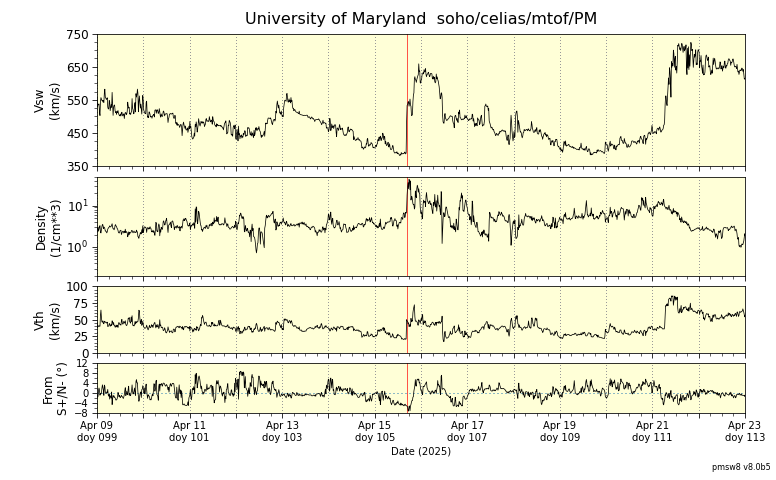

re: “Then the jet stream current creates a high in the Atlantic, which pushes a tropical wave toward North America, allowing hurricanes to form. Thus, the Kelvin wave in high latitudes is the result of the energy of the electromagnetic wave that hits high latitudes after the increase in solar activity.”
Are we dealing with imaginary linkages in this, or is there something more definitive that describes this relationship, how this actually works? Simple correlaion in time does not necessarily mean causation in the physical (or world of physics) world. One wonders if this relationship is ALWAYS seen, or is this a ‘one of a kind’ observation. With access to today’s weather depiction tools, its easy to become lulled into unrealistic relationships between ‘observed’ (at a distance) events.
Well, watch the solar wind and you’ll see if there’s something to it.
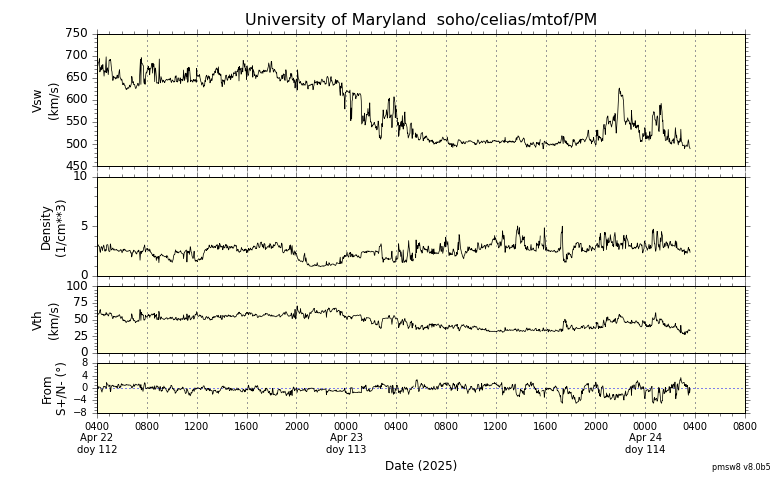
It fits in with electro-magnetic fields and waves.
Ireneuz, really like your TPW vid but….
“…result of the energy of the electromagnetic wave that hits high latitudes after the increase in solar activity.”
The amount of energy to make some aurora borealis versus spinning up a hurricane orders of magnitude different. You’re probably better off looking for where the butterflies are flapping their wings to start those hurricanes….
A weak jet stream in the North Pacific is not cutting down the typhoon over Japan, which has even turned west. This is causing persistent downpours in southern Japan with record amounts of rainwater.

He’s right…
There are still a lot of gaps in scientific knowledge
You wouldn’t think so given that the climate establishment claims:
“We own the science and we think that the world should know it”
We own the science,” brags UN representative at World Economic Forum
https://climatesciencenews.com/2022-10-05-we-own-science-un-world-economic-forum.html
I read that.
Been that way for decades. Surprising the came right out and admitted what this is really all about.
They got to Google, too.
““We own the science and we think that the world should know it”
Does Fauci know that? He said he was “The Science”.
Or maybe they own Fauci? Maybe he owns them?
PS Did they copyright “The Science”?
I guess there are not many Kelvin Waves this year considering the lack of hurricanes.
Interesting research, perhaps toward useful insights.
“Aquaplanet is a configuration that simulates a hypothetical world that behaves like Earth, but doesn’t have land or seasons.”
OK, but this made me think of a scene in The Muppets Take Manhattan. “How about, Ocean Breeze Soap. It’s just like taking an ocean cruise but there’s no boat and you don’t actually go anywhere.”
https://youtu.be/VwDUzSWoCjo?t=89
The article does not make it clear of the correlation between Kelvin Waves and Hurricanes is observed in the real world or just the computer simulation.
Seeing as a world without land will also not have shallows and thus the seas will warm uniformly, the simplification seems quite extreme.
It was unclear if there were any actual observations. It also did not say if hurricanes always formed after the Kelvin Waves. If just models then where is the science?
Kelvin waves are also thought to play an important role in ENSO and kick starting El Ninos. So is there a correlation between El Nino and hurricanes?
Yes, they are connected by the force of the solar wind, which primarily acts on the strength of the polar vortex in the south. The southern polar vortex is now weakened which affects the strength of the easterly wind along the equator and hinders the development of La Niña.


So, when we see one of these areas like what is currently going in the large green shaded area in the ITC, is that a Kelvin wave, or is it larger than that?
You definitely need to look into the stratosphere.

Unrelated. The green blobs are the probability assessments of the path of a known tropical cyclone (aka depression/storm/hurricane)..
Not to nit-pick but NHC uses the ‘blobs’ for disturbances which have not yet formed a center of circulation. They are blobby to convey the large uncertainties associated with un-formed systems. When they become depression then they usually use a line track.
Do nit pick. Getting things correct is science.
Thanks for the bit of formation probabilities.
They use a track line but usually with a divergence cone. And blobs, too, if the system is very slow moving or “chasing their tails.”
The tropical wave in the Atlantic is now being held back by a descending jet stream from Canada.
http://tropic.ssec.wisc.edu/real-time/mtpw2/webAnims/tpw_nrl_colors/natl/mimictpw_natl_latest.gif
This circulation will also bring thunderstorms and precipitation to the Sahara.
Rainfall forecast for Japan through September 3.
https://www.ventusky.com/?p=34.4;137.3;5&l=rain-ac&t=20240903/1200&m=ecmwf_mres
But this is just a model. So it qualifies as a theory of causation but has no value as evidence of causation. Without validation by real world observations we should not assume the theory will prove to be true.
Correct. They are making no claims other than gaining better insight into the phenomenon.
So they used a model as a tool to better their understanding of atmospheric physics.
Well done.
Let’s hope that model is not implemented to predict hurricanes in 2030. (/s)
Maybe my mind operates too simply, but to check whether “twice as many hurricanes form two days after the passing of large-scale atmospheric waves called Kelvin waves than in the days before” all you need are the dates of Kelvin waves and hurricanes, you don’t need a model of an imaginary planet.
If you make it too easy for them, how will the get grant money? (/s)
That humor aside…. the stated intent:
“There are still a lot of gaps in scientific knowledge about how hurricanes form and research like this helps us narrow where scientists should focus to better understand these powerful storms.”
“twice as likely” doesn’t mean much. It certainly doesn’t mean “cause”. It may mean “contributes to”. And, of course, it may just mean “somehow related to”.
Hurricanes are chaotic phenomena. We know what they look like as they form, going through various stages, but even those stages are not certain.– not every tropical depression becomes a tropical storm becomes a hurricane/cyclone.
Dave Fultz showed this in his very simplified rotating dishpan model.
“twice as likely” might mean their sample size is too small.
So the gist of all this is that Kelvin waves possibly increase the probability of a hurricane and the effect may extend by a couple days.
Now go test it in the field.
This year may eventually turn into a bumper year for Atlantic storms, but so far it’s falling behind that of an average year. Presently: a neutral ENSO has existed longer than originally expected, maintaining a light wind shear; massive amounts of dry air and dust have be blowing out of Africa that I don’t believe was predicted; winds out of Africa are further north than typical; and the Atlantic has cooled far faster than predicted.
Unless things change, conditions are poor for TS development until you get close to the Windward Islands and the Caribbean, the Gulf of Mexico, and near the Atlantic seaboard. Even those locations have areas of dust. This is a highly unpredictable season, even midway through it (September 10th is roughly the halfway point).
Note the precipitation in the Sahara.
https://www.sat24.com/en-gb/continent/af
Now compare that to where the dust in emanating from. https://earth.nullschool.net/#current/particulates/isobaric/850hPa/overlay=pm10/orthographic=15.06,14.62,788/loc=-63.154,12.469
What your site is showing is mainly SUB-Saharan precipitation, too far south to affect the dust.
An unexpected tropical storm in the Bahamas that could turn into a hurricane.

There is no tropical storm in the Bahamas, nor is one expected over the next seven days. That is simply thunderstorm activity and doesn’t rate a mention by NOAA.
No.
https://www.tropicaltidbits.com/sat/satlooper.php?region=nwatl&product=ir
There is no pressure differential there, and thus no wind field setting up. It is a cluster of thunderstorms, nothing more, and it is almost rained out – gone. I am far from an expert but you seem to understand nothing.