By Christopher Monckton of Brenchley
The New Pause has again lengthened by another two months. On the normative UAH lower-troposphere dataset there has been no global warming over the 6 years 8 months from January 2015 to August 2021. As always, the Pause is calculated as the longest period ending in the present that shows no warming trend, taken as the least-squares linear-regression trend on the UAH satellite monthly global mean surface temperature anomalies for the lower troposphere:

The trend on the entire UAH dataset since December 1978, a period of 42 years 9 months, is equivalent to only 1.35 C°/century, even though the data began shortly after the naturally-occurring Great Pacific Shift of 1976 that is responsible for much of the warming over most of the period.

Furthermore, over the 18 years 1984-2001 a naturally-occurring reduction in cloud cover was responsible for most of the period radiative forcing (Pinker et al. 2005) and hence global warming.
IPCC (2021) tries to pretend that there has been 1.27 K global warming since 1750, all of which is imagined to be anthropogenic. However, the HadCRUT4 dataset showed only 0.91 K since 1850, but HadCRUT5, in preparation for IPCC’s latest report, pushes that up to 1.04 K.
Since January 2014, the beginning of the year after the previous IPCC Assessment Report, there has been only 1/8 C° global warming.
It is by now clear that even with constant adjustments to nearly all of the major temperature datasets it is difficult to discern clearly a large anthropogenic influence. But that is not what the world is being told.
Every natural disaster – Hurricane Ida, the drought in much of the western U.S., the wildfires in some nations, the floods in others – is instantly and automatically blamed on global warming that is barely happening.
A simple question for the climate fanatics: how can global warming be worse than you thought given that it is a whole lot less than you predicted?
Meanwhile, atmospheric CO2 concentration, as precisely measured by the NOAA observatory on Mauna Loa, Hawaii, went from 400 ppm in January 2015 to 413 ppm on Sept 1, 2021 (ref: https://gml.noaa.gov/ccgg/trends/monthly.html ).
That’s an increase of +3.3% over those same 6 years 8 months of the pause in GLAT discussed in the above article.
So, IPCC and all you AGW/CAGW alarmists: please tell me yet again how CO2 in the atmosphere is the predominate driver of global warming.
“That’s an increase of +3.3% over those same 6 years 8 months of the pause in GLAT discussed in the above article.”
It is also an increase of just 0.032 W/m2.
And like the dip in CO2 emissions due COVID is lost in the noise of natural variation.
Why do you think this place prays for La Nina?
Because NV in respect to ENSO/PDO can swamp the rising trend of anthro-GHG forcing for short periods.
Yet still all M’lord can find is a “pause”, and one that exists at a higher temperature than that of the long-term trend – such that the LT trend is increasing to catch up.
Time was when La Ninas cooled the planet ….
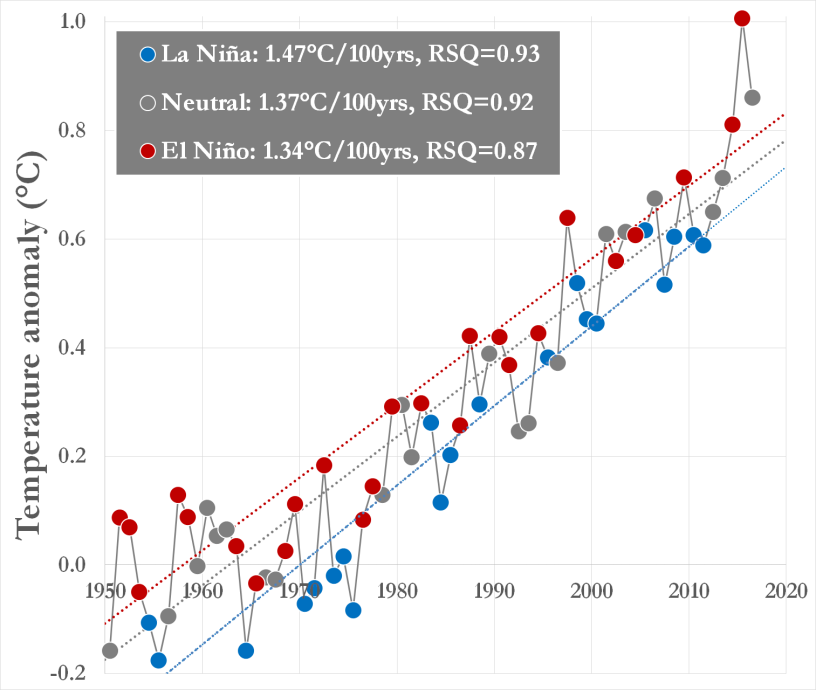
Why does this graph differ so much from the UAH series?
He has access to the ‘special’ data?
Thats right he allegedly worked for the MO he says so all over the Internet 🤮
It’s not UAH.
It’s using some adjusted, swaged, smudged temperature misinformation starting from 1950.
Disinformation?
His graph does not say what it is, where it came from, how it was measured and by whom, or really much of anything.
I think it was last week’s Blue Light Special at Fake Graphs R Us.
Less than 1.5 C in a Century is the best you can concoct? During a period of rapid increase in atmospheric CO2 concentrations? You are not helping your CliSciFi masters.
Anthony Banton posted “. . . is lost in the noise of natural variation.”
Anthony, thank you for your outright admission that atmospheric CO2 concentration is NOT a predominate forcing for global lower atmospheric temperature warming . . . that it is “lost” amongst the noise of natural variation.
I could not have said it better myself.
Banton hoist on his own petard!
All climate scientists agree on this point. Month-to-month variation is very high which easily drowns out the +0.002 W/m2 month-to-month change in CO2 forcing. But when you integrate the CO2 forcing over the last 170 years you get +2.0 W/m2 which is 1000x higher and easily dwarfs the integration of natural forcing over the same period.
Wait a minute! If natural variation drowns out the contribution from CO2 forcing then what in Pete’s name are you integrating? If it’s drowned out then you don’t know what it is. If you don’t know what it is then how do you integrate it?
Yeah, good catch, definitely a case of hand-waving.
dE(CO2)/dt vs dE(N)/dt where dE(CO2) is the energy transfer in/out of the troposphere attributable to CO2 and dE(N)/dt is the energy transfer in/out of the troposphere attributable to natural mechanisms.
On a monthly scale abs(dE(CO2)/dt) is small compared to abs(dE(N)/dt). But because dE(CO2)/dt is persistently positive and because dE(N)/dt oscillates between positive and negative the integration of dE(CO2)/dt is much higher than that of dE(N)/dt when done over long periods of time.
You didn’t answer the question. If dE(N) drowns out dE(CO2) then how do you know what dE(CO2) actually is? Do you have some magical way of identifying E that allows separating out E(CO2) from E(N)?
If you don’t know what dE(CO2) is then how do you integrate it? Writing a general integration equation is easy. But it’s not until you put integration limits on the integral and actually evaluate it that it means anything in the real world. And don’t forget to add in the constant C to the evaluation (usually evaluated based on boundary conditions). Do *you* know what the boundary conditions are that determines “C”?
If not then you haven’t really evaluated the integral and all you are doing *is* hand-waving.
We can calculate its RF via the Myhre 1998 equation and others. We also know via Schuckmann 2020 and others that about 1-2% of the planetary energy imbalance goes into the atmosphere. And we know the specific heat capacities of the various heat reservoirs in the climate system so we can estimate how long it takes for the energy imbalance to equilibrate. Don’t hear what I’m not saying. I’m not saying we know these things perfectly. We don’t and we never will. But we do know enough that we constrain the range. We know with confidence that the total energy uptake directly attributable to CO2 exceeds that directly attributable to nature over the long term even though the month-to-month variability of the energy flows in/out of the atmosphere from CO2 is exceeded by that from natural processes.
bdgwx posted:
He leaves undefined, of course, the phrase “long term”.
There is the 30 year-interval, from 1945 to 1972, where GLAT temperatures cooled despite atmospheric CO2 concentration simultaneously continuing its persistent slowing increasing exponential growth curve.
Based on this data, I assert than humans simply cannot predict future exchanges in Earth’s energy flows with any, ahem, confidence, especially by trying to link warming to atmospheric CO2 levels.
I meant for long term to mean 1850 to 2020. But since this blog post is primarily focused on UAH I’m okay with analyzing with the 1979-2020 period as well. Either way total accumulated energy attributable to CO2 is higher than that attributable to natural mechanisms.
And remember that CO2 isn’t the only thing anthropogenic energy modulator. There are other GHGs and then aerosols that are in play as well. A better analysis would probably be E(A) vs E(N) where is all anthropogenic attribution and N is all natural attribution. E(A) over the period 1945-1980 was probably to close to zero and maybe even negative because aerosol forcing was increasing rapidly perhaps faster than the GHG forcing.
“Either way total accumulated energy attributable to CO2 is higher than that attributable to natural mechanisms.”
If you can’t measure it then how do you KNOW this? This is nothing more than an assumption by you to support your beliefs.
How does aerosol forcing increasing cause CO2 forcing to go negative? More hand-waving?
bdgwx posted: “E(A) over the period 1945-1980 was probably to close to zero . . .”
That’s hand waving at its finest . . . “probably”??? And an obviously ridiculous statement.
Do you have any scientific rationale . . . just the tiniest bit a data or science-based logic . . . to support such a spurious claim?
Hint: mankind did not stop, let alone reverse, its ever-increasing emissions of CO2 over this time period. Just look at the increases in fossil fuel use and cement production from 1945 to 1980.
Hand waving is all he’s got. Not a single measurement to show.
“We can calculate its RF via the Myhre 1998 equation and others.”
Here we go again! You can “calculate” a figure. But you admit you can’t measure it. So how do you determine your calculation is correct?
“about 1-2% of the planetary energy imbalance goes into the atmosphere.”
So what? There are all kinds of physical processes that operate on that “imbalance”. Convection, conductilon, latent heat, etc just to name a few. And you think *anyone* actually understands how all this works physically so they can correctly model it?
“I’m not saying we know these things perfectly.”
If you say you can’t know these things perfectly and you say you can’t measure them either, then how do you perform an integration that is anything more than wishful thinking?
“But we do know enough that we constrain the range.”
No, you don’t. If you don’t know how all the physical processes work then how do you set any constraints? All you can do is what they do with the models – fiddle with the parameters till you get the answer you want!
“We know with confidence that the total energy uptake directly attributable to CO2 exceeds that directly attributable to nature over the long term”
How do you know that? Short term or long term? If you can’t measure it then how do you *KNOW*? You said above that the nature overwhelms the CO2, meaning you don’t know and can’t know (with present measurements) what is actually going on. You make ASSUMPTIONS that you can’t prove in order to get the answer you want. And you think that is science?
“even though the month-to-month variability of the energy flows in/out of the atmosphere from CO2 is exceeded by that from natural processes.”
The long term is made up of the short term. Long term and short term aren’t two different things. Once again you are doing magical hand-waving hoping to convince yourself you are right.
Science is based on MEASURING things. You then figure out what is happening to produce those measurements. If you can’t measure something and just guess at it then you aren’t doing science.
Your fundamental mistake is assuming dE(CO2)/dt is known, at any point in time . . . nothing could be further from the truth.
Climate scientists can estimate dE(CO2)/dt. Don’t hear what I didn’t say. I didn’t say climate scientists know exactly down to the joule what it is, but they can constrain it to a reasonable range. You should be able to estimate this yourself with a simple spreadsheet. Give it a shot. What is the average dE(CO2)/dt a monthly basis from 1979-2020? What is the total accumulated over the period?
“Climate scientists can estimate dE(CO2)/dt”
And I can estimate how much baking powder vs baking soda to put in a cake. Doesn’t mean my estimate is anywhere near close. You have to MEASURE it to reach any scientific conclusions.
Everything Einstein postulated has been proven through MEASUREMENTS. Where are the measurements of dE(CO2)/dt?
What specifically are challenging? Are you challenging that CO2 RF increasing by about +0.002 W/m2.month today? Are you challenging that the total RF in the last 170 years is +2.0 W/m2? Are you challenging that the total natural RF over this period is significantly less than +2.0 W/m2?
*YOU* are the one that said E(N) swamps out E(CO2), not me. *YOU* explain how you can measure something you can’t discern.
That’s right. That is what I’m claiming. On a monthly basis and using the Myhre 1998 estimation formula we can conclude that CO2 forcing increases by only about +0.002 W/m2.month. But just taking solar insolation alone we see that it changes by an average of +1.3 W/m2.month from July to January and -1.3 W/m2.month from July to January. That doesn’t even include numerous other natural modulated mechanisms that are in play on a monthly basis. I wouldn’t be surprised if the variation is in the 10’s of W/m2.month. Do you have different figures that refute this? Do you think the CO2 forcing changes on a monthly basis are significantly higher than what I presented? Do you think the natural modulated forcing changes are significantly less?
I’m also claiming that the cumulative forcing of CO2 over the last 170 years is about +2.0 W/m2 whereas the cumulative natural forcing over the same period is about +0.2 W/m2 (at most). This comes from IPCC AR5 WG1. Do you have substantially different figures for either of these?
In other words you aren’t concerned about science at all, just politics.
The only thing I am refuting is your hypocrisy in saying you can’t measure something but then turning around and acting as if you can.
Formula’s aren’t science unless you can confirm the formula with actual experiments and observations – e.g. Gauss’ Law.
You are a flat-earther in essence.
I never said we can’t measure something. What I said is that we can’t measure energy flows or anything for that matter perfectly. And I’m more than happy to review any evidence contrary to the hypothesis that the naturally attributed energy flow variations are significantly greater than the CO2 attributed energy flow variations on monthly timescales or that total anthropogenic energy accumulation is significantly greater than natural energy accumulation in the climate system over the last 170 years. If you have figures significantly different than what I posted then feel free to present them now.
“I never said we can’t measure something.”
Got a short memory, eh?
bdgwx: “Month-to-month variation is very high which easily drowns out the +0.002 W/m2 month-to-month change in CO2 forcing”
“easily drowns out” – meaning dE(CO2) is not measurable. It would be like trying to measure the flow of water out of your gas tank by measuring the flow of gasoline out of your fuel pump. The little bit of water volume just gets drowned out by the volume of gasoline being pumped!
I don’t need to provide you anything. *YOU* made the assertion that the dE(CO2) gets drowned out. *YOU* now need to prove that it doesn’t if you want to change your story.
“easily drowns out” – meaning dE(CO2) is not measurable.
“easily drowns out” does not mean it is not measurable. It just means the natural attributed energy flow variation dominates over the CO2 attributed energy flow variation. I will repeat again abs(dE(CO2)/dt) << abs(dE(N)/dt) on monthly timescales. I don’t know how to make that any more clear.
“I don’t need to provide you anything. *YOU* made the assertion that the dE(CO2) gets drowned out. *YOU* now need to prove that it doesn’t if you want to change your story.”
Absolutely. You don’t have to provide anything. That’s perfectly fine. Just understand that in lieu of not providing anything I have no choice but to defer to those that can. And I don’t want to change my story. I will stand by what I said until convincing evidence is presented that outweighs what is already presented and which comes to a significantly different conclusion.
““easily drowns out” does not mean it is not measurable.”
Really? Just how do you measure it? How do you separate out the dE(N) contribution from water vapor from the dE(CO2) contribution, both at the same wavelength? Especially when one is drowning the other out?
“It just means the natural attributed energy flow variation dominates over the CO2 attributed energy flow variation.”
Again, how do you measure it?
“I will repeat again abs(dE(CO2)/dt) << abs(dE(N)/dt) on monthly timescales. I don’t know how to make that any more clear.”
Again, then how do you measure abs(dE(CO2)/dt) if it is << abs(dE(N)/dt)? If you cant’ measure abs(dE(CO2)/dt) on monthly timescales then how do you scale it up to long timescales?
All you have provided is magical handwaving.
“I have no choice but to defer to those that can.”
All you have to offer is the argumentative fallacy of Appeal to Authority. That may fool other CAGW advocates but it wouldn’t fool a middle school debater!
the “climate” discusses the PAST weather, it is not a force and has no power over the weather….blaming “climate change” for any weather event is INSANITY!
Especially since the GAT doesn’t give us a clue to the actual temperature profile of the globe. Climate is determined by maximum and minimum temperatures which describe the temperature profile of a location. Climate is *not* determined by averaging mid-range values because mid-range values can be identical for two different climates, especially when absolute mid-range temps are used but “anomalies” from mid-range temps!
As usual, two graphs and a couple hundred words from CMoB sends the climatistas into a complete froth.
As those from the Greatest Generation were wont to say, “You know that you are over the target when you start taking heavy flak.”
Aye, because the flak guns had to defend important targets, not someone’s wheat field.
Cooling is devastating to the claims of the alarmists. It’s supposed to be getting warmer and warmer because of increased CO2, according to the claims of the alarmists, but instead, as Chris shows, it is cooling, and this is very upsetting for those living in the alarmist bubble. So they froth.
It caused Izaak to hand-wave some wild claims about “random variations” to convince himself it is still the magical control knob.
And if the Temperature axis was in whole degrees, the increment we are most familiar with, you would be hard pressed to show any trend at all! But that doesn’t help with the lie.
The BBC may sense what’s up ahead and are getting their excuses in early. They’re doubling down on “warming means cooling”:
https://www.bbc.com/news/science-environment-58425526
Ha yeah, the Baghdad Bob Corporation.
Isn’t it about time the IPCC ditched their RCP 8.5 lunacy??
Roger Pielke jr and Ritchie have given us a summary of these terrible FIXED IPCC scenarios since 1990 and what a load of delusional nonsense they are and surely must change ASAP.
https://issues.org/climate-change-scenarios-lost-touch-reality-pielke-ritchie/
The IPCC and their media flunkies have it covered-
Ozone recovery is offsetting Southern Hemisphere climate change trends in summer (msn.com)
Calculating pause length back in time from the present moment, cannot be cherry-picking unless you get to choose your present moment. That is, unless you possess a working time machine.
In a few months, the temperature anomaly of the troposphere will drop to 0 C. All it takes is for the anomaly in the Arctic to drop.
http://www.bom.gov.au/climate/model-summary/archive/20210831.nino_summary_4.png
http://ocean.dmi.dk/arctic/meant80n.php
A drop in stratospheric temperature above the 65th parallel.
It is interesting to see how the drop in stratospheric temperature causes the ozone hole to grow rapidly.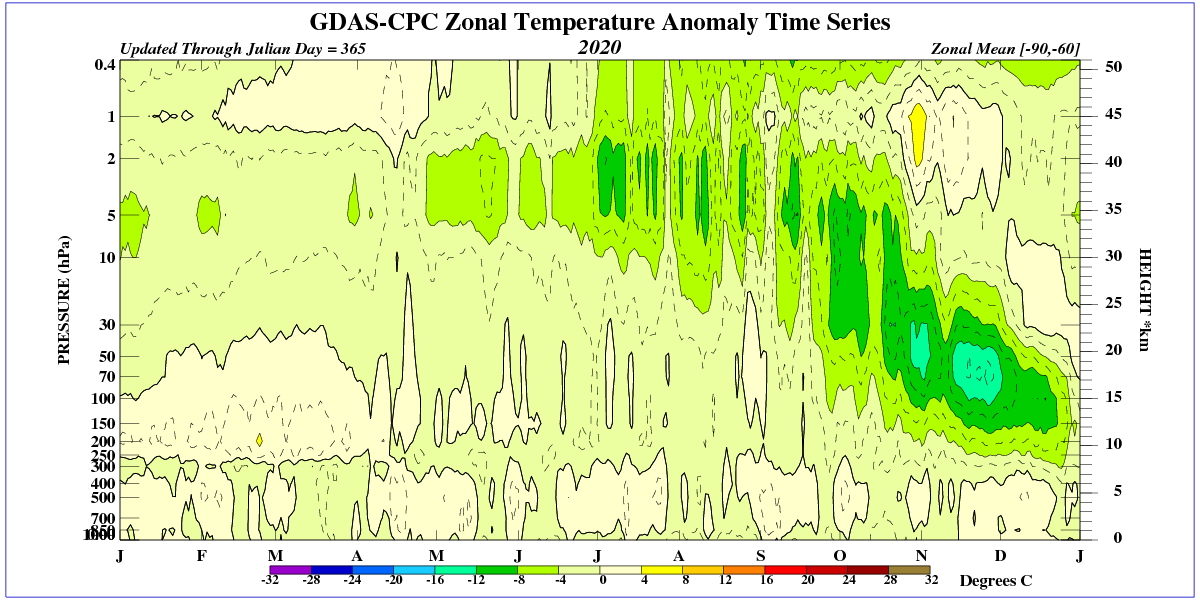
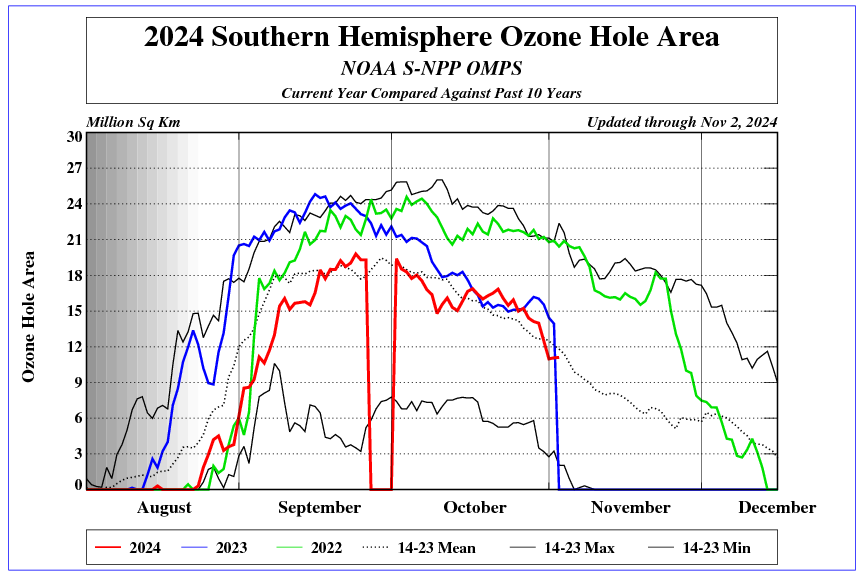
Solar activity very low. No strong solar flares and a decrease in UV radiation in the 25th solar cycle.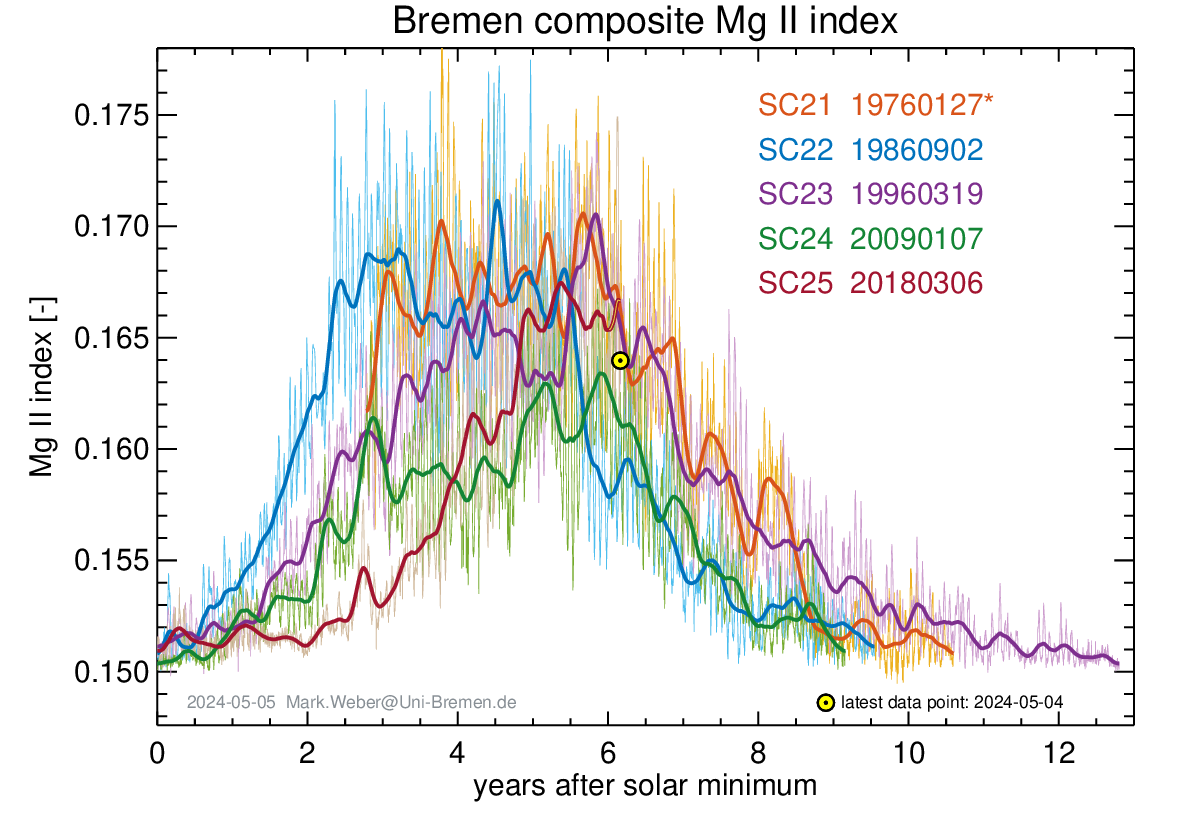
https://www.iup.uni-bremen.de/gome/gomemgii.html
Where is Leif to warn us about the intensity of SC25?
La Niña on the way.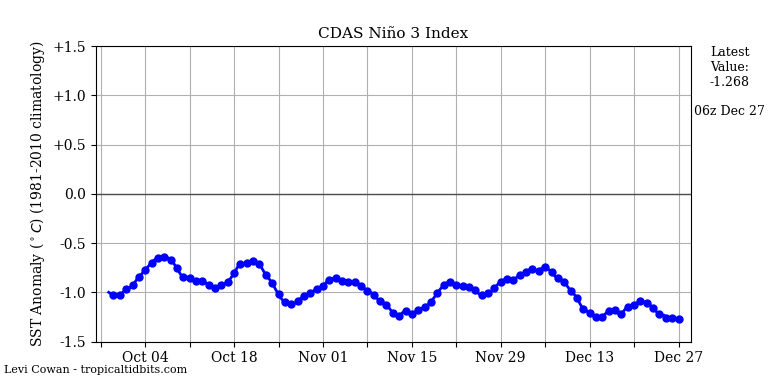
http://www.bom.gov.au/archive/oceanography/ocean_anals/IDYOC007/IDYOC007.202108.gif
Thanks
It seems to me that few people understand how the stratospheric polar vortex interferes with circulation in the troposphere during the winter season.
“Stratospheric Intrusions are when stratospheric air dynamically decends into the troposphere and may reach the surface, bringing with it high concentrations of ozone which may be harmful to some people. Stratospheric Intrusions are identified by very low tropopause heights, low heights of the 2 potential vorticity unit (PVU) surface, very low relative and specific humidity concentrations, and high concentrations of ozone. Stratospheric Intrusions commonly follow strong cold fronts and can extend across multiple states. In satellite imagery, Stratospheric Intrusions are identified by very low moisture levels in the water vapor channels (6.2, 6.5, and 6.9 micron). Along with the dry air, Stratospheric Intrusions bring high amounts of ozone into the tropospheric column and possibly near the surface. This may be harmful to some people with breathing impairments. Stratospheric Intrusions are more common in the winter/spring months and are more frequent during La Nina periods. Frequent or sustained occurances of Stratospheric Intrusions may decrease the air quality enough to exceed EPA guidelines.’
Large drop in winter temperatures in the upper stratosphere and temperatures in the southern hemisphere.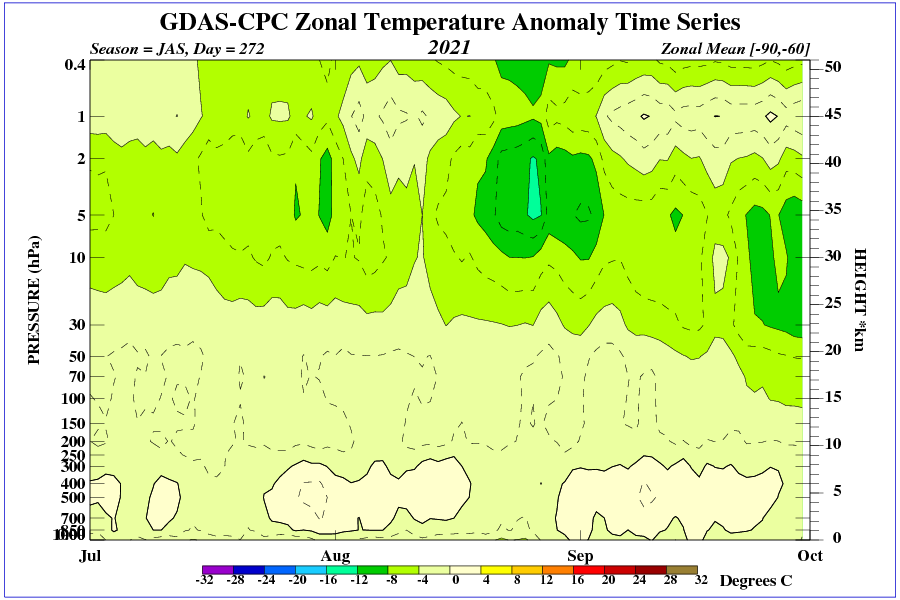

Indeed, talk of Antarctic “warming” is a creative achievement of the first order – one of which George Orwell would be proud.
The problem is that the Earth’s troposphere is very thin and during the winter season the stratosphere descends at the poles almost to the surface. Antarctic winter temperatures periodically drop below -70 C, which is the average temperature in the tropopause.
Is it the Arctic that is raising the global temperature of the troposphere?
https://www.drroyspencer.com/2021/09/uah-global-temperature-update-for-august-20210-17-deg-c/
It is probably worthwhile noting that the Antarctic sea ice reaches its maximum extent about the time of the Equinox when, after 6 months of ‘darkness,’ direct sunlight again reaches the South Pole.
ren
It seems to me that few people understand how the stratospheric polar vortex interferes with circulation in the troposphere during the winter season.
“Stratospheric Intrusions are when stratospheric air dynamically decends into the troposphere and may reach the surface,
CO2 warms the troposphere but cools the stratosphere and everything above. If the stratosphere frequently intrudes downward toward the surface, this is a problem for CO2 warming alarmism, presumably?
CO2 as a trace gas in the troposphere does not affect the temperature of the troposphere more than the increase in its mass, relative to the mass of the troposphere. In contrast, in the stratosphere, where convection is absent, greenhouse gases such as ozone and also galactic ionizing radiation affect stratospheric temperature, especially above the polar circle. In contrast, ozone production is only affected by high-energy ultraviolet radiation.
During stratospheric intrusion, ozone falls into the troposphere pushing water vapor out of a significant area that can cover many US states. During winter in such dry Arctic air ( because the ozone wave is coming down from the north) temperatures drop sharply. Therefore, stratospheric ozone that falls from the stratosphere is not a greenhouse gas in the troposphere, but just the opposite, because it falls from the tropopause, where winter temperatures drop below -60 degrees C.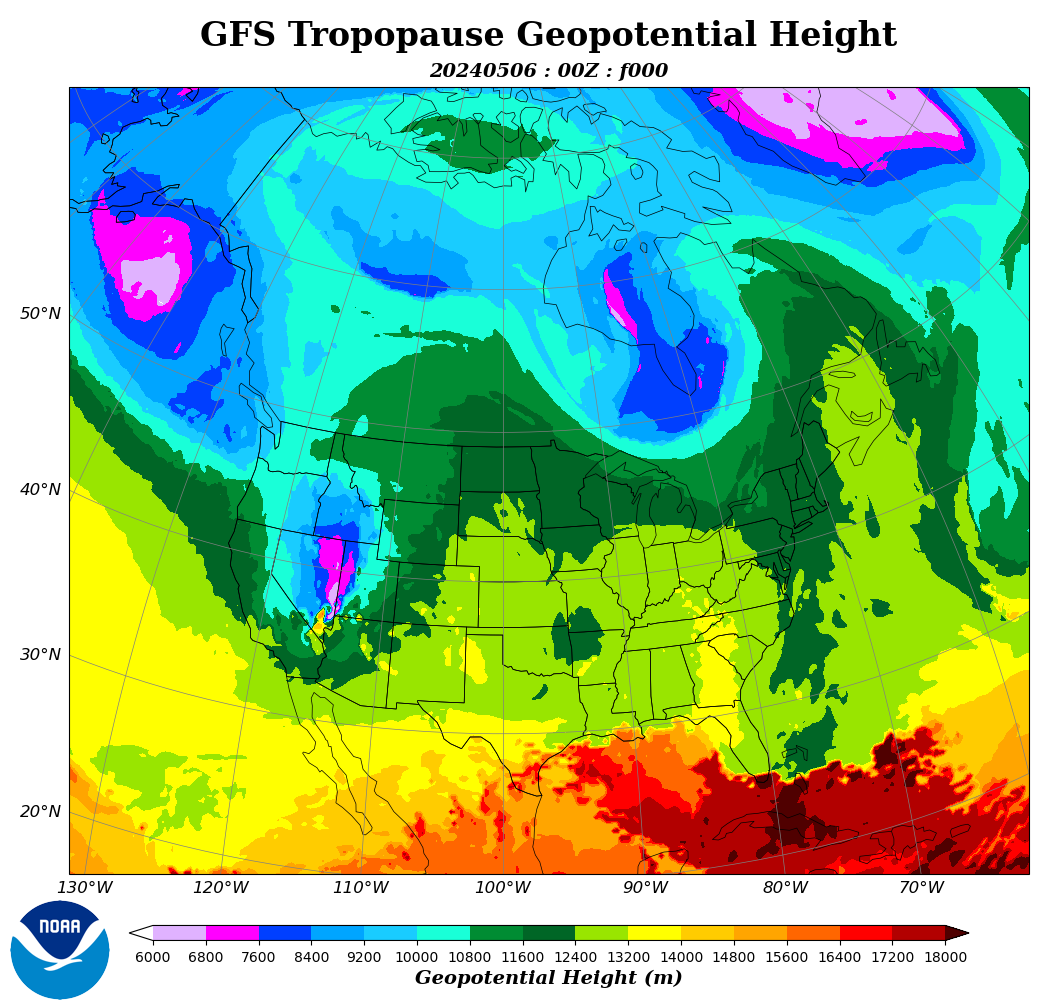
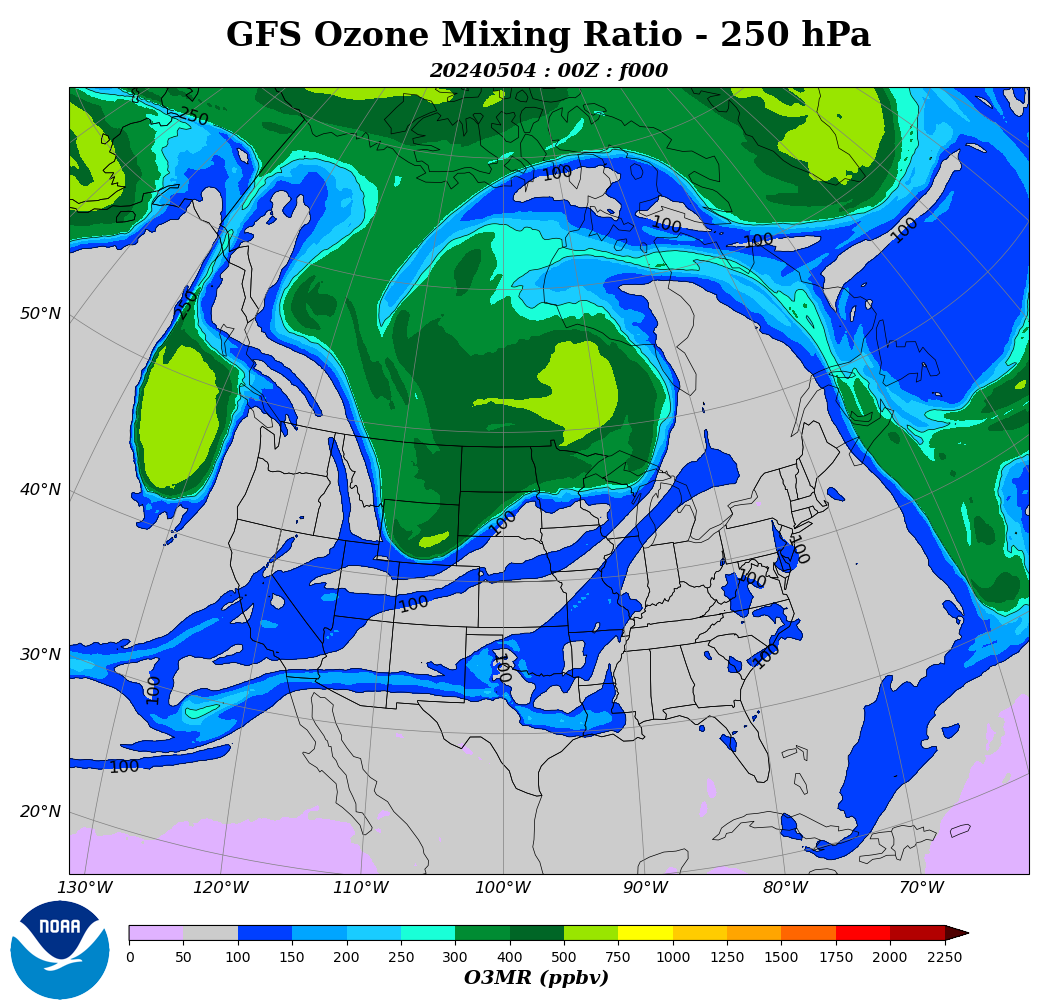
https://www.cpc.ncep.noaa.gov/products/stratosphere/strat_int/
The graphic below shows how the height of the tropopause in high latitudes decreases in the fall.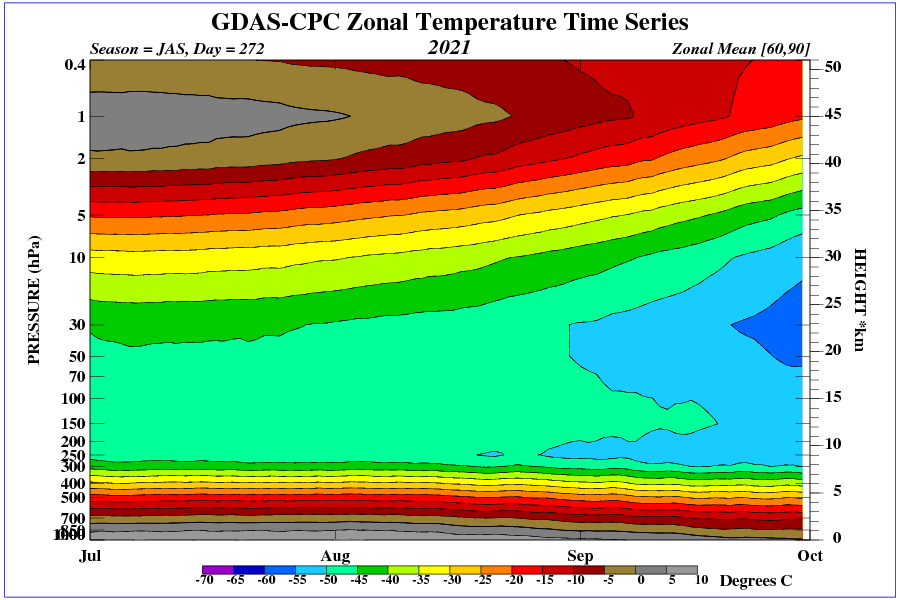
The equatorial Pacific subsurface temperature anomaly, updated every three days, shows the development of La Niña very well.
http://www.bom.gov.au/archive/oceanography/ocean_anals/IDYOC007/IDYOC007.202109.gif
Where do you see global warming in August?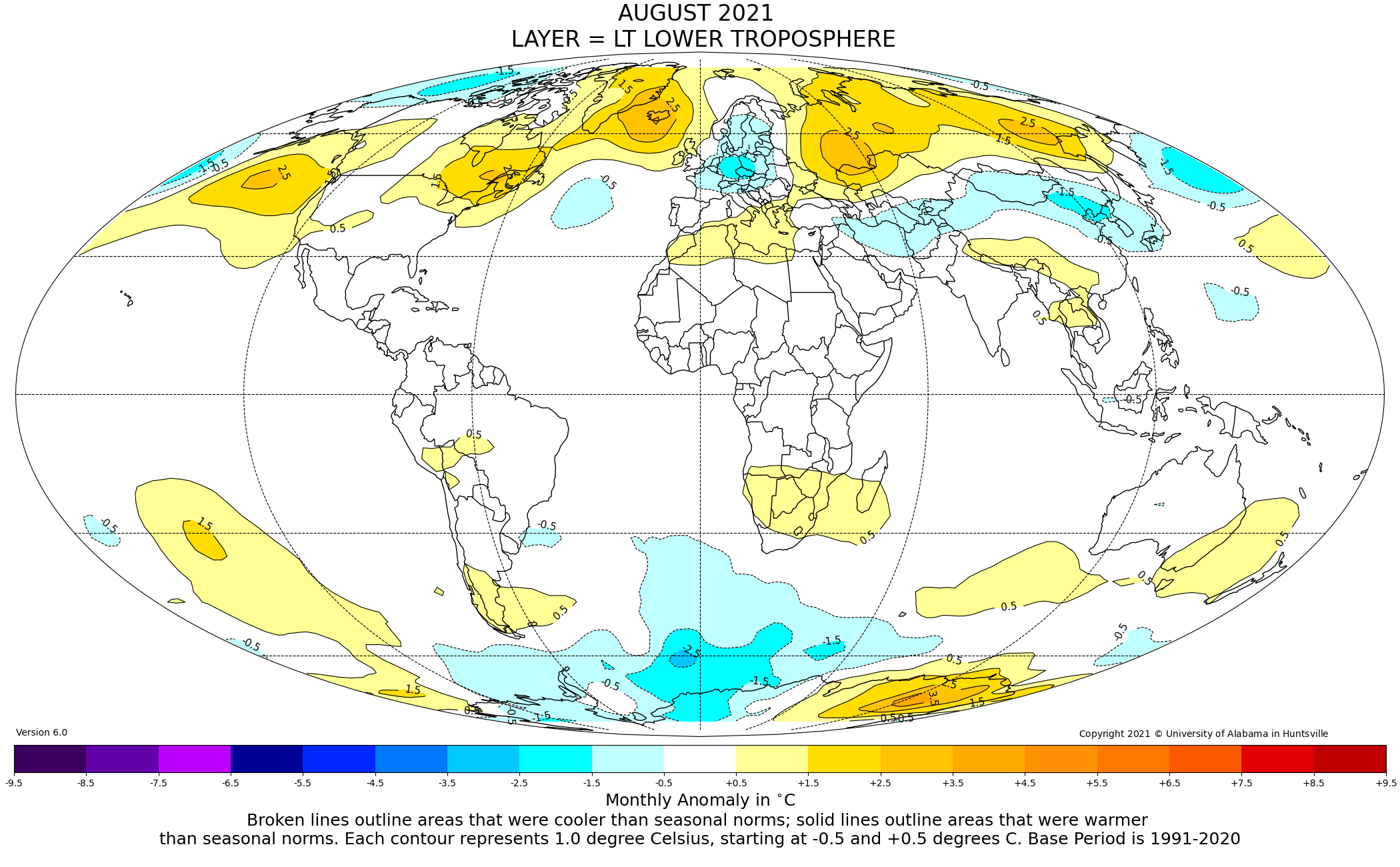
Not to worry, they will find some in some parking lots from UHI.
The current pause appears to have begun around 2004 with the end of thirty years of warming that began around 1974. Since 2004 the temperature curve has noticeably flattened. The El Nino that peaked in 2016 was used by some to argue that warming had resumed. However, it should be noted that the temperatures for 2008 and 2012 are lower than the temperature for 2004 more than the temperature for 2016 was higher than the 2004 temperature. Also, the most recent annual temperature is lower than the 2004 temperature. All of this argues strongly in support of a warming pause that began around 2004 and continues as of the pres- ent year. So far there is no reason to doubt that this pause will be the same length as the previous two thirty year pauses since the 1880’s. Which means that the current pause will last until about 2034 and will be followed by thirty years of warming from 2034 until 2064. Thus the current century will experience only forty years of warming.
Let’s look at the SSW in the middle of the previous winter. The highest spike is visible at the top of the stratosphere (1 hPA). As the graph shows, the temperature of the upper stratosphere was very low in December, and there was a spectacular drop in temperature in February. The low temperature at the top of the stratosphere is logical because of the strong decrease in UV radiation, so why such a sudden jump in temperature at the stratosphere-mesosphere boundary? The nature of the SSW is, in my opinion, completely unknown and occurs at altitudes where the influence of the troposphere is excluded.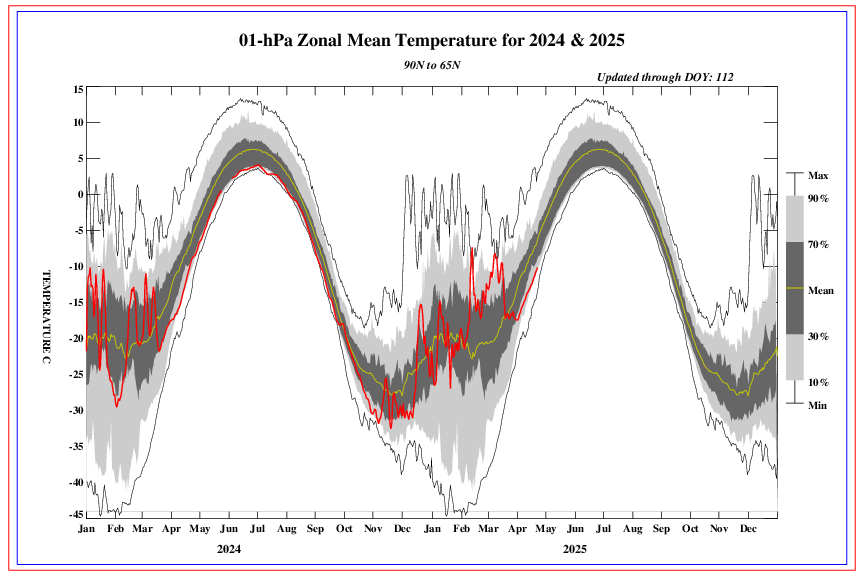
The “pause” start month and length in different sets with data up to August 2021.
UAH: January 2015, 80 months
RSS: April 2015, 77 months
NOAA: August 2014, 85 months
GISS: November 2014, 82 months
The article mentions the warming since January 2014, without mentioning how odd it is to have so much warming in just 1 year before the pause started. Here are the rates of warming for different data sets, from January 2014 to August 2021.
UAH: 0.174°C / decade
RSS: 0.198°C / decade
NOAA: 0.098°C / decade
GISS: 0.136°C / decade
None of these values have any statistical significance of course.