
Guest essay by Eric Worrall
Bill McKibben sees climate change every day, and he wants you to see climate change as well. But his dramatic description of “Hiroshimas” worth of energy leaves out some important context.
How Fast Is the Climate Changing?: It’s a New World, Each and Every Day
By Bill McKibben
September 3, 2020The struggle over climate change is necessarily political and economic and noisy—if we’re going to get anything done, we’ll have to do it in parliaments and stock exchanges, and quickly.
But, every once in a while, it’s worth stepping back and reminding ourselves what’s actually going on, silently, every hour of every day. And what’s going on is that we’re radically remaking our planet, in the course of a human lifetime. Hell, in the course of a human adolescence.
The sun, our star, pours out energy, which falls on this planet, where the atmosphere traps some of it. Because we’ve thickened that atmosphere by burning coal and gas and oil—in particular, because we’ve increased the amount of carbon dioxide and methane it contains—more of that sun’s energy is trapped around the Earth: about three-fourths of a watt of extra energy per square meter, or slightly less than, say, one of those tiny white Christmas-tree lights. But there are a lot of square meters on our planet—roughly five hundred and ten trillion of them, which is a lot of Christmas-tree lights. It’s the heat equivalent, to switch units rather dramatically, of exploding four Hiroshima-sized bombs each second.
We get a sense of what that feels like when we have a week like the one we just came through. Hurricane Laura detonated in intensity in a few hours before it made landfall—that escalation was one of the most rapid that has ever been observed in the Gulf of Mexico, and it’s because of the extra heat that’s available. …
Read more: https://www.newyorker.com/news/annals-of-a-warming-planet/how-fast-is-the-climate-changing-its-a-new-world-each-and-every-day
Back in the real world, there is a weak correlation between warming and wind speed, but the correlation is not statistically significant (see the graph at the top of the page).
Bill McKibben’s talk of Hiroshima’s worth of energy is very dramatic. But that 3/4 of a watt per square meter Bill talks about has to be seen in the context of other climate phenomena, such as changes to insolation caused by Earth’s not quite circular orbit around the Sun.
In January the Earth is only 0.9833 AU from the Sun, in June the Earth is 1.017 AU from the sun (AU – astronomical unit = 93 million miles). This results in a variation of solar intensity of 1413 w/m2 in early January, when the Earth is closest to the sun, which drops to 1321 w/m2 in June.
Obviously there are other numbers you could use, such as total sunlight striking the Earth’s surface, but my point is natural annual variations in total solar intensity are at least an order of magnitude larger than any anthropogenic CO2 signal.
In the context of this and other large climate shifts such as seasons, variations in snow cover, or random changes in ocean currents and cloudiness, Bill McKibben’s 3/4 of a watt / square meter of anthropogenic warming could best be described as “noise”.
There is no substantial evidence anthropogenic CO2 is adding enough energy to the climate system to make a significant difference to storm intensity.
Correction (EW): 1.017 AU, not 1017AU (h/t Dave Yaussy)
As the planet COOLS, with a probability of La Nina conditions in a few months time, expect more “extreme” events..
These will be blamed on warming…………………. that isn’t happening.
“Bill McKibben Talks Up the Alleged Climate Change Extreme Weather Link”
I would urge those that agree with Mr Mckibbens view that “extreme” weather is linked in some way to an increase in atmospheric CO² to have a look at the website below, “National Water Summary 1988-89– Hydrologic Events and Floods and Droughts” from the US Geological Survey about the state of California.
https://geochange.er.usgs.gov/sw/impacts/hydrology/state_fd/cawater1.html
It looks at historic floods and droughts in California from more or less the 1930’s to the late eighties, when CO² in the atmosphere went from 310 ppm to about 350 ppm respectively.
California DWR :
“California is no stranger to drought; it is a recurring feature of our climate. Paleoclimate records going back more than 1,000 years show many more significant dry periods. The dry conditions of the 1920s-30s, however, were on a par with the largest 10-year droughts in the much longer paleoclimate record.”
Quote from webinar, Professor Lynn Ingram, a professor of Earth and Planetary Science at UC Berkeley:
“So to sum up, the paleoclimate record shows that past periods of warmth are associated with drier conditions in California, there were two dry periods that occurred between 19 and 1400 AD, during the medieval warm period; these were two century long droughts that had 60-70% average precipitation. We also see wet-dry cycles over the past 2000 years with periods of 30, 55, 90 and 200 years, so there is other variability in cycles that we see in the records.”
How are you convinced that it’s CO² @ur momisugly 415 ppm that’s causing the problem today, when the exact same things or worse were occurring with CO² @ur momisugly 300 ppm and less?
But if you factor in the frequency of storms in the past there is clearly a big fall in total yearly hurricane energy.
Back in the real world, there is a weak correlation between warming and wind speed, but the correlation is not statistically significant (see the graph at the top of the page).
Also in the real world we ”global stilling” caused by wind turbines sucking energy out off wind speed.
How many ”papers” has there been on it recently….
As usual they want it both ways.
So over the last 150 years, average wind speed has increased by about 25 km/h? That seems like a lot.
I remember bill mcfibben promising to publish his personal carbon footprint. Has he done so yet?
blissfully unaware of competing less extreme factors
http://tropic.ssec.wisc.edu/
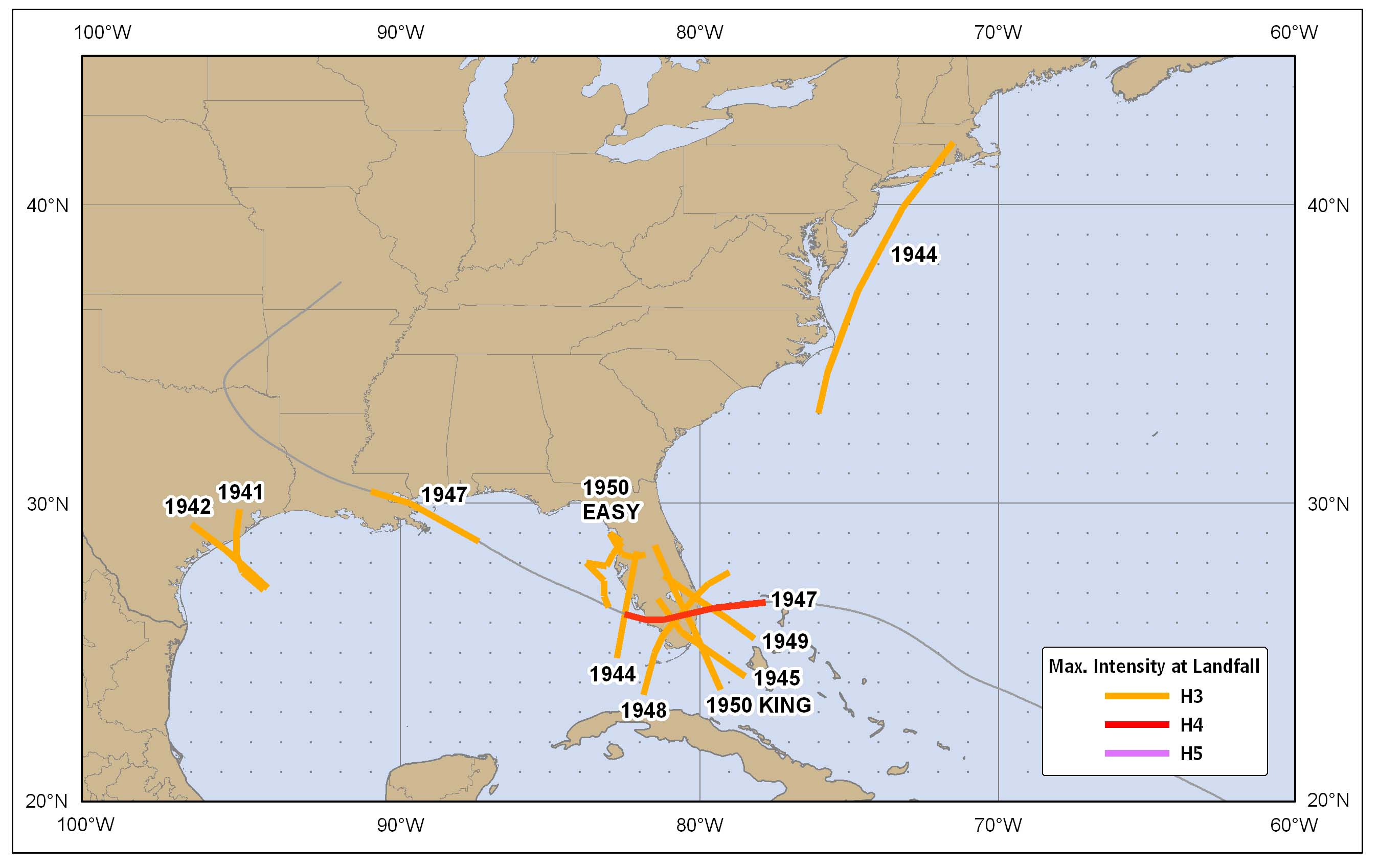
BTW the 1940s had plenty of major hurricane hits
So the confidence estimate is more than the trend estimate per decade?
Toss!
From the article: “But, every once in a while, it’s worth stepping back and reminding ourselves what’s actually going on, silently, every hour of every day. And what’s going on is that we’re radically remaking our planet, in the course of a human lifetime. Hell, in the course of a human adolescence.”
Another Unsubstantiated assertion by a climate alarmist. Of course, McKibben has absolutely no evidence to back up this claim of his. He wants you to take his word for it. Not me. I need a little evidence.
From the article: “Obviously there are other numbers you could use, such as total sunlight striking the Earth’s surface, but my point is natural annual variations in total solar intensity are at least an order of magnitude larger than any anthropogenic CO2 signal.”
On top of which, we don’t know exactly what the “anthropogenic signal” amounts to, is it 1.5C per doubling or 4.5C, or is it lower? We don’t know this number.
Bill McKibben pretends he knows the number. He pretends to know how much warmth CO2 adds to the Earth’s atmosphere. But he does not know this number. Nobody knows this number. It’s all based on unsubstantiated speculation.
Bill McKibben needs to establish just how much warmth is being added to the Earth’s atmosphere by CO2 before he can go speculating on what that portends. Or rather, I should say that is what he should do, but like always, alarmists assume they know more than they know and confuse speculation for facts and then make pronouncements that don’t reflect reality, like McKibben does here.
Assumptions and assertions are all the alarmists have to offer. They have no evidence to offer, but that doesn’t stop them from pretending they do.
What’s the number, Bill McKibben?
From the article: “There is no substantial evidence anthropogenic CO2 is adding enough energy to the climate system to make a significant difference to storm intensity.”
Actually, there is NO evidence that CO2 is causing any changes in the Earth’s weather.
We still don’t know the effect CO2 has on our atmosphere. We don’t know if CO2 ultimately warms or cools the Earth’s atmosphere after all feedbacks are included. This is the real state of climate science at the present time. The rest is all speculation.
Assumptions and Assertions be damned!