Guest “never mind” by David Middleton
From Real Clear Science…
How Did Humans Survive Our Near Extinction?
By Ross Pomeroy – RCP StaffRoughly 75,000 years ago, Indonesia exploded. A great supervolcano in Sumatra erupted, spewing an estimated 2,800 cubic kilometers of magma and rock into the air. Ash may have been deposited as far as the Indian Ocean, the South China Sea, and even Lake Malawi in Africa, perhaps farther. Gases ejected into the atmosphere may have caused global temperatures to drop by as much as 18 degrees for several years after the eruption, with a smaller degree of cooling continuing for a thousand years after.
In his recently released book, End Times: A Brief Guide to the End of the World, science journalist Bryan Walsh summarized a 2009 research paper on Toba’s potential climate effects.
“Precipitation would have fallen by 45 percent, and vegetation cover would have shrunk dramatically, with broadleaf evergreen trees and tropical deciduous trees dying out. Imagine a winter that lasted for years, like something out of Game of Thrones, shriveling life on land.”
For our Homo sapien ancestors, concentrated almost entirely in Africa and southern Asia, life could have become very challenging indeed. In fact, genetic evidence suggests that between 50,000 and 100,000 years ago, our species experienced an extreme population bottleneck, plummeting to as few as 2,000 to 10,000 individuals from a population that once numbered in the many tens of thousands. After existing for perhaps 200,000 years on Earth, humans almost went extinct, and Toba may have been to blame.
How did our forebears survive? Stanley Ambrose, an anthropologist at the University of Illinois and one of the chief architects of the Toba catastrophe theory, hypothesizes that cooperation may have been the difference between life and death.
[…]
Real Clear Science
Ross Pomeroy does go on to note that “the Toba catastrophe theory is controversial, and there are very legitimate scientific critiques”… But we all had to collectively pull together in a sort of Paleolithic Green New Deal in order to survive the Tarantian climate crisis…
“You and I and everyone we know – everyone who came before us and everyone who might come after us – are here because the human beings who lived through Toba found a way to survive the eruption and its long, cold aftermath. Without their resourcefulness, the human story could have ended in its earliest chapters. Extinction was a possibility.”
Stanley Ambrose
And just like the modern “climate crisis,” the Tarantian climate crisis was also a fake crisis.
The temporal proximity of the ~74 ka Toba supereruption to a putative 100–50 ka human population bottleneck is the basis for the volcanic winter/weak Garden of Eden hypothesis, which states that the eruption caused a 6-year-long global volcanic winter and reduced the effective population of anatomically modern humans (AMH) to fewer than 10,000 individuals. To test this hypothesis, we sampled two cores collected from Lake Malawi with cryptotephra previously fingerprinted to the Toba supereruption. Phytolith and charcoal samples were continuously collected at ~3–4 mm (~8–9 yr) intervals above and below the Toba cryptotephra position, with no stratigraphic breaks. For samples synchronous or proximal to the Toba interval, we found no change in low elevation tree cover, or in cool climate C3 and warm season C4 xerophytic and mesophytic grass abundance that is outside of normal variability. A spike in locally derived charcoal and xerophytic C4 grasses immediately after the Toba eruption indicates reduced precipitation and die-off of at least some afromontane vegetation, but does not signal volcanic winter conditions. A review of Toba tuff petrological and melt inclusion studies suggest a Tambora-like 50 to 100 Mt SO2 atmospheric injection. However, most Toba climate models use SO2 values that are one to two orders of magnitude higher, thereby significantly overestimating the amount of cooling. A review of recent genetic studies finds no support for a genetic bottleneck at or near ~74 ka. Based on these previous studies and our new paleoenvironmental data, we find no support for the Toba catastrophe hypothesis and conclude that the Toba supereruption did not 1) produce a 6-year-long volcanic winter in eastern Africa, 2) cause a genetic bottleneck among African AMH populations, or 3) bring humanity to the brink of extinction.
Yost et al., 2018
The Tarantian Climate Crisis
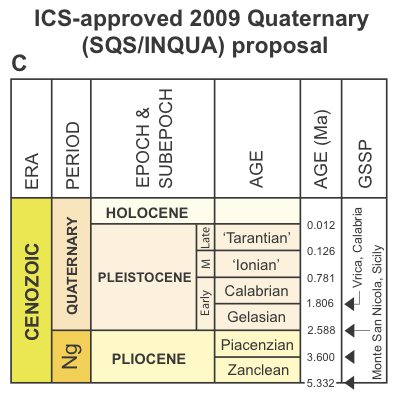
The Toba super eruption occurred near the middle of the Late Pleistocene Tarantian Age. The Tarantian Age roughly coincides with the final glacial stage of the Pleistocene Epoch. If Toba caused a Tarantian climate crisis, it would have left a clear mark in the ice core record.
The youngest Toba eruption is the largest known volcanic eruption of at least the last 2 Ma. There are two competing 40Ar/39Ar age estimates for the eruption, 75±0.9 ka from Mark et al. (2014) and 73.88± 0.32 ka from Storey et al. (2012).
Yost et al., 2018
The Toba supereruption sort of coincides with Glacial Stadial 21…

Zooming in on GS21, we can see that most of the dating range for Toba falls within the stadial…

GS21 was quite unremarkable in Greenland…


The timing is even worse in Antarctica…


The entire age range for the Toba supereruption falls near the nadir of the Antarctic expression of GS21.
Conclusion
The Tarantian climate crisis is the perfect analogy for the modern climate crisis. It was a time when the entire human race set aside their differences, collectively marshaled their resources, and saved the species from certain extinction at the hands of an existentially threatening climate crisis that didn’t exist.
References
North Greenland Ice Core Project members. 2004. “High-resolution record of Northern Hemisphere climate extending into the last interglacial period”. Nature 431(7005):147-151.
Rasmussen, S & Bigler, Matthias & Blockley, Simon & Blunier, Thomas & Buchardt, Susanne Lilja & B. Clausen, Henrik & Cvijanovic, Ivana & Dahl-Jensen, Dorthe & J. Johnsen, Sigfus & Fischer, Hubertus & Gkinis, Vasileios & Guillevic, Myriam & Hoek, W.Z. & Lowe, John & B. Pedro, Joel & Popp, Trevor & Seierstad, Inger & Peder Steffensen, Jørgen & Svensson, Anders & Winstrup, Mai. (2014). “A stratigraphic framework for abrupt climatic changes during the Last Glacial period based on three synchronized Greenland ice-core records: Refining and extending the INTIMATE event stratigraphy”. Quaternary Science Reviews. 106. 10.1016/j.quascirev.2014.09.007.
Uemura, Ryu, Motoyama, Valérie Masson-Delmotte, Jean Jouzel, Kenji Kawamura, Kumiko Goto-Azuma, Shuji Fujita, Takayuki Kuramoto, Motohiro Hirabayashi, Takayuki Miyake, Hiroshi Ohno, Koji Fujita, Ayako Abe-Ouchi, Yoshinori Iizuka, Shinichiro Horikawa, Makoto Igarashi, Keisuke Suzuki, Toshitaka Suzuki, Yoshiyuki Fujii. 2018. “Asynchrony between Antarctic temperature and CO2 associated with obliquity over the past 720,000 years”. Nature Communications, 9, 961. doi: 10.1038/s41467-018-03328-3
Yost, Chad & Jackson, Lily & Stone, Jeffery & Cohen, Andrew. (2018). “Subdecadal phytolith and charcoal records from Lake Malawi, East Africa imply minimal effects on human evolution from the ~74 ka Toba supereruption”. Journal of Human Evolution. 116. 10.1016/j.jhevol.2017.11.005.
Are these the same guys who predicted massive global cooling from the Sadam Hussein oil wells fire smoke?
The effect of volcanoes on climate is consistently over-estimated. Volcanoes are the “control knob on the control knob”. The CO2 control knob takes the credit for warming. But when warming happens with CO2 still rising, this is conveniently explained by volcanoes.
But the effect of volcanoes is very transient. Only flood basalt volcanism (a whole igneous province) can start to affect weather / climate. For more than a month or so.
Yep… Even the LIP’s don’t leave much of a climate mark.
It takes the sort of oceanic crust building that was going on in the Cretaceous to seriously affect the climate and CO2.
It’s odd that three LIP:s (Siberia, CAMP, Deccan) coincide with major extinctions while many others as large (Parana-Etendeka, Karooo, Ethiopia-Yemen, Ontong Java, North Atlantic-Iceland) are completely unnoticeable in the fossil record.
However we know that one of those three coincided with a large asteroid impact (Chicxulub), which was the major killing agent, and the other two quite possibly did too.
The post-Toba 2,000 to 10,000 human bottleneck theory was disproven pretty definitively a few years ago. You should do better research before publishing and propagating outdated theories.
https://www.smithsonianmag.com/smart-news/ancient-humans-weathered-toba-supervolcano-just-fine-180968479/
Nevermind. I guess I should have read the article all the way through!
Incidentally there is good evidence that the Lake Toba eruption didn’t even break cultural continuity in relatively nearby India:
https://www.researchgate.net/publication/6223267_Middle_Paleolithic_Assemblages_from_the_Indian_Subcontinent_Before_and_After_the_Toba_Super-Eruption
Good info, thanks!