From the UNIVERSITY OF SUSSEX and overheated climate science department, comes a claim that just doesn’t seem plausible, suggesting that in the future, nearly 11% of a “worst-off city” gross domestic product would be consumed by UHI boosted climate change. On the other hand, the study is by Dr. Richard Tol, who is well respected by the climate skeptic community. He does have a point about “the effects of uncontrolled urban heat islands”

‘Heat island’ effect could double climate change costs for world’s cities
Overheated cities face climate change costs at least twice as big as the rest of the world because of the ‘urban heat island’ effect, new research shows.
The study by an international team of economists of all the world’s major cities is the first to quantify the potentially devastating combined impact of global and local climate change on urban economies.
The analysis of 1,692 cities, published today (Monday 29 May 2017) in the journal Nature Climate Change, shows that the total economic costs of climate change for cities this century could be 2.6 times higher when heat island effects are taken into account than when they are not.
For the worst-off city, losses could reach 10.9 per cent of GDP by the end of the century, compared with a global average of 5.6 per cent.
The urban heat island occurs when natural surfaces, such as vegetation and water, are replaced by heat-trapping concrete and asphalt, and is exacerbated by heat from cars, air conditioners and so on. This effect is expected to add a further two degrees to global warming estimates for the most populated cities by 2050.
Higher temperatures damage the economy in a number of ways – more energy is used for cooling, air is more polluted, water quality decreases and workers are less productive, to name a few.
The authors – from the University of Sussex in the UK, Universidad Nacional Autónoma de México and Vrije University Amsterdam – say their new research is significant because so much emphasis is placed on tackling global climate change, while they show that local interventions are as, if not more, important.
Professor Richard S.J. Tol MAE, Professor of Economics at the University of Sussex, said:
“Any hard-won victories over climate change on a global scale could be wiped out by the effects of uncontrolled urban heat islands.
“We show that city-level adaptation strategies to limit local warming have important economic net benefits for almost all cities around the world.”
Although cities cover only around one per cent of the Earth’s surface, they produce about 80 per cent of Gross World Product, consume about 78 per cent of the world’s energy and are home to over half of the world’s population.
Measures that could limit the high economic and health costs of rising urban temperatures are therefore a major priority for policy makers.
The research team carried out a cost-benefit analysis of different local policies for combating the urban heat island, such as cool pavements – designed to reflect more sunlight and absorb less heat – cool and green roofs and expanding vegetation in cities.
The cheapest measure, according to this modelling, is a moderate-scale installation of cool pavements and roofs. Changing 20 per cent of a city’s roofs and half of its pavements to ‘cool’ forms could save up to 12 times what they cost to install and maintain, and reduce air temperatures by about 0.8 degrees.
Doing this on a larger scale would produce even bigger benefits but the vastly increased costs mean that the cost-benefit ratio is smaller.
The research has important implications for future climate policy decisions – the positive impacts of such local interventions are amplified when global efforts are also having an effect, the study shows. Professor Tol said: “It is clear that we have until now underestimated the dramatic impact that local policies could make in reducing urban warming.
“However, this doesn’t have to be an either/or scenario.
“In fact, the largest benefits for reducing the impacts of climate change are attained when both global and local measures are implemented together.
“And even when global efforts fail, we show that local policies can still have a positive impact, making them at least a useful insurance for bad climate outcomes on the international stage.”
###
The study: https://www.nature.com/nclimate/journal/vaop/ncurrent/full/nclimate3301.html
The urban heat island occurs when natural surfaces, such as vegetation and water, are replaced..
===
Didn’t we just read a study that said the earth is greening…and more trees make it hotter?
reduce air temperatures by about 0.8 degrees….
====
…..like anyone would notice
Yeah like here in Aus the SMH Weather page states temps as 32c, lol, feels like 32.4c. Yeah sure!
I guess people who work in cities just won’t know what Productivity is anymore
Although cities cover only around one per cent of the Earth’s surface
===============
if you consider oceans. cities cover 4% of the land. about the same area as used in total including agriculture 150 years ago. now including agriculture we use 40% of the land surface area.
Thank you, Anthony has done a great job with the Climate Station bad settings.
I thought you might be interested in my interview on Nuclear Energy vs. Renewable Energy and Climate Change: Here is the show page for the Horsting interview: http://sarahwestall.com/nuclear-energy-and-global-climate-change-a-controversial-science-discussion/
Are the climaistas admitting that the UHI may bias the land temp readings?
Possibly, it is hard to keep the lies straight.
Yeah, what’s up with dat? I thought for years they’ve been telling us UHI doesn’t exist so it can’t bias the temp readings. The old adage about not being able to keep your lies straight seems to be true.
That can happen when you tell to many of them (lies)
That’s OK Joe – Temperature readings from stations at cooler altitudes should balance the overall results … oh, but wait, those were shut down, weren’t they.
Wasn’t the consensus that UHI caused cooling, so NASA/GISS needed to adjust temperatures upwards to correct for this?
That’s what the warmistas say. Richard Tol is not a consensus warmista, but a bad naughty dissident/deníer.
Anyway, if “Study: ‘Heat island’ effect could double climate change costs for world’s cities”, then you could headline it as “Study: Urban heat island might be causing 50% of the cost of climate change”. Not that UHI existed, but it still could make things worse. /sarc
Well what else could explain he need to adjust modern temperatures upwards?
http://jennifermarohasy.com//wp-content/uploads/2009/06/hammer-graph-3-us-temps.jpg
(seems NOAA may have removed this image from their website… Not too good for their reputation)
Jeff in Calgary on May 30, 2017 at 9:45 am
Maybe this is a somewhat more actual variant of what you try to show us?
http://fs5.directupload.net/images/170531/zzap8kq5.jpg
Joe,
I think what this study says, in so many words, is fit ‘cool pavements and roofs’ – get rid of UHI – and CAGW will go away further and faster than unicorn f@rts.
I appreciate that the authors didn’t phrase it in those exact terms [their loss], but that is pretty much what they imply.
No need for hyper-conflabs like Paris [with the benefits to all branches of the local economy].
No need for treaties that aren’t treaties but pious wish-lists of folk who don’t seem too keen on Western civilization (Barrie, you know who I mean. And Jeremy, too, of course).
No need to mangle raptors across the Northern Hemisphere.
No need to seek rare-earth metals found, currently, mostly in China.
Auto
Apparently it hasn’t happened yet, according to the quote, but will be a dangerous problem in the future, if you want to believe that.
If city centers are that much warmer, then they can grow food that might not grow in their Hardiness Zone. Just think of the boon for all those hipster restaurants in downtown areas that could grow their own fresh kale and jack fruit on the roof of their skyscrapers!
Why cale? You would of course do the most sustainable thing, which is definitely not kale but something with high energy / protein content. Like grasshoppers, or edible larvae.
Sorry, my bad. If you put a hipster culturing kale, the result is a lot of protein.
It seems spelling is diffikult. My bad again.
Easy solution.
Don’t live in big cities.
Unless it is a cold climate and you like warmth.
Then you use up land the furry little critters need and the farmers need. Oh, and the land for the wind turbines (that create their own heat sink when they turn) and solar panels. Whatever will we do then?
/sarc
Change zoning to stop large cities from increasing urban density-besides “cool” pavements and rooftops, limit new high construction possibly by limiting replacement buildings to 500 ft height to reduce the number of people. The World Trade Center rebuild is a good example. Instead of 2 110+ story towers with 3.8million square feet and 5 other buildings with 9.6 million square feet. The replacement One World Trade Center has 2.6 million square feet. By limiting replacement buildings and spreading huge cities into substantially separated smaller ones the UHI would be dispersed and lowered over a wider area also reducing concentrated pollution and allowing for more green spaces.
Spacing smaller cities out could cut the UHI effect by as much as 4-5deg.F
UHI is a surface-area issue. Lowering building heights worsens the problem. And making One WTC smaller than the original WTC is not “spreading huge cities into substantially separated smaller ones.”
So, as they have JUST found out, UHI is affecting the cities – what effect is this supposexd to have on GLOBAL climate? (Except, of course, for the fact that most of the GISS thermometers are now inside these areas).
Tol shows close to a 10 degree swing for UHI…
…I’m sure Giss allows for that
right?…………LOL
This is certainly a sneaky way for Dr. Tol to sneak local adaptation into the conversation. Especially since the study would appear to indicate it is a much more cost effective way to deal with this completely local phenomena.
“they produce about 80 per cent of Gross World Product, consume about 78 per cent of the world’s energy and are home to over half of the world’s population.”
Most manufacturing left the cities a long time ago.
At one time services had to concentrate in cities, because that’s where their customers and suppliers were.
With modern technology, this is no longer required.
The remainder of that 80% is just to service the population that lives in the cities.
Urban density is highly overrated. link
I’m not sure where you get the information that “Most manufacturing left the cities a long time ago”? In the UK, just about all manufacturing is in cities, unsurprisingly since manufacturing needs skilled workers of all levels, access to infrastructure and markets, and often likes to be close to innovation from universities or similar places.
The same applies to China and India, and as far as I know, most of Europe.
Depends on what you call manufacturing and what you call a city. IT industry is typically located in cities and bigger centres, because it does not require a lot of space, but it might require a prestigious location.
Heavy industry (manufacturing) is usually not situated in central metropolitan areas. Mines and mills are outside. Milk and timber are not produced or or even packaged in “cities”. Of course, urban areas include areas of manufacturing, but these typically from some distance of the city centre, or are located in a town definitely not callable as a city.
About innovation from universities. Right. Like climate science.
Skilled workers exist outside of cities as well.
Those who live outside of big cities have access to infra-structure and markets.
There are good universities outside of big cities, plus there’s no guarantee that graduates will want to stay in those cities if they don’t have to.
I live in what is commonly referred to as “Silicon Valley”, the self proclaimed center of the hi-tech universe. All the IT and other tech firms are in the suburbs, populated by single family homes, nice green lawns and trees and parks and environmentalist mandated “open spaces”. Some chi-chi software firms have located to San Francisco, but the vast majority of firms are located on the Peninsula. I have no doubt that there is a small UHI effect, but Manhattan this ain’t. Although, to be fair, I would not call this manufacturing. The factory work was outsourced largely to overseas producers decades ago.
As of this comment, I have not read the study, but the statements by the authors seems to indicate that they are ignoring a very very important fact about the past 150 years of warming. The daytime highs are not increasing. It is the nighttime temperatures that are trending higher which tick incrementally raising overall temperatures. This means that the “crisis” is not really that big a deal. We are not going to see spikes in daytime temperatures, just incremental increases in the overnights when temperatures are not that big a deal. In fact, like many things in a warming world, there may be an overall benefit as heating costs in winter urban areas may tick down, and we may prevent some cold related deaths. But I am sure the authors thought about this before writing the scary headline and press release.
And here in Aus we have had a “record” low May overnight. Apparently a 20 year, record, low. Not much in the MSM tho…
Sorry PMJD but the Sydney Morning Herald of Doom was whining about how ccccccooolddd it was at 7˚C (~45˚F) overnight. Those poor, poor daaahlings, how they suffer from climate change./sarc The Yanks must be falling about launghing
…in a sane world that would mean less frosts, less freezes
But I am sure the authors thought about this before writing the scary headline and press release.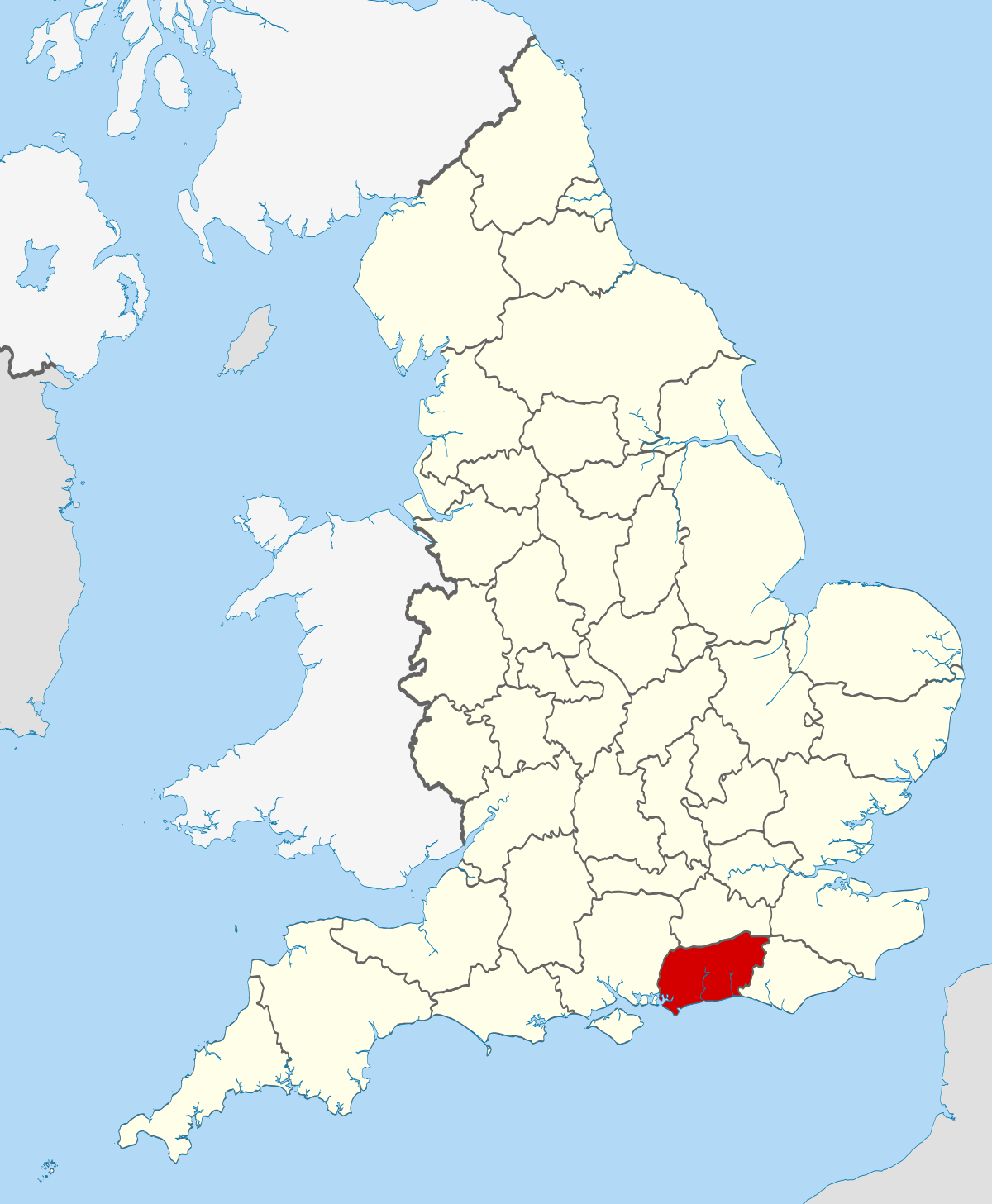

=========
what if you live in a cold climate? isn’t UHI something to be wished for? Why is the assumption always that warming is bad?
For example, the first red blob below is Sussex. Why is the university as far south as you can get in the UK?
SUSSEX
Why is it not as far north in the UK, say near the Outer Hebrides (second red blob) if heat is a problem?
OUTER HEBRIDES
Oh that is because the climate change hits Arctic the hardest. They could not possibly be situated there, as they’d be nearer to the ‘super-hot Arctic’ (Washington Post, 2016).
I prefer Skye. And wee dram or three.
Well, when the temperatures rise, deaths due to cold exposure will decline. However, deaths decline across most species, bacteria, vermin, parasites and disease bearing vectors included. If we aren’t battling the elements we are battling everything else that wishes to thrive as well.
I live in a remote rural area of NE Wyoming. The temperature outside at 5 AM was 38 degrees F. At 7 AM it is now 73 degrees F, and rising rapidly. Am I going to die? 🙂 No, I’m going to leave for work soon and be very happy it won’t be -20 F for probably another 7 months.
What is WITH these people who worry so much about .8 degrees? Oh, and I can’t imagine living in a city at any temperature. 🙂
UHI is real. It may be correct if cities don’t adapt.
But, of course they will.
People will replace asphalt with lawn roofs and plant more trees for shade, if required.
The use of fountains to cool urban areas has been developed for over a thousand years.
So I think they have over-estimated the costs, if not the heat.
So what about the cities in temperate and colder zones? During autumn, winter and spring they may enjoy lower heating costs to such an extent that the cost benefits may exceed the negatives during summer. This could actually be a zero sum game globally. I get the impression the authors assume that all big cities are in tropical or sub tropical zones.
The theory of CO2 global warming states that the polar regions will heat more. So far, we have seen very little heating in the tropical or sub tropical zones. I fail to see the negative side of global warming (if the warming we have observed is even caused by CO2…).
Also the warming is not that day time highs are getting higher, but rather that the night time lows are not quite as low. What is not to like about that?.
It is not much of a stretch to think of paving , roofing or siding materials that change their nature such that they can capture warmth by absorbing incoming radiation or reflect to keep cool. On a micro scale, shades, awnings and shutters already do that. The next 30 years are going to be interesting.
Are there economic benefits to concentrating people and business/industry in cities and if there are, how do they compare to the heat-island related costs? Clearly at some time in the past (and maybe still in the present) there were economic reasons for the growth of cities.
One of the nasty effects of urban and suburban environments is the modification of the hydrology of the area. When precipitation just runs off into the sewers and gets sent out to where ever they dump it, it does not sink into the soil and remove enthalpy later through evaporation and transpiration. As we know, a lot of heat is conveyed to the upper atmosphere by transevaporation to be dissipated. NASA puts it at 86.4 W/M^2 on average. Set that to zero in an area and you have a problem. Obviously, the open ocean has much more evaporation than land, but still. When you change the hydrology of an area in the way cities do, you will have a problem with heat. Of course the members of the Escathological Cargo Cult of the CAGW would not know heat of evaporation if they had to cool off with a swamp cooler. Thus, they will continue to blame hot cities on CO2 instead of extra energy dissipation and lack of transport.
“Overheated cities face climate change costs at least twice as big as the rest of the world because of the ‘urban heat island’ effect, new research shows.”
I think we should be careful about how we describe UHI. Instead of “climate change” costs, I would describe them as “local UHI costs”. Otherwise, we run the risk of people incorrectly conflating UHI with CO2 warming.
That’s the point, precisely!
Every little bit of confusion helps keep the climate alarm funds flowing.
How much of the increased cost is expensive power?
Good point, ghl.
“This effect is expected to add a further two degrees to global warming estimates for the most populated cities by 2050.”
Now what exactly does this mean? Are they saying UHI is going to add two degrees to the global temperature? Or is this just restricted to the UHI cities? If it is restricted to UHI cities, then why are they calling it “global warming”?
Could it mean that UHI effects are contanimating global temperature records?
This is just a shameless attempt at conflating the faux issue of ” globalclimate change” with the strictly local issue of UHI. Cities have no business asking everyone else to help pay for cooling them down. If a state wants to do this to make their cities more attractive places to live and/or visit, fine, go for it.
“Higher temperatures damage the economy in a number of ways – more energy is used for cooling, air is more polluted, water quality decreases and workers are less productive, to name a few.”
I question the “workers are less productive” remark. Notwithstanding the difficulty of quantifying productivity, organization of work to improve productivity simultaneously contributes to UHI. In other words, UHI is the result of organizing work to improve productivity.
Now I can guess that what was meant was something along the lines of higher temperatures, ceteris paribus, make workers less productive. But “ceteris paribus” simply does not apply here because the UHI is resulting from changes designed to increase productivity.
This criticism could also apply to the “more energy is used for cooling.” Of course it is. And yes, this does lead to an increase in ambient temperatures. But is this a bad thing? Would workers be more productive in the absence of air conditioning?
Here’s the bottom line. Increasing productivity always comes at a cost. TANSTAAFL. Almost always this involves the use of greater energy throughput, and that always produces heat. But whether that is a “bad” thing or not is a “social” issue. And the only way to get to a fair, rational, and optimal result is to make sure all tradeoffs are properly priced with choices made in free markets. Before I retired, I occasionally taught a course in introductory microeconomics. A standard unit in the course was to get students to think about the “optimal” quantity of “pollution.” An ill-informed student’s first response is often to think that the optimal quantity of pollution is “zero.” But when the cost of that is pointed out to them, they begin to see that the issue is considerably more nuanced.
I think it is good to draw attention to the role of UHI in explaining any identifiable increase in global temperature (such as how siting weather stations can be biased by UHI effects). Anyone who has carefully considered the change in the skyline of a typical urban environment over the past 50 years will realize that the change has to have influenced global temperatures significantly. As a former student of geography, I think humans do have a significant impact upon the climate. But the current fixation on CO2 is clearly agenda driven, and ignores what are likely to be more significant factors.
Your worry that UHI has affected or will affect global temperatures “significantly” is misplaced. It is a drop in the bucket, and of no global consequence whatsoever. Whatever effects man has on global climate are too small to 1) measure and 2) be of any concern. The effects are strictly local. It isn’t warming, in fact, that we need to be concerned about, but rather, cooling.
I don’t necessarily dispute your reply, certainly not as to the greater concern being cooling than warming. As for UHI simply being “strictly” local it still “adds up.” Whether the sum total is too small to measure on a global scale is an empirical question. Can you cite any evidence one way or another, are are you just guessing?
Perhaps I should have made sure my statement about the “significance” of UHI was in comparison to the “significance” of CO2. (And this is just my guess.) Both may be too small to lose any sleep over (notwithstanding that loss of sleep has now been added to the dire consequences of rising CO2).
They won’t be less productive if their workplaces are air-conditioned. That’s the case already in most of the American South & Southwest.
Exactly. I was born in Phoenix, AZ in 1959 and have lived in the area all of my life. Over the years, many have asked me how I stand the heat, and the answer is simple – I say indoors where there is air conditioning when it is really hot outside. And yes, A/C power costs are high. But winter heating costs are low, and I don’t have to shovel snow, the city doesn’t have to plow streets, the streets and sidewalks don’t get damaged by frost heaving and cars don’t rust out from salting icy roads. It’s all a matter of trade-offs, and considering migration trends and the rate of growth of cities like Phoenix and Las Vegas, the trade-offs seem to favor warmer climates. Are people really fleeing toward disaster? Seems unlikely.
http://www.governing.com/gov-data/census/2010-census-state-migration-statistics.html
If this happened, wouldn’t people over time simply migrate northwards? Do they really think people are that stupid?
Yes.
I am fed up to the back teeth with continuously reading their scare-mongering scenarios where everything is always a “potentially devastating impact of climate change”.
Oh don’t you worry. Once they stop, there will a new generation with a totally updated set of scare-mongering scenarios. Doomsdayism is eternal.
The study is likely right.
The really high Social Cost of Carbon values are driven almost exclusively by costs in China. And the costs in China are mostly driven by increased costs for air conditioning.
If you add urban heat island effects to the models of Chinese cities in the SCC costing models, the SCC will increase significantly.
I have a great set of slides depicting this. Unfortunately, they are confidential. All of the information is in the publicly available SCC models. It is just structured to prevent the reader from noticing that the SCC is nonsense.
Chinese cities in the SCC costing
==============
you could substantially reduce the SCC by doing a Pol Pot. The UHI coupled with Paris Climate Agreement will no doubt force the Chinese back their farms to work the land and escape the murderous heat, and thereby remove the largest source of CO2 on the planet so the rest of us can drive around in Lincolns and Cadillacs with the AC cranked to the max.
here is the solution to SCC and sea level rise.
total economic costs of climate change for cities this century could be 2.6 times higher
===================
2.6 x 0 = 0
Sounds like a good paper. If it continues to warm, no matter the cause, then local UHI effects
could be serious during parts of the year. This type of paper brings attention to important issues in adapting to temperature increases.
…if you believe people in Miami are less productive than people in Cleveland
It is all a matter of air-conditioning costs, therefore energy costs.
The costs of air conditioning compared to the increased production values of moderate temperatures is probably insignificant. When you think of the number of cubicle workers per hundred square feet of office space, vs the cost of keeping said space at 72 degrees F, I think the climate control costs are easily justified.
Having lived in Manhattan , there is no question UHI is a real and consequential problem , as opposed to RoW warming which I believe inconsequential .
Dense cities face not only the problem of additional solar capture and disruption of air flow , enormous amounts of additional energy are is injected thru air conditioners having to work harder just to overcome their own heat dumped into the streets .
Manhattan tries to air condition its subway stations . That alone dumps prodigious amounts of heat into the canyon streets . In many locations a 4 or 5c difference versus the edge of the island is all too sweatifying .
I took the “get out of town” solution exchanging my view of the Brooklyn Bridge and aroma of the Fulton Fish Market for a view of the still snow capped north face of Pikes Peak from an altitude of 2500m . No ac needed ( but the furnace in the am ) .
I think a bit more consideration of other factors is needed here. Yes heating up cities in warmer climates means greater need of air conditioning, but in cooler climates it means less energy for heating. UHI is more pronounced in cold climates and mainly affects nocturnal lows. In addition many large cities in hot climates may increase local vegetation and soil moisture compared to surrounding land thus assisting cooling. At any rate the claims are an admission of the importance of UHI as demonstrated by Anthony and others. Now if they can just admit how much that affect has deformed the trends from surface temperature records on land.