Guest post by David Middleton
They must have used the RCP 8.5 Death Star…

The announcement of the Trappist-1 system in February, with seven rocky planets orbiting an ultracool dwarf star, sent ripples of excitement through astrobiologists everywhere.
At least three of the planets looked like they were within the star’s “habitable zone” – the region in which water will remain liquid. On that level, at least, the trio seemed like very good candidates for hosting life.
Now, however, 3D climate modelling is dampening expectations, suggesting that at most only one of Trappist-1’s satellites could support life.
The modelling has been completed by Eric Wolf from the Laboratory for Atmospheric and Space Physics at the University of Colorado, Boulder. In doing so, he made the assumption that the seven planets are – or had once been – ocean-covered, with atmospheres comprising nitrogen, carbon-dioxide and water vapour. Orbital and geophysical properties were derived or deduced from collected data.
When Wolf ran the numbers, the results were rather depressing.
“Model results indicate that the inner three planets presently reside interior to the inner edge of the traditional liquid water habitable zone,” he writes in a paper lodged on pre-print site arxiv.
“Thus if water ever existed on the inner planets, they would have undergone a runaway greenhouse and lost their water to space, leaving them dry today.”
The outer three planets, he adds, “fall beyond the maximum CO2 greenhouse outer edge of the habitable zone” and will have entered a lifeless snowball state.
Thus, only the middle planet remains a candidate for hosting life. It could maintain “at least some habitable surface”, Wolf notes, depending on the atmospheric nitrogen levels. If the planet is, in fact, covered in ocean, then “near present day Earth surface temperatures can be maintained”.
[…]
Don’t get me wrong, I find the entire field of exoplanetary science and the Kepler mission to be really cool. The application of a remote sensing method to detect and even describe likely planetary bodies in other solar systems is just about the coolest science on this planet… But, are they really “discovering” exoplanets? It seems to me that this would be analogous to oil companies booking reserves on the basis of high-quality seismic hydrocarbon indicators, without ever drilling them.
Clearly, there are a series of anomalies in the Trappist-1 system which could very well be planets in the habitable zone… But, isn’t this an case of jumping the gun?
NEWS & TECHNOLOGY 1 March 2017
How we’re already seeking life on TRAPPIST-1’s rocky planets
By Leah Crane and Joshua Sokol
WE ARE already taking the first steps toward learning if there could be life on TRAPPIST-1’s newly discovered planets – and what that life might look like.
Last week, a team led by Michaël Gillon at Belgium’s University of Liege announced that TRAPPIST-1, a small, faint star some 40 light years away, has four more rocky planets to join the three we already knew about.
All are less than 20 per cent bigger than Earth, and all orbit well within the distance at which Mercury circles our sun. Despite this closeness, the planets may be candidates to search for life. That’s because TRAPPIST-1 is much smaller and dimmer than the sun, so three of the planets may be cool enough to host liquid water on the surface, putting them in the habitable zone (see diagram).[…]

Without even actually seeing the Trappist-1 system, it appears that the exoplanetary scientists discovered extraterrestrial life capable of a rudimentary form of space travel, only to have that life wiped out by climate models… Cue the guy from the Hindenburg broadcast…
As usual, any and all sarcasm was purely intentional.
Discover more from Watts Up With That?
Subscribe to get the latest posts sent to your email.
“NASA LOOKS TO PAD ITS BUDGET
… it’s that time of year again when there’s life on other planets”
http://pickeringpost.com/story/nasa-looks-to-pad-its-budget/6934
I’d rather have NASA spend its budget looking for life on orher planets than disrupting life on this planet.
There’s at least 1 good dystopian science fiction movie somewhere in these Trappist planets.
Personally I think the phrase “good dystopian science fiction” needs to be retired for ten or twenty years to give the subgenre a bit of a rest, given that it’s done a bit of a “Blob act” and slimed over the rest of the market.
At least.
Seven worlds, each more dystopian than the last, for a modern-day Gulliver’s Travels. Although he also visited the real world of Japan, which in the 18th century wasn’t all that dystopian, but not well known to the outside world, either.
“Fermi Paradox”
The great man responsible for the first self-sustaining nuclear reaction said it best, back in the late 30’s: “Where is everybody?” If there is other intelligent life in our maybe 13.8 Billion Year Old universe, how has our 4.5 Billion Year Old planet not been visited? If interstellar travel is possible, it would have happened in over 9 Billion years, somewhere, and, where are they?
Riddle me that Batman, including you Professor Brown, never answered the question the first time I asked you. And, did you or your kin attend South Cary Elementary in North Carolina when I was there? Is Charles Brown a relative?
how has our 4.5 Billion Year Old planet not been visited?
why are you assuming that it hasn’t?
How about if Eric Wolf from the Laboratory for Atmospheric and Space Physics at the University of Colorado, Boulder, would try checking the model performance in Earth reality first?
Then the solar system has also plenty of interesting mysteries to explore. According to still a slightly more credible publicly funded source, NASA, planet Mercury has ice, Venus is dry and Mars has frozen carbon dioxide.
This article is just another indication of the CO2 insanity cult that has deeply infected all of academia, and seemingly most ‘science’. I hope those affected can be deprogammed eventually.
“It seems to me that this would be analogous to oil companies booking reserves on the basis of high-quality seismic hydrocarbon indicators, without ever drilling them.”
I would suggest that the probability of proving oil or gas given high quality seismic is better than 1 in 10. I would put the probability of a life sustaining planet given current info at about 1 in 10,000 or much worse. Hardly a fair comparison. Indeed, an analogy that does disservice to seismologists everywhere.
It can be as good as 5 in 10… But proved reserves are p90 numbers. Anything less than 9 in 10 doesn’t make the cut… 😉
It is the new Science and that is to say “opinion”.
Ah models, I loved this bit “Thus if water ever existed on the inner planets, they would have undergone a runaway greenhouse and lost their water to space, leaving them dry today.”.
In other words model twaddle! I wish I could be paid to make sheet up…
David Middleton wrote “The exoplanets are inferred from indirect observations.” and I’m unsure exactly what the problem with that is. It would appear to be a point for the philosophers to agonize over more than practical scientists. If we are to restrict ‘observations’ to those reported solely by the detectors which happen to be organic and stuck to the front of our faces with no intervening hardware or software then Galileo’s shadows on the cave wall are beginning to look pretty wobbly.
It’s simply correctly expressing the confidence levels and natures of different types of observations in a scientific manner.
There are so many unknowns it is pure speculation at this point what will be found on these planets. In that it seems probable that close rotating plants like the moons of Jupiter will be tidally locked. With one side always facing the star if that is the case, it will make for an interesting climate. Moreover being so close to the star it is a question of what levels of radiation will bathe the planets. Early stellar development of such stars is said to be rather violent and may well have ripped off the atmosphere off these close planets.
The nature of ultra-cool star systems is a only recently pondered phenomena. Hopefully the Webb Space telescope that is scheduled to be launched next year may add some additional information on this interesting system.
Ya’ll should actually read up on the methods of detection.
Dave and Greg espescially
start here
https://en.wikipedia.org/wiki/Methods_of_detecting_exoplanets
Then
https://www.nasa.gov/press-release/nasa-telescope-reveals-largest-batch-of-earth-size-habitable-zone-planets-around
https://www.nasa.gov/feature/promising-worlds-found-around-nearby-ultra-cool-dwarf-star
And then
https://www.nasa.gov/press-release/nasa-s-hubble-telescope-makes-first-atmospheric-study-of-earth-sized-exoplanets
Steve,
It’s not a matter of questioning the methods of detection. They clearly have identified 100’s of anomalies which are consistent with exoplanets. They can even infer some coarse details about the size, density and atmospheres of these anomalies. I have little doubt that, if we could fly a space probe through the Trappist-1 system, many, if not most, of these anomalies would be confirmed as planets.
My observation is that when they announce that they have confirmed the discoveries of exoplanets, it is analogous to an oil company saying they’ve confirmed an oil discovery on the basis of high-grading a seismic amplitude anomaly… without ever drilling a well.
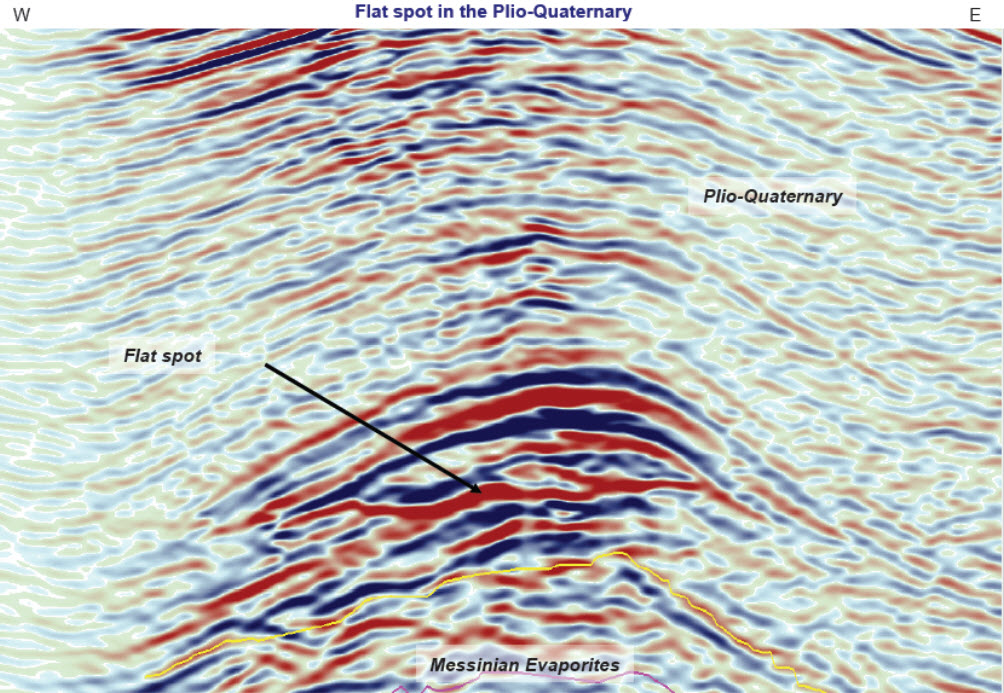
These are all observations consistent with hydrocarbon accumulations:


http://www.kittiwake.com/sites/default/files/used-oil-sampling.jpg
Only the bottom two images are confirmations of hydrocarbon accumulations. The top two are high quality direct hydrocarbon indicators… Anomalies consistent with hydrocarbon accumulations, excellent oil and gas prospects. At best, this is where exoplanet detection is today.
When exoplanet detection gets to the level of the bottom two images, they will have confirmed the discovery of exoplanets. Right now they have a large portfolio of excellent prospects.
“My observation is that when they announce that they have confirmed the discoveries of exoplanets, it is analogous to an oil company saying they’ve confirmed an oil discovery on the basis of high-grading a seismic amplitude anomaly… without ever drilling a well.”
Err no. it is not vaguely analogous.
The process is called inference to the best explanation.
There isnt anyone I know doing this work that would characterize it as a confirmed discovery. That’s your straw man.
There isnt any one of them that would accept your analogy.
It is what it is. An Inference to the best explanation. The way you question it, is not by Analogy.
the scientific way to question it is to propose a different explanation.
Until then, the inference to the best explanation is that these anomalies are caused by planets.
I think I questioning how these discoveries are characterized by the media rather than by the scientists.
By your analogy dave, the moon wasnt discovered until we brought back rocks.. and the sun? still not discovered.. its only signals in various spectrum. you need a bottle of plasma.
Read Quine. Two dogmas of empiricism
We didn’t need to discover the Moon. We could see it with the naked eye and directly measure it.
When Pluto was discovered, it was a planet. As it was analyzed more closely, with greater knowledge about large objects in the Solar System, Pluto was re-categorized as a Trans-Neptunian Object. Closer examination of these exoplanets will probably reveal that some of them aren’t planets.
Since we will not be flying space probes through the Trappist-1 system or any other solar systems apart from our own, I suppose my objection to calling these confirmed discoveries of exoplanets is a bit pedantic, if not pointless.
This is so sad. You know I bet if these guys had happier models that showed life might exist on all the planets, they would be much happier in their jobs and their lives. Maybe someone can help them come up with happier models and make the world a better place for them and us. Since it’s all science fiction anyway….Be Happy!!!
Just more catastrophic climate fantasy.
Fantasy that matches prior illusions painted by the climate faithful in their dark dreams.
From the paper: <a href=https://arxiv.org/ftp/arxiv/papers/1703/1703.05815.pdf"Assessing the Habitability of the TRAPPIST-1 System Using a 3D Climate Model"
Forget large quantities of ultra-violet sunshine; instead there will be large quantities of infrared and red light.
Now, how do those infra-red atmospheric absorption frequencies work on incoming dwarf starlight?
Every thing known about the planets themselves are assumptions. Assumptions that make many of the current climate assumptions seem almost real.
Almost.
“TRAPPIST-1 system assuming atmospheres comprised of N2, CO2, and H2O, following the traditional assumptions for terrestrial planetary atmospheres within the habitable zone”
Isn’t amazing that Colorado Edu. teaches their researchers to automatically assume a planet is inhabited by Earth type carbon based life? Skip all of the pre-life atmospheric stages and go directly home.
Yes, home! Their pallid attempt at modeling Earth by pretending a distant solar system is just like Earth; with Earth dooms as predicted by the rabidly devoted climate delusional.
It’s only logical, really, … forecasting climate for invisible planets.
Hey, if you can’t go there, then you really can’t prove our models wrong, even though they are wrong on the planet that you CAN go to.
. . . another indicator of the value of climate models, … as science fiction,
Excellent! The fewer models that can be verified, the better for the researcher!
What’s the difference between a model train and a climate model? — When a model train crashes, it’s fun. When a climate model crashes, it’s funded.
The tendency to approach the unknown with a great deal of certainty says something really important, but I’m not sure if it’s about optimism or something entirely less flattering.
“he made the assumption that the seven planets are – or had once been – ocean-covered, with atmospheres comprising nitrogen, carbon-dioxide and water vapour.”
I find it interesting that the name TRAPPEST-1 is used, as the Miller-Urey experiment showed that amino acids could not derive from simple atmospheric gasses unless TRAPS are used to separate amino acids produced from destructive tars also produced in the experiment.
SR
Miller, S.L., Production of some organic compounds under possible primitive earth conditions, J. American Chemical Society 77:2351–2361, 1955.
SR
https://en.wikipedia.org/wiki/TRAPPIST
Telescope located in Chile’s Atacama Desert region.
Miller-Urey is mainly of historical interest now. All the component complex compounds of living things have been shown both to occur in space, delivered to earth on meteorites, and/or readily to self-assemble under Hadean and Archean Eon earth conditions, which are now known much better than in the 1950s, when incorrect assumptions were made about the early atmosphere.
https://en.wikipedia.org/wiki/Murchison_meteorite
Loaded with amino and nucelic acids and lots of other organic compound constituents of the complex chemicals of life. Ditto other meteorites. Organic compounds are also observed in space.
As for home cooking here on earth from simpler chemicals, nuthin’ says livin’ like the goodies coming from the Sutherland lab and others around the world:
Common origins of RNA, protein and lipid precursors in a cyanosulfidic protometabolism
http://www.nature.com/nchem/journal/v7/n4/full/nchem.2202.html
Chimp, from your Nature link:
“Common origins of RNA, protein and lipid precursors in a cyanosulfidic protometabolism”
was the title, but:
“We show that precursors of ribonucleotides, amino acids and lipids can all be derived by the reductive homologation of hydrogen cyanide and some of its derivatives,….”
was the text.
The authors only derived precursors of ribonucleotides, which themselves are merely precursors of RNA. So, they derived precursors of precursors. That is 2 orders of magnitude below RNA.
The authors also only derived precursors of amino acids, which are precursors of proteins. Precursors of precursors, 2 orders of magnitude short of proteins as well.
You might as well claim that the Earth is about to go BOOM in a nuclear explosion because uranium is a precursor to a nuclear bomb…
SR
Chimp March 22, 2017 at 12:57 pm:
“earth conditions, which are now known much better than in the 1950s, when incorrect assumptions were made about the early atmosphere.”
Mitch, please list the current assumptions about Earth’s early atmosphere compared to those incorrect assumption of the ’50s.
By the way, Miller-Urey experiment as published did NOT employ the standard assumption of the ’50s for the Earth’s early atmosphere because they had already determined that no amino acid could be derived from it. Ammonia gas was added to enable formation of organic compounds even though it was understood to be a product of the biosphere, not a precursor. That is why their title included the phrase “possible primitive earth conditions”
SR
Chimp March 22, 2017 at 1:06 pm
https://en.wikipedia.org/wiki/Murchison_meteorite
Loaded with amino and nucelic acids and lots of other organic compound constituents of the complex chemicals of life. Ditto other meteorites. Organic compounds are also observed in space.
==============================================================================
I didn’t want to neglect this claim lest I leave the impression you were on to something.
In order for his hypothesis to be viable, Urey stated the concentration of favorable organic compounds in the early oceans would need to about 10%. This level of organic compounds is 100 times more concentrated than city sewage before treatment. For meteorites to deliver organic compounds in the quantities needed for even a fraction of the concentration Urey stated was needed would have required
a level of bombardment that would have boiled the early oceans, and we all know what boiling does to amino acids…
SR
Stevan,
Meteorites could easily have delivered all the constituent compounds needed for life on earth, but the fact is that they need not have done so, since the same chemicals were made in our own ancient oceans from less complex organic compounds.
Nucleobases abound in meteorites. Stitching them together with ribose sugars has been show to be an ordinary, every second occurrence in Hadean oceans. The phosphate backbone reaction is catalyzed by PAHs, vast armadas of which exist in interstellar space.
https://www.nasa.gov/topics/solarsystem/features/dna-meteorites.html
Both ET bombardment and local production of all the constituents of life made then abundant on the early Earth.
Stevan Reddish March 23, 2017 at 12:25 pm
As I already pointed out, Miller-Urey doesn’t matter. It’s interesting in that it shows how easy it is to create complex organic molecules from simpler compounds, but today that’s not surprising, since we see so many amino acids and other big molecules in interstellar space.
Chimp March 23, 2017 at 7:19 pm
As I already pointed out, Miller-Urey doesn’t matter. It’s interesting in that it shows how easy it is to create complex organic molecules from simpler compounds,…
===============================================
Chimp, I started this sub-thread by pointing out that the Miller-Urey experiment had to employ traps to separate amino acids produced from destructive tars also produced. (This is relevant to the statement in the posted article that it is assumed that life would arise from simple atmospheric compounds.) My point about the traps is that any amino acids produced in nature by the mechanism proposed by Urey would have been destroyed by tars also produced as they would not be immediately separated as in the lab experiment. My ultimate point was that the the Miller-Urey experiment actually showed that amino acids, and thus proteins, could NOT easily arise naturally from a simple early atmosphere.
You initially concurred, with the caveat that incorrect assumptions were made in the 1950’s about the early atmosphere. So, how can you now say that Miller-Urey showed how easy it is to create complex organic molecules from simpler compounds??
SR
Chimp March 23, 2017 at 7:17 pm
Stevan,
Meteorites could easily have delivered all the constituent compounds needed for life on earth, but the fact is that they need not have done so, since the same chemicals were made in our own ancient oceans from less complex organic compounds.
================================================
Chimp, your links don’t support your claims.
Your NASA link has the note: “Disclaimer: This material is being kept online for historical purposes. Though accurate at the time of publication, it is no longer being updated. The page may contain broken links or outdated information”
I already pointed out the failure of your “Common origins of RNA, protein and lipid precursors in a cyanosulfidic protometabolism” link in my response here: Stevan Reddish March 22, 2017 at 11:14 pm
Stevan,
Sure they do.
That the link isn’t updated doesn’t mean its information isn’t valid.
There are lots of other links with info on the Murchison Meteorite available, such as this one:
https://www.scientificamerican.com/article/murchison-meteorite/
I don’t know why the other link to the Nature article didn’t work. Here’s a pdf version:
http://www2.astro.psu.edu/users/edf/Patel_2015.pdf
Sorry, but it’s a scientific fact that all the biochemical constituents of life either arrive here from space, readily self-assemble in aqueous solution or both.
This confirmatory finding is relevant:
NASA Detects Metabolic Precursors in Meteorite Dust
https://www.nasa.gov/centers/ames/news/releases/2011/11-65AR.html
Precursors of life are so ubiquitous in the universe that a “soft” form of panspermia seems ever more plausible:
Meteorite-catalyzed synthesis of nucleosides and other prebiotic compounds
http://www.pnas.org/content/112/23/7109.full.pdf
The rapidity with which life arose on earth, as shown by recent discoveries, tends to support this hypothesis.
As for instance in this recent discovery:
https://www.scientificamerican.com/article/were-meteorites-the-origi/
All I know is there’s lots of bad dudes around continually trying to disprove that science is settled-
“This is a huge, major hypothesis, and one that could require the rewriting of any textbooks that discuss paleontology, but that doesn’t mean it’s fully accepted yet. It will be some time before the paleontology community comes to a conclusion on whether or not the full family tree should be re-evaluated, and there may be changes in the ways that certain groups are divided along the way.”
http://www.msn.com/en-au/news/techandscience/a-new-theory-could-overturn-one-of-the-most-central-facts-about-dinosaurs/ar-BByBGh5
And this is most unsettling for settled science and scientists.
Whether theropods are more closely related to sauropods or ornithischians is of interest only to paleontologists. It doesn’t change the fact that dinosaurs arose in the Triassic from a pool of closely related, bipedal omnivores or carnivores.
My personal opinion is that Herrarasaurids lie just outside Dinosauria. They lack the open acetabulum, for instance, otherwise diagnostic of dinosaurs. Others have seen them as basal saurischians or theropods. Their teeth IMO clearly show them to be carnivores, not omnivores, as in this revisionist survey.
David Middleton said: “The direct imaging is not direct observation. A direct hydrocarbon indicator is direct seismic imaging of an oil or gas reservoir. It is not a direct observation of the reservoir. Only a drillbit can enable direct observation of the reservoir.”
This is really a bit silliness. I defer to your experience as a petro-geologist, but I have a hard time trying to swallow the idea that just because I can SEE the cake on the table, I haven’t directly “observed” the cake until my fork takes a chunk out of it & I put it in my mouth & start chewing. If you want to say “Unless you touch it, it’s not direct” that’s fine for you, but for the rest of us mere mortals, simply seeing the light directly reflected from the object itself is direct enough.
Again, deferring to your technical experience (& not sarcastically at all), perhaps it is true that the presence or absence of what might colloquially be termed “oil” cannot be confirmed from the evidence available in your example of seismic “imagery” (not “actual” imagery, but a visual representation of an interpretation of seismic data derived from seismological instruments). However, astronomers don’t need to land on Mercury (e.g.) to have observed it directly, nor do our observations of exoplanets rely solely on “inferred” data. And while it is true that most of them have not been directly imaged (TRAPPIST included), nevertheless the light from them (whether reflected or emitted) in many cases HAS been directly detected, confirmed & quantified, even if our ability to resolve them separately from their stars is still beyond our capability in most (but not all!) cases.
For example, from the following video, which is an interview with the scientists which confirmed that water exists on 51 Pegasi b, Jayne Birkby (Harvard-Smithsonian Center for Astrophysics) makes a similar but more useful distinction than yours when she says: “So this is a direct detection of this planet: we’re not inferring it from what the star is doing; it’s a direct detection, but we do it spectrally, rather than in imaging.” (bold emphasis mine) In other words, they are able to separate the light of the planet itself from the light received directly from the star. The planet is thus directly detected, whether or not they can properly resolve a visible light image of it… let alone stick a drill bit it.
(https://www.youtube.com/watch?v=X6v60Ru7tRY | quoted material begins at 35:19, segment in which direct imaging vs. direct detection discussion begins 34:31)
As I replyed to Steve Mosher, my objection is a bit pedantic, if not pointless, because we won’t be flying a space probe through the Trappist-1 system in any of our lifetimes.
Speak for yourself, Sir! I intend to live forever. ~_^
Thanks for your many fine posts, this one among them.
Can you believe it? I fracking misspelled “replied”! D’oh!!!
Your cake analogy misses the mark. If you can see the cake, you don’t have to discover it.
Regarding your quoted passage, the direct spectral detection of exoplanets is analogous to the direct seismic detection of hydrocarbons. The seismic detection of hydrocarbons is not a confirmed discovery of hydrocarbons. Direct hydrocarbon indicators occasionally lead to dry holes.
Flying a probe through the Trappist-1 system would be analogous to drilling a well. Since we won’t be flying a apace probe there in our lifetimes, these exoplanets are about as confirmed as they will ever get.
Effect of high-energy radiation from TRAPPIST-1 on its planets:
https://academic.oup.com/mnrasl/article-abstract/465/1/L74/2562607/Strong-XUV-irradiation-of-the-Earth-sized?redirectedFrom=fulltext
Even in our solar system until a few years ago it seemed that life could be an exclusive on the planet Earth. Today with space exploration, we do know that there are many unexpected places where microbial life could exist (Mars, Europa, Enceladus), however it is difficult to have the evidence.
TRAPPIST 1 is very close, on an astronomical scale, but still far increbibilmente to humans. So it’s even more difficult to have data to see if there is life. The climate simulations are important but only one path to follow, we will have the evidence definitife by direct observation. So we have to wait 2018 and 2024, when it will become operational JWST (NASA) and E-ELT (ESA), which will be able to study the atmosphere of these planets and determine if there are gases that can be produced only by forms of life.