Full story here
0
0
votes
Article Rating
I know, there are some here who must think I’m a very cynical person, but …
“Expert: Scientists exaggerated coral bleaching story”
is a very generic phrase where “coral bleaching” could easily be replaced with:
Arctic Ice
or
rising sea level
or
Polar Bears
or
snowless winters
or
bees
or
…
(sorry, WordPress is giving me an error saying I’m attempting to post a list without an “end of file” marker)
Looking at a somewhat detailed chart of the ocean currents in that region,
the area most affected is distinguished by being bathed in water from a branch of the South Equatorial current that passes through the Coral Sea by way of the channel between Vanuatu and the Solomon Islands – a potentially active thermal vent area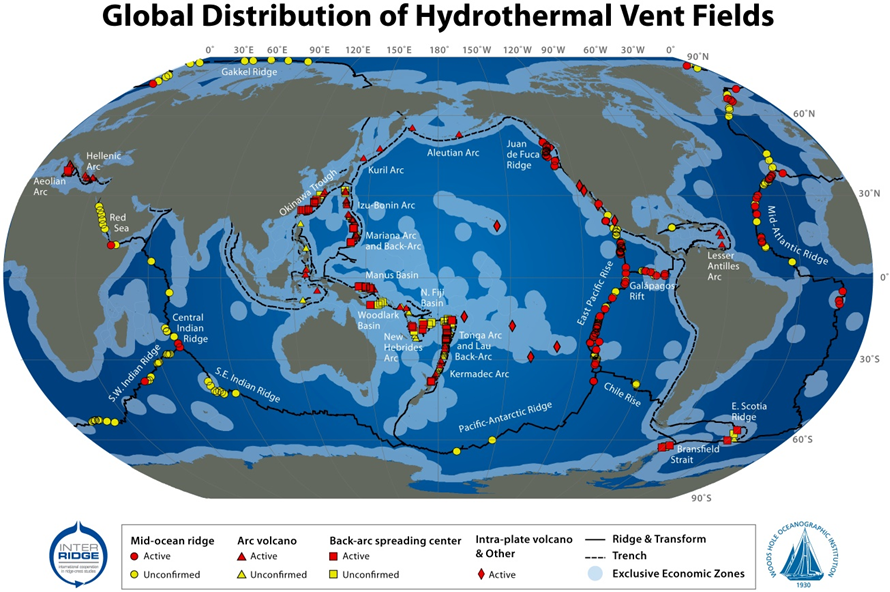
I would want to sea the water chemistry all along the Great Barrier reef before I tried to indict marine warming.
“The Australian”, if it has been quoted correctly, has continued it’s extreme bias, it takes very little searching to find that they have only given part of the story. The story is now a complete mess coming from all over the place, but it is advisable to read all the things you can find about it and then you may come to the conclusion that it is pretty difficult to find who said what and to whom. Relying on newspaper reports is pretty unedifying. The hero in the post seems to be Russell Reichelt who says “it is frightening”. That is apparently not believed to be true by most commentators on this blog.
I agree. I also think that WUWT should produce an article on the actual report from the reef authority, and Russell Reichelt’s position on the state of the reef now, and going forward as temperature increases.
Sure, basking in the warm glow of righteous indignation feels good, but isn’t what the report actually says more important? Surely that’s worth an article.
Well Austin says:
TED link: http://tedxtalks.ted.com/video/Coral-Gardening-Frontline-in-th
And here on YouTube: https://www.youtube.com/watch?v=7PRLJ8zDm0U
As far as I see, it seems there was an El Nino or something. Maybe it’s unprecedentedness is the cause of the irretrievability of this anthropogenic-rooted disaster. Oh wait, El Ninos are natural. Never mind.
Must be the CO2. Amazing how CO2 can warm one patch of ocean before the rest. It kinda contradicts my understanding that the catastrophic warming would be global with nearly no change in the tropics and a pronounced change in the Arctic and Antarctic. Sure got that wrong.
Lots of talk about coral bleaching due to warm sea temps, but I have not seen any sea temp data from the GBR region to see what temp values were responsible, how long the reef was exposed to above normal temps or indeed if sea temps were responsible at all. Are there any daily sst values available?
There are many published papers about the bleaching at Great Barrier Reef, which has happened before 1998. Glynn 1993 is a good example of that:
Mass coral mortalities in contemporary coral reef ecosystems have been reported in all major reef provinces since the 1870s (Stoddart 1969; Johannes 1975; Endean 1976; Pearson 1981; Brown 1987; Coffroth et al. 1990). Why, then, should the coral reef bleaching and mortality events of the 1980s command great concern? Probably, in large part, because the frequency and scale of bleaching disturbances are unprecedented in the scientific literature. For example, no less than 60 major “coral reef bleaching events” (Fig. 1 a) were reported over the 12 year period, 1979-1990 (Coffroth et al. 1990; Williams and BunkleyWilliams 1990; Glynn 1991), compared with 45 “mass coral mortalities” (Fig. 1 b, c) caused by various other disturbances. In contrast, only three bleaching events were reported among 63 mass coral mortality records during the preceding 103 years (1876–1979; Coffroth et al. 1990; see Fig. 1 caption for additional references). ”
However, this is not as simple as it sounds:
“An alternative explanation for the increased frequency of disturbances to coral reefs can be attributed to more observers and a greater interest in reporting in recent years.”
… was anyone interested about bleaching before 1980s? Was there anyone making scientific observations and storing that data? It seems the answer is: No.
The connection between ENSO events and bleaching was already well known at 1993:
“Most of the coral reef bleaching events of the 1980s occurred during years of large-scale ENSO activity (Glynn 1988 a; Jaap 1988). Four bleaching events were reported in the non-ENSO year of 1988: two occurred first in 1987 and continued into 1988 and two were confined to 1988. ENSO conditions known to cause coral bleaching and mortality include (a) sudden sea level drops resulting in reef exposures and reduced circulation, (b) low cloud cover, increased irradiance and warming of shoal reef waters, (c) high rainfall and lowered salinities, (d) largescale sea warming, and (e) calm seas with doldrum-like
conditions. During ENSO events, conditions “a” and “b” often occur in the western Pacific, “c” and “d” in the
central and eastern Pacific, and “e” in the western Atlantic. The strong association of such ENSO-generated stressors with bleaching is indicated in Fig. 1, which depicts ENSO events and their respective durations and intensities. A Fisher exact probability test demonstrated a significant relationship between ENSO years and coral bleaching during 1960-1990 (P=0.012)and 1980-1990 (P=0.030). Before 1979-80, coral reef bleaching was reported only during the 1963-64 and 1972-73 ENSO events even though ENSO events of moderate or stronger intensity occurred every 3.9 years on average from /870- 1990 (Quinn et al. 1987). ”
… so anyone who is trying to argue that bleaching was first observed at 1998 has either studied the science of the bleaching poorly or is lying.
ftp://www0p.isis.unc.edu/pub/marine/brunoj/Bleaching%20papers%20for%20NCEAS%202/Glynn%201993_coral%20bleaching.pdf
Arc Centre of Excellence Coral Reef studies says 35% of GBR killed/dying(impact in North and central GBR) :
https://www.coralcoe.org.au/media-releases/coral-death-toll-climbs-on-great-barrier-reef
Possibly La Nina can save the day?
Here’s the problem…22% of the reef died from the unusually warm waters, exacerbated by the previous El Nino event…It was worse where the waters were warmer in the northern tropics, not where it was more polluted. But these events are becoming more frequent, and this makes recovery much harder. If the waters become even warmer with the next major El Nino event, the death rate could well be much higher.

This is a biggie. What makes it a biggie is that the Head of the Government-run department is speaking out against intentionally bias claims of climate change induced destruction of the Great Barrier Reef
Great Barrier Reef: scientists ‘exaggerated’ coral bleaching
By Graham Lloyd -The Australian
There is growing scientific conflict over bleaching on the Great Barrier Reef. Picture: Tourism Queensland
Activist scientists and lobby groups have distorted surveys, maps and data to misrepresent the extent and impact of coral bleaching on the Great Barrier Reef, according to the chairman of the Great Barrier Reef Marine Park Authority, Russell Reichelt.
A full survey of the reef released yesterday by the authority and the Australian Institute of Marine Science said 75 per cent of the reef would escape unscathed.
Dr Reichelt said the vast bulk of bleaching damage was confined to the far northern section off Cape York, which had the best prospect of recovery due to the lack of onshore development and high water quality.
The report emerged as Malcolm Turnbull and Bill Shorten traded political fire on the reef’s future this week at the halfway point of the election campaign.
As Labor announced $500 million towards protecting the reef, the Opposition Leader said: “We will invest in direct environmental management. We will invest in science and research. We will invest in proper reef management.’’
He said if Australia did not spend the money on the reef, “it is in serious danger of being irreparably damaged. If we do not act, our children will rightly ask us why didn’t we.’’
…
The political debate and the release of the authority’s survey results highlights a growing conflict between the lead Barrier Reef agency and the National Coral Bleaching Taskforce headed by Terry Hughes.
Dr Reichelt said the authority had withdrawn from a joint announcement on coral bleaching with Professor Hughes this week “because we didn’t think it told the whole story”. The taskforce said mass bleaching had killed 35 per cent of corals on the northern and central Great Barrier Reef.
Dr Reichelt said maps accompanying the research had been misleading, exaggerating the impact. “I don’t know whether it was a deliberate sleight of hand or lack of geographic knowledge but it certainly suits the purpose of the people who sent it out,” he said.
“This is a frightening enough story with the facts, you don’t need to dress them up. We don’t want to be seen as saying there is no problem out there but we do want people to understand there is a lot of the reef that is unscathed.”
Dr Reichelt said there had been widespread misinterpretation of how much of the reef had died.
“We’ve seen headlines stating that 93 per cent of the reef is practically dead,” he said.
“We’ve also seen reports that 35 per cent, or even 50 per cent, of the entire reef is now gone.
“However, based on our combined results so far, the overall mortality rate is 22 per cent — and about 85 per cent of that die-off has occurred in the far north between the tip of Cape York and just north of Lizard Island, 250km north of Cairns. Seventy-five per cent of the reef will come out in a few months time as recovered.”
Former climate change commissioner Tim Flannery described diving on the Great Barrier Reef near Port Douglas recently as “one of the saddest days of my life”
…
Dr Reichelt said Dr Flannery’s language had been “dramatic” and “theatrical” and his prognosis, although of concern, was “speculative”. Dr Reichelt also rejected reports, based on leaked draft documents, that improving water quality would cost $16 billion.
He said the interim report had been rejected by a board of which he was member and “taken totally out of context” in media reports.