This year the solstice occurs on Tuesday December 22nd at 04:49 GMT, about 15 hours from the time of this posting. This thought provoking article highlights what the ancient people in what we now call Ireland knew 3200 years ago.
One Moment in Time: The Solstice Seen from Newgrange

Deep inside the world’s oldest known building, every year, for only as much as 17 minutes, the sun — at the exact moment of the winter solstice — shines directly down a long corridor of stone and illuminates the inner chamber at Newgrange.
Newgrange was built 1,000 years before Stonehenge and also predates the pyramids by more than 500 years.
Lost and forgotten along with the civilization that built it, the site was been rediscovered in 1699. Excavation began in the late 1800s and continued in fits and starts, until it was undertaken in earnest in 1962. It was completed in 1975.
Seen as a tomb, the function of Newgrange in regards to the solstice wasn’t known until 1967 — and then by happenstance acting on a hunch. It was in December of 1967 that the astronomical alignment was witnessed and understood:
Michael O’Kelly drove from his home in Cork to Newgrange. Before the sun came up he was at the tomb, ready to test his theory.’I was there entirely alone. Not a soul stood even on the road below. When I came into the tomb I knew there was a possibility of seeing the sunrise because the sky had been clear during the morning.’
He was, however, quite unprepared for what followed. As the first rays of the sun appeared above the ridge on the far bank of the River Boyne, a bright shaft of orange light struck directly through the roofbox into the heart of the tomb.
‘I was literally astounded. The light began as a thin pencil and widened to a band of about 6 in. There was so much light reflected from the floor that I could walk around inside without a lamp and avoid bumping off the stones. It was so bright I could see the roof 20ft above me.
‘I expected to hear a voice, or perhaps feel a cold hand resting on my shoulder, but there was silence. And then, after a few minutes, the shaft of light narrowed as the sun appeared to pass westward across the slit, and total darkness came once more.’
Since that time, people from all over the world have made the pilgrimage to Newgrange to bear witness to this ancient ritual begun over 5,000 years ago and only brought back into the light for the last 40.
The unknown makers built well. And they built for a very long time:
Five thousand years ago, the people who farmed in the lush pastures of the Boyne Valley hauled 200,000 tons of stone from the river bank a mile away and began to build Newgrange. At the foot of the mound, they set ninety-seven massive kerbstones and carved many of them with intricate patterns. Inside, with 450 slabs, they built a passage leading to a vaulted tomb, and placed a shallow basin of golden stone in each of its three side chambers.
Like so much else from the Age of Myth the “why” of it all at Newgrange will never be known. The people who took 20 years to move 200,000 tons of rock left us no clues beyond the spiraling runes cut into the rock. Like all the mysteries that emerge from time with no footnotes, it is left to us to make what meaning we can from them. But perhaps this one monument from the Age of Myth gives us, every year, one small hint.
No matter what time and the universe can throw at us, we still go on. To remind ourselves that we have and shall endure and prevail, we still mark our small planet’s turn around our home star. We mark it with ceremonies every year when, at this moment in time, the sun begins to rise higher to warm us again in our small patch of heaven. And we are still here to bear witness, no matter how shrill the Acolytes of Zero, to the mystery and the gift. We’re a tough race and a rough species. It will take more than a few degrees centigrade, one way or another, to finish us.
The light of the solstice pierces to the heart of the tomb at Newgrange, and then, soon after, the Light of World arrives. Two moments that remind us of the many manifest miracles of God. Reminders that no winter is without end and that The Gift is given to us again. If we can but receive it.
Posted by Vanderleun at American Digest h/t to dbstealey
Discover more from Watts Up With That?
Subscribe to get the latest posts sent to your email.
This part of Ireland appears to have been fairly stable through the Holocene – not depressed by thick ice so not much affected by isostatic rebound. Sea level during Holocene Optimum (about 6000-4000 yBP) is documented 2-5 m higher than today in Ireland
The builders of Newgrange could have transported stones from the coast nearly to the site by barges on the adjacent river –
Fascinating story
Apparenly the quartz facing stones come from south of Dublin, quite a way away. And in the Newgrange museum they have a replica coracle as the transport medium. I just creased up when I saw that. I mean, how can archaeologists be so dumb? The staff had to ask if I was alright, rolling on the floor laughing. Yeah – a coracle on the Irish Sea, that’ll work.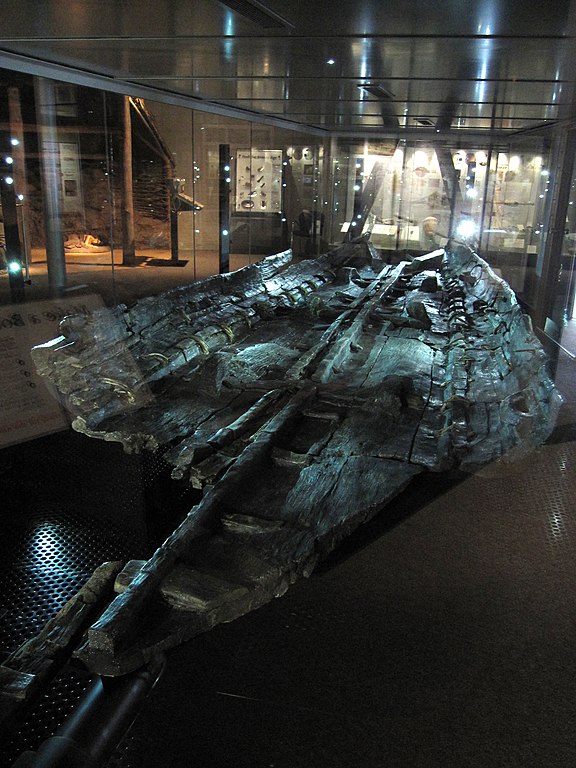
Yes, they must have had barges. And we already have an example from the Bronze Age, circa 1600 BC, the Dover Boat. Its not too much of a leap from the Bronze Age to the Stone Age.
Thought it was an Imperial Star Destroyer there for a second….LOL
Always impressed on how the ancients meticulously understood seasonal movements of the stars and geometry.
All that was needed was to note the position of the lowest sun angle, and what date it occurred on.
For superstitious folks, they may have done this to reassure themselves that the sun would not just keep sinking and the days getting shorter until it was completely gone.
Since they could not just go to a library, or pick up a newspaper to get the date, they had to keep track of the sun in order to know what the date was, and so when to plant crops.
Guessing based on weather would be a very risky proposition for people who had no grain and feed supply store down the road.
And as for other phenomenon like predicting eclipses, this was possible if and only if a given culture happened to discover the saros cycle.
Once that was noted, the rest fell into place rather naturally.
Realize as well that it was likely only one or a few people in a given group or culture had this knowledge, and likely kept it a sort of cultish secret.
Travelers likely transported and traded such knowledge to others in distant locales.
So it may have been the case that one or a few geniuses of a very observant nature learned these things and then passed them along.
Structures like this may have been built to make sure that an untimely death of the keeper of the knowledge did not cause disaster when no one was then able to predict planting times.
Just guessing about all of this…I do not really know.
Menicholas-
Let me be clear-
A light shining down a hallway, or through a window is no big deal. Doors and windows must face some direction right? But that’s not what I find breathtaking. What I find breathtaking is that this mound contained a “roofbox” situated so perfectly that ONLY on the day of the Winter solstice, just at the point of sunrise ( the sunrise that occurs ON the day of the Winter Solstice…not “at the moment of the solstice”-the author is wrong) that roofbox channels the light of the sunrise, directly and exactly INTO the tomb area below in such a way that there is bright light, directly centered inside that tomb for 17 minutes. If you’d read the linked article, maybe you’d have a better idea of why I might think that such a feat “is breathtaking.”
(quoted from the article linked to in the OP)
“Every year since 1967, O’Kelly has returned to Newgrange for the midwinter sunrise, and every year, from his vantage point lying on the smooth sandy floor of the tomb, he has seen the bright disc of the sun fill the roofbox and the shaft of light pass down the passageway, across his face, into the recess at the back of the chamber. Its precision makes him certain that the effect was deliberately engineered.”
“The builders must have sat here on the hillside, perhaps for a number of years, at the winter solstice period, watching the point of sunrise moving southward along the horizon, eventually determining the point where it began to turn back again. Having established this, they could then have put a line of pegs into the ground and laid out the plan of the passage.’ However, there was one more problem to resolve. The roofbox would have had to have been precisely aligned to the horizon and, as each of the stone slabs weighs about a ton, the position of the slit would have had to have been determined before the building began. Add to this the fact that the tomb was built on a hill, with the chamber 6ft (1.8m) above the entrance, and the achievement of the builders of Newgrange is all the more astounding.”
(hence my point about it happening again and again and again…but only when the alignment of the rising sun is just right )
““Every year since 1967, O’Kelly has returned to Newgrange for the midwinter sunrise, and every year, from his vantage point lying on the smooth sandy floor of the tomb, he has seen the bright disc of the sun fill the roofbox and the shaft of light pass down the passageway, across his face, into the recess at the back of the chamber. ”
Ok, since we are now dotting i’s and crossing t’s, i want to doubt this account.
Are we to believe it was clear and sunny every year in the day of the solstice? Many comments are to the effect that it is a rare year that it is so.
(Note: “Buster Brown” is the latest fake screen name for ‘David Socrates’, ‘Brian G Valentine’, ‘Joel D. Jackson’, ‘beckleybud’, ‘Edward Richardson’, ‘H Grouse’, and about twenty others. The same person is also an identity thief who has stolen legitimate commenters’ names. Therefore, all the time and effort he spent on posting 300 comments under the fake “BusterBrown” name is wasted, because I am deleting them wholesale. ~mod.)
BusterBrown@hotmail.com
Another meaningless, distracting comment intended to irritate and confuse, not inform nor improve.
No. The relation of “cold temperatures” to “winter is NOT an absolute one-to-one of day-of-year=Dec 22 to declare “winter starts”, nor does “winter end” when the sun crosses the equator again on March 22. Well, at least to anyone other than the TV newsreaders and their writers. Just as June 22 does NOT begin “summer” (hot days of the year start anywhere from mid-March through early June across the northern hemisphere).
Yes, and for that matter, how is that Winter begins in December anyway?
I think that it would be more accurate to have the Solstice occur in the middle of Winter.
Like Summer beginning at the end of June? Come on!
When are we going to convene a nomenclature summit to resolve these vexing issues?
“Yes, and for that matter, how is that Winter begins in December anyway? I think that it would be more accurate to have the Solstice occur in the middle of Winter. Like Summer beginning at the end of June? Come on! When are we going to convene a nomenclature summit to resolve these vexing issues?”
Lol 🙂 Well you take that up with the Solstice and see what happens! lol Here’s what I’ve been trying to say, more succinctly: (from wiki no less…sigh..bold mine)
“Although the instant of the solstice can be calculated, direct observation of the solstice by amateurs is impossible because the sun moves too slowly or appears to stand still (the meaning of “solstice”). However, by use of astronomical data tracking, the precise timing of its occurrence is now public knowledge. One cannot directly detect the precise instant of the solstice (by definition, one cannot observe that an object has stopped moving until one later observes that it has not moved further from the preceding spot, or that it has moved in the opposite direction)[citation needed]. Further, to be precise to a single day, one must be able to observe a change in azimuth or elevation less than or equal to about 1/60 of the angular diameter of the sun. Observing that it occurred within a two-day period is easier, requiring an observation precision of only about 1/16 of the angular diameter of the sun. Thus, many observations are of the day of the solstice rather than the instant. This is often done by observing the sunrise and sunset or using an astronomically aligned instrument that allows a ray of light to be cast on a certain point around that time. Before the scientific revolution, many forms of observances, astronomical, symbolic or ritualistic, had evolved according to the beliefs of various cultures, many of which are still practiced today.”
My point-without anywhere near our technology, they got pretty darn close. Close enough that if the sky is clear, 5,000 years later, that roofbox still produces a shaft of light at sunrise on the winter solstice.
And shes out…
It is just that words fail to adequately describe the lag the Climate system has from coldest/warmest input (solar) to coldest/warmest response (climate). Something I am sure the ancients knew all about.
RACookPE1978
..
(Note: “Buster Brown” is the latest fake screen name for ‘David Socrates’, ‘Brian G Valentine’, ‘Joel D. Jackson’, ‘beckleybud’, ‘Edward Richardson’, ‘H Grouse’, and about twenty others. The same person is also an identity thief who has stolen legitimate commenters’ names. Therefore, all the time and effort he spent on posting 300 comments under the fake “BusterBrown” name is wasted, because I am deleting them wholesale. ~mod.)
(Note: “Buster Brown” is the latest fake screen name for ‘David Socrates’, ‘Brian G Valentine’, ‘Joel D. Jackson’, ‘beckleybud’, ‘Edward Richardson’, ‘H Grouse’, and about twenty others. The same person is also an identity thief who has stolen legitimate commenters’ names. Therefore, all the time and effort he spent on posting 300 comments under the fake “BusterBrown” name is wasted, because I am deleting them wholesale. ~mod.)
There is a valid point of curiosity here…how is it (in the northern hemisphere), or why should it be that the beginning of December, when is normally very cold in places that get cold, is not Winter, but the middle of March, when it is just about full Spring in many places, is part of Winter?
Similar logic applies to Summer.
Now about that summit…
“There is a valid point of curiosity here…how is it (in the northern hemisphere), or why should it be that the beginning of December, when is normally very cold in places that get cold, is not Winter, but the middle of March, when it is just about full Spring in many places, is part of Winter? Similar logic applies to Summer.
Now about that summit…”
I don’t know anyone that thinks that “Winter” or “Summer” or any of the seasons actually fit into nice little boxes defined by dates. Most people I know think “winter” starts when it gets cold and snows. And summer starts when it gets hot enough to go swimming without shivering upon getting out. In fact, I’ve heard people my whole life say “Well…it’s the first OFFICIAL day of winter now” etc.
Of course, if you shop in retail stores, you KNOW that Valentines season starts on Dec 26th, Easter season starts on February 15th, Summer starts the day after Easter, back to school season starts the day after Summer break begins (locally) Fall/Halloween/Thanksgiving starts the day after the kids go back to school, and the Christmas season USED to start the day AFTER Thanksgiving but doesn’t anymore….:)
My understanding is that the moment of solstice may occur at night, or evening, or any other time at random.
Since this beam of light is only observed at dawn, it is not precisely accurate to say that the inner chamber is illuminated at “the moment” of the solstice.
I am also very curious as to whether the light gets in there, but not quite so directly, for some number of days before and after the solstice?
The sun angle changes very slowly at the solstices…a fraction of the rate of change at the equinoxes…so I would be very surprised that light only shines down the corridor at sunrise on one day a year.
If the solstice is at midnight, does no light appear that year, or is the day before and the day after both have the same size shaft of light in there?
It seems few are aware, the earliest sunrise is not on the solstice, due primarily to the length of a solar day varying throughout the year. One has to use the equation of time for a given latitude to know, or look it up in a table.
The date of perihelion also has a small affect, but latitude is the most important factor.
The closer to the poles, the closer to the solstice is the date of latest sunrise and earliest sunset.
Near the equator, earliest sunset is in November!
So the moment of sunrise continues to get later for many days after the solstice, and the day of earliest sunset is a few weeks before the solstice.
(Here in Fort Myers, for example, the sun rises today at 7:11, but for several days in January it is 7:17)
Of course, the precise location of the sunrise on the horizon is not the same as the time of the sunrise, but it too changes very slowly near the solstices.
A quick check shows the heading of sunrise at Drogheda is close to 131 degrees S. for many days.
http://www.timeanddate.com/sun/ireland/drogheda
The Earth sun relationship is far more complex than many might suppose.
I have won bets from smart people who had never looked up the time of sunrise on any particular day, and were 100% sure that the sun rose earlier and set later on the day after the solstice…it does not.
http://www.sundialsforlearning.com/wp-content/uploads/pages/equation-of-time.gif
http://www.zullophoto.com/Images/analemma_graphic.gif
http://www.bing.com/images/search?q=Analemma+Photography&view=detailv2&&id=EAC5EC25ECCA0D837ACD8FF09EB25195429B7598&selectedIndex=10&ccid=Va8CsKrz&simid=608011454044702929&thid=OIP.M55af02b0aaf302af865af0eb0a822c3ao0&ajaxhist=0
Erin go Bragh!
I wonder if the date of Michael O’Kelly’s visit to Newgrange to witness the sun rise was in 1966 not 1967. In 1967, the solstice occurred at 13:16:44 UTC whereas in 1966 it occurred at 07:28:08 UTC. Apparent sunrise on December 22 1966 at Newgrange occurred at 07:20 UTC. If the sunlight entered the structure as the sun rose and disappeared 17 minutes later the solstice would have occurred almost exactly in the middle of that period on December 22 1966. I rest my case.
http://stellafane.org/misc/equinox.html
http://www.esrl.noaa.gov/gmd/grad/solcalc/sunrise.html
I made an error using NOAA’s sunrise calculator. Sunrise at Newgrange on Dec 22 1966 was 08:42 UTC, just over an hour after the solstice, compared with about four and a half hours before the solstice in 1967.
(Note: “Buster Brown” is the latest fake screen name for ‘David Socrates’, ‘Brian G Valentine’, ‘Joel D. Jackson’, ‘beckleybud’, ‘Edward Richardson’, ‘H Grouse’, and about twenty others. The same person is also an identity thief who has stolen legitimate commenters’ names. Therefore, all the time and effort he spent on posting 300 comments under the fake “BusterBrown” name is wasted, because I am deleting them wholesale. ~mod.)
According to my ephemeris for the 20th century, you are correct.
“My understanding is that the moment of solstice may occur at night, or evening, or any other time at random.”
Then your understanding is incorrect, because the word solstice means Sun-stand still, and is defined as
“either of the two times in the year, the summer solstice and the winter solstice, when the sun reaches its highest or lowest point in the sky at noon, marked by the longest and shortest days.”
And the author’s statement about the exact moment of the solstice occurring at sunrise is ALSO incorrect. It would be correct to say ” at the exact moment of dawn, on the day of the winter solstice” or something like that.
(Note: “Buster Brown” is the latest fake screen name for ‘David Socrates’, ‘Brian G Valentine’, ‘Joel D. Jackson’, ‘beckleybud’, ‘Edward Richardson’, ‘H Grouse’, and about twenty others. The same person is also an identity thief who has stolen legitimate commenters’ names. Therefore, all the time and effort he spent on posting 300 comments under the fake “BusterBrown” name is wasted, because I am deleting them wholesale. ~mod.)
“Actually Billy understanding is correct, because the solstice can occur “at night” because at the exact moment the solstice occurs, the sun is at it’s highest/lowest point somewhere on the planet. Remember, when it’s night where you are, it’s day on the other side of the earth.”
Again, there is no such THING as a solstice that occurs at night, because a solstice is based upon the Sun’s position at NOON, in every time zone, during a specific 24 hour period. Earthlings established a little thing called the International Dateline a long time ago. That “dateline” is defined as “an imaginary line of navigation on the surface of the Earth that runs from the north pole to the south pole and demarcates the change of one calendar day to the next It passes through the middle of the Pacific Ocean, roughly following the 180° line of longitude but deviating to pass around some territories and island groups.” (bold mine)
The day of the winter solstice is a 24 hour period, just like every other 24 hour day is, that lasts for exactly 24 hours for everyone in the world, no matter where in the world they happen to live. The sun and the earth don’t care what the “date” is for the humans living here. The Sun doesn’t suddenly change position relative to the Earth at some “exact moment”. The beginning and ending of the winter solstice in Idaho occurs at a different time than the beginning and ending of the winter solstice in Egypt, but both periods are exactly 24 hours long and have the exact same “date”. And both of them call sunrise the moment that the sun breaks the horizon FOR THEM, no matter what time it is FOR THEM in that location.
In other words, Egypt’s solstice will never coincide exactly in real time with Idaho’s solstice.
Aphan, I am not sure what to say.
I know what you are referring to, but you seem to have no understanding of what i and others are referring to.
Having read many of your well informed comments over many months now, I do not really believe that either.
The solstice is defined and listed in tables everywhere as occurring at a specific moment in time.
Most dictionaries list both definitions, either the specific day that is the shortest of the year, and also, separately, as the specific moment in time that the center of the sun is overhead at the Tropic of Capricorn or the Tropic of Cancer at some point on the Earth.
it only resides there for an instant, as it then reverses direction and heads back the other way.
(Actually, as I noted above, it would be more correct to refer to a specific point in the orbit of the Earth, and this would also make it plain that the event is a moment in time, not a day, by this definition.)
You are talking about something else. The other definition.
I could say that you are wrong, but I would not do that, because I see that there are two separate definitions:
noun
1. either the shortest day of the year ( winter solstice) or the longest day of the year ( summer solstice)
2. either of the two points on the ecliptic at which the sun is overhead at the tropic of Cancer or Capricorn at the summer and winter solstices
Again:
“Either of the two corresponding moments of the year when the Sun is directly above either the Tropic of Cancer or the Tropic of Capricorn. The summer solstice occurs on June 20 or 21 and the winter solstice on December 21 or 22, marking the beginning of summer and winter in the Northern Hemisphere (and the reverse in the Southern Hemisphere). The days on which a solstice falls have the greatest difference of the year between the hours of daylight and darkness, with the most daylight hours at the beginning of summer and the most darkness at the beginning of winter. Compare equinox. ”
The American Heritage® Science Dictionary
Note the word “moment”.
The literal etymology likewise refers to the standing still, which is again a moment in time.
One can use whatever definition of a word one wants, but it is pointless to declare in big letters than any other definitions are false, even if the other definition were not the precise scientific definition.
My take on the subject, from before there was a WWW, is at http://wermenh.com/eqoftm.html
Oh good, this site is still up: http://www.analemma.com/
http://wermenh.com/images/eqoftm.gif
Ric,
“I don’t know who came up with daylight time,”
Being from Philadelphia, I have heard this attributed to Ben Franklin himself.
Although he was an inveterate traveler, and I would not be surprised if he was the popularizer rather than the author of many of the ideas attributed to him.
Have to share a chuckle…every time I scroll past your bottom image here, I think to myself “Hey look….boot-print of the Gods!”
I don’t know why the following got posted WAYYYYY down, instead of under Menicholas’s post at December 21, 2015 at 11:28 am , but I’m going to try again-
Have to share a chuckle…every time I scroll past your bottom image here, I think to myself “Hey look….boot-print of the Gods!”
Annnnndddd nope. This is so bizarre.
And on a lighter note. http://waterfordwhispersnews.com/2015/12/21/newgrange-broken/
Yes, but the aliens that built it incorporated a repair mechanism powered by the sun.
The next time it is not cloudy at sunrise near the solstice, the device will repair itself.
I think it is a game hardly worth the effort disputing which megalithic structure is the oldest when there are so many uncertain factors at play, but can I recommend a fascinating book to your readers about stellar and solar alignments of ancient Egyptian temples – including detailed analysis of foundation dates for Karnak and other major religious sites – by a former Astronomer Royal, J.Norman Lockyer.
His book “The Dawn of Astronomy” deals with a whole range of astronomical alignments and deals with all the issues of obliquities, equinoxes and solstices etc, in arriving at closely argued datings for when temples were first constructed or altered as risings shifted over time. His book was published in 1894 and is well worth the effort of reading. There is also a chapter about Greek temples.
His book also confirms for me that the notion that ancient people were in any way mentally inferior to us just because their material culture was different to ours is pretty much on par with climate activists who think they are a whole lot smarter and “righter” than those who are a little more humble in the face of nature and the past.
Medical services were less than acceptable unless you believe in leeches as recently as a hundred or two years ago. Those really bright folks of the old days had very short average life expectancy. Children were not even considered people as recenty as ancient Rome and could be disposed of by their parents I they so desired. Strep throat or an impacted wisdom tooth could punch your ticket in those good old days.
Note that leeches have made a medical comeback.
Containing blood thinners and anticoagulants, it may well have been the case that leeches could be medically beneficial in certain circumstances.
But, being rather limited in their toolbox back then, they were then overused.
When all one has is a hammer, everything looks like a nail.
Medical services were less than acceptable”. Well of course,medicine has always needed other technologies to be successful.
One of the commentators made the point that European Anthropologists see everything in terms of religion when they find artifacts, such as at Stonehenge.
One of the findings from excavation of Neanderthal sites in Southern Spain were carved curved pieces of horn with horizontal striations cut on one flat surface.
The suggestion is that they were used for ceremonial purposes as sticks for beating out rhythm or rubbing together during shamanistic ceremony.
At the time the Neanderthals had a growth spurt in population before merging with modern man.
However if you look at these artifacts they look like the two sides of a pair of hemostats.
Sure, no handles,no hinge no variable clip.These came later in the evolution of the instrument.
My own view is that they were bound together with sinew and used as hemostats to clamp off the umbilical cords of newborn Neanderthals.
This led to the rebound in Neanderthal survival and the technology was eventually transferred to our ancestors.
If this be true they were not mentally inferior.
Moderately Cross… Excellent last paragraph.
Ditto.
Just posted the same sentiment over at SDA–totally agree.
Been there a few years ago during a round trip in Ireland. Very impressive what the people have done with hauling all those rocks and their knowledge of the sun and stars at that time…
Quite narrow entrance, at solstice the sunlight enters from above the stone all along the tunnel into the main chamber, as you can see in the second photo in the story. Here the entrance from the outside:
http://www.ferdinand-engelbeen.be/familie/ireland/irl_192.jpg
To me that is perhaps the big wonder of these ancient structures. not necessarily the conception of them, but the incredible labors, sustained over many years by what must have been large numbers of people.
Not to minimize the conception, but i suppose I tend to give these people credit for being as human as us, and they had smart and observant people too.
Now, find me the guy who invented how to use friction to make a fire, or first used a wheel, or…and this is a big ‘un…took some cotton fibers and twirled it into a thread, and then wove up a piece of cloth, and then sewed it into a garment…those was some smart cookies.
[Ok, so then they got all stupid and invented shirts for women…no one is perfect 🙂 ]
7th century rulers built a temple for the Sun God in Arasavalli [village] in Srikakulam district in Andhra Pradesh State in India on the East Coast side. The Golden Sun rays fall on the IDOL inside the temple on two times in a year — while crossing the equator south to north and north to south — in March & October 1, 2 & 3 early morning 6.00 am to 6.20 am. It is now a tourist destination.
Dr. S. Jeevananda Reddy
This is a fine website, with animations, on the analemma.
http://www.analemma.com/
It also has a nifty little sungraph you can put on your smart phone. (Not for android, though. Blast.)
“Aphan
December 21, 2015 at 11:40 am
Based on the clues in the Bible, Jesus was born in the Spring, and thus Easter is the celebration that occurs closer to the actual time of year. If Jesus was born in the Spring …
There are amazing correlations in the Bible between the 12 tribes of Israel and the zodiac signs … Interesting stuff.”
Indeed. That’s also the key to understanding the Star reported by the Magi. This fellow has what I think is the best explanation I’ve ever seen:
http://www.eclipse.net/~molnar/
If he’s right, he can give the exact date. Not a slam dunk by any means, but the author took a sabbatical to do the research and he has taken context seriously. As one of my history professors put it: know context, know meaning. No context, no meaning.
In my youth riding a motorcycle through the middle of OZ it was at least 110 in the water bag and cloudless. Desert flat terrain almost forever. I stopped to camp just before sunset, set up a tent then laid on my back to watch. Being no reflection from clouds a dark line started at the horizon and the stars came out in a distinct line across the heavens like a curtain lifting, brights stars in half the sky and blue sky in the rest, special.
As soon as the sky was full of stars the temperature dropped to almost zero in about half an hour, after the heat of the day amazing. In the sand the next morning I found some sea shells that were not eroded, the remnants of our inland sea from ages not long passed.
It would seem to me that OZ and maybe the entire world was a different place in the not to distant past, but what would I know I am only a lowly engineer.
Are you aware that Newgrange was extensively rebuilt in the 60s which led to certain features becoming apparent? I don’t like to be a party pooper here, but living on an island where these things are common, Newgrange sticks out like a sore thumb due to it’s apparent good condition. There are a few megalithic structures with similar features on Ynys Môn, but they look very different from Newgrange.
http://www.irishtimes.com/news/newgrange-got-new-lease-of-light-and-life-in-1960s-rebuild-1.1275165
Yet more den1ar science that need to be reconstructed / re-educated.
No – people could not possibly have constructed this with their hands – the stones are too big.
However the structure is anthropogenic.
It was caused by changes in the CO2 level resulting from human fires and agriculture.
Local anthropogenic changes in CO2 caused hurricanes to blow big pieces of rock together at the site,
embossing symbols and drawings on the sides of the rocks in the process by a mechanism that was recently elucidated (Schmidt, Mann, Oreskes, By CO2 we have been made and without CO2 nothing was made that has been made, Nature 2015).
Furthermore, tornados caused by anthropogenic CO2 in the atmosphere assembled the rocks into their precise arrangement.
Resonance with the precession cycle caused the slit opening to appear which admits a sliver of sunlight at precisely winter solstice every year,
the time and date when annual variations in anthropogenic CO2 output cause the day to have its shortest length.
A lot of folks here should expect a knock on their door soon to arrange their re-education sessions to help understand that its always CO2 wot dunnit.
Great article, I always find it impressive how people from a time gone by meticulously understood seasonal movements of the stars and geometry.
This is my first time hearing about this ancient building, very interesting and Thank you so much for sharing this post..
The sunrise occurs at its southernmost point on the winter solstice. An alignment at this time is easily laid out with 2 markers (sticks or stones) by dead reckoning. It only requires being awake and alert at sunrise, and moving one stone a little if the next day’s sunrise is a bit further south, until the sunrise ceases to move southward. Then you have found the solstice alignment.
The remaining structure can be quickly built around the alignment.
All the talk about graves and ceremonies and rituals is sheer speculation. The builders left no written records and few artifacts.
What counts is that they had an unambiguous and reliable marker for the end one year and the beginning of the next, and a handle on the number of days in a year (365 or 366) – invaluable data for agrarians.
Google has a Doodle for the December Solstice today.
I just saw an article about an ancient Osage Indian cave, with an ancient sun calendar, which is illuminated on the winter solstice. I had never heard of this cave before–it is the Smallin Civil War Cave, near Springfield Missouri, and has been used by humans for 7000 years. Interesting.
http://www.ozarksfirst.com/news/winter-solstice-mystery-at-smallin-cave
And some continue to insist that the stones of Stonehenge were delivered by an ice-sheet! Nuts! I would not give a fig for their supposed learning.
Newgrange is five thousand years old. However, there is a problem with that.
Sunrise assumes its southernmost position at the winter solstice. It only depends on obliquity, nothing else. Currently it is at 132°12′ at Newgrange’s latitude (53°42′). However, obliquity changes.
It is 23°26′ now, but 5,000 years ago it used to be 24°. At that time sunrise at winter solstice occurred at 133°24′, 1°12′ south of its current position. If alignment of roofbox and inner chamber is sufficiently inaccurate to let light in at winter solstice even now, then at the time of construction the inner chamber was flooded with light for a month around solstice at each sunrise.
Which does make the phenomenon somewhat less miraculous.
It is clear to people who study similar spiral designs around the planet during the exact same time period that this culture was moved to build the structure based upon very prominent signs in the sky back then. Apparently, there was a major astronomical event in our solar system that created magnificent plasma discharges between the planets. The people then interpreted these signs in the sky as some kind of divine intervention and built structures to commemorate the event and made drawings to remember it by.