
By Christopher Monckton of Brenchley
The usual suspects have issued yet another “myth-busting” video in their continuing attempt to flog the dead horse of catastrophic Caucasian-caused climate change (CCCCC).
This latest droopy me-too effort is at sciencealert.com.au/features/20142309-26219.html.
Here are the main points in bold face. Science-based responses are in Roman face.
“Overall, temperatures are increasing”. This statement is unscientific because the starting and ending dates are not specified. Temperature has declined since the Holocene Climate Optimum 6000-10,000 years ago. The Old Kingdom, Minoan, Roman, and medieval warm periods were also warmer than the present.
Since 1950 there has been warming, but at only half the rate predicted by the IPCC in 1990.

In the 17 years 11 months from October 1996 to August 2014 there was no global warming at all, according to the RSS satellite dataset, whose output is not significantly different from that of any other global-temperature dataset.

“Storms, droughts, floods, ocean acidification, sea-level rise”: The usual litany. As for storminess, the trend in severe hurricanes, typhoons and tropical cyclones has been downward in recent decades; there has been no trend in landfalling Atlantic hurricanes for 150 years; and the U.S. has enjoyed its longest period without a major hurricane landfall since records began. There is no trend in extra-tropical storminess either, according to the IPCC’s special report on extreme weather.
As for floods, the same report, confirmed by the Fifth Assessment Report, says there is no evidence of any global increase in the frequency, intensity, or duration of floods.
As for droughts, Hao et al. (2014) show that the land area under drought has fallen slightly over the past 30 years.

As for ocean “acidification”, the ocean remains pronouncedly alkaline, with a pH around 8 (where 7 is neutral and values below 7, such as the 5.4 for rainwater, are acid). Why is rainwater acid? Because it is the “missing sink” that scrubs CO2 out of the atmosphere. When the rainfall reaches the ocean, it locally alters the pH at the surface by a minuscule amount. However, where rivers debouch into the ocean (as the Brisbane River does just opposite the Great Barrier Reef), pH can vary locally by large amounts: yet calcifying organisms thrive nevertheless. The oceans are strongly buffered by the basalt basins in which they lie: so our capacity to alter the pH of the oceans by our tiny alteration of the composition of the atmosphere is as near nil as makes no difference. And there is no global measurement network for ocean pH, for two reasons: first, no automated pH measuring device has proven successful; and secondly, notwithstanding the propaganda everyone in the field knows perfectly well that ocean pH is not going to change very much, and that, even if it did, calcifying organisms are well adapted to dealing with it.
As for sea-level rise, the GRACE gravitational-recovery satellites showed sea-level falling from 2003-2009 (Cazenave et al., 2009).

The Envisat satellite showed sea-level rising by a dizzying one-eighth of an inch during its eight-year lifetime from 2004-2012.

The intercalibration errors between the Jason-Topex-Poseidon laser-altimetry satellites are greater than the sea-level rise they pretend to find.

Sea level is probably not rising any faster in this century than it did in the last: and, since there has been no global warming for almost 18 years, there is no particular reason why it should be rising at all. A telling comparison between the reconstructed sea-level changes shown in Grinsted et al. (2009) and the schematic showing surface temperature change in IPCC (1990) indicates that sea-level was 8 in. higher than the present in the medieval warm period and 8 in. lower than the present in the little ice age.

“13 of the last 14 years have been the warmest since records began”: This, too, is an unscientific statement. Records began only in 1850. And, like it or not, there has been no trend in global temperatures for about 13.5 years on the mean of the terrestrial records and on the mean of the satellite records. Yet CO2 concentration has continued to rise at record rates. Absence of correlation necessarily implies absence of causation. The rising CO2 concentration cannot be causing the lack of warming evident over the past couple of decades.
“Not only Arctic but also Antarctic sea ice volume is declining”: Not a good moment to run this argument, given that satellites do not do a very good job of estimating ice thickness, but are at present showing a record high sea-ice extent in the Antarctic, a substantial recovery of Arctic ice even in the summer, and no appreciable change in global sea-ice extent throughout the 35-year satellite record.

“The Sun is dimmer, but temperatures are rising”. The Sun is indeed becoming less active, but global mean surface temperature is not rising. It is not falling either. Perhaps the modest decline in solar activity is being offset by a modest forcing from the additional CO2 we are adding to the atmosphere: if so, then the CO2 forcing is substantially less than the IPCC imagines. Indeed, Professor David Douglass of Rochester University has recently asked me an interesting question: has anyone attempted empirical measurements, rather than modeling, to determine the CO2 forcing? Please let us know in comments if you are aware of any atmospheric measurements on the basis of which the CO2 forcing has been quantified. The value in the IPCC’s recent documents was determined by inter-comparison between three models, and, given the lamentable performance of models in every other field of climate prediction, perhaps Professor Douglass has a point.
“We add 30 GTe CO2 each year, but Nature adds 780 GTe: however, Nature also takes away 780 GTe, so our net effect is to increase CO2 in the air.” Not quite right. We emit 35 GTe CO2 each year at present, but only half of this remains in the air: the rest is scrubbed out by rain or taken up by the ocean, trees and plants. Nor is it wise to assume a pre-existing balance of CO2 sources and sinks. Close examination shows considerable annual variations in the net CO2 increase in the air, suggesting that our monotonic influence is a rather small part of the picture.
“We know the CO2 remaining in the air is substantially manmade because fossil-fuel CO2 has less carbon-13 than the air, and the carbon-13 fraction in the air is falling”. The difference between fossil-fuel carbon-13 content and general atmospheric CO2 content is not as great as was once thought, and the carbon-13 content in the air is falling very slowly. This method of attribution is fraught with measurement and coverage uncertainties.
“The concentration of water vapor, the most potent greenhouse gas, is increasing, causing a positive feedback”. Not all records show the water vapor increasing, particularly in the crucial upper to mid troposphere. The “positive feedback” may even be a negative feedback. If water vapor were causing a strong positive feedback, global temperature should have risen at least as fast as the IPCC predicted in 1990, but it has risen only half as fast, leading the IPCC almost to halve its medium-term predictions of global climate change.
“CO2 lagged temperature change in the paleoclimate, but it acted as a reinforcing or positive feedback once the Milankovich cycles had triggered temperature change, amplifying it 9-fold”. Given the many uncertainties in paleoclimate analysis, no firm conclusion can be drawn as to the magnitude of the CO2 feedback. The IPCC’s Fourth Assessment Report put it at 25-225 ppmv per Kelvin – an order-of-magnitude interval that shows very clearly how unwise it is to assume that CO2 was the main reason for temperature change in the paleoclimate. After all, during the Neoproterozoic era 750 million years ago, equatorial glaciers came and went twice at sea level. There are no equatorial glaciers at sea level today. Yet today, to the nearest tenth of one percent, there is no CO2 in the atmosphere at all.
Now contrast the fact-based responses to the goofy scare stories of the “myth-busters”. If the news media had been willing to print facts instead of extremist predictions, the general population – and the scientifically illiterate politicians who represent them – would be in a better position to judge for themselves whether to be scared about manmade global warming. On the real-world evidence, there is no longer any legitimate pretext for fear, and still less for the “climate action” that that needless fear engenders.
And should not Ban Ki-Moon, having relentlessly ignored facts such as those briefly set out here, resign forthwith and for aye? He abandoned the impartiality that his office demands and took sides with communists and kooks by participating in the fatuous New York useful idiots’ climate march. He must go – and the U.N. with him. What little use it had has gone.
Despite how much I love being lectured by lazy minded bleating fifteen year old bearded hipsters – high on their own grandeur – on subjects I am far more knowledgeable about, I couldn’t bring myself to watch it.. £100 says he invoked the precautionary principle..
Nice shot!
I’ll bet a further $100 that he has lots of bumper stickers on his Prius.
Come on. He’s at least in his later twenties.
HA HA! I also enjoy that particular pastime!
The ‘truth’ in climate change – as rare as a Victoria Beckham smile.
14 of my tallest years have occurred this century. Does this mean I am still growing? That’s great news!
Well played sir.
Great Analogy!
You are way more tolerant than me. After suffering through his hiding the GW pea I only made it halfway through his 2nd point. After he flashed the graph (from Steve Goddard?) that wasn’t attempting to show a trend and claiming it was thus proving the pause doesn’t exist.
I also unsubscribed from his channel (the quality was going downhill anyway).
“Konrad” continues to pick nits while struggling with basic atmospheric physics. The 255 K effective radiative temperature of the Earth (an approximation that leaves latitudinal flux differences out of account) is simply the fourth root of {the mean radiative flux [S(1 – a) / 4] divided by the Stefan-Boltzmann constant}, where S is total solar irradiance of 1362 W/m2 and a is the bond or spherical albedo of about 0.3.
The emissivity with respect to long-wave radiation of the Earth’s radiating surface (which is a mean 10 km above the surface, so that the emissivity of the oceans is scarcely relevant) is close enough to unity to make little difference. So 255 K is near enough as an approximation of the effective radiating temperature. If one wanted a more accurate mean value, one would worry less about the insignificant difference between the long-wave emissivity of the Earth’s radiating surface and unity and more about the latitudinal differences in radiative flux, which, owing to the Hoelder inequality, have a rather larger effect on the result.
Konrad…………….
What do you say??
I do not know why the producer of this video would have someone with large dark glass who looks like of cocaine dealer for college kids, be a good look for exposing the truth. I wouldn’t buy a candy from the guy for charity, since I would assume he stole the candy.
Comments deriding that hipster dufus kid’s appearance are somewhatad hom… just another paradox in the debate. The greatest paradox of all is the entire claim that mankind’s re- insertion of CO2 into the atmosphere is harmful to the planet, when in fact, the added CO2 is a great boon to life. Kiln that limestone! Turn on the lights.
Yes, agreed. My previous comment was a bit of gratuitus flaming. But also implied a valid question as to the wisdom and motivations of the producer.
Guilty as charged. The fact that he looks smug is strictly irrelevant to the smugness of his arguments. I guess.
The appearance of Mr. Smug here is an indication as to who the target audience is.
I’m not part of that target audience. Every kid I’ve ever dealt with that adopts that look has proven to be an ignorant, self-centered twit with very little grounding in Science, or reality of any sort.
In that sense, it’s not an “ad hom”, since my life experience has taught me that people who look like that are NOT to be listened to on anything other than the merit of having or not having fries with my meal.
Monckton of Brenchley: “Absence of correlation necessarily implies absence of causation.”
My preference would be that Lord M. avoid such statements, since they require too much interpretation to be considered true. I am told that it is trivial to design a second-order linear system whose response to a cosine stimulus is a sine: the response would be orthogonal to the stimulus despite the causation.
I should nonetheless note that my (admittedly casual) observations suggest that Lord M. has recently exercised greater effort to make his commentary more bullet-proof, and, if so, he is to be commended.
But, the stimulus here is a monotonic rise in CO2, while the output is varying up and down. Not entirely dispositive, but very nearly so.
I agree.
My point was merely that Lord M. had again over-egged the pudding. His influence, although significant, would be much greater if he didn’t so often compromise valid contentions by advancing invalid arguments in their support. It is frustrating to some of us not so blessed to see him thus squander his talent.
Absence of correlation necessarily implies absence of causation. The fact that the sign of the correlation may be negative as well as positive does not alter that fact. And Mr Born should not be so smugly self-congratulatory: he is prone to make numerous errors himself.
I confess that I am indeed prone to errors, and I would be grateful if Lord Monckton could point any specific one out that I can remedy. In particular, it’s been about half a century since I studied calculus, so I suppose it’s possible that I’ve gotten my sums wrong here:
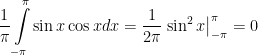
If not, though, it would appear that the correlation of sine with cosine is zero, not negative. Yet I am told that it is possible to design a linear system whose response to a sine is a cosine. If that is true (and some pretty smart guys have assured me it is) then it is incorrect to state categorically that absence of correlation necessarily implies absence of causation.
Yes but, in finite time, you can never be sure the correlation is not merely delayed. The question is, how long do you have to wait? Perhaps if you just said the likelihood of causation is becoming vanishingly small given the lack of correlation, Joe would be happy.
Joe – you need to do an autocorrelation over the full distribution of lag times. This is where the finite time constraint enters in. You can only compare data over lag intervals less than the duration of the record.
Bart:
I’m sorry I can’t respond appropriately to your comment, but I was unable come up with a sense in which autocorrelation is relevant to the issue of whether absence of correlation (i.e., of cross-correlation) necessarily implies absence of causation.
Sorry, yes, I am so used to doing autocorrelations that the correct term failed to transmit. Please substitute “cross-correlation”.
Bart:
I take your meaning. But you have actually demonstrated my point. As you can see, my criticism regarding Lord M’s categorical statements such as the one in question was that “since they require too much interpretation to be considered true.” Yes, there would be cross correlation between the stimulus and a quarter-wave-advanced version of the response. But that’s the kind of interpretation one has to add.
Furthermore, note that my hypothetical was precisely the simplest case for a linear system: a sinusoid. In the case at issue, you would indeed find a correlation between the seasonal temperature and CO2 concentration changes.
But we’re beating a dead horse. I remain of the opinion that Lord Monckton–and, ultimately, human welfare–would benefit if he would resist the temptation to overstate his case. He has a good case. Why compromise it with questionable statements?
I agree M’s statement was too categorical.It’s more than a quibble, but less than a deadly sin, IMHO.
Joe Born September 25, 2014 at 5:44 am
Monckton of Brenchley: “Absence of correlation necessarily implies absence of causation.”
My preference would be that Lord M. avoid such statements, since they require too much interpretation to be considered true. I am told that it is trivial to design a second-order linear system whose response to a cosine stimulus is a sine: the response would be orthogonal to the stimulus despite the causation.
Joe:
first — 2nd order is not a linear system by fundamental definition
2nd — take a sin wave differentiate it you get a cosine wave — however while 90 degrees different in phase the frequency is the same — it would show strong correlation
Rather than nit picking over definitions however we have an annual experiment which disproves the CAGW proffered linkage of CO2 and T — specifically as we look at the detailed Mauna Loa CO2 data we see a well defined annual oscillation superimposed on the secular rise — The CO2 rises from October until April/May then declines rapidly until September and then the cycle repeats Meanwhile there is no such evidence in the Global Average Temperature [irrespective of which data set]
Hypothesis:
1) Mauna Loa CO2 is not global but local to the Northern Hemisphere
2) Annual fluctuation is driven by the rapid growth of Northern Hemisphere temperate plant life from April / May until September / October absorbing atmospheric CO2 and yielding cellulose followed by the cessation of growth in September and then the decay and return of much of the carbon to the atmosphere during the Autumn / Winter
3) Implication is that there is very short residence time in the atmosphere as the annual cycle suggests
4) there is minimal coupling between the Northern Hemisphere dominated by Temperate Vegetation and the Southern Hemisphere dominated by oceanic plankton and Tropical Rain Forests
By the way those who claim that the lack of C-14 implies a fossil fuel origin are missing an obvious fact. C-14’s half life of 5700 years implies that the process of plate technonic burial of C in sediments at Continental edges and its re-emission through a volcano occurs on the 1000s of C-14 half lives. Hence
any CO2 emitted from a terrestrial or submarine volcano will be just as deficient in C-14 as any CO2 from burning fossil fuels. The CO2 emitted from the African and other CO2 Lakes will similarly be old as well.
“Meanwhile there is no such evidence in the Global Average Temperature [irrespective of which data set]”
These are global average temperature anomalies, though. They’ve already had any yearly cycles subtracted out.
” 2nd order is not a linear system by fundamental definition”
I would be grateful for a reference to set me straight on that point. Experts have told me that a linear system is one that can be described by linear differential equations of any order, including second. They are distinguished, I am told, by the fact that the response to a stimulus that equals the sum of constituents is the sum of the responses to those individual constituents. The buzz word they seem to use for this is “superposition.” A system described by second-degree equations would not ordinarily exhibit that property, as I understand it, but one described by a second-order system would if the equations are are first-degree only.
Again, if I have this wrong, I would appreciate a reference that would show me my error.
“take a sin wave differentiate it you get a cosine wave — however while 90 degrees different in phase the frequency is the same — it would show strong correlation”
Just so.
Note that what you’ve essentially done, though, is take a model and correlate the observed response with the model response. The stimulus and response have no correlation, only the modeled response and the observed response. So Lord M’s categorical statement remains untrue.
“We add 30 GTe CO2 each year, but Nature adds 780 GTe: however, Nature also takes away 780 GTe, so our net effect is to increase CO2 in the air.”
This type of statement is baffling to me. Since nature has the awesome ability to take away 780 GTe, somehow it is not able to manage an additional 30 GTe. Is there a contract that forces Nature to say, “780 GTe, I hit my quota, I’m done, time to quit.” Obviously CO2 processsing in the atmosphere is more complex and dynamic than that.
What especially irks me is the notion that Nature and man are seperate entities, we eat, we excrement, we are born, we die, we rot, and yes we exhale CO2 like all mammals do. We affect Nature and Nature affects us like every other living organism. The thought must be that because we have the ability to own iPhones we somehow have control and mastery of Nature itself. This to me is called having a God-complex, which is more unhealthy than 30 GTe of CO2.
I am not saying we should not be wise and responsible about our waste and how we live, but that is a far cry from believing we have control and mastery of Nature itself.
The amount of CO2 in the environment determines the amount of life that can be supported. When CO2 is added it takes awhile (a lag) for the current life to utilize the increase, expand and participate in the carbon cycle. However, over time the added CO2 will drive a larger biosphere and the flow will reach equilibrium. At the present time we have continued to increase the total CO2 faster than life can expand to utilize it. That won’t happen forever.
Equilibrium of CO2 in the atmosphere is illusory, when viewed in a human- scale time frame. Yesteryear’s CO2 looks a lot like today’s limestone- graveled road.
My plants increase their growth on an HOURLY time scale. Not years, not decades. The jiggles in the CO2 record are the yearly vegetation cycle. The belief that the biosphere can’t immediately and rapidly adapt stretches credibility.
Indeed, the static, non-reactive nature of the sinks they have assumed drives their conclusion. Yet, we know just from the fact that the rise is less than the input that this assumption is false.
great comment! We don’t control the earth, more likely it controls “us”. Perhaps, this is all a clever trick by mother nature to re-saturate a CO2 deprived atmosphere with plant food.
RED ALERT; watch out for Shellshock, everybody who runs an internet connected server; security hole in bash (since 20 years); published yesterday, first attacks in the wild. First patches out as well, but still incomplete protection.
Test code:
x=”() { :;}; echo HACKED” bash -c “”
Thanks for the heads up but better test code:
env X=”() { :;} ; echo busted” /bin/sh -c “echo completed”
See http://www.theregister.co.uk/2014/09/24/bash_shell_vuln/
#ClimateJusticeWarriors
#ClimateCommunists
From watching the video, he *knows* it’s a scam. When he cites Cowtan & Way’s Frankenstein global average temperature, as if their use of satellite data to up-adjust ground station smearing our over the Arctic represents “satellite data” of actual temperature, well, he can’t *not* know it’s a scam.
“The Sun is indeed becoming less active, but global mean surface temperature is not rising. It is not falling either. Perhaps the modest decline in solar activity is being offset by a modest forcing from the additional CO2 we are adding to the atmosphere: if so, then the CO2 forcing is substantially less than the IPCC imagines.”
– Perhaps the ocean is giving up it’s heat to make up the difference, with CO2 not providing any measurable forcing whatsoever, modest or otherwise.
I think you have missed a ‘C’: Catastrophic Caucasian Capitalist Caused Climate Change’ – CCCCCC 🙂
I think you meant ‘catastrophic conservative-capalisit-caucasian-caused climate change.’
I’m thinking about starting a website called Citizens Concerned For Catastrophic Conservative Caucasian Capitalist Caused Climate Change, it would be http://www.ccccccccc.org
Also for us up north we could have the Canadian Chapter of Citizens Concerned For Catastrophic Conservative Caucasian Capitalist Carbon Caused Climate Change,
I wish I could like a comment.
Good one Alberta!
elmer, you would love Alberta, assuming you’ve never been,….
Probably would, I like Gordon Lightfoots Alberta Bound.
“The concentration of water vapor, the most potent greenhouse gas, is increasing, causing a positive feedback”
But everyone tells me the awesome thing about hydrogen cars is that their only emission is clean, clean water vapor; none of that messy carbon stuff!
richardscourtney
September 25, 2014 at 12:31 am
Another thing re the excellent Idso paper you link on natural earth (Venus and Mars, too) experiments to determine T effect of doubling CO2 (0.46C/Wm^ -2). He also draws from papers on plankton increase with temp and their emissions of sulphur compounds that nucleate clouds. He neglected to mention that growth in the biosphere is endothermic so it cools, too.
Gary Pearse
True, Idso does not mention several possible mechanisms. His “eight natural experiments” each observes a response of a forcing change. He postulates many mechanisms for these changes but that is secondary to his finding in each of the eight cases. However, Idso’s paper does support your argument
Tha Abstract of Idso’s paper summarises these points in the body of the paper when it says
Richard
Well done. Not inflammatory, well documented, to the point, and most of all factual. The climate obsessed are out of control, out of ideas and long past offering honest arguments. Skeptics have been shown to be correct time after time. This is a great summary of that fact.
Good job
I prefer Catastrophic Anthropogenic Climate Anomalies.
Ok great aarticle but you left out the most important aspect. “Feelings” feelings trump any and all imperical data. For example if you were to make a YouTube version of this article you would be guilty of “hate speech”. Because it would cause hurt feelings. You would be showing no respect for the “feelings” of those who do not share your view (as fact and reality based as it is) even though those same people would be happy if you were jailed for what you have written.
That’s tolerance in our brave new culture.
+1
I love it that he knows exactly how much “naturally” occurring CO2 the planet needs to be in “balance” I think the earth’s carbon cycle is a little more complex than that. If the earth was in perfect balance before man arrived then why do plants double in size when they are provided with more CO2?
You really need to fight videos WITH videos. Most people will go to a video link to hear the other side while only a small fraction will bother to read something these days.
Is that so?
Surely reading something takes very little time compared to watching a video.
isn’t time precious?
Just my opinion. I have no data.
You have to be able to read (or willing to if you can). Then it helps if you can read at a decent speed.
Lord, you still haven’t grasped the CO2 cycle, have you?
Paging Ferdinand…
Nice ad hominem attack, Hans Erren. If you have some knowledge of the CO2 cycle, then why not share it?
it’s the difference between turnover and profit that the lord does not grasp.Read Dietze on CO2. The cumulative contribution of natural sources to the global co2 level is NEGATIVE.
fossil fuel CO2 + natural CO2 source = natural CO2 sink + surplus in atmosphere
surplus in atmosphere = half fossil fuel CO2, ergo natural co2 sink is greater than natural co2 source
QED
Mr Erren has difficulty in understanding the head posting, and in understanding the atmospheric CO2 budget. The reason why only half of the CO2 we emit to air remains there is that there is an additional sink no accounted for by the models (which cannot explain the missing sink). The missing sink is rain.
Monckton of Brenchley
I write to make a nit-pick that I think is important. And I am writing with intention of being supportive although I am disputing one of your (minor) points.
In reply to Hans Erren who supports the views of Ferdinand Engelbeeen you write
I disagree with both of you because the carbon cycle is a dynamic system and not the static system assumed by each of you.
You may well be right that accounting for rain is inadequate because the circular ‘mass balance argument’ fails to adequately account for almost everything and – instead – assumes atmospheric CO2 concentration would not change were it not for the CO2 emissions from human activities (as Alx implies in this thread here).
I don’t know if the observed continuing rise in atmospheric CO2 concentration has a natural cause, or an anthropogenic (i.e. man-made) cause, or some combination of natural and anthropogenic cause(s) but I want to know.
What seems to be happening is that the carbon cycle is moving towards an equilibrium state that it never reaches because that state is constantly changing. The ‘seasonal’ variation in atmospheric CO2 is a response to mechanisms of CO2 emission and sequestration with short (i.e. hours, days, weeks and months). The annual rise in atmospheric CO2 in any year is the residual of the seasonal variation in that year. And there is rise each year because some mechanisms of the carbon cycle have long (i.e. years, decades, centuries) rate constants. Ice core data suggest that time to achieve a change to equilibrium would be ~800 years.
One of our 2005 papers used this assumption of the dynamic system to model the change in atmospheric CO2 concentration using each of six different models: three assumed a natural cause and the other three each assumed an anthropogenic cause. And each of our models matched the Mauna Loa data to within the stated inherent errors without need for any data processing such as the 5-year smoothing used to obtain agreement of the Mauna Loa data with the (ridiculous) Bern Model used by the IPCC.
(ref. Rorsch A, Courtney RS & Thoenes D, ‘The Interaction of Climate Change and the Carbon Dioxide Cycle’ E&E v16no2 (2005) )
The most likely explanation for the rise in atmospheric CO2 concentration is the probable rise induced by warming from the Little Ice Age in past decades. Other explanations for alteration to the equilibrium state exist and the anthropogenic CO2 emission is one possible explanation.
Please note that this post is intended to be supportive of your essay although it disputes the significance of one of your statements. Your essay debunks claims of certainty that significant global warming will be caused by anthropogenic CO2 emissions increasing atmospheric CO2 concentration, and I am stating that the available data does not indicate if the anthropogenic emissions are having any discernible effect on atmospheric CO2 concentration.
Richard
Like similar articles, this one defines the “global warming” as the change along a straight line of the global temperature when this line is fit by a specified procedure (e.g. least squares regression analysis) to a specified global temperature time series. The position in the time-temperature space of this line varies dependent upon the chosen time period. If we chose the period from 1950 we get a slope for the line of 1.37 C per century. If we chose the period from 1996 we get a slope of 0. The amount of the “global warming” varies dependent upon the chosen period.
In legitimate science one forms hypotheses about the future values of variables which, unlike this one, have the property of observability. When observed an observable variable has one value and not many of them.
Assuming you are talking about the “hiatus/pause/interruption” duration, it is actually calculated by carefully choosing a “today” and going back in time until you reach a non-zero value for change, ie, when a trend is present. “Today” is actually rounded to the nearest month because the data are released monthly. Depending on the month chosen for the end date, a start date will bob around a rather broad range, and the specific temperature at the zero change line will bob around a bit, too. It would be interesting to see that variability plotted.
dp:
Thank you for giving the opportunity to clarify. My post addresses the meaning of the phrase “global warming” in the article under review and in the numerous similarly argued articles that have been published in the literature of global warming climatology. In these articles the meaning varies with the interval in time that is selected for linear regression analysis. Let’s suppose this interval extends from 1950 to 2014. According to the article, the slope of the straight line resulting from linear regression analysis is 1.37 C per century. Now let’s suppose this interval is Oct. 1996 to Aug. 2014. According to the article, the slope is 0.
Now let’s compute the amount of the global warming in the 1 thousandth of a century that ends on Jan. 1, 2012. If the slope is 1.37 C per century, the global warming was 0.00137 C. If the slope is 0, the global warming was 0.
On Jan. 1, 2012, the amount of global warming in the previous 1 thousandth of a centurey was 0.00137 C and it was 0. In logic, a variable takes on values one at a time. Here, a variable takes on more than one.
This is one of several logical errors in the structure of modern climatology. Strangely enough, while professional climatologists have raised an alarm about the amount of the “global warming”, they have not yet told us what this term means in a manner that allows scientific research to be conducted. Though allegedly “scientific,” research conducted to date was not.
Terry, you have omitted a significant part of the logic.
..
IF interval start 1950, THEN warming = 1.37C/century.
..
IF interval start 1996, THEN warming = 0.0C/century.
…
There is no “error” the variable in question is conditioned, and in fact only takes on one value at a time.
beckleybud:
Contrary to your claim I’ve not omitted that part of the logic. Instead, I’ve shown that this part of the logic results in the logical inconsistency that the “global warming” takes on more than one value at a single point in time.
No Terry, the actual value does not take on two different values at the same time. The value it takes DEPENDS on which interval you use as a condition for the calculation of the value.
The logical problem is that you want to have both intervals active at the same time, which is your mistake. You only can use one at a time.
beckleybud:
You are correct in stating that “The value it [the “global warming”] takes DEPENDS on which interval you use as a condition for the calculation of the value. The reason for the rule that “you can only use one at a time” is not stated. Please state it.
definitions…
A: interval start 1950
B: interval start 1996
————————-
.
A implies ~B
Meaning if the interval starts in 1950, it does not start in 1996
B implies ~A
Meaning if the interval starts in 1996, it does not start in 1950
———————————
In symbolic logic this can be stated as….
[ (A->~B) & (B->~A) ] -> ~(A&B)
beckleybud:
Thanks for the stimulating discussion. In your argument “A implies ~B” and “B implies ~A” play the role of premises. These premises are consequences of the law of the excluded middle and the law of non-contradiction. Each law is one of the classical laws of thought.
That they are called “laws” can be a misnomer for in the practice of scientific research situations arise that violate both laws; for examples see R. Christensen and Reichert, T: “Unit Measure Violations in Pattern Recognition: Ambiguity and Irrelevancy” in Pattern Recognition, Vol. 8 1976 pp239-245. Thus, in proving a conclusion one cannot assume either law but must prove it to be true. These proofs have not yet come from you. Hint: to prove satisfaction of the excluded middle and non-contradiction one proves satisfaction of unit measure. Unit measure is an axiom of probability theory..
Terry Oldberg,
I always enjoy your comments. So I have a question for you.
I have been asking this question here for a couple of years now:
Can anyone please post testable measurements, quantifying the specific fraction of a degree of global warming [out of the total 0.7ºC of global warming over the past ≈150 years], which is directly attributable to human emissions?
That question goes to the heart of the entire debate. Because up to now, the Narrative has been that human activity is responsible for “half” or “most” of the warming, or some such vague, unquantified opinion. But there are no empirical measurements showing how many tenths, or hundreths of a degree of global warming, out of the 0.7º total, that measure the warming caused by human emissions.
Science is all about measurement. If no one can produce verifiable measurements showing the specific rise in global warming caused by human emissions, then the default position of science, based on the Null Hypothesis, must be ‘zero’. If it is more than that, then produce testable measurements showing just how much global warming humans are responsible for causing.
As of now, there are no such measurements. There are only opinions. It is time for real world measurements, no? Anything else is nothing but evidence-free conjecture.
You still are in error when you state
“On Jan. 1, 2012, the amount of global warming in the previous 1 thousandth of a centurey was 0.00137 C and it was 0. ”
The correct way to state it is….
“On Jan. 1, 2012, the amount of global warming in the previous 1 thousandth of a centurey was 0.00137 C when using 1950 to 2014 as a basis and it was 0 when using 1996 to 2014 as a basis. “.
…
The error you made was using the word AND
It would have been correct to say OR alleviating your mistaken logic
…
So in effect the variable does not take on more than one value.
[1/1000 of one century = 36.5 days. The measured global warming over the past century = 2014_avg – 1914_avg. .mod]
beckleybud:
That the global warming was 0.000137 C AND 0 violates non-contradiction. That the value was 0.000137 C OR 0 satisfies the excluded middle. Your argument amounts to the unsubstantiated claim that non-contradiction is not violated and the excluded middle is satisfied. Can you prove your claim? I don’t think so.
The most recent available monthly data are chosen as the end date for the temperature trend graphs. If “dp” wishes to plot the data in some different way, it should feel free to do so.
Terry, the value is calculated using one, or the other interval. You cannot use both intervals simultaneously.
beckleybud:
Both intervals are used simultaneously when “global warming” has several meanings, one for example being 0 C and the other being 0.00137 C. That the term has several meanings violates non-contradiction and creates the potential for applications of the equivocation fallacy. The solution to both pathologies is disambiguation of “global warming” under which the term references a single numerical value. In promoting disambiguation I find that warmists and skeptics are alike in opposing disambiguation. Warmists like the ability to argue that the climate sensitivity is high. Skeptics like the ability to argue that the climate sensitivity is low. The members of neither group like disambiguation.