
By WUWT Regular “Just The Facts”
If you aren’t familiar with Stratospheric Polar Vortexes, you can get acquainted here, here and here.
“A strong link exists between stratospheric variability and anomalous weather patterns at the earth’s surface. Specifically, during extreme variability of the Arctic polar vortex termed a “weak vortex event,” anomalies can descend from the upper stratosphere to the surface on time scales of weeks. Subsequently the outbreak of cold-air events have been noted in high northern latitudes, as well as a quadrupole pattern in surface temperature over the Atlantic and western European sectors, but it is currently not understood why certain events descend to the surface while others do not. This study compares a new classification technique of weak vortex events, based on the distribution of potential vorticity, with that of an existing technique and demonstrates that the subdivision of such events into vortex displacements and vortex splits has important implications for tropospheric weather patterns on weekly to monthly time scales. Using reanalysis data it is found that vortex splitting events are correlated with surface weather and lead to positive temperature anomalies over eastern North America of more than 1.5 K, and negative anomalies over Eurasia of up to −3 K. Associated with this is an increase in high-latitude blocking in both the Atlantic and Pacific sectors and a decrease in European blocking. The corresponding signals are weaker during displacement events, although ultimately they are shown to be related to cold-air outbreaks over North America. Because of the importance of stratosphere–troposphere coupling for seasonal climate predictability, identifying the type of stratospheric variability in order to capture the correct surface response will be necessary.” Mitchell et al. 2012 – Paywalled
During January 2014 the Northern Stratospheric Polar Vortex appears to have experienced a weak vortex event and displacement, i.e. here is a 10 hPa/mb – Approximately 31,000 meters (101,700 feet) Height Analysis showing the low pressure area of the Stratospheric Polar Vortex being displaced (squeezed) on January 7th;

and this Northern Hemisphere Temperature Analysis at 10 hPa/mb shows the Northern Stratospheric Polar Vortex apparently with two lobes on January 11th, 2014:

Northern Polar Wind at 10 hPa/mb also shows the Stratospheric Polar Vortex still displaced at present (if you click on the picture it will link to an animated version):

– NCEP / National Weather Service / NOAA – Click the pic to view animated at source
and when Polar Wind is overlaid with Temperature, you can clearly see the cold “air from very high altitudes” that descends “through the center of the vortex, moving air to lower altitudes over several months,” “NASA” (Click the pic to animate):

“Large regions in northern Asia, Europe and North America have been found to cool during the mature and late stages of weak vortex events in the stratosphere. A substantial part of the temperature changes are associated with changes in the Northern Annular Mode (NAM) and North Atlantic Oscillation (NAO) pressure patterns in the troposphere. The apparent coupling between the stratosphere and the troposphere may be of relevance for weather forecasting, but only if the temporal and spatial nature of the coupling is known. Using 51 winters of reanalysis data, we show that the development of the lower-tropospheric temperature relative to stratospheric weak polar vortex events goes through a series of well-defined stages, including the formation of geographically distinct cold air outbreaks. At the inception of weak vortex events, a precursor signal in the form of a strong high-pressure anomaly over north west Eurasia is associated with long-lived and robust cold anomalies over Asia and Europe. A few weeks later, near the mature stage of the weak vortex events, a shorter-lived cold anomaly emerges off the east coast of North America. The probability of cold air outbreaks increases by more than 50% in one or more of these regions during all phases of the weak vortex events. This shows that the stratospheric polar vortex contains information that can be used to enhance forecasts of cold air outbreaks. As large changes in the frequency of extremes are involved, this process is important for the medium-range and seasonal prediction of extreme cold winter days.” Kolstad et al. 2010
Here is Northern Hemisphere – Vertical Cross Section of Geopotential Height Anomalies and the Northern Annular Mode (NAM) or Arctic Oscillation (AO) Index, which shows large positive Height Anomalies and the AO swinging negative in January:

And here is North Atlantic Oscillation (NAO) Index for the prior 4 Months, showing a positive swing in mid-January:

So what caused the weak vortex event, displacement of the Northern Stratospheric Polar Vortex and cold air outbreaks?
There are several potential factors:
“A vortex displacement event is associated with anomalously high wavenumber-1 planetary wave activity entering the stratosphere and is characterized by a vortex with a comma-like shape that is shifting equatorward. Often this shifting occurs ‘‘top down’’ and the vortex has a baroclinic structure. Subsequently the Aleutian high, a weak anti- cyclone, encroaches over the pole and is especially dominant at lower levels.”
“A vortex splitting event is associated with anomalously high wavenumber-2 planetary wave activity entering the stratosphere. During such an event the vortex barotropically splits into two ‘‘daughter’’ vortices that tend to align along the 90°E – 90°W axis, with one centered over Siberia and the other centered over northeastern Canada (Matthewman et al. 2009, hereafter M09).”
“Analyses show that the most extreme vortex variability occurs most commonly in late January and early February, consistent with when most planetary wave driving from the troposphere is observed. Composites around sudden stratospheric warming (SSW) events reveal that the moment diagnostics evolve in statistically different ways between vortex splitting events and vortex displacement events, in contrast to the traditional diagnostics.” Mitchell et al. 2011
Planetary Wave 1 activity can be see on this Zonal Wave #1 Amplitude Jan, Feb, March Time Series;

and Planetary Wave 2 on this Zonal Wave #2 Amplitude Jan, Feb, March Time Series:

There was some Planetary Wave 2 activity in early January, however there was strong Planetary Wave 1 activity throughout much of the month.
A second likely factor in the weakening and displacement of the Polar Vortex is Eddy Heat, i.e. “strong negative fluxes indicate poleward flux of heat via eddies. Multiple strong poleward episodes will result in a smaller polar vortex, Sudden Stratospheric Warmings and an earlier transition from winter to summer circulations. Relatively small flux amplitudes will result in a more stable polar vortex and will extend the winter circulation well into the Spring.” NOAA
Here you can see that 10 day Averaged Eddy Heat Flux Towards The North Pole At 100mb neared a record daily maximum in early January:

A third potential factor in Polar Vortex behavior is that “geomagnetic activity (used as a measure of solar wind parameters)” plays a role in the “variability of large-scale climate patterns and on changes in the global temperature.”, i.e.: “We have found positive statistically significant correlations between global temperature and the distribution of surface temperature over Eurasia, the East and Equatorial Pacific and over the North Atlantic for the period 1966-2009 correspond to large-scale climate patterns defined by climate indices. We found very similar positive correlations between geomagnetic activity and the distribution of surface temperature in the mentioned regions. As an effect of geomagnetic storms, energetic particles penetrate from the magnetosphere into the region of the stratospheric polar vortex. The increase of temperature and pressure can be observed over northern Canada. The vortex shifts towards Europe, rotates counter-clockwise and the wind blows from the polar region over Greenland southwards. It diverts the warm flow proceeding northward over the Atlantic, eastward along the deep Icelandic low extending as far as the Barents Sea and takes part in warming Eurasia. The strengthened zonal flow from Siberia cools the western Pacific with the impact on the warming of the equatorial and eastern Pacific when also a distinct 1976-78 climate shift occurred. Processes in the Atlantic and Pacific play a significant role and a time delay (wind forcing over the previous 1-4 yr) appears to be the most important for the relocation of the oceanic gyres. Results showing statistically significant relations between time series for geomagnetic activity, for the sum of climate indices and for the global temperature help to verify findings concerning the chain of processes from the magnetosphere to the troposphere.” Studia Geophysica & Geodaetica, Bucha 2012
A Coronal Mass Ejection (CME); hit Earth around January 1st:
Ensemble WSA-ENLIL+Cone Model Evolution Movie for Median CME Input Parameters – Dynamic Pressure:

and the Magnetosphere was rocking and rolling:

However, potential influences of Solar activity on Polar Vorticity are speculative and in the past Leif Svalgaard has challenged the potential that Solar influences on the upper atmosphere could influence Earth’s climate.
Finally, we have the Wobbly Jet Steam hypothesis put forth by Jennifer Francis, of Rutgers University and other, i.e.:
“The Arctic is heating faster than the rest of the world, hurried along by the disappearance of polar sea ice. Bright white ice reflects energy back into space; dark blue water absorbs it. Arctic temperatures are about 2 degrees Celsius warmer there than they were in the mid-1960s. (The average temperature increase for the Earth’s atmosphere overall is about 0.7 degree C, since 1900.)
In other words, the temperature difference between the Arctic and North America is shrinking. That’s one factor causing wobbliness in the jet stream, the west-east current that circles the Northern Hemisphere, according to Jennifer Francis, research professor at Rutgers University. Normally, that river of air keeps low-pressure cold air contained above the Arctic and holds higher-pressure warm air above the temperate regions, where most people live.
Scientists tend to call the jet stream a “polar vortex,” Francis says.
A slowing in the jet stream has caused it to zigzag, carrying warmer temperatures farther north than usual—and Arctic cold farther south. “The real story,” Francis says, is that the jet stream is “taking these big swings north and south and that’s causing unusual weather to occur in a number of places around the Northern Hemisphere.” Bloomberg Businessweek
I am not sure which scientists beyond Jennifer Francis “tend to call the jet stream a ‘polar vortex,'” as these are two distinct and separate climatic phenomena, i.e.:
“The jet stream consists of ribbons of very strong winds which move weather systems around the globe. Jet streams are found 9-16 km above the surface of the Earth, just below the tropopause, and can reach speeds of 200 mph.” Met Office Whereas “the polar vortex extends from the tropopause (the dividing line between the stratosphere and troposphere) through the stratosphere and into the mesosphere (above 50 km). Low values of ozone and cold temperatures are associated with the air inside the vortex.” NASA
This graphic is helpful in seeing the height and location of the Polar Jet, one of the Jet Streams in relation to the Tropopause, down to which the Stratospheric Polar Vortex can extend:

Additionally, in the following image the Stratospheric Polar Vortex is delineated by the “Arctic Front”, whereas the Jet Stream is delineated by the “Polar Front”:


Jennifer Francis’ comment that “Scientist tend to call the jet stream a ‘polar vortex'” reminds me of this graphic:

But I digress, there are two key weaknesses in the Wobbly Jet Steam hypothesis. Firstly, there does not appear to be a correlation between Sea Ice Area and Extent and the Cold Air Outbreaks. Secondly, it seems highly suspect that the extent of Arctic Sea Ice in September and October could have a significant impact on Stratospheric Polar Vortex behavior in January.
From a correlation perspective, the prior most notable Polar Vortex associated Cold Air Outbreak was the January 1985 Arctic Outbreak:
“The January 1985 Arctic outbreak was the result of the shifting of the polar vortex further south than is normally seen. Blocked from its normal movement, polar air from the north pushed into nearly every section of the eastern half of the United States, shattering record lows in a number of states. The effects of the outbreak were damaging. At least 126 deaths were blamed on the cold snap and 90 percent of the citrus crop in Florida was destroyed in what the state called the “Freeze of the Century.” Florida’s citrus industry suffered $1.2 billion in losses ($2.3 billion in 2009 dollars) as a result of the inclement weather. The public inauguration of President Ronald Reagan for his second term was held in the Capitol Rotunda instead of outside due to the cold weather, canceling the inaugural parade in the process. (Because Inauguration Day fell on a Sunday, Reagan took a private oath on January 20 and the semi-public oath on January 21.)” NOAA
(An interesting aside, on January 12, 2014 “KinkyLipids” changed the Wikipedia January 1985 Arctic Outbreak page from ‘Arctic outbreak’ to ‘cold wave’, ‘Janaury’ to ‘Winter’ and “moved page Winter 1985 Arctic outbreak to Winter 1985 cold wave” because “Sources do not use the term ‘Arctic outbreak’. The term ‘cold wave’ matches other Wikipedia articles”. Not sure why one wouldn’t call “the outbreak of cold-air events” an “outbreak”, but you can visit the new Wikipedia “Winter 1985 cold wave” at the old January 1985 Arctic Outbreak link http://en.wikipedia.org/wiki/January_1985_Arctic_outbreak)
Regardless of what it’s called, the January 1985 Cold Air Outbreak occurred during a time of slightly above average Northern Sea Ice Area, where the January 2014 Cold Air Outbreak occurred during a time of slightly below average Northern Hemisphere Sea Ice Area:

Also, Arctic Sea Ice Extent was within two standard deviations of the 1981 – 2010 average for the entirety of 2013:

and there was signifacantly more Sea Ice Area prior to the recent the strong Cold Air Outbreaks occurred, versus 2012 when the Cold Air Outbreaks weren’t as strong:

Aside from the apparent lack of correlation between Cold Air Outbreaks and Arctic Sea Area and Extend, there is another aspect of Arctic Sea Ice that makes the Wobbly Jet Stream hypothesis even wobblier. The Arctic is mostly land locked and freezes over quickly in the Fall. Thus by December Sea Ice Extent has reached across much of the Arctic:

For the Wobbly Jet Stream hypothesis to be correct, either the approximately 1 Million Sq. km Sea Ice Area Anomaly in September and October must have a long lasting residual effect that lingers into January to disrupt the vortex, or the approximately 500K Sq km anomalies in November and December around the periphery of the Arctic are what must weakened and displaces the Stratospheric Polar Vortex.
Even Kevin Trenberth thinks the melting sea ice, warming Arctic, Wobbly Jet Steam causes cold January weather hypothesis is weak, i.e. “So with regards to the Arctic, there are certainly major changes in the Arctic Sea Ice. And those are biggest in the fall. We’ve had record low Arctic Sea Ice, about 40% decline in Arctic Sea Ice overall, since the 1970’s, in September. But the Arctic fills up in the winter time.” “And so at those times of years the Arctic Sea Ice it seems to me plays a much lesser role. The area affected is a lot less, simply because the arctic is land locked.”
So Planetary Waves, Eddy Heat, Geomagnetic Storms or Sea Ice, what do you think caused the weakening and displacement the Northern Stratospheric Polar Vortex in January 2014?
For an array of real time Northern Stratospheric Polar Vortex graphs and graphics please visit the WUWT Northern Polar Vortex Reference Page.
Dr. S., I was cherry picin some cosmic ray info in one of your many online docs and btw giggles at the “no consensus” part of conclusions.
And this was the bomb..
” ” Alternatively, the calculation of the cosmic ray solar modulation parameter may not be quite cor158
rect for low solar activity – for which the assumption of a spherically symmetric heliosphere is not
159 valid. The issue remains unresolved, although the recent low solar activity combined with an actual
160 measurement of the intensity in the Local InterstellarMedium may eventually provide the empirical
161 evidence needed to settle the matter.””
Kinda, stuff I run into my interstellar, interplanetary and planetary journey..
http://www.leif.org/research/Long-term-Variation-Solar-Activity.pdf
page 9 line 152 did you mean recorded. ? not record
Brant Ra says:
February 2, 2014 at 6:16 pm
I am however certain that if one were to look closely one would find a basic rhythm if you will, that is driven by the sun as a resonant system.
If you are so certain, perhaps you could ‘look closely’ and show us what you find.
Carla says:
February 2, 2014 at 6:19 pm
http://www.leif.org/research/Long-term-Variation-Solar-Activity.pdf
page 9 line 152 did you mean recorded. ? not record
You guessed it!
The problem with the cosmic rays is that there is a large [and unknown] part of the record that reflect climate rather than solar activity.
I see that some people do not been following the winter in the southern hemisphere, and a utter. From August 2013 to October there was the same lock polar vortex. There’s radiation reaches the hole over the Atlantic. Just check the AAO or tell the truth. What was winter in South America?
1st 3 words!! “If your aren’t”
you
[Done. Thank you. Mod]
I think that individual SSW events are more akin to weather than climate change.
However, the frequency and intensity of SSW events changing over decades and centuries in response to changing solar effects on the balance of the ozone creation / destruction process would lead to climate change.
One only needs a small change in the gradient of tropopause height between equator and poles to produce the climate variations that we observe.
Thanks for the post. It is great and hard to find scientific blogs around here.
Let me get this straight..
Warm air moves to the north pole. The air cools and and and becomes more dense. This cold air has to go some where right???
Maybe just maybe a elongation and subsequent disruption in the ‘polar vortex’ is one of the mechanisms for heat and mass exchange between the warmer tropics and the cooler arctic.
It would be interesting to a see a 3 dimensional representation of the airflow immediately preceding, when the polar vortex and following the elongation and subsequent splitting of the polar vortex.
@lsvalgaard
Sun – stratosphere-climate.
Some basic understanding: they are mainly indirect and cumulative (long-term) effects and often delayed – indirect: through ozone and stratospheric water vapor. There are hundreds of papers on the subject.
… but the direct effect is also possible … Perhaps it is atmospheric patterns with mid-latitude decide about polar vortex, not vice versa.
Varma et al. 2012., (http://onlinelibrary.wiley.com/doi/10.1029/2012GL053403/abstract): „The results suggest that during periods of lower solar activity, the annual-mean SWW [Southern Hemisphere Westerly Winds] tend to get weaker on their poleward side and shift towards the equator. The SWW shift is more intense and robust for the simulation with varying stratospheric ozone, suggesting an important influence of solar-induced stratospheric ozone variations on mid-latitude troposphere dynamics.”
Perhaps it is like for NH.
In an e-mail to J. Francis I presented evidence of the lack of correlation between the extent of Arctic sea ice and cold winters on NH, particularly before 2007.
I received this response:
“You are correct that sea ice loss alone is not enough to affect the jet stream appreciably. We link jet stream changes to Arctic amplification, which is caused by a number of factors. Sea ice loss is only one of those factors that affects mainly fall and winter, and mainly the lowest layers of the atmosphere. Earlier loss of the snow cover on high-latitude land contributes to Arctic amplification during late spring and summer, while increasing water vapor content warms upper layers of the atmosphere in all seasons. Other studies have also found that the atmospheric response to sea ice loss alone has not yet been statistically significant as well, but recent analyses of model simulations for the future when ice loss is more dramatic do show a robust response.
Our work also suggests that the same types of extreme conditions will not be experienced year after year in the same location, only that the jet stream will assume a more amplified trajectory. Other atmospheric features likely dictate where ridges and troughs will set up, such as the natural fluctuations of ENSO, PDO, AO, etc.”
semczyszakarkadiusz says: February 3, 2014 at 6:20 am Rutgers University – Global Snow Lab (GSL) – Click the pic to view at source[/caption]
 Rutgers University – Global Snow Lab (GSL) – Click the pic to view at source[/caption]
 Rutgers University – Global Snow Lab (GSL) – Click the pic to view at source[/caption]
 Remote Sensing Systems (RSS) – Microwave Sounding Units (MSU) – Click the pic to view at source[/caption]
 Remote Sensing Systems (RSS) – Microwave Sounding Units (MSU) – Click the pic to view at source[/caption]
 Remote Sensing Systems (RSS) – Microwave Sounding Units (MSU) – Click the pic to view at source[/caption]
 Remote Sensing Systems (RSS) – Microwave Sounding Units (MSU) – Click the pic to view at source[/caption]
In an e-mail to J. Francis I presented evidence of the lack of correlation between the extent of Arctic sea ice and cold winters on NH, particularly before 2007.
I received this response:
“Earlier loss of the snow cover on high-latitude land contributes to Arctic amplification during late spring and summer, while increasing water vapor content warms upper layers of the atmosphere in all seasons. Other studies have also found that the atmospheric response to sea ice loss alone has not yet been statistically significant as well, but recent analyses of model simulations for the future when ice loss is more dramatic do show a robust response.”
In terms of Snow Cover, per Rutger’s data, 2013 Northern Hemisphere Winter Snow Cover was the 4th highest on record;
[caption id="" align="alignnone" width="578"]
2013 Northern Hemisphere Spring Snow Cover was the 5th highest since 1997:
[caption id="" align="alignnone" width="578"]
and 2013 Northern Hemisphere Fall Snow Cover was the 4th highest on record;
[caption id="" align="alignnone" width="578"]
Given the high levels of snow cover during 2013, I cannot see how “loss of the snow cover on high-latitude land contributes to Arctic amplification during late spring and summer” could be a significant factor in this winter’s cold air outbreaks.
In terms “increasing water vapor content warms upper layers of the atmosphere in all seasons”,
RSS Northern Temperature Lower Stratosphere Anomaly (TLS) was -4.1778 degrees K/C in December 2013;
[caption id="" align="alignnone" width="578"]
RSS Northern Polar Temperature Troposphere / Stratosphere Anomaly (TTS) was -2.0253 degrees K/C in December 2013;
[caption id="" align="alignnone" width="578"]
RSS Northern Polar Temperature Middle Troposphere Anomaly (TMT) was 0.1319 degrees K/C in December 2013, and below the average of the last 15 years;
[caption id="" align="alignnone" width="578"]
and Northern Polar Temperature Lower Troposphere Anomaly (TLT) Anomalies was 1.1361 degrees K/C in December 2013, and around average of the last 18 years:
[caption id="" align="alignnone" width="578"]
As such, the proposed mechanism of “increasing water vapor content warms upper layers of the atmosphere” does not appear to be occurring, and certainly not in 2013, thus I do not see how “increasing water vapor” or warm “upper layers of the atmosphere” could be a factor in this winters cold air outbreaks.
Jennifer Francis’ hypotheses do not seem to be based on fact, but rather a desire to explain the recent cold air outbreaks within the context of the catastrophic Anthropogenic Global Warming narrative, i.e.:
“Jennifer Francis, a research professor with Rutgers University’s Institute of Marine and Coastal Sciences, said that such extreme weather events can be caused by global warming. Despite the fact that the extreme weather is bitter cold in this case, warming of the arctic can have such an effect because it changes the flow of the jet stream. Sea ice melts, leaving more water surface area exposed to absorb sunlight, leading to further warming.
“Extra heat entering the vast expanses of open water that were once covered in ice is released back to the atmosphere in the fall,” Francis said. “All that extra heat being deposited into the atmosphere cannot help but affect the weather, both locally and on a large scale.”
The arctic is warming about twice as quickly as the rest of Earth, according to Francis, and this shrinking temperature difference slows down the jet stream. It then gets stuck, leaving weather patterns lingering longer than usual.
Yet a study by Colorado State Professor Elizabeth A. Barnes suggests that this explanation oversimplifies the impacts of Arctic warming, as well as the subsequent impacts on severe weather:
‘We conclude that the mechanism put forth by previous studies … that amplified polar warming has led to the increased occurrence of slow-moving weather patterns and blocking episodes, appears unsupported by the observations.'” US News
Forecast polar vortex at an altitude of 30 km on February 8, 2014.
http://oi59.tinypic.com/1shxn7.jpg
How much water vapor is at a height of 30 km?
http://www.cpc.ncep.noaa.gov/products/stratosphere/strat-trop/gif_files/time_pres_TEMP_MEAN_JFM_NH_2014.gif
ren says: February 3, 2014 at 11:01 am Lossow, et al. 2009 – Click the pic to view at source[/caption]
 NKey et al. 2004 – Click the pic to view at source[/caption]
How much water vapor is at a height of 30 km?.
[caption id="" align="alignnone" width="632"]
“The water vapour distribution observed during the Hygrosonde-2 campaign shows some special characteristics, with respect to the general water vapour distribution described in the Sect. 1. The observations exhibit three distinct maxima in the water vapour concentration at about 32 km, 52 km and 57 km. We suggest that this aspect reflects measurements probing both vortex and extra-vortex air in different altitude ranges.
In the altitude range between 15 km and 19 km the observed water vapour concentration is rather constant with altitude. This is usually an indication of extra-vortex conditions. Typical water vapour concentrations outside the polar vortex range between 4 ppmv and 5 ppmv in the altitude range between 16 km (∼400 K potential temperature) and 26 km (∼600 K) (e.g. de la Nöe et al., 1999; Maturilli et al., 2006). This is consistent with the ECMWF operational data which indicates that for most of the altitude range between 15 km and 19 km the polar vortex was not developed at all. From about 4.2 ppmv at 19 km altitude the water vapour concentration is increasing steadily to the first maximum at about 32 km, where a concentration of 7.7 ppmv can be observed. This strong increase in the lower and middle stratosphere is in general typical for the conditions inside the polar vortex (Maturilli et al., 2006). This conclusion is also supported by the analysis of the vortex edge location based on the criteria defined by Nash et al. (1996) using ECMWF operational data. This analysis showed that the location of the Esrange was inside the polar vortex somewhat above 22 km(∼500 K potential temperature). The discrepancy in altitude above which the location of the Esrange is inside the polar vortex is likely attributed to the rather coarse vertical and horizontal resolution of the ECMWF model in comparison to the smaller scale changes across the polar vortex edge. As a small scale deviation from the vortex inside picture drawn above, the observed water vapour profile exhibits a small bite-out slightly below 22 km. The balloon measurement show a minimum concentration of about 4.6 ppmv in this very thin layer, which is characteristic for conditions outside the polar vortex as described above.
The observed maximum in the water vapour concentration at 32 km represents the conventional water vapour maximum for conditions inside the vortex, which is shifted downward due to the large scale subsidence of air inside the polar vortex. The observed altitude of the conventional maximum is somewhat lower than the examples found in the literature. Observations by ACE/FTS from 2004 show this water vapour peak slightly below 40 km altitude (Nassar et al., 2005). Aellig et al. (1996) report about measurements of the Millimeter-wave Atmospheric Sounder (MAS, Croskey et al., 1992) where they observed the maximum at about 1200 K potential temperature, which corresponds to an altitude of approximately 37 km. Results from the Polar Ozone and Aerosol Measurement (POAM) III instrument (Lucke et al., 1999) show occasionally a similar altitude of the conventional water maximum inside the polar vortex as our observation. In the average they find this maximum at an altitude of about 35 km in the Arctic winters between 1998/1999 and 2000/2001 (Nedoluha et al., 2002).
Up to an altitude of about 45 km the water vapour concentration decreases and the measurement has been performed inside the vortex. Above 45 km the water vapour concentration recovers, indicating that the measurement was made outside the polar vortex in this altitude range. At the transition altitude between vortex and extra-vortex at about 45 km
also a nearly monochromatic gravity wave has been observed (see Table 1) which was likely involved in the modulation of the polar vortex edge and the advection of extra-vortex air.
The second water vapour maximum at 51.5 km represents the conventional water vapour maximum for conditions outside the polar vortex. The maximum exhibits a concentration of 7.1 ppmv. This can be compared to typical water vapour concentrations inside the polar vortex that range between 3 ppmv and 5 ppmv in this altitude range, according to ACE/FTS observations (Nassar et al., 2005). A pronounced drop in the water vapour concentration above the second maximum results in a minimum at about 55 km. This minimum exhibits
a water vapour concentration of 5.9 ppmv. Again, distinct gravity wave activity is evident in the wind and temperature distribution in this altitude region. The observed water vapour concentration at this minimum is distinctly higher than those typical concentrations inside the polar vortex determined by ACE/FTS. This may indicate that only air from the edge between vortex and extra-vortex or the edge of a filament has been advected at this altitude. Higher up the water vapour concentration recovers and at 57 km a third distinct maximum (6.8 ppmv) in the observed water vapour distribution can be found. This third maximum is only part of the ex-
pected water vapour decrease above the extra-vortex conventional water vapour maximum around the stratopause. Then a sudden steep decrease of the water vapour concentration
occurs around 60 km, connected to a gravity wave induced very strong wind shear. At 70 km a concentration of only 2 ppmv remains, a typical value for air from inside the polar vortex. Since the wind changed its direction from southwest to southeast, it can be concluded that vortex air was located southeast from the Esrange in this altitude range. Above 70 km the water vapour concentration recovers towards values which tend to be more representative for the extra-vortex, as observed by ACE/FTS.” http://www.atmos-chem-phys.net/9/4407/2009/acp-9-4407-2009.pdf
And here’s the rest of the atmospheric water vapor picture for reference:
[caption id="" align="alignnone" width="632"]
“Some unique characteristics of the polar atmosphere affect the height assignment of cloud and water vapor features used in high-latitude wind estimation. In particular, low water vapor amounts, atmospheric temperature inversions, and low, thin clouds on height assignment can significantly impact the infrared window, CO2-slicing, and H2O intercept methods. Satellite-derived and model ed cloud and atmospheric properties show that 20-35% of polar clouds are low (greater than 600 hPa) and thin (optical depths lessthan 5), with associated height assignment errors averaging 75 hPa. Total precipitable water (TPW) is less than 0.5 cm over most of the Arctic and Antarctic in winter and surface contamination in the 6.7 μm water vapor channel is apparent at TPW amounts less than approximately 0.3 cm. To mitigate the effects of low, thin clouds and the relatively dry polar atmosphere on height assignment, it is recommended that atmospheric motion vectors (AMV) based on clear sky water vapor features be flagged and adjusted for surface effects when TPW is less than approximately 0.3 cm, and that AMVs from low, thin water clouds be flagged and adjusted for cloud optical depth in a post-processing step. ”
https://www.eumetsat.int/cs/idcplg?IdcService=GET_FILE&dDocName=pdf_conf_p42_s5_key&allowInterrupt=1&noSaveAs=1&RevisionSelectionMethod=LatestReleased
Whether water vapor may be responsible for increase in temperature at a height of 30 km?
ren says: February 3, 2014 at 1:28 pm Lossow, et al. 2009 – Click the pic to view at source[/caption]
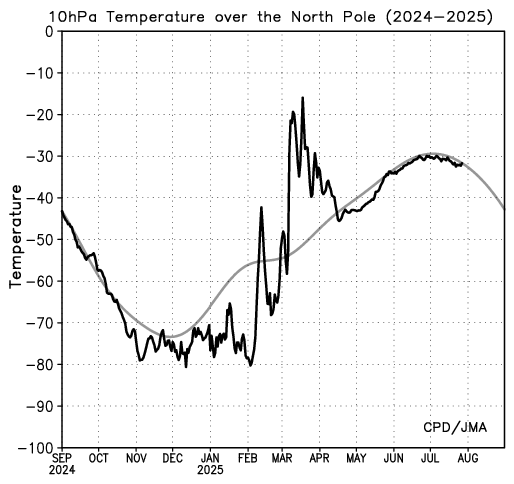 Japan Meteorological Agency – Click the pic to view at source[/caption]
Whether water vapor may be responsible for increase in temperature at a height of 30 km?
What increase in temperature?
[caption id="" align="alignnone" width="632"]
“Time series of stratospheric temperature anomalies from satellite data (Fig. 1) show overall cooling during 1979-2005. The time series are punctuated by transient warming events associated with the large volcanic eruptions of El Chichon (1982) and Mt. Pinatubo (1991), which persist for approximately two years. The overall cooling ranges from ~-0.5 K/decade in the lower stratosphere (~20 km), to over -1K/decade in the upper stratosphere (40-50 km). These values can be compared with warming in the lower atmosphere (troposphere) over the same period of order 0.1-0.2 K/decade. The time series in Fig. 1 show that the stratospheric changes are not monotonic, but more step-like in nature; note that stratospheric temperatures have been relatively constant over the recent decade 1995-2005. ”
http://www.acd.ucar.edu/Research/Highlight/stratosphere.shtml
“Trends in the middle and upper stratosphere have been derived from updated SSU data, taking into account changes in the SSU weighting functions due to observed atmospheric CO2 increases. The results show mean cooling of 0.5–1.5 K/decade during 1979–2005, with the greatest cooling in the upper stratosphere near 40–50 km. Temperature anomalies throughout the stratosphere were relatively constant during the decade 1995–2005.”
http://acd.ucar.edu/~randel/2008JD010421.pdf
And the end of 2013 was below average going into January cold air outbreaks:
[caption id="" align="alignnone" width="632"]
Just found the following Japan Meteorological Agency site that offers a number of useful stratosphere monitoring tools including the one above:
http://ds.data.jma.go.jp/tcc/tcc/products/clisys/STRAT/
Such a temperature increase, for example, in January 2014.
http://www.cpc.ncep.noaa.gov/products/stratosphere/strat-trop/gif_files/time_pres_TEMP_ANOM_JFM_NH_2014.gif
It may otherwise, if water vapor is responsible for changes in temperature of the ozone in the zone? Whether the chemical reaction of ozone formation are emitted energy?
ren says: February 3, 2014 at 9:20 pm NOAA – National Weather Service – Climate Prediction Center – Click the pic to view at source[/caption]
 NOAA – National Weather Service – Climate Prediction Center – Click the pic to view at source[/caption]
 NOAA – National Weather Service – Climate Prediction Center – Click the pic to view at source[/caption]
 NOAA – National Weather Service – Climate Prediction Center – Click the pic to view at source[/caption]
 NOAA – National Weather Service – Climate Prediction Center – Click the pic to view at source[/caption]
 NOAA – National Weather Service – Climate Prediction Center – Click the pic to view at source[/caption]
Such a temperature increase, for example, in January 2014.
http://www.cpc.ncep.noaa.gov/products/stratosphere/strat-trop/gif_files/time_pres_TEMP_ANOM_JFM_NH_2014.gif
Not sure, if you look at the 10 hPa/mb Height Analysis from January 7th it shows a high pressure area, next to Polar Vortex;
[caption id="" align="alignnone" width="578"]
a Temperature Analysis shows a positive temperature anomaly within the high pressure area;
[caption id="" align="alignnone" width="578"]
and Ozone Mixing Ratio shows an “Ozone Hole” in the warm high pressure area, in addition to the “Ozone Hole” within the vortex:
[caption id="" align="alignnone" width="578"]
In comparison, at 30 hPa/mb a Height Analysis shows the same high pressure area;
[caption id="" align="alignnone" width="578"]
and Temperature Analysis shows the positive temperature anomaly within it;
[caption id="" align="alignnone" width="578"]
however the Ozone Mixing Ratio at 30 hPa/mb shows an Ozone surplus in the warm high pressure area:
[caption id="" align="alignnone" width="578"]
I am not sure what the cause of this is, but I suspect that it is associated with the dynamics of vortex, or the disruption of them, versus water vapor or a chemical reaction. If you look at 10 hPa wind overlaid with temperature, clockwise rotating air masses can be seen on each side of the vortex:
http://earth.nullschool.net/#current/wind/isobaric/10hPa/overlay=temp/orthographic=3.21,86.34,197
According to this summary;
http://www.google.com/url?sa=t&rct=j&q=&esrc=s&source=web&cd=1&ved=0CCQQFjAA&url=http%3A%2F%2Fwww.iap.unibe.ch%2Fpublications%2Fdownload%2F3255%2Fen%2F&ei=8onwUo3MPIHlyAGWhoDwDg&usg=AFQjCNHTS75Nwtbo50PRexuTbtEiUTK0uw&bvm=bv.60444564,d.aWc&cad=rja
during a Sudden Stratospheric Warming, “the warming is a consequence of energy deposition by breaking waves and adiabatic heating by strong downward motion in the upper stratosphere.”
I suspect that there are similar dynamical processes in play here as well.
It’s not steam, but ozone is a source of energy in the area of the ozone.
http://www.weatherquestions.com/ozone_layer.jpg
Sorry, this is not water vapor but ozone is a source of energy in the area of the ozone.
I thought this was interesting and may apply conceptually to a degree, as Saturn’s polar vortices differ too like the Earth’s polar vortices.
From http://en.wikipedia.org/wiki/Saturn#South_pole_vortex (with references removed)
“A persisting hexagonal wave pattern around the north polar vortex in the atmosphere at about 78°N was first noted in the Voyager images.
The sides of the hex are each about 13,800 km (8,600 mi) long, which is longer than the diameter of the Earth. The entire structure rotates with a period of 10h 39m 24s (the same period as that of the planet’s radio emissions) which is assumed to be equal to the period of rotation of Saturn’s interior. The hexagonal feature does not shift in longitude like the other clouds in the visible atmosphere.
The pattern’s origin is a matter of much speculation. Most astronomers believe it was caused by some standing-wave pattern in the atmosphere. Polygonal shapes have been replicated in the laboratory through differential rotation of fluids.
HST imaging of the south polar region indicates the presence of a jet stream, but no strong polar vortex nor any hexagonal standing wave. NASA reported in November 2006 that Cassini had observed a “hurricane-like” storm locked to the south pole that had a clearly defined eyewall. This observation is particularly notable because eyewall clouds had not previously been seen on any planet other than Earth. For example, images from the Galileo spacecraft did not show an eyewall in the Great Red Spot of Jupiter.
The south pole storm may have been present for billions of years. This vortex is comparable to the size of Earth, and it has winds of 550 kph.”
So we have two planets whose polar vortices differ significantly. Interesting. Do they differ for some of the same reason(s)?
ren says: February 3, 2014 at 11:30 pm
It’s not (water vapor), but ozone is a source of energy in the area of the ozone.
http://www.weatherquestions.com/ozone_layer.jpg
But there’s barely any UV reaching the polar stratosphere during the polar night, i.e.:
“The stratosphere is heated primarily by absorption of solar ultraviolet (UV) radiation by ozone (known as shortwave heating), while the stratosphere is primarily cooled by emission of IR radiation to space by carbon dioxide, ozone, and water vapor (known as longwave cooling). As the polar winter begins, solar UV heating by ozone ends and the Antarctic stratosphere cools to very low temperatures. ”
http://www.ccpo.odu.edu/~lizsmith/SEES/ozone/class/Chap_11/11_3.htm
Here is a good summary of “Composition measurements of the 1989 Arctic winter stratosphere”:
Simultaneous measurements of the stratospheric burdens of H2O, HDO, OCS, CO2, O3, N2O, CO, CH4, CF2Cl2, CFCl3, CHF2Cl, C2H6, HCN, NO, NO2, HNO3, ClNO3, HOCl, HCl, and HF were made by the Jet Propulsion Laboratory MkIV interferometer on board the NASA DC-8 aircraft during January and early February 1989 as part of the Airborne Arctic Stratosphere Experiment (AASE). Data were acquired on 11 flights at altitudes of up to 12 km over a geographic region covering the NE Atlantic Ocean, Iceland, and Greenland. Analyses of the chemically active gases reveal highly perturbed conditions within the vortex. The ClNO3 abundance was chemically enhanced near the edge of the vortex but was then depleted inside. HCl was chemically depleted near the vortex edge and became even more depleted inside. In fact, by late January deep inside the vortex, HCl was either completely removed up to 27-km altitude, or partially removed to an even greater altitude. NO2 was also severely depleted inside the vortex. In contrast to Antarctica, H2O and HNO3 were both more abundant inside the vortex than outside. While for H2O this is solely a consequence of descent (without accompanying dehydration), HNO3 additionally shows evidence for chemical enhancement inside the vortex. One exception to the high HNO3 abundances inside the vortex occurred on January 31 when stratospheric temperatures above the aircraft fell below 190 K. However, following this event, HNO3 burdens fully recovered, suggesting that if the loss on January 31 was due to temporary freeze-out of HNO3, the resulting particles reevaporated above 12 km. Taken together, these results suggest that although the Arctic vortex did not get cold enough to produce any dehydration, nor as vertically extensive denitrification as occurred in Antarctica, nevertheless, enough heterogeneous chemistry still occurred to convert over 90% of the inorganic chlorine to active forms in the 14- to 27-km altitude range by early February 1989.”
http://onlinelibrary.wiley.com/doi/10.1029/91JD03114/abstract
Also, further to the Solar/Climate connection question:
“A mechanism for sun-climate connection” Hameed, 2005:
“echanisms by which small changes in the sun’s energy output during the solar cycle can cause changes in weather and climate have been a puzzle and the subject of
intense research in recent decades. Here we report that differences in surface circulation conditions during solar maximum and minimum periods are caused by differences in the frequencies with which circulation perturbations in the stratosphere reach the surface. A much greater fraction of stratospheric perturbations penetrate to the surface during solar maximum conditions than during minimum conditions. This difference is more striking when the zonal wind direction in the tropics is from the west: no stratospheric signals reach the surface when equatorial 50 hPa winds are from the west under solar minimum conditions, and over 50 percent reach the surface under solar maximum conditions. It has been previously shown that stratospheric circulation perturbations reaching the surface change weather patterns by imposing atmospheric pressure anomalies characteristic of the Arctic oscillation.”
“The results obtained above may be understood in the context of findings by Gray et al. [2004] who studied the influence of the solar cycle and the quasi-biennial oscillation on the winter polar vortex in ECMWF Reanalysis data for 1957–2001. They examined composites of averaged zonal winds in the stratosphere for four categories: solar minimum conditions/easterly winds, solar minimum conditions/westerly winds, solar maximum conditions/easterly winds and solar maximum conditions/westerly winds. They find that the polar vortex in the stratosphere is more disturbed in years in which the wind is from the East than in years when it is from the West, in conformation with the Holton-Tan effect. However, they find an important difference in West years between solar minimum and maximum conditions. In the solar minimum/westerly winds composite the vortex is anomalously strong throughout the whole winter and an easterly anomaly in the winds does not appear until April. In the solar maximum/westerly winds composite, on the other hand, an easterly anomaly develops in February and moves poleward and downward by March indicating midwinter warming events in solar maximum/ westerly years. Their results are consistent with previous work by Labitzke and coworkers who noted as early as 1982 that major midwinter stratospheric warmings do not occur during the QBO westerly phase except near solar maxima [Labitzke, 1982]. Together with our results, they suggest that the stable vortex in winters when solar activity is low and winds are from the west present conditions in which propagation of stratospheric signals to the surface is unlikely.”
“This paper presents quantitative evidence for an increased rate of penetration of northern hemisphere winter circulation anomalies from the stratosphere to the troposphere under solar maximum conditions as opposed to solar minimum conditions. The difference occurs primarily during the QBO westerly phase. Previous work has shown that the occurrence of major midwinter stratospheric warmings also depends on both the QBO phase and the solar cycle. The leading candidate mechanism for effecting this dependence is solar ultraviolet variations, which influence ozone concentrations, radiative heating, and zonal circulation in the tropical upper stratosphere. In the QBO westerly phase, major midwinter warmings occur at an increased rate under solar maximum conditions as opposed to solar minimum conditions. Our results show that the circulation anomalies caused by these stratospheric warmings propagate down to the surface much more frequently under solar maximum conditions than under solar minimum conditions. This suggests that solar perturbation of the stratosphere by ultraviolet radiation variations followed by downward propagation of resulting circulation anomalies to the surface is the principal sun-climate mechanism.”
http://somas.stonybrook.edu/downloads/pubs/hameed/HameedLee.pdf
And this 2014 paper, “Possible effect of strong solar energetic particle events on polar stratospheric aerosol: a summary of observational results” Mironova et al.:
“In agreement with our earlier findings (Mironova et al 2012, 2013), we report a minor possible effect related to additional ionization during the strong GLE event in July 2000. The maximum response of the Ångstrom exponent was observed one day after the GLE of 14 July 2000 in the altitude range of about 100 g cm2 (about 16 km height). The observed decrease of the Ångstrom exponent implies that, shortly after the GLE, new particle formation and/or growth of preexisting ultrafine aerosol particles took place. The effect was observed only in the southern polar stratosphere, during the local winter, with the temperature sufficiently low to allow formation of polar stratospheric clouds.
No effect was observed in the northern hemisphere (local summer) with high stratospheric temperatures. No effect was found for the weaker events of April 2001 and October 2003 that took place during the spring/fall seasons. It is worth mentioning that the polar stratospheric temperature was above the polar stratospheric cloud formation threshold during these events. As a summary of the phenomenological study of the atmospheric response of the behavior of aerosol particles to strong SEP events, which includes both the results presented here and in earlier studies (Mironova et al 2008, 2012), we propose that noticeable changes in aerosol content, as a response to enhanced ionization in the polar lower stratosphere (15–20 km height), can be observed only during the polar night, under winter cold conditions, in regions where the ambient temperature is below the threshold (about 190 K) for polar stratospheric cloud formation. No effect was found if the temperature was above the threshold. In order to make sure that the observed phenomenon is not a typical mid-winter/summer stratospheric effect due to, e.g. a change in insolation of the polar atmosphere or stratospheric nighttime chemistry related to UVI (Enghoff et al 2012), we have checked the period of mid-summer/winter (January and July) for other years (1998–2003) using POAM data (Mironova et al 2012, Randall 2010 ) and found no similar phenomena outside the periods of GLE events.
Thus, we conclude that a combination of at least two factors can lead to an observable enhancement of stratospheric aerosols: (1) an essential, at least by a factor of about two, increase of the ionization rate in the region, and (2) winter season without UV and with low temperature sufficient for formation of polar stratospheric clouds. We note that the observed effect is small and limited to the polar stratosphere, even for extreme GLE events, and is unlikely to directly affect regional climate. On the other hand, it provides a clear case example to study possible mechanisms of outer space influence upon atmospheric properties.”
http://cc.oulu.fi/~usoskin/personal/ERL_Mir_2014.pdf
In the stratosphere, water vapor absorbs energy, and ozone gives it. Ozone startosferze moves.
http://www.cpc.ncep.noaa.gov/products/intraseasonal/temp50anim.gif