In an emotional commentary written for the WorldNetDaily (aka WND) Christopher Monckton has said that he’ll take over the journal and publish a first issue in March 2014. He displays what he calls a “mockup cover” (shown below) that consists of his coat of arms along with various cyclic, spirographic, and colorful psychedelic style images of natural and mathematical patterns.

Monckton writes (he calls the editor Rasmussen “the Rabbit” for some reason):
However, The Borg do not allow publishing houses to act as publishing houses. When I recently co-authored a paper with professor Fred Singer on the consequences of chaos theory for the predictability of global warming, the editor of Energy & Environment, one of the few journals to allow skeptical science an airing, ordered my name to be taken off the paper on the ground that it would annoy The Borg. Besides, she said, she did not like my politics (of which there was nothing whatsoever in the paper).
These are the points the Rabbit made in rejecting professor Mörner’s special issue and shutting down the journal:
- “Copernicus Publications started publishing the journal Pattern Recognition in Physics (PRP) in March 2013. The journal idea was brought to Copernicus’ attention and was taken rather critically in the beginning, since the designated Editors-in-Chief were mentioned in the context of the debates of climate skeptics.” And why should taking part in scientific debate debar an editor?
- “Before the journal was launched, we had a long discussion regarding its topics. The aim of the journal was to publish articles about patterns recognized in the full spectrum of physical disciplines. PRP was never meant to be a platform for climate skeptics.” It should be a platform for science, wherever the evidence leads.
- “Recently, a special issue was compiled entitled ‘Pattern in solar variability, their planetary origin and terrestrial impacts.’ Besides papers dealing with the observed patterns in the heliosphere, the special issue editors ultimately submitted their conclusions in which they ‘doubt the continued, even accelerated, warming as claimed by the IPCC project’ (Pattern Recogn. Phys., 1, 205–206, 2013).” The Rabbit stated no reason for daring to dispute their scientific conclusion?
- “While processing the press release for the special issue, ‘Patterns in solar variability, their planetary origin and terrestrial impacts,’ we read through the general conclusions paper published on 16 December 2013. We were alarmed by the authors’ second implication stating ‘This sheds serious doubts on the issue of a continued, even accelerated, warming as claimed by the IPCC project.’” And why was the Rabbit “alarmed”? Because he was told to be.
There is only one reasonable conclusion to be drawn from the above passages. The Age of Reason and Enlightenment is over. The Dark Ages are back.
Read more at http://www.wnd.com/2014/01/the-thermageddon-cult-strikes-again/#uptbtelyETT0rmR6.99
Of course, the true measure of a journal’s success will be how much it is read, how often its articles are cited, and whether it gets that all important listing as certified journal in the ISI Web of Knowledge. See: http://ip-science.thomsonreuters.com/mjl/
Of course that last bit isn’t a requirement, but it does help a journal become accepted. I would urge them to apply as soon as their first issue is completed.
All I can say is that I hope the people that tried to publish in the first PRP journal (now closed) find a friendly home there. It will be interesting to watch it evolve and I wish them all the success they deserve.
Judging from the comments in the WND article, it looks like Joseph A Olson (aka FauxScienceSlayer of the Slayers/PSI fame) is queuing up to submit some of his writings. I’m sure other like minded individuals will follow in seeking to publish there.
We live in interesting times.
To have any credibility the rules of the peer review process have to be impartial (in their intent)and must be adhered to.
Will the rules be published?
If this journal isn’t part of the Copernicus family then their rules don’t apply.
So what rules do apply?
See how many of the patterns on the moc-kup front cover you can identify.
William Connolley is already spewing invectives over at WND. I doubt he will last long. Their editorial policy is very strict. Stick to the facts or you are gone.
Lord Monckton,
Alas I have to rely on my eyes and brain wiring to extract patterns. I may not be able to justify the patterns via statistics…. yet my brains says they are there. Woe is me, I see dozens of patterns, in the background image color gradients, the discreet lay outs of the smaller images, the color periods, cycloid and Fibonacci patterns and Archimedes spirals…nice..
But I don’t see the connection to the Heraldry? I expected Monckton but the Portcullis is Somerset?
“The Rabbit said the professor had allowed authors of some papers in the special issue to review other papers in the same issue.
Suppose that had been the Rabbit’s real reason. All he had to do was to tell the professor – who had of course obtained reviews from outside the diverse group of 19 authors as well – to get some more outside reviews.”
—-l
Best line of attack I have seen in the matter.
Physicists theorize that life exemplifies an emergent pattern, inevitable under certain conditions:
https://www.simonsfoundation.org/quanta/20140122-a-new-physics-theory-of-life/
http://www.santafe.edu/news/item/smith-braakman-physbio-logic-metabolism/
Christopher Monckton,
In the free marketplace of ideas, I think your proposed journal ‘take over’ plan to sustain a new part of the marketplace is admirable.
I think the important task to further the process of demarcation, of what is science and what is not, will occur in the free marketplace of ideas if the community of science can create a more objective and rational culture.
As for any reborn PRP, there will be controversy by necessity. There should be.
John
Would each item in the Heraldry qualify as a repeating pattern?
The Heraldic symbol used to be on the 1p coin in the UK.
I guessed it was a reference to PR1P – the name of the journal (PRiP).
Of course, the portcullis was on the Tudor Arms which are derived from the House of Beaufort so it may be a windspeed reference.
I support TB not because I agree with he & company (I decisively don’t) but rather because it’s morally imperative that they be assured (via law if necessary) freedom of expression without stalking, harassment, & malicious misrepresentation.
I similarly respect peoples’ right to believe in cAGW, even if it isn’t true.
The key question would be “[does] Copernicus own the journal?”. If they do, then they own the rights to the name and it will not be possible to restart the journal without their consent. Copernicus have two models for starting up a journal, one in which they own the journal and the other where it is owned by the client, see
http://publications.copernicus.org/launch_your_journal.html .
Everyone is acting like Peer-review is like the purple USDA seal of approval but just like the current USDA stamp “peer-reviewed” science today now contains “contamination.. such as feces, vomit and metal shards….(inspectors said they would have taken action under the old system.)”
Peer-review is NOT some sort of magic wand. All it does is make sure the work is reasonably logical, decently written and not plagiarized…. if we are lucky.
The real test is does the paper contain ALL the data, ALL the methods, ALL the computer code and everything else needed to make the information reproducible.
This is the key point and peer-review, as done today by climate scientists ignores it.
Gail Combs says at January 23, 2014 at 7:49 am…
I agree that such a journal would be worthy of the name.
But if that is not the standard that this journal is working to the, so be it.
So long as they were clear that this journal would be less worthy of respect than one that has “ALL the data, ALL the methods, ALL the computer code and everything else needed to make the information reproducible” then it could still perform a service.
A lesser service but at least an honest service.
Thanks Christopher, Lord Monckton. May the new journal prosper on merit.
@Gail Combs
…Peer-review is NOT some sort of magic wand. All it does is make sure the work is reasonably logical, decently written and not plagiarized…. if we are lucky….
Actually, it’s worse than that
What ‘peer review’ ensures is that ‘peers’ are happy with it.
There is a general feeling that this means that it is logical, coherent, etc – but we have seen many examples of situations where climate science arguments are not logical, where conclusions do not follow from the data – all sorts of problems.
‘Peer Review’ is as good as the ‘peers’ doing the review. If they are corrupt, the review is damaging. If they are good, the best peer review can do is weed out the rubbish. This in itself is dangerous – it means that readers may get into the habit of believing that EVERYTHING in a peer-reviewed journal is error-free, and switch their critical facilities off.
If that happens, it is arguably even more damaging…
As they come to mind :
The Vaticans double spiral staircase,
Peacock feathers,
Italian Broccolli,
Computer Graphic Fractal generation,
A Rose,
Coiled up Millipede
Satellite shot of a Hurricane (Just west of the Bahamas at a rough guess)
The sandy thing, the sea-shell looking thing, the yellow flower thing, and the rock aggregate looking thing, not a clue….
Only Christopher Monckton can pull a rabbit out of a broken magician’s hat. What an amazing guy. Kudos GK
Require that the peer reviewers be selected RANDOMLY, and that their NOTES first draft to final are also published.
Sir,
I have spent considerable amount of my spare time spotting patterns in the solar and geomagnetic data; these are persistently characterised as meaningless ‘curve fitting’, which may be so, but they are still unquestionably similar or correlated patterns, I do hope that one or two may find place in the magazine. I wish you best of luck.
It would be interesting to see if the reborn journal will have the guts to also publish the texts of the reviews of each article. This way others can judge if a proper review was done [and by whom].
2-1 Narceus americanus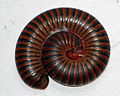
1-1 The Coat of Arms (or perhaps Heraldic Badge) of Christopher Walter Monckton, 3rd Viscount Monckton of Brenchley
1-3 Oscillating chemical reaction.
3-2 Rosebud
2-2 Cyclone
4-2 http://upload.wikimedia.org/wikipedia/commons/thumb/5/5b/Vatican_Museums_Spiral_Staircase_2012.jpg/220px-Vatican_Museums_Spiral_Staircase_2012.jpg
No offense, but the coat of arms doesn’t look that great on the cover and, frankly, detracts from the other impressive looking patterns. If the cover had another natural pattern like the others in the top left box it would look sleeker and more professional. Perhaps reserve the coat of arms for inside the cover, or on the back?
He displays what he calls a “mockup cover” (shown below) that consists of his coat of arms along with various cyclic, spirographic, and colorful psychedelic style images of natural and mathematical patterns.
That is not his coat of arms it is in fact a slightly modified version of the logo of the House of Lords. Monckton has been asked by the House of Lords to discontinue using it but apparently continues to do so.
Monckton of Brenchley says:
January 23, 2014 at 7:10 am
See how many of the patterns on the moc-kup front cover you can identify.
#################################
1. will you require that all papers have a proper SI?
2. will you require that all papers supply their data AS USED in the paper.
That is, they should supply an actual copy of the data, rather than pointing
to a pile somewhere as Phil Jones did.
3. Will you require that all authors supply their code used to generate their results
4. Will you retract any paper where the author fails to supply this material?
I bet you’ll try to weasel out of these requirements and be worse than Mann or Jones ever were.
“See how many of the patterns on the moc-kup front cover you can identify.”
Other than the Coat of Arms, they all appear to be variants of the same pattern, an expanding spiral based on the natural logarithmic function, the “Spira Mirabilis”.
the top right may just be a simple spiral, though.
p.s. my guess for the green is a Romanesco Broccoli. Ah, and that magnificent staircase is in the Vatican.