CO2 did not drive the rapid warming of the 20th century.
Story submitted by Stan Robertson
The difference between a good idea and a bad idea is often a quantitative matter. For example, many people would think it a good idea to replace internal combustion engines with electric motors. But if the intent is to reduce the burning of fossil fuels then switching to electric motors would not help unless the electricity was generated without burning fossil fuels. Some people think that it has been a good idea to use corn to produce ethanol for a fuel, however, I am not one of them because the energy return on investment is either negative, or minuscule at best. From the standpoint of greenhouse gas emissions, it is a horrendous loser. It may be a biofuel and cleaner burning, might help ameliorate ozone problems and etc, but considering that nearly a gallon of oil is consumed in addition to the gallon of ethanol produced and burned, it is a quantitative loser. (Not that I care at all about the CO2.)
One of the ideas that seems to be widely believed is that human produced greenhouse gases, chiefly CO2, has dominated the warming of the earth in the last century. It is a simple quantitative matter to show that this is completely false.
According to the calculations of the UN IPCC, a doubling of the atmospheric concentration of CO2 (with an accompanying rise of other greenhouse gases) would reduce the outgoing infrared radiation from the earth by a net 2.7 watt/m^2 at the top of the atmosphere. This is known as the “climate forcing” that will occur along with a doubling of the CO2. This is a relatively straightforward, but messy calculation. I have repeated the IPCC calculation for CO2 and obtained a larger number, but after including the IPCC adjustments for other greenhouse gases and the effects of sulfate aerosols accompanying coal burning, we agree. It is important to note that the surface temperature increase that will accompany the CO2 is proportional to the logarithm of the CO2 concentration. Thus while CO2 concentration is increasing exponentially with time, the temperature only increases linearly.
In order to maintain equilibrium with the incoming UV/VIS radiation received by the earth, the surface temperature would need to increase enough to allow it to radiate an additional 2.7 watt/m^2 at the top of the atmosphere after any CO2 doubling. At a nominal surface temperature of 15 C (288 K), the earth surface radiates about 390 watt/m^2 on average, but the radiation that exits the top of the atmosphere is only 240 watt/m^2. Thus the earth would need to produce an additional (390/240)x2.7 watt/m^2 = 4.4 watt/m^2 at the surface in order to offset the direct effect of doubling the atmospheric CO2. At 288 K, the earth radiates an additional 5.4 watt/m^2 per 1C of temperature rise. Thus the direct effect temperature increase of a CO2 doubling would be 4.4/5.4=0.8 C.
At the present 0.5% per year rate of increase of CO2 it will take about 140 years to double its concentration. But as we all know, a 0.8 C temperature increase in 140 years is not the result that the UN IPCC is alarmed about. The IPCC climate models include large positive feedback effects that raise their expected temperature increase into the range 2 – 4.5 C, with their most probable value at about 3 C.
There are four main arguments against this: (1) We have already had half of a 2.7 watt/m^2 climate forcing since pre-industrial times. That has been accompanied by only 0.8 C temperature increase. As shown below, there are reasons for believing this to be due primarily to natural causes. (2) There is no evidence that confirms the existence of any large feedback effects since the end of the last deglaciation. (3) The rate of temperature increase within the past century has been within the bounds of normal climate variability and (4) as shown below, the heating effect of CO2 has been quantitatively inadequate to explain the actual warming that has occurred in the last century.
There have been two periods of rapid warming that account for most of the warming that occurred in the last century, as shown below.

Let’s examine the first of these rapid warming periods first. By 1944, the atmospheric CO2 concentration had increased from the pre-industrial level of about 280 ppm up to 310 ppm. At that time the concentration was increasing at a rate that would require about 600 years to double. The fraction of a doubling climate forcing that would have occurred by 1944 would have been log(310/280)/log(2)=0.15 and this would have contributed at a rate of 0.15×2.7 watt/m^2 per 60 decades, or 0.0068 watt/m^2 per decade. It’s direct warming effect at the surface would thus be only (390/240)x(0.0068 watt/m^2 per decade)= 0.01 watt/m^2 per decade. This would have raised the temperature by (0.01 watt/m^2 per decade) /( 5.4 watt/m^2 /C) = 0.002 C per decade. This is such a pitifully small fraction of the 0.174 C per decade rate of heating that occurred 1917-1944 that it is pretty clear that CO2 had nothing to do with the warming of the first half of the last century. Even the IPCC climate modelers concede this point.
But there is still more to be learned from that period. Apparently some natural phenomenon allowed the earth to absorb energy at a significant rate and produce the temperature increase of the first half of the century. Let’s see how much that might have been. To begin, the earth would have had to take in enough heat to at least produce the additional surface radiation that would accompany a temperature rise of 0.174 C per decade 1917-1944. This would be (5.4 watt/m^2/C)x(0.174C/decade) = 0.94 watt/m^2 per decade. This is already 94X the CO2 heating rate.
But, in addition, as shown by both the ARGO buoy system and heat transfer calculations, at least 700 meters of upper ocean can respond to heating on a time scale of a decade. The additional amount of heat required to raise its temperature by 0.174 C per decade would be c*d*0.174C, where c= 4.3×10⁶ joule/m^3/C is the heat capacity of sea water and d= 700 m, or 5.2×10^8 joule/m^2. Dividing by the number of seconds in 10 years, this would be an average of 1.7 watt/m^2 per decade. But since it would start at zero, it would have to end at 3.4 watt/m^2 per decade in order to attain this average. This should be added to the 0.94 watt/m^2 per decade surface radiation losses by the end of the warming period. So the total heating rate would have to ramp up by 4.3 watt/m^2 per decade to provide the warming that actually occurred in either of the rapid warming periods. This is 430 times the direct CO2 surface heating for 1917-1944.
Since essentially the same rate of temperature increase occurred 1976-2000, we can compare 4.3 watt/m^2 with the heating that might have been caused by CO2 in the last part of the last century. From 1944 to 2000, the CO2 concentration increased from 310 ppm to 370 ppm, with a doubling time of about 140 years. The corresponding climate forcing that would have caused, at the surface, would be (390/240)x(log(370/310)/log(2))x(2.7 watt/m^2)/14 decades = 0.08 watt/m^2 per decade.
Due to the higher rate of growth of CO2 concentration in the second half of the 20th century, this is 8X as large as the direct surface heating effect caused by CO2 in the first half. Nevertheless, it is still some 54 times smaller than the rate of heating that actually occurred.
These straightforward calculations make it painfully obvious that CO2 forcing is not what drove the two periods of rapid heating during the last century. Until there is some understanding of the natural causes of these rapid warming periods and their inclusion in the climate models, there is no reason to believe the models. This is simple first year physics.
===========================================================
Stan Robertson, Ph.D, P.E, retired in 2004 after teaching physics at Southwestern Oklahoma State University for 14 years. In addition to teaching at three other universities over the years, he has maintained a consulting engineering practice for 30 years.
Discover more from Watts Up With That?
Subscribe to get the latest posts sent to your email.
KR says ” Hence the forcing of CO2 is increasing just a tiny bit faster than linearly over time.”
So still basically zero. 🙂
The manmade part of CO2 is increasing exponentially. That is, if you subtract 280, what is left is exponential with a 33-year doubling time to a good approximation through the 20th century.
bones: ‘@AlecM: What would be the average (over a year or two) earth temperature as viewed from space in cloudless regions and in the bands of the Atmospheric Window? And what would be the radiation rate in watts/m^2? Would not the average outbound radiation over the entire surface as measured at the surface be about the same?’
Look at Hansen et. al. 1981 paper and following Houghton they claim the GHE = 33 K by attributing it all to the effect of water on reducing lapse rate hence raising the tropopause. This is very difficult to disprove because to do so you have to show definitively that increase in [CO2] does not increase [H2O].
I have however done it by using my process engineering training, but my PhD was applied physics. There are 13 mistakes in climate alchemy. the heat transfer is the worst. The main GHGs switch off IR emission in their bands. If they did not there would no radiative thermal equilibrium and we’d be a thin wisp of gas. The reality is that the GHGs warm the surface. There is no GHG blanket. The forcing argument is stupid. There can be no direct thermalisation at LTE.Direct thermalisation at clouds is a cooling mechanism.
So in answer to your question, there are a large number of control systems for the planet. There is no average temperature unless one uses a GHC with the correct physics to establish it. The main parameters are AW radiation and evapo-transpiration limiting upper temperature in cloudless regions during the day. At night condensation controls temperature. So the AW and the water cycle are the most important part of the planetary temperature control. Then we have clouds which restrict the AW heat loss and further reduce diurnal temperature range.
But as we are seeing with the present cold weather, the jet streams are moving nearer the equator because solar EUV is low and the low magnetic field of the sun has increased cloud cover. This means the Hadley cells are shorter and the planet is cooling in the Northern land mass. Very soon the seas will cool in the cooling ENSO; we are heading to 17th Century weather. There will be mass famine in some years.
CO2 will equilibrate at ~450 ppmV as the seas cool and the vegetative growth rate rises sufficiently.
Indirect thermalisation at clouds
Sorry GCM not GHC.
Like the original author your claims are also false. You recycle years old claims that are not accurate or correct.
Ethanol does have fewer BTU and thus gets slightly reduced mileage. Using the current E85 blend there is roughly 20% lower MPG. E85 also costs less, meaning the cost per mile is almost identical. It is an excellent replacement for fossil fuels, burning cleaner and reducing emissions, plus it is a RENEWABLE energy source.
Every manufacturer supports E10 blends, and they will not harm any reasonably newer vehicle. If you have a 70’s muscle car or an old boat with a fiberglas tank you probably shouldn’t use ethanol. You should not use ethanol if you have a 20 year old chain saw, mower or other ancient gas powered equipment.
Stihl is perfectly happy to have you use ethanol in their products. So does Husqvarna, among others.
Ethanol and ethanol blends have HIGHER octane, and thus run better, not worse than gasoline. I have a 2003 bi-fuel Tahoe. I run E85 appx. 50% of the time. My cost per mile was generally lower using E85 before the ethanol tax credits expired. Now it runs a few percent higher or lower depending on the market and gas prices. It does absolutely nothing to “degrade” the driving experience whatsoever – and that is based on 100,000 miles of E85 experience over a number of years.
And your “starving the poor” claim has repeatedly been proven false. As I noted above, US corn exported to Guatemala is not starving the Guatemalan’s because if its high price – to the direct contrary, Guatemala’s government purchases US corn becasue it is significantly CHEAPER than their own – they buy US corn (and we provide everything they have asked for) to LOWER the cost of corn for their citizens.
There is nothing “poor quality” about ethanol. People need to educate themselves and stop posting these false and refuted old claims.
Ethanol is not, and never will be, a full replacement for fossil fuel – at least not using corn. It IS an excellent and necessary “bridge” – reducing fossil fuel use now, which extends our fossil fuel reserves and reduces foreign energy dependance – while helping develop the vehicle and distribution base necessary to support future, much more efficient, renewable ethanol processes and sources.
its been the coldest March in the UK for 50 years more snow than 30 years. the govt chief scientist witters on that its extreme weather caused by climate change — !!!!
The BBCs own forecasters have to admit its because of winds fro the east.
‘Scientists!!’ do they exist any more?
My understanding is that racing cars of the past used to run on an ethanol mix because more bhp could be extracted. ie., they went faster. No doubt, they were not worried about economy. Nor were they worried about CO2 emissions.
Whether there is a net reduction in CO2 emissions by using some form of ethanol mix is a moot question. One has to take into account the CO2 produced in producing the ethanol, and the fact that the fuel economy of an ethanol mix is lower so that overall more fuel is burnt per mile.
Overall, it is doubtful that there is any net reduction of CO2 in using biofuels/ethanol mixes.
Anyone who accepts that the Earth emits real radiative energy at the black body flux which assumes a sink at absolute zero, is a lunatic. This makes all climate alchemists lunatics. They believe that they’re right because pyrgeometers measure temperature then convert it by the S-B equation to Power, also the potential flux to a sink at absolute zero. This is also lunacy but includes the meteorologists as well!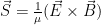 . Emitted or absorbed radiative power (through/by a surface) is technically the flux of the Poynting vector. Finally, there is, in fact, such a things as average power:
  and in the case of electromagnetic power associated with a harmonic wave the average power is 1/2 of the peak power (from averaging e.g.
  ). Technically, this means that there is a RMS amplitude to the electric or magnetic field that leads to the average power, but if one referred to RMS power I would certainly understand that one meant average power as opposed to instantaneous power (where there is no “root mean” derived from the square).
This is a straw man argument, as what is accepted is an entire measured infrared spectrum of outgoing radiation incident on a night sky that, except for two tiny patches covered by the Sun and moon, is at an almost uniform temperature of 3K, close enough to absolute zero (compared to the temperature of the Earth) as to make no difference. The Earth, without any question whatsoever, emits real radiative energy into a sink at (almost) absolute zero. In fact, every day, it emits almost exactly as much real radiative energy as it absorbs from the Sun (plus a teensy bit from other sources) and hence remains in a very approximate dynamical equilibrium. The evidence is a mix of nearly complete understanding of the physics involved in this process plus direct photographs of the spectrally decomposed outgoing radiation. It is not the classic blackbody radiation curve because the emission doesn’t come from a homogeneous black body, but one can discern consistent in-band blackbody radiation from the surface at its approximate temperature within that curve from unblocked parts of the spectrum.
There are several places you can look at those IR spectrographs — they were republished on WUWT in at least one article on the greenhouse effect, they are in Grant Petty’s A First Course in Atmospheric Physics, selected ones are available on the internet in a variety of places. In the meantime, asserting that the Earth — a continuously warmed object floating in a vacuum — doesn’t cool radiatively — that really is lunacy.
On a separate note: Watts is a unit of power, and Watts per m^2, a unit of power density. Power is an instantaneous quantity. There is no such thing as average power, or RMS power either.
I sometimes wonder, are the people who post this sort of thing really as ignorant as they appear to be? Watts are indeed Joules per Second in SI units. Watts per meter squared are units of intensity (not usually expressed as “power density”) and this is a quantity that is most meaningful (in the case of electromagnetic radiation, which is directional) when expressed as the Poynting vector
rgb
A. Scott says:
March 25, 2013 at 11:49 am
////////////////////////////////////////////////////////
The price of US corn/grains is only one factor and the issue is not whether (due to efficiencies) the US can produce grain at a cheaper price than some foreign country can do so through its own domestic production.
Some suggest that the increase in grain price was one factor behind the Arab Spring which, in itself, has led to thousands of deaths. So political commentators consider that there has been an increase in the price of export grains
One important factor not addressed by you, is surplus quantity. How much grain does the US export (say over the past 30 years), and much grain is exported in it food aid programme (say over the past 30 years)? A sub issue is the use of GM crops to try and make good the shortage of conventional crops which shortage has been caused by the switch in land use to biofuels.
AndyG55 says:
March 25, 2013 at 1:16 pm
//////////////////////////////////////////////////////
But your observation applies to all the data sets (with the exception of the satellite data set which data set has its own problems and is of a rather short duration).
Where can one find a data set comprising of raw data produced only from good sited stations with no station drop outs or moves?
People have no choice but to use the basterdised data sets since this is all that is readily available.
Ferdinand Engelbeen:
Concerning observed atmospheric CO2 increase, at March 25, 2013 at 12:32 pm, you yet again make the unfounded and implausible assertion
Please desist from asserting your improbable assumption as fact.
It is extremely unlikely that “the 97% natural is mostly back and forth cycling” which can be assumed to be constantly in balance. This improbable balance may exist, but nothing else in nature is observed to be so in balance and constant.
An imbalance of less than 2% p.a. between the natural emission and sequestration would account for all of the observed rise in atmospheric CO2. And there are several possible reasons why such an imbalance may have occurred.
One example of such a possible cause of natural altered imbalance is variation to undersea volcanism centuries in the past. Increased undersea volcanism would release additional sulphur ions which travel with the thermohaline circulation until they reach ocean surface layer centuries later. The increased sulphur in the ocean surface layer would reduce the pH of the layer with resulting alteration to the equilibrium concentrations of CO2 in the air and ocean surface layer.
A change of only 0.1 in ocean average pH (which is much, much too small for it to measurable) would induce a rise in atmospheric CO2 concentration which is larger than has been observed in the past century. Hence, undersea volcanism could be the cause of ALL the observed rise to atmospheric CO2 concentration. And there are other possible causes, too.
Please note that the human emission of CO2 would not affect this in any way: the changed equilibrium would be the same whether or not the human emission existed.
And you are plain wrong when you repeatedly assert
It matters a very, very great deal because the improbable assumption of balance between the natural inputs and outputs provides the conclusion that emissions from humans are causing the rise in atmospheric CO2 concentration. And that unfounded conclusion is distorting energy and economic policies around the world.
I don’t know if the rise in atmospheric CO2 concentration is entirely natural, or entirely anthropogenic, or partly natural and partly anthropogenic. But I want to know.
The myth that natural emissions and sequestrations of CO2 are known to be in a constant balance needs to be dispelled if we are to determine the true causes of the recent rise in atmospheric CO2 concentration and, thus, to avoid distortion of energy and economic policies.
Richard
StephenP says:
March 25, 2013 at 5:13 am
“I see that we are all doomed, according to the outgoing chief government scientific advisor, Sir John Beddington:….”
I heard him on the Today program yesterday. Once again the BBC is listening to the doom mongers while shutting out any sceptical opinions based on actual data. Of course, he didn’t mention any inconvenient facts e.g. the lack of global warming for getting on for two decades and that the English climate has been rapidly and consistently getting colder since 2000, as shown by the CET.
Before rapidly switching channels, I glimpsed him again on the BBC news last night. He said something like: “We know the weather will be more extreme….”
We know? Does he have a crystal ball? What about all the uncertainty in climate science? What about all the forecasts by the climate models that have turned out completely wrong? What about the missing tropical hot spot, and the fact that the world’s IR emissions are actually increasing as CO2 increases, in direct contradiction to the dogma (Lindzen)? Are these morons completely incapable of learning anything? Or are they simply liars who, deep down, know the game is up but they have their careers and pensions to think of?
And yet he has the gall to say “We know…”
I find it completely sickening.
Chris
Endless argument and politics about CO2 in most discussions ignore the amount of money involved or the toxins evolved. The production and combustion of ethanol adds aldehydes and ketones to the sidewalk environment. The extraction and combustion of coal adds <2.5 micron particulates proven to be harmful. Then there is Hg and other metals and acid mine waste water. Disposal of nuclear waste is and has been a problem. Nuclear weapons proliferation is a problem. Nuclear accidents that are supposed to be so rare as to not amount to concern gave rise to Cherynoble and Fukushima.
Charging plug in hybrid vehicles with solar electricity eliminates range anxiety, bridges the fossil fuel aftermarkets and could eliminate 2/3 of the need for global oil and oil related pollution. But oil profit would diminish as well. Efficiency, appropriate energy conserving and solar utilizing architecture, improved insulation and fenestration all contribute to more comfort and less pollution but diminish fuel vendors profits.
The issue as I see it is not CO2 but what price for pollution and nuclear risk? Significant global cooling would exacerbate the levels of pollution as would significant global warming. Staying comfortably and artificially warm or cool in homes, work places and vehicles requires energy.
K.I.S.S. Not the band the principle of Keep It Simple Stupid. The issue is funding. Scientists need it to pursue knowledge but funding is limited. If you don’t publish you get no funding, if you publish something boring you may get some funding, if you publish something that excites people you get lots of funding. What’s more exciting than yelling “we’re all going to die”? Institutions push for exciting research (they need money too), and the Government pushes for answers to the “Important Questions” (cynics can read that as issues I can get elected/re-elected on) without understanding that the aquisition of knowledge often procedess at its own pace.
Sounds familiar
http://www.vukcevic.talktalk.net/NP.htm
but it is 1940 news
(Real-science.com & Tallbloke’s Talkshop)
AlecM says:
March 26, 2013 at 12:01 am
…But as we are seeing with the present cold weather, the jet streams are moving nearer the equator because solar EUV is low and the low magnetic field of the sun has increased cloud cover. This means the Hadley cells are shorter and the planet is cooling in the Northern land mass. Very soon the seas will cool in the cooling ENSO; we are heading to 17th Century weather. There will be mass famine in some years.
CO2 will equilibrate at ~450 ppmV as the seas cool and the vegetative growth rate rises sufficiently.
Probable scenario, and due to the CAGW-chicken-little&fanatics this is not being accounted for and we go totally unprepared for such scenario if this happens.
richardscourtney says:
March 26, 2013 at 4:35 am
Ferdinand Engelbeen:
……
I don’t know if the rise in atmospheric CO2 concentration is entirely natural, or entirely anthropogenic, or partly natural and partly anthropogenic. But I want to know.
The myth that natural emissions and sequestrations of CO2 are known to be in a constant balance needs to be dispelled if we are to determine the true causes of the recent rise in atmospheric CO2 concentration and, thus, to avoid distortion of energy and economic policies.
Thanks for pointing that out. There is still a lot to learn about the carbon cycle and so many uncertainties, as example the undersea vents and volcanoes which cover 70% of the surface of the globe, but due to the much thinner earth-crust should represent a higher percentage then 70% of total emissions:
http://www.newscientist.com/article/dn12218
“The team estimates that in total there could be about 3 million submarine volcanoes, 39,000 of which rise more than 1000 metres over the sea bed.”
Also the quantities that are absorbed by vegetation are being re-estimated:
http://www.sciencedaily.com/releases/2003/05/030509084556.htm
“Why would a forest grow so well on arid land, countering all expectations” – I chuckle when I see such comments.
Phytoplankton too:
http://climaterealists.com/index.php?id=9768
“This wasn’t just any phytoplankton bloom,” Stanford University marine scientist Kevin Arrigo told The Christian Science Monitor. “It was literally the most intense phytoplankton bloom I’ve ever seen in my 25 years of doing this type of research.”
It’s heartening to see bloggers adding sanity to the “AGW” issue.
Chad, Ed_b, EMSmith, AlecM, george e. and others deserve credit for taking the time to respond to Stan/Bones.
I’ll add that the carbon cycle has both biological and geological properties, with enough convolution to make oversimplification a constant danger. Biology/ecosystems do not often lend itself to linear/physical analysis. Thus the danger of “averaging” in an attempt to simplify the issues to tractable understanding.
Is there an “average” boundry layer? “Average” surface albedo? Average desert?
Average global temperature? Average carbon flux? Obviously not.
Before fossil fuels, were the global carbon sources to the atmosphere at 100 percent? The global carbon sinks were 100 percent? Well yes. But both sources and sinks obviously vary.
A billion years of variable biology has caused the atmosphere to have variable carbon sources and variable carbon sinks. Makes sense that the 100 percent carbon sinks will accomodate the added fossil CO2. That is, the gigatonnes of fossil CO2 has increased the total carbon cycle to 103 percent of the pre-industrial levels. The atmosphere is not a stagnant pool, the carbon cycle will adapt to about 103 percent of the pre-industrial fluxes.
C4 photosynthesis evolved as a response to vitally low CO2 levels, rest assured that the ecosystems will adjust as needed. Time is on our side. Best to stop feeding the insane “alarmists” with money.
“””””……rgbatduke says:
March 26, 2013 at 3:45 am
…………………….
On a separate note: Watts is a unit of power, and Watts per m^2, a unit of power density. Power is an instantaneous quantity. There is no such thing as average power, or RMS power either.
I sometimes wonder, are the people who post this sort of thing really as ignorant as they appear to be? Watts are indeed Joules per Second in SI units. Watts per meter squared are units of intensity (not usually expressed as “power density”) …….””””””
Some of them actually may be.
Actually “Intensity” or “radiant intensity” as it applies to electro-magnetic radiation has SI units of Watts per steradian.
Never is it Watts per metre sqared.
I used ” power density” as a shortened form of “areal power density” meaning the rate at which energy passes through a cross sectional area perpendicular to the direction of propagation, antwhere in the EM field; and those SI units are properly “Watts per metre squared” or “Joules per second per metre squared” if one prefers.
And I deliberately used that form to distinguish that case from the alternative cases of “Watts per metre squared” which also are the proper SI units of “radiant emittance” when referring to radiating surfaces, and “irradiance” when referring to radiant energy receiving surfaces.
But in any case, what is measured is the instantaneous value, that depends on the square of of the electric field (at that location).
Since we are taught that all objects above zero Kelvins Temperature must radiate EM energy at a rate (radiant emittance) depending on that Temperature, that object can only rise in Temperature, (due to incident radiant energy), if the (instantaneous) rate of incident energy absorption; (irradiance x absorption coefficient) exceeds the pre existing emission rate.
Whether the object heats or cools (radiatively), depends only on whether it gains or loses energy (time integral of the power). The maximum Temperature it can reach, depends on the instantaneous rate at which absorbed energy exceeds radiated energy (assuming radiation is only operating energy transport process).
But “intensity” or “radiant Intensity” is a quantity that pre-supposes a “point source”, since its SI units are “Watts per steradian” and not Watts per metre squared; points having zero area.
Practical measurements of “Intensity” require that the source-sensor distance exceed ten times the (real non-point) source diameter. At such a distance, the error is about 1/2% due to the source size.
“””””…..rgbatduke says:
March 26, 2013 at 3:45 am
Finally, there is, in fact, such a things as average power: and in the case of electromagnetic power associated with a harmonic wave the average power is 1/2 of the peak power (from averaging e.g. ).
.(……plus stuff that doesn’t cut and paste……. )
And it is every bit as real, as is the average telephone number in the Manhattan telephone directory.
Averaging is a well defined (and fictional) result of performing an algorithm on a set of numbers, which themselves may represent actual things or values, that could have been actually observed, or measured, by someone, in an actual real situation or experiment for example. In that sense, the original numbers can be described as “real” in that they represent something that actually was observable. But the process (averaging) is just as valid, when applied to an entirely ad hoc set of numbers that are unrelated to each other in any way.
ALL of these real observable numbers, are replaced by the algorithmically defined number, to give an entirely fictional number, that was not, and can not, ever be observed by anybody, or any thing.
In that sense, they (averages) do not exist.
Averaging, and averages, are defined elements of the discipline of mathematics; specifically, that branch of mathematics, called statistics. Within that discipline they can be regarded as real, being defined operations valid within that discipline.
In the real world, where observations are made, or experiments conducted, and measurements taken, averages are not observable, nor do they have any influence on the outcome of an experiment. Physical systems only respond to real time actions and phenomena.
One can manipulate the data of any real world experiment, in any manner of fashion one desires, according to any algorithm, one wants to describe, and for any reason. The results of that process are properties of the algorithmic process; they are not properties of the real world system being observed.
richardscourtney says:
March 26, 2013 at 4:35 am
The myth that natural emissions and sequestrations of CO2 are known to be in a constant balance needs to be dispelled if we are to determine the true causes of the recent rise in atmospheric CO2 concentration and, thus, to avoid distortion of energy and economic policies.
Dear Richard,
We haven been there for several years now, but for new readers not familiar with our discussion, I will give my opinion again in short:
While I agree with you that the rise of CO2 shouldn’t be used to distort our energy supply and economics, I strongly disagree with the first halve of what you say, as the natural emissions and sequestrations of CO2 are near in balance over the past 50+ years. With slightly more sequestration than emission. That is simply calculated from the changing mass balance over the years.
Every year the inventory of the human emissions is made from fossil fuel sales (taxes!) and burning efficiency. Maybe a little underestimated, but fairly good. Every year the average increase of CO2 in the atmosphere is measured to a high degree of accuracy. The difference between these two is what nature has done in the past year: more sequestering than emissions or the opposite or no change. It doesn’t matter at all if some volcano exploded that year or a lot of forests were burning down or seawater temperatures increased a lot, the net result of all these individual events together is known for every year in the past 50+ years with a reasonable degree of certainty. And that shows remarkably little variation (+/- 2 GtC or +/- 1 ppmv) over the years. Here the graph:
http://www.ferdinand-engelbeen.be/klimaat/klim_img/dco2_em.jpg
It is quite simple: as long as no CO2 is escaping to space (which is the case for hydrogen…), the mass balance shows that nature as a whole is a net absorber for CO2 over the past 50+ years, not a net contributor. No matter if the natural cycle was 10 or 100 or 1000 GtC/year into and 14 or 104 or 1004 +/- 2 GtC out of the atmosphere.
Further, all available evidence agrees with human use of fossil fuels as the cause of the increase, every alternative I heard of violates one or more observations. That includes undersea volcanoes and ocean acidification…
See further:
http://www.ferdinand-engelbeen.be/klimaat/co2_measurements.html#The_mass_balance
All of Ferdinand Engelbeen’s information is based on the
hypothesisconjecture that CO2 is well mixed in the atmosphere. Data is tossed if it does not met the “well-mixed’ assumption. This is a fundamental underlying assumption to the CAGW scam. With out this conjecture the whole edifice falls apart.Several people have shot down this conjecture.
Lucy Skywalker gathered together much of that information here.
Jeffrey A. Glassman, PhD wrote two very good in-depth science articles on the subject
THE ACQUITTAL OF CARBON DIOXIDE
ON WHY CO2 IS KNOWN
NOT TO HAVE ACCUMULATED IN THE ATMOSPHERE &
WHAT IS HAPPENING WITH CO2 IN THE MODERN ERA
And finally a newer article by E.M. Smith looking at the actual data in CO2 global maps that anyone can understand here
The oceans cover 70% of the earth’s surface. The ocean temperatures change, the amount of green growing stuff changes, the Jet stream and trade winds change, the amount of CO2 put out by humans and volcanoes varies yet we are to accept the fact that CO2 is well mixed….
richard verney says: March 26, 2013 at 4:05 am
I have addressed this question regularly. Anyone can go to the US Field Grain Yearbook (or the extensive other data the USDA provides) and find out the true facts instead of repeating partisan rhetoric.
As to corn – contrary to the claims that ethanol production has reduced or negatively affected corn exports:
*Total US Corn exports averaged 47 million metric tons a year fro period 1991-2011. The average US corn exports for the peak ethanol increase years of 2002 – 2007 was 51 million metric tons with a top number of 6o.7 million metric tons in 2007/08.
*During the period since corn use began increasing due to ethanol – 2002 thru 2011 – US corn use for fuel increased from 997 to to 5,018 million bushels. Yet the US exports increased significantly during the height of that period.
*Prices both increased AND decreased significantly from 2002-2011, despite corn used for ethanol growing substantially.
*The US has met ALL domestic use, both food and fuel, met ALL export demand, AND has still maintained an average annual surplus of 1.4 billion bushels during the period 1991-2011
More unsupported allegations. The US has provided, during the 1991-2011 period, up to 92% of Egypt’s corn imports – on average over 71% each year during this entire period.
The truth is in the data. While US corn exports declined slightly from 2008 – from an almost exactly average year of 47,900 million metric tons to appx 39,000 million metric tons in 2011, its is becasue the other corn exporting country’s – Argentina, Brazil, India and the EU combined, increased their corn exports from 16,900 to 52,200 million metric tons from 2005 to 2011. Their cheaper corn has reduced the overall export demand in the US.
And what about your claims about prices? Again the data tells the truth.
*1971-1991 Corn prices averaged $2.28 a bushel, with prices mostly between $2.50 and $3.20 for that period.
*1991-2011 Corn prices averaged $2.57 a bushel, with prices mostly between $1.85 and $3.04 for that period.
*2001-2011 Corn prices averaged $3.37 a bushel, with prices mostly between $1.97 and $3.55 for that period.
There are short, speculator driven spikes during each of these periods, as with today. But the reality is, absent those short spikes, Corn prices today are very little changed than they were in the 1970’s
Regardless – lets take the 1971-1991 average of $2.28 a bushel and compare to the 2011 price of $5.18. That would be a 127% increase from 1971 to 2011, a 40 year period. That would be an average annual increase of just over 3%.
From 2001 to 2011 the US supplied 0.566 billion metric tons of corn exports comprising 52% of ALL world corn exports.Most of that corn was supplied at the same prices as corn sold for in the 1970’s.
Anyone that claims the US has not done, and is not doing, greatly more than their fair share, regardless of whether it is about export quantity or price, is simply not living in the real world, or has an agenda to push.
Once again – the US is providing for ALL domestic demand, including ethanol, is providing for ALL export demand, and sill maintains an appx 1 to 2 billion bushel domestic reserve.
We also effectively maintain an appx 5 billion bushel further domestic reserve thru the ethanol industry, which the ethanol industry demonstrated in 2012. With low crop yields and substantial losses related to the drought, and production well below projected, the US ethanol industry reduced corn their usage in 2012 by almost the entire amount below projections.
Egypt has huge oil reserves and revenue. It is not our responsibility to provide this rich nation cheap, subsidized food. We already provide the majority of their corn import demand and have for many years. And we do so at fair, market prices. It is Egypt’s responsibility to provide for their people – and they have plenty of money to do so should the ruling elite so choose.
One more for Richard Verney. From Rami Zurayk, professor of agricultural and food sciences at the American University of Beirut and author of Food, Farming and Freedom: Sowing the Arab Spring. He addresses pretty much exactly what I said:
Not only are we providing the majority of their corn (and other) imports, we are sending huge sums of other aid.
Again – the “State” and the ruling elite have vast sums of oil money at their control, yet seemingly refuse to use it.
It’s not the CO2, it’s the sun’s energy infused in plants and fossil fuels for millions and millions of years from the very beginnings of photosynthesis and released when carbon is burned in the presence of oxygen. (Convection.) The newly formed molecules absorb the released heat setting those molecules in motion, expanding, rising, “warm air rises.” Remember that phrase from your old highschool physics classes on the weather? Pots of water heating on burners demonstrating the creation of currents in a fluid medium later to be applied to the creation of air currents, warm air rises. It takes a huge amount of energy to lift those masses into the atmosphere. There, that same energy drives the giant engines of weather in the atmosphere. Additional energy and water vapor arrive in the atmosphere following evaporation from surface waters. Nature and man both release CO2 but nature’s is put to good use. The weather delivers carbon and water to the forests and fields of the planet. Carbon for the growth of the plant and water for the nourishment of the plant. We consume those plants for our growth and development but it is the sun’s energy infused in the plant during photosynthesis that gives us our spark of life, the energy to do our work. Nature’s release of carbon and water travel circular paths. See the Keeling Curve for a picture of the earth “breathing”. The curve not only records nature’s output of CO2 but man’s as well! Nature uses the same amounts of CO2 and H2O, approximately, over and over and over again. Nature is first and foremost a recycler. Man on the other hand is not a recycler. When he runs out of fuel he simply digs and drills for more. Actually, his output has nowhere to go .. Forest and field have already absorbed their quota of CO2. Man’s CO2 accumulates. More matter means more energy. E = M , sort of. In any event, follow the energy. Global warming/climate change is the weather, EXTREME weather, weather on the rampage, gales gone wild, weather on steroids – HEAT energy. Follow the energy.