A faster rotating early-Earth may have compensated for reduced Sun output
Guest post submitted by Ian Schumacher
The ‘faint young sun’ paradox states that according to star models, billions of years ago the Sun would have only been about 70% as bright as it is today. Given the same environment as today this would result in most water on Earth being frozen making early life difficult to exist. However, geological history does not show such a frozen Earth period and early Earth is thought to have been quite warm.
Most solutions to this problem relying on an enhanced greenhouse effect or on cosmic rays and clouds. To me these solutions, while possible, ignore much the simpler explanation of a shorter Earth day.
The Stefan-Boltzman law/equation states that, at equilibrium, the outgoing radiation from a black-body equals incoming radiation (from an external source) and is proportional to the fourth power of the temperature of a black-body.
S=σT⁴
From our perspective, what is important here is that outgoing radiation increases quickly with temperature. The average temperature is highest when temperatures are evenly distributed. The average temperature is less than or equal to the fourth root of the average of the fourth power of temperature:
≤ ()1/4
The more uneven the temperature distribution, the lower the average temperature. For example, consider the set of numbers:
{2, 2, 2, 2, 2}
The average of this set is 2. The fourth root of the average of the fourth power of these numbers is 2. Now consider the set of numbers:
{1, 2, 4, 2, 1}
The average of this set is also 2. The fourth root of average of the fourth power of these numbers is 2.75. In order to have the same fourth power average we would need the set of numbers:
{0.72, 1.45, 2.90, 1.45, 0.72}
which only has an average of 1.45; significantly less than 2 from the more even distribution.
A fast spinning Earth distributes temperatures more evenly allowing for a significantly higher average temperature than a slow spinning Earth. The faster the Earth spins, the higher the average temperature.
Billions of years ago, the Earth was rotating up to twice the rate it is today (it has slowed over time due to tidal friction). All else being equal, this would have distributed temperatures on the Earth’s surface more evenly and resulted in a higher average temperature. Since the Sun was also weaker the two effect may have roughly canceled each other out.
The Earth is not a black-body, but reflects a significant amount of light. Reflected light is not available to heat up the Earth’s surface and therefore has a large effect on Earth’s temperature. The reflection coefficient is also known as albedo. Water in solid state (snow, ice) has a very high albedo compared to water in liquid state or soil. A small increase in temperature can cause some snow to melt, reducing albedo and causing temperatures to increase further. In this way water provides a strong positive feedback; amplifying small changes in temperature. It is this effect that likely drives the Earth into and out of ice-ages by amplifying an otherwise small external forcing factors such as changes in Earth’s orbit. Similarly this positive feedback mechanism could work to amplify the increased average Earth temperature due to faster Earth rotation of an early Earth.
More here: http://blog.vzv.ca/2012/10/a-simple-resolution-to-faint-young-sun.html
“””””…..John Doe says:
October 17, 2012 at 6:42 am
george e smith says:
October 16, 2012 at 11:10 pm
I should clarify one item above: “””””…..Any spot on earth will receive the exact same total insolation in a single rotation, regardless of rotation rate…….”””””
——————————————————————————-
Sorry George but you totally missed the physical fact that the highest average temperature is obtained when there’s the least deviation from the mean. A faster rotating planet will have less diurnal temperature variation and thus a higher average temperature. Schumaker is quite correct about that……”””””
Well John Doe, i suggest you read YOUR statement immediately above; and reread my two posts carefully.
Just for starters, nowhere did I say anything about the correctness or otherwise of Schumaker”s statement. But that statement as you stated it above: “””””…..
A faster rotating planet will have less diurnal temperature variation and thus a higher average temperature. Schumaker is quite correct about that…….””””” is plain nonsense.
Schumaker (and apparently YOU) make the statement that two entirely different data sets must have different averages, and that the data set with the smallest range of values must have a higher average value.
You can’t change the entire data set (which changing earth’s rotation rate will do ) and then assume that they are related to each other.
And if you reread my first post, you will see that I explained that feedback effects will totally change the conditions.
I DO agree with ONE aspect of Schumaker’s argument.
If you have two earth Temperature data sets (let’s just say as a result of earth rotation rate); that have …….EXACTLY THE SAME AVERAGE TEMPERATURE…… then the case with the highest low to high Temperature range, WILL have THE HIGHER TOTAL COOLING DUE TO RADIATION.
That’s an elementary consequence of the S-B 4th power law. Even a square law would give greater cooling with a greater p-p Temperature range.
Anybody who has ever done much in the way of power calculations, computing RMS , Avrage or peak values of Voltage or current , fully understands that.
Temperature average does not translate to cooling rate. Earth is cooled most efficiently by the hottest tropical deserts; NOT by the icy polar regions.
But my biggest disagreement with Schumaker’s thesis, is he ignores the feedback effects that totally change the game plan.
I noticed reading through ALL the comments, that Dr Svalgaard refers to the faint sun paradox:…..””””””But the effect is not enough to resolve the paradox. Here is the current status of our knowledge about the paradox: ……”””””
I INFER from that comment, that (a) there once was a faint young sun; and (b) the earth was not a frozen ice ball at the time; ergo a paradox.
There are NO paradoxes; just unexplained phenomena.
The very mention of this paradoxical situation implies that other feedback effects regulate Temperature despite Insolation changes; and I simply point out that Schumaker ignored that.
John Doe says:
October 17, 2012 at 8:09 am
——————-
Yes well I’ve actually modeled what you describe and only found the diurnal range to become smaller or lager while the oscillation itself remained peg at almost the exact same mean value.
Yes there is some tiny variation on the mean because of the non-linearity of T^4, but because we’re at or near equilibrium, the heating and cooling occurs at almost the exact same rate…the slope of the heating portion during the day is the same as the slope as the cooling portion over night, because we’re oscillating about the equilibrium….it can’t occur any other way.
I modeled a normal day and a day twice as fast; the result was a larger vs. smaller diurnal range in temperature because there is more and less time for heating and cooling, but the diurnal oscillations themselves centered on nearly the same value…only a fraction of a degree difference, given a 100% change in rotation rate.
@zbcustom
True that with faster rotation, the day side would heat less but the night side would equally cool less giving a more even temp distribution between the day and night sides which will lead to a higher average.
[6 4 6 4] has an average of 5.
[7 3 7 3] has an average of 5.
6 is the daytime high, 4 is the overnight minimum, for faster rotation (less time to heat and cool)
7 is the daytime high, 3 is the overnight minimum, for slower rotation (more time to heat and cool)
The diurnal range is smaller or larger, but the mean is the same. Because the range extremities are different there will be some effect on the mean because of the T^4 dependence on heating and cooling where the one range exceeds the other, but, these are both also occurring at (very near) equilibrium and so the heating and cooling slopes are basically identical (equal magnitude, just reversed day vs night). So the effect on the mean is negligible because heating and cooling occur at the same rates around equilibrium. A smaller range about the mean does not equate to a different mean, by definition. The T^4 effect is very small given the diurnal range difference, and because the oscillations are occurring about the energy equilibrium.
Ayn Rand noted that a paradox can only exist when one of your prior assumptions is incorrect.
The giant insects were the result of a much higher oxygen level during the Carboniferous than today – as much as 31 – 35% of the atmosphere. Given the way they breathe, higher oxygen content in the atmosphere leads directly to larger bugs. Link follows:
http://blog.everythingdinosaur.co.uk/blog/_archives/2010/11/03/4671836.html
Granted that clouds are a cooling mechanism during times of sunlight in the tropics and temperate regions. But they are also a warming mechanism at the higher latitudes when there is little to no sun. Warmest times in the winter up here are cloudy days and nights. Coldest are when it is crystal clear, at which time God sucks all the heat out and deposits it somewhere in the vicinity of Saturn (/sarc). Cloud cover is more complex than a simple reflection of incoming or outgoing energy. Cheers –
I haven’t seen any comments on the higher level of radioactive decay heat in the early years of earth. Thorium 232 has a half-life of 14 billion years, so there would be only a little more heat in early history, but u-238 has a half-life of 4.5 billion years. The decay heat from the u-238 would have been double in early earth, compared to present.
Professor, will “all of the above” be an acceptable answer on the mid-term?
Do we know the distance from the sun back then?
Another factor is that the heat flow from the interior of the plant was greater. Tides were greater as well due to the fact that the Moon was much closer to the Earth.
As in most things in science, to try and pin any one factor down is atp to obscure rather than illuminate the truth.
No one has commented on “according to star models”
If the Earth rotated at 24/14 times the present rate, I would expect the AVERAGE temperature to be exatly the same, but the temperature RANGE to be reduced significantly.
Probably to ~60% of the current range. Of course, when it happens to be cloudy, the RANGE will be even less.
Let’s also remember that the Earth did, in fact, freeze over about 80% in at least 4 different time periods.
The first Snowball was 2.4 billion years ago as the rise of Oxygen occurred and again at 2.1 billion years ago as Oxygen increased again. The landmasses were just becoming large enough at that point to hold large land-based glaciers. It is possible that ocean currents would have been constantly sweeping sea ice away from the poles to melt at the equator before this time so the impact on global Albedo may not have been that high before the landmasses could accumulate high-Albedo land glaciers.
So the lack of Oxygen and the lack of large landmasses are part of the explanation.
The early Earth would have had more Methane or other GHGs which got combusted as Oxygen became more prevalent in the atmosphere and, before Oxygen, there was no Ozone layer intercepting UV radiation high in the stratosphere so it more readily reached the surface (and the early Sun was more energetic at UV wavelengths in it earliest Epochs although the bulk of the energy would have been at longer wavelengths than today)
The author seems right, it would be a warmer globe spinning faster, but there would also be other factors some two billion years ago as many have raised above.
One is a thicker, denser atmosphere, this is generally accepted as true and mentioned by many above.
A second factor is the effective emissivity of the Earth that I hear raised very rarely. A surface with a constant radiative input will heat up to a point where equilibrium is reached but that particular temperature is emissivity dependent. The lower the emissivity the higher the equilibrium temperature but it will also take longer for equilibrium to be reached due to the inverse lower absorptivity. Most of the hypothetical ‘33C’ GHE is due to the fact that this globe is NOT a blackbody radiator. The equilibrium temperature is then by definition is much less that the consensus of 33C on GHGs hugely due to water vapor. Really the 33C is closer to a 134C boost calculated properly and the effective emissivity is much less than one and is density dependent (the thickness or mass of the atmosphere).
Climatologists seem so shallow in science. They concentrate on singular factors without ever bringing in to play all of the real effects present in the explanation of our ‘climate’.
But I so take the author’s point that one of these factors was bound to be the increased rotation rate.
The criticisms against my simplistic post are valid. I only wanted to convey the idea as simply as possible, not come up with a realistic estimate, which would have been tremendously difficult.
As it turns out this has been done http://discovermagazine.com/1993/nov/thefastyoungeart316 [thank you Henry Clark]
and as Henry quoted it was found:
“What surprised Jenkins and his colleagues, though, was the dramatic effect of the rapid rotation rate.”
Apparently a faster rotating Earth has more reasons to be warmer (such as fewer clouds) than just reduced temperature variance.
So for those wishing more complexity, they should seek out the paper associated with this article (and post the link here if they find it).
I was also going to write about primordial heat and radioactive heat and how this heat would have been released at a much faster rate for an young Earth, but that would have polluted the one main idea I wanted to convey.
Cheers.
Devils advocate: Have we ever witnessed a “dim sun” , ever seen one of these dim suns get brighter? Have we seen a red giant go white dwarf? A yellow sun turn red giant? NOPE. Could be the initial theory is wrong.. it is all just theory. Just sayin..
Yes if clouds start changing frequency then you don’t have a situation of “all things being equal” anymore, because the absorptivity has changed. This is of course far different than the direct mathematical analysis of number variations themselves.
Let me try to resolve a bit of this with some numbers. Most of the planet is ocean. How much does the ocean temperature change day to night? Here’s the average day-to-night temperature swings at the Bodega Bay buoy, offshore from where I live. The climate is typical for the Pacific Ocean off the north coast of California.

 ) is the change in temperature up and down (half of the temperature range).
This is the average of 27 years of data. As you can see, the average daily swing for the ocean around here is small, about 0.4°C top to bottom (or ± 0.2°C).
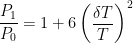
Now, the formula says that the ratio of the average radiation emitted varies as follows:
Where P0 is the average amount emitted with no variation in temperature, and P1 is the average amount emitted when the temperature is varying. T is the temperature, in kelvins, and delta-T (
If there were a big variation, like say on the moon where day-night swings are (from memory) on the order of plus and minus 100K or so, the effect is quite large. If we take T to be say 288K and delta-T as 100K, lunar conditions, then P1/P0 is
1 + 6 * (100/288)^2 = 1.7
This means the system with the large temperature swings will emit 70% more energy (in other words, 1.7 times the energy) than the system with no temperature swings. As a result, it will run much cooler on average …
But that’s the moon. If we look at the corresponding temperature swings for the ocean, it’s plus or minus 0.2°C from day to night. That means that the variation is something like
1 + 6 * (0.2 / 288)^2 = 1.000003
In other words, yes, the day/night variation is a real phenomena. The problem with the Schumacher theory is that the day/night variation in ocean temperature gives a change in radiation that is so small as to be lost in the noise … and the world is 70% ocean. Even if you doubled the swings to allow for the land, it’s still way too small to affect anything.
w.
PS—I found similar day/night temperature excursions (well under one degree C) in the data from the TAO buoys. See here_1 and here_2.
Willis Eschenbach says:
October 17, 2012 at 4:04 pm
FYI, the temperature swing on the moon is 300C (and K too). I already explained early this morning that there was only 1C diurnal swing over the ocean and only 10K over land which makes the effect of rotation speed insignificant.
That said the thermal inertia of the ocean does have a significant effect. If the moon rotated as fast as the earth it would still have a ~75K diurnal range.
John Doe says:
October 17, 2012 at 8:09 am
Everyone seems to be talking about heating rates but surely the evidence of the Moon, with temperature swings approaching 300 degrees C from night to day (-173 to +123), shows that for a planet rotating in a radiation field the really important variable is the amount of time planetary surfaces are “shaded” from the radiation field – after all once the temperature reaches the maximum the radiation is capable of no more heating occurs – this is what the SB equation shows – the maximum.
If a planet rotates faster its night side has less time to radiate the energy away – the rate of energy gain or loss changes with temperature and the planet’s radiation is always less than the radiation field.
So if a period of rotation is less the cooling will be less and the average will be higher – note though that it cannot increase above the maximum blackbody temperature described by the SB equation no matter what. (This is where I have problems with the supposed 170 W/sq metre insolation so beloved of climate science – using average insolation in the SB equation to determine temperatures is incorrect.)
Also surely the Moon shows that the oceans and atmosphere on Earth reduce the heating potential of the solar radiation during the day as convection and evaporation move energy from the surface to the upper atmosphere while the oceans reduce the cooling potential during the night due to the properties of water.
The Earth might have been spinning even faster. Recent work has found a way for the Earth-Moon system to lose angular momentum. It’s mentioned in the following summary, as being a reason why new Big Splat studies are being done — there are more kinds of Moon-forming collisions possible when the Earth is left with a faster rotation rate.
http://io9.com/5952497/further-evidence-that-the-moons-explosive-birth-was-weirder-than-we-thought
Willis Eschenbach
Agreed, temperature variability probably not important for the ocean. Presumably ocean temperature changes so little because of evaporation, which create clouds. A faster spinning Earth would most like then have fewer clouds. Fewer clouds, hotter Earth. Maybe?
Some may not have realized that flowers, and trees had not evolved at this period in earths history and giant dragon flies didn’t appear on earth until the end of the Carboniferous period, in fact Some people are discussing the wrong period off by billions of years. The faint Sun paradox was when life originated on Earth 3.8 billion years ago when the Sun was hypothetically 30%, The approximate fossil record dates are;
3.6 billion years ago simple cells (prokaryotes) appeared.
3.4 billion years ago stromatolites demonstrating photosynthesis appeared.
2 billion years ago complex cells (eukaryotes) appeared.
1 billion years ago multicellular life appeared.
600 million years ago simple animals appeared.
570 million years ago arthropods (ancestors of insects, arachnids and crustaceans) appeared.
550 million years ago complex animals appeared.
500 million years ago fish and proto-amphibians appeared.
475 million years ago land plants appeared.
400 million years ago insects and seeds appeared.
360 million years ago amphibians appeared.
300 million years ago reptiles appeared.
200 million years ago mammals appeared.
150 million years ago birds appeared.
130 million years ago flowers appeared.
It’s just another hypothesis that had to “enhance the greenhouse effect” to compensate for the lower solar luminosity for it to work. But it failed!
*hypothetically 30% [Fainter].
Sparks
Thanks for the nice timeline summary, which is new information for me. Going to put in my notes for future reference.