Sunspot AR1476 may have some surprises for us in the coming days, and I hope it isn’t a Carrington type event. It has already launched two CME’s yesterday.
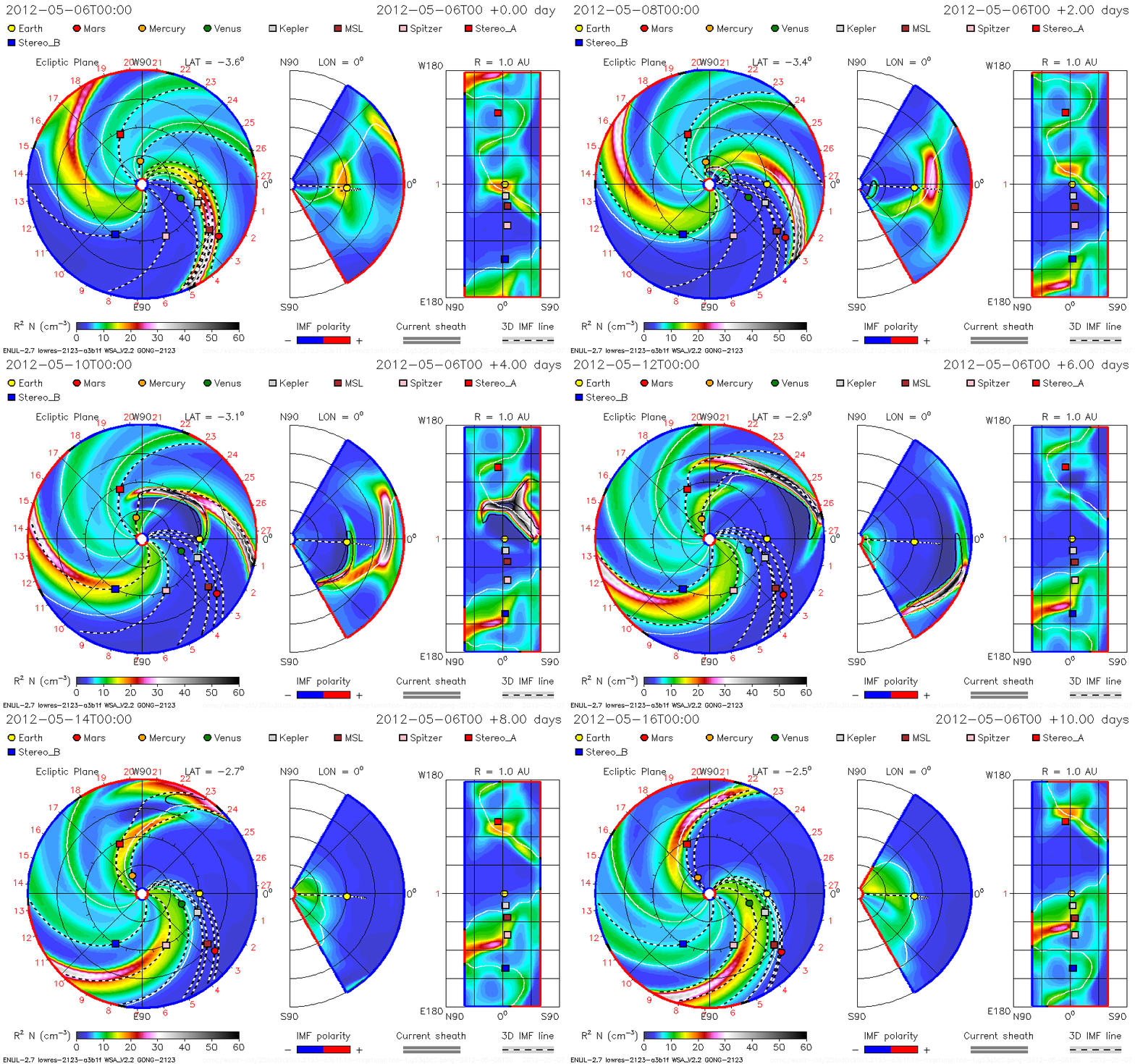
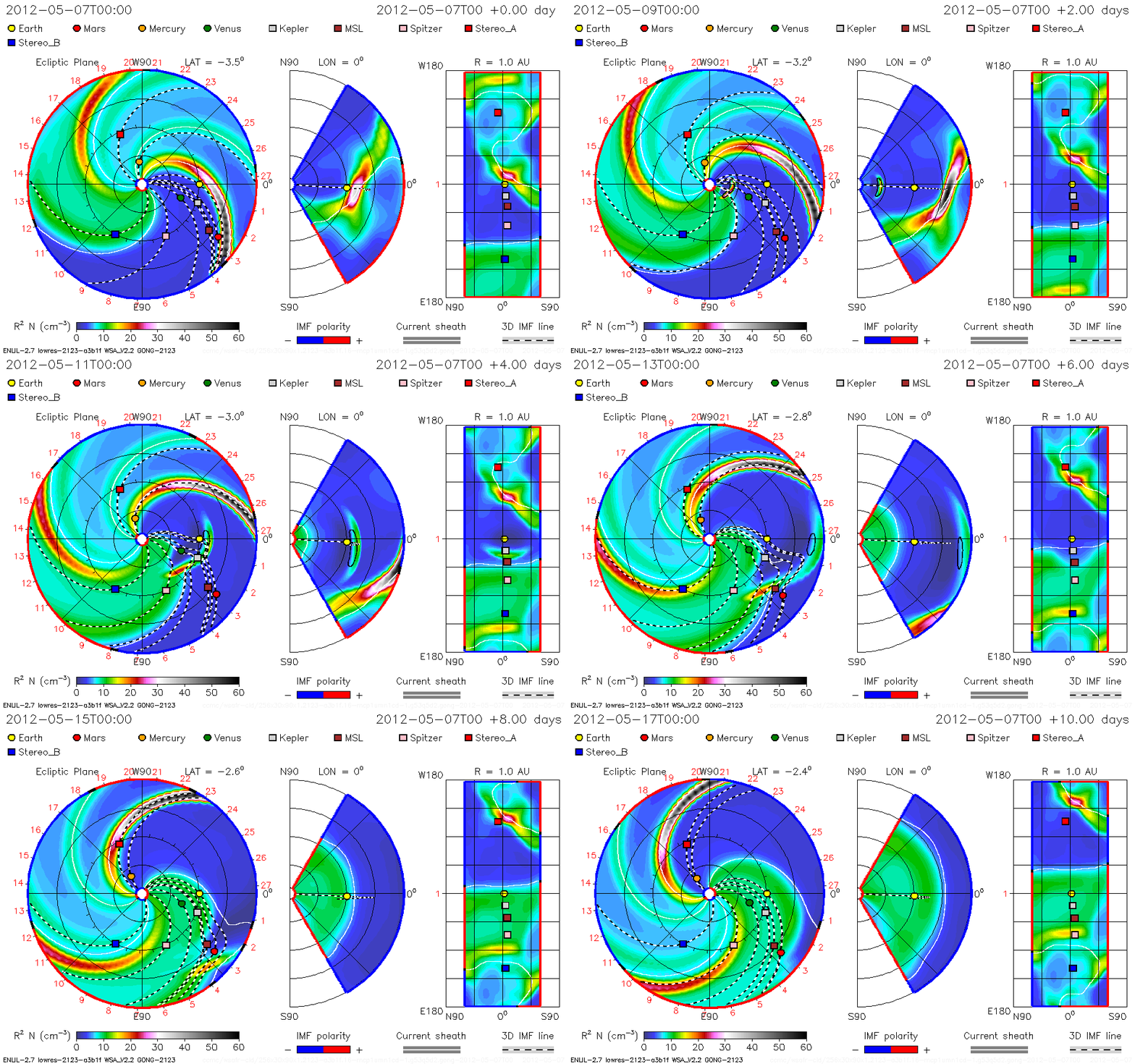
From NASA’s Spaceweather.com: A pair of solar eruptions on May 7th hurled coronal masss ejections (CMEs) toward Earth. Forecast tracks prepared by analysts at the Goddard Space Weather Lab suggests that clouds with arrive in succession on May 9th at 13:40 UT and May 10th at 07:54 UT (+/- 7 hours). The double impact could spark moderate geomagnetic storms. High-latitude sky watchers should be alert for auroras.
With a least four dark cores larger than Earth, AR1476 sprawls more than 100,000 km from end to end, and makes an easy target for backyard solar telescopes. Amateur astronomer Alan Friedman sends this picture of the behemoth from his backyard in Buffalo, NY:

“AR1476 is firecrackler,” says Friedman.
Indeed, the active region is crackling with impulsive M-class solar flares. Based on the sunspot’s complex ‘beta-gamma’ magnetic field, NOAA forecasters estimate a 75% chance of more M-flares during the next 24 hours. There is also a 10% chance of powerful X-flares.
“This one is going to be fun as it turns to face us!” predicts Friedman. He might be right.
Here’s the current SDO image:

And a close up of AR1476:

Keep up with the latest at the WUWT Solar Reference Page
Today, AR1476 has the Earth directly in its sights. 75% chance of an M class event and 20% for an X class in the next 24hrs. Time will tell.
http://www.swpc.noaa.gov/alerts/warnings_timeline.html
Ric Werme,
As leaf chlorophyll degrades the tree strives to retake nitrogen, but without chlorophyll working the light striking leaf can incite damage. There are minerals the tree also tries to pull back in & those ions on the move can instigate radicals the anthocyanin antioxidant treats. A red colored leaf is poorly picked up by insect photoreceptors & thus red leaves help mask those still resource holding leaves that have lost chlorophyll & are becoming colored insect photoreceptor attractive yellow.
Your pictured tree just had a great season. It grew with so many resources it could dedicate energy to anthocyanin production and maximized internal recycling. Stand alone trees apparently make more anthocyanins because need the “camo”/screen more due to being so exposed. Sorry can’t parse the factors for fall splendor.