Guest post by E.M.Smith
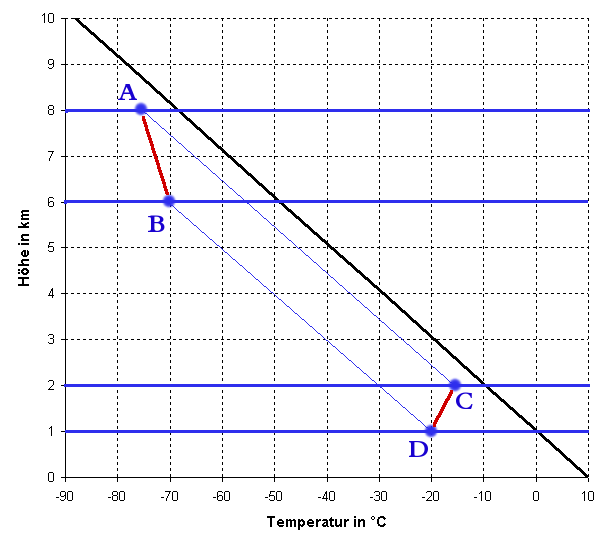
Temperature Inversion
The Event
We’ve recently had some very cold days in International Falls.
This posting:
http://wattsupwiththat.com/2011/01/21/new-record-cold-tempertures-in-minnesota/
has a nice write up of the -46 F new record cold. ( That’s -43.33 C – still damn cold.) This is not just another “oh a record” posting. I’m asking “what does this mean about the magnitude and time scale of CO2 action?” and finding it means “not much” and “very short term”. But first, the data:
RECORD EVENT REPORT
NATIONAL WEATHER SERVICE DULUTH MN
518 PM CST FRI JAN 21 2011
…RECORD LOW TEMPERATURE SET AT INTERNATIONAL FALLS MN…
A RECORD LOW TEMPERATURE OF -46 DEGREES WAS SET AT INTERNATIONAL
FALLS MN TODAY. THIS BREAKS THE OLD RECORD OF -41 SET IN 1954.
Last night set a “daily record” too, but not a new “all time record”.
Here is a monthly chart so you can see if anything “interesting” happens on that scale:
And here is a ‘close up’ on that week in particular:
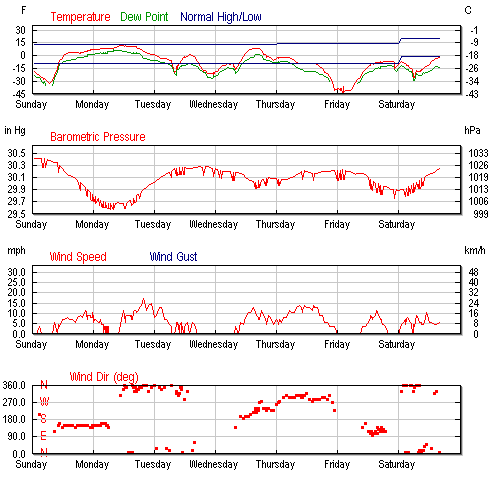
International Falls week ending 22 January 2011
The Meaning
OK, so what does this mean? Typically it means that there was a temperature inversion on a cold clear night. (I was watching The Weather Channel when they reminded me of this with a brief coverage of how this particular cold record happened). Normally, temperature decreases with altitude, during an inversion the temperature is coldest at the surface and warmer at altitude. (The “D-C” segment in the diagram up top. It is showing how air from the ‘normal’ “A-B” segment, if descended, would result in an inversion).
Under certain conditions, the normal vertical temperature gradient is inverted such that the air is colder near the surface of the Earth. This can occur when, for example, a warmer, less dense air mass moves over a cooler, denser air mass. This type of inversion occurs in the vicinity of warm fronts, and also in areas of oceanic upwelling such as along the California coast. With sufficient humidity in the cooler layer, fog is typically present below the inversion cap. An inversion is also produced whenever radiation from the surface of the earth exceeds the amount of radiation received from the sun, which commonly occurs at night, or during the winter when the angle of the sun is very low in the sky. This effect is virtually confined to land regions as the ocean retains heat far longer. In the polar regions during winter, inversions are nearly always present over land.
That bit about relative IR rates is the key bit, from my point of view.
The Weather Channel also pointed out that the conditions needed were:
1) Clear sky. (i.e. no cloud layer blocking IR).
2) Still air. (i.e. no turbulent processes mixing the air and a lack of convective processes).
3) Dry air. (i.e. the water vapor content had to be taken out of the air for the IR to be free to leave).
So what does that LEAVE in the air? CO2.
Now think about this for a minute. If you have ANY of: Convection, barometric driven mixing, clouds, water vapor, water droplets; then IR does not dominate. With them all removed, and with the CO2 left in place, we have the full “CO2 Forcing” in effect (but unobscured by other drivers).
And what did we get? A New All Time Record Low.
I’d like to turn this into a whole lot more, but to me it’s clear and done at this point and any “more” is “less” clear.
CO2 is completely swamped by ANY of [ convection, wind, water vapor, clouds / water drops ] and when seen acting on its own can do nothing to prevent record lows from IR radiation from the surface.
There are sidebars and sidelights, but the crux of it is just that. CO2 is a wimp, and can be ignored. Water kicks sand in its face and clouds pee in its beer while the wind gives it a wedgie.
Sidebar on timing:
Look at the daily cycles. The IR cooling process happens in less than a day. From the 20th to the 21st things plunge. Why did it not happen on the 12th to 13th? Because IR was busy being beat up by the other processes. And when they are out of the way? Overnight a plunge to “way cold” that leaves CO2 “speechless”.
This means that the IR process is measured in HOURS, not days, weeks, months, and certainly not “30 year trends”. It’s over and done in HOURS. Trying to measure it with an annual average is folly of the worst sort. Trying to do so when there is clear evidence that it is irrelevant in the context of water and wind is lunacy. Doing it while completely ignoring clouds, humidity, and winds, as the “Annual Global Average Temperature” does is a bastard cross of folly with lunacy. “Just say no.”
Sidebar on Water and Wind
The Weather Channel put up two graphics. I don’t know if they were “typical” or actual data from the location, and I can only describe them here (i.e. I don’t have links… yet…)
One showed ‘normal conditions’ with it -40 F at altitude and something like -8 F at the surface, the other showed the inversion with it being -43 F at the surface (last night) and something like -15 F at 5000 feet. They then went into the above referenced discussion of the importance of ‘still air’ and low humidity to allow radiative cooling of the surface.
This made one thing very clear to me: Much of the “surface temperature” we measure is in fact measuring how much “vertical mixing” has happened (or not). We can get 30 F range based on how much vertical mix is going on? And nobody is taking that into account in the “Global Average Temperature”?
Where are the data on vertical mixing rates globally? Do we even have a clue how they change over time? Over 60 year PDO cycles? We’ve got 3 orders of magnitude “more there there” in the vertical mixing range than in the 1/100 C variations they are panicked over in “Global Warming” and it is being ignored?
Now look at that daily data again. Yes, there is wind moving things down from Canada, but it’s not the lateral displacement that is dominant here, it’s the vertical displacement. The lateral is taking several days to work, the vertical is much faster. There are “microbursts” that can down an airliner (over 2000 fpm downdrafts) and the distance we are talking about is 5000 feet. I make that 2.5 minutes time scale.
I’ve noted for a couple of years now that ever since the sun went quiet, the vertical atmospheric ‘thickness’ got compressed to thinner, and the PDO flipped: that the winds were more “bursty” and with more “vertical component” (in comments on various threads, many at WUWT). Now I think we have “why it matters”. Just ask the folks in Frostbite Falls…
Now, as that thinner colder layer gets colder (as has happened up North) we get more water vapor turned into ice crystals (all that snow on the ground as well as the ice in noctilucent clouds) and with more GCR (cosmic rays) making more condensation, if it’s more COLD condensation as ice, we get that “clear cold dry” air.
Conclusion
So, in the end, it’s all about what happens to the water, what happens to the wind, and what drives the clouds.
And even just ONE clear, dry, cold night with CO2 doing all it can but resulting in a record low EVER for that location pretty much says there is not a thing of importance being done by CO2. That even just one day away is drastically different says that the CO2 is not the “driver” here, it isn’t even in the passenger seat…
—————–
Steven Mosher,
I believe Lindzen discusses what the greenhouse effect is wrt ( Lindzen’s term of )”the characteristic emission level, τ=1″ of the atmosphere. It is some more precise in Lindzen’s paper [ https://www.cfa.harvard.edu/~wsoon/ArmstrongGreenSoon08-Anatomy-d/Lindzen07-EnE-warm-lindz07.pdf ] than your discussion. I take it to be a major conclusion of Lindzen that there are serious attribution issues for CO2 increases causing so called (my words) ‘observed heating at the earth surface’.
Regards,
John
Wow, my lost first comment just reappeared. Thought it was long gone. Well, the second one’s on the same thought and written better anyway. Don’t you hate it when you make a few housekeepping changes and everything seems to go bonkers.
Thanks Anthony.
Normally these kind of posting are way above my pay grade…..but, this one I understand.
Hi
A very interesting post, the subject “temperature inversion” is something with which I am familiar, but it appears to work the other way to what is described in your post, in my particular case.
I live out in the country in the UK, at the bottom of a shallow valley. on either side at the top of the valley is open high ground. Where I live is in described in local terminology as a “frost pocket”.
Firstly what happens on a “normal” frosty night i.e. no temperature inversion process.
Every time there is an anticyclone, (still air conditions), with clear sky, as the temperature falls at night, the cold air runs down the valley sides from the open common above and collects at the bottom of our valley. I have seen the oak trees in our wood at the bottom of the valley, which were in new leaf in May, totally burnt off up to 15 feet from the ground, with an exactly horizontal line marking the junction between the frost and the non frost night time low.
Our neighbour lives 25-30 feet (vertical height) up the slope and although I might get -2 or -3 deg C frost, the same night he does NOT record a frost at all. (+1 – +2 deg C).
Now the rare temperature inversion, Once or twice a year, when the cold air runs down into our valley, instead of it displacing the warmer air at the bottom of the valley, it slides over it, trapping the warm air under the colder blanket. If our oil CH boiler is running, after a short time we start to choke and eyes water from the fumes from the exhaust gases, although it exhausts through a roof chimney. This is because the hot exhaust fumes cannot penetrate the cold layer above, they collect as a noxious cloud at ground level. The effect lasts maybe an hour or two, then the balance changes, (I suppose due to the extra heat from the flue gases, the trapping layer disappears and we can breathe again).
Its fun living in a frost pocket, gardening presents particular challenges! I always fall about laughing when a talking head on the TV gardening program exhorts us to start planting for hot dry drought conditions!
regards
Patrick
This post has some of the most woefully flawed logic I think I’ve ever seen. It gets cold at night, so therefore CO2 is not a greenhouse gas? Wow. Get on to Nature with that one.
To Dave Springer and others:
The point is that this was colder than 1954, when CO2 levels were lower and we hadn’t started climbing the hockey stick curve. How does that happen unless CO2 is doing… very little?
I think it is because CO2 levels, if they are significant, are not actually uniform across the globe. In fact we rely on temperature readings from all over the place (in weather stations of varying quality) but a single point reading of CO2 at Mauna Loa in Hawaii. I wonder how relevant that is, especially when it is considered alongside global average temperature, which is a derived measurement obtained with lots and lots of errors.
On average, it isn’t Christmas Day, but that doesn’t mean to say that Christmas has stopped happening.
If say there was much less or much more co2 in the atmosphere under the same inversion conditions would there be any effect on night time air temperature?
You make a great argument for why it isn’t just weather.
E.M. Smith,
The air is far more denser in the cold as water molecules(humidity) is not a factor in the atmospheric density.
Add in centrifugal force from planetary rotation which helps force the heat energy away from the planet’s surface.
“I take it to be a major conclusion of Lindzen that there are serious attribution issues for CO2 increases causing so called (my words) ‘observed heating at the earth surface’.”
Actually No. Lindzen, Christy, Spencer, Monckton, Willis, would ALL say that
all other things being equal more c02 means more warming. That’s just first
order physics.
It get’s much more complicated when you look at “all other things” but first
order physics says more c02 = warmer than less C02.
This is actually a proposition that is good for skeptics to accept becase all the
STRONG skeptical arguments have to do with the “all other things being equal”
When you argue that to a first order more C02 means a cooler earth, then you
have severe problems explaining things.
So, for example, you could agree as Lindzen does, that more c02 causes more warming, BUT THAT the addition warming is small and thus attributing the OBSERVED warming SOLELY to C02 is not possible yet.
Another simple way to look at it is this.
C02 can never cause warming.
C02 causes warming, but the effect is too small to measure, yet.
C02 causes some of the warming we have seen and so does internal variability
C02 causes most of the warming we have seen, more than internal variability has.
Nobody with any credibility argues #1. They cant.
Some people argue #2 and they explain that the ups and downs of climate
are due to other factors, but they admit that over time if more C02 is added,
that the ‘ups’ will get higher. Some people argue number three. the climate goes up and down, but adding C02 over time will cause a significant rise and we may
have already seen some of this in the 20th cnetury. And finally warmists, who dont deny the ups and downs but who see the increase in the “up” as being driven by
human factors ( like more than half of the “up”)
wayne says:
January 24, 2011 at 1:49 am (Edit)
Here we go on radiation again and Steven Mosher, I see the point of what AGW proponents point out on increased opacity and the raising of the height at which unimpeded passage to space occurs. But there is an equal (or close) effect that makes co2 be the molecule that increases loss of heat that is already within the atmosphere. The more co2 the faster the atmosphere will lose it’s heat.
#####
sorry wayne. I’ve seen no published physics that establishes that. No experiments that establish it and its totally at odds with the observational record. It makes the past less understandable no more understandable. It makes a hash of our understanding of how other planets operate.
Back to Science of doom class for you.
Easy out for the warmists: CO2 affects the average global temperature over decades and centuries, not local temperatures over a day or two. But I agree with you: why not? Why doesn’t the almighty CO2 prevent local record low temps? It’s either a warm insulating blanket or it’s not.
I too am skeptical of the CO2 contribution to warming the Earth. Yes, Earth’s atmosphere does provide a “comfort blanket” of about 33C above the black-body temperature of 255K. And, yes, CO2 is a powerful absorber of IR energy in the bands you mentioned above (although I think the 15 micron band is more important here, because it’s closer to the terrestrial thermal radiation peak).
But the question should be: how much warming effect does CO2 _alone_ have on terrestrial warming? It seems from the article above that CO2 doesn’t work unless there is water vapor to ‘assist’.
We have an ideal planetary “CO2 greenhouse laboratory” in place on the planet Mars, whose atmosphere is 95% CO2 (with no other GHG’s to complicate the analysis), to observe how much warming is due to CO2 alone.
Finding: Virtually no warming due to CO2 is observed.
The Martian atmosphere is much thinner, only 1% of Earth, but because it’s almost pure CO2 the actual concentration of CO2 is about 30 times greater per unit surface area than on Earth.
Yet the mean surface temperature is the same as the black body temperature, ~210 K, according to NASA’s “Mars Fact Sheet”:
http://nssdc.gsfc.nasa.gov/planetary/factsheet/marsfact.html
Black-body temperature: Mars 210.1 K Earth 255 K
Average temperature: Mars ~210 K Earth 288 K
Conclusion: Even though CO2 is a powerful absorber of 15 micron radiation, in isolation its contribution to “greenhouse warming” is negligible.
Whenever I bring this up, someone invariably mentions that “pressure broadening” may play a role here. Pressure broadening refers to the apparent thickening of aborption lines under high pressure. But is there really any _conclusive_ evidence or experiment that proves that this effect actually produces warming, without any help from other feedback mechanisms?
And, getting back to Mars, why is it that CO2 doesn’t produce a lot of warming?
E. M. Smith claims
———-
Lots of stuff about thermal inversions, clear skys no wind, yada, yada…
———-
except there is a problem. According to this there was cloud and snow.
http://www.wunderground.com/history/airport/KINL/2011/1/21/DailyHistory.html?
Can you have snow if there is a thermal inversion ?
I became suspicious and decided to check because EM claimed, without providing evidence, that a thermal inversion based on radiation imbalance was involved, even though there is no evidence of a thermal inversion or that such a thermal inversion, if present, was not caused by some other mechanism.
It also appears that Yahoo is attributing this particular cold snap to cold winds blowing out if Canada.
This is an excellent post and it demonstrates many of the failings behind the AGW theory, not least that the land based global temperature data set is measuring the wrong metric such that there is no evidence whatsoever that the heat content of the atmosphere is actually increasing.
The AGW crowd often argue that one cannot conduct a real physical experiment to show the effect of CO2, and yet nature has already done the experiment. For example, the temperature inversion on this frosty night. Another example would be night time temperatures in arid/desert area. And further, not least in the geological time frame, there are periods when the earth was cold yet CO2 levels were high, times when the earth was hot and CO2 levels quite low, times when CO2 levels were falling yet temperatures increased, and times when CO2 levels were increasing and yet temperatures cooled. Put all of this together and one can see that in the real world, CO2 has no significant impact and does not control temperatures.
I also consider that there is a time period in all of this which is not fully thought through. CO2 cannot heat the atmosphere, the earth or the oceans. At most, it acts as an impediment to the loss of heat from the ground and oceans. It simply delays heat loss. As the photons seek to find there way into space, they can no longer take a straight path. Some of them hit a CO2 molecule and this bounces them in a different direction possibly down back towards the earth where at some time they hit another CO2 molecule and that bounces them in another direction possibly back up to space where upon some of them will collide with a CO2 molecule bouncing them in a different direction etc. All that is happening is that instead of a straight line exit, there is a zigzag course which takes longer for the photon to travel before eventually it finds its way out to space.
If that is so, the question is whether the surface that has received the energy from the sun during the course of the day can sufficiently dissipate all that energy during the course of the night, or does the presence of increasing levels of CO2 mean that it can’t?
The process that I described above happens both day and night, but there is a different energy budget between day time and night time, the effect of which is that during the day, the earth receives more energy from the sun than it can dissipate back to space such that it warms up during the day. At night, the earth is not receiving any energy from the sun and has an opportunity to dump the heat back into space. There is sufficient time during the night to mean that the next day starts off with the same energy balance as did the previous day.
We know that whatever be the effect of CO2 in isolation, it does not significantly impede the night time dumping back of heat into space. This can be seen by night time temperatures in arid/desert areas. It can also be seen over the oceans. Over deserts, the night time temperatures quickly fall away and reach a low supported by the heat capacity/retention of the sands and rocks. The night time air temperature over the ocean is the same temperature as the ocean itself. The oceans have much more heat capacity and it is heat being radiated from the oceans during the night that keeps the air above them warm during the night and at the same temperature as the ocean below.
CO2 in isolation is inconsequential. Further, the wavelength of the back radiation is such that it cannot in any event penetrate the ocean to any significant degree (the penetration is measured in microns whereas the energy for sun penetrates to 10s of metres) which means that it incapable of heating the oceans and if CO2 cannot heat the oceans (which represent about 99% of the heat capacity of the earth, ignoring the core/mantle), it cannot cause global warming.
Tim Folkerts says: January 23, 2011 at 9:58 pm
“Just because an effect is small does not necessarily mean it can be ignored.” The answer, to that observation is that an increase in something that is negligible still remains negligible.
Stevo says:
January 24, 2011 at 2:01 am
This post has some of the most woefully flawed logic I think I’ve ever seen. It gets cold at night, so therefore CO2 is not a greenhouse gas? Wow. Get on to Nature with that one.
———-
Well spotted. Actually it set the record at 2am.
Must be a huge amount of IR back radiation at that time with no sun about.
Steven Mosher says:
January 24, 2011 at 2:35 am
Another simple way to look at it is this.
C02 can never cause warming.
C02 causes warming, but the effect is too small to measure, yet.
C02 causes some of the warming we have seen and so does internal variability
C02 causes most of the warming we have seen, more than internal variability has.”
Steven Mosher, you left off the most important one of all. 4 is the AGW position. You left off the CAGW position. The C being catastrophic, as in the world will end if we do not move to global transfer of wealth now. You left off that position, without which probably none of us would be either posting or reading here.
In regard to the post I think E.M. is postulating another means for the extra energy of CO2 to be used up in accelerating a convection process of moving energy, such as the potential that some of the energy increase from CO2 is used to speed the hydrologic cycle as opposed to increasing temperature.
BTW Mr Mosher, I am not saying that all the energy is used in other ways then increased temperature. I am saying that there are indications and observations that the feedbacks may be neutral or even negative and the temperature increase from a doubling of CO2 is quite possibly beneficial when the KNOWN aerial fertilization effect of increased CO2 is taken into account.
The surface record minus ESNO cycles, (1940 ish peak to 2000 peak) is not indicative of a disaster, especially when considering that most of the increase in temperature is at night.
Also BTW did not Spencer do an article on UHI, showing that it can and does take effect even in “growing” rural areas?
@Tim Folkerts:
Perhaps you missed that the cold parts of the cycle happen at night when it’s very low on visible ‘radiation’ and all you’ve got to work with is IR. The IR retention of CO2 is doing nearly nothing different now than back when the prior record was set. All the major variation comes from the other factors (wind, water, clouds).
The fact that we have nearly NO accounting for that in the “Global Average Temperature” means that attributing changes in it to CO2 while ignoring the humidity ranges and the wind changes is simply a big fat error.
I note in passing you make a near-religious leap of faith to “everything will average out” and it simply must show up in climate. Try this instead: A 4th power function will drive cooling to the limit inside hours and then you are done. We see this happen every clear cold still night. Processes driven by decadal scale drivers (like solar variation, GCR variation, volcanic variation, ocean cycles and the attendent humidity changes) will stay out of the average range for the duration of those decadal scale events.
@Stephen Fisher Rasey:
Gotta Luv It! I think I feel a new mascot coming on…
@David Springer:
It changes the understanding by pointing out the dominance of the non-CO2 factors. That on any given day we get 10’s of degrees change from things that are NOT in the drivers list for AGW Global Average Temperature, yet are clearly demonstrated. When GAT is constructed, it is done from temperatures alone. Not temperatures adjusted for wind, vertical mixing rates, humidity, cloud cover. They are IGNORED in that calculation. So here we have a clear demonstration that they amount to tens of degrees of “Forcing” and that CO2 accumulated over the years could do nothing to hold the temperature above that of the prior occasion. We’re ignoring the $100 bills we’re spending and saying that the pennies will make up for it. You can’t do that.
You could ALMOST make a case for saying that if we had measured all the wind, clouds, humidity, etc. and they where known to be the same that then any residual belonged to CO2 (though that is still a logical error as there could be an unobserved factor); but we don’t use those things at all in calculating the temperature change. It is simply assumed that the other things do not change. Yet we know that they do…
So this puts a bit of ‘sizing’ on things. It says “look, we got 10 F to -45 F, 55 F range, in one day then back up 40 F to about -5 F in one day all from the things that are being ignored” so we can now their size is in the 10s F range. It says “With CO2 up from 2xx to 3xx we’ve got no impact on the degree of record lows, it’s just not having any warming effect”. And it puts some timing on things. The IR heat loss proceeds to completion in a matter of hours. (Not surprising when you remember it is a 4th power function. That is going to have an incredible increase in heat loss during the hot times, but also an incredible dampening on lower bound when things cool.) It shows that even a single night window of time with [ clouds, water vapor, wind ] out of the picture and all that lovely heat is GONE. Not in a “pipeline”. Not slowly buiding up anywhere. Without water vapor holding the heat in, it leaves, and does so before sun rise. Even with greatly increased CO2. If the heat was ‘building up over months’ it could only happen if something ELSE was holding it in, as the CO2 didn’t.
CO2 was invarient over the time period. Something else causes the variation. And if that variation lets you drop to below any prior temperature, then it is dominating CO2 even if the CO2 were slowing the IR loss. Slowing an 8 hour process to an 8.2 hour process just doesn’t change the outcome during the night.
@Brad:
But they keep telling us that climate is the 30 year average of weather! (When it isn’t, but that’s another posting…) so weather IS suitable for posting! 😉
But seriously, it is important as it demonstrates the actual time scale of IR heat loss. Dramatic in one day. This was NOT a wind driven event. It was not a snowfall event. It was an IR event. And the IR left Dodge..
@TimC:
It isn’t an argument so much as an observation.
And no, a small thing can not dominate large things just by being patient. What this observation amounts to is, metaphorically, this:
There is a heat bucket into which we pour heat from the sun each day. The clouds, water vapor, and winds keep a 10 Gallon Per Minute hole plugged. We are also plugging a 1/1000 GPM hole with CO2. It’s a 100 gallon bucket. So one night the 10 GPM hole is left open and the darned thing drains dry in 10 hours. That 1/1000 GPM hole just doesn’t matter. (As every year has a few nights with the big holes opened).
The “excess heat” just can’t “build up”. Ever.
In less picturesque speach: You’ve got a 4th power function driving the IR losses and that is a terrible task master. Only if the IR is seriously blocked by the other things can you hold the heat in (and we are not paying attention to them when NASA calculates a GAT, so we don’t know how much ‘warming’ is from them, but we can see that CO2 alone is not holding the heat in).
jorgekafkazar says:
Doesn’t it have to be daytime for CO2 to do its full magic?
It blocks the same part of the same IR window to the same degree at all times. During the day, more heat is delivered from the sun, so there is more to leak out, and we warm up (until convection sets in taking that heat to altitude and dumping it).
Also the IR radiation function is a 4 th power function, so as things get hotter, the IR leaves hotter*hotter*hotter*hotter faster… 😉
but frankly, it’s convection that dominates, not IR, in moving heat to altitude.
Dermot O’Logical says:
CO2 is a factor in the IR budget. As Steve Mosher above says – it is warmer with CO2 than it would be without it. It is just that there is disagreement to the extent of its contribution.
The point of the observation is that it is vanishingly small and far far smaller than the other things that are ignored. It doesn’t matter if it’s 1/1000 or 1/10000 when we are ignoring the 1000000 scale events. It’s less than noise, it’s irrelevant noise.
Further, the issue of TIMING is very important. All the “global warming EOL as we know it” is based on the heat accumulating. But this shows that it leaves in hours. It doesn’t have a nice big heat battery being charged. Just clouds, water, and winds messing with the thermometers and the heat transfer rates.
It’s not that CO2 has no impact on IR, it is that IR in total happens way too fast and water vapor is way more important, so any Global Average Temperature calculation that ignores global athmospheric water vapor is like calculating the incremental impact on your lifespan from 1 gm of butter added to your lifetime diet and ignoring the heart attack in progress.
@IanM: Darn, I mssed that! 😉
@stevo:
You missunderstand the points. It’s not that CO2 isn’t a greenhouse gas, it’s that it is of no importance compared to the ones we are ignoring and that when they are out of the way, we get a very cold day even colder than the last time they were out of the way (i.e. the increase in CO2 had no observable impact). So it may well be a greenhouse gas, but is way lost in the noise, or worse. It just isn’t registring an effect.
It’s putting a OBSERVATIONAL size and speed on things. Something horridly missing in the “toy world” modeling process.
Stevo
I believe it’s customary to read the post on which you’re commenting.
Are you purposefully avoiding the obvious conclusion by omitting the key word “significant”? Yes, we can agree that an insignificant factor will have an insignificant impact on weather. Given that climate IS the average of all weather, then why can it not be said that whatever is insignificant to weather in general can ultimately only be insignificant to climate as well?
Thanks, that’s a ‘keeper’! Water vapor is reported to be responsible for as much as 95% of the overall so-called “green house effect” but the average person needs an A-B example like yours to bring the point home and it’s a very good one IMO.
@Steven Mosher:
You continue to think I don’t understand what is claimed. I do. I reject it as based on false assumptions and repeating it does not improve those assumptions.
I care about OBSERVATIONS much more. And what was observed?
The surface is not warmer.
The “altitude of radiation” doesn’t matter at all and it isn’t CO2 that changes it. It’s water vapor and clouds that matter. (During this cold event the surface was doing the radiating at 0 AGL altitude… your CO2 didn’t move it an inch.)
Convection dominates where the heat is dumped during the day (I’ve a posting up on that where they MEASURED the timing and distance, again an ‘under a day’ rate). So staring at IR all the time is just causing you to not notice all the vertical mixing that’s the real issue.
http://chiefio.wordpress.com/2010/12/02/does-convection-dominate/
that looks at this paper:
http://hal.archives-ouvertes.fr/docs/00/31/68/93/PDF/angeo-19-1001-2001.pdf
Or put more simply: That -46 would have been 5 F with more water in the air as it visibly was on other days that week. And constant stressing that it’s a “warmer” not an absolute temperature does not help your case. I heard you the last 100000 times. Look, the land got COLDER than ever before with more CO2 than in recorded history. WHY? Because it’s the water vapor and clouds that matter, not the CO2. And it doesn’t matter if it would have been -44.9 or -44.8 or -44.7 from the CO2 as the “other stuff” is swinging the -44 into a -20 or even a -10.
And I’m quite happy with the idea that it might take longer for heat to escape. You seem to think I don’t “get that”. News Flash: Your presumption of ignorance is wrong.
My point is that the timing is measurable. It took hours. Increase that from 7 hours to 7.001 hours and it just does not matter. Without the water vapor in the way and without clouds in the way, it proceeds to substantial completion before the sun rises. (I’d hope we can agree that -46 F is substantial completion of the cooling and that -50F was not ‘otherwise in the cards’… as that is really not warming…)
So the question is NOT “how much warmer”. The questions are:
1) Why are we ignoring water vapor and assuming it is constant when it isn’t?
2) Why are we pretending the heat budget is being balanced on the order of 30 years when we see it being balanced on the order of a day?
3) Why are we ignoring cloud cover and assuming it is constant when it isn’t?
4) Why are we ignoring the daily convective processes that are critically imporant to the altitude at which serface heat is dumped each day (vis said paper) ?
5) WHY are we counting our pennys and ignoring the $Million Credit Cards the family is loading up each day?
Steve, that I think your points are not the right ones does not mean I don’t understand them. I do. I just reject them as being the wrong questions to ask and the wrong places to look for an answer.
http://chiefio.wordpress.com/2010/12/28/ignore-the-day-at-your-peril/
I’ve already commented on E.M.’s blog, so I won’t repeat what I said there here.
I’d just point out to the warmists posting here that what E.M. has done is provided a giant “Dig Here” sign. There must have been occasions when the same dry air / no wind conditions occurred in the same place, but yet despite the rise in CO2 levels, the record was set now, not in times previous, which should have been the case if CO2 has a measurable effect on temperatures.
Other posters have also pointed out that those same conditions arise in deserts (including Antarctica) on a regular basis. Why, with the 10’s of billions spent on climate research, have no monitoring stations been placed in these locations. It’s all very well demonstrating CO2’s warming effect in the perfect conditions of a lab, or do some calculations that show it on paper, but there has been no demonstration of that effect in real world conditions, and all the arm waving isn’t going to change that.
The corollary to a thesis being unfalsifiable and untestable is that it is unproveable.
http://www.skepticalscience.com/co2-lags-temperature.htm
Well, the most important aspect to CO2 is whether it leads or lags climate….not weather. If it lags, but eventually intitially contributes to ice age recovery with a decided exponentially dampened effect as levels rise, then much ado about nothing.
Science 22 July 2005; Vol. 309. no. 5734, p. 532; DOI: 10.1126/science.309.5734.532n
There is actually a lot of published, and ignored, studies on this subject it would seem.
This is where I am stuck frankly, because if CO2 lags…….well
Excellent post sir !!!
“CO2 is a wimp, and can be ignored. Water kicks sand in its face and clouds pee in its beer while the wind gives it a wedgie.”
That is a keeper !!!