By Steve Goddard
The Arctic is proud to have been listed as one of many “fastest warming places on earth.”
The GISS 250km Arctic image below shows temperature trends from 1880-2009. Areas in black represent regions with no data.

In most fields of science, data is considered an essential element of historical analysis. But climate science gets a pass, because it involves “saving the planet.” Antarctic coverage is equally as impressive. The image below looks right through the earth to the Arctic hole.

Temperatures in the high Arctic have been running well below normal and have started their annual decline. There are only about 30 days left of possible melt above 80N.

http://ocean.dmi.dk/arctic/meant80n.uk.php
This can be seen in North Pole webcams which show the ice frozen solid.

http://psc.apl.washington.edu/northpole/webphotos/noaa2.jpg

As forecast in last week’s sea ice news, ice loss accelerated during the past week over the East Siberian Sea due to above normal temperatures.

http://ocean.dmi.dk/arctic/icecover.uk.php
The modified NSIDC map below shows (in red) regions of the Arctic that have lost ice over the past week.

The modified NSIDC map below shows (in red) ice loss since early April.

The modified NSIDC map below shows (in red) ice loss since July 1. The Beaufort Sea has actually gained ice (green.) Looks like a Northwest Passage traverse is quite possible (by helicopter.)

Ice loss from July 1 through July 23 has been the slowest on record in the JAXA database. Ice loss during July has been about one half that of 2007.

The graph below shows the difference between 2010 and 2007 melt. 2010 started the month half a million km² behind 2007, and is now half a million km² ahead of 2007.

The modified NSIDC image below shows the difference between 2007 ice and 2010 ice. Green indicates more ice in 2010, red indicates less.

“Climate expert” Joe Romm reported in May
Arctic sea ice shrinks faster than 2007, NSIDC director Serreze says, “I think it’s quite possible” we could “break another record this year.” Watts and Goddard seem in denial
Average ice thickness continues to follow a track below 2006 and above 2009, hinting that my prediction of a 5.5 million km² minimum continues to be correct.

During July, ice movement has been quite different from 2007 – which had strong winds compressing the ice towards the pole. By contrast, July 2010 has seen winds generally pushing away from the pole. Thus the ice edge on the Pacific side is further from the pole. No rocket science there, and a pretty strong indication that the alleged 2007 record summer melt was primarily due to wind.
Cryosphere Today showed two days ago that Arctic Basin ice is nearly identical to 20 years ago, but unfortunately their web site is down and I can’t generate any images.
NCEP forecasts warm temperatures in the East Siberian, Chukchi and Beaufort Seas for the next week, so I expect that melt will continue around the edges of the Arctic Basin.
Meanwhile, Antarctic ice continues well above normal. Antarctica is also the fastest warming place on the planet.
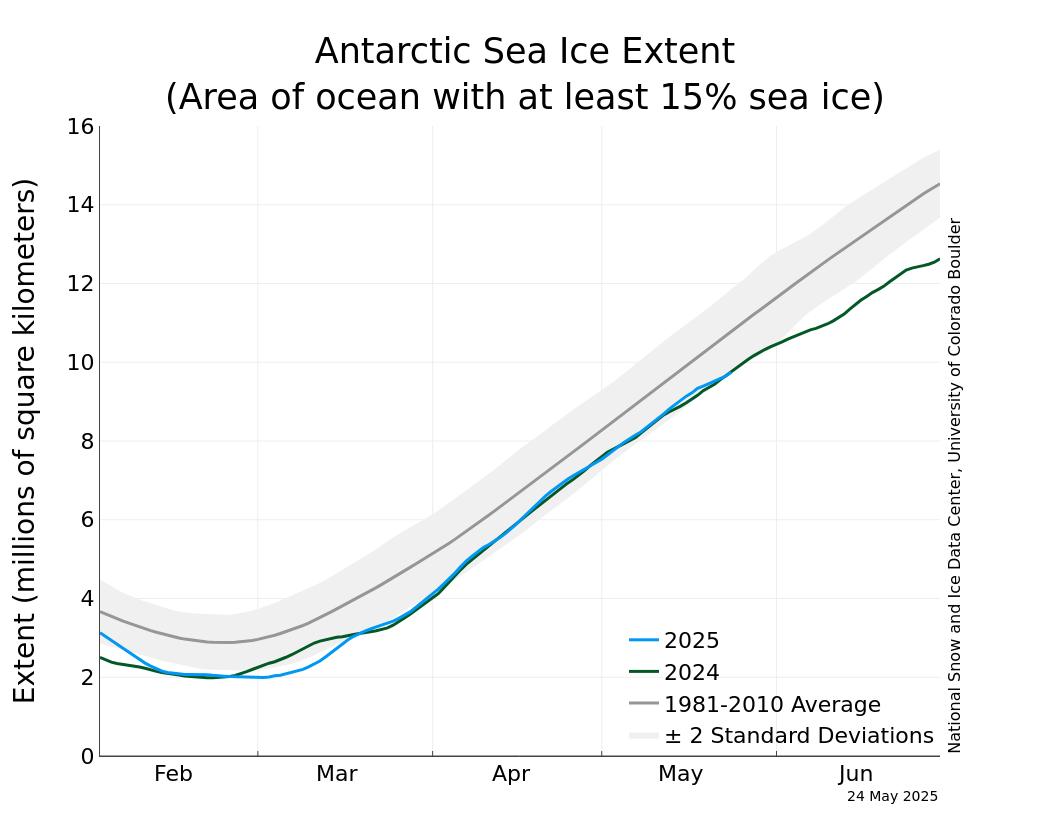

Conclusion: There is no polar meltdown at either pole.
Next week we start comparing PIOMASS forecasts vs. reality. PIOMASS claims that Arctic ice is the thinnest on record.

============================================
Don’t forget to bookmark WUWT’s new Sea Ice Page
Sponsored IT training links:
Subscribe for 350-030 training and get up to date 70-649 materials with 100% success guarantee plus get free demos for 220-701 exam.
p.s.
phlogiston says:
July 29, 2010 at 11:59 pm
Phil. says:
July 29, 2010 at 6:43 am
“Basin crisis” – sounds like something I experienced recently after a not-so-fresh seafood salad.