Count the number of ifs, mays, and coulds in this story, then look the rebuttal and other supporting information. The Telegraph is repeating alarmism.
From the Telegraph By Kate Devlin, Medical Correspondent
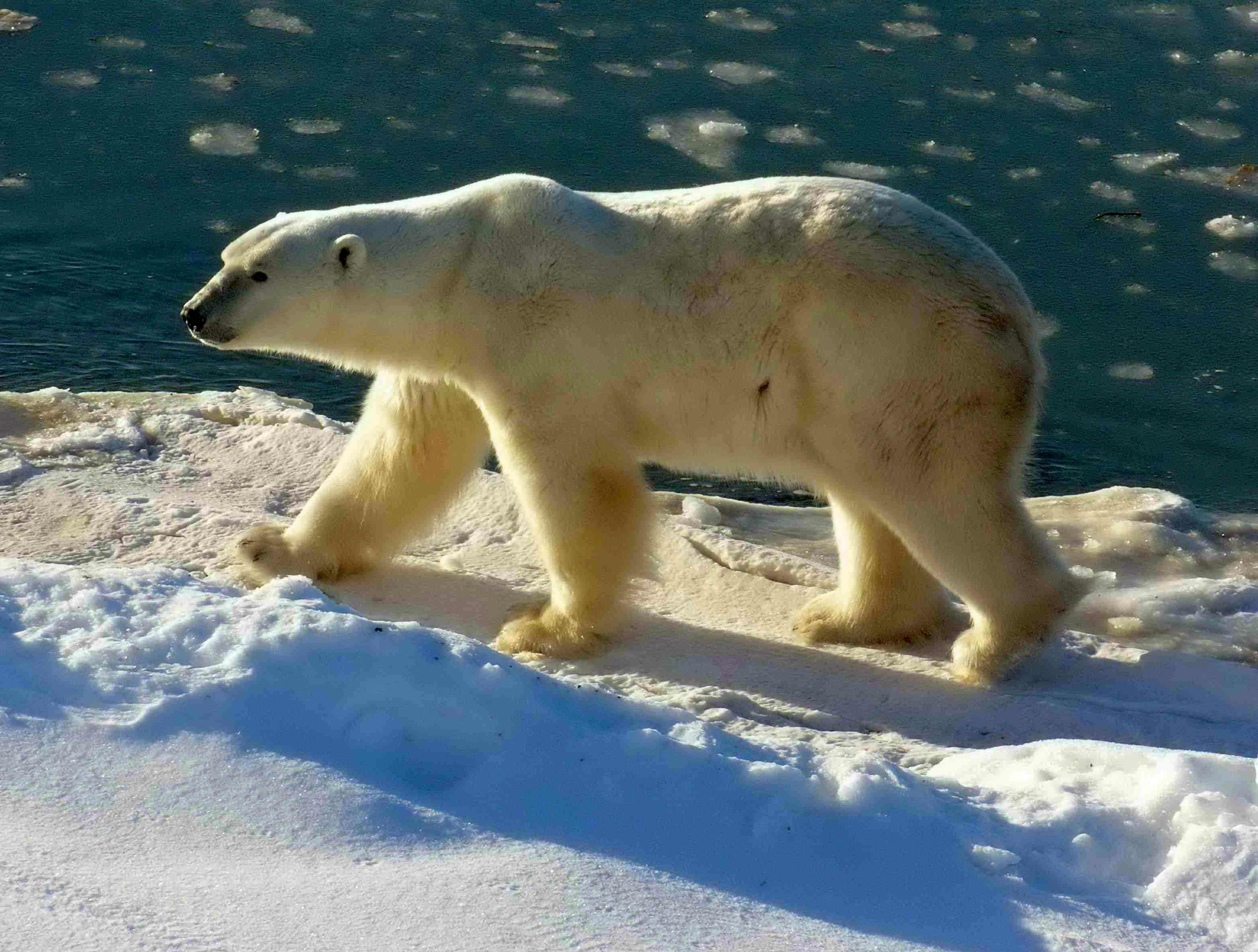
Polar bears face extinction in less than 70 years because of global warming, scientists have warned.
Melting ice is causing their numbers to drop dramatically, they warn. Others also at risk include ivory gulls, Pacific walruses, ringed and hooded seals and narwhals, small whales with long, spiral tusks.
One of the problems is that other animals are moving north, encroaching on their territory, spurred by increasing temperatures, pushing out native species.
The animals are also struggling with the loss of sea ice.
“The Arctic as we know it may soon be a thing of the past,” said Eric Post, associate professor of biology at Penn State University, who led the latest study, published in the journal Science.
“Recent projections suggest polar bears could be extinct within 70 years.
“But we think this could be a very conservative estimate. The outlook is very bleak for them and other creatures such as ringed seals.”
He added: “The rate at which sea ice is disappearing is accelerating and these creatures rely on it for shelter, hunting and breeding. If this goes, so do they.”
Read the complete story in the Telegraph here
OK now for the other side of the story:
A few countering reports:
Christian Science Monitor, May 3rd, 2007 – Despite global warming, an ongoing study says polar bear populations are rising in the country’s eastern Arctic region.
Science Daily May 10th, 2008 – Federal Polar Bear Research Critically Flawed, Forecasting Expert Asserts
National Post March 6th, 2007 – Polar bear numbers up, but rescue continues
WUWT May 9th 2009 – The “precarious state of the U.S. polar bear population”
Dr. Mitchell Taylor, a biologist with Nunavut Territorial government in Canada wrote this letter (PDF) on April 6th, 2006 to the U.S. Fish and Wildlife Service:
Some excerpts:
At present, the polar bear is one of the best managed of the large arctic mammals. If all the arctic nations continue to abide by the terms and intent of the Polar Bear Agreement, the future of polar bears is secure.
…
Polar bears are believed to have evolved from grizzly bears during the Pleistocene era some 200-250,000 years ago (Amstrup 2003). Polar bears were well developed as a separate species by the Eemian interglacial approximately 125,000 years ago. This period was characterized by temperature fluctuations caused by entirely natural events on the same order as those predicted by contemporary climate change models. Polar bears obviously adapted to the changing environment, as evidenced by their presence today. That simple fact is well known and part of the information contained in the reference material cited throughout the petition, yet it is never mentioned. This fact alone is sufficient grounds to reject the petition. Clearly polar bears can adapt to climate change. They have evolved and persisted for thousands of years in a period characterized by fluctuating climate. No rational person could review this information and conclude that climate change pre-destined polar bears to extinction.
…
The petition admits that there is only evidence for deleterious effects from climate change for one polar bear population (Western Hudson Bay [WH]) at the southernmost extreme of polar bear range (Fig. 1). The petition argues that the likelihood of change in other areas is reason enough to find that polar bears should be regarded as a species at risk of imminent extinction. I hope the review considers the precedent set by accepting this argument. Climate change will affect all species to some extent, including humans. If the likelihood of change is regarded as sufficient cause to designate a species or population as “threatened,” then all species around the world are “threatened.”
Some data. With hunting no longer allowed, bear populations have increased 4-5 times:


Unable to access the Telegraph to leave a comment to check this site.
I am amazed that anyone is out there that still believes this stuff. The AGW faithful, sure, but the rest?
The biggest tripe about this is that all types of bears are indigenous to forests, not open land and especially not ice sheets. A polar bear is simply a bear who doesn’t want to find his native habitat again because he got used to hunting down eskimos and seals for food. It’s a vicious predator that contributes nothing back to the circle of life, unlike us who are always credited with destroying life but because of us many species have a chance of survival that they never had before.
The Telegraph article unequivocally shows that a lady reporter possesses a strong passion to polar bears.
A question from a non-native speaker: The “if, mays, and coulds” on the first line should be “ifs, mays, and coulds” ?
Hmmm. So those other animals are like……..food to Polar Bears. Right? The largest and meanest carnivore on Earth is scared of lemmings and rodents? Birds and walruses? What am I missing here?
Revisiting an old, disproved lie? They’re running out of arguments, aren’t they…
Oh no, Global Warming reruns.
Isn’t that special?
Writer’s cramp, no doubt brought on by befuddlement as nature turns to bite them.
Sun in a coma, ice recovering, volcanoes popping off, ,weak El-Nino, short summer, early fall.
And what would we do without those polar bears anyway?
I think the 2 million in Washington today had other things on their mind.
Nah,
Just another slow news day, and I have to fill another ten column inches on page 2 before I can go to the pub (sigh).
Wait! I know!
I’ll rerun that white bear thing – that was about the same size. See, perfect. Mine’s a pint.
“Recent projections suggest polar bears could be extinct within 70 years.
“But we think this could be a very conservative estimate.”
Here we go again.
Well I ‘project’ that polar bears will be extinct in 90 days. But I ‘think’ this could be a very conservative estimate. I did it by typing the number ’90’ into a pocket calculator and ticking a box on a list – hours, days, months: just as accurate, and a lot cheaper. I have so much research grant left I can afford a Ferrari.
Maybe if enough ECO’s visit the arctic as in “Arctic Cruises
the Land of Midnight Sun and Polar Bears! Fully Outfitted Icebreakers” their personal contribution in feeding the polar bears will make up for the dirth in bear food.
It’s simple. Now that we know they’ve got twenty years, we can create a very simple market incentive to preserve the species by capturing a breeding pair and altering their offspring to be delicious.
Just think, we can farm Polar Bears. What? The dang things eat seals, it’s not like eating kittens.
In fact, it’s a bit like eating something that eats kittens.
Now, more seriously…Anyone else curious how the Bears have survived for at least 110,000 years? Shouldn’t the last interglacial have wiped them out? Hell, what about when Coastal Northern Russia was between 2.5 to 7 degrees warmer in July than the present from about eight thousand to thirty five hundred years ago?
Anyone who believes the Polar Bear is at risk needs their head examined.
MacDonald, G.M., et al., 2000. Holocene treeline history and climate change across northern Eurasia. Quaternary Research, 53, 302-311.
How can I alarm thee? Let me count the ways…
“Rereke Whakaaro (00:25:01) :
Nah,
Just another slow news day, and I have to fill another ten column inches on page 2 before I can go to the pub (sigh).
Wait! I know!
I’ll rerun that white bear thing – that was about the same size. See, perfect. Mine’s a pint.”
In UK, the months of August and September are generally known as the “silly season”, this is because of Parliament recess, and thus newspapers have no easy cheap Government press releases to copy. We thus have had in the past headlines like “London bus found on moon”. This current story is not quite in that category, because for some folk it will be believable, it is simply known as filler. The press have hundreds of these stories waiting for a suitable hole in the paper to fill.
Solution, don’t read the mainstream newspapers, especially in August and September.
Just back from 3 weeks in US – warm, to England – cold.
The first thought is to chastise the Telegraph and Kate Devlin. But, all they have done is reported what has been claimed by Eric Post, associate professor of biology at Penn State University.
I will leave it at that as to not disparage Eric Post for producing questionable material and claiming that it is true and unbiased science.
spangled drongo (00:57:13) :
“How can I alarm thee? Let me count the ways…”
Brilliant!
Kate Devlin is sooo right the poor Polar Bears are under threat and they need to be looked after. Kate and anyone else who is concerned should be given one to look after. Could solve so many problems.
tokyoboy
The question whether to put a comma before the last item of a list is controversial. Mainstream usage is like this:
a,b,c and d
But the Economist uses the form
a, b, c, and d
You are probably safest to use the form without a comma before the ‘and’. But the other form is not really incorrect, just unusual.
If you take the map of the circumpolar distribution of polar bear populations displayed here and overlay it with the map of the present arctic ice extent http://nsidc.org/data/seaice_index/images/daily_images/N_daily_extent_hires.png one wonders how all those polar bears are able to survive the arctic summers in the huge area of their habitat that has little or no ice even before the period that ice extent declined from a median of around 7 million square km to the present 5.3 million sqkm. I am no polar bear expert but I assume they thrive happily around the ice free coasts of the continents and surrounding islands during the summer.
No… I think she’s got it wrong. It should read……
“Recent projections suggest that JOUNALISTS could be extinct within 70 years”, a fed up public has warned.
The article should then go on to read……. ““But we think this could be a very conservative estimate. The outlook is very bleak for them and other creatures such as Environmentalists.”
The fed up public do concede that……. “The rate at which INTEGRITY is disappearing, is accelerating and these creatures rely on it for Chardonay, good food and breeding. If this Journalistic Hoax goes, so do they.”
Even so, species go extinct all the time. If all species that ever existed were still around today it would be a mighty crowded place here.
The seals are not going to miss them, that’s for sure.
One interesting factoid;
Don’t eat the liver of a polar bear it has deadly levels of vitamin A.
SAS survival guide.
and yet………… is this as unusual as made out?
http://www.mailonsunday.co.uk/news/worldnews/article-1213000/Cargo-vessels-navigate-legendary-Northeast-Passage-using-ice-breakers.html
the successful trip across the arctic via north west passage?
“Kate Devlin is the Medical Correspondent for The Telegraph newspaper and website. She writes on everything from swine flu to the challenges facing the NHS, and was previously Scottish Political Correspondent.”