UPDATED: This opinion piece from Professor Henrik Svensmark was published September 9th in the Danish newspaper Jyllands-Posten. Originally the translation was from Google translation with some post translation cleanup of jumbled words or phrases by myself. Now as of Sept 12, the translation is by Nigel Calder. Hat tip to Carsten Arnholm of Norway for bringing this to my attention and especially for translation facilitation by Ágúst H Bjarnason – Anthony

Translation approved by Henrik Svensmark
While the Sun sleeps
Henrik Svensmark, Professor, Technical University of Denmark, Copenhagen
“In fact global warming has stopped and a cooling is beginning. No climate model has predicted a cooling of the Earth – quite the contrary. And this means that the projections of future climate are unreliable,” writes Henrik Svensmark.
The star that keeps us alive has, over the last few years, been almost free of sunspots, which are the usual signs of the Sun’s magnetic activity. Last week [4 September 2009] the scientific team behind the satellite SOHO (Solar and Heliospheric Observatory) reported, “It is likely that the current year’s number of blank days will be the longest in about 100 years.” Everything indicates that the Sun is going into some kind of hibernation, and the obvious question is what significance that has for us on Earth.
If you ask the Intergovernmental Panel on Climate Change (IPCC) which represents the current consensus on climate change, the answer is a reassuring “nothing”. But history and recent research suggest that is probably completely wrong. Why? Let’s take a closer look.
Solar activity has always varied. Around the year 1000, we had a period of very high solar activity, which coincided with the Medieval Warm Period. It was a time when frosts in May were almost unknown – a matter of great importance for a good harvest. Vikings settled in Greenland and explored the coast of North America. On the whole it was a good time. For example, China’s population doubled in this period.
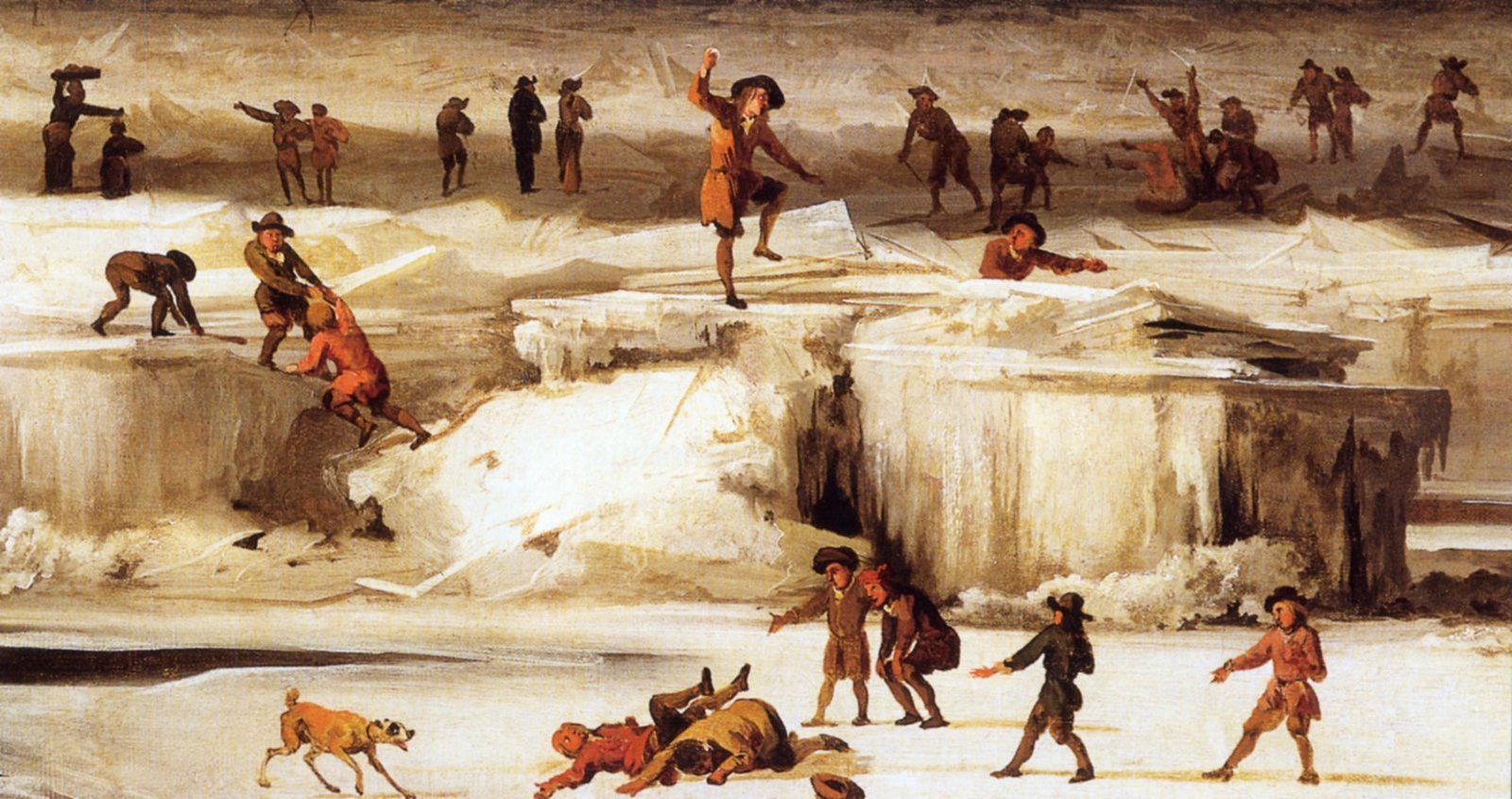
But after about 1300 solar activity declined and the world began to get colder. It was the beginning of the episode we now call the Little Ice Age. In this cold time, all the Viking settlements in Greenland disappeared. Sweden surprised Denmark by marching across the ice, and in London the Thames froze repeatedly. But more serious were the long periods of crop failures, which resulted in poorly nourished populations, reduced in Europe by about 30 per cent because of disease and hunger.
It’s important to realise that the Little Ice Age was a global event. It ended in the late 19th Century and was followed by increasing solar activity. Over the past 50 years solar activity has been at its highest since the medieval warmth of 1000 years ago. But now it appears that the Sun has changed again, and is returning towards what solar scientists call a “grand minimum” such as we saw in the Little Ice Age.
The match between solar activity and climate through the ages is sometimes explained away as coincidence. Yet it turns out that, almost no matter when you look and not just in the last 1000 years, there is a link. Solar activity has repeatedly fluctuated between high and low during the past 10,000 years. In fact the Sun spent about 17 per cent of those 10,000 years in a sleeping mode, with a cooling Earth the result.
You may wonder why the international climate panel IPCC does not believe that the Sun’s changing activity affects the climate. The reason is that it considers only changes in solar radiation. That would be the simplest way for the Sun to change the climate – a bit like turning up and down the brightness of a light bulb.
Satellite measurements have shown that the variations of solar radiation are too small to explain climate change. But the panel has closed its eyes to another, much more powerful way for the Sun to affect Earth’s climate. In 1996 we discovered a surprising influence of the Sun – its impact on Earth’s cloud cover. High-energy accelerated particles coming from exploded stars, the cosmic rays, help to form clouds.
When the Sun is active, its magnetic field is better at shielding us against the cosmic rays coming from outer space, before they reach our planet. By regulating the Earth’s cloud cover, the Sun can turn the temperature up and down. High solar activity means fewer clouds and and a warmer world. Low solar activity and poorer shielding against cosmic rays result in increased cloud cover and hence a cooling. As the Sun’s magnetism doubled in strength during the 20th century, this natural mechanism may be responsible for a large part of global warming seen then.
That also explains why most climate scientists try to ignore this possibility. It does not favour their idea that the 20th century temperature rise was mainly due to human emissions of CO2. If the Sun provoked a significant part of warming in the 20th Century, then the contribution by CO2 must necessarily be smaller.
Ever since we put forward our theory in 1996, it has been subjected to very sharp criticism, which is normal in science.
First it was said that a link between clouds and solar activity could not be correct, because no physical mechanism was known. But in 2006, after many years of work, we completed experiments at DTU Space that demonstrated the existence of a physical mechanism. The cosmic rays help to form aerosols, which are the seeds for cloud formation.
Then came the criticism that the mechanism we found in the laboratory could not work in the real atmosphere, and therefore had no practical significance. We have just rejected that criticism emphatically.
It turns out that the Sun itself performs what might be called natural experiments. Giant solar eruptions can cause the cosmic ray intensity on earth to dive suddenly over a few days. In the days following an eruption, cloud cover can fall by about 4 per cent. And the amount of liquid water in cloud droplets is reduced by almost 7 per cent. Here is a very large effect – indeed so great that in popular terms the Earth’s clouds originate in space.
So we have watched the Sun’s magnetic activity with increasing concern, since it began to wane in the mid-1990s.
That the Sun might now fall asleep in a deep minimum was suggested by solar scientists at a meeting in Kiruna in Sweden two years ago. So when Nigel Calder and I updated our book The Chilling Stars, we wrote a little provocatively that “we are advising our friends to enjoy global warming while it lasts.”
In fact global warming has stopped and a cooling is beginning. Mojib Latif from the University of Kiel argued at the recent UN World Climate Conference in Geneva that the cooling may continue through the next 10 to 20 years. His explanation was a natural change in the North Atlantic circulation, not in solar activity. But no matter how you interpret them, natural variations in climate are making a comeback.
The outcome may be that the Sun itself will demonstrate its importance for climate and so challenge the theories of global warming. No climate model has predicted a cooling of the Earth – quite the contrary. And this means that the projections of future climate are unreliable. A forecast saying it may be either warmer or colder for 50 years is not very useful, and science is not yet able to predict solar activity.
So in many ways we stand at a crossroads. The near future will be extremely interesting. I think it is important to accept that Nature pays no heed to what we humans think about it. Will the greenhouse theory survive a significant cooling of the Earth? Not in its current dominant form. Unfortunately, tomorrow’s climate challenges will be quite different from the greenhouse theory’s predictions. Perhaps it will become fashionable again to investigate the Sun’s impact on our climate.
–
Professor Henrik Svensmark is director of the Center for Sun-Climate Research at DTU Space. His book The Chilling Stars has also been published in Danish as Klima og Kosmos Gads Forlag, DK ISBN 9788712043508)
Sponsored IT training links:
Interested in CISA certification? We offer complete collection of dumps questions to successfully pass NS0-163 and 642-566 exam.
” Such wild ups-and-downs can not be reconciled with our understanding of the carbon cycle. ”
Excellent!! Data doesn’t fit model so ignore data.
Tamino answers challenges by using different datasets and bluster, why do people respect him? Don’t they look at what he’s saying?
Solar Heat Amplifier Discovered
http://theresilientearth.com/?q=content/atmospheric-solar-heat-amplifier-discovered
Joel/ Leif/ Anna
Joel
We are looking at huge variations (without high levels of co2) that demonstrate very warm and very cold temperatures. However, don’t forget they are from the Little Ice age period! Yet, despite that, temperature profiles and slopes are little changed to our current ‘superheated’ world. Many of the mean average temperatures are dragged down by extremely cold winters, yet even so many of our warm records still come from the 18th/19th century.
If we could extend the graph back 600 years the temperatures would be higher than now, and would illustrate even better the hypothesis that either co2 has little effect on the natural variabilty, or that the co2 record is wrong and we are missing co2 peaks and troughs. I am happy to agree to either scenario 🙂
I would remind you that Britain enacted the factories Act over 130 years ago, setting legal limts for co2, and there are numerous accounts of it being measured prior to that for a variety of reasons. It was even incorporated into fiction (see Gaskills North and south)
Those enforcing the law through taking measurements knew enough to take the gas mantles in factories into consideration when making their calculations-there are numerous ‘clean’ measurements made from the arctic to the tops of mountains. Haldane had co2 analysis machines patented in the 1890’s and prior to that the chemical analysis became very accurate-Saussures measuents in 1830 were probably the first reasonably correct ones.
I know you have little regard for Beck’s work. So it would appear that you are prepared to believe Arrhenius was correct with his theory, but do not believe his contemporaries in the 19th century were able to measure co2 accurately enough to quantify that theory?
Why do you believe our forefathers-who invented modern science- are so clever in other respects but so dumb when it comes to co2?
Why do you believe that we weren’t even capable of measuring co2 until the start of the space age? Even Charles Keeling didn’t believe that, acknowledging in his autobiography that the old measurements were more accurate than he had at first believed (Although only the ones that fitted in with Callendars 1938 theory) Keeling was much influenced by Callendar in his early years when the former knew nothing whatsoever of climate science or of measuring co2. So you believe Keeling got it right from day 1, yet after 130 years of trying the older generation of scientists-including nobel winners-got it wrong every time?
Incidentally, don’t forget that even Callendar eventually believed he had got his Co2 theory wrong!
I would be 60% sure that Beck is correct. If he isn’t correct it must mean that natural variabilty is a much greater climate driver than co2-as Vicky Pope surely admitted?
I have always found you a fair minded person Joel, why don’t you pose your questions to Ernst Beck as I did? I found him very open.
Leif
I am grateful for the posting of your graph. I first came across it two years ago (on Climate Audit?) and have always wondered who produced it. Presumably you will be happy if I quote it elsewhere?
As the full CET data shows, it is untrue when warmists claim temperatures have risen further and faster than at any time in our history.
Anna
The graph was plotted in excel xls to allow each data point to reflect the measurement behind it (you let the mouse hover over the data point) You should be able to resize it by using the plus or minus buttons at the foot of the chart. However if you have an old version of excel you might find the jpeg version more useful-hope you can see it.
http://cadenzapress.co.uk/download/beck_mencken_hadley.jpg
I am happy with your vote however you cast it 🙂
tonyb
anna v says:
I have no clue what you are talking about at this point. I think your 4th point is the most important though: You don’t like the policy implications of the science and so that determines how you feel about the science itself.
The climateprediction.net experiment did these sort of variations in the parameters. The IPCC had chosen instead to collect the results of the models from various different groups and show that as demonstrating roughly what the range of possibilities are. These results are also in pretty good agreement with more rigorous Bayesian probabilistic methods that are used to determine the probability of various values for the equilibrium climate sensitivity from empirical data as discussed in the IPCC AR4 report.
Sonicfrog: The point is that you made a claim that somehow significant internal variability wasn’t present in the models until recently when climate scientists became concerned that recent trends over some decadal or less timescales were flat or negative. That claim is manifestly wrong…and such variability can be seen even in Hansen’s model from the 1980s (as well as models shown in the TAR published in 2001). As for the Compo and Sardeshmukh, I don’t think it shows what you think it shows. What they show is if they fix the sea surface temperatures over the oceans (and hence about 70% of the planet), they can reproduce similar land surface temperatures to what has been seen. However, this begs the question of what has caused the sea surface temperatures to warm.
Ron de Haan (10:50:28) :
Solar Heat Amplifier Discovered
http://theresilientearth.com/?q=content/atmospheric-solar-heat-amplifier-discovered
thanks for the link.
Add the galactic cosmic rays to the soup, at the plankton reaction to UV in producing clouds to the soup and CO2 contributions will take their proper share of observed warmings.
TonyB:
TonyB, I don’t see what is particularly noteworthy about this statement, which amounts to saying that during a time period when CO2 was quite close to constant, the variations in temperature…at one particular site on the globe…were not dominated by whatever very small CO2 variations may have occurred. Is that a surprise to you (particularly recalling that internal variability becomes a larger and larger factor the smaller the region is over which you are looking)? If the temperatures had been so sensitive to such small changes in CO2, that would require a ridiculously high climate sensitivity.
And, with the recent climb in CO2, the average temperatures in Central England appear to have risen to unprecedented levels over the time period for which we have measurements. (What Leif’s plot shows is only that the RATE of Central England temperature rise is not completely unprecedented in that there was a similar rate one time previously quite early in the record.)
It’s not just me. The entire scientific community has little regard for his work for the reasons that I outlined in my previous post (and probably some others that I haven’t thought of).
anna v (12:08:26) :
Ron de Haan (10:50:28) :
Solar Heat Amplifier Discovered
http://theresilientearth.com/?q=content/atmospheric-solar-heat-amplifier-discovered
“thanks for the link.
Add the galactic cosmic rays to the soup, at the plankton reaction to UV in producing clouds to the soup and CO2 contributions will take their proper share of observed warmings”.
You’re welcome Anna,
I think the soup will be served cold.
Joel
You said
“And, with the recent climb in CO2, the average temperatures in Central England appear to have risen to unprecedented levels over the time period for which we have measurements. (What Leif’s plot shows is only that the RATE of Central England temperature rise is not completely unprecedented in that there was a similar rate one time previously quite early in the record.) ”
So with the recent steep climb in co2 temperatures are on average fractionally higher than they were during the Little Ice age but cooler than during the MWP? Is that supposed to be some sort of vindication of the theory?
You haven’t commented on the rest of the post-co2 measurement was well established-why should these clever people get this measurement wrong continually over so many years only for a complete amateur like Keeling to get it right first time?
Tonyb
Joel.
It doesn’t matter what i think the paper says. It matters what the guys who wrote it thinks.
http://www.smh.com.au/environment/when-the-sun-goes-quiet-earth-shivers-20090912-flhk.html
Via Icecap.us
Svensmark and The Great Copenhagen Liars Conference
http://factsnotfantasy.blogspot.com/2009/09/great-copenhagen-liars-conference.html
As a non-scientist, the question I wonder about — presumably too general to be taken up by this particular essay — is how are scientists able to measure solar activity prior to the modern era? How do we know anything about solar activity — with any precision — during the Middle Ages?
And this is also the problem I had with the Global Warming theory when I first learned about it a couple decades ago. “Science” is such a recent activity in the grand scheme of things, in the long life of planet Earth.
RR Kampen (05:49:40) “[…] end of story. The data pass all tests for randomness.”
Let me point out exactly where you are going wrong:
1) “end of story” — We’re nowhere near “end of story” in the climate discussion.
2) “The data pass all tests for randomness.” Tests for randomness are based on assumptions.
Suggested: See beyond your assumptions.
All of this assumes that the fire in the stove is unchanging.
It assumes the damper remains stationary, and that the front door isn’t left wide open.
It assumes that the weather outside is unchanging.
annsnewfriend (14:57:51) :
Millions are asking themselves the same thing.
Many millions more are soon going to be asking those questions.
Joel Shore (13:58:49) :
And, by the way, it is important to note that if you look at the global temperature data, you can also find 10-year periods when the trend was a lot greater than the 0.17 C / decade, again because of the noise.
Can you point those out on this graph (or another of your own choosing) please Joel, because I can’t see any.
http://www.woodfortrees.org/plot/hadcrut3vgl/mean:120
As for whether some of the late 20th century warming could be attributed to PDO or other such long term oceanic cycle, I remain quite skeptical although I suppose further time will tell.
What would you attribute the warming from 1910-1940 to?
And the cooling from 1940-1970?
These are not ten year random walks, but 30 year periods, so something else is going on. Consigning everything apart from co2 to ‘noise’ is not tenable. You seem to be deluding yourself.
TonyB (13:08:05) :
You haven’t commented on the rest of the post-co2 measurement was well established-why should these clever people get this measurement wrong continually over so many years only for a complete amateur like Keeling to get it right first time?
Location, location, location! 😉
Joel Shore
Thanks for your feedback on the 5-order polynomial entry. I kind of expected this as a justifiable criticism.
One of my favourite scientists, (late) Dr Patricia Durbin a US radiobiologist, once said ” the scientific method exists to make up for the limitations of intuition”. However truth is sometimes found in the tension between opposites and it is also true that intuition exist to redress the limitations of the scientific method.
Its getting colder, trust me.
tallbloke says:
See my post of 14:52:48 on 12 Sept for one example (+0.430 C/decade for 1974-1983). There is also a trend of +0.360 C/decade fore 1992 to 2001. (I’m surprised that you find my statement controversial since if the average slope is +0.17 C/decade over the whole 30+ year period and we know there are decade-long periods of significant lower slope, there are also going to be decade-long periods with higher slope. Saying otherwise is like saying that everyone is above average.)
Furthermore, I am not sure how you are expecting to see what I talked about on the graph that you showed. What you plotted is the temperature with a running average over 120 months or 10 years. What I am talking about is taking the yearly global temperature (so, roughly speaking, the temperature averaged over 12 months http://www.woodfortrees.org/plot/hadcrut3vgl/from:1970/to:2100/mean:12 ) and looking at the least-squares trendlines over various 10-year periods. I think you can see from this how the period 1992-2001 and 1974-1983 would have had above-average slopes, and how 1987-1996 and 1998-2007 would have had below-average slopes.
The warming from 1910 to 1940 is generally attributed to a variety of factors including some increase in solar irradiance, a lack of major volcanic eruptions, the rise in CO2 and other greenhouse gas levels that was already occurring, and perhaps also some internal variability. The cooling from 1940 to 1970 (which was fairly modest) is generally attributed mostly to an increase in aerosol pollutants (and this is supported by the fact that the cooling was more pronounced in the Northern Hemisphere) with some contribution from volcanic eruptions.
Tonyb says:
We don’t have any direct measure of their value during the MWP. And, as I noted before, I don’t consider the temperature record from one location a vindication of anything. However, it is certainly consistent with the theory.
Science advances. I don’t know what part of the problem is attributable to the measurement methods and what part is attributable to where they took the measurements.
Why do you think that CO2 underwent violent fluctuations that somehow weren’t captured even in an average sense in the ice core data…and that these fluctuations settled down to a nice steady rise right around when Keeling started his measurements?
tallbloke,
For completeness, here is a full plot of the HADCRUT3 data from 1970 to the present also showing the linear trend over that full time period and the linear trends over the various decadal time periods that I mentioned: http://www.woodfortrees.org/plot/hadcrut3vgl/from:1970/to:2010/mean:12/plot/hadcrut3vgl/from:1970/to:2010/trend/plot/hadcrut3vgl/from:1992/to:2001/trend/plot/hadcrut3vgl/from:1998/to:2007/trend/plot/hadcrut3vgl/from:1987/to:1996/trend/plot/hadcrut3vgl/from:1974/to:1983/trend
I will recapitulate why I think Beck may have a point and why the whole CO2 question has to be rethought from the beginning:
AIRS data show that even at 6000 meters CO2 is not well mixed: global attribution of measurements on top of mountains depends crucially on the well mixed hypothesis.
Beck’s measurement compilations show that CO2 levels depend crucially on location, something that is logical for a gas that has a surface source of many origins.
There are very few sources where ice core records were taken. Even ignoring the several serious critiques of ice core record measurements and possibility of diffusion of gases etc, the records would show the level of CO2 in a CO2 poor atmosphere, particularly as cold ocean is close to cold icebergs and cold ocean is a great eater of CO2. As far as I am concerned CO2 from ice cores just shows the record of CO2 in the iceberg location from which it was taken.
The logic of taking a grid of locations for temperature measurements on the one hand and measuring CO2 in high places where gods should be worshiped evades me on the other, evades me. Why one global measurement should be on top of a few mountains and the other, as densely on surface I cannot fathom. The scientific method would require similar measurements for a rational cause and effect attribution. Example:
If I suspect that there is a heat leak from a box that should be insulated, I will not take an average measurement of heat in and out it, if I want to study it. I will go with a heat detector all around, marking heat leaks to increase insulation. CO2 versus temperature is on the first step, while claiming it is on the second.
CO2 is heavier than air, its green house effect is really effective in the low atmosphere where it has little time really to disperse from its sources . I would like to see modern measurements of CO2 all over the globe, and am waiting patiently for the Japanese surface data ( the US satellite which would have been doing the same broke up ).
Further, I resent climate scientists saying that “all scientists do this or that”. There are thousands of scientists out here really questioning if the term “science” should be applied to climate studies.
And here are the first data analyzed from IBUKi
http://www.jaxa.jp/press/2009/05/20090528_ibuki_e.html#at1
Note that it is from April, note that it confirms that the distribution is not well mixed. I also have my “doubts” of how much manipulation has gone on to confirm to orthodoxy in orders of magnitude. From what I knew of Japanese science thirty years ago, in my field, particle physics, there was great adherence to orthodoxy. We have to wait and see.
Obviously these measurements are not a boost to climate orthodoxy on CO2.
p.s on the plot which I just googled
http://www.jaxa.jp/press/2009/05/20090528_ibuki_e.html#at1
It says : “column averaged dry air mole fraction”
how high a column?
Mauna Loa gives 386 at a very high level (2000 meters?) so the column should be broken up, and particularly, the last 300 or so meters should be given to have a real gauge and check on Beck’s compilation numbers.
Joel Shore (19:05:40) : “The warming from 1910 to 1940 is generally attributed to a variety of factors including some increase in solar irradiance, a lack of major volcanic eruptions, the rise in CO2 and other greenhouse gas levels that was already occurring, and perhaps also some internal variability. The cooling from 1940 to 1970 (which was fairly modest) is generally attributed mostly to an increase in aerosol pollutants (and this is supported by the fact that the cooling was more pronounced in the Northern Hemisphere) with some contribution from volcanic eruptions.”
Are you blind?? These periods correlate with the oceanic multidecadal cycles which you fail to mention.
Chris
Norfolk, VA, USA
Joel, the Hadcrut figures are irrelevant almost because of the upward adjustments that they make and the impossibility of measuring a global temoperature, linear trends are also irrelevant as it can be clearly seen that current trend is down possibly for 15 years now when you take out the 1999 El Nino. It is all irrelevant of course because the argument is not whether there has been warming or cooling which there is now and always has been but the contribution first of CO2 which is a tenuous or plainly incorrect link and the contribution of Anthropogenic CO2 which from everything I read is around 3% of total, an irrelevant component of what seems to be a minor climate driver. I’m still waiting to see how you square this particular circle. Do you have to wear blinkers to maintain your position?