
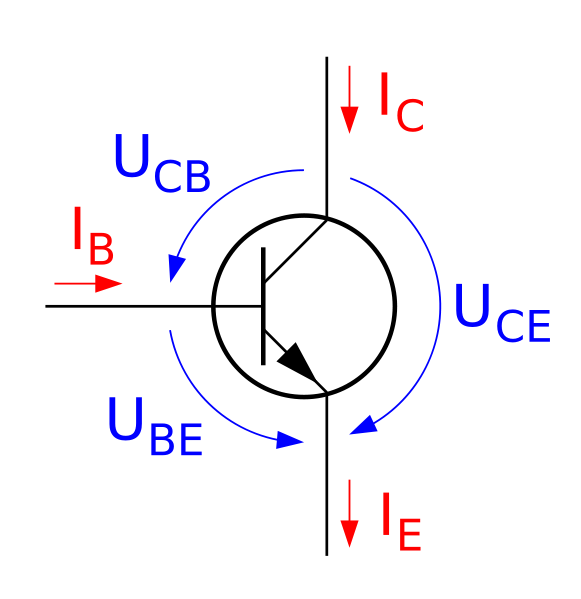

Some months back, I mentioned that I felt the sun-earth connection was much like a transistor. This new NCAR study suggests this may be the case where small solar variances are amplified in the earth atmosphere-ocean system.
From EurekAlert
Small fluctuations in solar activity, large influence on the climate
Sun spot frequency has an unexpectedly strong influence on cloud formation and precipitation
Our sun does not radiate evenly. The best known example of radiation fluctuations is the famous 11-year cycle of sun spots. Nobody denies its influence on the natural climate variability, but climate models have, to-date, not been able to satisfactorily reconstruct its impact on climate activity.
Researchers from the USA and from Germany have now, for the first time, successfully simulated, in detail, the complex interaction between solar radiation, atmosphere, and the ocean. As the scientific journal Science reports in its latest issue, Gerald Meehl of the US-National Center for Atmospheric Research (NCAR) and his team have been able to calculate how the extremely small variations in radiation brings about a comparatively significant change in the System “Atmosphere-Ocean”.
Katja Matthes of the GFZ German Research Centre for Geosciences, and co-author of the study, states: „Taking into consideration the complete radiation spectrum of the sun, the radiation intensity within one sun spot cycle varies by just 0.1 per cent. Complex interplay mechanisms in the stratosphere and the troposphere, however, create measurable changes in the water temperature of the Pacific and in precipitation”.
Top Down – Bottom up
In order for such reinforcement to take place many small wheels have to interdigitate. The initial process runs from the top downwards: increased solar radiation leads to more ozone and higher temperatures in the stratosphere. “The ultraviolet radiation share varies much more strongly than the other shares in the spectrum, i.e. by five to eight per cent, and that forms more ozone” explains Katja Matthes. As a result, especially the tropical stratosphere becomes warmer, which in turn leads to changed atmospheric circulation. Thus, the interrelated typical precipitation patterns in the tropics are also displaced.
The second process takes place in the opposite way: the higher solar activity leads to more evaporation in the cloud free areas. With the trade winds the increased amounts of moisture are transported to the equator, where they lead to stronger precipitation, lower water temperatures in the East Pacific and reduced cloud formation, which in turn allows for increased evaporation. Katja Matthes: “It is this positive back coupling that strengthens the process”. With this it is possible to explain the respective measurements and observations on the Earth’s surface.
Professor Reinhard Huettl, Chairman of the Scientific Executive Board of the GFZ (Helmholtz Association of German Research Centres) adds: “The study is important for comprehending the natural climatic variability, which – on different time scales – is significantly influenced by the sun. In order to better understand the anthropogenically induced climate change and to make more reliable future climate scenarios, it is very important to understand the underlying natural climatic variability. This investigation shows again that we still have substantial research needs to understand the climate system”. Together with the Alfred Wegener-Institute for Polar and Marine Research and the Senckenberg Research Institute and Natural History Museum the GFZ is, therefore, organising a conference “Climate in the System Earth” scheduled for 2./3. November 2009 in Berlin.
I agree with Anthony. This is a transistor-like effect. In a transistor a small variation in current input to one port results in a large variation in current flow on another port. Or, a small energy modulation controls a large energy flow.
In this case there is a small variation in ultraviolet that modulates a much larger flow in the visible portion of the spectrum where the ocean picks up most of its heat. It is almost like a phototransistor controlling an iris (not the floral type) or something.
Berry R (19:13:19) “Having read a lot of things like that, I get the feeling that a substantial portion of scientists working in the area are playing a bit of a double game. They publish stuff that chips away at the margins of the AGW hypothesis and then add a sentence or two at the end to get past peer review at the more politicized scientific venues.”
Good observation.
This is a computer model simulation study. What does it prove/disprove?
I wouldn’t call it a transistor effect – I would call it a ‘valve’ effect. Do you remember those beautiful glorified lightbulbs in the backs of old wirelesses? These things were works of art. The last time I looked at a transistor it looked like a glob of… well, something disgusting which I wouldn’t like to mention.
Feast your eyes on this lot!…
http://www.r-type.org/
Steve Hempell (14:19:42) :
Mark Bowen: Dave E
That last statement is likely talking about the 11 year cycle not solar effect per se. Piers Corbyn also does not like to use the 11 year cycle.
Small solar activity fluctuations amplify to larger climate influences
Nir Shaviv has hypothesized this before :
http://motls.blogspot.com/2009/02/nir-shaviv-solar-fluctuations-are.html
This is a computer model simulation study. What does it prove/disprove?
This, by itself, may not prove, disprove anything. But, what it does, is give a testable hypothesis that is at variance with the CO2 theories bandied about and has the advantage of actually making sense.
Add the following to the soup of UV induced effects:
http://www.nasa.gov/vision/earth/environment/0702_planktoncloud.html
It’s almost hard to believe, but new NASA-funded research confirms an old theory that plankton can indirectly create clouds that block some of the Sun’s harmful rays.
……
The researchers were also surprised to find that the DMS molecules completely refresh themselves after only three to five days. That means the plankton may react to UV rays quickly enough to impact their own weather. Toole and Siegel were surprised by the lightning-fast rate of turnover for DMS.
WUWT post on Nir Shaviv’s amplifying solar activity :
http://wattsupwiththat.com/2009/04/15/the-oceans-as-a-calorimeter/
comment from Nir Shaviv at that post :
Nir Shaviv (00:01:06) : (4/17/2009)
Lief also further said (at 03:42) that he doesn’t see the 11-year cycle in the satellite data. Well, the data barely covers a cycle, and it so happens that with the exception of the 1997 super el-niño, there is a clear trend which is consistent with the data: 1994-1995 low rate @ur momisugly solar minimum, 2001-2002 high rate @ur momisugly solar maximum, and 2007-8 low rate again at solar minimum. Of course, there is a lot of short term variability, but the signal is there.
(bolds by me)
Kevin Kilty (20:29:40) :
This link may be helpful :
http://www.sciencebits.com/calorimeter
This research is headed in the right direction….and makes damn good intuitive sense.
Slowly…..slowly….uncovering a complex web of slight solar variability magnified in the huge vat of energy storage of our planet: the Oceans.
Anthropogenic forcing wha??? Huh? What is that?
In less than 20 years it will be relegated to the annals of sham science and taught only for fun.
The REAL term here that should be used here is “anthropogenic pollution”.
And THAT problem is regularly being thrown under the rickety tie-dyed AGW bus.
When does anyone hear Al Gore or anyone else talking about the huge trash gyre in the Pacific?
Or about disastrous overfishing?
Or pointing out that the worst environmental disaster sites are outside the US borders….specifically China and India.
Yeah China the Pac NW really is appreciative of the huge amounts of mercury and other poisons you send their way through the hydrologic cycle!
All of these FIXABLE problems….drowned in an orgy of demonizing CO2 and cap and trade.
They need to give up on their AGW cult and either snap out of it or collectively drink the arsenic-laced punch….because THE OCEANS AND THE SUN HAVE IT.
The research that is the subject of this thread is encouraging progress.
I really appreciate all of the great minds on this site. Enlightening info. I keep coming back for more.
[And Stephen Wilde, your lyrical posts are spot on. Keep it up.]
Chris
Norfolk, VA, USA
anna v (21:27:58)
http://www.nasa.gov/vision/earth/environment/0702_planktoncloud.html
Great story – thanks Anna.
Imagine the hypothetical trial by the US Chamber of Commerce on global warming…
Perry Mason calls James Hansen to testify.
“Are you aware of the study by Gerald Meehl in which extremely small variations in radiation brings about a comparatively significant change in the System “Atmosphere-Ocean?””
Hansen: “No sir, I am not. This study has not been peer-reviewed by appropriate warmists.”
Mason: “Meaning…?”
Hansen: “RealClimate has yet to weigh in on the findings.”
Burger approaches for cross-examination. “Did you call for Nuremburg-style trials for skeptics?”
Hansen: “No sir. I called for burning at the stake.”
Burger: “Is this not the antithesis of the scientific method?”
Hansen: “Everyone knows the science is settled, so this sun thing can’t be right. Haven’t you seen those pictures of fluffy polar bears on melting ice?”
Mason: I call Al Gore to the stand. “Isn’t the sun’s influence on climate rather inconvenient?”
Gore: “No comment.”
Nir Shaviv (00:01:06) : (4/17/2009)
There was once a swirling imaging controversy. The assumption was that since an imager in a light polluted city had a ceiling of light above, there was a limiting magnitude imposed by the light dome where no more faint signal could be integrated.
Until it was proven wrong. The Noise does not block the faint signal, because the faint signal is riding on top of the noise. The high noise to signal ratio means that an inordinate amount of integrations is required to go fainter, not that it is impossible. The challenge was destructive interference by the heavy light dome.
With other things happening concurrently with Solar Min/Max times, there is noise.
But, I see the signal too. It’s riding on top.
Stephen Wilde (14:53:21) :
There is no need for the oceans to be ‘holding’ any energy. All they need to do is accelerate or decelerate the release of energy to the air and that results in temperature changes largely independent of solar variations.
In order to be releasing energy at different rates at different times the oceans have to be holding it in the first place, unless they are simply a conduit for the variability of the incoming energy, which observation shows they are not.
This response also cannot be used to explain recent global warming because the 11-year solar cycle has not shown a measurable trend over the past 30 years.”
There is no recent global warming, temperature trend for last 30 years is basically flat.
Meehl, G.A.; Arblaster, J.M.; Matthes, K.; Sassi, F.; van Loon, H. (2009). Amplifying the Pacific Climate System Response to a Small 11-Year Solar Cycle Forcing. Science 325, 1114-1118.
“Though the solar-forced eastern equatorial SST anomalies shown here are about half the amplitude of those associated with the El Nino-Southern Oscillation, they are relevant for understanding decadal timescale variability in the Pacific.”
Re: Juraj V. (23:34:51)
Don’t worry about that “politically correct” statement intended to clarify that the authors are clever enough to avoid constituting a threat to alarmists; other solar variables show a trend.
I think a better electrical analogy is that of a resistor with a solar panel and a capacitor in circuit.
The sun heats the resistor through the solar panel (sea surface mixed layer) which dissipates it’s heat into the ocean, and when the sun goes quiet, the the capacitor discharges (el nino) due to the lowered resistance of the cooled down resistor. The ocean releases it’s heat energy slowly, losing net energy until the sun gets active again.
The atmospheric processes described by this study may be second order effects which modulate the level of insolation to the solar panel/sea surface.
“In order to better understand the anthropogenically induced climate change and to make more reliable future climate scenarios, it is very important to understand the underlying natural climatic variability. This investigation shows again that we still have substantial research needs to understand the climate system”.
There’s masterly wording. Hint of genuflection still in place, but “substantial research” still needed now to separate out the natural from the AGW. Seamless, no loss of face.
Looks like this is the way the juggernaut of Science will wriggle through the turnabout.
M. Simon (17:05:45)
I’m not an electrical engineer so terminological advice is happily accepted. As regards the resistor idea I did say that the oceans are apparently variable in the level of resistance they offer to the flow of solar energy through them. If that makes them a capacitor then that’s fine by me.
DaveE (17:13:33)
Agreed, I should have referred to temperature and not heat. Generally I do avoid the use of the word ‘heat’ these days but I slipped up there.
Steamboat McGoo (17:14:14)
I am suggesting that the thermal dissipation effect of the oceanic resistor is variable over time. I could have made that clearer in the sentence you refer to but it is mentioned elsewhere.
Kevin Kilty (20:29:40)
If the UV is doing the driving it is a transistor (or valve) effect. If the oceans are doing the driving it is a resistor (or is it capacitor ?) effect. I’m open to persuasion but I have already said why I am doubtful about the UV effect being in control on anything less than century timescales.
tallbloke (23:31:09)
Yes, after posting I felt unhappy about the use of the word ‘holding’.
The oceans only slow down the passage of solar energy through them rather than ‘holding’ energy but in a sense the energy is being ‘held’ for a very short time as the slowdown occurs. The length of delay is miniscule but enough to lengthen the wavelength and produce a rise in temperature. Solar shortwave comes in but only longwave goes out. The conversion process must raise the temperature of the material that causes the wavelength change and most of it is water, not air. As soon as the solar input varies then so does the amount of energy flowing through so ‘holding’ in the usual meaning of the term does not happen as you correctly point out. However it is not the amount of energy flowing through that matters most on timescales of less than centuries. Instead it is the variable level of resistance offerred by the oceans taken as a whole at any given moment. If this proposition adequately decouples oceanic temperature variability from solar variability on time scales of less than centuries then a lot of problems are solved. But am I right ?
tallbloke (23:31:09) :
“Stephen Wilde (14:53:21) :
There is no need for the oceans to be ‘holding’ any energy. All they need to do is accelerate or decelerate the release of energy to the air and that results in temperature changes largely independent of solar variations.
tallbloke:
In order to be releasing energy at different rates at different times the oceans have to be holding it in the first place, unless they are simply a conduit for the variability of the incoming energy, which observation shows they are not.”
Applying a bit more logic there is more to be said on the above points.
I’ve dealt with the ‘holding’ issue as regards the ongoing flow of solar energy through the oceans but clearly that cannot be the whole story. The ocean bulk has over time (since the oceans first formed) acquired a certain average base energy content which keeps the oceans in liquid form but which is not readily involved in the ongoing energy flow from sun to sea to air.
The oceans have acquired that base energy by long term retention of solar and geothermal input but what we see is little affected by the ongoing energy throughput in the upper levels. That base energy is clearly ‘held’ on a long term basis and it is very difficult to change it on timescales of less than millennia. Probably only very long term solar changes caused by orbital variations can have much effect and I suspect that is where the ice ages become relevant.
Certainly changes in the air alone are not going to change that base energy level and yet the temperature of the ocean bulk will have a profound modulating effect on both the water and the air above it.
Now, nothing in nature is constant so there will always be interactions between that lower water, the water which is affected by solar input (beyond the evaporation layer), the water in the evaporation layer and the air above.
I suspect that those interactions within the oceans are the ones that periodically effect oceanic phase shifts causing variable rates of energy release to the air on multidecadal time scales and that is where we should be looking for the real climate driver.
“tallbloke (00:44:04) :
I think a better electrical analogy is that of a resistor with a solar panel and a capacitor in circuit.
The sun heats the resistor through the solar panel (sea surface mixed layer) which dissipates it’s heat into the ocean, and when the sun goes quiet, the the capacitor discharges (el nino) due to the lowered resistance of the cooled down resistor. The ocean releases it’s heat energy slowly, losing net energy until the sun gets active again.
The atmospheric processes described by this study may be second order effects which modulate the level of insolation to the solar panel/sea surface”
A couple of problems with that:
1) Whatever happens in the sea/surface mixed layer appears to involve an increase in the evaporation rate whenever more energy is added and there is a constant background flow of energy from water to air so dissipation downward from that layer appears to be negligible.
2) El Nino and La Nina events are not aligned with active or quiet periods of solar activity, Indeed they are as often in opposition to changes in solar activity. 1940 to 1975 the oceanic cycles were opposing an active sun. 1975 to 2000 they were supplementing an active sun. Now we have a quiet sun supplementing negative ocean cycles.
3) The oceanic effect on air temperatures is far far bigger than solar effects so the solar changes are insignificant in comparison for periods of less than several hundred years. At most the solar variability just provides a background trend behind the changes induced by the oceans.
I do agree however that the article at the head of this thread is more likely dealing with second order events which can supplement or offset the primary oceanic driver. I have already conceded that point as regards the Svensmark hypothesis.
Stephen Wilde (14:33:50) : and others
What TSI the oceans do not reflect they absorb. Absorption takes place from top down UV penetrates to ~40m being converted to heat all the way from 0 to 40m. At 40m there is little of the UV left and therefore little heat produced. The solar radiation is not slowed (other than the by the optical properties of the ocean slowing from light speed to just under. It is converted to heat mainly and biomass (ignoring the surface evapouration)
There is no way of converting biomass in the ocean back to heat (it can change CO2 absorption, or albedo perhaps). So the only way of slowing the UV radiation of TSI down is by retaining the heat it produces. This heat is spread out over depths of 0 to 40m. Somehow you are suggesting that this heat is stored over one or more solar cycles and is released during TSI minima (storage time at least 5 years. As I asked on another thread – what real physical means is at your disposal to retain this heat? Somehow you have to get heat from perhaps 20m down to much lower depths – away from the churning of the surface layers, and then keep it there until it is required to emerge 5 years later.
And please give up on the resistor analogy as others have said you do not seem to understand electronics. The power dissipated in the resistor creates the heat (I^2*R or V^2/R). The operating temperature is determined by the thermal resistance to the heat sink (air). If you dissipate 1 watt in a 1 watt rated resistor it will reach probably 55C above ambient (de-ratings usually begin at 70C reaching zero allowable dissipation at 125C – surface mount Rs)
A resistor does not store heat – remove the input and the resistor begins to cool immediately rate limited by the thermal resistance.
Ozone depletion started in 1970s and levels of ozone fell by 6% by 1992 check this plot Global Total Ozone Change here:
http://www.theozonehole.com/
You will notice that there are NO peaks of ozone corresponding to the solar cycle. OR if present are significantly less than the man made dip.
this is interesting
http://www.theozonehole.com/climate.htm
More on next post.
The other links
http://www.theozonehole.com/ look around!
http://ozonewatch.gsfc.nasa.gov/
This last one has 2 little plots showing ozone peak during 1988 and 2002
However, 1988 does not correspond to a peak of tsi
tsi peaks (start of tsi decline) are 1992 and 2002
or looking at the peak flattening off from the rise 1989 an 2000
And the peaks are significantly less than the ozone depletion drop.
So the 6% increase in ozone cannot be said to have increased ozone significantly. The o3 depletion is much more significant.