Wikipedia says:
The Eemian was an interglacial period which began about 130,000 years ago and ended about 114,000 years ago. It was the second-to-latest interglacial period of the current Ice Age, the most recent being the Holocene which extends to the present day. The prevailing Eemian climate is believed to have been similar to that of the Holocene.
Last Interglacial Arctic Warmth Confirms Polar Amplification of Climate Change
by the Cape Last Interglacial Project Members
Guest summary by Peter Hodges of the Paper at:
http://chubasco.fis.ucm.es/~montoya/cape_lig_qsr_06.pdf
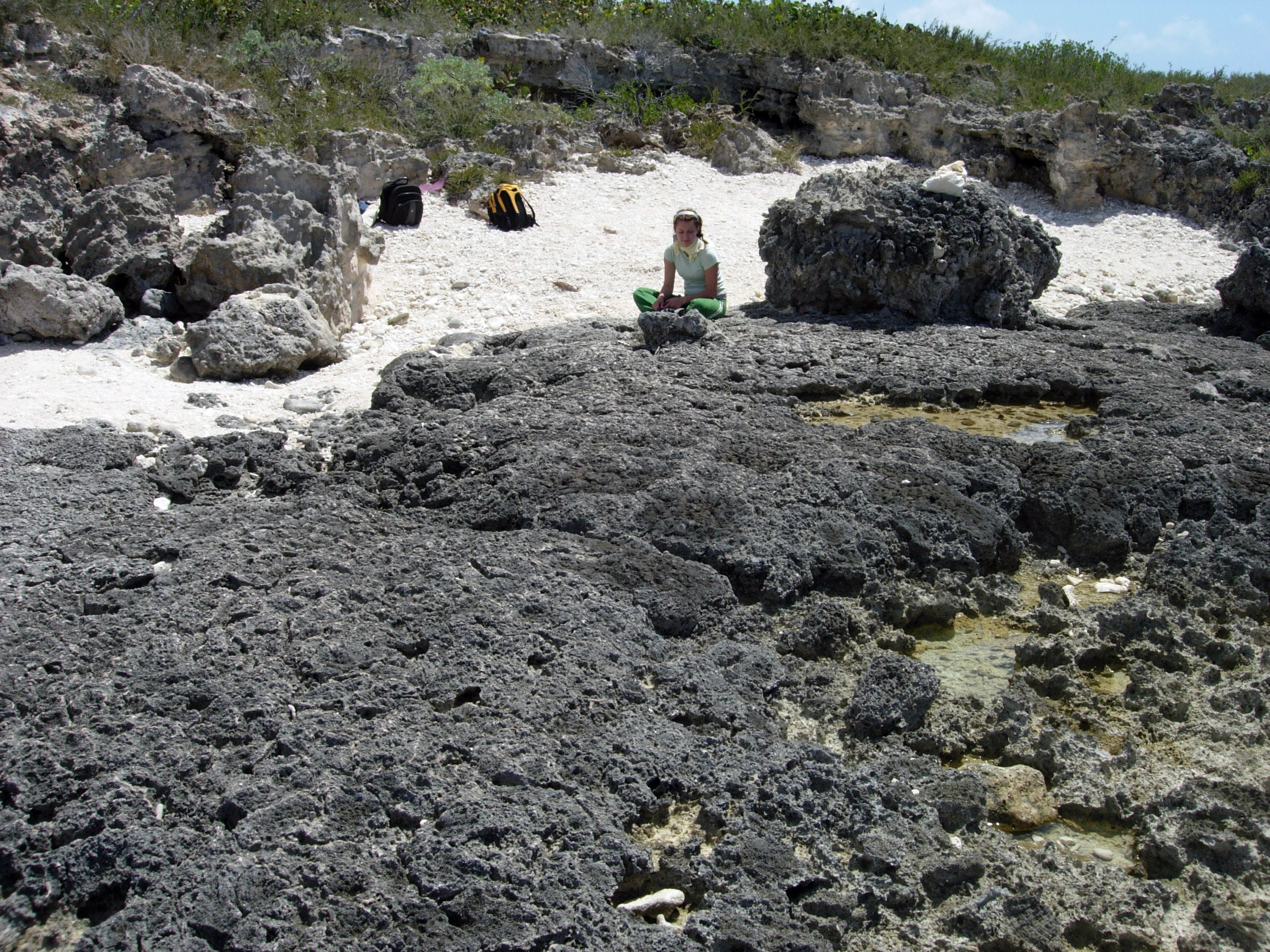
It is widely accepted that the last interglacial was much warmer than the current. Forests reached the Arctic ocean across most of Eurasia, Scandinavia was an Island due to higher sea levels, and hippos swam in the Thames. As a basic introduction to the subject the Wikipedia http://en.wikipedia.org/wiki/Eemian entry is well worth a quick read.
The paper concerned, however, offers a comprehensive survey of literature concerning the Eemian interglacial, focused on the Arctic. The literature cited by the authors consists almost entirely of data from actual empirical research as opposed to “data” from model outputs. There are also four pages of citations for anyone who wishes to check the authors sources, or simply dig deeper. For those who have time, I highly recommend reading the paper in its entirety.
For those don’t have the time, the authors offer a concise summary in their conclusion:
“Quantitative reconstructions of LIG (Last InterGlaciation) summer temperatures suggest that much of the Arctic was 5C warmer during the LIG than at present… Arctic sea ice was reduced to a greater extent in the LIG than during the early Holocene due to both greater summer insolation and the larger flux of relatively warm Atlantic surface water into the Arctic Ocean during the LIG than at any time in the Holocene.”
The fundamental factor which drove Eemian temperatures higher than those in the Holocene was dramatically higher summer insolation. Northern Hemisphere insolation during the Eemian was higher than today, while Southern Hemisphere summer insolation was lower than today. Most importantly, “By the time sea level reached present in the Holocene (6 ka), the high latitude Northern hemisphere summer insolation anomaly was ca 15Wm_2, whereas at the comparable time in the LIG (130 ka) it was ca 45Wm_2, three times as large.”

How much warmer were Eemian summers? Evidence from the surveyed literature paint a consistent picture. The Atlantic-Siberian sector was typically 4-8C warmer, and Beringia 2-4C warmer. Alaska was 0-2C warmer in summer, but colder in winter. NE Canada and Greenland registered at least 5C warmer in summer. Temperate zones adjacent to the Arctic (and the planetary average) registered roughly 0-2C warmer than the present. This was apparently enough of a difference to facilitate vastly different plant and animal distributions. In some areas plant zones move 1000k north. Trees grew as for north as the Arctic Ocean and hippos swam in the Thames.

The authors argue that the polar region temperature anomalies were so much greater than the planetary average due to positive feedbacks. The warmer Arctic temperatures greatly reduced snow, land and sea ice cover relative to present. This decreased the albedo on land and sea, which resulted in warmer temperatures. While Arctic sea ice cover is rigorously debated, “the available data suggest that sea ice remained through the summer in the central basin.”
There would have been however, much more estensive leads and the ice in places was at least 800km north of the present summer extent. Reduced sea ice and increased meridianal circulation of warm, salty Atlantic waters into the Arctic dramatically warmed Arctic waters relative to the present which then allowed for a much warmer northern Eurasia.
There does not appear to be a consensus on exact ice cover in Greenland. Southern Greenland may have been ice-free or almost ice free while modeled estimates for the Northern Ice sheet are that it was reduced by 20-50%. There is at least solid evidence that some northern sites such as Dye-3 were not glaciated during the Eemian.
While the paper argues that there is indeed “polar amplification of climate change”, the conclusion is again worth quoting:
“The observational records of 20th century warming are not in perfect accord with model projections…The paleoclimate record is more direct… Most of the warming occurred in summer months, whereas model projections indicate winter warming should dominate.”
The authors then illustrate the effects of “polar amplification” during glaciation: While global temperatures are estimated to be roughly 6-8C below present at last Glacial Maximum, Arctic cooling as evidenced by Greenland Ice Sheet boreholes was 25C.
So, no detectable tipping point upto 8°C above the present IG ! Hansen proven incorrect again. Quel surprise !
yeah but, but, but….but….um, humans are still causing catastrophic warming
Can anyone advise if there is any authoritive comment on Antarctic temperature in the Eemian as well.
Present Arctic warming may have not reached its peak.
http://www.vukcevic.talktalk.net/NFC1.htm
According to my findings, it is not out of question that the Arctic stays relatively warm while certain parts of the north hemisphere get colder. It is all meter of the currents circulation and jet stream interaction
As warm waters inflow increases, keeping Arctic’s temperature up, so it does outflow of the cold currents. This shifts ‘jet stream’ further to the south in the NW Atlantic as it was the case in the recent months, and may continue for some years to come.
So, the Arctic can drop as much as 25C in the next glaciation.
In the LIG, the temperature peaked early anywhere the data can be resolved.
With the Holocene being the peak, the slow slide downhill is already evident.
Further, in the paper, we don’t have enough fossil fuels available to completely melt the Canadian Ice, that taking 2,000 years.
We have 200 years, if we play it right. We might be able to lessen the slope of the slide down to Ice Age, but we cannot stop it.
Cooling is slow, but steady, and I think the reason for that is the Arctic mixes temp. differentials with the Antarctic over time.
First you tell us that the arctic was different 7k years ago and now this!
Are you seriously suggesting that our climate shifts through natural variation?
Hogwash, its all our fault.
The year, 2050. The place, southern England, Devonshire. The time, close to a New Ice Age as everywhere north is frozen solid! A professor of ancient languages & an anthropologost who has studied every existing cave-man writings & scribles, paintings, etc, & who has studied the capacity of the ancient human skull/brain & jaw vocal capacity has translated, the phrase, “Ooo, ooo, ooo, ugh, ugh, ugh, agh,agh, ooo, ooo, ugh”, through a highly validated language computer model using “representations”, “simulations”, & “sophistication”, from a humungous taxpayer funded state organisation, to mean,…… “It’s the freeking Sun, man, coupled with variations in orbital mechanics of the Earths rotation, speed of rotation, axial tilt, & wobble, & the variations in the gravitational effects of the other planets in the solar system upon the Earth up to & including our own planetary satellite, & the much misunderstood chaotic internal natural variations that these cause the Earth’s climate system, man, innit, nowotaaaameeen, bro?” It has to be pointed out that there are some uncertainties in this translation.
I am interested in the conditions in the rest of the world at that time. Was the rest of the land world one big desert or was this moderated by more water vapour leading to moist conditions or more variable conditions.
I’m not sure if I trust their conclusion that the arctic amplification they’ve measured is mostly due to positive feedbacks in the Arctic. The fact that the lower latitudes were hardly warmer than now IMHO points to a negative feedback at those latitudes – i.e. more clouds, more rain. And last but not least faster ocean transport of warmer waters to the Arctic.
Arctic amplification during glaciations is a completely different issue. I’m so tired of the AGW crowd using the unstable climate during glaciations as evidence for possible unstable climate during warmer periods, when the records so strongly indicate that a warm climate is stable (because of the negative feedback in the hydrological cycle) while glacial climate is unstable.
Interesting thesis, but they do not explain the basic mechanics of this event. They say that summer insolation in the N Hemisphere was increased by 11%, through “orbital parameters aligning”.
What parameters?
I presume they mean the Earth’s elliptical orbit and its angle of inclination combined together to place the N Hemisphere closer, and more towards the sun, in the summer months (and thus away from during the winter months). And the much warmer summers do not allow the very cold winters to build up any ice at the poles.
But an 11% increase in insolation due orbital parameters? That sounds like a awful lot to me.
Anyone seen Leif??
.
More Doomsday Warming scenarios crash and burn! How utterly unsurprising to discover that climate changes without any of mankind’s supposedly-malign influence.
>>Vuk:
>>This shifts ‘jet stream’ further to the south in the NW Atlantic as it
>>was the case in the recent months, and may continue for some years to come.
Yes, but southerly jetstreams do mean colder winters too. So, in Arctic ice terms, which will win out – colder winters or warmer summers?
.
And in continuation of my post.
So these same orbital parameters would not effect the S Hemisphere during the LIG. During the LIG, the S Hemisphere would have been tilted towards the sun, in summer, but much further way. So the LIG would have been a N Hemisphere only event. The S Hemisphere ice ages would be out of synch with the North.
Does this also show up in the record?
.
I don’t see how anyone can take this paper seriously. They used proxies to estimate the temperature, they attribute some(much?) of the cause of the warming to positive feedbacks, and they use models to reinforce their point. I mean listen to this from page 13/14:
“We postulate that the cumulative effect of positive
feedbacks from reduced sea ice, reduced permanent land
ice, reduced seasonal snow cover and the expansion of
boreal forests northward, coupled with increased meridional
heat transport by oceanic surface currents and the
atmosphere, amplified the modest LIG summer insolation
gradient to produce the substantially stronger thermal
response seen in the Arctic relative to lower latitudes in the
Northern Hemisphere. Climate modeling of the LIG also
underscores the importance of snow, ice and vegetation
feedbacks that amplify insolation-driven Arctic warmth
(Crucifix and Loutre, 2002; Otto-Bliesner et al., 2006).”
The holocene also had much higher temps across Nth Russia and Siberia with boreal forests reaching the Arctic coastline.
The temps were about 2.5c to 7c higher than today and the forests retreated to the present position by 3,000 years ago.
http://thedeadhand.com/Resources/ReferenceLibrary/tabid/164/articleType/ArticleView/articleId/184/Holocene-Treeline-History-and-Climate-Change-Across-Northern-Eurasia.aspx
Also the west Antarctic peninsula had at least 3 periods of warming during the Holocene over the last 5600 years, with one period in the MWP.
http://geology.gsapubs.org/content/38/7/635.abstract
LazyTeenager says:
September 10, 2010 at 1:44 am
Use a search engine lad.
” The warmest peak of the Eemian was around 125,000 years ago, when forests reached as far north as North Cape (which is now tundra) in northern Norway well above the Arctic Circle at 71°10′21″N 25°47′40″E / 71.1725°N 25.79444°E / 71.1725; 25.79444. Hardwood trees like hazel and oak grew as far north as Oulu, Finland.
At the peak of the Eemian, the northern hemisphere winters were generally warmer and wetter than now, though some areas were actually slightly cooler than today. The Hippopotamus was distributed as far north as the rivers Rhine and Thames.[1] Trees grew as far north as southern Baffin Island in the Canadian Arctic Archipelago instead of only as far north as Kuujjuaq in northern Quebec, and the prairie-forest boundary in the Great Plains of the United States lay further west — near Lubbock, Texas, instead of near Dallas, Texas, where the boundary now exists. The era closed as temperatures steadily fell to conditions cooler and drier than the present, with 468-year long aridity pulse in central Europe,[2] and by 114,000 years ago, a glacial era had returned.”
http://en.wikipedia.org/wiki/Timeline_of_glaciation
http://en.wikipedia.org/wiki/Glacial_history_of_Minnesota
The observed climate events back then would fit with a more active sun at the time allowing a highly positive AO and AAO with more poleward jets even than in the late 20th century or in the MWP whilst at the same time the ocean cycles were in a warmer phase than now adding to the poleward pressure on the jets.
That would be one of the four basic sun / ocean interactions that I previously proposed. In that combination the sun and oceans are actually offsetting one another in that the oceans are releasing energy faster to the air yet that energy is moving faster through the system to space and warming the higher latitudes of the troposphere in the process even as the total energy in the system declines due to that faster energy release from the oceans.
The total ocean energy content does not decline as fast as one might expect because the poleward shift in all the clouds associated with the jets and the ITCZ reduces global albedo and allows more solar shortwave input to the oceans which partially offsets the faster rate of energy loss from oceans to air.
Just as we see offsetting situations predominate now during the current interglacial so it was then during that interglacial but then the precise details of the solar / oceanic interaction produced a slightly warmer troposphere than the current one.
To fall back into an ice age with the concomitant huge tropospheric temperature swings one needs the solar and oceanic forcings to change phase relative to one another so as to be supplementing rather than offsetting each other’s effects.
Proposing independently variable solar and ocean cycles and reversing the sign for the effect of a more active or less active sun on stratospheric temperatures supplies the necessary adjustment to climate theory to explain most if not all observed climate changes including switches between glacial epochs and interglacials.
It becomes clear that higher summer insolation drove the higher Arctic temperatures 7K and 130K years ago. Something that can’t be said today about lower summer insolation at present.
Therefore something else must be driving the current record Arctic sea ice minima and the record high Arctic temperatures of the current recent modern era.
I wonder what that something else is?
I mean two articles/posts about higher summer insolations in the past, which doesn’t exist today, must mean something.
And I think I know what that something else is, it’s just something else meant to divert our eyes from the current record Arctic summer minima.
Just think about this, right at the time when the current Arctic summer minima is about to occur, find articles about past Arctic conditions that were caused by other natural factors that don’t exist today.
Good one A, it’s about time WUWT emphasized the fact that the modern era is different from other past natural causes, particularly at this time of year, when the record Arctic sea ice minima is upon us.
Appreciate WUWT’s honesty in that regard.
Ralph says: September 10, 2010 at 2:01 am
Yes, but southerly jetstreams do mean colder winters too. So, in Arctic ice terms, which will win out – colder winters or warmer summers?
As the jet stream forms high in the upper troposphere over the boundary between two air masses of different temperature, the greater the temperature difference between the air masses, the greater the air pressure difference, and the faster the wind blows in the jet stream.
I am not certain that the winter jet stream affects the Arctic at the same rate as it does the middle latitudes since it is normally well outside the Arctic circle.
Obviously the evidence of all those primitive greenhouse gas-spewing SUV’s that early man drove during the Eemian did not survive until the current day. Which is not surprising considering that modern man has a tough time making a vehicle that the steel doesn’t rust through with only 40 years of reasonable use. By the next interglacial, all that remains of our vehicles might be the ceramic insulators of the spark plugs. Which will be hailed as the pinnacle of our ability to make decorative beads.
☺
Looks like what will happen when the Arctic Sea gets ice free in summer. Then the sun will just shine into that sea for a half year every year. Might the Arctic sea surface temperature then rise to say +10° C within maybe just a dozen years?
So I guess this website has shifted from saying that the ice in the Arctic is recovering to saying that when it melts, it won’t be so bad because it has melted before…. Being wrong is correctable… being an idiot is permanent. Good luck with your survival.
[Reply: Being civil is productive, uncivil labeling is not. Perhaps you will consider correcting yourself. After all uncivil comments are “wrong”…. bl57~mod]
@Lazy Teenager
Deserts are concentrated in belts at 23 degrees north and south latitude called the Tropic of Cancer and Tropic of Capricorn. The equator itself is generally the warmest, wettest land on the planet.
The reasons are mostly trade winds and ocean currents. Those presumably behaved the same in the LIG as they are driven by coriolis force (the earth’s rotation) and surface temperature gradient from equator to pole.
Generally speaking colder means dryer as warm air holds more water vapor than cold air. Higher temperatures makes the water cycle faster – higher rate of evaporation at the surface, faster cloud formation, and more rain.
The dryest place on the earth by far is Antarctica which is because it is also the coldest place on the planet by far.
kadaka (KD Knoebel) says:
September 10, 2010 at 2:46 am
Obviously the evidence of all those primitive greenhouse gas-spewing SUV’s that early man drove during the Eemian did not survive until the current day. Which is not surprising considering that modern man has a tough time making a vehicle that the steel doesn’t rust through with only 40 years of reasonable use. By the next interglacial, all that remains of our vehicles might be the ceramic insulators of the spark plugs. Which will be hailed as the pinnacle of our ability to make decorative beads.
☺
I like your train of thought! 🙂