First, we pointed this out quite some time ago. See: Winds are Dominant Cause of Greenland and West Antarctic Ice Sheet Losses and also NASA Sees Arctic Ocean Circulation Do an About-Face
Second I’m pleased to see the Guardian finally catching on.You can watch wind patterns in this time lapse animation:

From the Guardian:
Wind contributing to Arctic sea ice loss, study finds
New research does not question climate change is also melting ice in the Arctic, but finds wind patterns explain steep decline.
Much of the record breaking loss of ice in the Arctic ocean in recent years is down to the region’s swirling winds and is not a direct result of global warming, a new study reveals.
Ice blown out of the region by Arctic winds can explain around one-third of the steep downward trend in sea ice extent in the region since 1979, the scientists say.
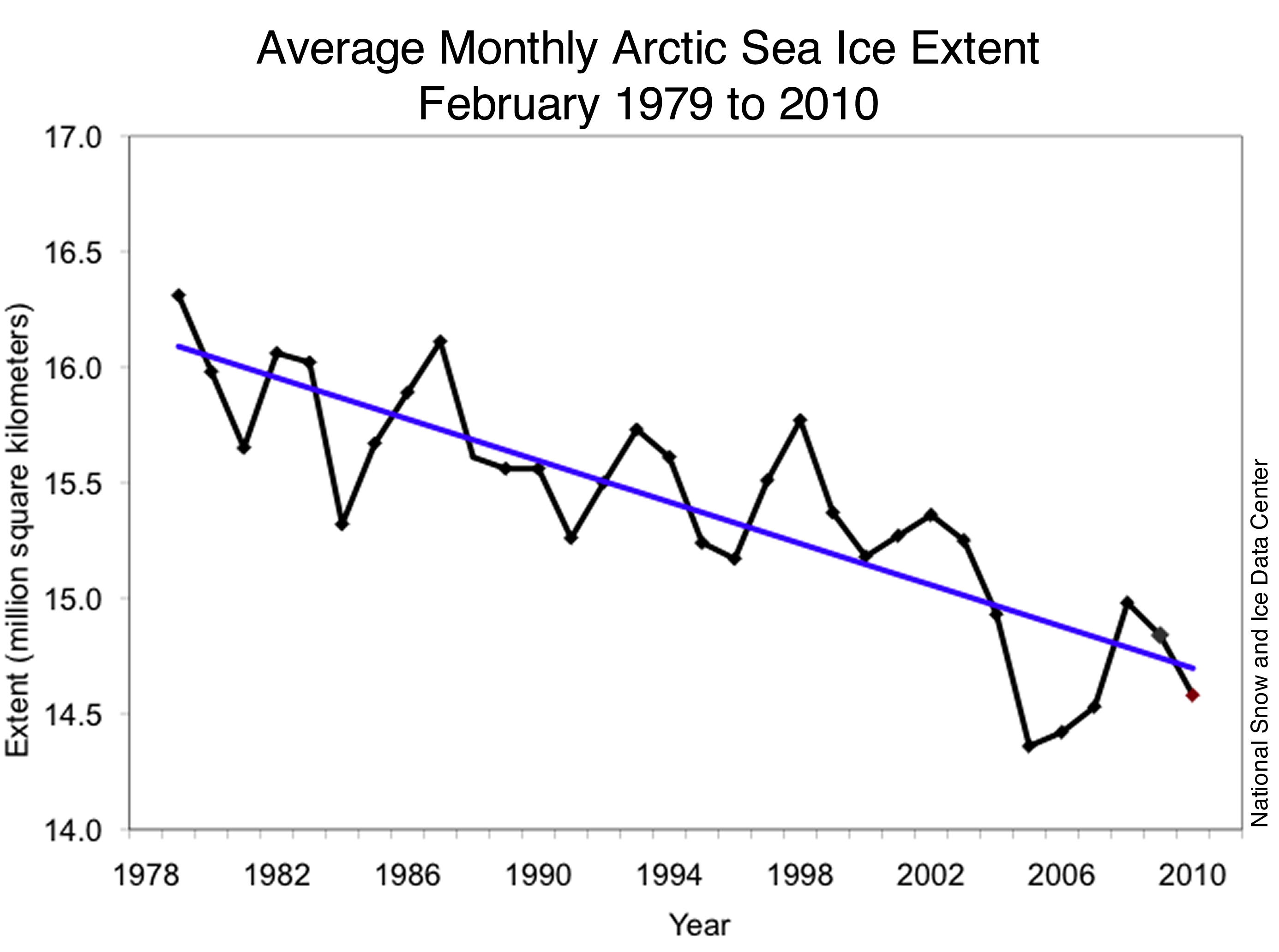
The study does not question that global warming is also melting ice in the Arctic, but it could raise doubts about high-profile claims that the region has passed a climate “tipping point” that could see ice loss sharply accelerate in coming years.
The new findings also help to explain the massive loss of Arctic ice seen in the summers of 2007-08, which prompted suggestions that the summertime Arctic Ocean could be ice-free withing a decade. About half of the variation in maximum ice loss each September is down to changes in wind patterns, the study says.
Masayo Ogi, a scientist with the Japan Agency for Marine-Earth Science and Technology in Yokohama, and her colleagues, looked at records of how winds have behaved across the Arctic since satellite measurements of ice extent there began in 1979.
They found that changes in wind patterns, such as summertime winds that blow clockwise around the Beaufort Sea, seemed to coincide with years where sea ice loss was highest.
Writing in a paper to be published in the journal Geophysical Research Letters, the scientists suggest these winds have blown large amounts of Arctic ice south through the Fram Strait, which passes between Greenland and the Norwegian islands of Svalbard, and leads to the warmer waters of the north Atlantic. These winds have increased recently, which could help explain the apparent acceleration in ice loss.
…
read the complete story at the Guardian
The Guardian? Things are turning round!
I bet Al Gore dont like this.
Come ON, surface temperatures have NOT diminished the ice cover. The change is NOT that major.
Undersea currents have! And, as noted, the winds.
Has the ocean warmed up that much? No, it’s redistributed its energy.
Max
Mildly hypnotic to look at. Wonder if I’ve found my new forum avatar
Hey, you know what? That study also doesn’t question my assertion that The Guardian is also melting Arctic ice, either. So this study fully supports my assertion that The Guardian is to blame for the melting prolonged!
Walt Meier from NSIDC explained this on WUWT in 2008
http://wattsupwiththat.com/2008/09/21/nsidc-s-dr-walt-meier-answers-10-questions/
WUWT March: 4 x 10 ^ 7 !!!!!!!!!
Daily Mean Temperatures in the Arctic 1958 – 2010:
http://ocean.dmi.dk/arctic/meant80n.uk.php
… or “prolonged melting”… I blame The Guardian editors for the error in my above post. The study also doesn’t question the Guardian’s involvement in my editorial snafu, so the science backs me up there as well.
Maps of Arctic ice:
http://acsys.npolar.no/ahica/quicklooks/looks.htm
What does drive winds?…pressure differences?, then, what does drive pressures?, we must find the “primum mobile” and just don’t care if finding the answer causes some undesired psychic reactions among settled scientists..
But… climate change must be driving the winds!
Yeah, that’s the ticket!
For the record, Arctic Sea Ice Area and Extent is currently slightly below average:
http://arctic.atmos.uiuc.edu/cryosphere/IMAGES/seaice.anomaly.arctic.png
http://nsidc.org/data/seaice_index/images/daily_images/N_stddev_timeseries.png
http://www.ijis.iarc.uaf.edu/en/home/seaice_extent.htm
And Global Sea Ice Area is average:
http://arctic.atmos.uiuc.edu/cryosphere/IMAGES/global.daily.ice.area.withtrend.jpg
I think that Antarctic Sea Ice Area is currently slightly above average;
http://arctic.atmos.uiuc.edu/cryosphere/IMAGES/seaice.anomaly.antarctic.png
but NSIDC Antarctic Sea Ice Extent now seems to contradict that.
http://nsidc.org/data/seaice_index/images/daily_images/S_stddev_timeseries.png
Does anyone know if NSIDC might be having satellite issues again?
Sorry but this is just a poorly presented story. It was known and widely discussed in 2007 while the melt season was underway that the unusual melt pattern of that year was due to ice being flushed out of the Fram Strait by winds and currents.
Old ice was also being flushed out during the winter contributing to the extremely low levels of thick old ice in the summer months.
This story is acting like this is new information. Its not. However similar wind patterns have set them self up over the past 30 years and not caused the ice melt. The reason that the winds were able to remove so much sea ice is that the ice had thinned to the point where it was much more able to be moved around and to a lesser extent the collapse of the ice arches in the Canadian archipelago.
The whole thing with the wind is that the arctic sea ice coverage decline is non linear, it is not just responding to changes in temperature but has thresholds where other factors can play more of a role, things like the wind.
Should also be worth noting that while the wind pattern is less conducive to melting this year there has been significant ice loss during the freeze season in the regions of the Barent and Kara seas. Together with the much later freezing in other areas such as the Hudson bay (I think that only completely froze somewhere round the 3rd of December) and the warm waters to the west of Greenland this melt season will be very instructive in how the ice cap is responding to the warming.
From all the arguments the melting polar caps and glaciers are the most persistent to tackle during private discussions among family and friends.
It’s not that the people I speak with are convinced warmists, they simply picked up the information and took it for granted.
Therefore it’s a good thing to bring out the true story as much as we can.
We all know the risks of an uninformed public.
Let alone the risks of a misinformed public!
They’ve also just given themselves room to yawn if/when Steve and Anthony are proven right late this summer. I can see the airy waving of the hand in dismissal coming already –“oh, right, natural variation recovery on the winds thing –the core AGW rate is still downwards tho, and that’s what matters.”
Isn’t it lovely how they get to have it both ways –panic in 2007 and dismissal in 2010.
It is interesting that a left wing newspaper is starting to see the reality of natural climate change driven by natural cycles.
The UK conservatives are fully commited members of the AGW fraud despite the growing opposition and sceptisism of the public.The conservatives are simply basing their entire economic,social and enviromental policies on the AGW fraud and in effect they are building a very rickety house of cards built on quicksand.
It looks like the conservatives will win the election and if they do the left would have the utterly perfect opportunity to savage the new conservative administration from the start.
We could be seeing the start of a new political alignment with the labour party reverting back to a wholly left wing base in opposition and the left wing media taking over the sceptics case as a perfect ready made an popular attack platform exposing the big business/banker/carpet bagging carbon trading/money grubbing fraud that has so infected modern politics.
We are seeing the start of the reformation of the labour party already, with an electoral defeat the left would have the perfect opportunity to rebuild its shattered base with a public sick to death of the lies and fraud of the AGW money making circus.
Expect to see a surge of leftist media sceptisism post election highlighting the links between big business and the AGW theory. In fact it would be a very clever move by the left to build an anti conservative base and the conservatives are extremely vulnerable to any sustained attack from that angle and it would be hugely popular with the public.
The winds were caused by CO2 from humans. This confirms warming. Less wind will also confirm global warming.
A tropical paradise the Arctic is not.
Ice, cold and fierce winds.
I wonder if Gore is busy building himself an Ark, after watching 2012?
I’m not sure what the biggest story is- The decline in sea ice largely due to wind patterns, or the Guardian publishing it.
Now if it had been on the BBC 6 o’clock news that would have been something.
Click daily image,
http://nsidc.org/arcticseaicenews/
we are now within 2 std deviations away from “normal”, or what they call normal, 1979-2000. Realizing we could now be at the same ice amt found in the mid 1940’s, except no one measured then. Nothing could be better than to get back to normal or close to it this year.
They have admitted the Arctic Ocean is not completely closed off, and every now and then it gets swirled around and old ice gets flushed out.
Shocking, isn’t it?
How old is the oldest sea ice they can find up there anyway? If, as the CAGW believers appear to assume, an ice-free Arctic Ocean is an extremely rare event, one could say it’d be unprecedented, shouldn’t there be ice that is decades old, perhaps even centuries old?
“The answer, my friend, is blowin’ in the wind”
What I don’t get is the apparent pairing of North and South ocean ice patterns. If wind is the mechanism in the North, presumably it also is in the South. But is there a detectable relationship between the winds at the two caps that would explain the remarkable regularity with which rises in the North correspond to falls in the South (in sea ice extent)? I note that, since accurate records began there has not been a year in which GLOBAL sea ice has not been both above the baseline period average and below it for portions of the year — this despite the fact that in the north the sea ice coverage has spent an extended period of several entire years below the baseline average. On the very day in 2007 the northern icecap reached its “lowest extent on record” the Southern cap reached its highest extent on record.
Given the hemispherical volatility of hemispherical sea ice coverage and the stability of global coverage, one should be led to seek a mechanism that correlates the two. It would be easy to say “heat redistribution” but clearly that’s not it, especially if the dominant factor is wind. Is there a working hypothesis? Are there climatologists paying attention to this connection?
Who would have guessed.